Published March 31, 2026 · Last Updated August 26, 2026
Keeping hives healthy starts with clean tools. In beekeeping, proper sanitation prevents dangerous diseases like American foulbrood from spreading through your colony. Small steps during each inspection help protect bees and preserve honey production.
Regular cleaning of equipment removes wax, propolis, and debris that attract pests such as wax moths. Make sure frames, hive parts, and protective clothing get attention after every use. A routine for washing tools and gloves keeps beekeeping equipment in good shape and reduces the chance of spores surviving.
When you spend a little time on thorough cleaning, you cut long-term damage and keep colonies stronger. Boiling water or approved products can kill spores that cause severe disease. Use plastic or wood-safe methods as needed and include the hive tool in your care plan.
Key Takeaways
- Maintain a clean hive to prevent American foulbrood and other diseases.
- Sanitize beekeeping equipment regularly to remove wax propolis and debris.
- Wash protective clothing, gloves, and tools after inspections.
- Use boiling water or approved products to reduce harmful spores.
- Consistent, thorough cleaning protects frames, hives, and colony health.
The Importance of Maintaining Clean Beekeeping Equipment
Contaminated gear can move dangerous spores between apiaries and ruin healthy colonies. Keeping equipment clean stops the spread of diseases such as American foulbrood, which can transfer on frames, tools, and protective clothing.
Regular cleaning prevents wax and propolis buildup that hides pathogens and attracts pests like wax moths. Make sure wooden parts and plastic foundations get attention during every inspection.
Sanitizing tools, gloves, and hive tool items reduces cross-contact between hives and lowers the chance of colony stress or damage. Use boiling water or washing soda for stubborn debris on wood and heavy residues.
When you keep a clean hive and maintain equipment clean status, you extend the life of boxes and parts and protect your honey yield. For practical protocols, see the cleaning your beekeeping equipment guide.
Small, regular steps cut long-term damage and help avoid costly repairs. If a wooden hive needs attention, consider expert advice on repairing damaged hive boxes before contamination spreads.
Essential Supplies for Sanitizing Your Gear
A well-stocked cleaning kit keeps your gear safe from spores and sticky residues.
This list covers the chemical agents and protective items you need when servicing hive parts and tools. Keep enough water nearby for rinsing and mixing solutions. Prepare for regular cleaning sessions so maintenance is quick and effective.
Chemical Agents
10% bleach works well on non-wood metal equipment and the hive tool to kill bacteria and spores.
Washing soda (sodium carbonate) helps remove wax and propolis from wooden frames and parts without costly solvents.
- Use boiling water or chemical solutions for heavy residues before scrubbing.
- Follow manufacturer instructions to avoid damage to plastic or wood components.
- If foulbrood is suspected, adopt aggressive cleaning and isolate affected hives to stop spore spread.
Protective Gear
Stock gloves, veil, and protective clothing for safe handling of chemicals and contaminated equipment.
Sanitizing gloves and veils is vital for a clean hive and healthy bees. A proper station saves time and limits pests or disease transfer between colonies.
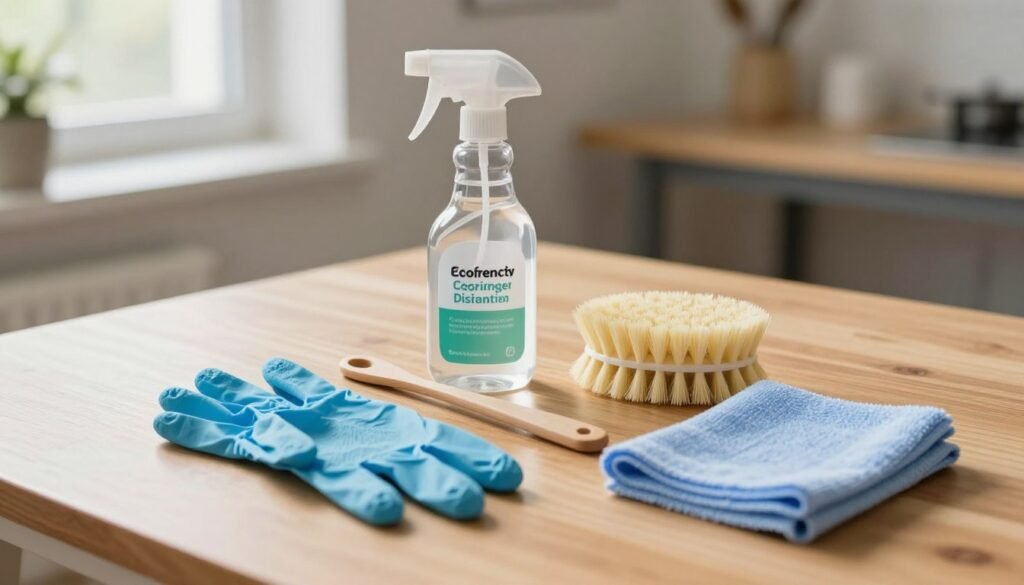
For a complete checklist and stepwise procedures, see the cleaning your beekeeping equipment guide.
How to Disinfect a Bee Brush and Other Small Tools
A quick cleaning routine for small gear saves time and lowers disease risk at inspections.
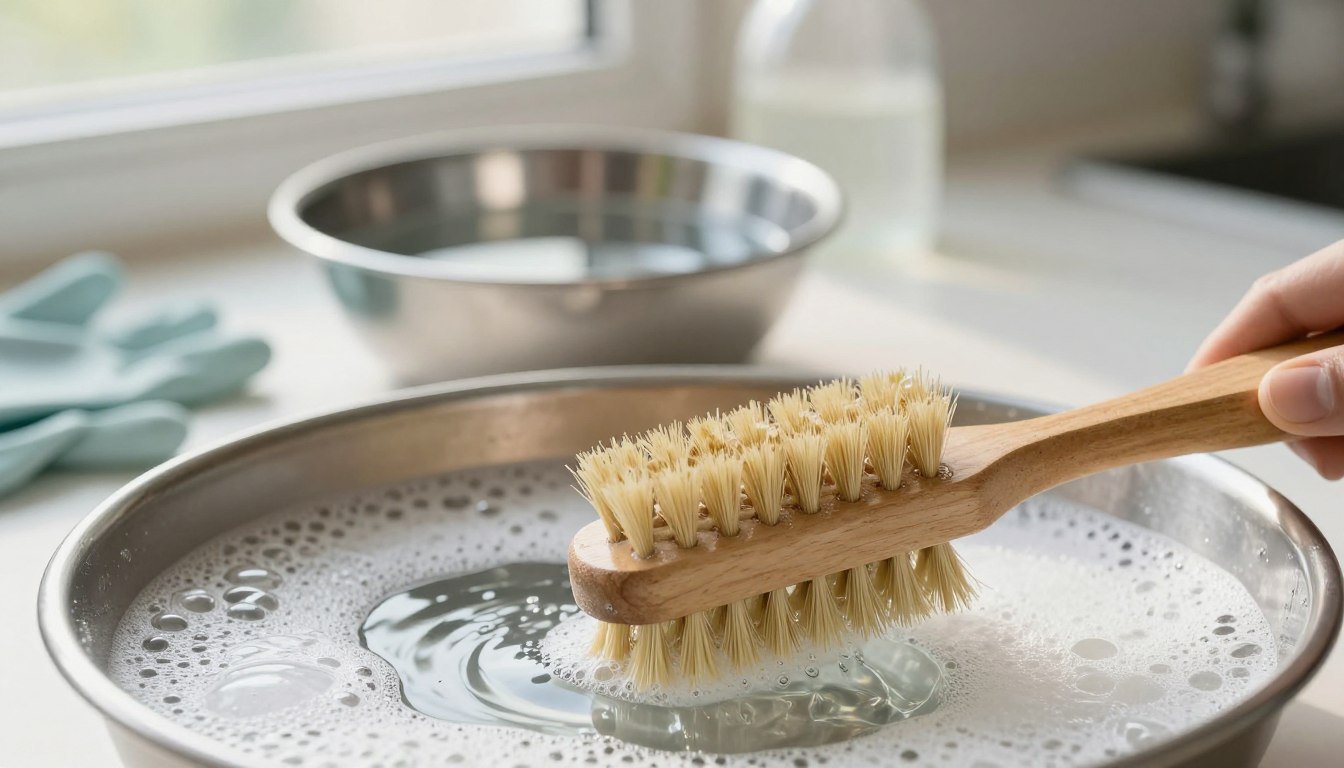
Start by washing the brush with mild soap and warm water. This dissolves honey and removes sticky residues that attract pests.
Scrape wax and propolis from metal hive tools, then heat the metal until red-hot to kill microorganisms. Let tools cool fully and dry before storage to avoid rust.
- Soak plastic parts in a 10% bleach solution after heavy use.
- Use washing soda for stubborn wax on metal parts.
- Inspect each tool for debris and spores before using on another hive.
“If foulbrood is suspected, sanitize every item and limit contact between colonies.”
For a full checklist and step-by-step procedures, see our cleaning beekeeping equipment guide.
Best Practices for Cleaning Protective Clothing
A clear routine for laundering protective wear saves time and protects hives. Clean clothing reduces alarm pheromones and lowers the chance of moving spores between colonies.
Follow simple steps after each inspection to keep suits, veils, and gloves in service for many seasons. Proper care removes wax and propolis, preserves fabric, and keeps your equipment ready for field work.
Washing Bee Suits
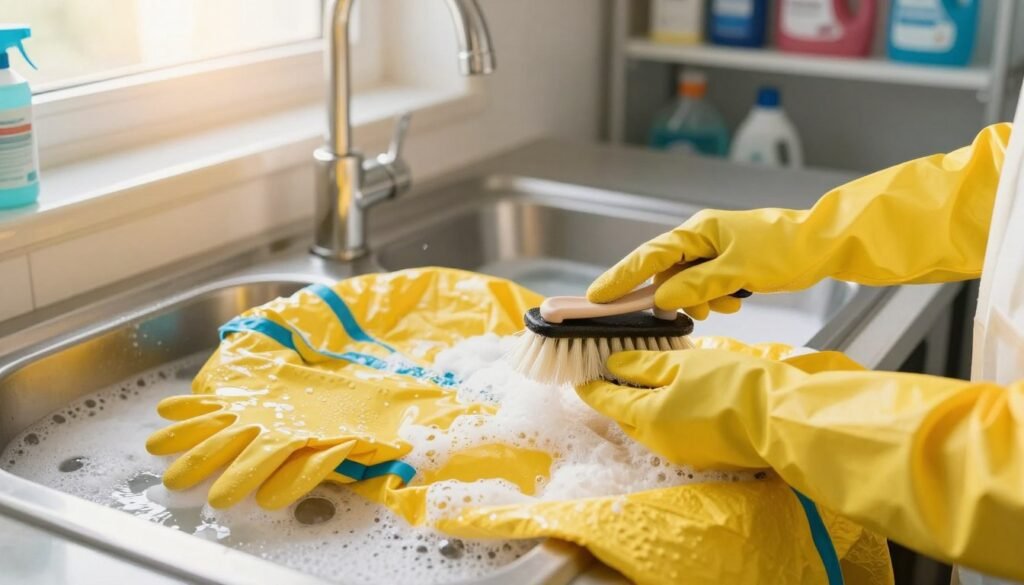
Use washing soda in warm water to cut through wax and propolis buildup on suits. Hand or machine wash on a gentle cycle with mild detergent.
Dry garments in the shade to avoid bleaching and heat damage. Always ensure suits are fully dry before storage to prevent mold and odors.
Cleaning Veils
Hand wash veils separately to protect fine mesh and seams. Rinse thoroughly in clean water and air dry in the shade.
Inspect the mesh and fastenings for tears. A small rip can let in stings and compromise safety.
Maintaining Gloves
Nitrile gloves clean well with soap and water; rinse and air dry. For leather gloves, soak briefly in cold chlorine water if heavily soiled, then condition with oil once dry.
Check gloves often for wear. Damaged gloves reduce protection and should be repaired or replaced promptly.
- Wash suit with washing soda after heavy inspections.
- Hand wash veils to preserve mesh.
- Condition leather gloves after cleaning to prevent stiffness.
- Always dry gear fully in the shade before storing.
| Item | Best Cleaning Agent | Drying | Notes |
|---|---|---|---|
| Bee suit | Washing soda + mild detergent | Shade, fully dry | Removes wax, propolis; prevents pheromone buildup |
| Veil | Mild soap, hand wash | Shade, air dry | Protects mesh; inspect for tears |
| Nitrile gloves | Soap and water | Air dry | Quick clean after inspections; replace if punctured |
| Leather gloves | Cold chlorine soak, condition with oil | Shade, dry naturally | Soaking softens; conditioning prevents cracking |
“Clean protective clothing is a small investment that pays back in safer inspections and healthier bees.”
For full maintenance guides and detailed steps for your beekeeping equipment, see the cleaning and maintenance resources at proper cleaning guide and our recommended tool maintenance resource.
Sterilizing Wooden Hives and Frames
Scorching interior wood surfaces can neutralize many pests and pathogens hiding in cracks and corners.
Carefully pass a blowtorch over internal surfaces. This kills wax moth eggs and most bacteria in crevices. Aim for corners and joints where pests like to lay eggs.
Freeze frames at 20°F or lower for 24 hours. That step destroys wax moth larvae and eggs before reuse.
After scraping excess wax and propolis, pour boiling water over frames and parts. Hot water removes stubborn debris from the wood without harsh chemicals.
- Inspect wooden hives for rot or damage and replace weak parts.
- Store cleaned frames in a cool, dry place for the season.
- Ensure beekeeping equipment is fully dry before reassembly to avoid mold.
“Sterilize with heat, freeze when needed, and always finish with dry storage for long-term hive health.”
| Action | Purpose | Notes |
|---|---|---|
| Scorch interior | Kill eggs and surface microbes | Use steady motion; avoid charring structural wood |
| Freeze frames | Eliminate wax moth larvae | 20°F for 24 hours; bag frames if needed |
| Boiling water rinse | Remove wax and propolis | Scrape first; dry thoroughly after rinse |
Managing Your Apiary Environment
A tidy apiary reduces hiding spots for pests and makes inspections safer for both keeper and colony.
Keep grass and weeds short around wooden hives. Low vegetation prevents insects from using plants as bridges into hive entrances. Short turf also improves airflow and cuts hiding places for pests.
Trim overhanging branches near your hive area. This stops twigs from snagging your veil or gloves during inspections and lowers the risk of accidental stings.
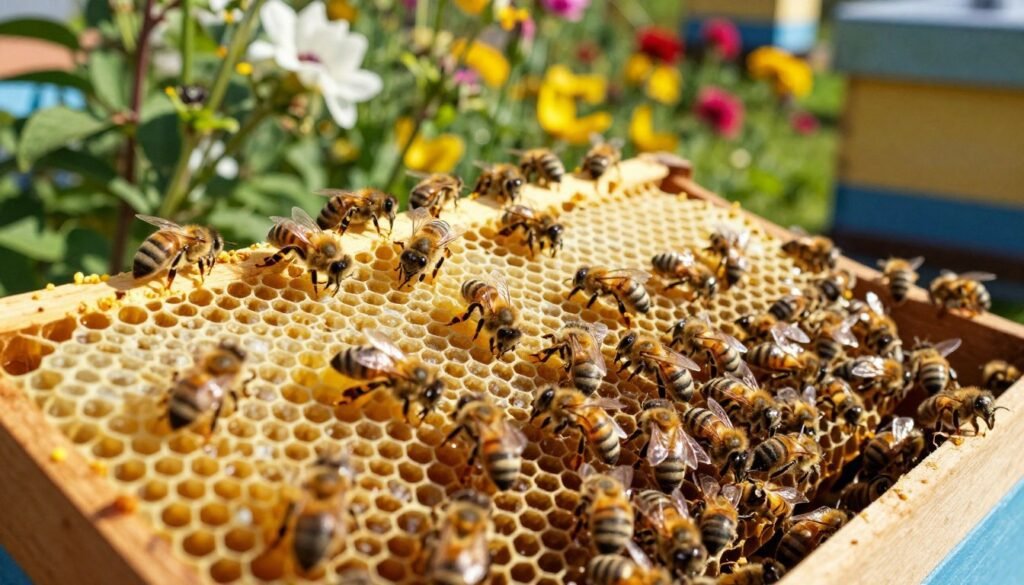
Controlling Weeds and Pests
Regular cleaning of the apiary helps you spot ant trails, rodent activity, and other signs of infestation early. Use water to wash away spilled honey and wax that attract pests.
- Keep grass short around wooden hives and clear undergrowth.
- Trim branches that hang near hive entrances and working paths.
- Store beekeeping equipment and parts away from the apiary when not in use.
- Check your hive tool and other tools for debris before starting work.
- Monitor colonies for stress; a tidy site supports healthier bees and better honey yields.
“A maintained environment reduces disease risk and makes inspections faster and safer.”
For detailed cleaning and sterilization guidance for hives and equipment, see this hive cleaning and sterilisation resource.
Proper Storage Techniques for Sanitized Equipment
Storing cleaned gear correctly is the final step that protects investments and supports colony health.
Store sanitized frames in an airtight container or a cool, well-ventilated area. This limits wax moth activity and stops mold growth during winter.
Make sure every tool and hive tool is fully dry before storage. Damp metal will rust and wet wood will warp or attract pests.
- Keep wooden hives and frames off the ground on pallets or shelves to prevent moisture damage.
- Use plastic bins for small parts, gloves, and beekeeping equipment so items stay organized and clean.
- Keep a dedicated toolbox for tools; it prevents rust and means gear is ready when inspections resume.
- Clean the storage area regularly and check boxes for pests or dust.
- Label boxes and inspect stored gear periodically to catch problems early.
“Proper storage is the final step in cleaning, ensuring gear is ready for your bees next spring.”
For detailed recommendations on storing supplies, see our guide on store your beekeeping equipment and advice for specialized gear like extractors at cleaning and maintaining honey extractors.
Conclusion
Keeping gear clean is the single best investment for long-term hive health and steady honey yields.
Consistent care of hives and equipment reduces disease risk, cuts pest problems, and helps your colonies thrive. Regular cleaning of tools and protective wear protects bees and supports productivity.
Store gear in cool, dry places and finish every maintenance session with thorough drying and inspection. For guidance on suit care, see this wash a bee suit guide, and for broader apiary planning check beekeeping expansion tips.
Steady effort with the hive tool and other gear pays off with healthier hives and more honey. Thank you for caring for your bees and practicing responsible beekeeping.
FAQ
What daily steps keep beekeeping equipment clean?
Remove debris and loose wax after each inspection, brush frames gently, and store tools in a dry, ventilated area. Wipe hive tools and plastic parts with rubbing alcohol or a 10% bleach solution after heavy use. Regular basic cleaning reduces pest buildup and lowers disease risk.
Which chemical agents work best for sanitizing gear?
Use household bleach diluted to about 10% for nonporous items, 70% isopropyl alcohol for quick surface contact, or accredited disinfectants labeled for apicultural use. For spores such as those that cause American foulbrood, follow state apiary board recommendations and consider thermal or caustic soda treatments on reusable metal and glass parts.
How should I treat wooden hives and frames without causing damage?
Avoid soaking solid wood. Scrape off propolis and wax, then use hot water rinses followed by careful brush cleaning. For severe infestation or disease, burn contaminated frames or use approved methods like gamma irradiation where available. Light sanding and fresh paint on exterior surfaces help protect wood while preserving internal comb structures.
What’s the safest way to clean protective clothing?
Machine-wash bee suits and clothing separately on a warm cycle with mild detergent. Rinse thoroughly and air-dry in sunlight when possible; ultraviolet light helps reduce pathogens. Do not use fabric softeners. For veils, hand-wash and inspect seams and zippers before reuse.
How can I sanitize gloves and veils without degrading them?
Clean gloves and veils with warm, soapy water and a soft brush, then rinse. For latex or nitrile gloves, discard if torn. For heavy contamination, wipe with 70% isopropyl alcohol and let air-dry. Store clean items away from direct sunlight and pests.
Are boiling water or steam treatments effective for small tools and frames?
Boiling water or steam kills many pests and pathogens on metal and heat-safe plastic parts. Heat can warp some plastics and damage glue joints in frames, so use cautiously. Limit exposure time and allow items to dry thoroughly before reassembly.
How do I handle equipment suspected of foulbrood or other serious disease?
Immediately isolate suspect colonies and contact your state apiarist. Do not reuse contaminated comb. Follow local regulations—options include burning affected material, gamma irradiation of reusable items, or legal disposal methods. Documentation and rapid reporting protect neighboring apiaries.
What role does apiary site maintenance play in disease control?
Keep the yard clear of tall weeds, dead wood, and damp debris to reduce pests like wax moths and small hive beetles. Maintain good airflow and sunlight exposure, and avoid stacking old frames where pests can shelter. Good site hygiene lowers infestation pressure.
How should sanitized equipment be stored to remain clean?
Store gear in sealable plastic tubs or metal cabinets off the ground in a cool, dry place. Use pest-proof containers for comb and frames, and label items with cleaning dates. Rotate stock so older cleaned equipment is used first.
Can I use household products like baking soda or vinegar for routine cleaning?
Mild solutions such as baking soda and vinegar work well for routine degreasing and removing light residues from nonporous surfaces. They are not reliable against resilient spores or severe disease, so use stronger, approved disinfectants when necessary.
How often should frames be replaced or renewed?
Replace or rotate out frames every few years depending on buildup of burr comb, propolis, and disease history. Regularly inspect brood frames for signs of brood disease and poor draw. Fresh foundation and comb help maintain colony health and honey quality.
What personal protective gear is essential during cleaning tasks?
Wear a sturdy bee suit, veil, and gloves when working around live colonies. When handling disinfectants or heat treatments, add chemical-resistant gloves and eye protection. Good PPE protects both the beekeeper and the colony.
How should I deal with wax moths and other pests in stored equipment?
Freeze small infested items for several days, or expose them to sunlight and thorough cleaning. For larger problems, use sealed storage, pheromone traps near stored comb, and regular inspections. Remove badly damaged comb and replace with fresh foundation.
Are there special considerations for cleaning plastic hive parts?
Use gentler heat and avoid caustic soda on plastics that can warp. Clean plastic parts with warm, soapy water, rinsing well. Disinfect with diluted bleach or alcohol if the manufacturer permits. Check for cracks where pests can hide.
When should I contact local bee health authorities about equipment contamination?
Contact your state apiary inspector if you suspect foulbrood, sudden unexplained colony losses, or if you find widespread disease signs across several hives. Early reporting helps manage outbreaks and ensures you follow legal disposal and treatment protocols.