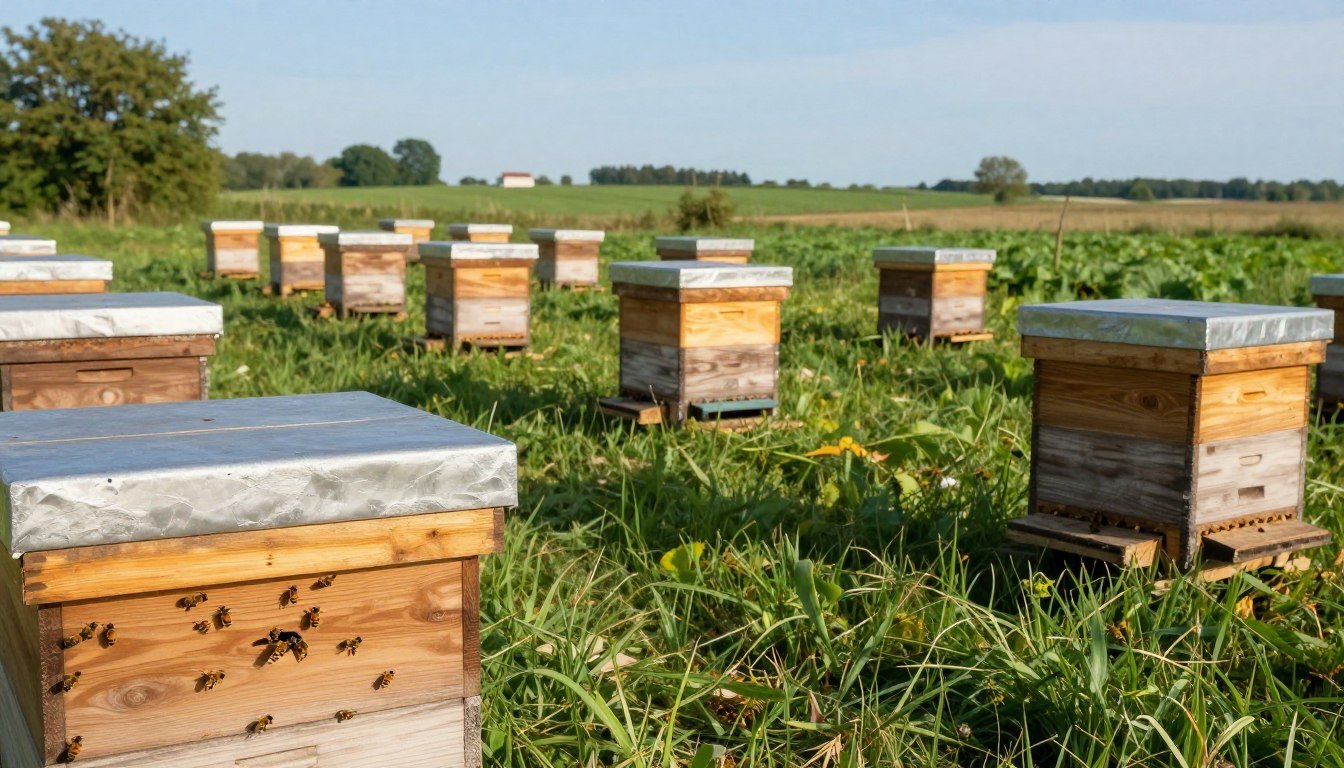
Placing hives with a clear 100-meter buffer from the forest edge improves foraging efficiency and colony health. This distance gives bees direct access to diverse nectar sources while keeping them away from dense wildlife corridors that can carry pests like varroa and other threats.
When beekeepers set each hive with thoughtful spacing, flight paths become simpler. Bees spend less energy navigating obstacles and return more often with nectar. That energy savings supports stronger hive immunity and longer colony lifespan.
Practical management steps include orienting the hive entrance away from heavy cover, ensuring good airflow, and keeping rows wide enough in feet to reduce moisture buildup. For detailed best practices on hive setup and disease prevention, consult the BMP manual for honey bee health.
Key Takeaways
- A 100-meter forest buffer balances foraging and protection.
- Clear flight paths reduce wasted energy and boost honey production.
- Proper hive orientation and spacing cut disease and pest spread.
- Small management steps improve colony health and longevity.
- Use the BMP manual to apply proven set-up and sanitation tips.
Assessing Your Apiary Site for Long-Term Success
Choosing the right spot means checking sun, water, and floral resources before moving any hives. A good assessment reduces surprises over time and protects colonies from seasonal shortages.
Urban versus Rural
In towns, honey production often benefits from abundant garden blooms and reduced feral competition. Bees may overwinter more successfully in built areas, but city beekeepers must follow zoning and animal rules and watch for watering conflicts.
Rural locations can offer large forage areas, yet monoculture crops can force supplemental feeding or hive moves during the season. Maintain a 3-mile buffer between apiaries to cut robbing and disease spread.
Accessibility
Evaluate ground conditions: avoid flood-prone sites and keep hives away from drainage ditches or creeks. If terrain is rough, plan a vehicle capable of hauling heavy equipment. Ensure a year-round water source so bees do not seek neighbor pools.
“Registering with the MDAC can open access to voluntary inspections and disease monitoring for commercial operations.”
- Check floral sources year-round to support healthy colonies.
- Choose locations that balance sun and shade across the day.
- Register with MDAC and review local rules; this saves time and protects your hives.
For more on neighbor distances and local placement rules, see how close beehives can be to.
Implementing Apiary Entrance Spacing for Better Biosecurity
Positioning hives with a solid 100-meter buffer reduces pest traffic and helps colonies thrive.
This measured distance acts as a physical barrier that lowers the chance of pathogens moving from forest wildlife into managed hives. It also cuts the energy bees use to navigate cluttered flight paths, leaving more resources for honey production.
Beekeepers should audit current site layouts against production goals. Simple measurement errors can increase dampness and raise pest pressure, which harms colony health and shortens productive life.
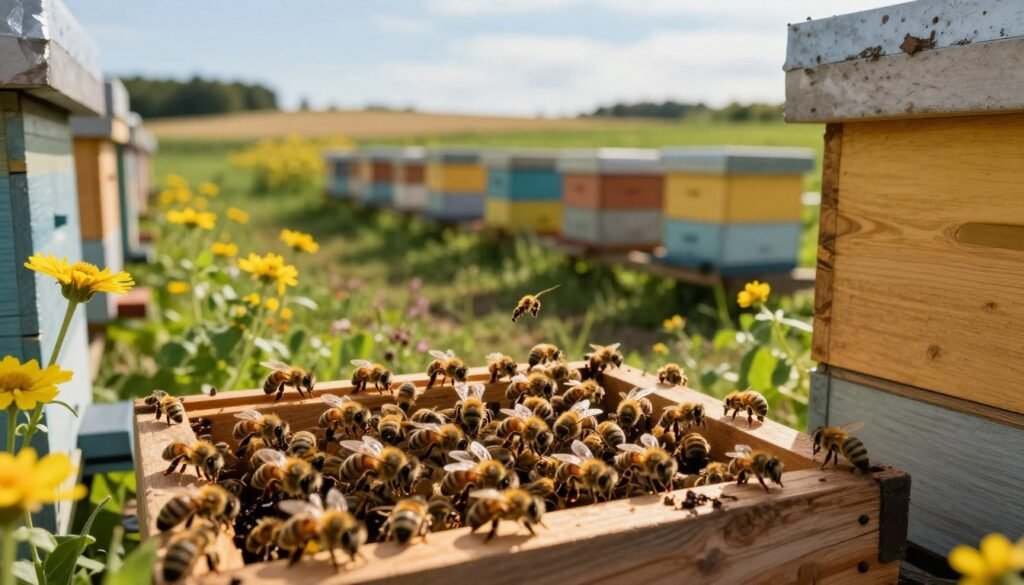
Practical steps include marking the 100-meter line, noting wind and sunlight, and adjusting hive rows to reduce moisture build-up near the entrance. Regular checks make sure the distance remains effective as trees grow or fields change.
| Distance from Forest | Expected Pest Risk | Impact on Production |
|---|---|---|
| Under 50 m | High | Reduced honey yield |
| 50–100 m | Moderate | Stable with management |
| 100 m+ | Low | Improved colony longevity |
Use the planning layout guide to align placement with long-term goals. Precise placement is a foundational step in lasting, productive beekeeping.
Mastering the Three Feet and Three Miles Rule
Even short hive moves can confuse bees; using proven steps keeps your colony intact. The three feet / three miles rule prevents returning foragers from circling the old site and getting lost.
Moving a Hive Short Distances
When you shift a hive less than 3 feet, move it a small amount each day. This gradual change lets bees reorient without a big, disorienting flight.
Place a leafy branch or a small board in front of the entrance so foragers pause and learn the new location. That simple step boosts successful returns and protects honey stores.
Relocating to New Areas
Moving a hive more than 3 miles resets the bee’s internal map. Bees wake in a new location and perform an orientation flight, which prevents mass loss of foragers.
Avoid the “danger zone” between 3 feet and 3 miles. That area causes lost foragers and can weaken a colony’s workforce, hurting production and management goals.
“Move less than three feet in stages, or go beyond three miles — anything between invites trouble.”
- Tip: Plan moves during calm weather and early day flights.
- Use slow, steady shifts for nearby moves and long relocations for property changes.
- For more distance guidance near homes, see how far beehives should be from a.
Balancing Foraging Efficiency and Resource Acquisition
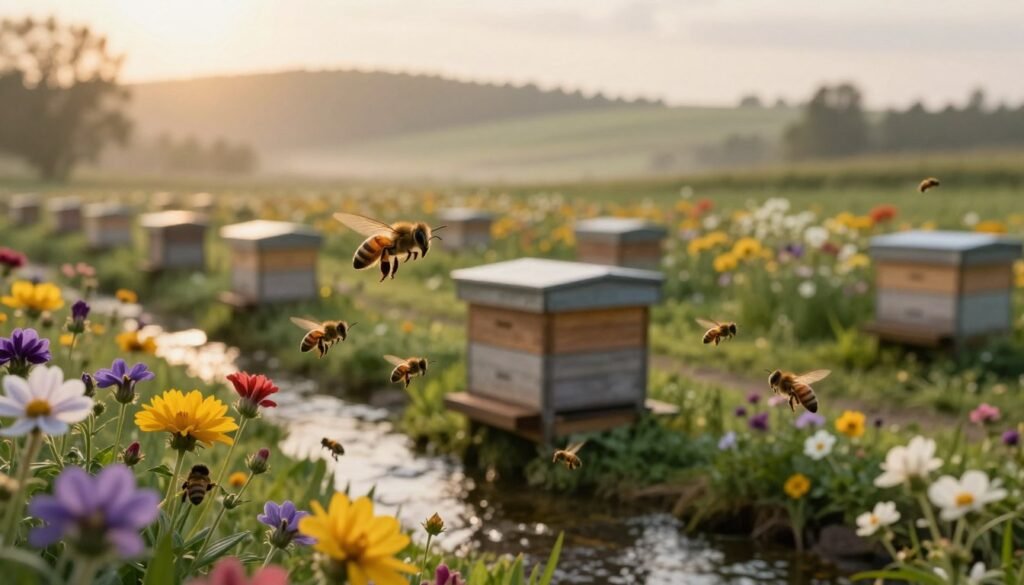
Placing a hive at a measured distance from woodland edge helps a colony tap both edge blooms and interior nectar sources without wasting energy. This setup reduces time spent dodging obstacles and lets the bees reach richer patches more quickly.
Streamlining Flight Paths
Clear flight lines let worker bees focus on gathering nectar and pollen rather than navigating clutter. That saved energy goes into brood care and honey production, which raises overall production across the season.
Beekeepers who maintain the recommended buffer see colonies that return with heavier loads. A hive positioned to access multiple floral sources reduces reliance on a single bloom and evens out foraging during dry spells.
Practical tip: mark routes and remove low obstacles near the takeoff zone so bees can leave and return on steady, predictable paths. For ideas on small hardware changes and hive reducer options, check hive reducer options.
Managing Environmental Factors and Sun Exposure
The microclimate around each hive shapes foraging windows and the colony’s ability to control brood temperature.
Full sun can reduce varroa and small hive beetle growth because hot, dry sites limit pest reproduction. At the same time, bees will struggle when humidity rises and evaporative cooling becomes less effective.
Place hives on a south-facing slope to lengthen the day foragers can work. This location helps nectar collection and overall honey production during cool mornings and late afternoons.
Wind protection matters. A row of trees or shrubs on the north side offers winter shelter and lowers colony loss from chilling. That small change shifts survival odds in favor of your stock.
Watch for bearding on hot days; clustered bees on the outside face higher risk from mosquito spray drift and other pests. Good site management balances pest control with bee comfort.
“Managing sun exposure is a critical aspect of beekeeping that directly affects temperature control and pest pressure.”
For practical placement tips and setup checklists, see the detailed hive placement guide.
Mitigating Pest and Disease Risks Through Strategic Layout
A deliberate pattern of hive placement limits pest movement and keeps colonies healthier across seasons.
Maintaining a 100-meter buffer from forest edge gives measurable protection against pathogens and wildlife that carry varroa and other threats. This distance reduces contact and lowers risk of pest influx into managed hives.
Keep separate apiaries at least 3 miles apart to cut robbing events and slow the spread of mites between colonies. That rule is one of the most effective steps beekeepers can use to protect colony health.
Understory or shaded sites invite small hive beetles and certain ants, especially Argentine ants in the Southeast. Place hives on raised stands and clear low vegetation to limit those invasions.
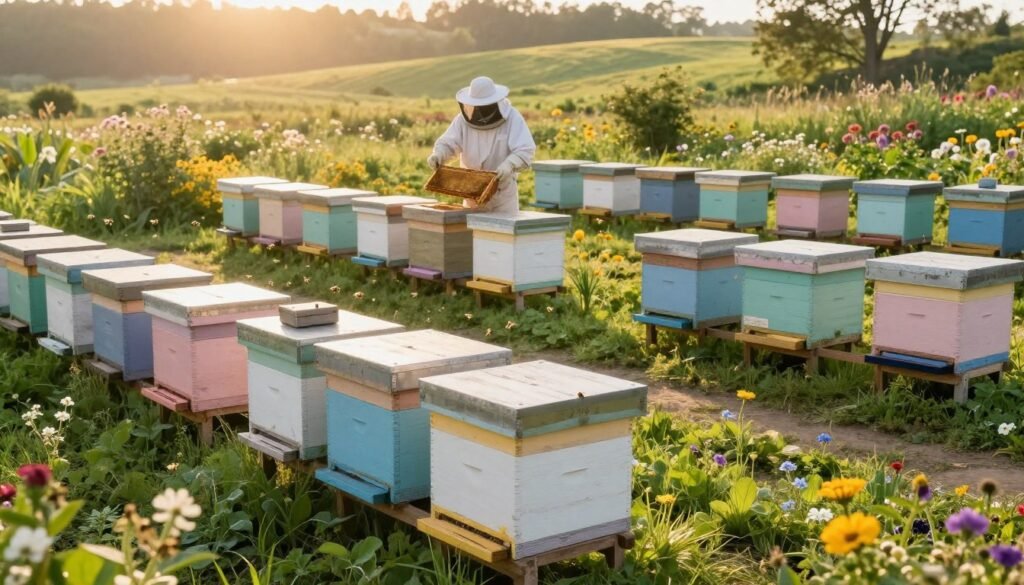
Strategic layout supports nutrition and extends a colony’s productive life by lowering disease pressure. Thoughtful placement keeps bees focused on foraging and honey production rather than fighting pests.
“Mitigating pest and disease risks is a primary goal for any beekeeper; layout is the most effective tool.”
- Place hives away from dense understory and monitor local pest threats.
- Use the three-mile rule between apiaries to limit pathogen spread.
- Learn site planning tips like those about having enough space in the bee yard.
Ensuring Safety for Humans and Livestock
A few deliberate adjustments at the hive front can prevent most unwanted encounters between bees and passersby. These steps protect people, animals, and the colony while keeping daily operations simple.
Creating Physical Barriers
Place a 6-foot barrier a few feet in front of the hive entrance so bees fly up and over pedestrians. This small change shifts the flight path higher and cuts low-level interactions.
If cattle are nearby, install an electric fence about 20 feet out to stop animals from rubbing hives. Never site honey bees beside penned animals that cannot move away; defensive swarms can seriously injure livestock.
Keep flight paths away from busy roads to avoid low flights over traffic. Annual requeening with gentle stock helps maintain docile bees and reduces incidents in urban and suburban locations.
- Design the location so the front path routes people well away from hive takeoff zones.
- Choose spots that provide sun exposure but limit crossings of high-traffic areas.
- Consider noise-reducing stands and other hardware to stabilize hives and protect neighbors — see noise-reducing hive stands.
“Ensuring the safety of humans and livestock is a critical responsibility for every beekeeper.”
Leveraging Technology for Precision Placement
Drone surveys let beekeepers map exact hive locations in minutes, turning guesswork into data-driven placement.
Modern drone-based measurement and GPS tools let managers confirm that each hive sits at the target distance. This precision saves time during setup and reduces layout errors that can harm long-term production.
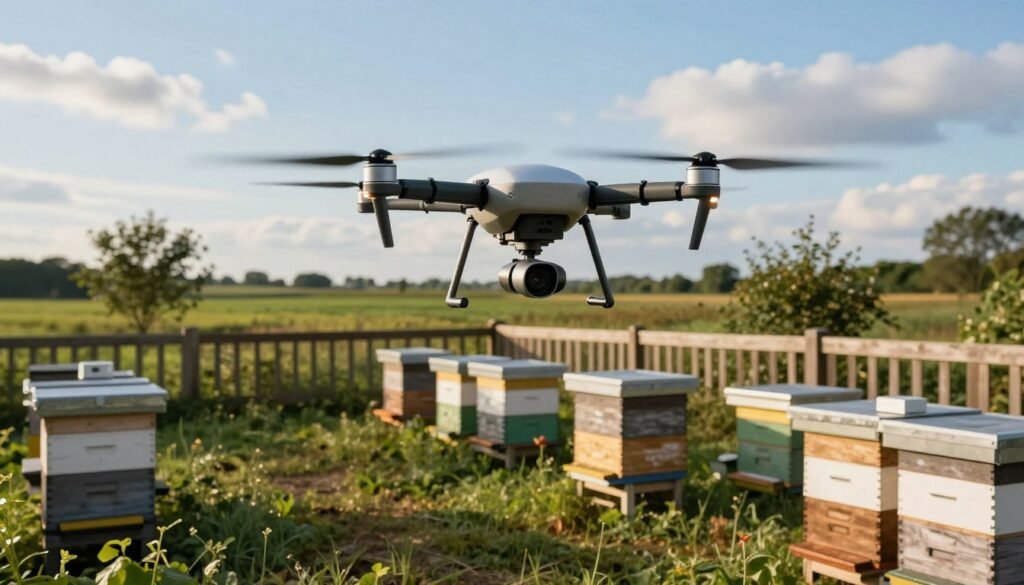
HONESTBEE supplies heavy-duty hives and honey equipment that pair well with mapping tech. Combining quality hardware with aerial verification helps operations scale without losing control of placement rules.
Research-backed practices from Stephan Kupsch and Amy P. Balcita support using these tools to improve site checks and monitor change over seasons. Digital records make audits simple and repeatable.
“Precision in placement is a foundational step toward establishing a thriving, long-lasting apiary that maximizes honey production.”
- Drone-based tech delivers the accuracy needed to protect hive health and optimize foraging zones.
- Specialized equipment turns strategic placement into measurable growth and streamlined operations.
- Learn more about monitoring methods in this research overview: apiary monitoring abstracts.
Conclusion
A clear plan for hive layout turns good intentions into measurable results. Small placement choices support long-term colony health, reduce pest pressure, and raise returns. Apply the 100-meter buffer and the three feet / three miles guidance to manage movement and stress.
Protect people and animals with simple barriers and avoid busy roads. Use modern tools and quality gear from trusted suppliers to scale with confidence. Consistent checks and thoughtful orientation keep colonies productive.
Start today by reviewing practical setup tips in the site planning factsheet. These steps help create a safe, efficient, and thriving apiary that endures season after season.
FAQ
How close should I place hives to reduce disease and pest spread?
Place colonies with enough lateral and front space to limit drift and robbing. Keep hives at least three feet apart so foragers can recognize their home, and when managing many colonies, stagger rows and vary entrance orientation. Adequate separation reduces direct contact, limits worker bee confusion, and helps slow the movement of pathogens and parasitic mites between boxes.
Does site type — urban versus rural — change placement strategies?
Yes. In urban settings, limit hive numbers, increase buffer zones from homes and footpaths, and use barriers or fencing. Rural locations allow more spread and natural foraging distances, but still require thoughtful layout to minimize intercolony contact and exposure to livestock and wild pollinators that can transfer pests.
How do I make the apiary accessible for routine checks while protecting hives?
Design clear, level walkways and position hives so you can approach the front without stepping between colonies. Ensure enough space to open boxes fully and park equipment nearby. Accessibility reduces inspection time, lowers stress for bees, and helps you spot disease signs early.
What is the “Three Feet and Three Miles Rule” and how does it apply?
The rule reminds beekeepers to separate hives in the immediate cluster by about three feet to reduce drift, and to recognize that bees commonly forage up to three miles, which affects disease dynamics and forage overlap. Use the short distance to manage on-site behavior and the long distance when considering landscape-level risk from surrounding colonies.
Can I move a hive a short distance without losing the colony?
Yes. For small moves (a few feet), shift the hive a maximum of three feet daily until you reach the new spot. For slightly longer short moves, displace the colony less than 50 feet and reorient the entrance. These steps help returning foragers find the new location and avoid drifting to other colonies.
How should I relocate a hive to a new area entirely?
For moves beyond the immediate yard, transport hives at night when foragers are inside, secure lids, and place them at least three miles away if you want the bees to establish new foraging patterns without homing to the old site. Notify neighbors and comply with local regulations to reduce conflict and disease spread.
How can I balance hive placement with foraging efficiency?
Position colonies where they have clear, unobstructed flight paths to rich nectar and pollen sources. Avoid dense tree cover at the immediate front, and face entrances to morning sun when possible to encourage early foraging. Carefully spaced hives ensure foragers spend less time navigating and more time collecting resources.
What design helps streamline flight paths and reduce collisions?
Elevate hives on stands, trim low vegetation, and leave a clear approach of several feet. Angle entrances slightly apart and use simple markers or perches so bees can orient quickly. These measures cut down on midair congestion and lower the chance of foragers entering the wrong colony.
How does sun exposure affect hive placement?
Morning sun helps warm colonies and encourages foraging, while afternoon shade keeps hives cool during hot periods. Aim for locations with early sun and afternoon relief. Avoid full shade, which can dampen activity and increase disease risk, and avoid spots that trap heat against hive sides.
What layout choices reduce pest and disease risks like varroa and Nosema?
Use mixed orientations, staggered rows, and physical separation to limit drifting. Clean equipment between colonies, provide dedicated tools per site, and design the yard so weak colonies sit away from strong ones. Regular monitoring and targeted treatments remain essential alongside layout strategies.
How can I protect people and livestock from accidental bee encounters?
Place hives away from high-traffic areas, livestock watering points, and play areas. Install simple barriers like hedges, fencing, or directional screens to guide flight paths upward and away from people. Clear signage warning of bees helps reduce surprise encounters and liability.
Are physical barriers effective at steering bee traffic?
Yes. Low fences, shrub rows, or baffles force bees to fly higher and alter their approach lines. Barriers also keep foragers from following straight paths across yards. Use materials that don’t obstruct airflow or create thermal hotspots near the hives.
Can technology help decide exact hive placement?
GPS mapping, foraging-range modeling, and simple mobile apps can identify floral sources, water, and nearby colonies. Thermal imaging and drone surveys help assess sun exposure and shade patterns. These tools improve precision in siting to boost health and production.