Published March 31, 2026 · Last Updated August 26, 2026
Maintaining clean beekeeping equipment keeps colonies healthy and productive. Dadant and Sons supplies a wide range of equipment, hives, and protective gear for proper apiary care.
Clean equipment helps bees focus on honey production and preserves frames and other investments. Regular cleaning reduces disease risks and supports strong bee health across every season.
A two-step routine—thorough cleaning followed by disinfection—limits pathogen spread and protects water sources used by colonies. For practical guidance on cleaning and disinfection methods, see this cleaning and sterilization guide.
Choosing quality products matters. Invest in reputable suppliers and follow regular maintenance advice; a concise checklist is available at Beekeepers Realm.
Key Takeaways
- Clean beekeeping equipment is essential for healthy colonies and higher honey yields.
- Routine cleaning protects frames, hives, and other important gear.
- Two-step care—clean then disinfect—reduces disease transmission risk.
- Watch water and storage areas to prevent contamination.
- Buy quality gear from trusted suppliers for long-term savings.
The Importance of Hive Hygiene
Keeping equipment clean is the frontline defense against infections that harm bees and honey yields. Good habits lower pathogen loads and make routine checks faster and safer.
Preventing Disease Spread
Inspect frames and wooden components regularly. Bacterial and viral infections spread quickly through contaminated gear. American Foulbrood (AFB) often requires destruction of affected woodenware under a bee inspector’s supervision.
European Foulbrood (EFB) should be discussed with a local inspector before attempting salvage. Clean water sources and debris-free feed areas cut pest attraction and lower infection risk.
“Early detection and swift action protect entire colonies and reduce financial loss.”
Protecting Equipment Longevity
Proper care extends the life of your wooden hive parts. Removing excess propolis and wax prevents moisture build-up and rot.
Regular maintenance also stops wax moths and other pests from damaging frames and comb. For guidance on safe wax handling, see bee wax extraction safety.
- Clean hives are easier to inspect and manage.
- Timely action preserves honey quality and frame integrity.
Essential Safety Protocols for Beekeeping Maintenance
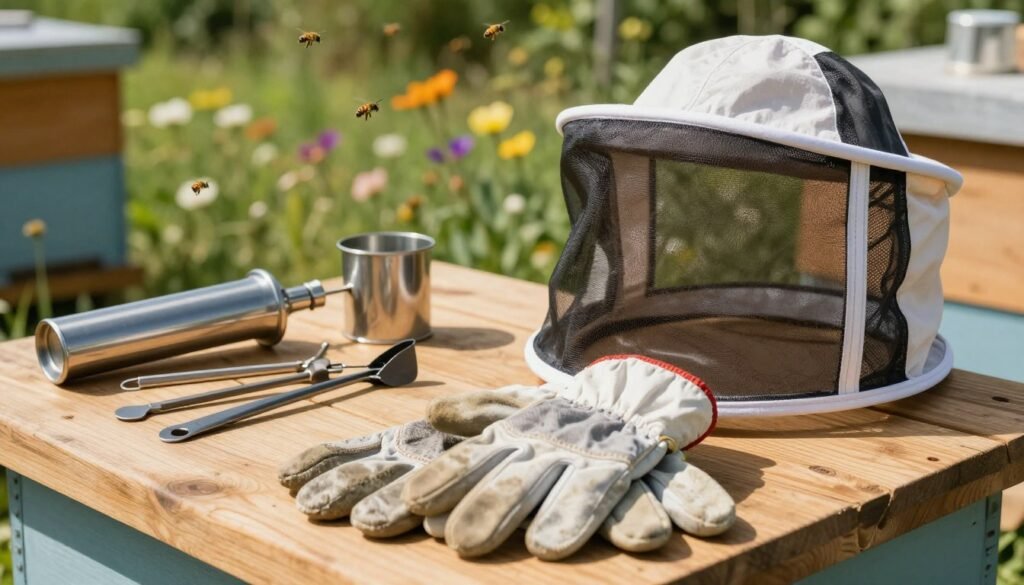
Safety begins with a quick inspection of suits, gloves, and the workspace before any maintenance. Check bee suits and gloves for holes, broken zippers, or worn seams. Replace or repair gear that won’t fasten securely.
Work in a well-ventilated, noncombustible area. Keep a clear bench and an accessible water source and a fire extinguisher nearby. This simple setup protects you and preserves equipment and hive components.
- Wear protective bee suits and gloves when handling frames and any tool. Proper coverage reduces sting risk.
- Organize hive tools on hooks or a pegboard so each tool stays undamaged and easy to find.
- Ensure bee suits are clean before work and frames are placed on a stable, nonflammable surface.
Practical tip: Blythewood Bee Company recommends routine checks of suits and gloves for tears. Regular inspection prevents surprises during colony work and helps keep bees calm. For guidance on gentle handling and calming methods, see this short guide on keeping bees calm.
For formal cleaning and safety procedures, review established protocols in this cleaning and sterilisation guidance.
How to Sterilize Hive Tools with Flame
A brief, moving flame quickly loosens built-up wax and propolis while lowering microbe counts on wooden and metal pieces.
Selecting the right torch: Use a gas blowtorch with a wide, soft flame as recommended by Black Mountain Honey. That style heats evenly and reduces deep charring on wooden parts.
Selecting the Right Torch
Wear gloves and work on concrete or another noncombustible surface. Keep the torch moving and avoid lingering in one spot.
The Scorching Technique
- Apply heat for about 30 seconds per tool or surface; this kills common surface pathogens like nosema spores.
- Move steadily to remove wax, propolis, and light debris without deep burning.
- Never use this method on gear known to have American Foulbrood; follow official disposal guidance instead.
Post-Flame Cleaning
After cooling, wipe each piece to remove charred residue. Check frames and metal edges before returning equipment to colonies.
For formal protocol and advanced cleaning options, review cleaning and sterilizing beekeeping equipment and practical tips for moving gear between apiaries at bee rescue techniques.
Preparing Your Equipment for Deep Cleaning
A quick pre-clean pass removes bulk wax and propolis, saving time and reducing chemical use later.
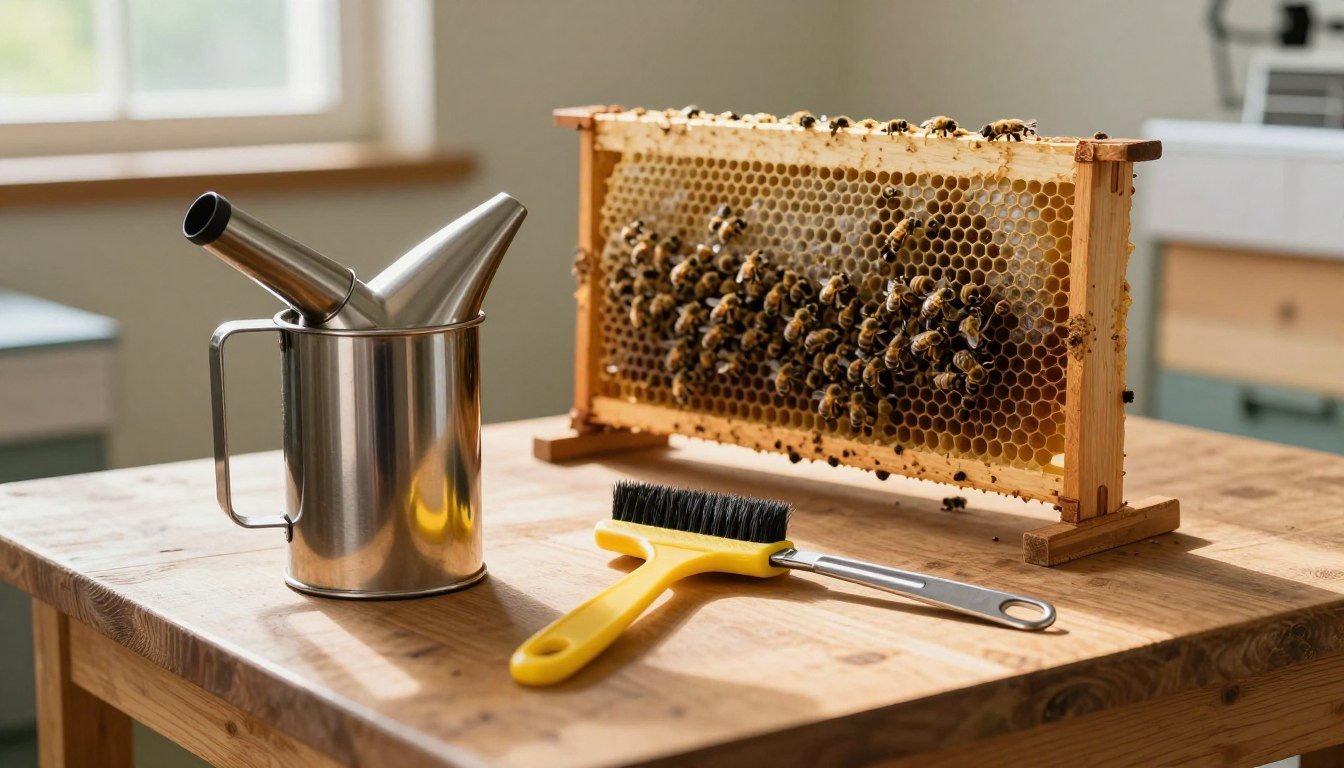
Start by scraping excess wax and propolis from frames and corners using a sturdy hive tool. Removing debris first speeds subsequent washing and keeps wooden parts from soaking up water.
Wash metal and plastic gear in warm water and mild soap to strip surface grime. Use boiling water for stubborn grease, and set aside ample drying space.
For heavy buildup on wooden hive boxes, consider washing soda or caustic soda treatment. Follow safety guidance and repair advice from this repair damaged hive boxes resource before reuse.
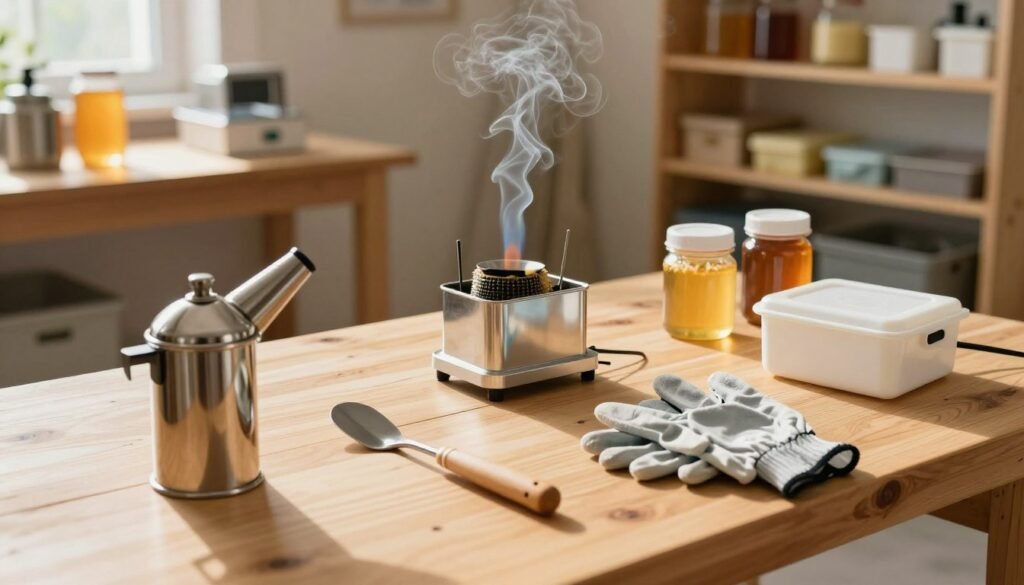
Inspect frames for signs of wax moths and other damage before winter storage. Lightly scorch wood with a blowtorch if needed, and always wear gloves and eye protection.
“Cleaning equipment regularly protects your investment and keeps tools ready for use.”
| Step | Method | Notes |
|---|---|---|
| Pre-scrape | Sturdy hive tool | Removes bulk wax and propolis |
| Wash | Warm water + soap / boiling water | Good for metal and plastic gear |
| Deep clean | Washing soda for wooden hive boxes | Use protective gear and follow repair links like the clean beekeeping equipment guide |
Finish by fully drying every piece before storage. Moisture invites mold and pests, which harm bees and reduce honey quality.
Alternative Sanitization Methods for Apiary Gear
Chemical disinfection gives a predictable, non-thermal route for maintaining clean apiary gear. This approach works well for plastic components and metal pieces that do not tolerate heat.
Chemical Disinfection Options
Bleach solutions are effective for plastic containers and metal equipment when mixed correctly. Allow a ten-minute contact time, then rinse thoroughly with clean water before returning items near bees or water sources.
Safety first: wear gloves and eye protection when handling bleach or washing soda. Keep chemicals away from active colonies and store them in labeled, sealed containers.
- Soak plastic hive parts in warm soap and water for gentle cleaning of wax and propolis.
- Use diluted bleach or washing soda for heavier contamination, following label directions and local guidance.
- Always rinse well; residues can harm bees and affect honey quality.
Consistent results: chemical sanitization suits those who avoid open flame and need a repeatable method for multiple hives and frames. After cleaning, place sanitized gear in dry, ventilated storage to protect longevity.
For equipment purchases and maintenance supplies, consult a trusted source for beekeeping equipment and replacement parts: beekeeping equipment.
Best Practices for Storing Clean Equipment
Store cleaned equipment in a dry, ventilated space so frames and boxes stay ready and free from moisture damage.
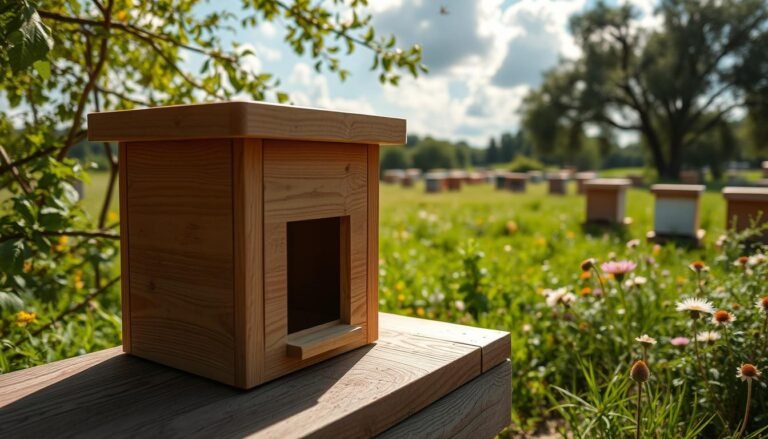
Stack hives neatly in a covered area to save space. A dry spot speeds deployment if a swarm appears.
Hang tools on a pegboard or nails for easy access and rodent protection. Keep a separate area for gloves and suits away from direct sunlight.
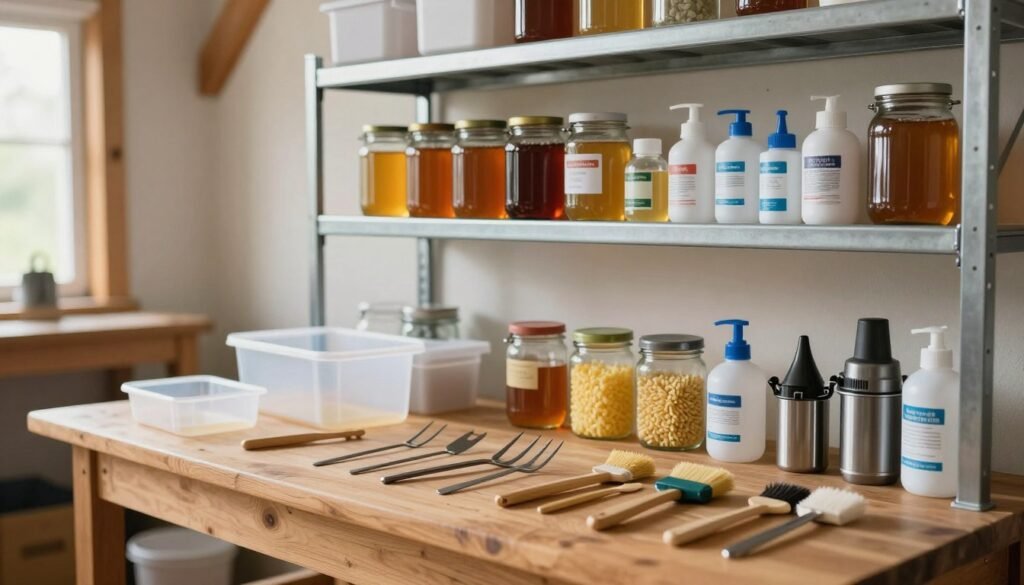
Always confirm that clean equipment is fully dry before storage. Damp wood invites mold, mildew, and wax deterioration.
Use breathable covers like loosely draped tarps that block dust but allow air flow. Avoid sealed plastic that traps water near frames and propolis.
- Protect against winter weather: store in a sheltered, ventilated building.
- Organize parts: label boxes, separate frames from loose items.
- Check periodically: inspect for pests, water leaks, and fabric wear.
“Good storage is simple prevention that saves repair costs and keeps colonies healthier.”
Managing Second Hand Beekeeping Supplies
Treat second-hand gear as suspect until you remove old wax, propolis, and debris that can harbour disease or pests.
When buying used beekeeping equipment, inspect wooden components for obvious signs of American Foulbrood or European Foulbrood. Look for sunken, discolored brood comb and odd odors before purchase.
Clean deeply before use: scrub frames and boxes, wash plastic parts in warm water and soap, and use boiling water on metal pieces when safe. A controlled scorch with a blowtorch can remove residual wax and lower surface microbe counts.
- Be cautious with second-hand frames; old wax and propolis attract wax moths and hold spores.
- If the history is unknown or damage looks severe, burning suspect boxes may be the safest route.
- Always wear gloves and use a clean hive tool when handling used gear to avoid cross-contamination.
Plan for time: managing used gear requires a significant cleaning investment, but careful work extends equipment life and is cost-effective for expanding an apiary.
“Proper inspection and cleaning of second-hand equipment protect your colonies and preserve honey quality.”
For step-by-step scraping and scorching guidance, consult this cleaning and scorching guide.
Conclusion
Small, consistent cleaning habits prevent large, costly problems in an apiary. Maintaining clean beekeeping equipment keeps colonies productive and extends the life of frames and boxes. ,
Practical care reduces disease risk. Remove excess wax, protect water sources, and use soda or mild disinfectants when needed. Always wear gloves and follow safety steps when handling chemicals or hot processes.
Store dry parts in ventilated space and label boxes for quick access. For guidance on choosing quality supplies, see choosing beekeeping equipment. Investing time in clean equipment and good storage pays dividends in honey yields and colony strength.
FAQ
What is the safest torch to use for cleaning beekeeping gear?
Use a small propane or MAP gas torch with an adjustable flame and a heat shield. These torches give steady control and reduce risk of overheating nearby components. Avoid larger blowtorches that produce uncontrolled flare and can melt plastic or char wooden parts.
Can I scorch metal tools and hive parts without damaging them?
Yes, brief exposure to a focused flame will burn off wax, propolis and light debris without harming steel if you keep the flame moving. Hold the flame a few inches away and sweep steadily. Do not linger on thin or painted metal, and never heat plastic or rubber fittings.
When should I use flame versus other cleaning methods?
Use flame for quick removal of sticky wax and propolis and for spot sanitizing after disease outbreaks. For deep cleaning, use warm water and detergent, washing soda or a bleach solution as appropriate. Combine methods: flame for residue, then wash to remove ash and dissolved particles.
How do I protect wooden components during flame work?
Keep flame at a distance and use short sweeps to avoid charring. For frames and wooden hive bodies, prefer hot water, washing soda or gentle scraping to remove wax moth damage instead of direct flame. Seal or repaint surfaces after cleaning if heat darkens the wood.
What safety gear is required when using an open flame around colonies?
Wear flame-resistant gloves, eye protection, and avoid loose clothing. Work in a well-ventilated area away from dry grass or hive stacks. Keep a fire extinguisher or water source nearby, and move bees away from the immediate area before igniting anything.
How do I handle propolis and honey residue before flaming tools?
Scrape off thick deposits first with a metal scraper or put tools briefly in hot water to soften sticky build-up. Flaming works best on thin layers. After heating, rinse tools to remove ash and dissolved resin, then dry and oil metal to prevent rust.
Is flaming effective against hive diseases like American foulbrood or Nosema?
Flame can reduce surface contamination but it does not guarantee sterilization of deeply embedded spores. For serious disease outbreaks, follow state apiarist guidance: incineration of infected combs or laboratory-grade chemical treatments are often required.
Can I flame-clean plastic components and extractor parts?
No. Plastic and many extractor parts will warp, melt or release toxic fumes. Use hot soapy water, food-grade sanitizers, or dilute bleach solutions for plastic items, and allow thorough rinsing before reuse.
What is the correct post-flame routine for tools?
After flaming, cool tools briefly then scrub with warm water and mild detergent to remove soot and burnt residue. Rinse, dry immediately to prevent rust, and store in a dry container. Apply a light coat of food-grade mineral oil to steel tools if you won’t use them soon.
How often should I clean and sanitize beekeeping equipment?
Clean regularly after honey extraction, seasonal inspections and whenever you see heavy propolis, wax or disease signs. Deep cleaning between seasons and before introducing new colonies helps prevent pest and pathogen transfer.
Are chemical disinfectants better than flame for apiary gear?
Chemicals like bleach, Virkon S, or hydrogen peroxide solutions offer broad-spectrum disinfection for many pathogens and are safer for delicate materials. Choose disinfectants labeled for agricultural use and follow dilution and contact-time instructions for effectiveness.
How do I safely store cleaned equipment to keep it disease-free?
Store dry, sealed, and off the ground. Use clean plastic bins or metal cabinets, label items by date, and rotate stock so older cleaned gear gets used first. Keep storage away from wild bee nests and rodent access.
What should I check when buying secondhand hive components?
Inspect for brood disease signs, heavy wax moth damage, pest residue, and structural defects. Ask about the previous colony health history. Prefer clean, kiln-dried woodenware or brand-name plastic equipment that’s easy to sanitize with heat-safe methods or chemicals.
Will boiling water replace flame and chemical methods for cleaning frames and small parts?
Boiling water is effective at removing wax and killing many pests on metal and heat-safe parts. It won’t reliably eliminate resistant spores. Use boiling as part of a multi-step routine: scrape, boil, then disinfect or replace heavily contaminated components.