
Knowing when to check colony health matters. Monthly checks from March through October give a clear picture of infestation trends. A single female varroa can spark rapid population growth, so timely sampling is vital.
Reproduction happens inside brood cells, so sampling while nurse bees are active yields more accurate counts. Aim for daylight hours when foragers and nurses maintain normal hive activity.
Consistent monthly monitoring helps you track changes and act before levels threaten the colony. Use an alcohol wash or sugar roll and compare results to established thresholds.
For guidance on seasonal timing, see a practical IPM Q&A and research on hygienic lines that influence mite buildup via varroa mite IPM and hygienic behavior in bee lines.
Key Takeaways
- Monthly checks from spring through fall reveal infestation trends.
- Sampling during daylight when nurse bees work gives truer counts.
- Reproduction inside brood cells makes timing critical.
- Early detection prevents rapid population surges.
- Use consistent methods and compare to treatment thresholds.
Understanding the Importance of Mite Monitoring
A steady testing rhythm gives beekeepers the data needed for smart pest management. A queen can lay up to 2,000 eggs a day, adding to the hundreds of workers cycling through a healthy hive.
Unchecked mite infestations make bees cranky, aggressive, and less productive. That stress can trigger absconding or winter collapse and spread viruses via varroa and other pests.
Integrated Pest Management (IPM) is the recommended framework for modern beekeeping. Regular monitoring varroa and consistent checks let you select nonchemical controls, splits, or treatments when needed.
- Routine testing protects the colony and the hundreds of worker bees that keep the hive functional.
- Data-driven decisions help beekeepers decide whether to combine, split, or treat colonies.
- Effective pest management depends on frequent observation and timely action.
For guidance on seasonal planning and sampling methods, review timing in varroa mite management.
Determining the Best Time of Day to Test for Varroa Mites
Choose a moment when nurse bees are busy on open brood frames so your sample reflects the adult mite load.
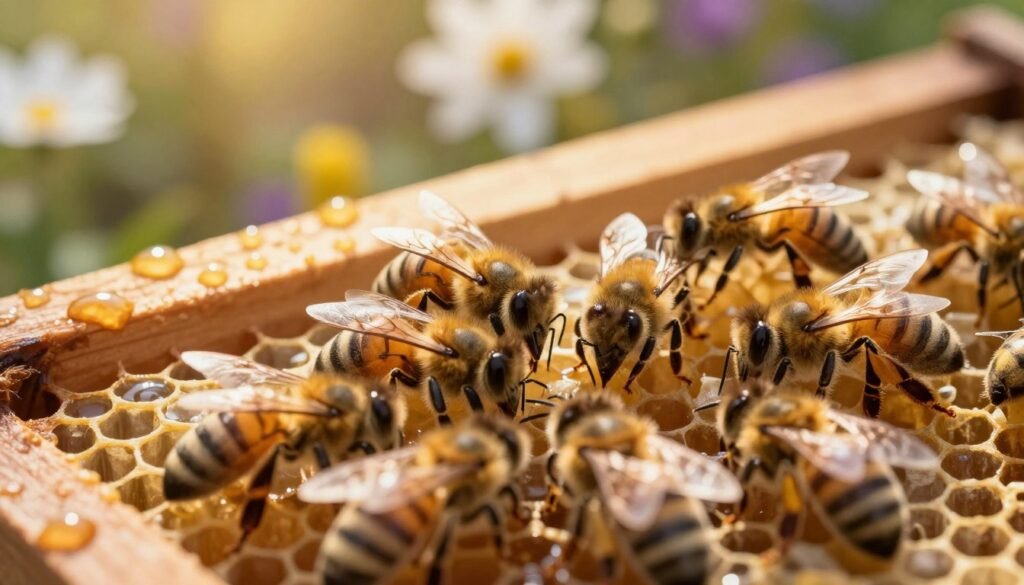
Sampling nurse bees means collecting individuals that tend larvae just before cells are capped. Take your sample from a frame with open brood and older larvae. That increases the chance mites are on adult bees rather than hidden in capped cells.
Sampling nurse bees
Collect roughly 300 bees — about a half cup — for a representative mite count. Use a soft brush or a gentle shake into a collection cup so you get mostly nurse bees and not many foragers.
Avoiding the queen
Check the frame and move the queen away before you collect. If the queen is on the frame, relocate her to another frame to prevent accidental harm during a wash or roll.
- Focus frames where nurses care for brood to increase detection of mites on adults.
- Collect 300 bees (half cup) for accurate results.
- Handle the frame carefully; move the queen off before sampling.
- Choose a method — an alcohol wash gives high accuracy but kills sampled bees; a sugar roll is gentler.
For step-by-step procedures and equipment tips, see a detailed guide on how to test. If you prefer nonchemical responses after testing, review natural remedies that support colony health.
Seasonal Considerations for Mite Population Cycles
When brood availability drops in late summer, mites shift onto adult worker bees and counts can jump quickly.
Late summer and early fall are critical points in the year for monitoring mite levels. As open brood declines, more mite individuals move onto adults and the hive sees a rapid population shift.
Managing Mite Spikes in Late Summer and Fall
Beekeepers must track brood cycles and test regularly through spring, summer, and fall. Early testing gives a clear signal before levels rise and helps plan any needed treatment.
Protect winter bees. The final generation must survive for weeks to sustain the colony through winter; keeping mite pressure low is essential.
- Late summer: fewer open brood cells pushes mites onto bees, raising mite levels.
- Adjust IPM based on brood rearing and season to reduce pest management surprises.
- Consistent testing across seasons readies the hive for the fall surge.
For a seasonal checklist and schedule, review the seasonal management schedule used by many beekeepers.
Selecting the Right Testing Methodology
Choosing a reliable sampling method shapes how accurately you measure mite pressure across a hive.
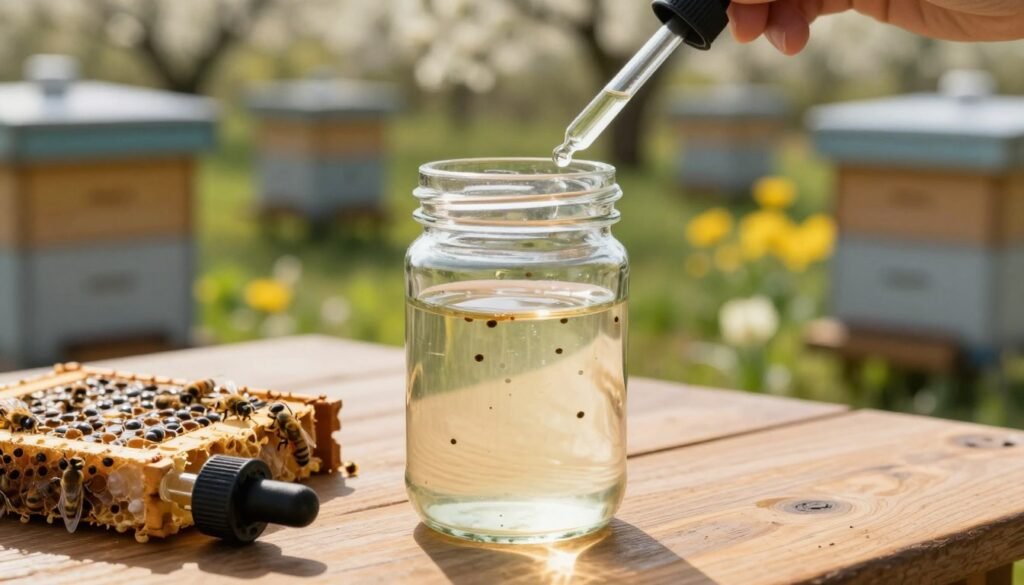
Alcohol wash accuracy. The alcohol wash remains the most precise way to get a true mite count. Collect about 300 bees (roughly a half cup) from a brood frame and swirl them in alcohol for about one minute. This dislodges mites and gives a clear count for treatment decisions.
Gentler sugar roll option
Sugar rolls do not kill sampled bees and are popular with hobbyists. They can undercount since not every mite detaches. Still, the method is quick and keeps the sample alive for release.
Bottom board monitoring
Sticky board monitoring is noninvasive. Place a board on the hive bottom to count mites that fall naturally over 24–72 hours. Use it as a trend tool rather than a precise mite test.
| Method | Accuracy | Sample Size | Notes |
|---|---|---|---|
| Alcohol wash | High | 300 bees (half cup) | Swirl ~1 minute; EasyCheck simplifies process |
| Sugar roll | Moderate | ~half cup | Gentler on bees; may undercount mites |
| Sticky board | Low (trend) | Whole hive | Noninvasive; useful for monitoring varroa over time |
Tip: Always sample from a frame with nurse bees for a representative count. For colony management and softer handling techniques, see guidance on raising gentle colonies.
Interpreting Results and Treatment Thresholds
Interpreting a mite count correctly guides whether you act now or monitor further.
Use the standard treatment threshold: more than 2 mites per 100 bees signals intervention. That threshold helps avoid needless chemical use while protecting brood and adult bees.
If a sample shows 45 or more mites per 300 bees, the colony faces high risk. Such a high mite level often links to heavy viral loads and possible absconding.
After any treatment, wait at least two weeks before repeating a mite test. This pause gives the treatment time to work and the hive time to stabilize.
Also allow about three days after an inspection before treating. Bees need that recovery window to return to normal behavior and reduce stress on the colony.
Many beekeepers prefer spring treatment to keep mite population growth in check before summer honey flows. Choose a method suited to your hive, from oxalic acid options to IPM strategies.
| Result | Interpretation | Recommended action |
|---|---|---|
| ≤2 mites per 100 bees | Low pressure | Monitor; repeat testing seasonally |
| 3–9 mites per 100 bees | Moderate pressure | Consider nonchemical controls; plan treatment if rising |
| ≥10 mites per 100 bees (≈45+ per 300) | High mite levels | Immediate treatment; consider oxalic acid or approved miticides |
Conclusion
Documenting counts each month lets you compare seasons and spot rising mite levels early. Consistent monitoring across spring, summer, and fall gives clear signals about hive health and whether a treatment is needed.
Keep simple records of every mite count and note when you sampled nurse bees. That log helps you see trends, decide on oxalic acid or other options, and protect the colony before winter.
Small, steady efforts prevent large losses. For planning help and efficient inspections in multi‑hive yards, review a short guide on time management for multi‑hive apiaries.
FAQ
When should I inspect my hives for mites during the day?
Aim inspections during mid-morning to early afternoon when foragers are out and most nurse bees remain inside. This yields a representative sample of the colony without disturbing returning workers. Avoid very early morning and late evening when activity patterns shift and samples may be skewed.
How many bees should I collect for a reliable mite count?
Collect about 300 nurse bees from frames near open brood; that sample size gives a meaningful mites-per-100-bees metric. Use a capped-frame area or brush bees into a jar; more bees reduces sampling error and improves confidence in treatment decisions.
What method gives the most accurate numerical count?
An alcohol wash provides the most precise mite count because it dislodges mites quickly and lets you directly count them against the bee sample. Follow safety guidelines and let the liquid soak to ensure mites separate from bees for an accurate tally.
When is a sugar roll preferable to an alcohol wash?
Use a powdered sugar roll when you need a nonlethal, field-friendly option. It works well for routine monitoring and is gentler on bees, though counts can be slightly lower than with alcohol. Ensure even coating and gentle agitation for best results.
How useful are sticky boards for long-term monitoring?
Sticky boards are excellent for tracking mite fall over days and for confirming trends seen with wash or sugar roll tests. Place a board under the hive for 24–72 hours to measure natural mite drop, which helps assess overall pressure and treatment impact.
Should I try to avoid collecting the queen when sampling?
Yes. Avoid the queen because her presence in the sample can skew behavioral observations and complicate collection. Focus on nurse bees from brood frames; they better reflect reproductive mite load and risk to brood health.
How do seasonal cycles affect when I monitor mite levels?
Mite populations typically rise through late summer and peak in fall as brood rearing changes. Monitor more frequently during these seasons and reduce intervals in spring when populations are lower. Adjust timing around nectar flows and brood breaks.
What thresholds should trigger treatment decisions?
Many beekeepers use thresholds such as 3–5 mites per 100 bees in late summer as an action point, but thresholds vary with region, colony strength, and method used. Combine counts with colony condition and consult local extension recommendations for specific thresholds.
How often should I monitor mite levels throughout the year?
Monitor monthly during low-pressure seasons and increase to every 2–3 weeks during late summer and early fall. Frequent checks before winter treatments help ensure colonies enter winter with acceptable mite levels.
Can treatment timing be guided by daily activity patterns?
While daily patterns affect sampling, treatment timing focuses more on season and measured mite levels. Apply chemical or mechanical controls when counts exceed thresholds and when brood conditions and weather favor treatment efficacy.
How many mites falling on a sticky board indicate a problem?
Absolute numbers vary, but consistent high daily drops—especially several mites per day sustained over a week—suggest significant infestation. Use sticky board data alongside wash or sugar roll results to confirm whether treatment is needed.
Are there safety or legal limits for treatments like oxalic acid?
Yes. Follow label directions, local regulations, and beekeeper association guidelines when using treatments such as oxalic acid. Application rates, timing (often during broodless periods), and temperature windows affect safety and effectiveness.
Does sampling location within the hive matter?
Yes. Collect bees from frames with open brood or from the brood nest center to sample nurse bees where mites preferentially reproduce. Forager samples from entrances underrepresent reproductive mite loads and give misleading low counts.
How should I record and track my counts?
Keep a simple log with date, method used (alcohol wash, sugar roll, sticky board), sample size, mites counted, and weather or brood status. Tracking trends over weeks makes it easier to spot population spikes and time interventions effectively.
What actions follow a high mite count in late summer?
When counts rise in late summer, consider immediate treatment options, brood interruption strategies, or combined methods to reduce mite pressure before fall. Timely response reduces winter mortality and protects the queen and developing brood.