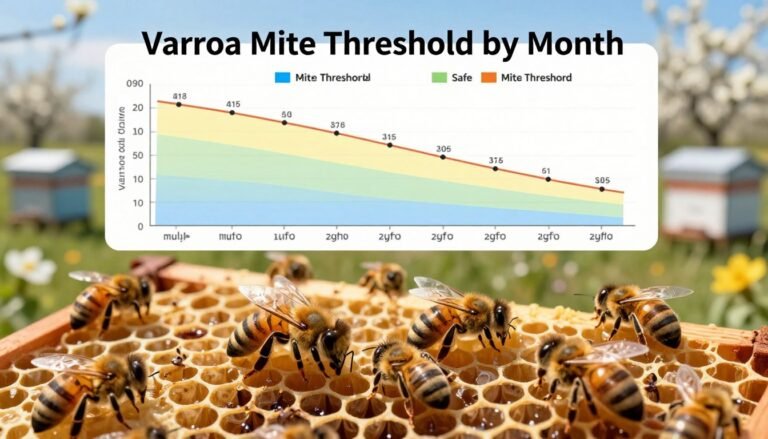
The brood break for varroa control is a practical IPM approach that helps beekeepers reduce mite numbers while keeping colonies productive.
By pausing brood production for a planned period, the mite loses the cells it needs to reproduce. This interrupts the reproductive cycle and can cut the mite population by roughly half when timed well.
Integrated Pest Management tool kits combine cultural steps and targeted treatments. That makes any chemical measures more effective and supports long-term hive survival.
Successful implementation needs careful timing with the queen and an understanding of bee development. Many beekeepers aim for about 24 days or more to maximize impact while protecting honey and adult bees.
Key Takeaways
- Planned interruption of brood growth disrupts Varroa destructor reproduction.
- A deliberate pause can halve the mite population when timed correctly.
- Use this method inside an IPM toolbox to reduce reliance on chemical treatments.
- Careful timing protects honey production and colony strength.
- This approach targets mites inside brood cells, where they reproduce and harm colonies.
Understanding the Varroa Mite Life Cycle
Understanding how the parasite completes its life cycle inside hive cells helps beekeepers time interventions. This cycle drives when treatments and mechanical steps work best.
Reproductive Habits
Varroa destructor first arrived in the UK in 1992 and soon became a central focus for researchers and beekeepers. Females enter open larvae cells just before capping. Once sealed, the mite is trapped and feeds on the developing bee.
Impact on Bee Health
These parasites prefer drone cells because the longer development time lets them produce more offspring. That preference can drive rapid population growth in summer and threaten colony survival.
- Chemical cues from larvae increase mite reproductive success.
- High mite loads reduce bee vitality and honey yields.
- Unchecked infestations raise winter mortality risk for colonies.
Tip: Learn more about breeding resistant lines and long-term solutions at the future of resistant bee genetics.
The Science Behind Brood Break for Varroa Control
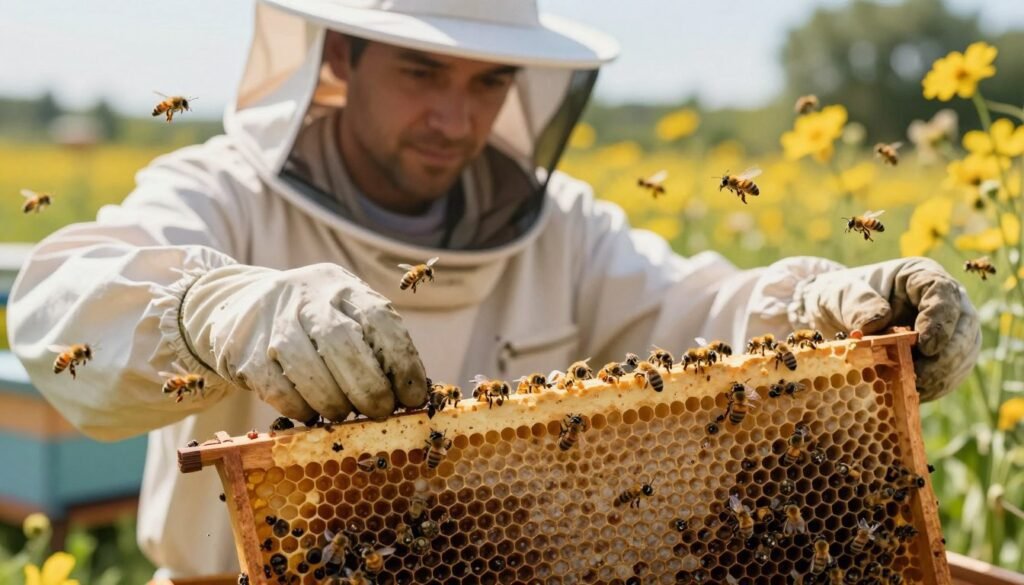
When larvae are absent, Varroa destructor cannot complete its reproductive cycle. That forces mites to ride on adult bees where grooming raises mortality and reduces reproduction.
Research supports this approach. Buchler et al. (2020) showed summer interruptions work well as part of integrated pest management. Jack and Ellis (2021) confirm that multi-method strategies best protect colonies.
Removing capped comb reduces male availability and delays mite reproduction. The result is higher infertility and lower population growth without relying only on chemical treatment.
| Mechanism | Immediate Effect | Outcome |
|---|---|---|
| No open cells | Mites transfer to adults | Higher grooming loss |
| Interrupted cycle | Delayed mating | Fewer offspring |
| IPM pairing | Treatments target adults better | Lower mite numbers |
For practical guidance and chemical-free options, see chemical-free management. Implemented well, these methods protect honey production and keep colonies resilient.
Timing Your Intervention for Maximum Impact
Aligning an induced pause with seasonal cues protects honey and weakens mite populations. Plan interventions so the colony’s natural rhythms work in your favor. Careful timing preserves strength while reducing pest numbers.
Seasonal Considerations
In the UK, natural brood pauses commonly happen between mid-November and mid-January and last about 5–10 days. This winter window often brings true dormancy and fewer open cells, making treatments more effective.
Initiate an induced pause just before a major nectar flow to keep honey yields high. Without young to tend, more workers forage and can sustain stores during the intervention.
“Choose the window when the queen slows egg laying and the colony naturally shifts activity.”
- Natural pauses: mid-Nov to mid-Jan, typically 5–10 days.
- Start a pause before a big nectar flow to protect honey.
- Avoid inducing a pause during critical growth or harmful flows.
- Time treatments during a cold snap when colonies are broodless for added effect.
Monitor the colony’s cycle and use targeted options such as the recommended varroa mite control methods to maximize results without weakening colonies.
Queen Caging as a Primary Method
A timed queen cage creates a pause in egg laying that leaves parasites exposed on adult bees. Caging the queen for 24 days induces a period with no young in the hive. During this interval, mites remain on workers and become easier to target.
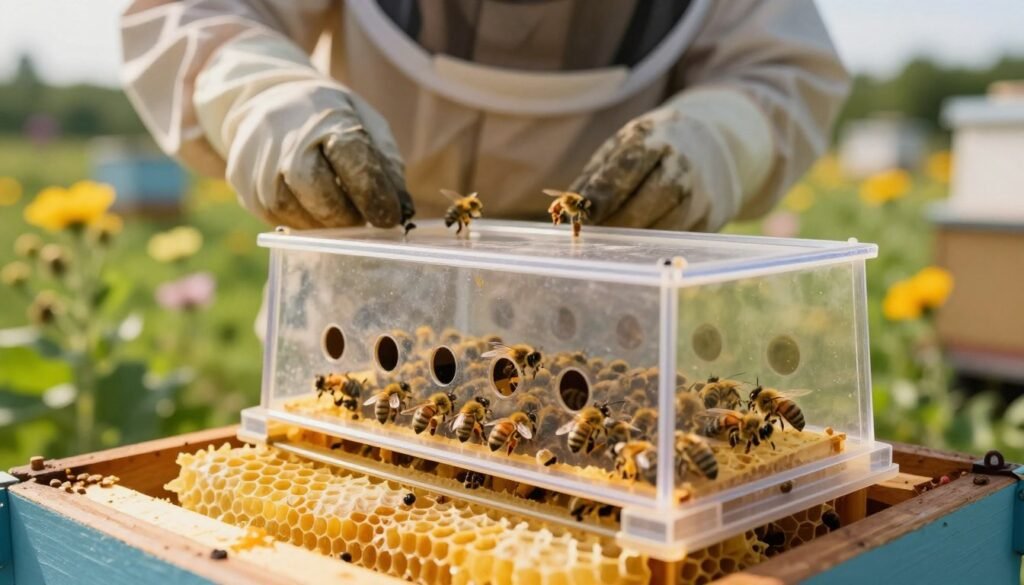
Queens tolerate confinement while workers feed and groom them. After the 24 days, release usually leads to laying within a few days. This short interruption helps protect honey stores and colony strength.
The simplicity of this method makes it popular with many beekeepers. It is widely regarded as the most direct way to start a brood break and reduce varroa destructor numbers without heavy chemical use.
- Effective: Prevents eggs for roughly 24 days and lowers mite reproduction.
- Safe: Workers care for the queen while she is caged.
- Practical: Easy to combine with targeted treatments after release.
Learn practical steps and a deeper explanation of the queen caging technique to apply this method in your apiary.
Utilizing Drone Brood Trapping
Concentrating drone rearing on a single frame turns the colony’s biology into a mite-management tool. This targeted tactic helps beekeepers reduce the pest population while keeping honey production intact.
Attraction to Drone Cells
Male larvae develop more slowly, so mites prefer those cells. That extended time boosts mite reproductive success.
Varroa destructor naturally seeks drone cells, which makes trapping highly efficient when timed in peak summer. Using a single frame of drone foundation concentrates the parasites into one manageable spot.
Removal and Disposal
Once the drone comb is capped, remove the frame and freeze it to kill mites and affected brood. Repeat as needed to keep the mite population low.
| Step | Action | Expected Effect |
|---|---|---|
| Install frame | Place drone foundation in center nest | Concentrates mites |
| Monitor | Check capping within 10–14 days | Identify peak mite numbers |
| Remove & freeze | Freeze capped frame | Destroys mites and infected brood |
Benefits: This method can cut mite numbers by up to 93.4% with no harm to colonies. It is simple to pair with a short brood pause or targeted treatment to protect bees and honey yields.
Managing Colony Splits for Mite Reduction
Dividing a strong hive into queenright and queenless halves creates a natural brood break that disrupts mite reproduction.
The queenless half needs about 22–30 days to rear, mate, and begin laying a new queen. During that time, no new brood cells are available and mite numbers fall.
Research shows the queenright portion also delays new brood by at least 10 days, which further hinders mite population growth (Gabel et al. 2023).
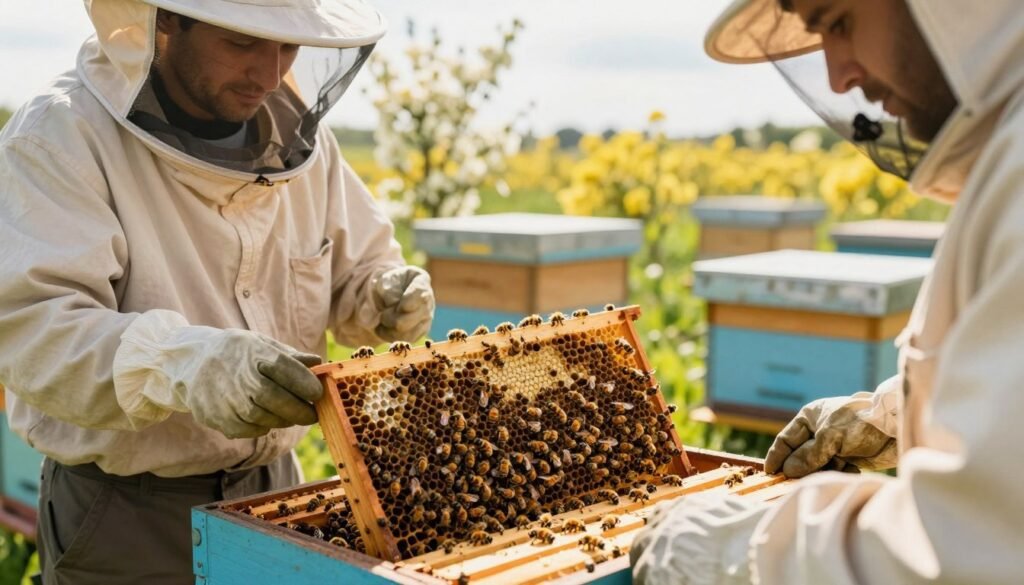
Practical tips: Ensure adequate drone availability by placing drone comb in top-performing colonies. Decide whether to let colonies raise their own queens or to purchase high-quality queens.
- Effective option: Splits reduce parasite numbers while increasing colonies.
- Timing: Expect several weeks of reduced mite reproduction in the queenless half.
- Quality: Purchased queens often give better results than walk-away splits.
| Split Type | Expected No-Brood Time | Benefit |
|---|---|---|
| Queenless half | 22–30 days | Major interruption to mite reproduction |
| Queenright half | ~10 days delay | Short-term reduction in available cells for mites |
| Drone management | Ongoing | Supports mating of new queens |
Planned splits are a sustainable management approach that protect honey yields and strengthen apiaries. Learn practical procedures in this splitting hives guide.
Implementing the Scalvini Cage System
The Scalvini cage gives beekeepers a precise way to restrict the queen and schedule an effective brood break. This shallow, injection-moulded plastic unit clips to a brood frame and keeps the queen safe while preventing egg laying.
Step by Step Setup
Place the queen in the cage about four weeks before the expected June gap in forage. Keep her confined for 26–27 days so existing young can emerge.
After that interval, remove honey supers and apply a targeted oxalic acid treatment to hit mites on adult bees and in open cells. Provide a light 1:1 sugar syrup during the gap to boost colony energy.
Add an extra brood box during the June gap to reduce swarming risk and give workers room to expand. This supports strong pollination and preserves upcoming honey flows.
- Attach the cage to a central frame so the queen stays protected.
- Time the setup to match summer forage gaps for best results.
- Combine with targeted treatment timing; see guidance on oxalic acid timing here.
Integrating Chemical Treatments with Brood Breaks
Timing chemical applications to a queen-induced gap exposes more mites living on adult bees.
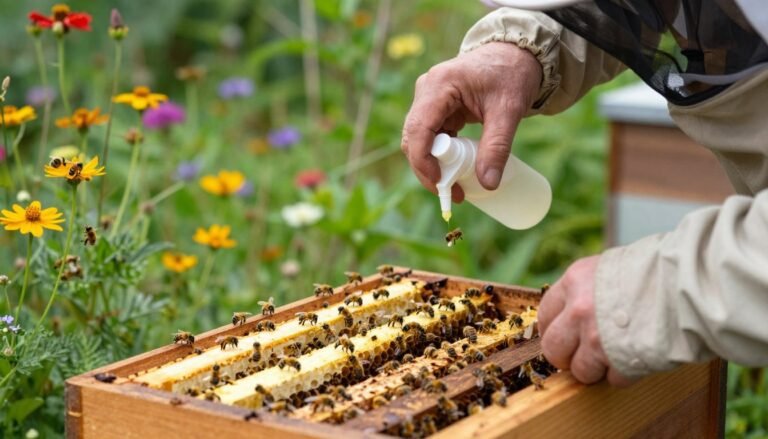
Oxalic acid works well during a brood break. It can be dribbled onto bees or sublimated to fumigate the hive. Both methods target phoretic mites when there are few or no capped cells.
Many beekeepers pair a late-season amitraz treatment in mid-August with oxalic acid in late autumn or winter. This sequence reduces population rebound and improves overwintering success.
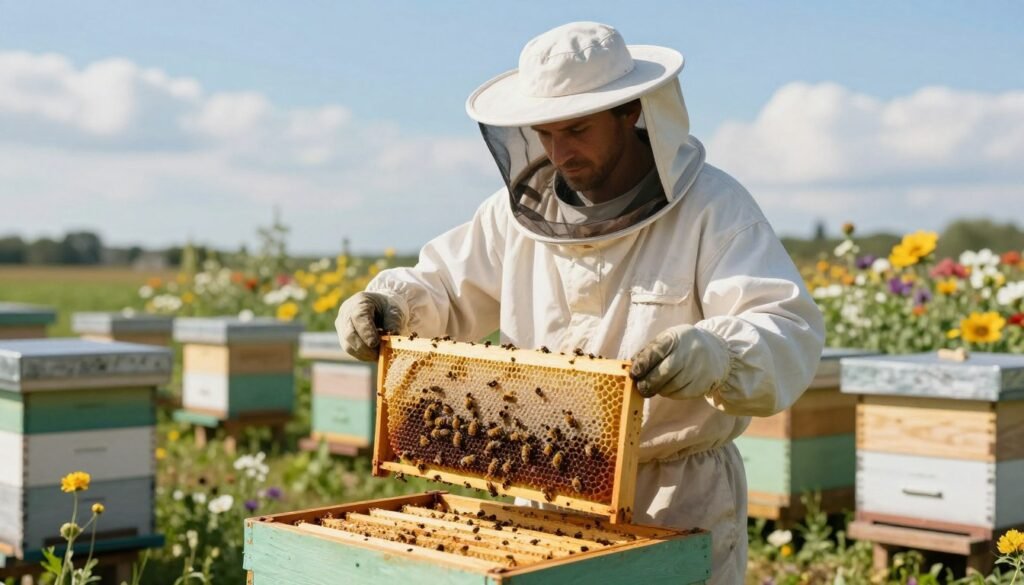
Api-bioxal is an alternative in the UK, though pure oxalic acid often shows greater potency and lower cost per dose. Always follow label directions and local regulations when using any treatment.
| Treatment | When to Apply | Target |
|---|---|---|
| Amitraz | Mid-August | Reduces late-season mite population |
| Oxalic acid (dribble) | During broodless period | Phoretic mites on adults |
| Oxalic acid (sublimation) | Late autumn/winter | Fumigates hive, hits remaining mites |
- Integrated pest management means combining these steps with mechanical methods and monitoring.
- This approach strengthens colonies and helps protect honey stores and colony health.
Monitoring Colony Health and Mite Loads
Tracking mite counts over weeks gives beekeepers the evidence to adjust treatments and timing. Regular checks are the only way to stay ahead of population growth and protect honey yields.
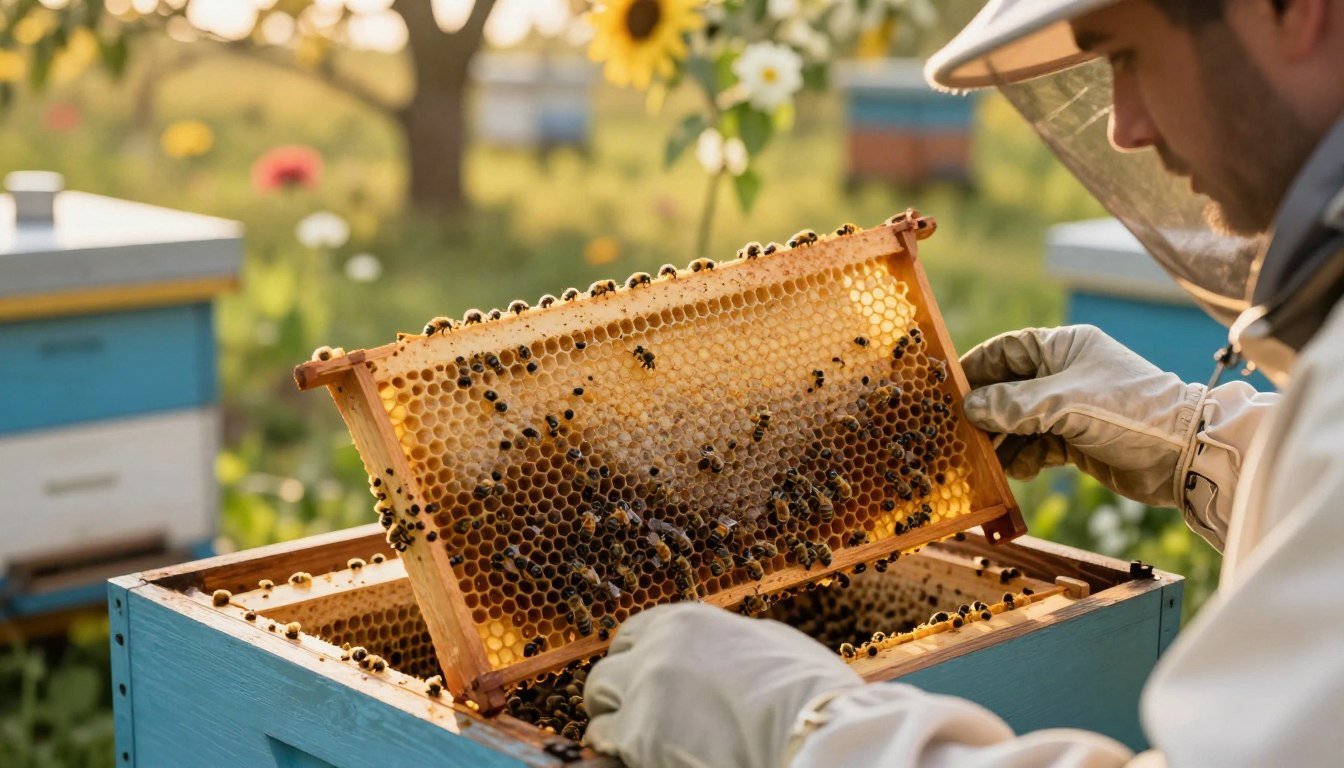
Inspect adult bees and sample using sugar shake or sticky board methods at set intervals. Keep notes on numbers, symptoms, and queen performance.
Watch for signs of viral stress such as trembling, deformed wings, or reduced foraging. These often signal high mite pressure and need prompt action.
Accurate records let you judge whether a planned brood break or a chemical treatment reduced the mite number. Good logs also guide decisions before winter and spring.
| Check | What to record | When |
|---|---|---|
| Sugar shake | Mite count per 300 bees | Every 4–6 weeks |
| Visual inspection | Queen laying, adult bee health | During active season |
| Sticky board | Daily mite fall after treatment | Post-treatment 48–72 hours |
Tip: Use the data to refine your apiary plan and link actions to results. For broader productivity planning, see apiary productivity guidance.
Conclusion
Combining simple hive manipulations with careful monitoring delivers measurable drops in mite numbers each summer while protecting honey yields and colony health.
Implementing a planned brood break alongside queen caging, drone trapping, or splits is an effective method that helps beekeepers reduce parasite pressure on honey bees.
Use regular checks and targeted treatment timing inside an integrated pest management plan. This approach keeps colonies strong and boosts year-round productivity.
Stay informed about new research and refine your methods to maintain resilient colonies and steady honey production.
FAQ
What is the "Brood Break Technique for Varroa Mite Reduction" and why use it?
The technique pauses egg-laying to interrupt the mite reproductive cycle inside sealed cells. Without developing pupae, Varroa destructor females cannot reproduce, so populations drop. Beekeepers use this method as part of integrated pest management to reduce mite loads without relying solely on chemical miticides.
How does the Varroa mite life cycle make interruption effective?
Female mites enter capped cells to reproduce alongside bee pupae. They lay eggs and successive offspring mature while the bee develops. Removing or preventing capped brood for a period equal to the bee development time stops mite reproduction and reduces the next generation of mites emerged with adult bees.
How long should egg-laying be interrupted to get good results?
Aim for a period roughly equal to the time from egg to adult worker emergence—about 21 days—or a similar span for drones. A pause of three weeks is a common target to prevent new mite progeny from completing development and rejoining the adult population.
When is the best time of year to implement this method?
Late spring to early summer usually offers the best balance: colonies are strong enough to tolerate a temporary reduction in brood, and mite populations are rising but not yet at peak. Timing also depends on local nectar flows and the beekeeper’s honey production goals.
What are practical ways to impose a temporary stop in egg-laying?
Common methods include queen caging or confining, creating artificial swarms (colony splits), or using reversible queen excluders and barriers. Each approach removes the queen from laying for the required interval while maintaining adult foragers and nurse bees to sustain the colony.
How does queen caging work and what should I watch for?
Queen caging confines the queen in a small cage within the hive for the interruption period. Ensure adequate food stores and ventilation. Monitor for stress, and avoid prolonged confinement beyond the intended window to prevent queen harm or colony rejection.
What is drone brood trapping and how does it reduce mites?
Mites prefer drone brood because drones take longer to develop, which favors mite reproduction. Beekeepers provide frames or traps of drone comb, let bees fill and cap them, then remove and destroy or freeze the capped drone brood to remove concentrated mites from the colony.
How often should I use drone brood removal in a season?
Typically every 3–4 weeks during the drone-rearing period, which often spans late spring through summer. Regular removal prevents mites from cycling back into the adult population and complements other management actions.
Can colony splits serve as an effective mite management tactic?
Yes. Creating a split separates bees and brood, often leaving one unit with reduced mite pressure. Properly timed splits can produce an interruption in mite reproduction and create strong nucs. Follow best practices to maintain queenright status and avoid weakening both colonies.
What is the Scalvini cage system and when is it useful?
The Scalvini system is a reversible queen cage setup that confines the queen while minimizing colony disruption. It’s useful when you want a short, controlled pause in egg-laying. Install carefully, monitor colony behavior, and remove the cage after the planned interval to restore normal laying.
Should chemical treatments be combined with an interruption strategy?
Integrating selective chemical treatments with interruption techniques can improve control, especially in high-infestation situations. Use FDA- or EPA-approved products like formic acid, oxalic acid, or amitraz according to label instructions, and time applications to target mites on adult bees when brood is absent or minimal.
How do I monitor mite levels before and after interventions?
Use standardized tests: sugar roll, alcohol wash, or sticky boards to estimate mites per 100 bees. Monitor before the interruption to decide if action is needed and again 2–4 weeks after to assess efficacy. Keep records for each hive to track trends and adjust management.
Will interrupting egg-laying reduce honey yields or harm winter readiness?
Short, well-timed interruptions generally have minimal impact on honey when scheduled outside intense nectar flows. However, avoid doing this late in the season when colonies need to rear winter bees. Plan interventions to protect both mite management goals and honey production.
How does this method fit into an integrated pest management (IPM) plan?
It’s a biological tactic within IPM that reduces reliance on chemicals. Combine it with regular monitoring, drone trapping, selective treatments, genetic selection for mite-resistant lines, and good hive hygiene for a balanced, sustainable approach.
Are there risks or downsides beekeepers should consider?
Risks include colony stress from queen confinement, reduced population if poorly timed, and potential for reinfestation from nearby hives. To minimize problems, follow precise timing, maintain strong adult populations, and coordinate treatments or breaks across apiaries when possible.
How do I choose the best method for my operation—caging, splits, or drone trapping?
Choose based on hive numbers, labor availability, honey goals, and local climate. Small-scale hobbyists may prefer queen caging or drone trapping. Commercial operations often use timed splits and coordinated treatments. Pilot a method on a few hives and scale what proves effective.