Last Updated September 4, 2026
Bees genuinely rely on stored food reserves to survive lean, forage-poor periods and to actively fight off disease when it does appear. Removing too much of that resource at once can genuinely weaken a hive and measurably raise stress within the entire colony, not just among the affected individuals. This matters right now across the United States in particular, where reliable pollination directly supports both regional food systems and countless agricultural livelihoods.
Honey, nectar, and pollen each play unique roles in bee nutrition and immunity. These three resources are simply not interchangeable with one another; taking large amounts of accumulated stores leaves colonies without what essentially functions as their own in-hive pharmacy, directly reducing overall resilience.
Good, responsible beekeeping ultimately balances honest production goals with the colony’s own genuine, ongoing needs. Responsible apiary managers commonly leave around 30 pounds of stores through spring, or a genuinely full deep box heading into winter, and hold off on any late fall extraction that might cut into that safety margin. For context and broader ecosystem impacts, see a discussion on pollinator pressures in scientific American and practical harvesting guidance at Beekeepers Realm.
Key Takeaways
- Stored food reserves are genuinely critical for both ongoing colony nutrition and true year-round survival, not just getting through winter.
- Removing too much stored product at once measurably harms hive health and raises stress hormones throughout the colony.
- Fresh nectar and pollen coming in day to day are never a full substitute for a colony’s own accumulated natural reserves.
- Responsible beekeepers must consistently prioritize genuine colony needs over any short-term pressure to maximize production.
- Ultimately, healthy, well-managed colonies support the wider pollination services that benefit farmers, gardeners, and everyday people alike.
Table of Contents
- Why Honey Matters to Bees and the Hive’s Year-Round Survival
- Understanding the Risks of Over-Harvesting Honey
- Sustainable Beekeeping Practices
- Conclusion
Why Honey Matters to Bees and the Hive’s Year-Round Survival
Honey acts as a compact fuel and medicine bank that keeps a hive going through lean weeks. It supplies concentrated energy along with trace minerals that directly power flight muscles, internal thermoregulation, and continued foraging even after the surrounding blooms have largely faded for the season.
Honey, nectar, and pollen: the foundation of bee nutrition and hive health
Nectar and pollen are the raw sources. Worker bees convert these raw materials into royal jelly, fermented bee bread, and stable stored sugars that together feed every single life stage within the colony, from newly hatched larvae to aging foragers.
Different floral nectar syrups typically get stored in separate, dedicated frames and may go on to serve distinct medicinal roles for the honey bee colony as a whole. This behavior, seemingly minor on its own, meaningfully helps the colony manage both disease pressure and general stress across changing seasons.
Watch: how bees convert nectar and pollen into hive food
Seasonal realities: spring flows, summer dearths, and winter needs in the United States
Spring nectar flows often help colonies build strong reserves quickly, but certain regions, like Cape Cod, reliably face a pronounced July dearth once the early bloom has passed. A prudent beekeeper will avoid spring harvest unless at least 30 pounds remain for the colony.
Practical benchmarks worth using include leaving a genuinely full third deep box heading into winter and carefully tracking local plant bloom timing to match stored reserves with the colony’s real, seasonal needs.
For timing and detailed management, see this practical overharvesting guidance.
Understanding the risks of over-harvesting honey
When too much stored sweet fuel is removed all at once, colonies can genuinely burn through what remains far faster than they are able to rebuild it under normal conditions. This kind of shortfall becomes genuinely critical during extended rainy spells or unexpected floral gaps, when foraging simply isn’t an option. Beekeepers must always see surplus harvesting as a careful, ongoing balance to maintain, never simply as an automatic path to a bigger yield.
Starvation and depleted reserves
Removing the primary honey stores strips the entire colony of its main and most reliable food source, with no equally good backup available on short notice. A hive with genuinely low reserves faces the real risk of rapid starvation the moment forage dries up or poor weather halts flying activity for even a few days.
Stress and disturbance
Frequent, repeated extractions elevate colony-wide stress hormones and directly interrupt the delicate ongoing process of brood care. Disturbance alters thermoregulation and foraging, which reduces productivity and slows recovery.
Weakened immunity
Low, inconsistent nutrition combined with ongoing stress steadily lowers a colony’s overall disease defenses over the course of a season. Colonies with poor stores show higher susceptibility to mites, pathogens, and brood loss.
Honey-bound hives and swarming
Unchecked, excessive storage buildup can gradually crowd out available brood space until the colony has nowhere left to expand. When too many frames fill with stored honey and nectar, the queen has nowhere left to lay, so she cuts back egg production, and the colony may respond by attempting to swarm, ultimately harming overall population stability.
Ecosystem ripple effects
Weakened honey bees deliver noticeably less pollination overall, which can meaningfully change local plant reproduction rates and ripple outward through the broader food web, a dynamic covered in more depth in the site’s guide to honeybee foraging behavior. Sustainable beekeeping practices that watch brood patterns and space help protect long-term production and people who rely on pollination.
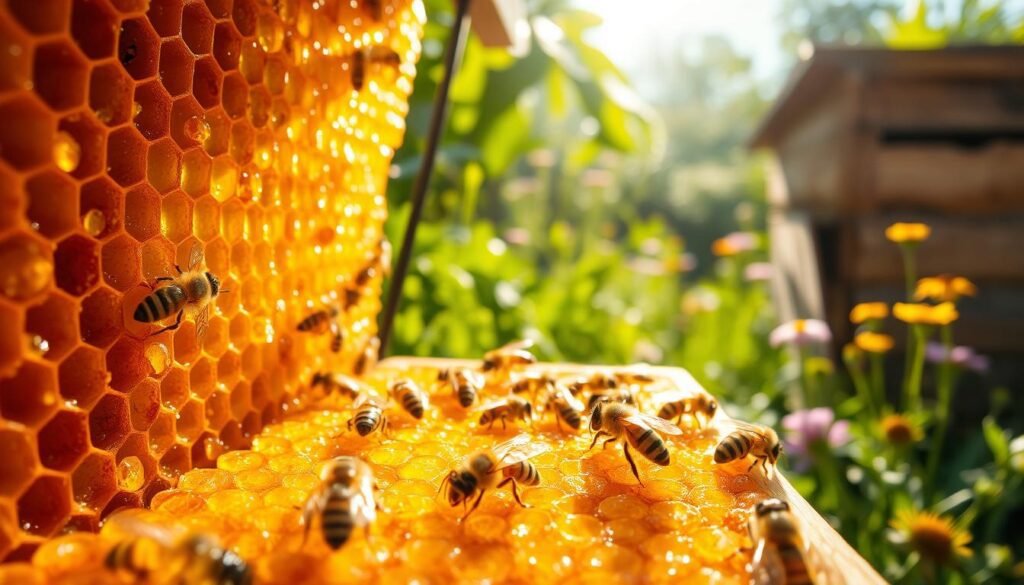
Sustainable beekeeping practices that protect bees, colonies, and honey production
Prioritizing colony needs first, ahead of short-term yield, consistently produces healthier bees and a genuinely steadier honey harvest over multiple seasons. Keep decisions simple: leave stores, watch brood, and add space before extracting.
Watch: sustainable harvesting practices in action
Harvest only surplus and secure reserves
Set clear thresholds. Hold at least 30 pounds of stores before a spring harvest, or a genuinely full third deep box heading into winter, as a reasonable baseline across most U.S. climates.
Defining surplus carefully, with the colony’s own needs coming first rather than short-term production goals, is the single most important discipline in sustainable harvesting.
Monitor hive condition with minimal disturbance
Schedule brief, focused inspections specifically designed to confirm brood patterns, overall population health, and remaining stores without lingering longer than necessary. Move quickly to lower stress.
Manage unharvested stores and space smartly
Add supers proactively before congestion sets in, rearrange frames as needed to relieve crowding, and generally prevent honey-bound conditions so brood rearing can continue uninterrupted.
- Use supplemental sugar-syrup feeding only when genuinely urgent, since it is not a stable, complete substitute for the natural stores and nutritional diversity bees get from real nectar and pollen.
- Plan and plant a genuinely diverse mix of forage plants nearby to support both overall bee nutrition and the resulting quality of the honey produced.
- Adopt genuinely efficient extraction workflows, prepared in advance, specifically to minimize open-hive time and keep colony disturbance to a minimum.
Clear, honest communication about these practices, whether to customers or fellow club members, genuinely builds trust in beekeepers and helps protect both product quality and long-term honey production for the whole community.
For seasonal timelines and tasks, see seasonal beekeeping tasks.
Conclusion
Protecting stored reserves, more than almost any other single management decision, ensures a colony can genuinely survive lean seasons and sudden, unpredictable forage gaps.
Safeguarding remaining honey stores directly supports overall bee health, ongoing food security inside the hive itself, and long-term colony survival across multiple seasons. Leaving a genuine surplus, monitoring frame conditions closely, and proactively adding space all together prevent the kind of honey-bound congestion that shrinks brood space and steadily weakens overall population.
When apiary managers deliberately follow modern, research-backed harvesting methods, colonies consistently face noticeably less disturbance and produce measurably better quality outcomes; see research on modern harvesting benefits here.
Value diverse nectar and pollen sources and learn best practices from practical guides like this beekeeping resource. Ethical, informed harvesting choices ultimately safeguard the bees themselves, yield genuinely better honey over time, and help the countless people who depend, often unknowingly, on reliable pollination throughout our world.
FAQ
What happens if beekeepers take too much from a colony?
Removing genuinely excessive stores can leave a hive dangerously short of food for the slower seasons ahead, especially the long winter months when foraging stops almost entirely. Colonies may exhaust reserves, leading to starvation, reduced brood rearing, and population decline. Good practice is to leave a clear surplus so bees can sustain themselves through dearths and cold months.
Why are nectar and pollen essential for a hive?
Nectar primarily provides carbohydrates for immediate energy needs, while pollen supplies the protein and lipids specifically needed for healthy larval growth and long-term adult health. These two resources support foraging, thermoregulation, and immune function. Maintaining access to both keeps a colony strong and productive.
How do seasonal patterns affect hive needs in the United States?
Spring typically brings abundant nectar flows and rapid brood expansion as the colony rebuilds after winter. Summer can offer varied resources but also dearths depending on region. Fall requires deliberately building up reserves ahead of winter, and winter itself is a long period of minimal to no foraging, when whatever internal stores exist simply must last until spring. Timing extractions around these cycles protects survival.
Can frequent hive inspections harm bees?
Repeated, poorly timed disturbance measurably stresses colonies, forces individual bees to waste valuable energy re-establishing hive temperature, and can genuinely interrupt ongoing brood care. Each inspection should be purposeful and brief. Using smoke sparingly and working efficiently reduces disruption and supports colony stability.
How does depleted food affect disease and pest resistance?
Nutrition links directly to immunity. Undernourished bees consistently produce fewer antimicrobial peptides and show impaired detoxification ability, making the entire colony noticeably more vulnerable to Varroa mites, Nosema, and various viral infections. Adequate stores and balanced pollen improve resilience.
What is a honey-bound hive and why is it a problem?
When too many frames fill up with dense stores, the surrounding brood nest may simply lack the physical room it needs to expand naturally. Congestion can trigger swarming impulses and reduce queen egg-laying. Managing space through super placement or removing surplus keeps colonies balanced without jeopardizing health.
Do reduced bee populations affect local plant communities?
A meaningfully smaller worker bee population lowers overall pollination service for nearby crops, wildflowers, and fruiting plants alike, with effects that compound over a growing season. That can reduce seed set and plant reproduction, creating ripple effects through ecosystems and agricultural yields. Healthy colonies support landscape biodiversity and food production.
How can beekeepers know how much surplus to remove?
Carefully assess overall frame coverage, current brood area, and local forage forecasts for the weeks ahead before deciding how much to remove. In many U.S. climates, leaving the equivalent of roughly 60 to 90 pounds of stores for winter is commonly advised, though actual regional needs can vary considerably depending on local winter length and severity. Track colony weight and consult extension services or experienced apiarists for local targets.
What management steps prevent overcrowding without depleting stores?
Add supers proactively right at the start of a nectar flow, create more available brood space before it becomes a problem, and perform timely, regular varroa and disease checks throughout the season. If frames are full but brood needs room, shift stores upward or provide foundation. Avoid replacing natural reserves with sugar syrup as a long-term substitute for real nutrition.
Are there ethical standards or certifications for sustainable extraction?
National organizations like the American Beekeeping Federation, along with individual state extension programs, actively promote a range of research-backed best practices for sustainable extraction. Some beekeepers follow organic or habitat-friendly guidelines that emphasize leaving adequate supplies, minimal chemical use, and landscape enhancement for forage.
What should hobbyist beekeepers prioritize to protect colonies?
Prioritize consistently monitoring overall colony health, leaving genuinely sufficient winter stores well before cold weather arrives, and taking the time to learn local seasonal bloom and dearth patterns. Invest in basic training, join beekeeper associations, and adopt gentle handling methods to reduce stress while maintaining productive, long-lived colonies.