Goal: perform a careful split that protects the queen and keeps colony momentum. This guide shows a calm, step-by-step method that lowers risk and preserves brood and stores.
Expect clear instructions that cover timing, gentle frame handling, and simple checks for the first couple days. Choose a time when the colony is strong and weather favors quick recovery. Proper timing gives the best chance for requeening or queen rearing.
Avoid common failure points: rough frame work, pinch hazards, and a rushed workflow. Safe looks like calm bees, steady smoke use, ordered frames, and no congestion near brood areas. This section covers vertical methods when the queen is hidden, moves for swarm control, and options that shorten queenless intervals.
Promise: practical checklists and day-by-day timing help you monitor progress. With preparation and the right process, both hives can maintain stores, workforce, and a clear path to a laying queen.
Key Takeaways
- Protect the queen with gentle, organized frame handling.
- Pick a strong colony and favorable weather for the split.
- Watch for pinch points and reduce congestion around brood.
- Use steady smoke and calm movements to limit stress.
- Follow a day-by-day checklist for the first couple weeks.
Understanding the goal: safe, controlled splits that protect the queen
Definition: A controlled split is a planned division of a colony that preserves the queen’s safety and keeps brood continuity with minimal shock. This idea prioritizes steady process over speed.
Outcomes matter: Protecting the queen preserves pheromonal stability and prevents chaos. That stability supports a steady population and keeps nurse bees focused on brood care.
Safety ties directly to technique. Slow inspections, correct frame spacing, and strategic brood layout limit queen exposure and crush risks. A clear step order and staged equipment reduce accidental injury.
“A calm, methodical plan lowers emergency queen-rearing and the chance of queen-loss swarms.”
- Balance brood, bees, and stores so both halves remain viable.
- Read bee behavior—clustering, flight quieting, and calm movements indicate it’s safe to continue.
- Choose methods that find the queen only when necessary; otherwise use vertical or no-touch approaches.
Expectations: Colony temperament and weather influence pace. Every decision during splits keeps the queen’s welfare front and center.
Search intent and who this guide helps today
This section answers practical, step-by-step needs for beekeepers seeking safe colony division that preserves the queen and brood. It targets hobbyists and sideline keepers who want clear actions they can follow in the field.
Informational intent: step-by-step instructions and best practices
Deliverables: concise checklists, timing markers by week, and decision points for method choice. Use these as a field guide when weather or equipment limits your options.
Beekeepers aiming to grow hives and reduce swarming
The ideal reader wants to expand without triggering emergency queen rearing. This guide offers setups for a new hive that balance brood, pollen, and stores so recovery is fast.
- Constraints: if the queen is hard to spot, use vertical methods or conservative frame moves.
- Adapt methods for climate and nectar flow; slow the process in cool or dry areas.
- Document each split; records make later attempts predictable.
| Goal | Quick Deliverable | Timing |
|---|---|---|
| Protect queen | Minimal frame handling checklist | First 48 hours |
| Create viable new hive | Frame layout & stores balance | 1 week follow-up |
| Reduce swarming | Decision points and monitoring | 2–3 weeks |
Key risks to the queen during splits and how to avoid them
Splits carry clear risks for the queen; knowing the main hazards lets you prevent costly losses. Read on for concise, practical steps that reduce injury, balling, and brood decline.
Inadvertent queen injury and balling during inspections
Crush points are common sources of harm. Tight frame spacing, pushing frames without clearing edges, or closing boxes on protruding bees can injure the queen.
- Work slowly and keep frames vertical.
- Clear edges before sliding frames together.
- Minimize prolonged openings to avoid chilling and balling.
Queen‑loss swarming risk in queenless setups
After de‑queening, colonies often produce many cells; multiple queens may emerge. Expect swarming within days of first emergence if cells are abundant.
“About 4–10 days after the first queen emerges, queen-loss swarming commonly follows.”
Brood loss and impacts on population and stores
Plan for brood decline: nearly half of open brood may be lost after queen removal. Favor capped or emerging brood and balance resources so both halves maintain temperature and coverage.
Essential gear checklist: brood boxes, frames, bottom board, queen excluder
A well-stocked bench of boxes and tools makes quick, safe hive work possible during peak season.
Core equipment: extra brood boxes, drawn frames or foundation frames, a clean bottom board, and a queen excluder. Add inner and outer covers plus a spare stand or pallet so you can stage a new unit quickly.
Preparing extra boxes and frames before swarm season
Have at least one drawn frame of honey and one frame of pollen for each new colony. These resources prevent short-term starvation and help nurse bees settle the brood.
Pro tip: Store spare frames in a dry, ventilated place so they are ready when the colony demands action.
Why a queen excluder is central to a vertical split
The excluder holds the queen below while nurse bees can pass through and move up to care for brood frames placed above. This encourages natural migration without direct queen handling.
- Tools: smoker, hive tool, queen clip or cage, marker, and a spare box for staging frames.
- Frame organization: ensure correct spacing so frames slide smoothly—this reduces rolling bees and crush risks.
- Logistics: prepare lids, ventilation, and a clean bottom so you can separate boxes as soon as nurse bees relocate above the excluder.
Readiness matters: before swarm season, assemble extras so decisions stay calm and deliberate. For safety best practices and field readiness, see this brief guide on beekeeping precautions: beekeeping safety precautions.
Timing your split: population, brood pattern, and signs of swarming
Pick the moment when colony strength, stores, and brood pattern line up; that moment gives the best chance for a calm division.
Busy landing board traffic and packed frames with honey backfilling are strong signals. High forager return and full frames mean the colony has surplus workers and stores.
Read the brood nest carefully. Confirm a mix of eggs, young larvae, and capped brood so either half keeps developmental continuity.
Key field checks
- Landing board: steady incoming bees for several days suggests peak population.
- Frames: favor frames with worker brood and even coverage; avoid drone‑heavy comb.
- Eggs and larvae: fresh eggs or very young larvae in the queenless portion give options for rearing.
- Queen cells: active cells on frame bottoms or sides mean swarming is imminent and prompt action is required.
Choose a stable day with good nectar flow and warm temperatures. Align inspections around midday when many foragers are flying; this lowers crowding on frames and reduces queen exposure.
“When brood, population, and stores align, a controlled field move is far less risky.”
| Signal | What it means | Action in next days |
|---|---|---|
| Busy landing board | High population and active foraging | Schedule split within 1–3 days |
| Packed frames & honey backfill | Adequate stores for new colony | Place one honey frame per new box |
| Eggs, young larvae, capped brood | Good brood continuity | Balance frames so both halves have mixed brood |
| Active queen cells | Swarm likely within days | Decide: move queen or manage cells immediately |
Method overview: choosing the safest way for your colony and goals
Match your chosen method to your goals and the colony’s current condition for the safest outcome. Each way trades risk, speed, and hands‑on work. Pick an approach that fits temperament, brood stage, and available equipment.
Vertical split is ideal when you cannot reliably find queen. Brands like Flow Hive favor this method because it keeps the queen below a queen excluder while nurse bees move brood upward. This reduces direct handling and crush risk.
Swarm-control split
Move the old queen into a balanced new box to mimic natural swarming. Honey Bee Suite recommends this to relieve swarm pressure while keeping brood and stores balanced.
Walk‑away split and improvements
The Apiarist warns that simple walk‑away splits often produce many queen cells and longer queenless periods. Improve that plan by limiting cells, or by adding a mature queen cell or mated queen to shorten downtime.
| Method | Best use | Key risk | Quick fix |
|---|---|---|---|
| Vertical | Can’t find queen | Slow nurse migration | Use strong frames of stores above excluder |
| Swarm‑control | Prevent swarming, rehome queen | Handling queen stress | Transfer gently; balance brood/pollen |
| Walk‑away (improved) | Fast expansion | Many queen cells, queen‑loss swarming | Limit cells; add mature queen cell |
“Plan equipment, checkpoints, and a clear sequence to protect the queen and maintain brood continuity.”
How to split a hive without killing the queen
Start with a clear sequence. Set receiving boxes, clear a workspace, and plan each frame move before opening the brood nest. A staged approach cuts handling time and lowers risk to the queen and brood.
Step-by-step safety principles that apply to any split
Work slowly and consistently. Use light smoke, pause so bees can move, and never force frames. Create space first by removing an outer frame and working from that gap.
Keep frames vertical and over the hive when you lift them. Check both faces and the top bars for the queen before transferring or shaking bees. Maintain correct frame spacing so bees are not pinched when reseating frames.
Gentle handling, spacing, and avoiding crush points
Clear bees gently from rim and frame lugs. Lower frames and boxes smoothly to protect bees below. Stage equipment so each frame moves once, cleanly, and with minimal shaking.
- Cover brood quickly: limit open-air time and avoid drafts that chill brood.
- Balance resources: give each box mixed brood and at least one honey frame for stability.
- Exit calmly: close boxes without rushing and recheck corners for trapped bees.
For a tested strategy on moving the old queen into a new unit, see a trusted field method at swarm-control split.
Vertical split guide: no need to find the queen
Let brood pheromones do the work: place selected frames above a queen excluder and let nurse bees move upward. This method keeps the queen in the lower brood box while brood and care move into the new unit.
- Select worker frames with eggs and young larvae; avoid heavy drone comb.
- Shake bees off each frame over the lower box so the queen remains below.
- Set those brood frames into a new brood box directly above the excluder and below any super so nurses detect brood scent.
Keep frames aligned and shoulders clear to prevent crushing bees. Wait 5–24 hours for nurse coverage to form across brood. After that period, lift the upper box and place it on its own bottom board.
Final checks: expect some drones above the excluder; separate the new hive soon so drones can fly. If possible, move the new box to a fresh location to cut drift. For prep reading and resources, see beekeeping resources and books.
Swarm-control split: moving the old queen into a new hive
Transferring the old queen into a prepared box anchors the new hive and lowers immediate swarm pressure.
Catch and transfer the queen safely: find the queen and handle her gently. Use a queen catcher or small cage and avoid excessive shaking. Place her in the receiving box first so the new unit is queen-right from the start.
Divide frames to balance brood, pollen, and honey
Split frames evenly so both hives have mixed brood, pollen, and at least one honey frame. Favor capped brood in the new hive so emerging workers build workforce fast.
Frame arrangement for stability
- Center worker brood for heat and care.
- Flank brood with pollen frames for nurse nutrition.
- Add one honey frame and fill remaining spaces with drawn foundation or comb.
Why this simulates a natural swarm
Moving the laying queen mirrors nature: the old queen departs with foragers while the parent hive rears a successor from cells. That pattern reduces the colony’s urge to swarm and keeps stores and brood continuity intact.
“Anchor the new unit with the queen, then manage remaining cells to prevent a follow-up swarm.”
Frame selection: eggs, young larvae, capped brood, and avoiding too many drones
A careful pick of eggs, young larvae, and capped brood shortens recovery time and cuts risk. Choose frames that favor dense worker patterns and solid coverage. That gives each new hive a running start.
Prioritizing worker brood and nurse bee coverage
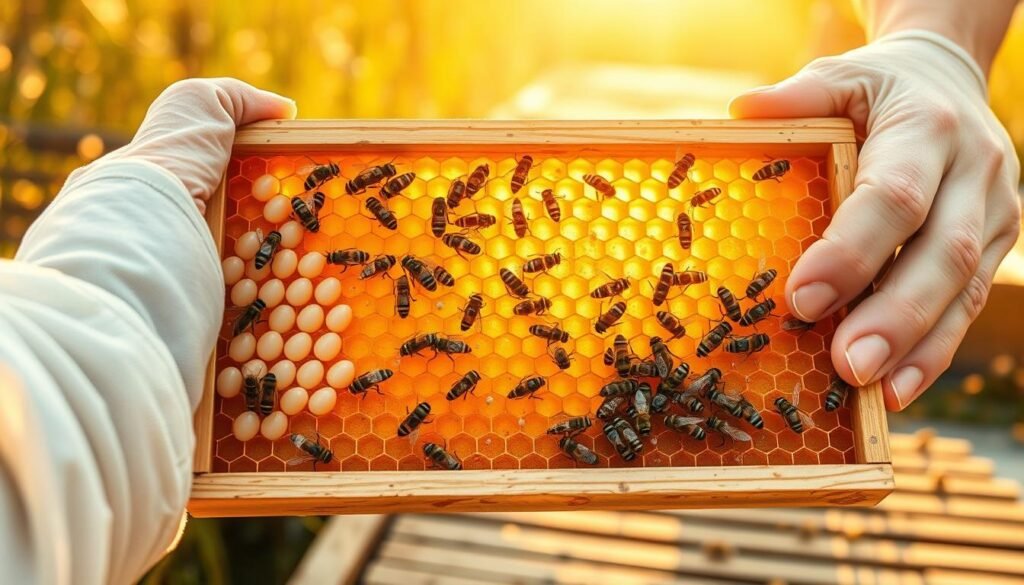
Select frames with even worker brood and active nurse bees nearby. Strong nurse coverage keeps brood warm and fed during transfer and the first critical hours after placement.
Include one or two frames with pollen and at least one honey frame for immediate sustenance. Avoid frames heavy with drone comb; they slow population growth and waste space.
Ensuring eggs or very young larvae for queen rearing if queenless
If one side will be queenless, place at least one frame of fresh eggs or tiny larvae there. Those young stages let the colony produce viable queen cells when needed.
- Favor capped brood in the queen-right portion to speed workforce increases.
- Check for existing queen cells and remove excess to limit afterswarming.
- Use straight, sound frames to ease handling and reduce crush risk.
Managing queen cells deliberately to prevent queen-loss swarming
Deliberate management of developing cells keeps a colony from producing rival queens and lowers swarming risk. Inspect the queenless side several days after the split and count developing queen cells.
Leave one quality cell; reduce extras after several days
Allow the bees to pick suitable larvae in the first 24–48 days, then thin cells. Keep one large, well‑fed cell in a protected spot on the frame. Remove late‑started or small cells that are unlikely to succeed.
When to cut swarm cells in the new queen-right split
In a queen-right box, cut any remaining swarm cells at once. This stops a follow‑on swarming event and preserves the current laying female.
- Inspect on day 3–5 after the split and mark the chosen frame.
- Handle marked frames slowly and keep the chosen cell upright.
- Maintain brood coverage while you work to avoid chilling young brood.
- Use box organization so checks are quick and cause minimal disturbance.
“Reduce many cells to one good candidate; that single choice stabilizes the colony and curbs swarming.”
| Action | When | Goal |
|---|---|---|
| First inspection | Day 3–5 | Identify and mark strong cell |
| Thin cells | Day 5–9 | Reduce number to 1–2 reliable cells |
| Cut cells in queen-right box | Immediate | Prevent follow-up swarming |
Document frames that carry the chosen cell so you can monitor progress without unnecessary openings. For practical field methods on staged splits and cell management see doing the splits.
Reducing brood loss and maintaining workforce after the split
A quick, deliberate refocus on brood placement and resources cuts early mortality and stabilizes the workforce.
Expect a sharp drop in open brood survival after de-queening; The Apiarist and Winston note roughly half of exposed brood can be lost. Counter this by prioritizing sealed and near-emergence frames for the vulnerable side.
Favor sealed and emerging brood
Select frames with capped brood or bees close to emergence. These provide an immediate boost in worker numbers and help cover remaining larvae quickly.
Supplement without weakening donors
- Expect loss: seed the queenless half with sealed or emerging frames rather than uncapped brood.
- Use near-emergence frames: they bring attendant bees and shorten the gap in nurse coverage.
- Balance donations: avoid stripping donor hive strength—move only what keeps both units viable.
- Food first: provide honey and pollen so new workers can feed larvae immediately.
- Limit disturbance: add frames quickly and close the boxes to prevent chilling.
- Recheck soon: inspect within a few days to confirm capping and steady emergence.
Practical tip: rotate in an extra emerging frame only if nurse coverage and weather support it. For additional field guidance on preventing follow-up swarming and maintaining colony balance, review trusted swarm prevention methods.
Requeening options to shorten the queenless period and stabilize the split
A prompt requeening choice can cut down the queenless interval and reduce emergency cell production. Pick an option that matches available time, weather, and colony temperament.
Introducing mature cells, virgins, or a mated queen
Three common routes exist: introduce a mature queen cell, add a virgin after emergence, or place a mated queen. A mated queen gives the fastest recovery and often begins laying in one or two days.
A mature queen cell halves the wait compared with emergency cells made inside a queenless hive. Virgins require mating flights; that adds uncertain time.
Expected timelines and checks
- From de‑queening to a laying female averages ~29 days (The Apiarist, Winston).
- Mature cell: emergence in a few days, then mating; first eggs often within a week after successful mating.
- Mated queen: laying often within 1–2 days; monitor for eggs on day 5–7 and act if none appear.
Practical tips: acclimate purchased queens with slow‑release cages, remove competing queen cells before introduction, and plan mating windows around good weather. If no eggs by the expected week, add a mated queen, a near‑emergence cell, or a frame with very young larvae.
Placement, relocation, and logistics: entrances, distance, and forager return
Placement and flight paths are as important as frame balance when establishing a new unit. Where you set the new box shapes worker orientation and reduces drift. Good placement helps the new colony anchor quickly and keeps the parent hive stable.
Moving the new box to its own bottom board
After 5–24 hours, lift the upper box and set it on a new bottom board. Flow Hive practice shows this gives nurses time to migrate upward. Do not sit the split box above a super; nurse movement should lead the process.
Re‑balancing bees if both halves remain in the same apiary
If both hives stay nearby, adjust entrances and stand positions. Small shifts of 2–10 feet and angled entrances help spread returning foragers.
- Pick a shaded, sheltered location with good forage access.
- Use a level, secure stand so frames stay true and combs do not sag.
- Align brood box entrances for clear flight paths and fewer collisions.
- Monitor stores and add a honey frame if foraging drops after moving.
“Relocate early and thoughtfully; orientation wins most forager disputes.”
| Action | When | Benefit |
|---|---|---|
| Move to own bottom board | 5–24 hours after split | Creates a standalone unit; anchors nurses |
| Relocate to fresh location | Immediately after moving | Reduces drift; speeds orientation |
| Adjust entrances if co‑located | Within first 48 hours | Balances returning foragers across hives |
Post-split inspection schedule and what success looks like by week
Set a brief inspection rhythm and use small checks so problems are caught before they grow. Short visits keep stress low and let you track nurse coverage, cells, and stores.
Day-by-day checks for nurse coverage, cells, and swarming cues
Day 0–1: confirm each hive has proper coverage. In vertical moves, separate upper boxes to their new board and verify queen presence or absence.
Day 2–4: inspect the queenless half for many cells and thin them to one or two. Check frames for honey and pollen access.
Day 5–10: watch for swarming signs; 4–10 days after a first emergence is a risky time. Keep inspections short and calm.
Weeks to watch: 2–4 weeks for a laying queen and population trends
Week 2: expect emergence from a chosen cell. Week 3–4: look for first eggs. The Apiarist and Winston report ~29 days on average to a laying queen.
If no eggs by day 21–29, act: add a mated queen, a mature cell, or a frame with eggs. Verify resource balance and add a frame of honey or capped brood if the new hive trails.
| When | Focus | Action |
|---|---|---|
| Day 0–1 | Coverage & queen check | Confirm boxes aligned; move upper box if planned |
| Day 2–4 | Cells & frames | Reduce extra cells; ensure honey/pollen access |
| Day 5–10 | Swarm risk | Limit disturbance; thin cells as needed |
| Day 21–29 | Egg check | Add queen/cell/eggs if none found |
“Track days carefully and use short inspections; timely action prevents queen-loss swarming and speeds recovery.”
Conclusion
A focused wrap-up helps both units recover fast and reduces follow-up problems.
Quick recap: deliberate handling, balanced stores, and clear week-based checks protect the queen and steady brood while bees reorient after a split.
Choose the method that fits your colony: vertical moves when the queen is hidden, or moving her to simulate a natural swarm. Manage cells proactively, favor capped and emerging brood, and add at least one honey frame for immediate stores.
Stage equipment and rehearse the workflow. Use short inspections each week and act promptly if milestones fall behind. For planning and swarm readiness, consult the swarming preparation guide.
FAQ
What is the safest goal when preparing a controlled colony division?
The safest goal is to protect the existing queen and maintain enough nurse bees and brood in each unit so both colonies stay healthy. That means planning a split that preserves eggs, young larvae, capped brood, pollen stores, and sufficient adult bees to care for brood and defend the hive.
When is the best time in the season to make a division?
Split during strong nectar flow and when the colony shows swarm preparations: many foragers, congested frames, and queen cells. Aim for a time with abundant food and at least several frames of eggs and young larvae so any queenless half can rear a replacement.
Which method works if I can’t find the queen?
Use a vertical split. Move selected brood frames upward above a queen excluder so the queen stays below. Shake excess bees off the frames before transferring and let nurse bees move upward to care for young brood in the new unit.
How do I move the old queen into a new hive safely?
Locate and gently cage or mark the queen. Transfer her with a frame of attendants into the new box, balance brood, pollen, and honey frames around her, and close the new colony before returning both hives to their locations.
What frames should I prioritize when creating a split?
Prioritize frames with eggs, young larvae, and capped brood to sustain population. Include pollen frames and at least one frame of honey or foundation for stores. Avoid transferring too many drone-rich frames to maintain worker balance.
How can I avoid crushing the queen during handling?
Work slowly and keep frames vertical. Inspect each frame before lifting, use gentle smoke sparingly, and avoid compacting frames when placing them into new boxes. Have a queen cage or marking tool ready in case you need to isolate her briefly.
What should I do about existing queen cells during a split?
If you want a single new queen, leave one high-quality cell and remove extras after several days. In queen-right splits where the old queen remains, destroy swarm cells to reduce the risk of queen-loss swarming.
How long will a new queen take to emerge, mate, and lay?
A mature queen cell takes about 8–9 days to hatch. After emergence, virgin queens need roughly 1–2 weeks to mate, then several days before laying begins. Expect 2–4 weeks to see a consistent laying pattern and population recovery.