Absconding in European honey bees is rare but painful for a new keeper. New equipment can smell unfamiliar. That odd scent, lack of food or shade, loud work, pests, or heat can push an entire colony to leave.
This short guide shows field-tested steps you can use right away. Air out new woodenware, avoid interior paint, and add a frame of drawn comb. Minimize early inspections and keep noise low near the stand.
Offer syrup and a water source, give morning sun with afternoon shade, and place the hive off the ground to deter predators. Delay queen self-release until comb appears and consider a temporary queen excluder under the brood box.
Key Takeaways
- Air out new gear and avoid interior paint to reduce off odors.
- Feed syrup and provide water to help colonies settle.
- Limit disturbance in the first days and reduce nearby noise.
- Manage the queen and add used comb to anchor the colony.
- Place hives with morning sun and afternoon shade; use stands for safety.
Understanding absconding vs swarming in honey bees
Reading movement and what remains on frames helps you tell whether a group has left as a reproductive split or whether the entire colony has cleared out. Watch flight patterns, frame contents, and queen presence when you open the box.
What an entire colony leaving looks like
Absconding occurs when the queen and almost all flying workers depart. You may find light stores, little brood, and few or no eggs. No queen cells are left behind. This event often follows stress from new equipment, heat, pests, or forage shortages.
How reproductive swarms differ
In a reproductive swarm, roughly 40–70% of the colony leaves with the old queen. Brood, honey, and developing queen cells remain to support the bees that stay. Swarms usually occur during the day after scouts agree on a new site.
- Absconding: empty frames, light stores, no queen cells.
- Swarming: capped queen cells, brood and honey left behind.
- Signs: unusual waggle dances can signal long-distance movement before full absconding.
| Feature | Absconding | Swarming |
|---|---|---|
| Who leaves | Queen + nearly all workers | 40–70% with old queen |
| Brood and stores left | Little brood, light stores | Brood and honey remain |
| Queen cells | None | Developing/capped cells present |
| Typical triggers | Stress, odors, heat, dearth | Reproduction, congestion, seasonality |
Use these cues during inspections to diagnose the event. The next section will cover common triggers and practical fixes for colonies that are preparing to leave.
Why colonies abscond: heat, forage dearth, disturbance, odors, pests
Unshaded summer heat raises nest temps quickly, and inexperienced workers cannot ventilate fast enough. Small or brand-new colonies lack the workforce and drawn comb that help regulate internal climate.
Overheating and afternoon sun exposure
Full-afternoon sun can push internal temperatures above the tolerance of brood. That stress often produces a rapid decision to relocate.
Food shortages and water scarcity
Extended dry periods cut forage and water sources. Without steady supplies, brood rearing drops and the colony may seek greener areas.
Disturbance, predators, and loud equipment
Frequent openings, mowers, or blowers raise agitation. Predators and ant incursions add pressure, especially during early setup.
New-gear odors and off-gassing
Airing new boxes and plastics is essential. Strong chemical smells repel workers and reduce the lived-in scent that anchors a nest.
Parasites and disease pressure
Varroa and other mites weaken colonies and raise the odds of mass departure when other stresses occur.
| Trigger | Immediate effect | Quick fix |
|---|---|---|
| Afternoon heat | Overheating, brood stress | Provide shade, increase ventilation |
| Forage/water dearth | Reduced brood, search behavior | Offer water and syrup, plant forage |
| Disturbance & predators | Agitation, abandonment risk | Limit inspections, time noisy work away |
| Odors/off-gassing | Repelled workers | Air wood/plastic before use |
| Varroa/mites | Colony weakness | Monitor and treat promptly |
Takeaway: stabilize shade, feed, water, ventilation and pest control together. Log heat waves and disturbances so you can link events with behavior and act early.
How to Stop Bees from Abandoning a Hive
Place new colonies where morning sun warms the entrance and afternoon shade keeps internal temperatures safe. Stabilize nest climate with bottom ventilation and by shading the box during hot afternoons.
Immediate feed and comb encouragement
Offer 1:1 syrup right away and keep it available until comb construction is evident. Syrup speeds wax work and helps build brood and stores without exhausting foragers.
Limit disturbance in the first days
Keep inspections to a minimum and schedule noisy work away from the apiary. Calm surroundings reduce stress and lower the chance the colony will try relocating.
Use lived-in scent and short queen management
Add one clean, disease-free drawn frame so workers find familiar wax and scent quickly. Delay queen self-release until comb begins; hand-release later or fit a temporary queen excluder under the brood box for 2–3 days and remove promptly.
- Provide a nearby water source so foragers can condition the nest.
- Use one drop of lemongrass or anise sparingly if needed.
- Track weight and outside activity daily to spot light stores early.
Note: Absconding usually follows several stressors at once. For more field-tested tactics, see prevent absconding.
Set up a new hive to feel like “home” from day one
A calm, familiar nest scent helps incoming bees accept the site as home fast. Air new woodenware and frames outdoors for several days so volatile odors dissipate. Do not paint interior surfaces; paint fumes can repel a colony and delay acceptance.
Place the new hive at its permanent apiary spot before installation. Orientation flights begin immediately. Moving the box in the first week causes confusion and increases drift.
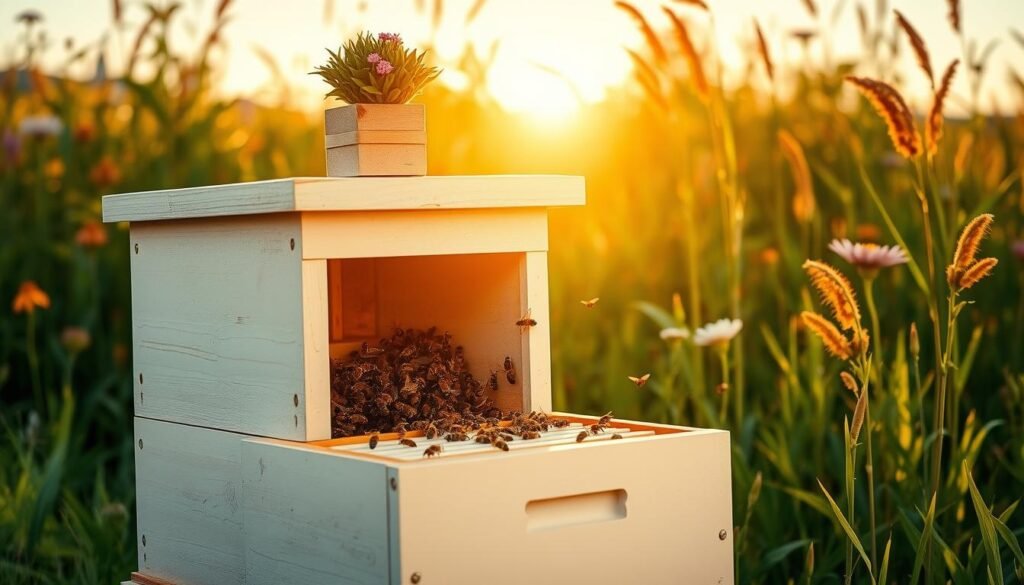
A quick checklist that makes the box familiar
- Insert one clean, disease-free frame of drawn comb near the center for immediate scent anchoring.
- Feed 1:1 syrup on installation so bees can draw wax and build comb faster.
- Keep spare healthy frames available to seed other new hives during spring installs.
- Provide a nearby water source to reduce forager wandering and drift.
“A single piece of drawn comb can be the difference between acceptance and unsettled bees.”
| Action | Why it matters | When to do it |
|---|---|---|
| Airing new boxes | Removes off-gassing and chemical scents | Several days before use |
| Add drawn comb | Provides familiar wax scent and immediate structure | At installation |
| Fixed placement | Helps orientation flights and reduces drift | Day one and first week |
| Feed syrup | Speeds comb building and boosts stores | From installation until comb is drawn |
For practical, field-tested steps that further lower absconding risk, read this guide on prevent absconding.
Temperature control: placement, shade, and airflow
Airflow at the bottom and space around the brood box are simple fixes that reduce heat stress and heavy bearding. Proper siting and modest ventilation help small colonies manage internal temperatures during warm season spells.
Morning sun, afternoon shade: balancing entrance activity and heat
Place the hive so morning light reaches the entrance. That early warmth wakes foragers and boosts nectar runs.
Then give afternoon shade to cap internal heat. Overexposed mini-nucs and small units often overheat and try to relocate.
Bottom ventilation and spacing the brood box
Use a screened bottom or a small vent near the bottom to improve airflow without chilling brood. Slightly tilt the box forward for moisture drainage at the entrance.
Allow room around the brood box and avoid crowding hives closely. Circulating air prevents hot pockets and lowers robbing risk.
- Tip: keep fresh water nearby so bees can cool the nest by fanning.
- Watch: heavy afternoon bearding often signals too much internal heat or poor circulation.
| Issue | Quick remedy | When |
|---|---|---|
| Afternoon heat | Temporary shade cloth | Heat waves |
| Poor airflow | Screened bottom or small vent | During summer |
| High humidity | Tilt box forward | After rain |
Queen management that reduces absconding risk
Keep the new queen confined while the workers establish wax and scent in the box. Caging her at installation gives the colony time to lay down familiar odors and draw comb near her. This anchoring lowers the chance the group will try relocating.
Hand release after comb appears. Open the cage on a calm, warm day and let attendants free the queen. Verify egg laying within several days; eggs and an active queen calm behavior quickly.
Short-term excluder and release checklist
- Keep the queen caged until comb is started; place drawn comb next to the cage.
- Hand-release during a warm, low-wind period so workers accept her fast.
- If restless, fit a queen excluder under the brood box for 2–3 days and remove promptly.
- Keep feed available and avoid repeated inspections while acceptance is confirmed.
| Action | Purpose | Timing |
|---|---|---|
| Queen caged | Anchors pheromones; prevents early exit | Installation until comb begun |
| Hand release | Improves worker acceptance | Calm, warm day after comb starts |
| Queen excluder under brood box | Stops queen leaving while comb builds | 2–3 days; remove once committed |
Note: Use light, gentle smoke so queen scent remains clear. Log the release day and check quickly for eggs rather than lengthy inspections. For extra reading on absconding drivers and prevention, see this detailed discussion on absconding and practical preparation advice at swarming preparation.
Feeding strategies that lock the colony in place
A steady feeding plan can anchor a new colony and speed comb building during its first critical weeks. Early nutrition reduces search behavior and gives workers energy to draw wax and store honey.
Syrup ratios and continuous availability during setup
Start with 1:1 sugar syrup for packages and hived swarms. That ratio stimulates wax production and fast comb construction.
Keep feeders full and easy to reach in the first weeks. A lapse in feed during a dearth often triggers relocation.
Attractant scents: use sparingly
A single drop of lemongrass or anise oil near the feeder can improve nest-site appeal. Avoid over-scenting; too much scent repels rather than attracts.
- Place a drawn frame adjacent to the feeder so bees can deposit incoming syrup and begin brood rearing.
- Provide steady water close to the hive for cooling and brood food production.
- Monitor feeder uptake and hive weight to judge stores and adjust feeder type to colony strength.
| Action | Why it matters | When |
|---|---|---|
| 1:1 syrup | Speeds wax work and comb | Installation → comb drawn |
| Single scent drop | Enhances site appeal | Use at setup only |
| Nearby water | Supports thermoregulation | Continuous |
Continue feeding until multiple frames of new comb hold brood and honey, then taper based on local forage. Keep equipment clean; old syrup or moldy feeders can repel bees and undo acceptance.
Disturbance control around the apiary
Keep human and machine activity low around new colonies for the first week so workers can settle and orient. Calm conditions reduce stress and help the queen begin laying on schedule.
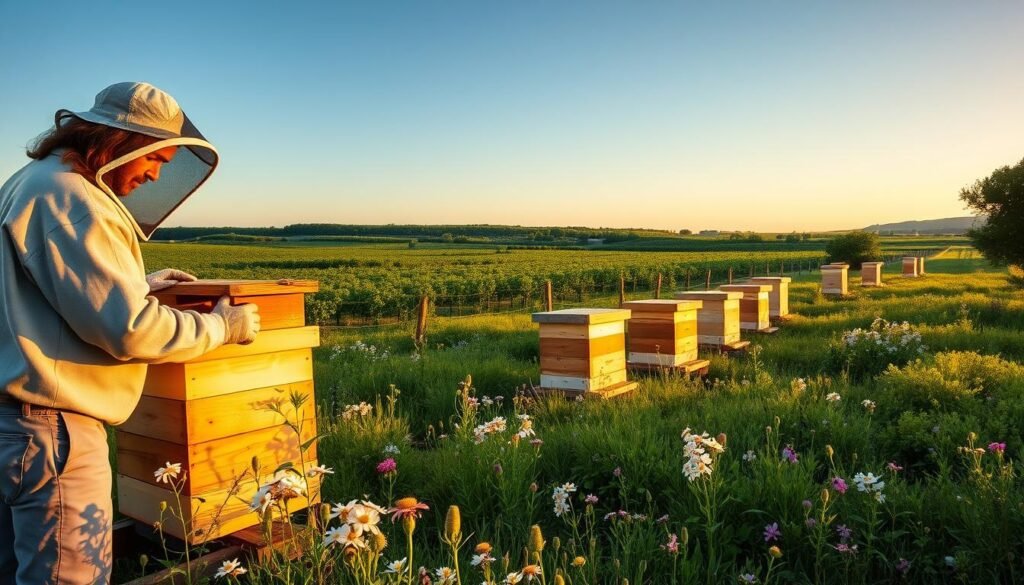
Inspection cadence during the first week
Set a conservative schedule: perform only brief, purposeful checks. Open the box only if you must confirm feed, the queen, or obvious trouble.
Observe without opening when possible. Use entrance traffic, forager returns, and weight trends as indirect cues before an intrusive check.
- Plan one short inspection in the first seven days unless there is clear need.
- Do inspections mid-day on warm, calm mornings or midday to reduce flight stress.
- Train each beekeeper who will access the site on the same first-week protocol.
Noise and vibration: mowers, blowers, and equipment timing
Power tools and mowing create vibration and airborne noise that irritate small colonies. Avoid running mowers, leaf blowers, or compressors near the apiary during the settling period.
Position hives away from heavy foot traffic, pets, and frequent machine use. Coordinate with neighbors on timing when the apiary shares an area.
- Move calmly and deliberately; avoid banging boxes or dropping frames.
- Keep solvents, paints, and strong odors out of the apiary; they compound disturbance stress.
- Reassess your inspection cadence after the queen is laying and several frames of comb are built, then return to normal management patterns.
“Quiet, consistent conditions in the first days give the colony the best chance to commit to the site.”
Predators and hive stands: simple deterrents that matter
Elevating boxes on sturdy stands keeps nocturnal mammals from reaching entrances and cuts raids at night.
Raise units so skunks and raccoons cannot paw at the entrance. Secure lids and fasten each box so wind or tampering does not toss frames and unsettle the colony.
Keep grass trimmed by hand during the first week to avoid machine noise and vibration that stress small groups.
- Reduce wide openings on new colonies so guards can defend without drafts.
- Avoid siting directly beside a tree or structure that funnels predator traffic.
- Inspect for ant trails and install safe barriers where needed.
- Space units for clear sightlines; this lowers drifting and helps defense.
| Issue | Deterrent | When to apply |
|---|---|---|
| Skunks & raccoons | Elevate stands; secure lids | Before first night |
| Ant harassment | Sticky or oil barrier at legs | At setup and after rain |
| Predator funnels | Move box away from trees/structures | During siting |
Log sightings and adjust stand height or fit entrance reducers as needed. Combine these deterrents with shade and steady feeding so colonies settle and the queen can begin laying with less risk of relocation.
Hived swarms: keeping them from leaving
Freshly hived swarms often carry scouts’ memory of another site and may try to leave within 24 hours. Act fast with simple anchors so the group commits.
Insert one frame of open brood from a healthy source if available. The brood pheromones give the box a lived-in pong and reassure workers the location is a real home.
Short-term excluder as a stopgap
Fit a queen excluder under the brood box only when the swarm shows mass orientation flights or clear restlessness. Remove it within 2–3 days to avoid drone trapping and delayed laying.
Why bait boxes rarely depart
Colonies that choose bait hives usually stay. Seed these boxes with old, healthy comb and place them at good height and volume.
- Provide immediate feed and water so the group can start comb and stores.
- Place hived swarms away from the original tree or cavity to reset scouts’ geography.
- Inspect minimally in the first days and monitor for varroa and other mites after establishment.
| Action | Purpose | Timing |
|---|---|---|
| Add open brood frame | Anchors colony with brood pheromone | At installation if disease-free |
| Temporary excluder | Prevents queen exit during unrest | 2–3 days only |
| Bait box seeding | Increases long-term commitment | During swarm season |
Mini-nucs and small colonies: special overheating risks
Mini-nucs can overheat in full sun within hours, so thoughtful siting is essential for small colonies. These tiny units have limited thermoregulation and small stores, which raises their absconding risk during heat spells.
Siting and immediate needs
Place mini-nucs in dappled shade, such as at the base of a hedge, so morning light reaches the entrance but midday sun is filtered. Avoid reflective surfaces and windless corners that trap heat.
Keep feeders topped and water close. Limited forager numbers mean stored honey runs low fast. A nearby water source lets workers cool the brood by fanning and evaporative cooling.
Practical setup checklist
- Reduce entrance size so a few guards can manage traffic and deter robbers.
- Provide a sliver of drawn comb to speed the queen into laying.
- Use gentle, light inspections and avoid jarring movements that unsettle small clusters.
- Consider a breathable cover or shade cloth during heat waves; remove once cool.
- Plan to move thriving colonies into larger equipment as soon as they outgrow the box.
| Risk | Quick fix | When |
|---|---|---|
| Rapid heat increase | Dappled shade; shade cloth in midday | Heat waves / summer |
| Low stores | Keep feeders full; offer 1:1 syrup | Installation → comb drawn |
| Poor cooling | Nearby water; reduced entrance | Continuous during warm season |
Small colonies settle best in calm, shaded areas with steady food and water.
For regional placement tips and climate-specific advice, see the regional siting guide.
Forage and water planning during hot, dry periods
Hot, rainless stretches often strip nectar supplies; preemptive feeding and water provision can anchor an at-risk colony.
Install permanent water sources with landing materials so bees can drink safely without drowning. Shallow basins, stones, or corks give landing points for easy access.
Keep water filled and shaded during midday heat so evaporation does not force foragers far from the apiary.
Recognizing local dearth and boosting supplemental feed
Track bloom cycles and recent rainfall in your area. When blooms fade, increase syrup availability before stores run light.
Use hive weight checks or feeder uptake as early-warning tools. A steady decline in weight or rapid feeder empties signals stress.
- Offer 1:1 syrup during dearth and keep feeders reliable.
- Provide supplemental pollen or protein patties when brood rearing slows.
- Reduce entrances to lower robbing pressure in tight seasons.
- Plant drought-tolerant forage nearby to extend nectar and pollen supply.
| Sign | Action | Timing |
|---|---|---|
| Feeder empties quickly | Top up feeders; check multiple hives | Daily during dearth |
| Rapid weight loss | Start continuous syrup; monitor weight | Within 2–3 days |
| Low brood activity | Offer pollen substitute; assess queen | Immediately |
| High robbing risk | Reduce entrances; feed late day | During peak foraging |
Practical note: coordinate feeding times in multi-hive yards to avoid triggering robbing and adjust shade and ventilation when adding feed during heat waves. Reassess weekly; small storms or irrigation can change dearth conditions quickly.
Recognizing early signs of an absconding decision
A sudden drop in brood and odd waggle dance patterns are early, actionable signals. Watch daily changes in nest work and entrance traffic. Quick recognition gives you time to intervene.
Reduced brood rearing and unusual waggle dance activity
If brood frames look lighter while the queen remains present, the colony may be scaling back reproduction. Check for only small numbers of eggs and limited nursing.
Unusual waggle dances during low-forage times often point toward long-distance direction and scout commitment. Note frequency and direction during inspections.
Light stores, high agitation, and mass orientation flights
Look for very light honey and stores, restless bees at the entrance, and repeated large orientation flights. These behaviors often occur together before a full move.
If you see these signs, act immediately: add open brood, boost feed, improve shade and ventilation, and cut disturbance.
“Early, small changes in brood and flight behavior are your best chance to keep a colony rooted.”
| Sign | What it means | Immediate step |
|---|---|---|
| Brood reduction | Colony cutting rearing | Add open brood; check queen |
| Unusual waggle dances | Scouts indicate long-range sites | Minimize inspections; add anchors |
| Light stores & agitation | Low reserves and stress | Rapid feeding; improve shade |
Immediate actions if your bees are leaving
Act fast and stay calm. A quick, steady response gives the colony the best chance to settle back in. Correct the stressors first—shade, ventilation, and strong odors—then begin recovery steps.
Re-hiving and queen retention
Collect the clustered group and place them into the corrected hive at the original stand. If you locate the queen, cage her briefly or use a push-in cage so pheromones anchor the workers while they rebuild comb.
Rapid feed, shade, and odor checklist
- Feed heavy syrup immediately and keep it available without gaps.
- If available, add one disease-free frame of open brood for pheromonal anchoring.
- Install a temporary queen excluder under the brood box for 2–3 days when risk of re-leaving is high.
- Provide shade and improve airflow; a shade cloth can work for short periods.
- Remove or swap any equipment with strong smells and do not paint interiors; air new pieces thoroughly.
- Reduce the entrance, offer nearby water, stabilize the stand, and avoid nonessential inspections for several days.
“Keep clear, time-stamped notes of each step so you can refine your emergency checklist.”
For further practical resources and reading, see this collection of field guides at beekeeping resources and books.
Seasonal timing in the United States: when absconding risk spikes
Timing matters: some months demand extra shade, drawn comb, and steady syrup supply. Spring package installs into brand-new equipment and mid-summer heat waves are the top risk windows. Late-season dearths can also push colonies when stores run low.
Spring packages in brand-new equipment
Spring installs into fresh woodenware often lack the lived-in scent bees prefer. Off-gassing and no drawn comb raise relocation risk.
Prep early: air boxes, avoid interior paint, and seed each new hive with one clean drawn frame when possible. Keep inspections calm during the first weeks and offer 1:1 syrup until comb arrives.
Mid-summer heat waves and late-season dearth
Mid-summer heat can overwhelm small colonies. Afternoon temperatures and scarce water lead to heavy bearding and potential flight decisions.
Pre-stage shade, add ventilation, and increase water and feed before hot spells. In late season, monitor blooms and rainfall; boost syrup and pollen substitutes when forage fades.
- Flag spring installs into new gear as high risk and seed with drawn comb.
- Pre-stage shade and ventilation before summer heat arrives.
- Monitor local bloom and add syrup during predicted dearths.
- Time inspections for calm weather; avoid long openings in heat.
| Seasonal window | Main risk | Practical steps |
|---|---|---|
| Spring (new installations) | Odors, no comb | Air gear, add drawn frame, feed 1:1 syrup |
| Mid-summer | Heat, water shortage | Provide shade, ventilate, supply water |
| Late season | Forage dearth | Increase syrup, offer pollen substitute, monitor weight |
Conclusion
Stable microclimate, reliable nutrition and limited disturbance are the practical pillars that keep colonies rooted. When you manage shade, ventilation and steady feed, the queen settles and your chance of loss falls quickly.
Seed new equipment with clean drawn comb, air boxes before use and avoid interior paint. Good beekeeping includes nearby water and minimal early inspections for each hive or hives in a yard.
For hived swarms add an open brood frame and consider a short-term excluder; bait boxes that attract swarms usually retain them and build honey stores fast. Monitor varroa and mites regularly—pest pressure raises departure risk.
Document weather, timing and actions as you follow this process. With timely steps and calm work you greatly increase the chance that your bee colony will remain at home and thrive.
FAQ
What’s the difference between absconding and swarming in honey bees?
Absconding is when an entire colony abandons its hive, leaving brood, stores, or sometimes nothing behind. Swarming is a reproductive event where a portion of the colony, typically with the old queen, departs to form a new nest while a remnant stays with a new queen. Absconding often follows severe stress — heat, predators, pests like Varroa, or lack of forage — while swarming follows internal signals of crowding and queen supersedure.
How can I tell if an entire colony is preparing to abscond?
Watch for rapid reductions in brood rearing, mass-orientation flights at odd times, high agitation at the entrance, and light food stores. Bees may move brood toward the top bars and stop building comb. If the queen clusters outside or a large fraction of workers linger in trees or on nearby structures, absconding is likely.
How does brood and stores differ between reproductive swarms and absconding colonies?
Reproductive swarms usually leave with minimal brood and many foragers; the parent hive retains most brood and stores. Absconding colonies often take brood, brood comb, and stores with them or abandon comb entirely if stressed. Timing differs: swarms occur on warm mornings in spring, while absconding can happen quickly during heat waves, dearths, or heavy pest pressure.
Can overheating cause bees to leave a new hive?
Yes. Full-afternoon sun and poor ventilation make miniature colonies and nucs overheat. Bees will abandon boxes that reach stressful temperatures. Provide afternoon shade, proper top and bottom ventilation, and avoid dark, heat-trapping placement to reduce that risk.
How much does lack of food or water trigger absconding?
Severe forage dearth or unreliable water sources can push colonies to relocate. In new or small colonies, even a short-term shortage matters. Immediate supplemental feeding with appropriate syrup and continuous water access at the apiary reduces the chance they will leave seeking resources.
Do predators or frequent inspections increase absconding risk?
Yes. Repeated predation by skunks, ants, or bears, plus loud equipment and frequent intrusive inspections, increase stress and encourage absconding. Keep inspection cadence light during establishment, remove attractants for predators, and time noisy work away from peak bee activity.
Can new hive odors or off-gassing from paint cause abandonment?
Strong chemical odors from fresh paint, treated wood, or plastic can repel bees. Airing out new woodenware, avoiding interior painting, and using neutral or bee-safe products before introducing bees helps them accept the site and reduces the chance they will relocate.
How do parasites and Varroa mites factor into absconding decisions?
High parasite or disease pressure can trigger a colony-wide decision to leave. Varroa and viruses weaken brood and adults, creating a colony-level stress that may be resolved only by relocating. Vigilant monitoring, timely mite control, and using disease-free frames help prevent those pressures from forcing absconding.