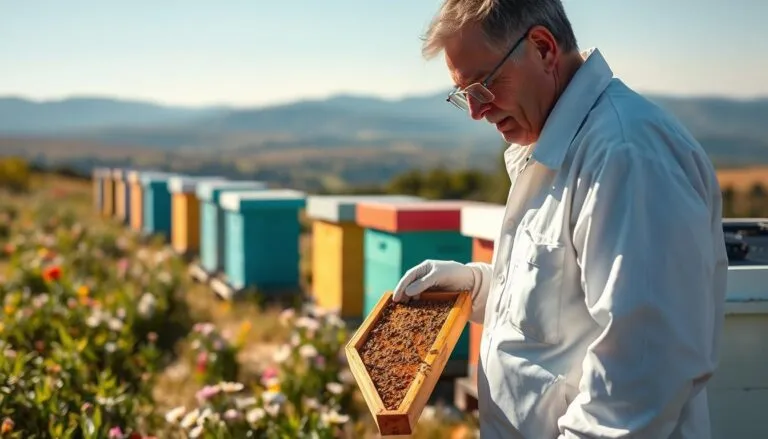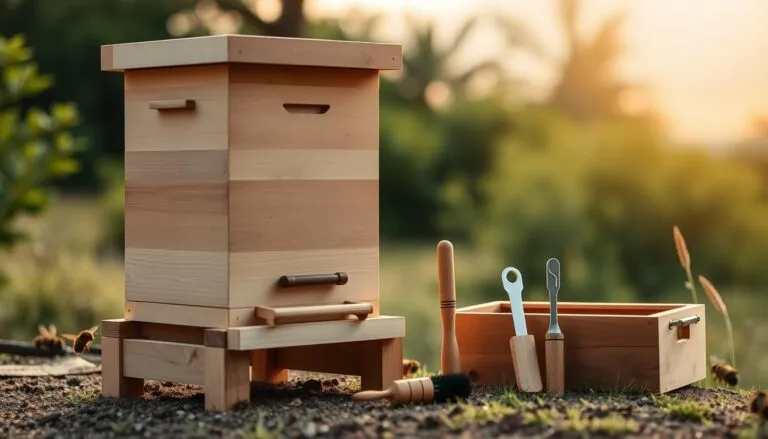
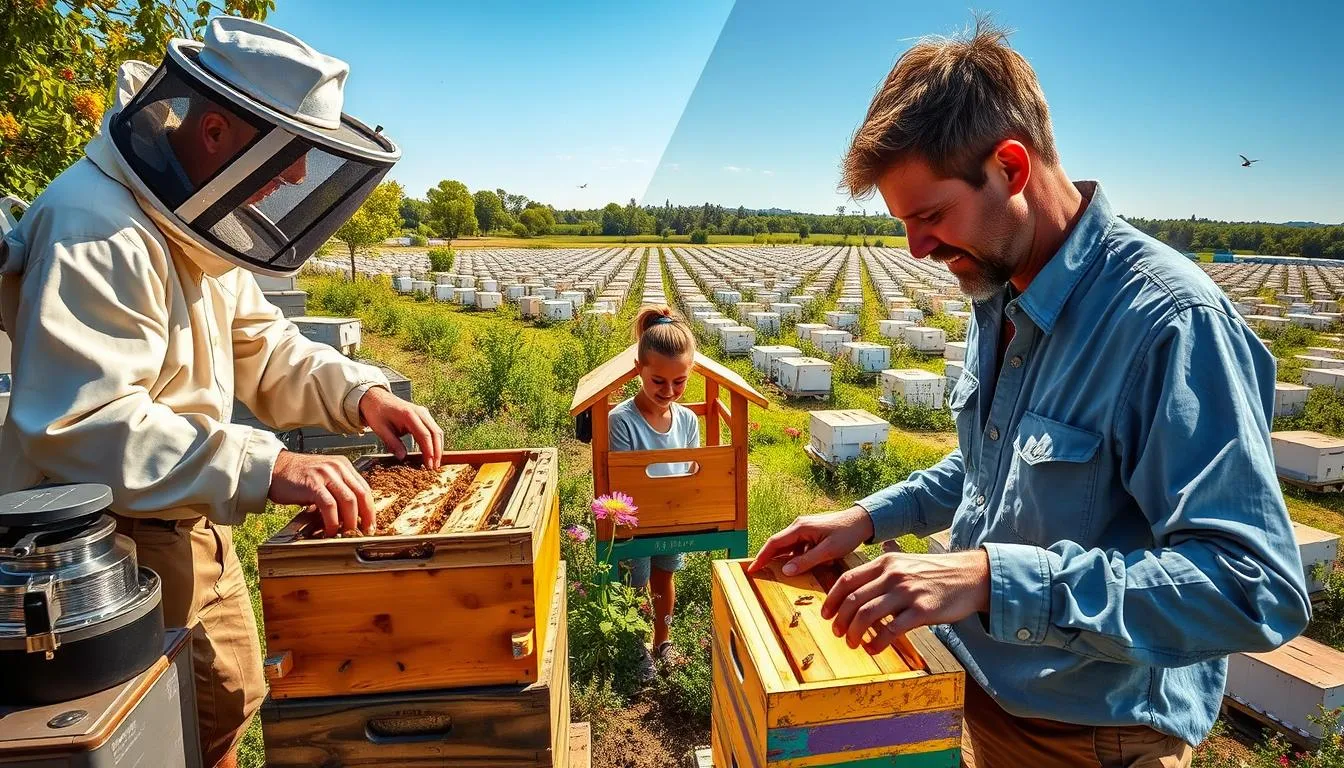
This introduction clarifies what separates large-scale apiary work from backyard keeping. We outline scale, revenue streams, risks, and realistic outcomes for anyone choosing a path with bees and hives.
In the United States, honey remains popular, but pollination services now drive much of the farm-scale income. The USDA reports heavy honey production and notes many colonies move long distances for almond bloom each February.
Most beekeepers are hobbyists, while a small number manage the bulk of colonies and run seasonal logistics like migratory pollination. That difference changes equipment needs, labor, and financial planning.
We will compare gear, labor intensity, disease management, and yearly costs such as miticides, sugar feed, and packaging. Expect clear, practical information and a realistic view of what a year looks like for each approach, including loss rates and replacement strategies. Both paths can be rewarding, but they demand different time, capital, and discipline.
For detailed cost and income examples that inform realistic expectations, see an analysis of apiary economics here.
Key Takeaways
- Pollination, not just honey, often drives revenue for larger operations.
- Over 90% of beekeepers keep bees as a pastime, while few run many hives.
- Scale changes risk management: treatments and replacement differ by operation size.
- Costs include miticides, sugar feed, and packaging—plan for a full year.
- Season timing from spring buildup to fall feeding affects both honey and pollination returns.
Defining beekeeping pathways in the United States: commercial, sideliner, and hobbyist
Choices in scale and intent shape how people keep bees and what they expect from their hives. U.S. practice generally separates three paths: small-scale backyard keepers, mid-range sideliner operations, and full-time enterprises that run hundreds of colonies.
Where most beekeepers fit
The vast majority of beekeepers—USDA estimates show about 212,000 total—are hobbyists managing under 25 hives. These keepers aim for garden pollination, personal honey, and learning rather than profit.
Typical hive counts and goals
Sideliners sit between hobby and full-time work, often expanding to sell nucs or seasonal pollination. A commercial beekeeper is commonly defined as managing 300+ hives full-time and pursuing contracts, large honey crops, or bee sales.
- Expectation: One colony rarely supports a livelihood; hundreds are typically needed for a business.
- Quality matters: Queen health, brood patterns, and steady build-up are priorities at every scale.
- Networks differ: Hobbyists use local clubs; larger operators rely on supply chains and contract info like the peer-reviewed study.
Choosing a path starts with honest goals, resources, and appetite for growth over several years. Local forage and years of experience shape whether someone stays small or scales up.
How this comparison works: scale, time, income streams, and management intensity
A clear comparison focuses on four axes: scale, annual time use, income mix, and management intensity. We look at how many hives and colonies someone runs, what tasks occupy each season, and which income sources support operations.
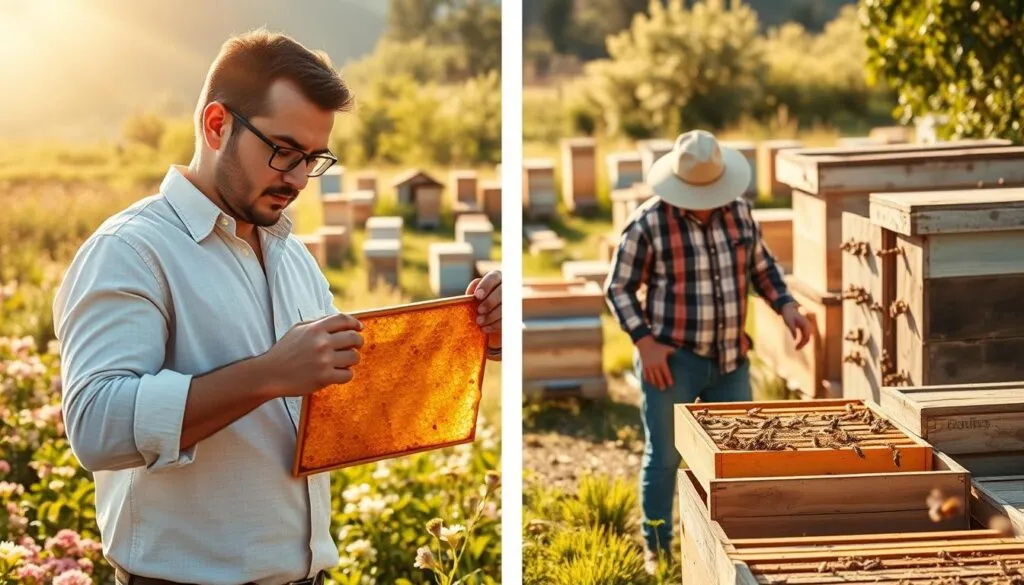
Scale drives systems. Larger yards need repeatable checklists, standardized frames and equipment, and written procedures. Smaller setups stay flexible but must still keep regular inspections and records.
Time commitments differ. Big operations schedule multi‑day moves for pollination rentals and bulk harvests. A backyard keeper typically works short weekly sessions through the spring and fall, learning over years.
- Income mix: pollination fees, bulk honey, and bee sales often fund larger operations; small producers sell jars or a nuc occasionally.
- Management: tracking frames, brood patterns, and feed per hive becomes yard‑level planning at scale.
- Equipment: everything from pallets and forklifts to personal tools affects efficiency and risk.
| Focus | Smaller scale | Larger scale |
|---|---|---|
| Typical hives/colonies | 1–25 hives | 100+ colonies |
| Primary income | Jar sales, occasional nucs | Pollination contracts, bulk honey, bee sales |
| Time per year | Weekly inspections; seasonal learning | Transport windows; contract deadlines |
Both paths gain from structured records and seasonal checklists. The stakes of missed timing rise with scale, so reliable workflows and training matter — consider formal courses linked to practical skills at beekeeping courses and training.
Commercial vs Hobby Beekeeping USA: Operations, Seasonality, and Outputs
Moving thousands of colonies across state lines requires precise scheduling and tight coordination with growers. About two‑thirds of U.S. colonies travel to California each February for almond pollination, then follow spring and summer blooms north for apples, blueberries, and vegetable crops.
Migratory yards and pollination contracts
Large apiary operations plan routes to meet contract dates. Packers load hives on pallets, secure supers and boxes, and deliver strong colonies to farmers who depend on consistent bee coverage.
Backyard hives and local output
Smaller setups stay near home forage. Owners focus on raw honey, wax, and occasional nucs or queens for neighbors. Timing is flexible and driven by local weather.
Production focus and equipment
Pollination often leads revenue for full‑scale operators, while local keepers prioritize honey quality. At scale, trucks, pallets, forklifts, frames, and standardized lids speed work and reduce loss.
| Aspect | Large yards | Backyard |
|---|---|---|
| Primary output | Pollination, bulk honey | Raw honey, wax, small sales |
| Logistics | Trucks, pallets, schedules | Car trips, home storage |
| Hive prep | Strong brood nests, fed to meet frame targets | Flexible timing, weather dependent |
For a seasonal checklist that helps time inspections and feed, see seasonal tasks.
Economics in practice: costs, income, and realistic profit expectations
Understanding the true costs of a season helps set honest expectations for income and effort.
Hobby economics
Startup and ongoing expenses
After an initial box, tools, and suits, plan yearly purchases of frames and foundation. You will also buy jars and labels for any honey sale, sugar for fall feed, and miticide treatments like oxalic acid or Apivar to protect colonies.
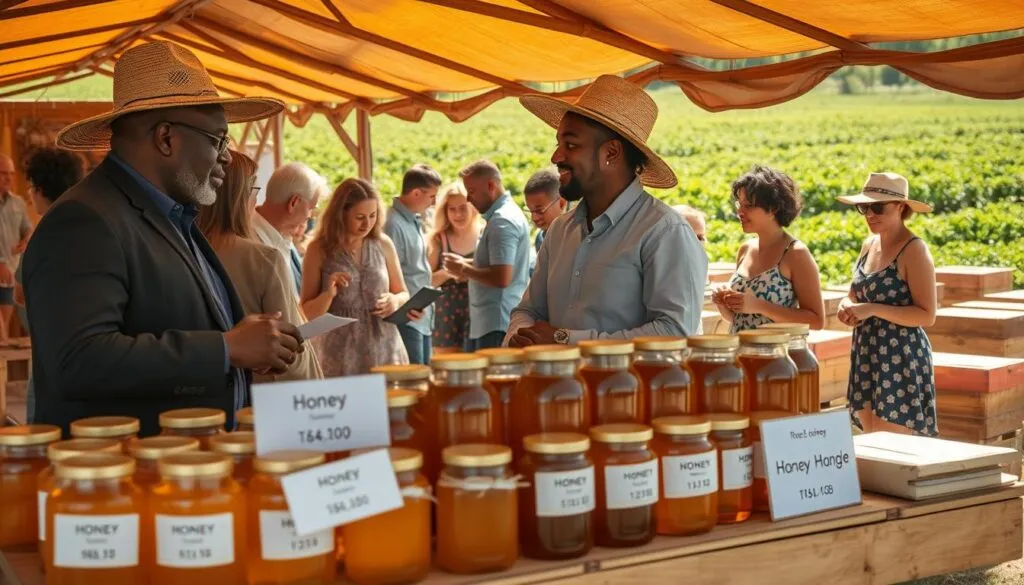
Honey yields and packaging realities
Yields vary. The U.S. average for operations with five or more colonies was about 58.3 pounds per colony in 2016. A small backyard may collect far less depending on weather and forage.
Packaging costs—jars, lids, labels, and compliant labeling—reduce gross revenue and must be deducted before calculating net income.
Commercial revenue mix
At scale, income blends pollination fees, bulk honey sales, and bee sales such as packages and nucs. That mix smooths cash flow but adds transport and labor costs.
| Item | Typical hobby | Larger operator |
|---|---|---|
| Primary income sources | Jar sales, occasional nucs | Pollination fees, bulk honey, bee sales |
| Annual recurring costs | Frames, jars, sugar, miticides | Fuel, labor, pallets, treatments |
| Average yield (example) | Variable; often | ~58.3 lb/colony (reported average) |
Why you won’t get rich
Margins are tight. Travel, insurance, seasonal labor, and volatile honey prices compress returns.
A single nuc sale can offset a loss, but most hobbyists should budget for bees and honey as a personal pursuit with occasional extra money rather than a reliable income stream.
Bee health and risk management: pests, losses, and sustainability
Strong colonies do not happen by chance; they require routine checks and smart treatment timing.
Varroa, small hive beetle, wax moth: monitoring and treatment timing
Varroa is non-negotiable. Regular mite counts guide treatment windows. Apply oxalic acid during broodless periods and rotate products to protect honey and colony strength.
Small hive beetle and wax moth attack weak colonies or stored comb. Clean equipment, inspect frames often, and store combs properly to reduce infestations.
Winter losses and replacement
Both backyard and larger operators face winter losses. Plan replacements by making nucs when possible or budgeting for packages in spring.
CCD context and current losses
Reports of Colony Collapse Disorder have eased, but yearly losses still reflect multiple stressors: mites, poor nutrition, pesticides, and transport. Migration increases disease transmission risks, so coordinated monitoring and treatment windows matter at scale.
- Watch brood patterns and queen health — irregular brood signals trouble.
- Schedule treatments outside honey flows to avoid contamination.
- Adopt routine checks — pre-winter feeding, mite counts, and spring build-up pay off.
For recent coverage on mite impacts and responses, see Varroa mite challenges.
Who should choose which path? Matching goals, time, and resources
Match your available hours and site access to the kind of apiary life you want. This makes the next steps clearer and reduces costly mistakes.
Hobbyist fit: nature connection, garden pollination, and small-batch honey
A hobbyist often begins with a class and one to a few hives. These keepers seek a closer connection to nature and garden pollination. They enjoy small-batch honey and hands-on learning.
Start with manageable numbers that fit local rules. Inspect regularly, plan for winter prep, and protect neighbors with good placement and secure flights. Use local clubs and mentors to build skills and confidence.
Considerations for potential beekeepers help new keepers check regulations, site suitability, and time commitments.
Path for growth: land access, migratory readiness, and farmer relationships
Scaling requires reliable space, fleet planning, and firm schedules. Operators secure outyards, trucks, and pollination work or bulk buyers. They also develop queen and nuc skills to keep supply steady.
Plan honest time budgets: contracts limit flexibility during bloom. Use milestones—survival rates, honey per hive, and successful queen replacement—to judge readiness before expanding.
| Fit | What to expect | Key planning points |
|---|---|---|
| Backyard / hobbyist | Garden pollination, small sales | Start small, local rules, regular inspections |
| Growth / scaled apiary | Contracts, bulk supply, nuc production | Land access, transport, queen & nuc program |
| Shared priorities | Colony health, records | Mentors, training, measured expansion |
Final note: beekeepers at every level benefit from clear goals, steady learning, and realistic time planning. When supply or numbers matter, invest in queen and nuc capability before you expand further.
For broader benefits and context on starting as a hobbyist, see beekeeping benefits.
Conclusion
Conclusion
From one hive to fleets that move colonies for almond bloom, the scope of beekeeping in the U.S. covers a wide range. Some tend a few hives for garden pollination and local honey, while a commercial beekeeper schedules routes and contracts each year.
Successful operations—large or small—rely on good timing, solid frames and equipment, and a steady focus on bee health. Products like honey, wax, and nucs add value, but pollination often drives large-scale returns. Thoughtful planning lowers emergency losses and reduces the amount of stress later.
There is a lot to learn, and reliable information from local clubs, extension services, and industry groups helps beekeepers improve over years. Match your goals to available time, keep clear records, and prioritize timely treatments. Both paths can yield rewarding products and support pollination that benefits your community and food system.
FAQ
What are the main differences between commercial and hobby beekeeping?
Commercial operations run hundreds to thousands of colonies, focus on pollination contracts, honey and bee sales, and use trucks, pallets, and bulk equipment. Hobbyists keep a few backyard hives—often under 25—prioritize pollination, small-batch honey, and simpler gear. Scale, time commitment, and income streams distinguish them.
How many hives define a sideliner or small commercial beekeeper?
A sideliner typically manages dozens to a few hundred colonies and mixes commercial work with other jobs. Small commercial beekeepers run 300+ hives and invest in logistics for moving and servicing apiaries, as well as consistent production planning.
What income streams support larger apiaries?
Larger operations earn from pollination fees (almond season and other crops), honey sales, nucs and queen sales, and packaged-bee distribution. Diversifying income helps offset thin margins and seasonal variability.
Can a hobbyist make money from honey sales?
Yes, but income is modest. Most hobbyists sell small quantities locally, cover some costs, and rarely make substantial profit. Realistic expectations: jars and packaging, labeling rules, and local market pricing limit revenue.
What are typical honey yields per colony?
Yields vary by forage, climate, and management. Backyard colonies might produce 20–60 pounds per year, while well-managed commercial colonies in strong nectar flows can yield more. Expect variability and factor in extraction losses and equipment.
How do pests and disease risks differ by scale?
All beekeepers face varroa mites, small hive beetle, and wax moth. Larger operations must implement regimented monitoring, integrated pest management, and record-keeping to limit spread across many apiaries. Hobbyists can manage fewer hives with focused treatments but still need regular checks.
What are realistic winter loss considerations?
Winter losses happen to hobbyists and professionals. Commercial beekeepers often build nucs for replacement or buy packages in spring. Hobbyists may raise nucs or purchase a queen to rebuild. Planning for losses is essential in any operation.
How does migratory beekeeping change management needs?
Migratory work requires trailers, truck access, palletized hives, permits, and scheduling for pollination contracts. It increases travel time, stress on colonies, and the need for rapid inspections and queen management compared with stationary backyard apiaries.
What startup costs should a new beekeeper expect?
Hobbyists need hives, frames, a smoker, protective wear, a hive tool, and initial bees or a nuc—often a few hundred to a couple thousand dollars. Scaling toward commercial requires trucks, pallets, extraction equipment, and additional colonies, raising capital needs substantially.
Is beekeeping a good side business for farmers?
Yes. Farmers can integrate hives for crop pollination and a supplemental income from honey or nuc sales. Success depends on forage availability, time for management, and balancing crop and apiary needs.
How do you decide between making nucs or buying packages to replace losses?
Making nucs saves money and develops local genetics but requires time and sufficient colonies. Buying packages or queens is faster and predictable but costs more. Choice depends on colony numbers, season timing, and labor capacity.
What equipment differences should I expect as I scale up?
At scale you’ll need commercial extractors, large supers, pallets, hive movers, and inventory systems. Small-scale beekeepers rely on hand tools, a basic extractor, and limited storage. Logistics and storage space grow with colony numbers.
How do pollination contracts work for large operations?
Beekeepers sign agreements with growers for set fees per colony to pollinate crops like almonds. Contracts specify timing, colony strength, and delivery logistics. Reliable relationships with farmers are crucial to steady income.
Can hobbyists evolve into commercial operators?
Yes. Many commercial beekeepers started as backyard enthusiasts. Growth requires capital, expanded equipment, stronger disease management, business planning, and willingness to travel for pollination or markets.
What are common misconceptions about making money from bees?
A frequent myth is that beekeeping is an easy path to wealth. In reality, margins are tight, labor is intensive, and income depends on honey markets, pollination demand, and colony health. Expect steady work rather than quick riches.
How important is record-keeping and data at different scales?
Record-keeping is vital at any size. Commercial operations rely on detailed logs for treatments, production, and contracts. Hobbyists benefit from simple notes on feed, varroa counts, and queen performance to make better decisions each season.
What role do queens and genetics play in managing losses and production?
Queen quality affects colony temperament, productivity, and overwinter survival. Commercial beekeepers often source or breed queens to improve performance; hobbyists can buy proven queens or select from strong local colonies for resilience.
Where can I find reliable training and supplies?
Resources include state beekeeping associations, Extension services, and reputable suppliers like Mann Lake, Brushy Mountain, and Betterbee. Hands-on mentorship from experienced beekeepers accelerates learning and reduces costly mistakes.