Published November 27, 2025 · Last Updated August 26, 2026
Pollinators support much of the food we eat. The UN FAO notes that about 35% of global crops depend on animal pollinators. Teaching clear, science-based facts can turn fear into curiosity and care.
Early, hands-on learning helps young learners connect with nature. Short outdoor lessons boost focus and spark creativity. Simple activities make pollen transfer and plant reproduction easy to see and remember.
This guide sets a practical goal: give parents, teachers, and local leaders usable information that builds a shared sense of stewardship today. It covers basic science, safe ways to observe insects, and easy projects for schoolyards and gardens.
Find classroom ideas and age-appropriate experiments at pollination resources for children, and practical beekeeper references at beekeeping resources. Expect better knowledge retention, safer behavior around insects, and stronger local action for habitat.
Key Takeaways
- Animal pollinators drive much of the world’s crop production; facts matter.
- Short outdoor lessons increase engagement and reduce fear.
- Clear, science-based activities teach pollen transfer and plant reproduction.
- Parents, teachers, and leaders can create simple, scalable programs.
- Schoolyard plantings and seasonal events build a shared sense of purpose.
Why Pollinators Matter Today: Connecting Kids and Communities to Bees
A single flower visit by an insect can ripple through an entire food chain. More than three-quarters of flowering plants and about one-third of crops rely on animal pollinators. The FAO estimates that roughly 35% of global crop production depends on them.
That matters because many familiar foods—apples, almonds, blueberries, tomatoes, coffee, and cocoa—need visits from these animals. When pollinator numbers fall, yield drops and local markets feel the effect. This links nature directly with daily life and local food choices.
Threats are clear and avoidable: habitat loss, pesticide exposure, disease, and climate stressors reduce pollinator numbers and plant reproduction. Fewer blooms mean less food and fewer learning chances for students exploring nature outdoors.
Conservation is practical and local. Schools and families can plant native flowers, cut chemical use, and join data projects that measure results. Aligning a school field day or World Bee Day with planting events turns lessons into measurable action.
“Hands-on nature work builds curiosity, resilience, and clear conservation wins.”
For community programs and resources, see our about page at Beekeepers Realm — about us.
How to educate kids / community about bees and pollination
Begin with clear, hands-on demonstrations that make life stages and hive roles visible. Start by tracing the life cycle of a flower and an insect. Show how a queen lays eggs, how drones mate, and how workers gather pollen.
Use simple demos that model pollen transfer between blooms. Small role-play sessions help students connect each caste’s work with seed and fruit formation.
Engaging children with science and nature
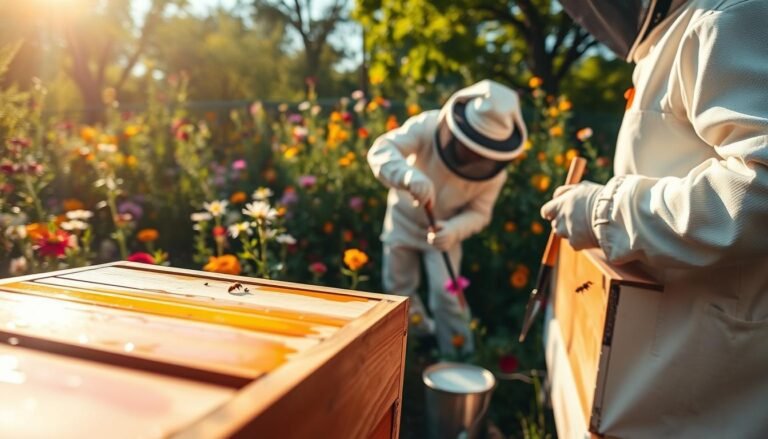
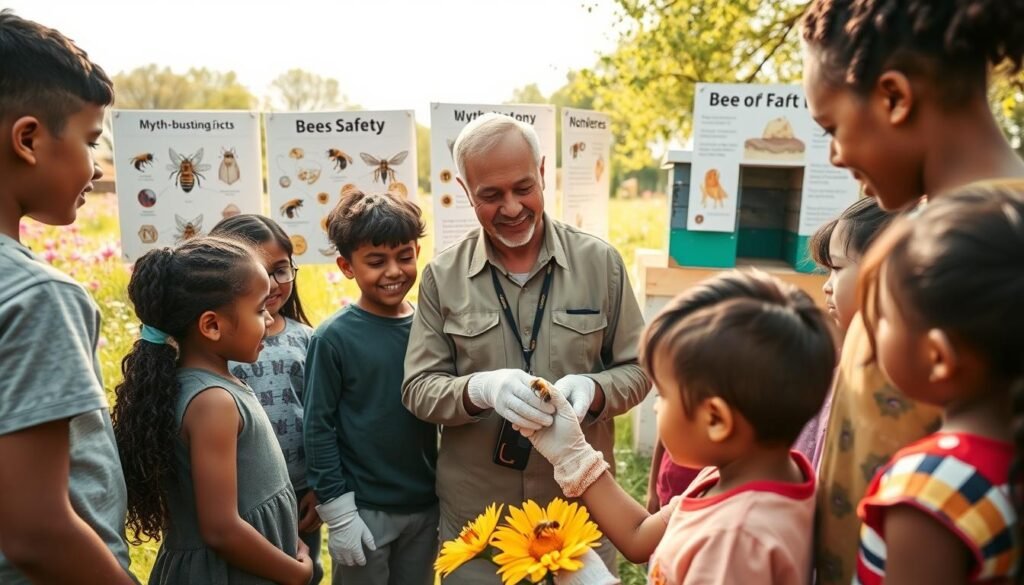
Invite local beekeepers for supervised viewing and classroom prep. Safe observation must keep distance from colonies and follow bee-safe practices.
Mobilizing schools, gardens, and partners
Link schools, parks, and nonprofits to plant native species and plan bloom succession. Shared planting days scale impact and build practical knowledge.
Linking learning to real-world benefits
Map local foods that rely on pollinators and show how biodiversity supports resilient food systems. Reinforce learning with journals, student talks, and cross-subject projects.
| Activity | Learning Goal | Next Step |
|---|---|---|
| Life-cycle demo | Understand stages of plants and insects | Plant fast-bloom seeds |
| Hive roles role-play | Identify queen, drones, workers | Visit an apiary with a beekeeper |
| Community planting day | Create habitat, link to food | Make signage and reflection journals |
beekeeping benefits offer practical guidance for school programs and safe apiary visits.
Hands-on activities that make pollination visible and memorable
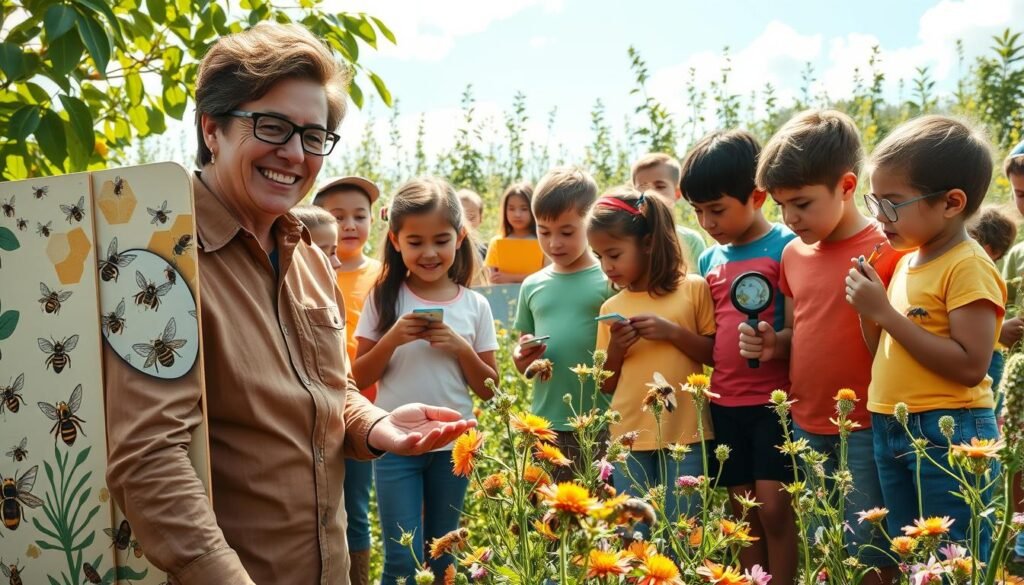
A mix of field observation, role-play, and tasting sessions helps learners link flowers and local flavor. These activities turn study into direct experience and spark lasting curiosity.
Observation and field experiences
Plan short bee walks where students note foraging at flowers and record different insects. Give clear tips: wear light colors, avoid strong scents, and keep distance from any hives or cavities.
Interactive lessons and role-play
Use the waggle dance as a movement game so learners map direction and distance. Stage role-play where one student is the queen and others handle foraging work and brood care. Simulations reinforce communication and colony roles.
Honey tasting and garden building
Offer small samples of local honey varietals and ask learners to match flavors to likely plants. Build a pollinator-friendly garden with native seeds, staggered bloom times, and a shallow “bee pond” of pebbles for safe drinking.
| Activity | Learning goal | Safety tip | Approx. time |
|---|---|---|---|
| Bee walk | Observe foraging behavior | Light clothing; move slowly | 30–45 min |
| Waggle dance game | Understand resource mapping | Use open space; brief rounds | 20–30 min |
| Honey tasting | Link flavor to flowers | Small portions; note allergies | 15–20 min |
| Planting day | Create habitat; track growth | Assign roles; supervise tools | 1–3 hours |
For structured lesson plans and seasonal schedules, see World Bee Day activities and consult local seasonal beekeeping tasks when arranging visits with beekeepers or observation hives.
Teaching safely and accurately: bee safety, sting response, and myth-busting
This section outlines simple routines that keep field lessons calm and safe. Clear steps help maintain attention and protect children during outdoor science time.
Practical safety practices for families and groups
Wear light-colored clothing and skip strong scents. Stay a respectful distance from any colonies in pipes, tree crevices, or buildings.
If bees become defensive, move briskly to an enclosed shelter. Cover faces with a shirt and avoid flailing arms. Do not jump into water.
Sting response and first aid
Remove the stinger immediately by scraping sideways with a fingernail or card. Do not pinch with tweezers; that can force more venom. Wash the area, use a cold compress, and monitor the child for allergic signs.
“Act fast, stay calm, and follow medical guidance if symptoms worsen.”
Common myths clarified
- Only female bees sting; most are nonaggressive unless provoked.
- Honey bee workers have barbed stingers and often sting once; queens rarely sting people.
- Not all species make honey — many are solitary and never live in hives.
- Wasps are different creatures: diets, color patterns, and behavior vary from bees.
Practical tip: Provide short handouts with key facts and first-aid steps for families. Model calm behavior, use accurate language, and schedule activities outside peak heat or stormy periods to protect both learners and the environment.
Conclusion
Practical lessons and small habitat steps turn classroom curiosity into lasting care.
Start local: plant diverse native plants, stagger bloom times, add a shallow water source, and select seeds suited to your region. These actions strengthen school and home gardens and help food systems.
Keep contact with local beekeepers for supervised hive visits and seasonal guidance. Small projects — a single garden bed or a shared tip — add up and build real conservation gains.
Document results: note which flowers attract the most visitors, record queen sightings, and track honey harvests. For lesson plans and support, see empowering the next generation.
Choose one project this week, share progress, and celebrate the life lessons that connect school, home, and the wider world.
FAQ
What are simple ways to introduce children to pollinators?
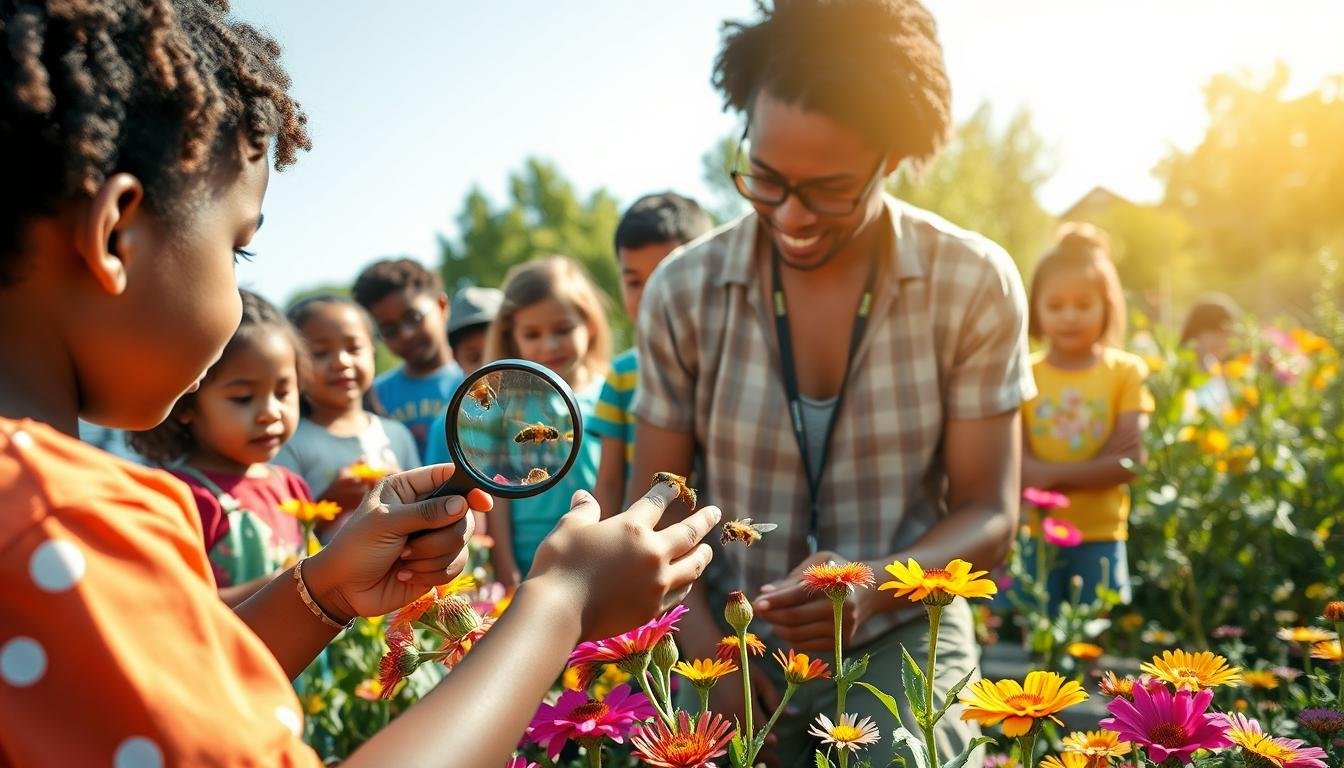
Start with short outdoor sessions in a garden or park. Use magnifying glasses for close looks at flowers and insects, point out nectar and pollen, and read a short picture book about honey bees or native pollinators. Keep activities under 30 minutes for younger learners and follow with a simple craft or drawing to reinforce the experience.
How can schools and neighborhoods partner with local beekeepers?
Contact local beekeeping clubs, university extension services, or Apiary Inspectors for guest talks, supervised hive visits, or classroom kits. Partnering can provide equipment loans, safety guidance, and practical demonstrations that bring life-cycle and hive structure lessons to students and families.
What classroom activities show the pollination process clearly?
Create a hands-on station where students act as pollinators using cotton swabs to transfer pollen powder between model flowers. Demonstrate the waggle dance using map-based directions and run a short role-play where groups represent queen, workers, and drones to explain division of labor in a hive.
How do taste tests connect plants, place, and honey?
Organize a guided honey tasting with small samples of varietal honeys (clover, orange blossom, buckwheat). Ask learners to note differences in color, aroma, and flavor, then link those traits back to the flowers and local habitat where the nectar originated.
Which plants best support pollinators in school or community gardens?
Choose native, nectar-rich species with staggered bloom times such as coneflower (Echinacea), milkweed (Asclepias), bee balm (Monarda), and native asters. Include a water source like a shallow “bee pond” and plant in clusters to make forage efficient for visiting insects.
What safety rules reduce sting risk during outdoor lessons?
Advise neutral-colored clothing, avoid strong fragrances, and teach children to move calmly near flowers and nests. Maintain a comfortable distance from active hives and have an adult supervise any close viewing. Use barriers or screened observation boxes for safe hive demonstrations.
What is the correct first aid for a bee sting?
Remove the stinger quickly by scraping with a flat edge, clean the area with soap and water, apply a cold pack to reduce swelling, and use an over-the-counter antihistamine or topical cream if needed. Seek medical help for allergic reactions such as difficulty breathing, swelling of the face or throat, or dizziness.
How can educators dispel common pollinator myths?
Use clear, simple facts: honey bees are not the only pollinators—many native bees, butterflies, and flies contribute; only female bees sting; bumble bees and solitary bees have different nesting habits than honey bee hives. Demonstrations, videos, and real specimens help replace fear with understanding.
Can young children safely visit a live hive?
Yes, when visits are led by an experienced beekeeper and safety rules are enforced: stay calm, follow instructions, wear protective gear if required, and observe from a safe distance. Use screened viewing boxes or a glass-fronted observation hive for close but secure learning.
What community projects scale pollinator education?
Start pollinator corridor plantings, school garden programs, citizen science projects like BeeWatch or iNaturalist monitoring, and public workshops in partnership with local parks or master gardeners. These initiatives combine hands-on learning with measurable conservation outcomes.