

Last Updated August 26, 2026
This review explains how pollinators underpin plant reproduction and ecosystem stability. Flowers serve as the reproductive organs of flowering plants, evolved to attract animal visitors that move pollen and boost genetic diversity.
About one-third of global food output relies on pollinating insects. In the United States, pollinators add roughly $24 billion to agriculture. Managed honey hives are common, though honey bees were introduced to North America and are not native.
Native fauna also matter: the U.S. hosts more than 4,000 native bee species that support plants and species diversity across varied habitat. Color, scent, and ultraviolet guides coevolved to direct visitors and make pollination efficient.
Measured declines in pollinator number and habitat quality raise urgent questions for growers, land stewards, and educators. This review will cover pollination basics, animal biology, the links among foraging behavior, floral traits, broader pollinator guilds, agricultural relevance, threats, and practical conservation steps.
Key Takeaways
- Pollinators are essential to plant reproduction and global food security.
- Flowers evolved traits that guide animal visitors for efficient pollination.
- Honey bees are managed and non-native; thousands of native bee species persist across the U.S.
- About one-third of food production depends on pollinating insects; economic impact in the U.S. is substantial.
- Declines in number and habitat quality make evidence-based conservation urgent.
Ecosystem context and pollination fundamentals in the present day
Flower production is a costly investment for many plants, yet it drives cross-pollination and genetic resilience.
Why flowering plants invest in blooms: reproduction, pollen, and genetic diversity
Flowers enable transfer of pollen to receptive stigmas so ovules can be fertilized and seeds formed. This process sustains plant species across areas and landscapes.
Cross-pollination mixes genes from different individuals. That genetic variation improves vigor and helps plants adapt to changing conditions. Self-pollination is less costly but reduces diversity.
Animal-mediated pollination versus wind: efficiency and outcomes
Wind pollination scatters large amounts of pollen with little direction, forcing plants to produce excess pollen.
In contrast, animal pollination is targeted. Coevolved floral traits—color, scent, nectar guides—draw specific pollinators and raise success per visit.
- Core system elements: flowers, pollen, nectar, and visiting animals that move pollen efficiently.
- Animal pollinators include bees, insects broadly, and birds; together they support food production and ecosystem resilience worldwide.
- Local plant species richness and area context shape visitation patterns and set the stage for specialization or generalization.
| Feature | Wind Pollination | Animal Pollination |
|---|---|---|
| Pollen production | Very high | Moderate |
| Targeting | Random dispersal | Directed by floral cues |
| Efficiency per pollen grain | Low | High |
| Common habitats | Open, windy areas | Flower-rich, diverse areas |
Why this matters: Understanding efficiency differences helps prioritize conservation and agricultural planning so that pollinators and flowering plants persist and sustain the food systems people rely on.
Bees as pollinators: traits, diversity, and efficiency
Morphology, vision, and behavior combine to make bees among the most effective pollinators in temperate landscapes. They spend much of their time collecting pollen and nectar, which drives high visitation rates to many flower types.
Melittophily: floral cues and bee vision
Melittophily describes plant traits tuned to attract bees. Flowers that target bees often show bright white, yellow, or blue colors and UV-reflective nectar guides that guide approach and landing.
Bees cannot see red, so floral signals cluster in spectra bees detect well. This sensory limit filters which blooms bees find during foraging and shapes floral evolution.
Native diversity and managed honey use
North America hosts over 4,000 native bee species. Honey bees, introduced by settlers, are managed and non-native but remain vital for many crops.
“Both honey and native bees contribute to crop pollination, though life histories and ranges differ.”
Pollen capture and transport
Bees carry pollen on branched body hairs that trap grains during contact. Many species also have hind-leg corbiculae, or pollen baskets, that speed transport to nests or hives.
| Trait | Function | Relevance |
|---|---|---|
| Branched hairs | Trap pollen | Increases transfer per visit |
| Corbiculae | Transport clumps | Efficient resource movement |
| Flight range | Foraging radius | Affects crop pollination strategy |
Specialized flowers, like snapdragons, require a landing weight that filters visitors and improves pollen placement. Nectar rewards and pollen protein shape foraging and colony performance, linking floral quality to pollinator health and reproductive outcomes.
Butterflies as pollinators: sensory ecology and feeding behavior
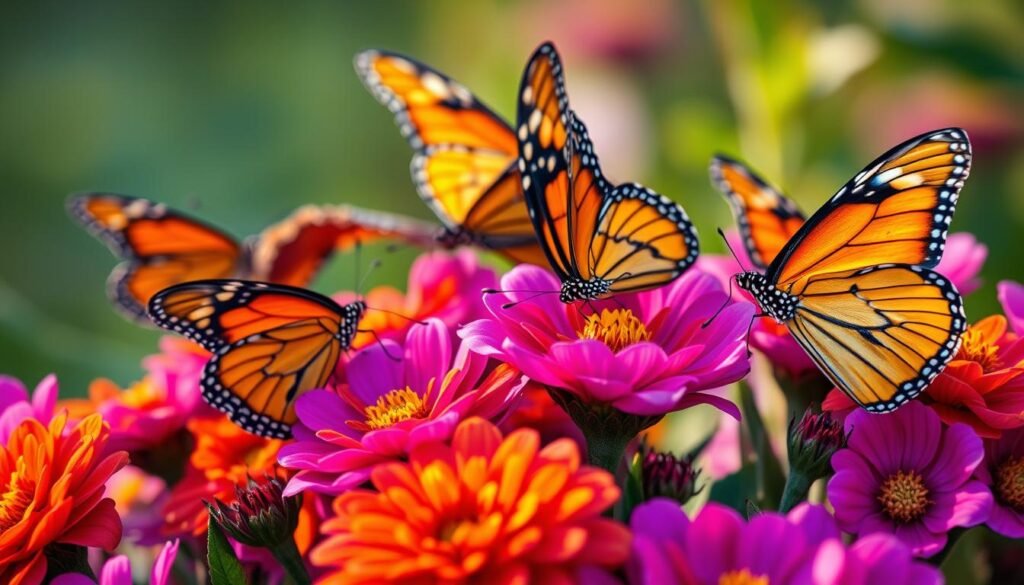
Butterflies rely on bright color signals and scent to find suitable flowers. Their vision includes red and ultraviolet wavelengths, and they respond strongly to floral fragrance. Many species prefer flat or clustered landing platforms near nectar sources.
Psychophily and floral cues
Psychophily describes plant traits that attract butterflies. Showy colors like red, pink, and purple plus strong scents match butterfly vision and smell. Plants such as Lantana and phlox exemplify this strategy.
Proboscis access and nectar nutrition
Butterflies feed with a long, flexible proboscis that reaches deep corollas. Flower tube length and nectar placement often evolve to match that reach.
Nectar is primary food for many butterflies. Beyond sugars, nectar blends can include vitamins, amino acids, and minerals that affect health, life span, and reproduction.
Pollen transfer and pollination role
As butterflies probe for nectar, pollen adheres to legs, mouthparts, and wing edges. This incidental transfer makes them effective pollinators for suitable flower types.
| Feature | Butterfly trait | Effect on plants |
|---|---|---|
| Color vision | Red & UV sensitivity | Favor showy blooms |
| Feeding organ | Long proboscis | Access deep nectar |
| Landing needs | Platforms or clusters | Selects open or flat corollas |
Compared to bees, butterflies depend more on color and scent and less on tactile handling. Gardens that mix colors, fragrances, and platforms support both pollinators and increase overall pollination services. For more on nectar foraging, see nectar foraging insights.
Interactions between bees and butterflies
Shared blooms often host multiple visitors, yet temporal use and handling styles reduce direct conflict while keeping pollen moving.
Niche overlap and temporal partitioning on shared floral resources
Visits overlap when blue, yellow, or scented cues attract different groups. Bees often forage early and follow efficient routes among conspecific flowers.
Other flyers arrive later and probe open corollas, which spreads visits across the day and limits peak competition.
Complementarity and cross-pollination benefits for flowering plants
Combined service increases seed set. Bee visits can deposit dense pollen loads, while butterfly visits extend effective pollination hours.
That complementarity helps plants maintain reproductive success when one pollinator declines.
Competition scenarios: resource scarcity and plant trait filters
When nectar or pollen are limited, contest rises. Floral filters—color, scent, corolla depth, and landing space—favor certain visitors.
Plant species with deep tubes or small platforms exclude some foragers and shift outcomes during shortages.
| Aspect | Typical effect | Implication for pollinators |
|---|---|---|
| Temporal partitioning | Continuous pollen flow | Reduces direct rivalry |
| Trait filtering | Selects visitors by morphology | Affects access during scarcity |
| Complementarity | Different pollen loads & timing | Boosts cross-pollination |
Practical note: Landscapes with staggered bloom and color diversity support both bees and butterflies, strengthening the plant–pollinator system and stabilizing food supply for people and wildlife.
Plant-pollinator coevolution and pollination syndromes
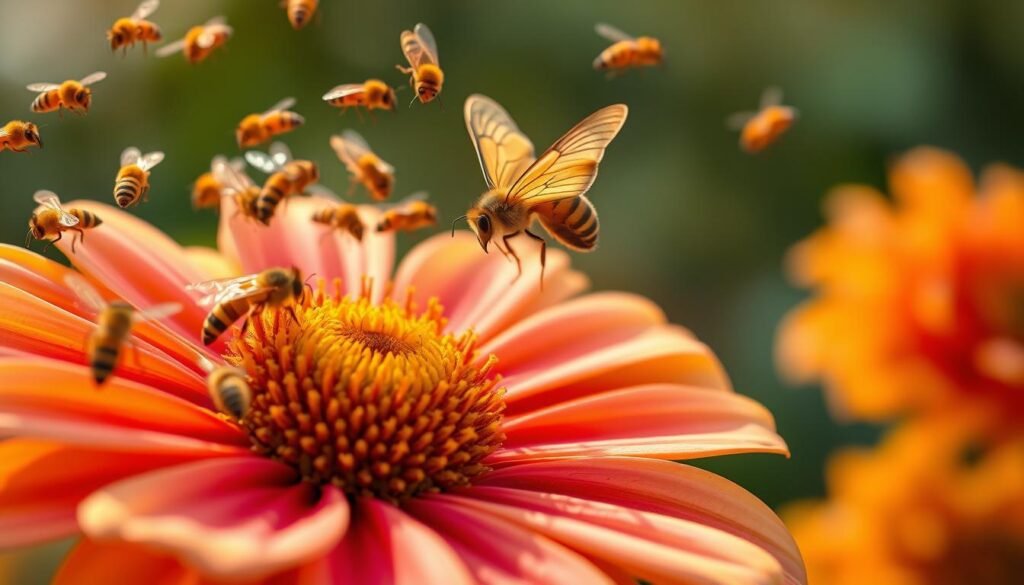
Coevolution has shaped many floral forms so that specific visitors fit like keys into plant locks. Pollination syndromes describe suites of traits—color, scent, rewards, and structure—that bias which pollinator groups visit particular flowers. These syndromes help explain how plant species attract the right animals to move pollen effectively.
Specialists versus generalists: how syndromes shape visitation
Specialist plant species match a narrow set of pollinator senses and body shapes. That tight fit often raises pollination efficiency but increases vulnerability if the partner declines.
Generalist plants use broad cues and showy displays that attract many pollinator types. This strategy can buffer plants from short-term shifts in visitor diversity.
Convergent floral traits driven by functional pollinator groups
Unrelated lineages often evolve similar flowers under the same pollinator pressures. Tubular, red blooms favor birds, while UV-patterned landing guides favor bee species. Such convergence highlights how pollinators shape floral form across the world.
Examples across taxa: snapdragons, Lantana, and phlox
Snapdragons require sufficient visitor weight to open petals, an effective melittophilous mechanism that controls access to pollen and nectar.
Lantana and phlox exemplify psychophilous design: bright color, fragrance, and clustered platforms that suit long-proboscis visitors. Together, these examples show how coevolution drives floral diversity and stabilizes mutualistic networks among plants and pollinators.
Pollinators beyond bees and butterflies: context within diverse guilds
Many other pollinator groups fill niches that flowers and farmers rely on year-round.
Birds often favor long, tubular, non‑aromatic flowers that supply large nectar volumes. Hummingbirds and sunbirds hover or perch while probing deep corollas, making direct contact with stamens and stigmas.
Moths visit at night. Pale, fragrant blooms like moonflower and woodland tobacco open at dusk to attract these nocturnal visitors. Night pollination widens temporal coverage of pollination beyond daylight hours.
Beetles represent some of the oldest flower visitors. They prefer bowl-shaped, robust blooms with musky or fermented scents. These traits tolerate clumsy feeding while ensuring pollen transfer.
Smaller taxa also matter. Flies and wasps probe open, accessible flowers and often work in cool or cloudy weather. Hoverflies, solitary wasps, and other insects boost pollen flow when other groups are scarce.
| Guild | Flower traits | Typical role |
|---|---|---|
| Birds | Long tube, vivid color, copious nectar | Effective at deep-corolla pollination |
| Moths | Pale, scented, night‑opening | Extend pollination into night hours |
| Beetles | Large, bowl-shaped, strong odor | Ancient pollinators; handle robust flowers |
| Flies & Wasps | Open, shallow flowers; varied scents | Support pollination in variable weather |
Collectively, these pollinators and insects raise the number of functional partners that stabilize plant reproduction. Including bumblebees and diverse species across the landscape increases resilience when one guild declines.
For further reading on diverse insect roles, see insect pollinators.
Agricultural relevance in the United States
Pollination services are central to modern U.S. agriculture. About one-third of global food relies on insect pollinators, and pollinators add roughly $24 billion to the U.S. agricultural economy. This support affects crop quantity and quality across many regions of North America.
Crop reliance and economic value
High‑value crops such as apples, almonds, and certain berries depend heavily on regular pollination visits. Farmers renting managed honey bee hives often do so to ensure dependable blossom coverage during peak bloom.
Managed hives, wild pollinators, and on-farm resources
Complementary roles matter: honey bees provide mobilized workforce while native bees, bumblebees, and butterflies enhance pollination breadth and resilience. Together they raise yields and fruit set in diversified cropping systems.
Practical steps that boost pollination services include planting regionally appropriate natives like butterfly weed, asters, and black‑eyed Susan in field edges, mixing cover crops, and creating hedgerows. These features supply nectar, pollen, and nesting resources across the season.
| Action | Benefit to crops | Additional agronomic gain |
|---|---|---|
| Renting managed honey bee hives | Reliable bloom pollination for apples, almonds | Flexible timing of service |
| Establishing native plant strips | Supports wild pollinators and extends foraging | Erosion control, habitat for beneficial insects |
| Cover crop mixes | Supplementary nectar and pollen during gaps | Soil health, weed suppression |
Investing in pollinator habitat often yields measurable returns in yield and quality. For guidance on linking conservation to farm practice, see pollinators benefit agriculture.
Threats to pollinator populations and interactions
The loss of meadows, hedgerows, and native patches severs links that many pollinators need to complete their life cycles. Habitat fragmentation reduces nesting sites and removes larval host plants, tightening resource bottlenecks for multiple species.
Habitat loss, floral resource decline, and host plant scarcity
Land development and herbicide use cut floral diversity. Seasonal gaps limit foraging, increase energetic stress, and disrupt normal movement across plant species. Moths, bumblebees, and other wild pollinators suffer when larval host plants vanish.
Pesticide impacts and behavioral effects
Widely used systemic insecticides—especially neonicotinoids such as imidacloprid, thiamethoxam, and clothianidin—impair navigation, learning, and memory in many bee species. Sublethal exposure reduces homing success and decision-making, and combined chemical use raises physiological stress.
Consequences for food security and plant reproduction
Declines in pollinators and populations lower pollination of flowering plants, reducing seed set and crop yields. Honey stocks have fallen in multiple regions, and these trends threaten regional food supply and global food stability.
- Habitat loss fragments nesting and feeding zones.
- Seasonal resource gaps undermine foraging efficiency.
- Cumulative stressors—pesticides, conversion, climate—accelerate population decline.
Conservation practices and planting guidance for U.S. landscapes
Designing pollinator-friendly areas balances beauty with functional habitat needs. Thoughtful planting and simple site choices make small spaces valuable for pollinators and wildlife.
Mindful planting: native species, bloom succession, and color diversity
Prioritize native plants adapted to local soils and climate. In the Mid-Atlantic, butterfly weed, asters, and black-eyed Susan provide reliable flowering spans.
Plan bloom succession so nectar and pollen resources persist from spring through fall. Mix colors and corolla shapes to suit different visitor handling styles and boost pollination.
Designing pollinator gardens: site selection, water sources, and maintenance
Choose sunny, wind-sheltered areas and keep dense bee-attractant plantings away from high-traffic space. Add shallow water basins with pebbles and leave small bare patches for nesting and thermoregulation.
Seasonal pruning, reduced fall cleanup, and staggered mowing help preserve habitat and extend flowering windows for native bees and other pollinators.
Avoiding harmful practices: limiting pesticide use and cultivar pitfalls
Minimize pesticide use and adopt integrated pest management to protect beneficial insects. Be cautious with cultivars that trade nectar or pollen for showy traits; select proven pollinator-friendly selections and monitor flowering performance over time.
Conclusion
Healthy pollinators underpin plant reproduction, reliable crops, and resilient landscapes in a changing world.
Bees and butterflies play major roles through coevolved links that boost pollination efficiency. Managed honey supports production, while wild bee diversity and free‑flying species widen service across bloom periods.
Habitat loss, pesticide exposure, and seasonal resource gaps threaten pollinator populations and reduce seed set. Practical steps—diverse native plantings, staged flowering, and reduced chemical use—can restore function in the local system.
For detailed guidance and regional lists, consult the plant science review. Small, steady stewardship gains scale up to meaningful benefits for pollinators, plants, and food security.
FAQ
What roles do bees and butterflies play in pollination?
Bees and butterflies serve as key pollinators for many flowering plants. Bees, including honey bees and bumblebees, transfer large amounts of pollen using branched hairs and corbiculae, which makes them efficient at fertilizing crops and wild plants. Butterflies use a long proboscis to access nectar, moving pollen between flowers in ways that complement bee foraging and can enhance cross-pollination and plant genetic diversity.
How do floral traits attract bees versus butterflies?
Flowers use color, scent, nectar guides (including UV patterns), and landing platforms to signal rewards. Melittophilous traits—bright blue or yellow hues and strong scent—appeal to many bees, while psychophilous traits—red tones, flat landing areas, and scented nectar—often attract butterflies. Convergent floral traits can attract multiple pollinator guilds like flies, moths, and beetles when resources overlap.
Do bees and butterflies compete for the same flowers?
They can, but competition depends on resource abundance and timing. Temporal partitioning and niche differences reduce direct conflict: bees often harvest pollen and nectar intensively, while butterflies typically sip nectar. When floral resources are scarce, competition may intensify, and plant trait filters determine which visitors dominate.
How important are honey bees compared with native bees in U.S. agriculture?
Managed honey bees are crucial for many crops due to their hive mobility and large foraging workforce. Native bees, however, contribute high pollination efficiency for specific crops and wild plant species. Together they support crop yields, resilience, and biodiversity across North American agricultural landscapes.
What threats reduce pollinator populations and interactions?
Pollinator declines stem from habitat loss, fewer flowering resources, loss of larval host plants, and pesticide exposure such as neonicotinoids. Diseases, climate change, and agricultural intensification also undermine populations of native bee species, butterflies, and other pollinators, with consequences for food security and ecosystem services.
How do pesticides affect pollinator behavior and physiology?
Certain insecticides impair navigation, foraging, and reproduction. Sublethal doses of systemic chemicals can alter bee learning and reduce butterfly larval survival. These impacts disrupt pollination networks and crop pollination services, especially where floral resources are limited.
What planting practices support both bees and butterflies?
Use native plant species with staggered bloom succession, provide varied flower colors and structures, and include larval host plants for butterflies. Add water sources, nesting habitat for native bees, and avoid mass-market cultivars lacking nectar. These steps increase floral resources and habitat diversity across gardens and farms.
Can planting a single wildflower mix benefit multiple pollinator groups?
A well-chosen mix helps, but diversity matters. Include species that offer pollen and nectar, varied bloom times, and structures suited to different feeders—short-tubed flowers for many bees and long corolla species for butterfly proboscises. This approach supports bees, butterflies, moths, flies, and beetles within the broader pollination system.
How does coevolution shape pollination syndromes in plants?
Pollination syndromes arise when floral traits evolve in response to the sensory abilities and behaviors of functional pollinator groups. Specialists develop tight matches with particular pollinators, while generalists attract many visitors. Examples include snapdragons and phlox, which show convergent traits across regions due to similar pollinator pressures.
What economic value do insect pollinators provide to U.S. crops?
Insect pollinators contribute billions of dollars annually by improving yields and quality for fruits, nuts, and vegetables. Both managed honey bees and native pollinators support crop production; maintaining diverse pollinator communities enhances agricultural resilience and reduces reliance on a single species.


