Published November 26, 2025 · Last Updated August 26, 2026
Bee communication is a rich, multifaceted system that lets honey bees share vital information about food, threats, and tasks inside the hive. Movement, odor, vibration, and touch all play roles in how a colony stays organized and efficient.
The waggle dance, decoded by Karl von Frisch, encodes direction and distance to forage relative to the sun. Honey bees also see ultraviolet markings on flowers, so foragers gather detailed cues about nectar sources and bring that information back to the hive.
Odor-based signals and pheromones coordinate brood care, mark danger, and stabilize social roles. Mechanical signals like piping and vibrations work well in low-light comb cavities, where touch and vibration help workers interpret messages.
This guide turns scientific insights into practical steps. You will learn to read visible dances, recognize common chemical signals, and distinguish true signals from incidental cues. The result: safer hive work, less stress for the colony, and better outcomes for both humans and pollinators.
Key Takeaways
- Movement and odor are primary channels for hive coordination.
- The waggle dance gives precise direction and distance to food.
- Honey bees use UV cues to collect and share rich flower information.
- Pheromones maintain social order and signal threats.
- Mechanical signals suit the low-light hive environment.
- Understanding these systems improves beekeeper safety and colony health.
How to Use This How‑To Guide to Decode Bee Communication Today
Start at the hive entrance and watch traffic and fanning for a few minutes. Note arrival rates, scent-directed fanning, and any quick shifts in buzzing. These simple cues set the scene before you open frames.
Next, inspect inside frames under red-filtered light or a low-output headlamp. Focus on dance orientation and duration first, then add odor cues like attraction or fanning to avoid confusion. Carry a notebook or use an app to log dance intensity, direction, and the time and weather for later comparison.
Practice a short, repeatable routine: entrance → one-frame check → record → follow up. After seeing a vigorous waggle sequence, compare notes with bloom maps or known forage to verify probable location and resource quality.
- Record colony context: queen status, brood pattern, and stores.
- Keep observations brief but regular—five minutes daily builds useful datasets.
- Pause work and retreat if buzzing jumps in intensity; safety matters as much as decoding signals.
For deeper methods on how honey bees communicate, consult this resource: how honey bees communicate. Practice consistently and you will extract clearer information about hive needs and nearby honey sources.
Know Your Hive: Roles of Queen, Worker Bees, and Drones for Context
Start by mapping who does what in the nest; that context clarifies nearly every message you observe. A quick check of the queen-right status and brood presence changes priorities and the signals you should expect.
Queen signals: pheromones that regulate the colony and swarming
The queen’s main channel is chemical. Queen mandibular pheromone (QMP) broadcasts her presence, holds the social order, and helps suppress new queen-cell building.
QMP stabilizes work patterns across the hive and plays a key role in swarming decisions.
Worker tasks and messaging: from foraging to receiver bees
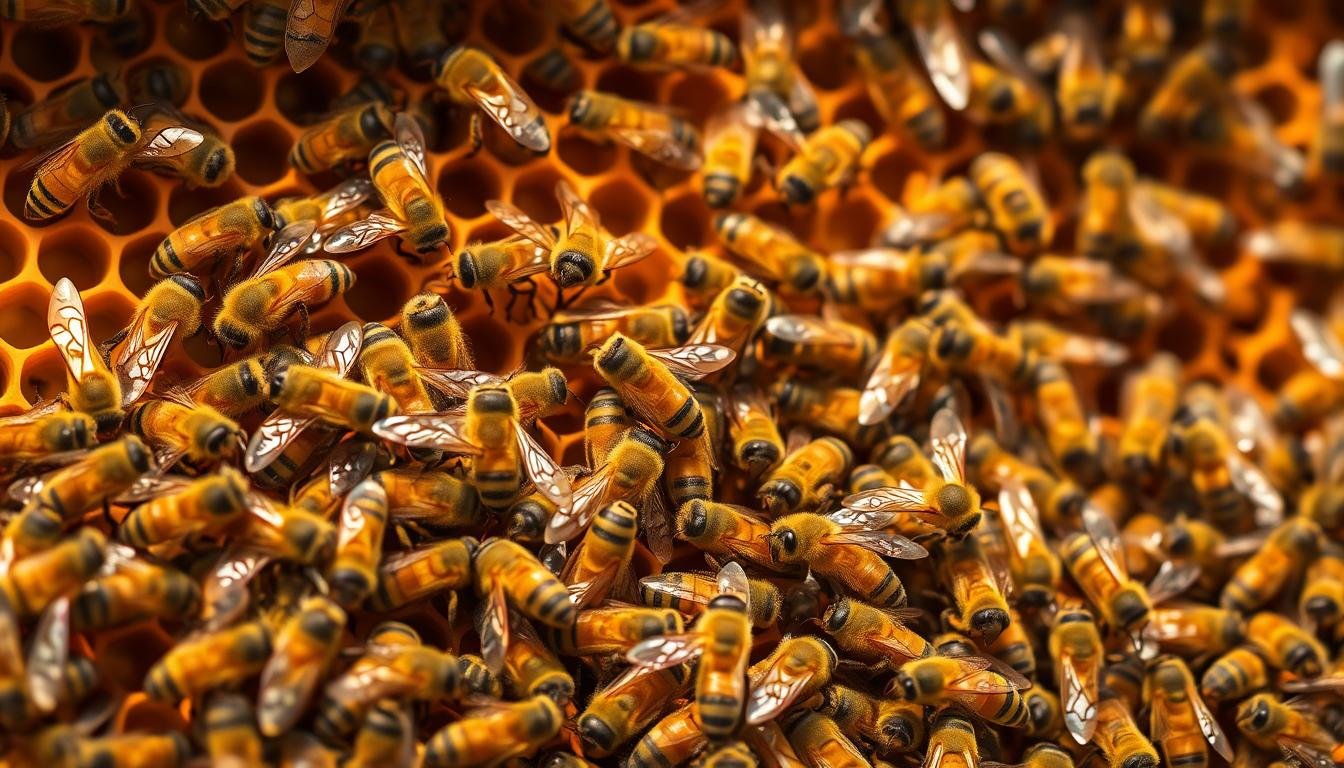
Worker bees shift tasks with age. Young workers clean and nurse; older workers forage and act as receivers at the entrance.
Receiver delays tell foragers the flow is congested. Longer unload times trigger tremble dances that recruit more receivers and rebalance effort.
- Trophallaxis and antennal contact pass nectar and status quickly.
- Dances and mechanical signals coordinate timing and effort among workers.
- Traffic at the entrance often reflects receiver recruitment and heavy forager flow.
Drones focus on mating and are typically removed before winter when resources favor survival. Together, these roles and their signals let the colony make real-time decisions.
Before trying to read dances, confirm queen-rightness and brood patterns. Knowing who emits which cues helps you interpret intent and improves practical hive management. For more on colony structure, see colony organization.
How Honey Bees See Flowers: UV Nectar Guides, Color, and Location Cues
Some blossoms wear secret patterns visible in ultraviolet light that steer foragers to rewards.
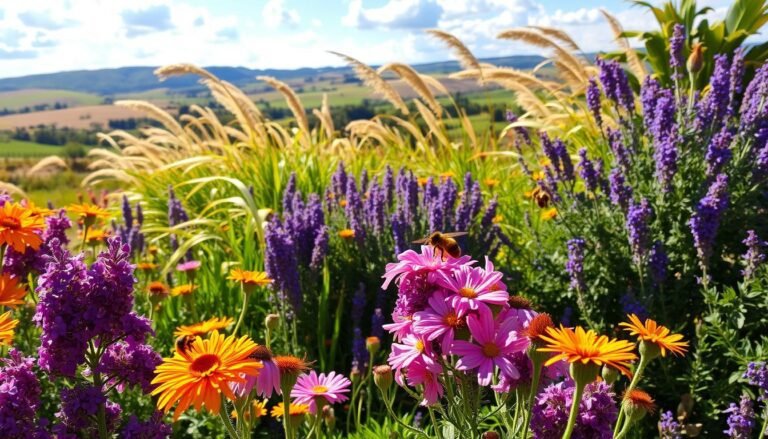
Ultraviolet nectar guides form arrows, bullseyes, or lines on petals. These patterns are invisible to people but tell a honey bee exactly where nectar and pollen sit.
Under daylight, a red blossom that looks uniform to us can show sharp UV contrast to foragers. That contrast helps bees see targets quickly and reduces wasted flight time.
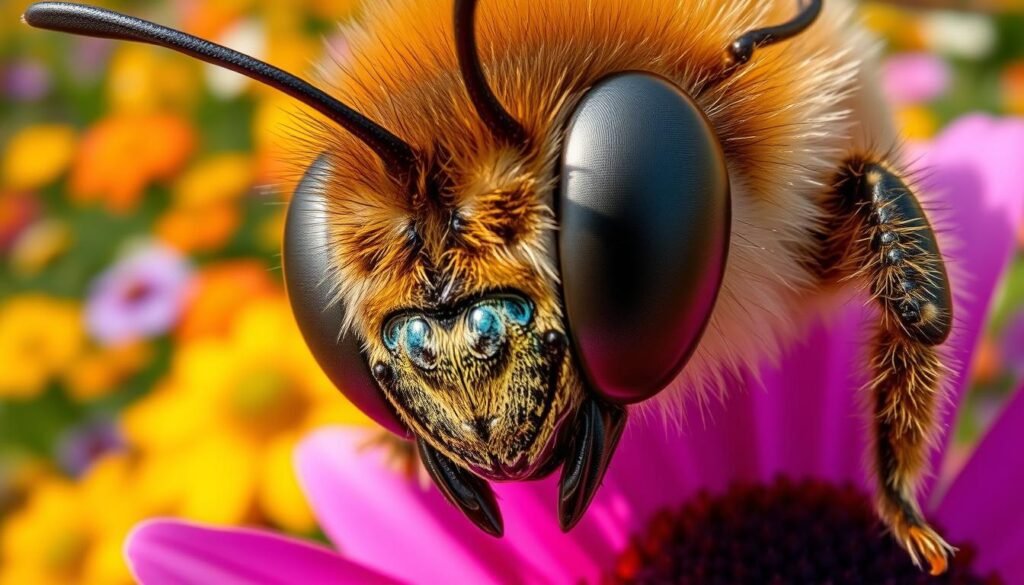
Detecting UV, color contrasts, and petal texture lets foragers assess reward and memorize the flower’s location relative to landmarks. Better visual acquisition in the field produces more precise dance messages about direction, distance, and quality back at the hive.
- Consistent nectar guides across species create predictable routes for repeat visits.
- Foragers store floral odors and taste cues that later act as incidental hints during in-hive dances.
- Rapid detection conserves energy and shortens foraging cycles, boosting colony food throughput.
Field tip: watch which flower colors and shapes bees favor at different times of day, since UV reflectance and nectar can shift with sun angle and temperature.
Using bloom maps and local plantings helps anticipate where location cues will concentrate foragers. This visual processing lays the groundwork for accurate dance signals and efficient resource transfer.
Learn more about regional patterns and planting strategies for pollinators with a guide to foraging for nectar.
Dance Language Inside the Hive: Reading Direction, Distance, and Quality
Workers convert landscape bearings into precise angles and tempos on the comb surface. These body movements let others find rich patches without leaving the hive.
Round dance signals nearby resources, usually within about 50 meters. Look for tight circular motion with direction reversals. Occasional short waggles in the circle hint at patch quality.
Waggle dance uses a straight waggle run inside a figure-eight. The angle of that run on a vertical comb maps to the sun’s azimuth and thus the outside direction.
Duration and tempo encode distance: longer waggle runs mean farther targets. More repeats and a faster tempo often indicate higher travel cost or a better food source.
Karl von Frisch decoded this system and showed how angle tracks sun movement. His experiments linked waggle geometry to precise location cues.
Intensity matters. Vigorous waggles, long sequences, and many followers boost recruitment. Followers use antennal contact to sense vibrations and floral odor on the dancer’s body, combining direction with scent to refine search.
Collective decisions emerge when multiple dancers advertise the same bearing. Strong recruitment to one quadrant may prompt management actions, such as moving supers or checking nearby forage.
“Track repeated waggle angles across several dancers and validate by surveying the landscape along that bearing.”
Practical tips: stand to the side and use low light. Note dominant waggle bearings, then scan that azimuth for flowering patches, water, or resin sources to confirm the signal.
Pheromones and Odor Cues: The Chemical Signals That Coordinate the Colony
Chemical cues form a silent web that guides work, gathers recruits, and sets alarm states inside the comb.
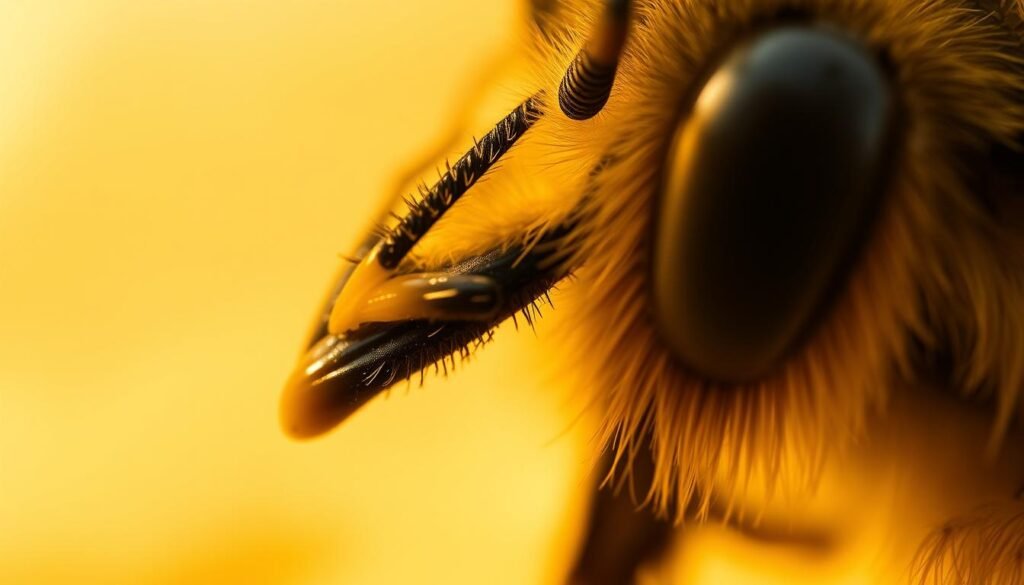
Nasonov gland pheromone advertises location. Workers raise their abdomens and fan at the entrance or on swarm clusters to release a plume. That scent plume helps nestmates orient to a new nest or a local landing point.
Nasonov gland pheromone
Field cue: steady fanning at the entrance often signals orientation or recruitment to a nearby source of food or water.
Queen mandibular pheromone (QMP)
QMP continuously broadcasts the queen’s presence. This reduces queen-cell initiation and keeps workers aligned on maintenance tasks. The persistent odor maintains colony cohesion and social stability.
Alarm and brood pheromones
Alarm pheromones recruit guards and raise defensive readiness. Even small amounts of alarm odor can speed escalation, so minimal disturbance during inspections matters.
Brood pheromones cue nurses to feed, warm, or cap larvae. These gradients concentrate work where developing young need the most care.
| Signal | Typical emitter | Primary effect | Field cue |
|---|---|---|---|
| Nasonov | Worker | Orientation & nest attraction | Fanning at entrance, plume visible from swarm |
| QMP | Queen | Social cohesion; suppresses queen rearing | Even distribution of care; fewer new queen-cells |
| Alarm | Guard/worker | Recruit guards; heighten defense | Sharp odor, sudden buzz increase |
| Brood | Larvae/pupae | Stimulate nursing and cell care | Focused nurse activity near brood frames |
“Odor on dancers doubles as a floral identity cue, streamlining search after followers exit the hive.”
These chemical signals work together with waggle and tremble signals. Odor gradients add context to movement-based messages. For practical apiary work, avoid strong perfumes or scented gloves during inspections and schedule checks when the hive is calm.
Vibration, Sound, and Touch: Mechanical Signals Bees Use
Mechanical cues—subtle shakes, piping, and low-frequency hums—trigger fast shifts in hive activity. These non-chemical messages help the colony act when light is low or speed matters.
Tremble dance, DVAV, and piping
The tremble dance appears when foragers face long unload times. A forager vibrates to recruit more receivers and rebalance labor.
The DVAV (dorsoventral abdominal vibration) is a brief shaking that raises overall activity. It often precedes task shifts or mass readiness.
Worker piping is a wings-together tone that tells nestmates to warm flight muscles before departure. It commonly rises before swarm flights.
Antennae, body hairs, and vibration sensing
Antennae serve as tactile and chemosensory tools, letting receivers sense dancer motion and scent together.
Body hairs with nerve endings detect specific frequencies. That tuning lets bees read signals even in darkness.
“Listen for subtle piping and watch for widespread shaking; these often forecast operational shifts or swarm readiness.”
- Spot tremble dances early to find nectar-handling bottlenecks and add space.
- Minimize tool knocks and hive vibrations during inspections to avoid false alarms.
- Combine vibration cues with visual dances to get a fuller picture of colony needs. See more on touch signals: touch signals.
From Signals to Cues: What Bees Intend vs. What Others Infer
Inside the nest, deliberate messages and casual clues work together to guide collective choices.
Signals are evolved acts that convey intent. Core honey bee signals include the waggle and round dances, tremble, DVAV shaking, buzz runs, grooming invitations, and worker or queen piping.
Cues are incidental facts others can use. Floral odor clinging to a dancer’s body, time-to-unload at the entrance, temperature gradients, and light direction are all cues that convey usable information without deliberate sending.
Practical points
- Log both signals and cues during inspections to avoid over-attributing intent.
- Prolonged unload times may indicate a receiver shortage or a shift in nectar flow.
- Odors from cells reveal brood or honey needs and guide task allocation.
“Combine a clear waggle signal with scent and temperature cues to narrow search areas and speed accurate foraging.”
| Type | Example | What it signals or cues |
|---|---|---|
| Signal | Waggle dance | Direction & distance to food source |
| Signal | Tremble/DVAV | Adjust workforce or readiness |
| Cue | Floral scent on dancer | Identity of nectar source |
| Cue | Hotter comb zone | Thermoregulation need |
Many animals use both signals and cues; honey colonies excel at reading incidental information to speed decisions. Season changes alter meanings, so compare inside observation with outside findings repeatedly to refine your model.
How to Observe Bee Communication: Practical Steps for Beekeepers and Learners
Good hive watching starts with quiet, low-light checks at consistent times. Begin at the entrance for a few minutes, then move inside the hive for short frame observations.
Inside the hive: spotting dances and receiver activity
Use red-filtered or minimal light. Dancers perform on vertical comb and rely on touch and vibration.
Find a dancer: note the waggle run angle and duration, count followers, then check if returning foragers unload quickly. Longer unload times often trigger tremble dances and signal the need for more receivers or added space.
At the entrance: listening and watching fanning
Listen for pitch and volume changes. A sudden rise in buzz can mean agitation; steady fanning often signals orientation or ventilation driven by Nasonov scent.
Record entrance fanning, unload time, and pollen colors on returning bees to link entrance cues with likely food sources.
Field foragers: inferring quality from return-hive behavior
When safe, note flight paths and then compare with return-hive signs: heavy pollen loads, distended abdomens, or vigorous dances. Correlate bearings with maps or landmarks to predict location and confirm by observing which blooms match pollen colors.
Practical habit: keep short, regular observations at the same time each day and log angle, duration, follower count, unload time, entrance buzz, and fanning activity to build reliable information.
“If buzz intensity spikes or guards become aggressive, close gently and reassess later for safety.”
Bridging Bees and Humans: Interpreting Buzzing, Safety, and Ethical Insight
Listen closely: changes in volume, pitch, and note density at the entrance are useful, real-time cues for humans working a hive. A calm, low hum usually means it is safe to continue. A louder, insistent buzz often warns of agitation or perceived threat.
Reading rising buzz intensity as a warning signal
Rising buzz often pairs with more guards at the entrance and rapid release of alarm pheromones. When you hear that shift, pause and scan for increased guard patrols, fanning, or rapid flight near the landing board.
Move slowly, avoid banging frames, and never crush insects under your tools. Gentle handling keeps defensive thresholds low and reduces stress on the colony.
Practical habits: practice entrance listening before opening hives, schedule inspections in good weather and during nectar flow, and respect brood areas by limiting exposure time and returning frames to their original order.
“When in doubt, a calm retreat protects both people and honey bees.”
Use protective gear as a safety net, not a reason to ignore clear signals. Interpreting sound well keeps operations safer and minimizes disruption to their work, especially when a strong food source is being advertised and recruitment is active.
Conclusion
By pairing careful watching with a few repeatable checks, you turn short dances and scents into clear actions for the apiary.
Read signals and cues together: intentional acts like the waggle dance give direction and distance, while floral odor, unload time, and brood heat act as useful extras. Remember karl von frisch—his work still anchors modern practice.
Actionables: watch dance angles, note unload times, listen for buzz shifts, and read fanning at the entrance. Match repeated pollen colors, steady bearings, or changes near brood cells to field findings.
Keep concise logs, respect the nest during checks, and use these insights to time interventions so bees can reach food and flowers more efficiently. Practice turns momentary information into safer, more productive work for both pollinators and others.
Learn more about practical decoding and site cues at bee communication and hive location.
FAQ
What is the basic way honey bees share information about food?
Foragers perform distinct body movements inside the hive to indicate location and quality of a food source. A short circular motion signals nearby rewards, while a precise waggle sequence encodes distance and direction relative to the sun. Dancers also carry floral odor and use glandular scents so nestmates can identify the flower type.
Who produces signals that shape the colony’s behavior?
The queen emits mandibular pheromone to maintain social cohesion and suppress emergency queen rearing. Worker bees generate most foraging and task-related signals: foragers dance, receiver bees accept nectar, and guard workers release alarm cues. Drones play no role in colony signaling for tasks.
How do ultraviolet patterns on flowers affect foraging?
Many blooms show UV nectar guides that direct returning foragers to nectar and pollen. These visual cues work with color perception and scent to speed recognition. Foragers rely on such combined signals to choose profitable patches and communicate those locations back at the nest.
What information does the waggle dance encode?
The waggle dance communicates three key elements: the direction relative to the sun, the linear distance to the resource, and the quality indicated by the vigor and repetition of the dance. Karl von Frisch first decoded this system and demonstrated how precise it can be.
How can beekeepers spot a round dance versus a waggle dance?
In low-light comb areas, a round dance appears as tight circular motions and indicates nearby sources within a few dozen meters. The waggle dance includes a straight run with side-to-side waggling; its angle on the vertical comb reflects the compass bearing toward the site.
What role do pheromones like Nasonov and alarm signals play?
Nasonov gland emissions attract nestmates to a site and aid orientation, especially during swarming or at new nectar sources. Alarm and brood pheromones mobilize defense and caregiving tasks, shifting worker allocation rapidly when threats or vulnerable brood appear.
Besides dances and scents, what mechanical cues do workers use?
Bees use vibration, piping, and tremble signals to coordinate tasks. Antennal contact and body hair detect subtle vibrations and temperature changes. These mechanical cues help regulate unloading behavior, recruit receivers, and influence decision-making during swarms.
How do observers differentiate intentional signals from incidental cues?
Signals are produced to change receiver behavior—like a waggle dance recruiting foragers—while cues are by-products such as floral odor clinging to a dancer. Observers look for consistent behavioral responses; repeated, directional displays that alter recruitment are true signals.
What practical steps help a learner observe communication inside a hive?
Use a well-lit observation colony or a frame by frame inspection under diffuse light. Watch for repeated runs on comb, note attendant receiver bees, and follow returning foragers at the entrance. Recording video at higher frame rates helps decode subtle movements and timing.
How can someone safely interpret buzzing intensity at the hive entrance?
Rising buzz levels and synchronized piping can indicate agitation or an alarm state. Approach slowly, avoid abrupt movements, and observe fanning or defensive flights. Proper protective gear and minimal disturbance let you assess signals without escalating colony stress.