Sue Hubbell was a Brown University librarian with no beekeeping experience when her thirty-year marriage ended in the early 1970s and she found herself alone on ninety acres in the Missouri Ozarks with roughly 300 hives to run. She turned that unlikely, unchosen situation into A Book of Bees (1988), a New York Times Notable Book that remains one of the most widely admired pieces of beekeeping literature ever written by an American author — and one built entirely on real, first-hand, often difficult commercial experience rather than romanticized hobby-farm distance.
Key Takeaways
- Sue Hubbell (1935–2018) was a Brown University serials librarian who became a commercial Missouri Ozarks beekeeper, running around 300 hives, after her marriage ended in the 1970s.
- Her 1988 book A Book of Bees: And How to Keep Them was named a New York Times Notable Book, blending memoir, nature journal, and real beekeeping instruction.
- She was also a frequent contributor to The New Yorker, Smithsonian, and Time, and wrote the earlier related memoir A Country Year: Living the Questions (1986), also a NYT Notable Book.
- Hubbell’s writing is distinguished by being drawn from genuine commercial beekeeping under real financial pressure, not a hobbyist’s occasional weekend at the hives.
- She died in 2018, leaving a body of nature and beekeeping writing still recommended alongside Richard Taylor’s as proof the craft supports genuinely literary treatment.
Table of Contents
- Who Was Sue Hubbell?
- From University Librarian to Ozarks Beekeeper
- From Ten Hives to Three Hundred
- A Book of Bees: What Makes It Different
- Her Wider Writing Career
- Leaving the Ozarks: Her Later Years in Maine
- Why Her Perspective Still Matters
- Frequently Asked Questions
Who Was Sue Hubbell?
Sue Hubbell was born January 28, 1935, and died October 13, 2018. Before beekeeping ever entered her life, she worked as a serials librarian at Brown University — a detail worth dwelling on, because almost nothing about that early career suggested the turn her life was about to take. She and her husband relocated to a ninety-acre property in the Missouri Ozarks in the early 1970s and began keeping bees together as a joint venture. When the marriage ended, Hubbell stayed on the land alone, kept the bees, and built a genuine commercial honey operation to support herself — not as a literary device, but as an actual livelihood.
From University Librarian to Ozarks Beekeeper
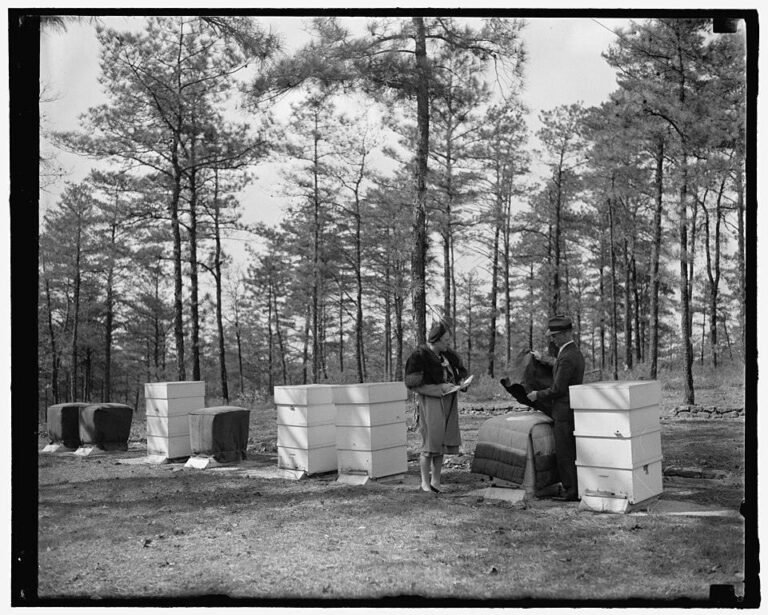
By the time she was writing about it, Hubbell was managing roughly 300 hives — the same order of magnitude as Richard Taylor’s operation, and squarely commercial scale rather than hobby scale. She ran the business largely on her own, doing the physical labor of extraction, equipment maintenance, and honey sales herself, year-round, in a rural setting with none of the built-in support a university career had provided. That lived reality — solitary, physically demanding, financially real — is what separates her writing from more detached nature journalism. The bees, in her account, were never a metaphor first; they were a job she had to get right or go without income.
From Ten Hives to Three Hundred
Hubbell’s operation didn’t start at commercial scale. According to her own account in A Country Year, she and her husband began with just ten hives, growing the operation to 40, then to 100, before it reached roughly 300 colonies by the time she was running it alone. She describes the business candidly, without any romantic gloss, as “a shaky, marginal sort of affair that never quite leaves me free of money worries but which allows me to live in these hills that I love” — a line reviewers and later profiles return to repeatedly because it captures exactly the tone that separates her writing from more idealized rural-life memoirs. Part of that reality was distinctly unglamorous: she taught herself tractor repair and basic carpentry out of necessity, and during the fall honey-selling season she drove much of the harvest to market herself, at times sleeping in her vehicle on the road rather than paying for lodging, running her own de facto wholesale distribution route with no outside sales staff.
A Book of Bees: What Makes It Different
A Book of Bees is described by its publishers and reviewers as “a melodious mix of memoir, nature journal, and beekeeping manual” — a description that captures why it’s still read by people with no beekeeping interest at all, alongside beekeepers looking for real technical grounding.
Published in 1988, A Book of Bees: And How to Keep Them walks through the practical mechanics of running hives across a full season — swarming, extraction, wintering, market realities — while never losing the memoir thread of a woman rebuilding an independent life on her own terms in a physically demanding rural trade. The New York Times Book Review named it a Notable Book of the Year, a distinction it shared with Hubbell’s earlier work A Country Year: Living the Questions (1986), which covers similar ground from a slightly broader angle — her full life on the Ozarks property, of which the bees were the economic center.
Her Wider Writing Career
Hubbell’s beekeeping writing wasn’t a one-off. She became a regular contributor to The New Yorker, Smithsonian, and Time, and wrote frequently for the “Hers” column of The New York Times — a genuinely national literary career built substantially on her Ozarks apiary experience as source material. That she could turn commercial beekeeping into subject matter serious literary editors wanted is itself notable; it’s a much harder trick than writing about beekeeping for an audience that’s already interested in bees. The Missouri Department of Conservation’s own Missouri Conservationist magazine profiled her rural-writing career in a 1996 piece, “Broadsides from the Ozarks,” underscoring how thoroughly she’d become associated with the region’s natural-history writing tradition, not just with bees as an isolated subject. She continued publishing well beyond her two most beekeeping-centered books, extending the same close-observation approach to other corners of the natural world in later work — evidence the Ozarks apiary was the launching point for a broader literary career rather than its sole subject.
Leaving the Ozarks: Her Later Years in Maine
Hubbell’s Ozarks chapter, though the one she’s best remembered for, wasn’t the end of the story. After roughly 25 years on the Missouri farm, she gave up the property in the late 1990s — razing the buildings and conveying the land to the state of Missouri — and relocated to Milbridge, Maine, to be closer to her son and his family. Through the 1990s she’d already been splitting time between the Ozarks and Washington, D.C., researching at the Library of Congress and the Smithsonian for her book Broadsides from the Other Orders: A Book of Bugs; from Maine, she went on to publish Waiting for Aphrodite, about marine invertebrates, and Shrinking the Cat, about evolutionary genetic engineering — proof the close-observation nature-writing approach she developed watching her own bees carried over intact to entirely different subjects. She died in Bar Harbor, Maine, on October 13, 2018, at age 83, after living with dementia in her later years, under the care of her son, Maine state representative Brian Hubbell, and his wife — a life covered in detail by the Bangor Daily News at the time of her death.
Why Her Perspective Still Matters
Most widely read beekeeping literature comes from either dedicated hobbyists writing for other hobbyists, or from career apiculturists writing primarily for a technical audience. Hubbell’s writing occupies a rarer space: someone with no beekeeping background at all, thrown into commercial-scale responsibility by circumstance, who then had both the discipline to run the business competently and the literary skill to make the experience legible to readers who’d never consider keeping a single hive. That combination is part of why she’s still grouped, decades later, with philosopher-beekeeper Richard Taylor as one of the two writers most often credited with proving beekeeping literature can stand on its own as literature — not just as instruction with a personality attached, even though Taylor arrived at the craft by lifelong choice layered onto an academic career, while Hubbell was thrown into commercial-scale responsibility by circumstance with no prior background at all. See our roundup of other famous people who kept bees for more of the field’s most influential voices.
Frequently Asked Questions
What is Sue Hubbell’s most famous book?
A Book of Bees: And How to Keep Them (1988) is her best-known work and the one most directly about beekeeping, though A Country Year (1986) covers overlapping territory and was also a New York Times Notable Book.
Was Sue Hubbell a hobbyist or a commercial beekeeper?
Commercial. She managed roughly 300 hives as her actual livelihood in the Missouri Ozarks, running the operation largely alone after her marriage ended.
Did Sue Hubbell have any beekeeping background before moving to the Ozarks?
No — she worked as a serials librarian at Brown University before she and her then-husband began keeping bees together on their Ozarks property in the early 1970s.
What other publications did Sue Hubbell write for?
She was a regular contributor to The New Yorker, Smithsonian, and Time, and wrote frequently for The New York Times‘ “Hers” column.
When did Sue Hubbell die?
She died on October 13, 2018, at age 83.
Is A Book of Bees useful as an actual beekeeping instructional guide?
It includes genuine, accurate practical content on hive management drawn from real commercial experience, but it’s structured as memoir first — readers looking for a purely step-by-step modern instructional guide should pair it with a dedicated technical resource rather than relying on it alone.