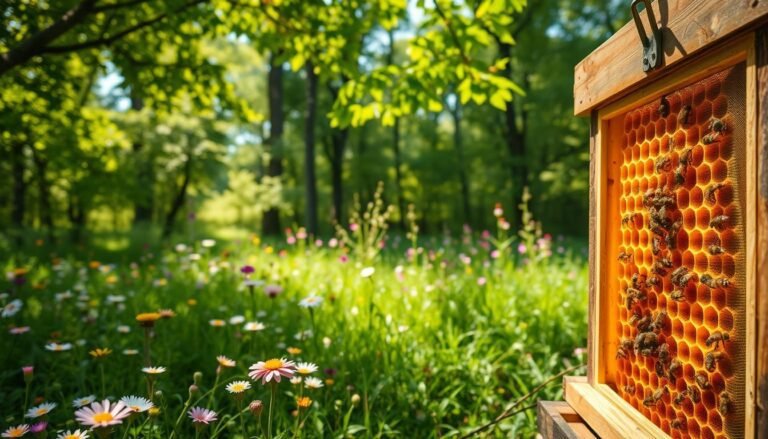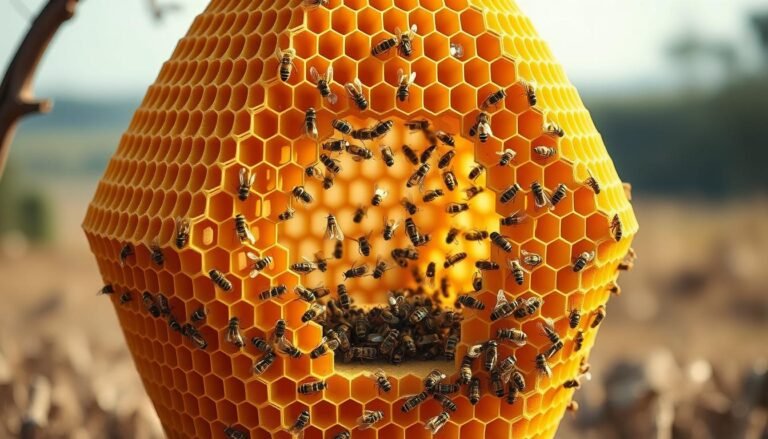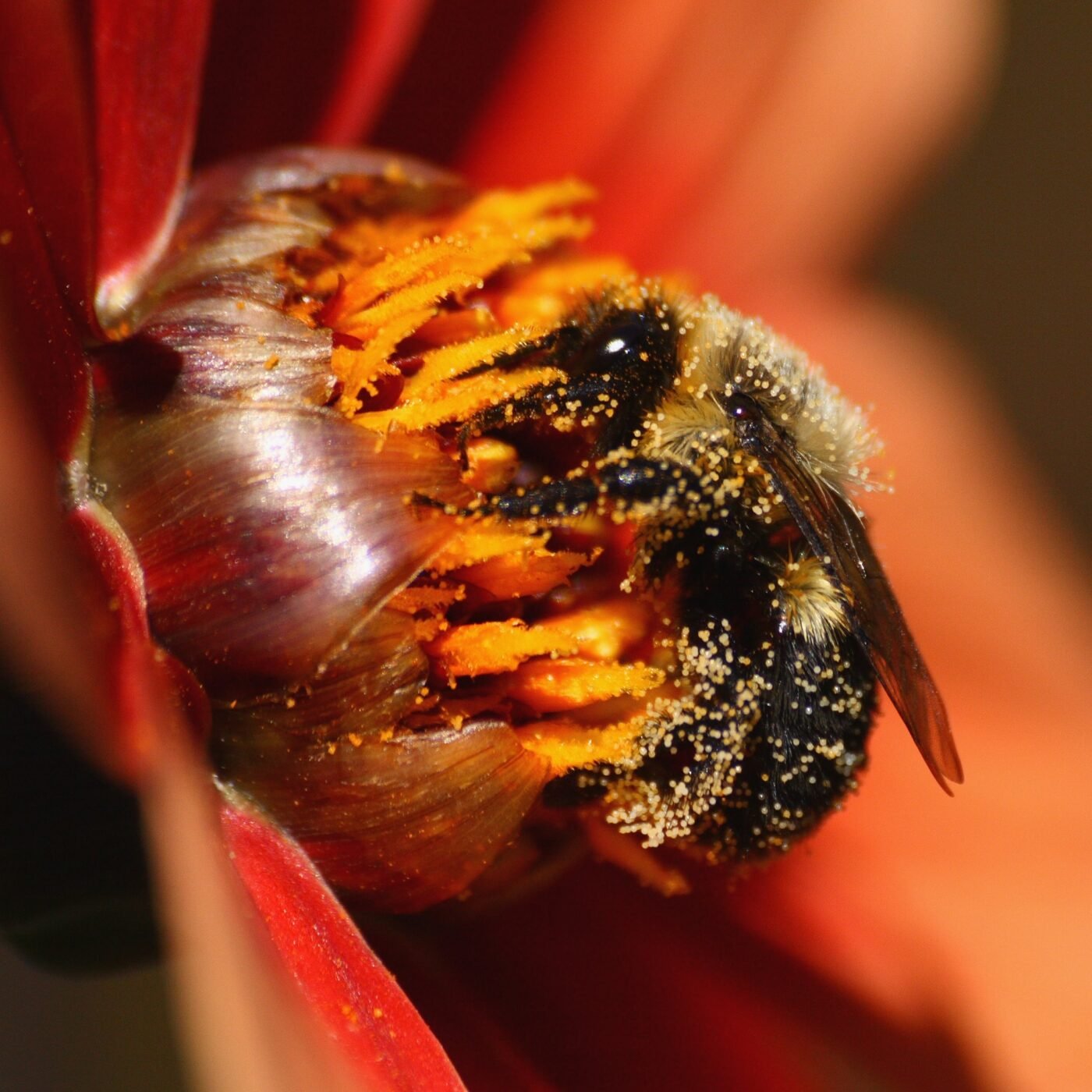
A flying bee builds up a positive electrostatic charge just from friction with the air, while a flower — grounded to the earth through its stem and roots — sits at a slightly negative charge, and that difference is strong enough to make negatively charged pollen grains physically leap through the air onto the bee’s body before the two ever touch. It sounds like a minor physics curiosity, but researchers have measured the effect directly, shown that bees can sense a flower’s electric field, and found evidence that bees use it to judge which flowers other bees have already visited — turning a basic law of physics into a genuine foraging tool.
Key Takeaways
- Bees accumulate a positive electrostatic charge in flight through friction with air molecules, while flowers, connected to the electrically neutral earth, typically carry a slightly negative charge.
- This charge difference causes negatively charged pollen grains to be attracted across the air gap to a bee’s positively charged body — a real, measured mechanism, not just a hypothesis.
- Researchers have found bees can physically detect a flower’s electric field: the field causes a bee’s antennae and fine body hairs to deflect, producing a mechanical sensation the bee can perceive.
- A flower’s electric field measurably weakens after a visit from a foraging bee, and evidence suggests bees can use this change to judge whether a flower has already been recently visited and is less likely to have much nectar or pollen left.
- The underlying phenomenon, known more broadly as static or electrostatic pollination, has since been documented in other pollinators too, including moths and butterflies.
Table of Contents
- How a Bee Builds Up a Charge Just by Flying
- Why Pollen Actually Jumps Onto a Bee
- Bees Can Feel a Flower’s Electric Field
- Reading a Flower’s Charge as a “Already Visited” Sign
- Frequently Asked Questions
How a Bee Builds Up a Charge Just by Flying
The physics starts before a bee ever reaches a flower. As a bee flies through the air, friction between its body and airborne particles strips away electrons, leaving the bee carrying a small net positive electrostatic charge — the same basic phenomenon behind rubbing a balloon on your hair, just happening continuously and passively during ordinary flight. A flower, by contrast, is physically connected through its stem and root system to the ground, which acts as a vast, electrically neutral reservoir; that connection typically leaves the flower itself sitting at a slight negative charge relative to the positively charged bee approaching it. Researchers studying this effect have directly measured the accumulated charge on flying bees and confirmed it’s large enough to meaningfully influence what happens next.
Why Pollen Actually Jumps Onto a Bee
Pollen grains carry the same negative charge as the rest of the flower, and opposite charges attract — which means that as a positively charged bee approaches, negatively charged pollen can be pulled directly across the remaining air gap onto the bee’s body, without the bee needing to physically brush against the anther at all. This has been experimentally observed and measured directly: researchers have documented pollen grains visibly leaping onto a bee’s body from a short distance, propelled by the electrostatic attraction alone rather than requiring contact. It’s a genuinely elegant efficiency gain for the plant — pollen transfer that doesn’t strictly require precise physical contact between the pollinator and the flower’s reproductive structures — and it helps explain part of why bees so often emerge from a single flower visit dusted in far more pollen than a purely mechanical brushing action alone would seem to account for.
Bees Can Feel a Flower’s Electric Field
The relationship isn’t purely one-directional physics happening to a passive bee — bees can actually perceive a flower’s electric field as it approaches, adding a genuine sensory dimension most people never think to associate with insects. As a bee nears a charged flower, the field causes a physical, measurable deflection in the bee’s antennae and the fine hairs covering its body, and researchers have shown this mechanical movement is detectable by the bee’s own sensory system, effectively giving it a way to feel an electric field before ever making visual or physical contact with the flower producing it. This is a genuinely different sensory channel from vision, scent, or touch in the conventional sense — it’s closer to a dedicated electroreception ability, a trait more commonly associated with certain fish and sharks than with flying insects, which is part of why the discovery drew significant attention within pollination biology research.
Reading a Flower’s Charge as an “Already Visited” Sign
Perhaps the most practically useful finding is what happens to a flower’s electric field after a bee actually lands and forages on it: the visit measurably reduces the flower’s charge, at least temporarily, as some of the accumulated static discharges or equalizes during contact. Because a bee approaching afterward can sense that weakened field, researchers have proposed — with real supporting evidence — that bees use this change as a foraging cue, effectively reading a flower’s current electrical state as a rough signal for whether it has been recently visited by another bee and is therefore less likely to still hold a full reward of nectar or pollen. If this interpretation holds up under continued study, it would mean bees are using real-time electrical information, invisible to human senses entirely, to forage more efficiently — avoiding flowers other bees have already worked over in favor of ones that haven’t been touched yet. This sits alongside flower color, shape, and scent as one more channel plants and pollinators use to communicate, just one that happens to be completely undetectable without specialized equipment.
Frequently Asked Questions
How does static electricity help pollination?
Flying bees build up a positive electrostatic charge, while flowers carry a slight negative charge; this difference attracts negatively charged pollen grains across the air onto a bee’s body, sometimes before any physical contact occurs.
Can bees actually sense electric fields?
Yes. Research has shown that a flower’s electric field causes measurable deflection in a bee’s antennae and body hairs, which the bee’s sensory system can detect, giving it a form of electroreception.
Does visiting a flower change its electric charge?
Yes — a bee’s visit measurably reduces a flower’s electrostatic charge, and evidence suggests bees can use that weaker signal to judge whether a flower has already been recently foraged by another bee.
Is electrostatic pollination unique to bees?
No. While much of the foundational research focused on bees, the same basic phenomenon has since been documented in other pollinators, including moths and butterflies.
Is this the main way bees find flowers?
No — vision, floral scent, and color remain the primary ways bees locate and choose flowers from a distance; the electrostatic effect operates at very close range and functions more as a fine-tuning mechanism for pollen transfer and freshness assessment than a primary search tool.