
Beekeeping at high altitude works, but it runs on a compressed calendar: colonies get a shorter nectar season, colder nights even in summer, and less oxygen for flight, so the beekeeping decisions that matter most are timing, insulation, and picking bees that can build up fast when the window finally opens. None of that makes mountain beekeeping impractical — thriving high-elevation apiaries exist from the Rockies to the Himalayas — but a hive managed on a lowland calendar will consistently underperform or fail to overwinter at elevation.
Key Takeaways
- The defining challenge at altitude isn’t cold alone — it’s a shorter bloom-to-bloom window, since spring arrives later and fall arrives earlier the higher a hive sits, compressing the entire buildup-to-harvest-to-winter-prep cycle into fewer weeks.
- Thinner air at elevation affects flight: research on bee foraging efficiency shows reduced air density changes the energetics of flight, meaning foragers can work harder for the same nectar load than an identical colony would at sea level.
- Mountain colonies typically need a larger honey reserve carried into winter than lowland colonies in the same general climate zone, since cold arrives earlier and the final pre-winter nectar flow is shorter.
- Site selection does more work at altitude than almost any other single decision — south/southeast-facing placement, windbreaks, and morning sun exposure can offset a meaningful part of the season-length disadvantage.
- Local, mountain-acclimatized queen stock consistently outperforms package bees shipped up from lowland breeding operations, since local genetics have already been selected for a compressed brood-rearing timeline.
Table of Contents
- Why Altitude Compresses the Beekeeping Calendar
- Thinner Air and Foraging Flight
- Hive Placement and Windbreaks at Elevation
- Feeding and Winter Reserves
- Why Local Genetics Matter More Here
- Frequently Asked Questions
Why Altitude Compresses the Beekeeping Calendar
Every 1,000 feet of elevation gain delays spring bloom and advances fall’s first hard frost, and the effect compounds: a mountain apiary at 7,000–9,000 feet might see two to three fewer usable forage months per year than a valley apiary twenty miles away at half that elevation. That isn’t a minor scheduling inconvenience — it changes what a colony can realistically accomplish in a season. A hive that would spend April through June simply building up at low elevation may need to build up, swarm-manage, and start prepping for winter almost simultaneously at altitude, because the window between “finally warm enough to expand the brood nest” and “already time to think about winter stores” is genuinely shorter. Beekeepers who move equipment or packages up from lower elevations without adjusting their mental calendar are the ones who consistently get caught unprepared going into fall.
Weather at altitude is also simply less predictable within the season itself — a warm week can be followed by a hard freeze in what would be midsummer at lower elevation, and mountain storms move in faster with less warning. Beekeepers working these sites plan for that volatility rather than treating it as an exception, keeping feed on hand year-round rather than assuming warm weather, once it arrives, is reliably there to stay.
Thinner Air and Foraging Flight
Air density drops as elevation increases, and that has a real, measurable effect on flying insects: lower air density means less lift and less aerodynamic resistance per wingbeat, which changes the energy cost of a foraging flight compared to the same flight at sea level — a dynamic documented in field research on high-altitude beekeeping in Nepal, where colonies are kept at some of the highest elevations anywhere in the world. Bees compensate — honeybee flight muscles are powerful relative to body size, and colonies at altitude do fly and forage successfully — but the net effect is that a forager working thin mountain air is doing comparatively more physiological work per trip than an identical bee foraging at low elevation, particularly noticeable on the coldest, thinnest-air mornings before the day fully warms.
This is one more reason mountain colonies benefit from strong numbers rather than lean ones: with less efficient foraging per bee, a colony needs more foragers working simultaneously to bring in the same daily nectar volume, which is part of why timing spring buildup correctly — so the workforce peaks exactly when the (shorter) main flow hits — matters even more here than at lower elevations.
Hive Placement and Windbreaks at Elevation
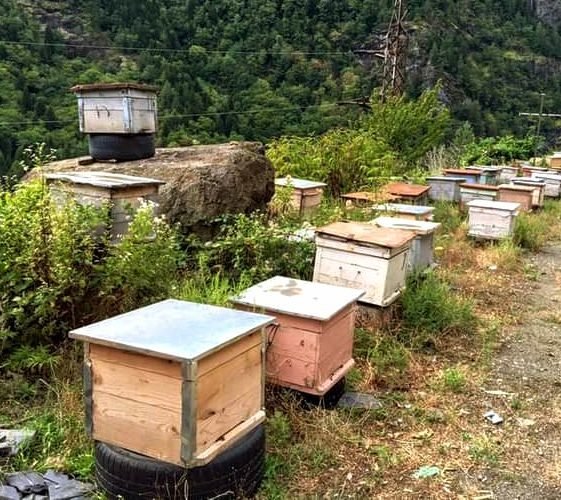
Because the growing season is already compressed, mountain beekeepers get outsized returns from site decisions that add even a few extra warm hours per day. Facing hive entrances southeast catches the earliest possible morning sun, letting foragers start the workday sooner than a north- or west-facing setup would allow. A windbreak — whether a tree line, a fence, or the natural shelter of a hillside — matters more here than in a mild lowland climate, since sustained mountain wind both cools the hive directly and forces bees to spend more energy on cluster thermoregulation, energy that would otherwise go toward brood-rearing or foraging. Beekeepers who can choose between two otherwise-similar mountain sites should treat morning sun exposure and wind shelter as the deciding factors, not an afterthought.
Feeding and Winter Reserves
A mountain colony typically needs more stored honey going into winter than a colony in a similar general climate classification at lower elevation, simply because the cold season starts earlier, runs longer, and offers fewer or no warm-spell cleansing flights along the way. Beekeepers at altitude commonly aim for a heavier fall reserve than lowland guidance suggests and check stores earlier in the season, since a colony that looks adequately provisioned in early September at 8,000 feet may be under real pressure by first frost, which can arrive weeks before it would at the base of the same mountain range. Supplemental feeding — syrup while temperatures allow it, then dry sugar or a candy board once it’s too cold for syrup to be safely taken down and cured — is treated as a standard part of the plan at altitude rather than an emergency measure, closely paralleling the practices covered in this site’s guide to beekeeping in cold-winter, short-summer climates, since the two situations overlap heavily even though one is driven by latitude and the other by elevation.
Why Local Genetics Matter More Here
Queen and package genetics bred for a long lowland season don’t automatically adjust to a shorter mountain one. Colonies descended from stock that has actually overwintered and reproduced successfully at altitude for multiple generations tend to show faster, better-timed spring buildup and more conservative late-season brood-rearing — both traits that matter enormously when the season itself is compressed. This is a large part of why experienced mountain beekeepers prioritize sourcing nucs, packages, or queens from apiaries at a genuinely comparable elevation rather than the closest available supplier, even if that means paying more or waiting longer, and why many eventually shift toward raising some of their own replacement queens from their best-performing mountain-acclimatized colonies rather than restocking from lowland breeders every year.
Frequently Asked Questions
What elevation counts as “high altitude” for beekeeping purposes?
There’s no single official cutoff, but most of the challenges described here become clearly noticeable above roughly 5,000–6,000 feet, and increasingly significant above 8,000 feet, where season length and air density effects both compound.
Do bees actually fly differently in thin air?
Yes — lower air density changes the aerodynamics of a foraging flight, meaning bees expend comparatively more energy per trip than they would at sea level, even though they remain fully capable of foraging successfully.
Should I buy packages or nucs locally if I’m starting a mountain apiary?
Sourcing from a supplier at a genuinely comparable elevation, rather than the nearest available lowland supplier, generally gives a colony a real head start, since mountain-acclimatized genetics build up on a timeline that already matches the shorter season.
How much more honey should I leave for winter at high elevation?
There’s no universal number since it depends on the specific site and winter length, but mountain beekeepers commonly plan for a heavier reserve than lowland guidance for the same general climate zone, and check stores earlier in the fall rather than assuming a typical timeline applies.
Is migratory beekeeping a way around the short mountain season?
Some commercial operations do move hives to lower elevations for winter and back up for the summer flow, but for a hobbyist or small-scale beekeeper, adapting management to a stationary mountain site is usually far more practical than migratory logistics.


