The rusty patched bumble bee (Bombus affinis) became the first bumble bee species — and the first bee found in the continental United States — to be placed on the federal endangered species list, when the U.S. Fish and Wildlife Service’s listing took effect on March 21, 2017. It wasn’t the very first bee of any kind to receive that protection — seven Hawaiian yellow-faced bee species beat it by about six months — but the rusty patched bumble bee’s listing was the moment a bee most Americans could actually picture, a fuzzy black-and-yellow bumblebee that once visited backyard gardens from the Upper Midwest to New England, became a legal recognition that a familiar pollinator was disappearing fast.
Key Takeaways
- The rusty patched bumble bee’s Endangered Species Act listing became effective March 21, 2017, following a 2013 petition from the Xerces Society for Invertebrate Conservation and a final listing rule published in the Federal Register on January 11, 2017.
- It was the first bumble bee species, and the first bee native to the continental U.S., ever placed on the federal endangered list — but not the first bee overall: seven Hawaiian yellow-faced bee species (genus Hylaeus) were listed as endangered on September 30, 2016, the actual first bees on the U.S. list.
- The species once ranged across 28 states, the District of Columbia, and two Canadian provinces; since 2000 it has been confirmed in only a fraction of that range, concentrated in the Upper Midwest and parts of the Northeast and Appalachians.
- The U.S. Fish and Wildlife Service’s listing rule and conservation guidance point to disease spillover from commercial bumble bee rearing, pesticide exposure, habitat loss, and climate change as the primary drivers, not a single cause.
- An Endangered Species Act listing carries real legal weight most “at-risk” wildlife lists don’t: it can trigger Section 7 consultation requirements for federal actions and Section 9 “take” restrictions, which is why the Fish and Wildlife Service later issued specific conservation-management guidance for landowners and agencies working near known populations.
Table of Contents
- How the Listing Actually Happened
- Not the First Bee — Just the First Bumble Bee
- How Fast the Range Actually Shrank
- What’s Actually Driving the Decline
- What an Endangered Listing Actually Changes
- How to Recognize One (and What to Do If You Think You Have)
- Frequently Asked Questions
How the Listing Actually Happened
The rusty patched bumble bee’s path to federal protection started with a formal petition. In 2013, the Xerces Society for Invertebrate Conservation — the same Portland-based nonprofit behind much of the U.S.’s bumble bee monitoring data — petitioned the U.S. Fish and Wildlife Service to list Bombus affinis under the Endangered Species Act. The agency’s own status review agreed the evidence supported it, and the final rule listing the species as endangered was published in the Federal Register on January 11, 2017, with the listing taking legal effect on March 21, 2017.
That timeline matters for a specific reason: an ESA listing isn’t a press release or an advocacy label — it’s a rulemaking process with a public comment period, a formal status review against the statute’s five listing factors, and a published legal rule. The rusty patched bumble bee’s file cleared all of that.
Not the First Bee — Just the First Bumble Bee
A lot of coverage from 2017 flatly called the rusty patched bumble bee “the first bee ever listed as endangered in the U.S.” That’s not quite right, and it’s worth correcting because the real sequence is more interesting. On September 30, 2016 — about six months before the rusty patched bumble bee’s rule took effect — the U.S. Fish and Wildlife Service listed seven species of Hawaiian yellow-faced bee (genus Hylaeus, sometimes called nalo meli maoli) as endangered: H. anthracinus, H. assimulans, H. facilis, H. hilaris, H. kuakea, H. longiceps, and H. mana. Those seven were Hawaii’s only native bees, once so common they ranged from the coastline to Mauna Kea’s subalpine slopes, and invasive species and habitat loss hit them even harder than mainland pollinators.
So the accurate framing is two separate, both-true records: Hawaii’s yellow-faced bees were the first bees of any kind on the federal endangered list, and the rusty patched bumble bee — six months later — was the first bumble bee species, and the first bee native to the continental United States, on that same list. This site’s own profile of yellow-faced bees covers their unusual biology; this article is specifically about what happened next, six months later, to a very different-looking bee three time zones away.
How Fast the Range Actually Shrank
The rusty patched bumble bee used to be an unremarkable sight. Historic records place it across 28 states, the District of Columbia, and the Canadian provinces of Ontario and Quebec, ranging from the upper Midwest and Great Lakes region east through the Ohio Valley and into the Northeast and southern Appalachians. Since 2000, confirmed sightings have narrowed to a much smaller footprint — the Fish and Wildlife Service’s own species profile now describes it as reported from only about 13 states and one Canadian province in that period, concentrated in the Upper Midwest (particularly Wisconsin and Minnesota) with scattered populations further east.
That’s a genuinely different kind of decline than, say, a species losing numbers evenly across an intact range. Large parts of the historic range appear to have lost the species entirely rather than just seeing lower density, which is part of why the Fish and Wildlife Service’s status review treated the situation as urgent rather than merely concerning.
What’s Actually Driving the Decline
The listing rule and the agency’s subsequent conservation guidance don’t point to one single smoking gun — they describe a stacked set of pressures common to several declining North American bumble bee species:
- Pathogen spillover. Commercially reared bumble bees, shipped nationwide for greenhouse tomato and other crop pollination, are widely believed to have spread pathogens — particularly the microsporidian parasite Nosema bombi — into wild bumble bee populations that hadn’t previously been exposed at that scale.
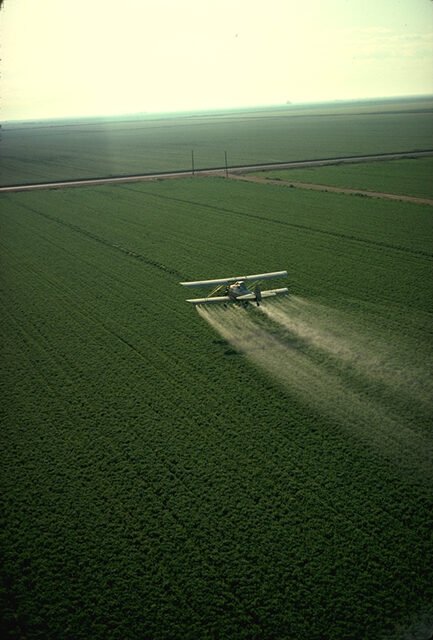
- Pesticide exposure, including systemic insecticides that wild bumble bees encounter through treated crops and ornamental plantings.
- Habitat loss and fragmentation, which is a broader problem for a bumble bee than for a managed honey bee colony: bumble bee colonies are annual, founded each spring by a single overwintered queen, so a queen needs both accessible nesting sites and a season-long sequence of flowering forage within a workable flight range just to get a colony established at all.
- Climate change, which the agency’s guidance flags as an added stressor on top of the others rather than a standalone cause.
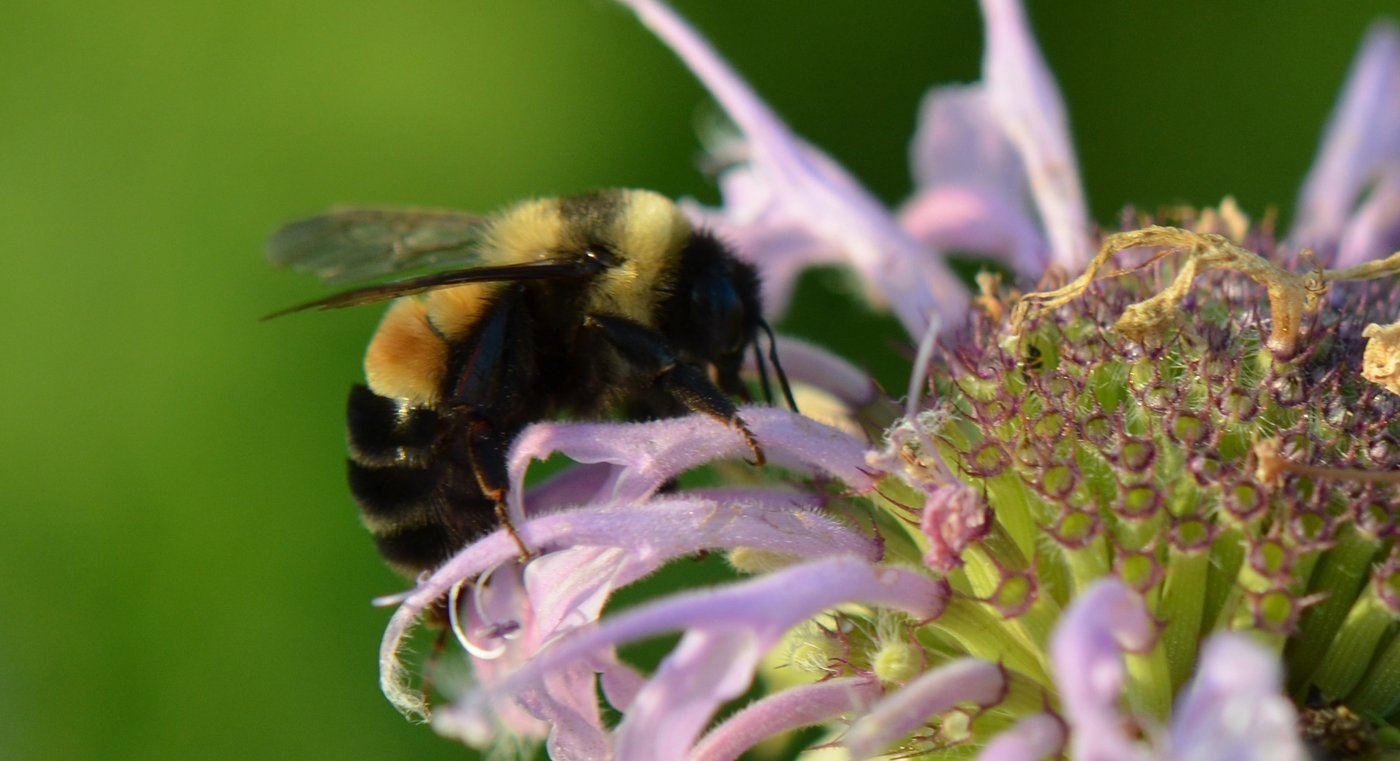
Gardeners working on habitat for this and other declining bumble bees often lean on bee balm (Monarda) specifically, since it’s a documented rusty patched bumble bee forage plant and blooms during the mid-to-late summer window when bumble bee colonies most need a reliable nectar source.
What an Endangered Listing Actually Changes
An Endangered Species Act listing isn’t symbolic. Two provisions do most of the real-world work. Section 7 requires federal agencies to consult with the Fish and Wildlife Service before taking or funding actions that might affect a listed species — relevant to federal land management, infrastructure, and agricultural programs operating within the bee’s range. Section 9 restricts “take” of a listed species, a legal term covering harm or harassment, not just direct killing. In the specific case of the rusty patched bumble bee, the Fish and Wildlife Service issued a 2018 conservation-management guidance document laying out practical steps for landowners, land managers, and agencies working in areas with known or possible populations — things like timing mowing and habitat management around the bee’s active season rather than a blanket prohibition on land use.
None of this restricts backyard beekeeping or honey bee management directly — Bombus affinis is a wild native bumble bee, not a managed honey bee — but it’s a real example of how the relationship between managed honey bees and wild native pollinators gets scrutinized once a wild species is formally at risk, including questions about disease transmission and forage competition between the two.
How to Recognize One (and What to Do If You Think You Have)
The species gets its name from a small rust-colored patch on the second abdominal segment of workers and males (queens typically lack it), set against otherwise black-and-yellow bumble bee coloring — though that patch isn’t always easy to see in the field, and several other bumble bee species have superficially similar markings, which is exactly why the Fish and Wildlife Service and Xerces Society ask for photographs rather than casual sightings. If you’re in the Upper Midwest or Northeast and think you’ve spotted one, the most useful thing you can do is photograph it (ideally showing the top of the abdomen) and submit it through a citizen-science pollinator monitoring program such as Bumble Bee Watch, rather than attempting to capture or handle it. This site’s broader guide to North American bumble bees covers general identification basics if you’re trying to distinguish bumble bees from each other in the first place.
Frequently Asked Questions
Was the rusty patched bumble bee the first bee ever listed as endangered in the U.S.?
No. Seven Hawaiian yellow-faced bee species (genus Hylaeus) were listed as endangered on September 30, 2016, making them the first bees on the federal list. The rusty patched bumble bee’s listing took effect about six months later, on March 21, 2017, making it the first bumble bee species and the first bee native to the continental United States to be listed.
Why did the rusty patched bumble bee decline so sharply?
The U.S. Fish and Wildlife Service’s listing rule points to several combined factors: pathogen spillover (particularly Nosema bombi) linked to commercial bumble bee rearing, pesticide exposure, habitat loss and fragmentation, and climate change, rather than any single cause.
Where can the rusty patched bumble bee still be found?
Its historic range covered 28 states, Washington D.C., and two Canadian provinces, but confirmed sightings since 2000 have been concentrated mainly in the Upper Midwest — especially Wisconsin and Minnesota — with scattered populations elsewhere in its former range.
Does the endangered listing affect backyard beekeepers?
Not directly — the rusty patched bumble bee is a wild native species, not a managed honey bee, so the listing doesn’t regulate honey bee keeping. It does affect federal agencies and land managers operating in areas with known populations, under the Endangered Species Act’s Section 7 and Section 9 provisions.
What should I do if I think I’ve found one?
Photograph it, ideally showing the top of the abdomen where the diagnostic rust-colored patch appears, and report it through a citizen-science platform like Bumble Bee Watch rather than attempting to capture it.
Readers interested in the underlying source can consult the U.S. Fish and Wildlife Service.