Published August 31, 2026
Table of Contents
- Why Brand Matters for This Specific Tool
- VEE GEE
- Atago
- Misco
- Side-by-Side Comparison
- Accuracy: The Factor That Actually Matters Most
- Analog vs. Digital Across Brands
- Calibration Requirements by Type
- Which Brand Fits Which Beekeeper
- Temperature Compensation Features
- Build Durability and Field Use
- Warranty and Support Comparison
- Buying Used or Secondhand
- Confirming the Correct Scale for Honey
- Considerations for Commercial-Scale Testing
- Cleaning Between Samples
- Storage and Care Between Uses
- Researching Real User Feedback Before Buying
- Measurement Range Considerations
- Do You Need More Than One Refractometer?
- Where to Buy
- Lighting Conditions for Accurate Reading
- Common Mistakes
Why Brand Matters for This Specific Tool
Our guides to using a honey refractometer and calibrating one correctly cover the general practice; this guide compares three specific, widely used manufacturer brands, since moisture reading accuracy — the entire point of owning this instrument — genuinely varies by build quality and optical component precision between brands, even among models marketed for the same basic purpose.
VEE GEE
VEE GEE is a long-established U.S. optical instrument manufacturer whose honey refractometers are widely used across American commercial and hobbyist beekeeping, known for solid, no-frills analog models at accessible price points alongside higher-end options. Its long market presence means readily available parts and a large base of accumulated user experience and troubleshooting knowledge within the beekeeping community specifically.
Atago
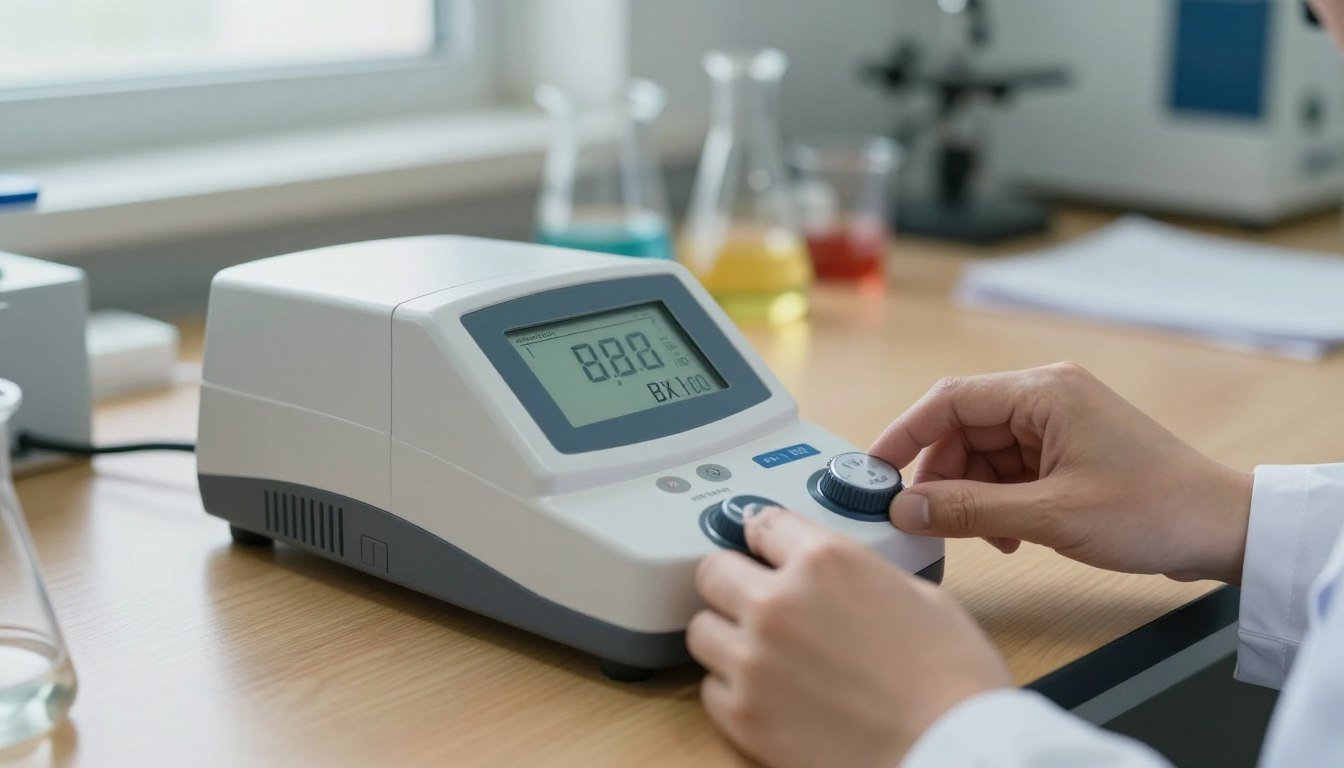
Atago is a Japanese optical instrument manufacturer with a strong reputation for precision across scientific and industrial refractometry generally, not honey specifically — this broader precision-instrument pedigree carries over into its honey refractometer line, often positioned at a premium price point reflecting tighter manufacturing tolerances and, in many of its models, digital readout options offering more precise, easier-to-read results than a traditional analog scale.
Misco
Misco is another established refractometer manufacturer offering both analog and digital models across a range of price points, generally positioned as a solid mid-range option between VEE GEE’s accessible analog models and Atago’s premium precision instruments. Misco’s digital models in particular have found real adoption among beekeepers wanting digital convenience without Atago’s premium price tag.
Side-by-Side Comparison
| Factor | VEE GEE | Atago | Misco |
|---|---|---|---|
| Origin | United States | Japan | United States |
| Known for | Accessible, reliable analog models | Precision, premium digital options | Mid-range analog and digital balance |
| Typical price positioning | Lower to mid | Mid to premium | Mid |
| Format range | Primarily analog | Analog and digital | Analog and digital |
Accuracy: The Factor That Actually Matters Most
All three brands’ honey-specific models are designed to read within a similarly tight accuracy range when new and properly calibrated, since the underlying optical principle (measuring light refraction through a honey sample to calculate moisture content) is the same regardless of manufacturer — the real accuracy differentiator across brands and models comes down to manufacturing tolerance consistency and how well the instrument holds calibration over repeated use and time, which is harder to assess from specifications alone and benefits from real user feedback and your own periodic calibration checks regardless of brand.
Analog vs. Digital Across Brands
Analog models (a traditional look-through-the-eyepiece design reading against a printed scale) are generally more affordable and don’t depend on battery power, while digital models offer a clearer, more precise numeric readout and eliminate the risk of misreading a scale line — a genuine benefit for less experienced users or anyone doing frequent readings where reading speed and reduced ambiguity matter. All three brands offer analog options; Atago and Misco both offer digital models as a meaningful part of their product lines, while VEE GEE’s lineup leans more heavily analog.
Calibration Requirements by Type
Regardless of brand, both analog and digital refractometers require periodic calibration using distilled water (which should read 0% on the Brix/refractive scale) to catch drift before it affects your actual honey moisture readings — see our dedicated calibration guide for the full process. Digital models sometimes offer a slightly more straightforward calibration procedure via a built-in calibration function, though this varies by specific model rather than being a consistent brand-wide difference.
Which Brand Fits Which Beekeeper
A hobbyist wanting a reliable, budget-friendly analog instrument for occasional pre-bottling checks is well served by VEE GEE’s accessible analog lineup. A commercial operation or anyone prioritizing reading precision and digital convenience, willing to pay a premium for it, may find Atago’s higher-end models worth the cost. A beekeeper wanting digital convenience without Atago’s premium price point has a reasonable middle-ground option in Misco. None of the three represents a wrong choice for careful, correctly calibrated use — the differences matter most at the margins of precision and format preference.
Temperature Compensation Features
Honey moisture readings are temperature-sensitive, and higher-end models across all three brands often include automatic temperature compensation (ATC), adjusting the reading automatically for sample temperature rather than requiring you to manually correct based on a reference chart. This feature matters more than it might seem if you’re testing honey at varying temperatures across different seasons or locations, since an uncompensated reading taken on a hot day can meaningfully misstate actual moisture content without you realizing it.
Build Durability and Field Use
Consider how and where you’ll actually use the instrument — a refractometer used in a controlled honey house setting has different durability needs than one carried in a field bag between apiary visits, where drops, dust, and temperature swings are more likely. Check specific model reviews for real-world durability feedback rather than assuming all models within a brand’s lineup share the same build quality, since manufacturers commonly offer both rugged and more delicate options within the same overall product line.
Warranty and Support Comparison
Warranty length and terms vary by specific model and retailer rather than being uniform across an entire brand, so confirm actual coverage before purchasing rather than assuming a standard warranty applies. Domestic brands (VEE GEE, Misco) generally offer more straightforward, faster support and repair logistics for U.S. buyers compared to Atago’s international sourcing, though Atago’s established U.S. distributor network has narrowed this gap for buyers specifically shopping through recognized beekeeping suppliers.
Buying Used or Secondhand
A refractometer, especially a well-built analog model, can last many years with proper care, making a used market purchase a reasonable way to reduce cost — inspect the optical components for scratches or cloudiness and confirm the instrument still calibrates correctly against distilled water before relying on it, since a used instrument’s actual condition matters more than its brand or original price when it comes to whether it still delivers accurate readings.
Confirming the Correct Scale for Honey
Some refractometers sold generically are calibrated for Brix (sugar concentration in solutions like wine or fruit juice) rather than the specific honey moisture percentage scale beekeepers need — all three brands covered here offer honey-specific models with the correct scale, but always confirm the specific model you’re buying is explicitly marketed and calibrated for honey moisture testing rather than assuming any refractometer works interchangeably across different uses.
Considerations for Commercial-Scale Testing
An operation testing many honey batches regularly may value a digital model’s faster, less fatiguing reading process over an analog eyepiece, particularly during a busy bottling season with many samples to check in succession. For this use case, the added cost of a premium digital model like many Atago options can be justified by real time savings across a season’s testing volume, a different calculation than for a hobbyist checking a handful of batches occasionally.
Cleaning Between Samples
Regardless of brand, clean the sample prism thoroughly between readings with a soft, lint-free cloth, since residual honey from a previous sample can contaminate the next reading and produce an inaccurate result — this matters especially when testing honey from multiple different batches or colonies in one session, where cross-contamination between samples could mask real moisture differences you’re specifically trying to measure.
Storage and Care Between Uses
Store any refractometer in its protective case, away from extreme temperature swings and humidity, both to protect the optical components from damage and to help the instrument hold its calibration longer between checks. Avoid leaving it in a hot vehicle or damp storage area for extended periods, since these conditions can degrade optical clarity and calibration accuracy over time regardless of brand or original build quality.
Researching Real User Feedback Before Buying
Beyond manufacturer specifications, real feedback from other beekeepers who’ve used the specific model you’re considering — through local beekeeping association members, online beekeeping forums, or regional extension programs — often surfaces practical details a spec sheet won’t, like how well a specific model holds calibration over years of field use or whether a particular digital display is genuinely easy to read in bright outdoor light. This kind of research is worth the modest time investment before a purchase you’ll likely rely on for many seasons.
Measurement Range Considerations
Confirm the specific model’s measurement range actually covers the honey moisture range you’re likely to encounter — most honey-specific models cover a standard range adequate for typical ripe honey, but if you’re working with unusual honey varieties or specifically monitoring for high-moisture honey at risk of fermentation, check that your chosen model’s range extends far enough to give a meaningful reading rather than simply maxing out at the edge of its scale.
Do You Need More Than One Refractometer?
A single well-maintained, correctly calibrated refractometer is genuinely adequate for most beekeeping operations regardless of scale, since the instrument itself isn’t a bottleneck the way some other equipment can be at higher volume — the real limiting factor at commercial scale is testing time per sample, not needing multiple physical instruments. A backup unit is worth considering primarily as insurance against loss or damage during a critical testing period, not as a throughput upgrade.
Where to Buy
Purchase from reputable beekeeping supply retailers or directly from authorized dealers rather than an unverified third-party marketplace listing, since a counterfeit or mislabeled instrument can produce inaccurate readings without any obvious visual difference from a genuine one. This matters more for a measurement instrument than for many other beekeeping supplies, since the whole value of owning a refractometer depends entirely on trusting its accuracy.
Lighting Conditions for Accurate Reading
Analog models specifically require adequate natural or bright indoor light to read the scale clearly through the eyepiece — a dim reading environment increases the chance of misreading the scale line, an error digital models largely eliminate through their direct numeric display. If you frequently test honey in a dimly lit honey house or storage area, this is a genuine practical reason to lean toward a digital model regardless of brand.
Common Mistakes
Choosing based on price alone without confirming the specific model is actually calibrated and marketed for honey (rather than a general-purpose refractometer with a different measurement scale) risks buying an instrument that reads the wrong scale entirely for your purpose. Skipping regular calibration checks regardless of brand undermines any refractometer’s accuracy over time, since even a well-built instrument can drift. Assuming a more expensive brand or digital format automatically means better accuracy without confirming the specific model’s actual specifications overstates what brand name alone guarantees.
Sources
Brand and product details reflect publicly available manufacturer information for VEE GEE, Atago, and Misco honey refractometer product lines, alongside general beekeeping equipment purchasing guidance.
FAQ
Is a digital refractometer more accurate than an analog one?
Not necessarily more accurate in the underlying measurement, but digital models offer a clearer readout and eliminate scale-misreading risk, which is a genuine practical benefit for less experienced users or frequent readings.
Which brand is most budget-friendly?
VEE GEE’s analog lineup is generally the most accessible price point among the three, while Atago tends toward the premium end and Misco sits in the middle.
Do all three brands need the same calibration process?
Yes — all refractometers, regardless of brand, need periodic calibration using distilled water (which should read 0%), though some digital models offer a more streamlined built-in calibration function.
Does a more expensive refractometer guarantee better accuracy?
Not automatically — confirm the specific model’s actual specifications and honey-appropriate scale rather than assuming price or brand name alone guarantees better performance.
Does temperature affect refractometer readings?
Yes — higher-end models across all three brands often include automatic temperature compensation to adjust readings for sample temperature, which matters if you’re testing honey at varying temperatures across seasons or locations.
Where should I buy a refractometer?
From reputable beekeeping supply retailers or authorized dealers rather than unverified third-party marketplace listings, since a counterfeit or mislabeled instrument can produce inaccurate readings without any obvious visual difference from a genuine one.