Published August 27, 2026
Table of Contents
- What Jenter and Nicot Systems Are
- Why Skip Grafting At All
- How the Systems Work
- Jenter vs. Nicot: The Real Differences
- Cost Comparison
- Step-by-Step Process
- Timeline: Confinement to Capped Cell
- Who Should Use a Graft-Free System
- Honest Limitations
- Cleaning and Maintaining the System
- Combining with a Cloake Board
- Scaling Up to a Sideline Business
- Frame Size and Hive Compatibility
- Common Mistakes
- FAQ
What Jenter and Nicot Systems Are
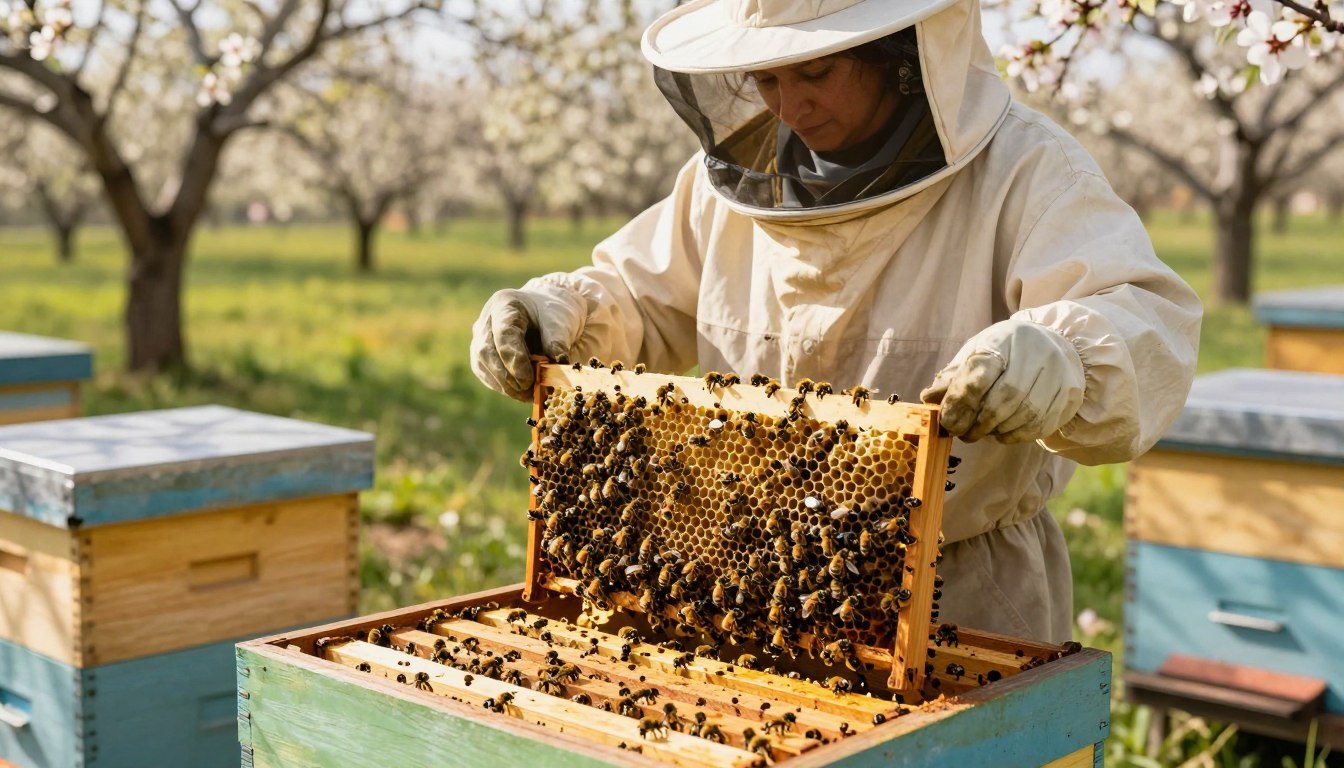
Jenter and Nicot are two competing brands of graft-free queen-rearing device: a plastic frame or box, fitted with a grid of small removable cell cups, that confines the colony’s queen to a limited area so she lays eggs directly into the cups. Once eggs hatch into larvae, the individual cups pop out and get mounted onto queen-rearing bars, where nurse bees in a cell-building colony feed the larvae into full queen cells — all without a beekeeper ever having to manually transfer (graft) a larva by hand.
Why Skip Grafting At All
Grafting — manually lifting a young larva from its cell and placing it into an artificial queen cup — is widely considered the most technically demanding step in traditional queen rearing. It requires steady hands, good eyesight or magnification, and enough practice to avoid damaging or drying out delicate larvae during the transfer, and even experienced grafters see some percentage of grafted cells fail to be accepted or develop properly. Because Jenter and Nicot systems have the queen lay directly into the final cup rather than requiring a larva to be moved afterward, the larvae are never physically handled before nurse bees take over their care, which removes this specific failure point almost entirely and tends to produce higher, more consistent acceptance rates for beekeepers without extensive grafting experience.
How the Systems Work
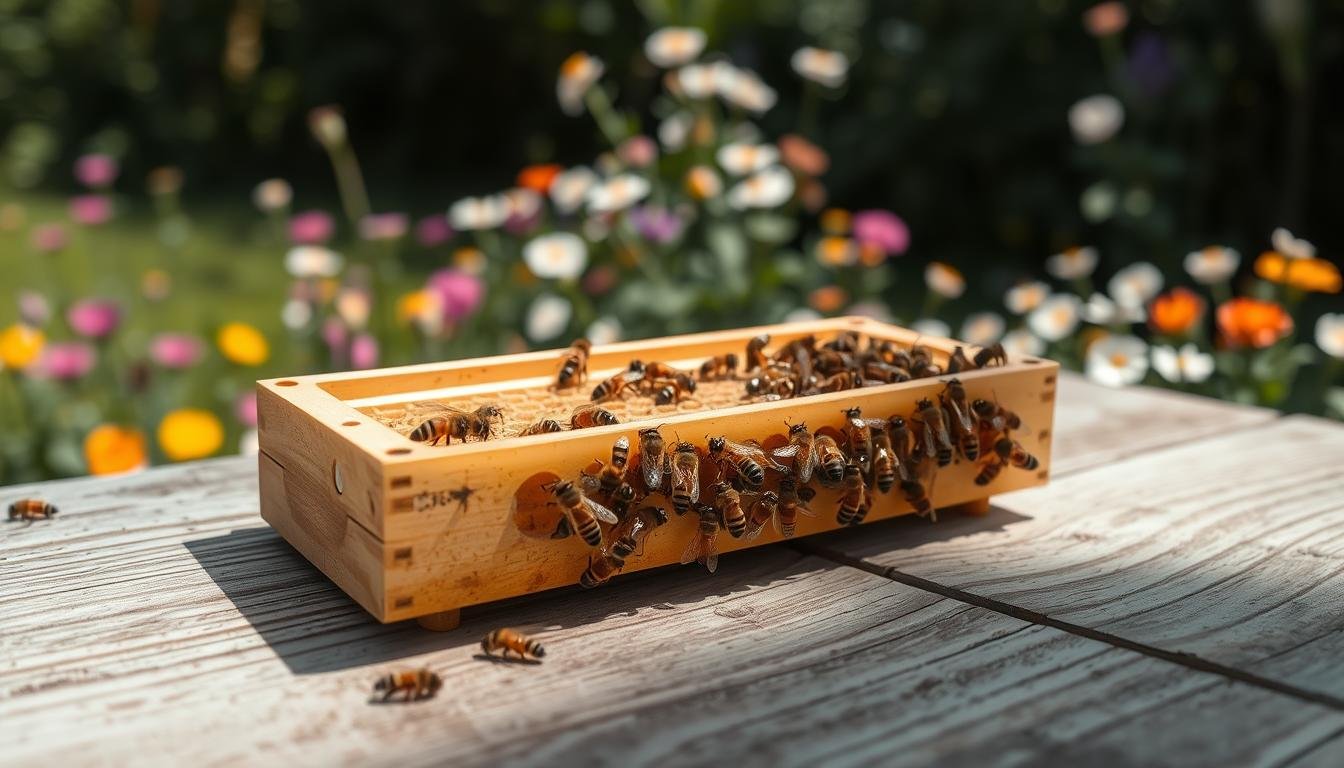
Both systems follow the same basic principle. A confinement box or frame, holding a grid of removable brown plastic cell cups, is inserted into the hive like a normal frame. The queen is confined to this box (sometimes with worker bees allowed to pass through a mesh, sometimes fully enclosed depending on the specific design) for a short window, during which she lays eggs directly into the individual cups. Once she’s released back into the general hive and enough eggs have been laid, the beekeeper removes individual cups containing newly hatched larvae, mounts them vertically onto a queen-rearing bar, and introduces that bar into a strong, queenless cell-building colony, where nurse bees take over feeding the larvae a rich diet that develops them into full queens.
Jenter vs. Nicot: The Real Differences
| Jenter | Nicot | |
|---|---|---|
| Design | Modular grid, roughly 10×11 individual removable cups | Plastic frame with integrated cell cups, more rigid assembly |
| Initial cost | Moderate | Generally higher |
| Setup effort | More cup-transfer handling | Minimal assembly once purchased |
| Reported acceptance rates | High, sometimes reported slightly higher due to the natural laying process | High |
| Durability | Modular parts, generally considered adaptable | Rigid design, appeals to commercial-scale durability needs |
Neither system is a clear across-the-board winner — beekeepers report success with both, and the choice often comes down to budget, whether you value Jenter’s more modular/adaptable design or Nicot’s simpler assembly, and which brand’s cups and spare parts are more readily available through your regional beekeeping suppliers.
Cost Comparison
Both systems represent a real upfront equipment cost compared to grafting, which technically requires nothing beyond a grafting tool costing a few dollars. That said, the investment is generally one-time (the confinement box and cups are reusable across many seasons), and for a beekeeper planning to raise queens regularly — whether for their own apiary’s requeening needs or to sell nucs and queens — the cost tends to be recovered quickly through the higher acceptance rates and reduced learning curve compared to developing reliable grafting skill, which itself often comes with real losses (unsuccessful grafts, damaged larvae) during the learning period.
Step-by-Step Process
- Prepare the confinement box with clean, empty brown cell cups inserted into the grid.
- Insert the box into the hive like a normal frame, and confine the queen to it — typically for a window of around 4-6 hours, long enough for her to lay a good number of eggs without overcrowding cells with multiple eggs per cup.
- Release the queen back into the general hive once the laying window is complete.
- Wait for eggs to hatch into larvae, checking the cups over the following days.
- Remove individual cups containing young larvae and mount them onto a queen-rearing bar.
- Introduce the bar into a strong, queenless cell-building colony, where nurse bees take over feeding and developing the larvae into queen cells.
Timeline: Confinement to Capped Cell
From the point eggs are laid, queen development follows the same general biological timeline regardless of whether the larva was grafted by hand or laid directly by the queen — roughly 3 days to hatch from egg, followed by about 5-6 days of larval feeding before nurse bees cap the cell, and total development to emergence taking about 16 days from the original egg. For the fuller biology of queen development timing, see queen rearing basics for small beekeepers, which covers the general timeline and cell-building colony management this graft-free process still depends on once cups are transferred.
Who Should Use a Graft-Free System
These systems suit beekeepers who want to raise queens somewhat regularly — for their own requeening needs, to sell nucs or mated queens, or to maintain specific breeding lines — but who either haven’t developed reliable grafting skill yet or would simply rather not deal with the fine manual dexterity grafting requires. For a beekeeper who only needs to raise a queen or two occasionally, the equipment cost may not be worth it compared to simpler options like a walk-away split; the investment makes more sense at a scale where you’re producing multiple queens per season on a repeat basis. Beekeepers already comfortable with grafting and getting good results from it also don’t necessarily need to switch — these systems solve a specific problem (grafting difficulty), and if that isn’t actually a problem for you, the added equipment cost may not deliver much practical benefit over your existing method.
Honest Limitations
Graft-free systems remove one specific failure point (grafting damage) but don’t eliminate every other variable in successful queen rearing — cell-building colony strength, nutrition, weather, and mating success still matter just as much as they do with traditionally grafted queens. Neither system guarantees a specific acceptance rate; reported figures vary by beekeeper experience and conditions, and should be treated as general reference points rather than promises. The systems also require the queen to be temporarily confined, which some beekeepers are more comfortable with than others as a matter of personal preference in colony handling.
Cleaning and Maintaining the System
Both systems involve reusable plastic components that need proper cleaning between uses to stay effective and to avoid transmitting disease between batches of queen cells. Cups and confinement boxes should be washed after each rearing cycle — plain warm water is generally sufficient for routine cleaning, though a light bleach solution followed by a thorough rinse is commonly recommended periodically for more thorough disinfection, particularly if you’ve ever reared queens from a colony with any disease history. Air-dry components fully before storage rather than sealing them away damp, since trapped moisture can encourage mold growth on the plastic surfaces over an off-season. Check plastic components for cracking or warping before each use, since brittle or damaged cups can fail during handling or fail to properly hold developing larvae. Stored properly between seasons (clean, dry, and away from direct sunlight, which can make plastic brittle over time), both systems’ components typically last many seasons before needing replacement. Like other beekeeping equipment investments — see radial vs. tangential extractor comparison for another example of weighing upfront cost against long-term reusability — the per-season cost drops considerably once you look past the first year.
Combining with a Cloake Board
Many beekeepers pair a graft-free system with a Cloake board — a device used to create a temporary broodless, “queenless” condition in part of a strong colony specifically to maximize the colony’s motivation to draw out the introduced cell-starter bar. The Cloake board handles the cell-building/finishing side of the process, while the Jenter or Nicot system handles the egg-placement side — together forming a complete queen-rearing pipeline from egg to mated queen. See queen rearing basics for U.S. beekeepers for more on cell-building colony setups this pairing depends on.
Common Mistakes
| Mistake | Why it matters |
|---|---|
| Leaving the queen confined too long | Extended confinement risks multiple eggs per cup or unnecessary stress on the queen — a 4-6 hour window is typically enough |
| Transferring cups too late, after larvae have grown too large | Older larvae generally develop into lower-quality queens, the same principle that applies to hand-grafting timing |
| Using a weak cell-building colony to finish the cells | The graft-free step only solves the placement problem — a weak finishing colony can still produce poor-quality queens |
| Assuming brand differences make one system dramatically superior | Both Jenter and Nicot report high success rates; the choice mostly comes down to budget and personal preference for the design, not a clear performance gap |
Scaling Up: From a Few Queens to a Real Sideline Business
Because a single confinement box can produce far more eggs in one laying window than most hobbyist beekeepers need, graft-free systems scale naturally toward producing surplus queens for sale, not just for personal requeening. A beekeeper who starts using one of these systems purely to simplify their own annual requeening often finds they have far more viable cells than their own apiary needs within a season or two, at which point selling nucs or mated queens becomes a realistic side option rather than something requiring separate specialized equipment. If you’re considering this path, factor in not just the rearing equipment covered here but also mating nucs, marking supplies, and shipping or local-pickup logistics for selling live queens — the rearing system itself is only one part of a genuine queen-selling operation. Start with what your own apiary genuinely needs each season before scaling toward a sales operation, since demand and pricing for locally raised queens vary a lot by region.
Frame Size and Hive Compatibility
Both systems are generally sold in configurations matched to standard frame sizes for common hive types (Langstroth deep and medium, National, and other regionally standard formats), so confirming the correct size for your specific equipment before purchasing matters — a mismatched confinement box either won’t fit properly in your brood box or will leave awkward gaps that bees may fill with burr comb. Most established beekeeping suppliers list the specific hive types and frame dimensions each product version is designed for; when in doubt, checking with the supplier directly before ordering is worth the extra step compared to guessing and dealing with a return. This is a small detail, but one that trips up first-time buyers more often than the actual queen-rearing technique itself does.
Sources
System mechanics, comparison details, and general queen development timing reflect published beekeeping equipment guidance and established queen-rearing reference material comparing graft-free queen-rearing hardware.
FAQ
What’s the difference between Jenter and Nicot systems?
Both are graft-free queen-rearing devices with similar mechanisms; Jenter uses a more modular grid of individual cups (moderate cost, more handling), while Nicot uses an integrated plastic frame (higher cost, less assembly). Both report high acceptance rates.
Do these systems guarantee successful queen rearing?
No — they remove the risk of grafting damage specifically, but cell-building colony strength, nutrition, and mating conditions still affect overall success just as much as with traditionally grafted queens.
How long is the queen confined during setup?
Typically around 4-6 hours — long enough to get a good number of eggs laid without risking overcrowded cups from an extended confinement period.
Is a graft-free system worth it for a hobbyist with one or two hives?
Usually only if you plan to raise queens somewhat regularly. For an occasional queen, a simpler method like a walk-away split may not justify the equipment cost.
Can I use a Jenter or Nicot system with any hive type?
Most versions are sold matched to standard frame sizes for common hive types like Langstroth and National — confirm the correct size for your equipment before purchasing to avoid a mismatched fit.