The Varroa destructor mite has been the primary threat to honey bee health across the United States. Beekeepers must understand what is happening inside each hive to protect the queen and preserve the colony through the year.
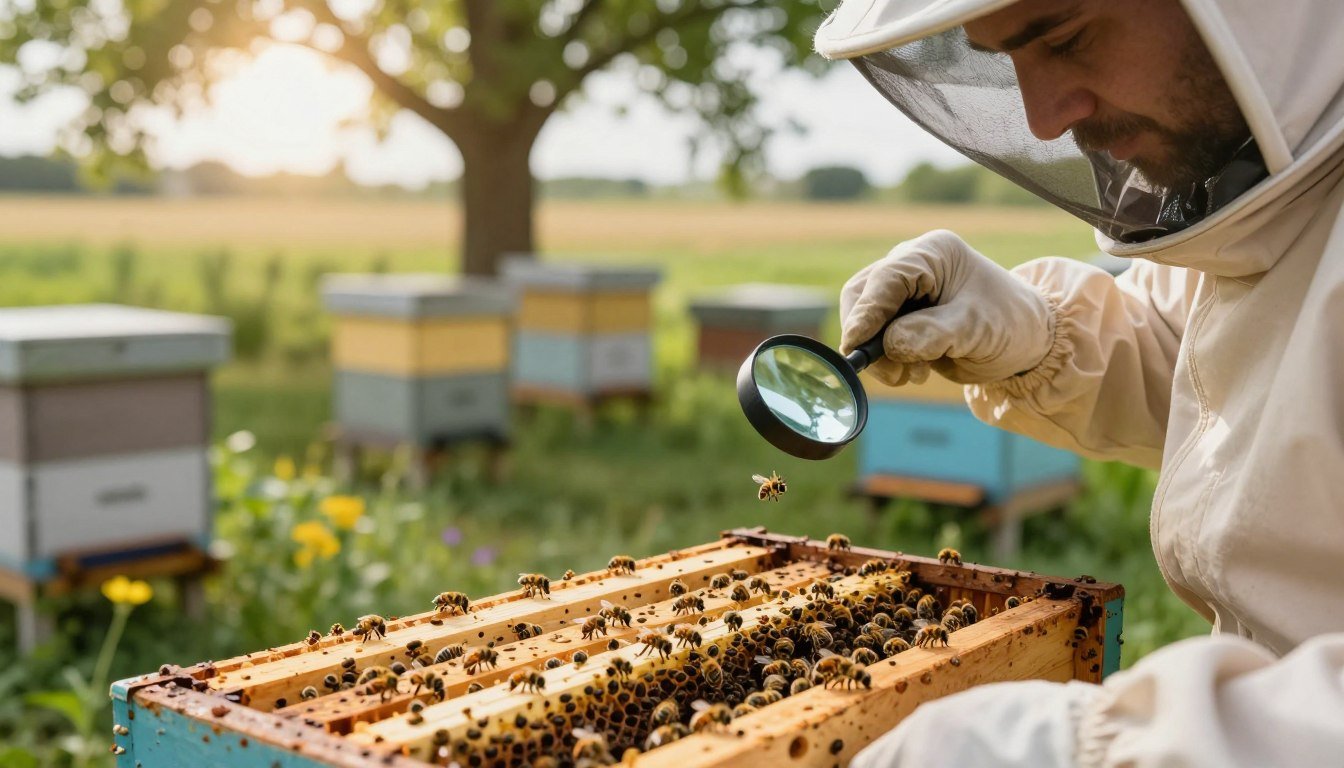
Regular monitoring during the active season is the only reliable method to assess colony health and the level of infestation. A single mite problem may escalate quickly if left unaddressed, putting nearby colonies at risk.
Every apiary needs a consistent method to track mites and bee ratios as the season progresses. Whether a manager favors treatment-free approaches or routine treatments, knowing the infestation level guides timely action.
For a practical primer on approaches and schedules used by experienced beekeepers, see this essential guide to varroa mite monitoring.
Key Takeaways
- Varroa destructor is the leading problem for honey bees in the U.S.
- Know the internal hive status to protect the queen and colony before winter.
- Regular checks during the season reveal changing mite levels and guide treatment timing.
- A single infestation may grow quickly and threaten multiple colonies.
- Consistent, simple methods help beekeepers make informed, timely choices.
Understanding the Threat of Varroa Mites
Since 1987, when Varroa destructor surfaced in Wisconsin, beekeepers have faced a persistent threat. The parasite spread quickly and now affects most U.S. regions. Its lifecycle and hiding places make it hard to spot.
The Lifecycle of Varroa Destructor
About 80 percent of the population lives inside capped brood cells. Mites reproduce there, hidden from view. This behavior shelters them during the brood stage and fuels rapid growth.
Impact on Colony Survival
Mites feed by puncturing bee bodies and sucking fluids, which raises disease risk. High mite loads often spread Deformed Wing Virus and other pathogens.
- Spread: The pest moved state to state after 1987.
- Hidden threat: Most stay inside brood, out of sight.
- Outcome: Untreated hives often weaken and die within one to three years.
Understanding the lifecycle is essential for effective methods and timely action. For a deeper threat overview, see this threat overview, and for guidance on treatments review this treatment comparison.
Can Small Apiaries Skip Varroa Testing
Many backyard beekeepers ask whether limited-scale operations must monitor mite levels every season.
The short answer: avoiding checks often leads to surprises by winter. Colonies that look healthy in summer can collapse by the first or second winter when undetected mites amplify disease.
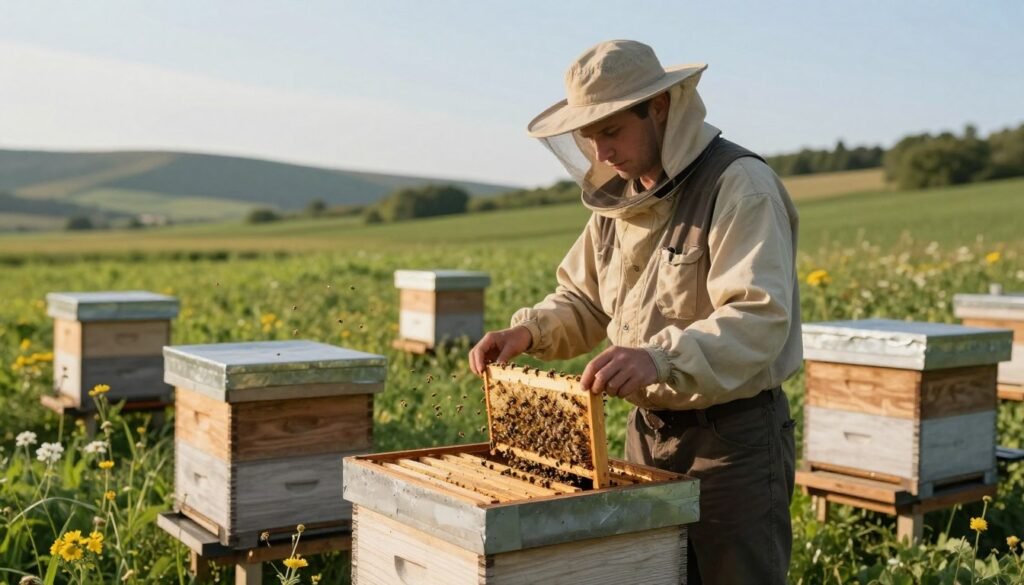
If you buy a nuc, plan on testing. New nucs frequently arrive with a mite load and are at high risk of winter loss. A package may survive one winter, but most fail by the second without intervention.
Even for beekeepers committed to treatment-free beekeeping, monitoring is essential. Data from routine checks helps identify colonies showing natural resistance and guides selective breeding or management choices.
“Consistent monitoring gives the evidence needed to understand why some colonies survive while others do not.”
For practical protocols and timing, review this essential guide to varroa mite monitoring, and learn about breeding for hygienic traits at predisposition to hygienic behavior.
Effective Methods for Monitoring Mite Loads
Regular sampling gives beekeepers clear data on mite level inside hive frames. Use repeatable methods during the nectar flow to see trends and act before winter. These three approaches balance speed, accuracy, and impact on bees.
Sugar Shake Technique
The sugar shake uses a jar and a dusting of icing sugar to dislodge mites from a half cup of bees (about 300 bees) taken from the brood area.
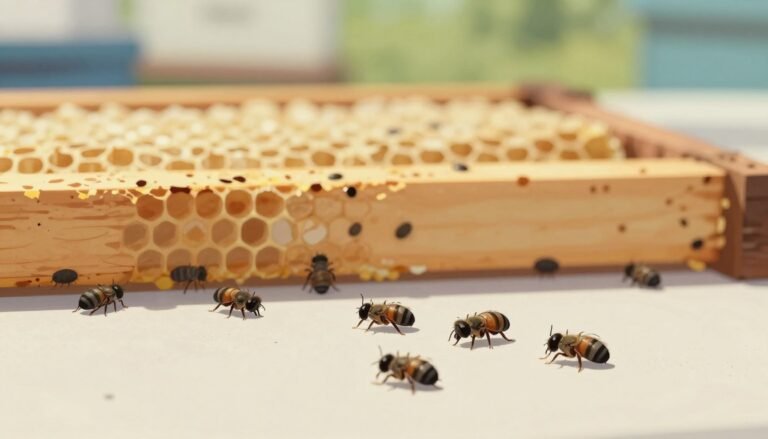
Use a mesh jar lid, shake gently, and count mites on a white surface. Avoid collecting the queen when sampling.
Alcohol Wash Procedure
The alcohol wash is highly accurate. Place bees in a jar with alcohol and agitate to free mites. This method kills the sampled bee portion but gives a precise mites count for comparison.
See a full protocol for an alcohol wash here.
Sticky Board Assessment
Sticky boards sit under the hive for 24 to 48 hours. Coat the board with beeswax or olive oil to catch falling mites.
This non-invasive option shows downward trends over a time period and works best during active nectar flow.
| Method | Accuracy | Impact on bees | Best use |
|---|---|---|---|
| Sugar shake | Good | Non-lethal if released | Quick field checks during brood period |
| Alcohol wash | High | Lethal to sample | Precise counts for threshold decisions |
| Sticky board | Moderate | Non-invasive | Trend monitoring over 24–48 hours |
“Accurate, routine checks remove guesswork and help protect colony health.”
For step-by-step monitoring guidance, review how to monitor for mites the right way.
Interpreting Mite Counts and Action Thresholds
A clear threshold turns raw counts into actionable steps to protect colony health before winter. A mite count above 5 percent is a warning that a colony might collapse before cold weather arrives.
When you analyze a jar sample, remember a half cup of bees equals about 300 bees. Some beekeepers set personal limits, for example, 8 mites per jar sample as their trigger for treatment.
If a sticky board shows 50 or more mites over 24–48 hours, take immediate action. A 10 percent brood infestation is also damaging and often requires prompt treatment to stop disease spread.
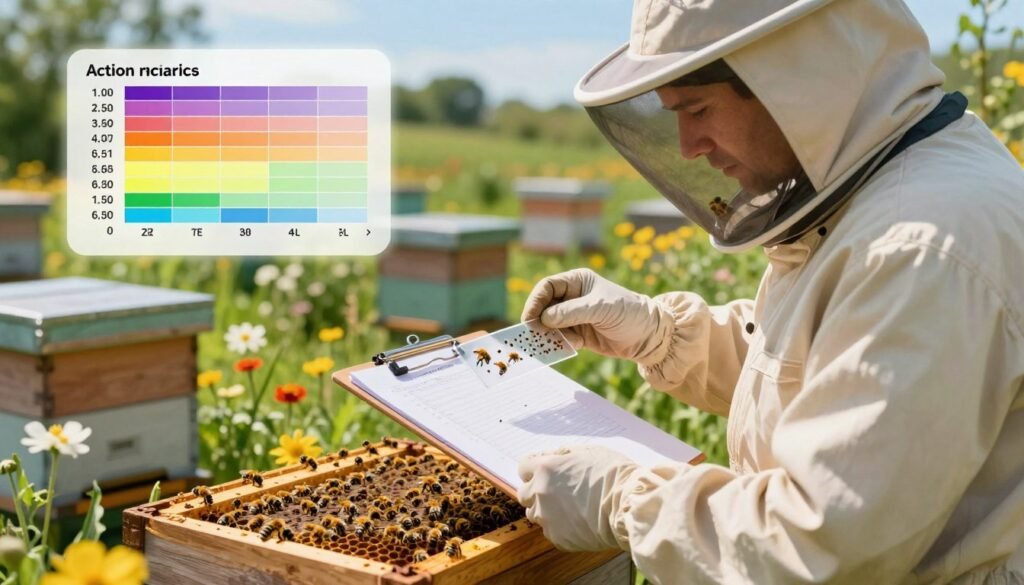
“Use thresholds to change guesswork into clear, timely steps that protect colonies through winter.”
Practical checks: use a lid with a mesh screen to shake sugar and mites into a jar for accurate counting. Monitoring gives the data needed to decide whether to treat a hive or watch closely.
| Indicator | Sample type | Threshold | Recommended action |
|---|---|---|---|
| Percent infestation | Brood inspection | 10% | Consider immediate treatment and brood management |
| Jar sample | Half cup (~300 bees) | 5% (~15 mites) or personal threshold (e.g., 8 mites) | Plan treatment if over threshold; recheck after intervention |
| Sticky board | 24–48 hour drop count | 50+ mites | Immediate control measures and close follow-up |
| Trend monitoring | Repeated samples | Rising counts | Act before winter to protect colonies |
Establish a personal threshold for your apiary and record each count. For a deeper look at interpreting counts, see understanding mite counts, and for post-treatment guidance review post-treatment mite guidance.
Evaluating Treatment Options for Your Apiary
Deciding how to treat mite problems means weighing residue risk, temperature limits, and hive health.
Comparing Synthetic and Organic Approaches
Synthetic strips such as Apivar often sit on plastic and deliver steady control. However, they may leave residues in wax and should not be used with honey supers in place.
Organic options include formic acid delivered in Mite Away Quick Strips and thymol-based Api Life Var. Formic acid occurs naturally and is effective, but it is corrosive to mites and may harm the queen if used above 85°F.
Thymol offers a plant-derived alternative and often needs multiple applications inside the hive. Avoid any harsh chemical while honey supers are on to protect your honey.
- Pros of synthetics: steady release, strong control; cons: wax residue risk, queen impact over time.
- Pros of organics: effective, often less persistent; cons: temperature limits and possible corrosive effects on queen and brood.
“Choose treatments that match your season and respect honey flow, brood health, and queen safety.”
Seasonal Management and Hive Health
A focused fall inspection and follow-up sampling after treatment give beekeepers clear control over mite levels.
The bees that raise your winter bees must be healthy. Winter bees live 4 to 6 months while summer bees live just weeks. Feeding real pollen during a nectar dearth helps the colony produce the fat, long-lived bees that survive winter.
A brood break in May reduces reproduction of mites and helps keep counts lower through the summer. Use planned breaks and timing of treatments to protect the queen and brood while honey flow is strong.
After any treatment, make sure to monitor the apiary. Tony Jadczak recommends follow-up sampling. Use a sugar shake or an alcohol wash in the fall to know the hive status before cold weather.

“Follow-up sampling turns action into proof and protects colonies through winter.”
| Action | When | Purpose |
|---|---|---|
| Feed real pollen | During nectar dearth | Improve winter bee health |
| Brood break | May | Lower mite reproduction |
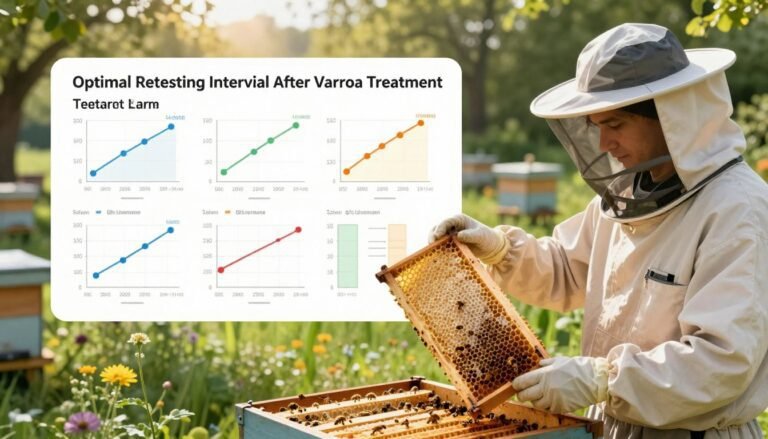
| Post-treatment check | 2–4 weeks after treatment | Verify mite level reduction |
Before the season ends, use either a sugar shake or an alcohol wash to measure mites. For guidance on reading counts after an alcohol wash, read alcohol wash mite counts.
Conclusion
A steady monitoring rhythm turns guesswork into timely decisions for colony survival.
Regular checks are the most effective way for beekeepers to protect bees from the damaging impact of mites and to prepare each hive for winter. Knowing a mite count lets you decide between a targeted treatment or a natural approach.
Give every hive consistent attention through the year and keep simple records. That practice helps you spot trends, choose proper treatment timing, and boost overwinter survival for your colony.
Want to build long-term skills? Learn how mentoring new beekeepers supports shared records and season-by-season planning at mentoring new beekeepers.
FAQ
Varroa Testing for Small Apiaries: Is It Necessary?
Even with a few hives, monitoring for varroa mites is essential. Mite pressure can rise quickly and spread between colonies. Regular checks help protect brood, queen health, and honey production. Test at key times—spring buildup, pre-winter, and during weak nectar flows—to catch infestations early and choose the right treatment.
What is the lifecycle of Varroa destructor and why does it matter?
These mites reproduce inside capped brood cells, matching their cycle to developing bee pupae. That hidden breeding drives rapid population growth. Understanding this timing helps beekeepers target treatments when mites are most exposed, reducing reinfestation of the colony.
How do mites impact colony survival?
High mite loads weaken bees by transmitting viruses and reducing lifespan. Infested colonies show poor brood patterns, reduced honey yields, and higher winter losses. Early detection and intervention preserve colony strength and long-term apiary viability.
What is the sugar shake technique and when should I use it?
The sugar shake dislodges mites from about a half cup of live bees using powdered sugar and a jar with a mesh lid. It’s nonlethal and works best during warm months when bees are active. Aim for multiple hives to compare mite levels across the apiary.
How does the alcohol wash procedure compare to sugar shakes?
An alcohol wash uses isopropyl alcohol to remove mites from a sample of roughly a cup of bees. It yields more accurate counts than sugar but kills the sampled workers. Choose this method when precise mite counts are necessary for treatment decisions.
What is a sticky board assessment and how useful is it?
Place a sticky board under the hive for 24–72 hours to collect fallen mites. This passive method gives a sense of infestation over time and complements active sampling. Use it during brood breaks or before treatments to gauge effectiveness.
How do I interpret mite counts and know when to act?
Action thresholds vary by season and method. As a rule, treat when sugar shake or alcohol wash shows more than 3–5% mites (that’s roughly 3–5 mites per 100 bees) during buildup or before winter. Sticky board counts above regional thresholds also signal treatment need.
What treatment options should I evaluate for my apiary?
Consider synthetic options like amitraz and tau-fluvalinate for strong efficacy, and organic choices such as formic acid, oxalic acid, and thymol for residue-sensitive operations. Rotate treatments and integrate nonchemical tactics—brood manipulation, screened bottom boards—to limit resistance.
How do I compare synthetic and organic approaches?
Synthetics often provide consistent mite knockdown but can leave residues and select for resistance. Organic acids and essential oils reduce residue risk but require precise timing and clear hive conditions. Balance efficacy, honey supers, queen safety, and regulatory guidelines.
What seasonal management steps reduce mite pressure?
Monitor during spring buildup, midseason nectar flows, and pre-winter. Remove honey supers before certain treatments, perform brood breaks or requeening if needed, and treat after honey harvest when appropriate. Timely interventions lower winter mortality and improve colony resilience.
Can I delay testing during high nectar flow or brood periods?
Avoid heavy testing during peak nectar collection if it disturbs honey supers, but don’t skip monitoring entirely. Use less disruptive methods or sample a subset of hives. Post-flow checks guide treatment choices before winter when mite impact is greatest.
How many colonies should be sampled to get an accurate picture?
Sample at least 25–50% of hives in a small operation, focusing on weaker or previously high-mite colonies. Consistent sampling across years shows trends and helps prioritize treatments where they’re most needed.
Are there nonchemical controls that really work?
Yes. Practices like drone brood removal, breaking the brood cycle, screened bottom boards, and breeding for hygienic stock decrease mite reproduction and complement chemical controls. Combining methods gives better long-term control than relying on one approach.
How should treatments be timed to protect honey and queens?
Follow product labels closely. Avoid formic acid or thymol when temps exceed label limits or when honey supers are on. Oxalic acid works well during broodless periods but won’t reach mites inside capped cells. Protect the queen by using approved doses and application methods.
What if I test and find high mite levels—what are immediate steps?
Isolate the hive if possible, remove excess supers, and choose a rapid-action treatment compatible with your operation and season. Recheck counts two weeks after treatment and again after a full brood cycle to confirm control. Consider neighboring colonies, as mites can move between hives.
How often should I recheck after treatment?
Reassess 2–4 weeks post-treatment to confirm efficacy and again after 8–12 weeks or a full brood cycle. Use the same sampling method for consistent comparisons. Persistent high counts may require an alternative product or integrated measures.
Will treating my hives prevent reinfestation from nearby colonies?
Treatment lowers your colonies’ mite loads but won’t stop reinvasion from untreated neighbors or feral bees. Community-wide monitoring and coordinated management yield the best regional outcomes. Stay connected with local beekeeping groups and extension services.