Published March 31, 2026
Understanding early warning signs helps keep an apiary healthy. A fertile female can lay tens of thousands of eggs across her life, and that steady output keeps the hive balanced.
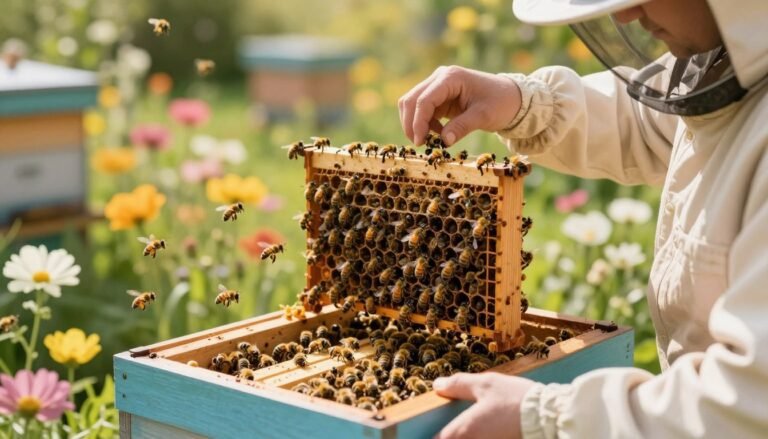
When workers start rearing male brood inside worker cells, the colony often faces reproductive trouble. Inspect comb and frames regularly. Spotting drone brood in worker cells signals urgency.
Workers maintain social order by sharing pheromones and caring for young brood. If the main female vanishes, emergency rearing may succeed only when young larvae are present.
Timely comb inspection and quick intervention can save the hive. Skilled beekeepers watch for changes in brood pattern and act before collapse.
Key Takeaways
- Regular comb checks help detect early signs of reproductive failure.
- Drone brood in worker cells indicates a failing colony.
- Pheromones from workers keep social order and fertility stable.
- Emergency rearing depends on available young larvae.
- Prompt action preserves hive health and long-term productivity.
Understanding the Role of the Queen
A strong matriarch shapes every hive by controlling reproduction and behavior. Her output of fertilized eggs underpins the colony’s growth and resilience.
The Importance of Fertilized Eggs
The main female will produce roughly 500,000 fertilized eggs over her lifetime. This steady supply ensures workers replace themselves and the nest stays productive.
Timing matters: a virgin female emerges 16 days after the egg stage and must complete mating flights early in life to store spermatozoa. Without successful mating, unfertilized eggs increase and the hive balance shifts toward males.
Pheromones and Colony Cohesion
The matriarch secretes pheromones that inhibit sexual development in workers. This chemical control keeps workers focused on foraging, nursing, and nest tasks rather than reproductive roles.
- Supersedure occurs when an old queen declines; workers raise a replacement from a fertilized egg fed royal jelly.
- Pheromone signals also modulate polyethism and frame-level organization.
| Feature | Role | Timing | Notes |
|---|---|---|---|
| Fertilized eggs | Worker production | Continuous | ~500,000 over life |
| Virgin queen | Replacement breeder | 16 days to emergence | Requires mating flights |
| Royal jelly | Queen development | Larval stage | Exclusive food for queens |
| Pheromones | Behavioral control | Ongoing | Suppresses worker reproduction |
For more on recognition and remedies, see this identifying drone-laying symptoms, and review guidance on preparing to swarm.
What Causes a Queen to Become Drone Laying
Environmental stress and sudden breeder loss often push a colony toward male‑biased brood. Chemical treatments like formic acid can impair egg production, and accidental crushing of the main female forces emergency responses.
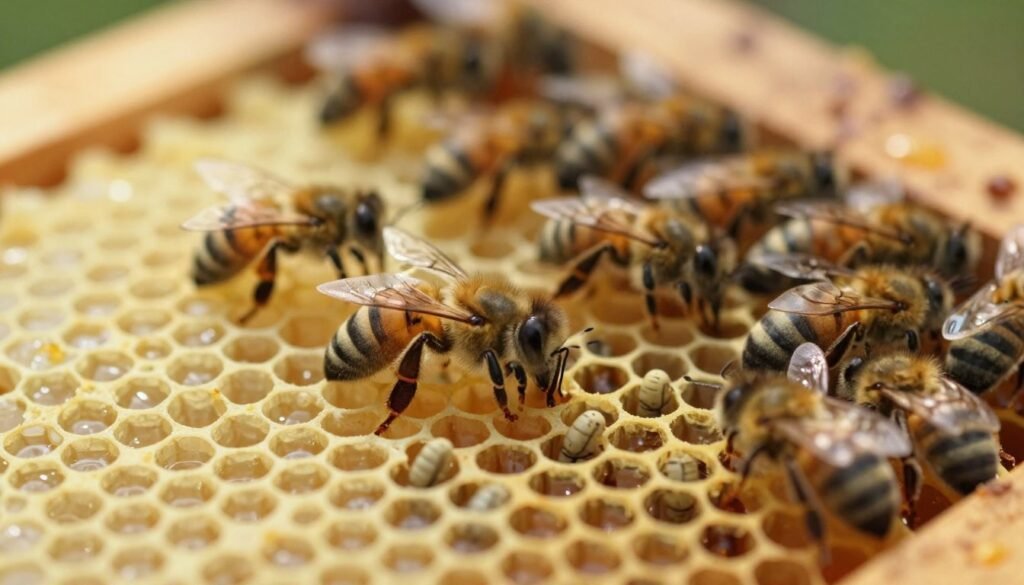
When the hive loses access to eggs young larvae, workers cannot raise a viable replacement from old larvae. Queens made from older larvae typically perform worse than those reared from the youngest available larvae.
Left without young brood, the colony may develop laying workers or a failing breeder that produces mostly unfertilized eggs. Sperm exhaustion in an ageing female also leads to male-only eggs over time.
“Prompt inspection and fast intervention give the best chance of restoring balance in the brood pattern.”
- Monitor frames and comb for early signs.
- Know how chemical controls affect fertility.
- Act quickly after queen loss; timing matters.
For more on recognizing symptoms, see identifying drone-laying symptoms and consult brood pattern assessment for practical frame-level inspection tips.
Identifying the Signs of a Drone Laying Colony
Inspect frames for uneven, patchy brood and domed cells; these visual cues flag serious reproductive imbalance.
Visual Indicators on the Comb
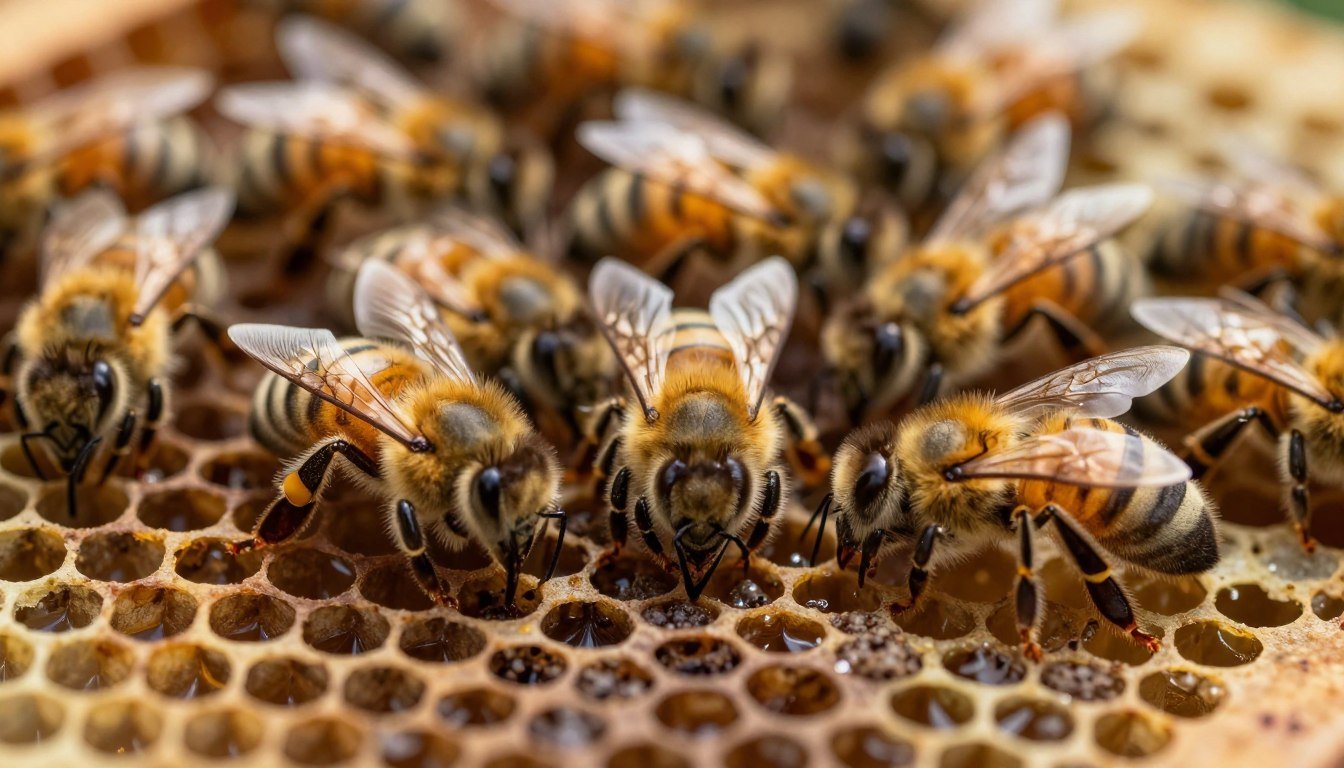
Look for multiple eggs in one cell. Laying workers lack the precision of a fertile female and often deposit several eggs per cell. That pattern is a clear early sign.
Check for drone brood in worker-sized cells. When male brood appears in small cells, the colony has been without a fertile breeder long enough for workers to attempt reproduction.
- Scattered, non-compact brood across the comb indicates the main breeder is no longer producing fertilized eggs.
- Domed cappings on drone cells are often uneven and dispersed; this suggests failing worker production.
- Because Varroa reproduce faster in drone cells (≈2.7 daughters per foundress versus ≈1.1 in worker cells), parasite pressure often accelerates decline.
| Indicator | What to check | Why it matters | Action |
|---|---|---|---|
| Multiple eggs per cell | Inspect several frames | Shows laying workers present | Mark colony for intervention |
| Drone brood in worker cells | Compare cell sizes | Signals prolonged queen loss | Consider uniting or requeening |
| Domed, scattered cappings | Look for patchy pattern | Reduces worker replacement | Prioritize corrective measures |
| High Varroa buildup | Sample mite levels | Thrives in drone cells | Treat or combine hives |
The Biological Mechanism of Laying Workers
When social inhibition fades, a few workers can shift from foraging to reproductive roles over several weeks. This change begins once pheromones that normally suppress ovary development drop in strength.
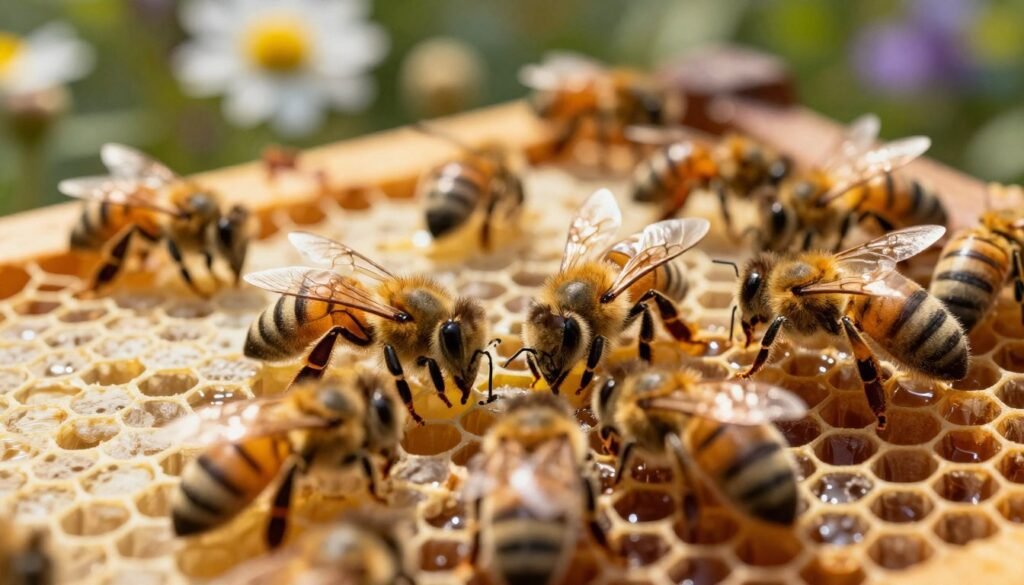
Timing matters. All worker brood needs 21 days to emerge. That interval helps beekeepers estimate how long a hive has been without a fertile focal female.
Ovary development in workers is epigenetic. Changes in gene expression take weeks. Only then do pseudo-queens appear and start to lay unfertilized eggs.
“Early action—introducing frame eggs from a healthy hive—can prevent irreversible collapse.”
- Queenless colony gradually loses reproductive inhibition, allowing some workers to develop ovaries.
- These laying workers emit queen-like pheromones that limit others, so few individuals do most egg production.
- Unfertilized output means only drone eggs form, shrinking the workforce over time.
| Process | Timing | Action |
|---|---|---|
| Loss of pheromones | Days to weeks | Inspect frames; add frame eggs |
| Ovary activation | Several weeks | Requeen or unite colony |
| Pseudo-queen laying | After ovary development | Monitor brood pattern; intervene |
Distinguishing Between a Failing Queen and Laying Workers
A careful comb check can reveal whether infertile brood stems from the breeder or from workers that began laying. Start by noting egg placement and capping patterns.
Key visual checks:
- Single, centered eggs in cells usually indicate a fertile matriarch.
- Multiple eggs per cell suggest either a young, prolific breeder or laying workers.
- Drone eggs in worker-sized cells point toward prolonged reproductive failure.
Pheromones matter. A drone laying queen still emits chemicals that suppress workers, so laying workers are absent if such a breeder exists. If no queen is found, verify whether workers have developed ovaries; their eggs stop emergency rearing and prevent queen cells.
| Sign | Likely source | Action |
|---|---|---|
| Multiple eggs/cell | Worker brood or hyper-productive breeder | Locate queen; consider requeening or combine |
| No queen cells | Queenless colony with laying workers | Often unrecoverable; prioritize stronger colonies |
| Queen present, unfertilized eggs | Drone laying queen | Remove and replace |
Why Introducing a New Queen Often Fails
Introducing a new queen into a colony that already hosts laying workers rarely succeeds. Workers that have developed ovaries often view her as a threat and will attack quickly.
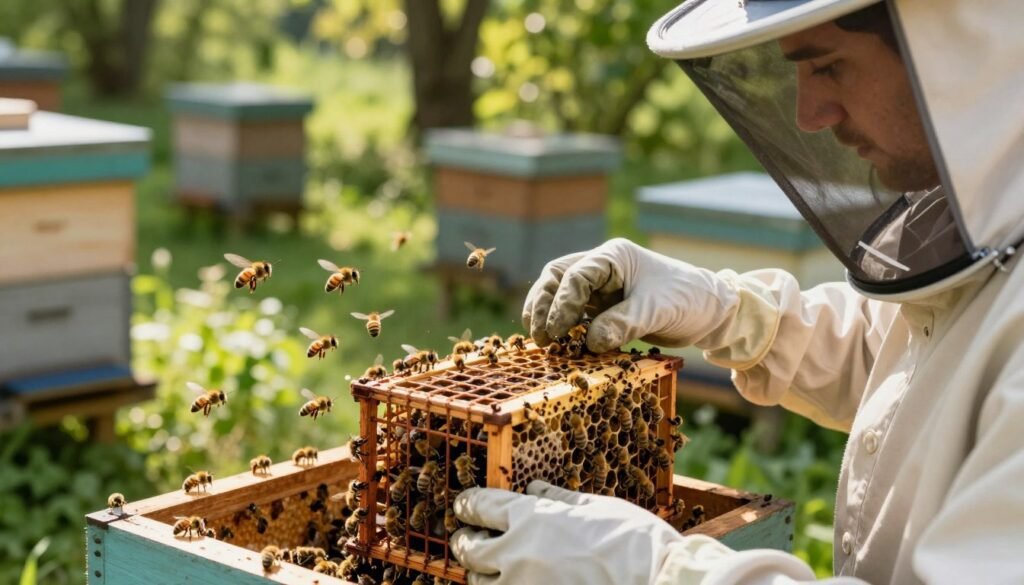
Pheromones from laying workers mimic queen signals. These chemical cues tell the hive there is a reproductive presence even when brood is male-biased. That scent profile makes acceptance unlikely.
Timing also matters. A queen cell that emerges in spring may be accepted, but in autumn or late winter mating flights fail. Without drones available, a new queen cannot mate and will not restore normal brood production.
- Placing a new queen into a hive with laying workers often wastes time and money; workers usually kill her.
- Confirm true queenlessness before attempting introduction; pheromone signals can mask the real status.
- Consider uniting with a strong hive or moving viable frames rather than forcing a failed introduction.
| Situation | Likely Outcome | Best Action |
|---|---|---|
| Colony with laying workers | New queen rejected | Combine or redistribute frames |
| Queen cell present in spring | Possible acceptance | Allow emergence and monitor mating |
| Introduction in cold season | Failure due to no mating | Delay until drones return or unite colonies |
“Ensure the colony is truly queenless before spending resources on requeening.”
Assessing the Viability of Your Beehive
Start viability checks by scanning comb for recent egg pattern and capped worker brood that signal recent fertility. A colony with capped worker brood usually indicates the hive was fertile within the last three weeks.
If you find no open brood for more than nine days, the fertile individual may have stopped laying or left the hive. That gap is a red flag that needs follow-up.
Check egg placement. Multiple eggs in one cell often point to an old breeder with exhausted sperm rather than laying workers. Conversely, drone brood inside worker-sized cells signals reproductive failure and suggests a drone laying queen or longer-term queenless colony.
- Confirm whether you can see queen activity or fresh eggs on frames.
- If the colony is queenless but healthy, consider uniting it with another hive before winter.
- When brood patterns show extended absence of open brood, prioritize consolidation rather than risky rescue attempts.
“Prioritize the health of the apiary: sometimes combining a weak colony into a strong one preserves bees and resources.”
| Sign | Interpretation | Action |
|---|---|---|
| Capped worker brood (≤3 weeks) | Recent fertility | Monitor; locate eggs or queen |
| No open brood (>9 days) | Possible queen loss or stop in laying | Inspect closely; consider uniting |
| Drone brood in worker cells | Reproductive failure | Plan requeening or consolidation |
For guidance on producing replacement breeders and strong frames, review queen rearing basics before deciding whether to requeen or unite hives.
Methods for Managing a Drone Laying Colony
Seeing swaths of drone brood where worker cells belong signals the need for decisive hive management. Quick action preserves bees and honey and lowers parasite risk.
Shaking out the bees is a practical first step for many beekeepers. Move the colony 50–100 meters from the apiary and gently shake frames so foragers return home to other hives. Young bees will drift and mixing helps save them while laying workers decline.
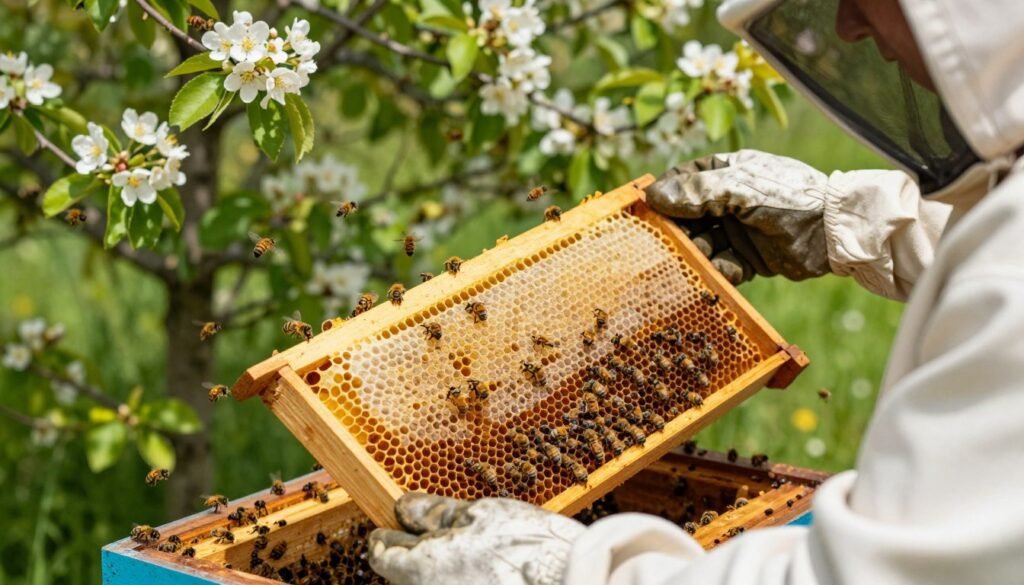
Uniting with a stronger colony
Combine the remaining bees with a strong, queenright hive using the newspaper method. This staged introduction reduces fighting and lets pheromones blend over time.
- Discard poor drone brood after shaking off the bees; it rarely contributes to future strength.
- Remove the empty hive stand so foragers do not keep returning to an abandoned site.
- Only attempt a new queen introduction if the colony shows no sign of laying workers’ pheromonal control; otherwise, requeening will likely fail.
“Consolidation often saves more bees and stores than trying to rescue a doomed nest.”
For further reading on symptoms and options, see identifying drone-laying symptoms.
The Risks of Attempting to Save Doomed Colonies
Rescuing a failing colony can spread pests and disease across your apiary. Sick nests often harbor viruses, fungi, and high Varroa loads that transfer during robbing or close contact.
Robbing is the main short-term threat. Bees from weakened hives attract neighbors. That behavior accelerates transfer of mites and pathogens and endangers healthy hives.

When laying workers dominate, their pheromones block acceptance of new stock. Introducing a new queen often fails and wastes both the insect and the keeper’s resources.
- Weak nests often act as reservoirs for Varroa and viral agents.
- Keeping such a hive raises robbing risk and can infect strong colonies quickly.
- Frames taken from these nests may carry contaminated brood or mites.
- Time spent on rescue can be better used strengthening productive hives.
“Recognize when consolidation protects the apiary more than stubborn rescue attempts.”
| Risk | Why it matters | Recommended action |
|---|---|---|
| High Varroa and viruses | Fast spread during robbing and drift | Remove or combine with strict quarantine |
| Laying worker pheromones | New queens rejected | Avoid direct introduction; unite or euthanize |
| Resource drain | Wastes frames, queens, and time | Prioritize strong hive investments |
Preventing Future Reproductive Issues in Your Apiary
Autumn brood checks and gentle chemical use lower the risk of reproductive failure. Confirm the presence of a current-year queen and look for compact, homogeneous brood before winter.
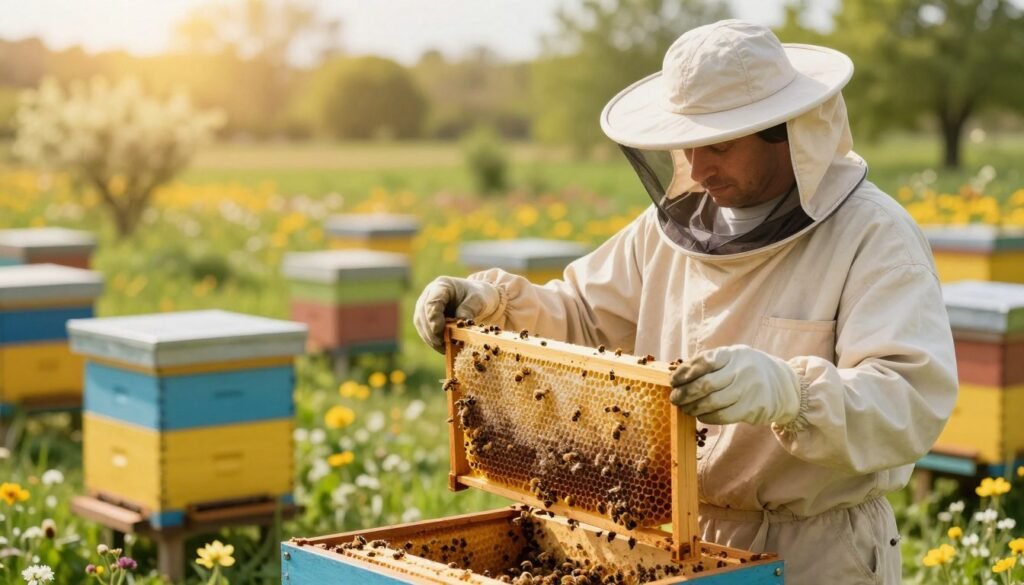
Regular inspections during spring and summer give you time to act. If you spot uneven frames or missing eggs, replace the breeder or unite with a stronger colony promptly.
Administer treatments carefully. Some formic acid applications stress queens and halt egg production. Use labeled doses and monitor the hive for signs of queen decline.
- Track the laying pattern each visit and record any changes in cells or brood.
- Keep access to young larvae and frame eggs ready; these support natural rescue if the focal female is lost.
- Limit heavy chemical use; prioritize integrated pest management and strong nutrition.
“Simple, routine checks and cautious treatment preserve colony strength and reduce the chance of male‑biased brood.”
| Preventive Step | Why it matters | Action |
|---|---|---|
| Autumn brood check | Predicts overwintering success | Verify current-year queen and compact brood |
| Cautious chemical use | Protects breeder fertility | Follow label; monitor queen activity |
| Regular seasonal inspections | Early detection of issues | Replace breeder or unite quickly |
| Maintain young larvae access | Enables natural rearing | Save frames with eggs and young larvae |
For deeper reading on genetics and brood health, review resources on bee genetics.
Common Misconceptions About Brood Patterns
Many new colonies display odd egg placement early on, and that can be a normal sign of adjustment. Inspecting comb at calm times helps avoid hasty judgments.
Multiple eggs in one cell does not always signal a laying worker problem. In a tight mating nucleus, a freshly mated breeder may lay several eggs per cell while ramping up output. This often means high fecundity, not failure.
Compare patterns. Drone brood in a failing colony tends to be scattered across frames and heterogenous. By contrast, a healthy, productive focal female produces compact, uniform brood across adjacent cells.
Always check for worker brood and recent eggs before acting. Pheromones from intact colonies give clear signals; their presence reduces the chance that workers have activated ovaries.
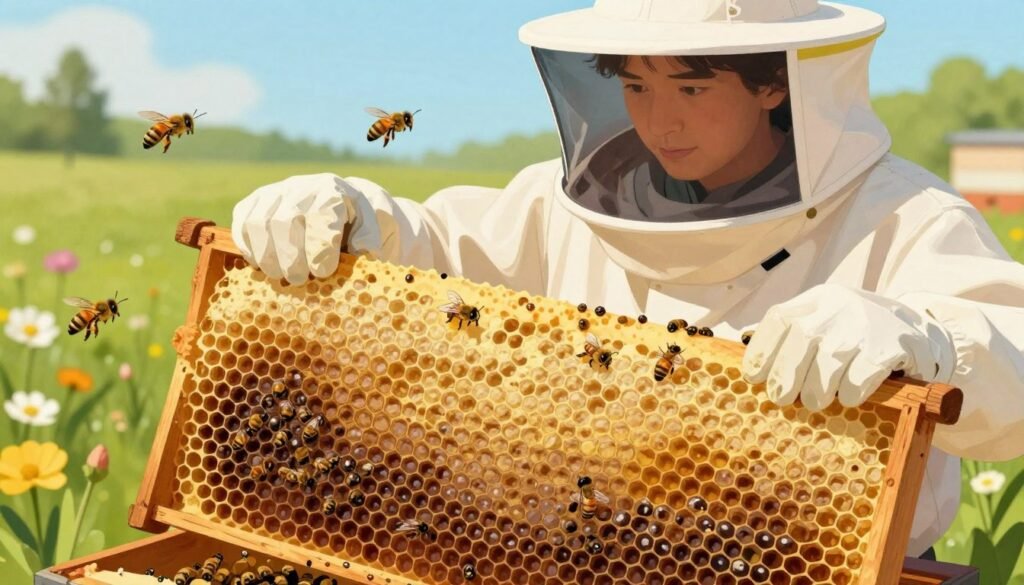
“Distinguish early adjustment from decline; careful checks save healthy stock.”
- Do not destroy a young, productive breeder based on multiple eggs alone.
- Look for scattered drone cells and inconsistent pattern when suspecting failure.
- Use frame-level comparison and secondary signs before requeening or uniting.
When to Consolidate or Remove a Hive
Deciding whether to merge or remove a failing nest is often the most pragmatic step for apiary health. Small but vigorous units can be combined with another colony to build strength for the season ahead.
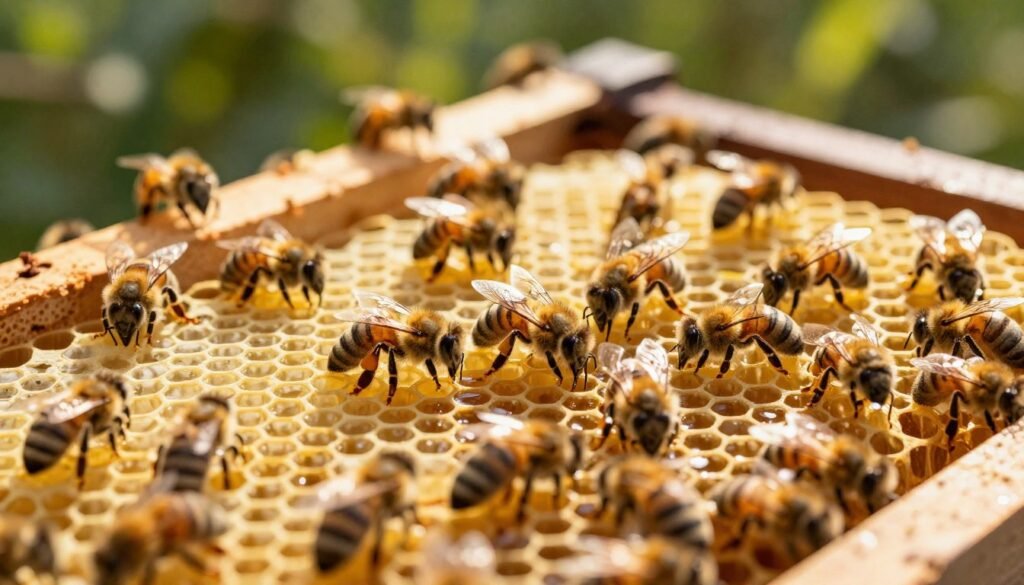
If brood quality and adult numbers are acceptable, unite the frames and bees with a stronger neighbor. Use the newspaper method or staggered pulls so conflicts calm and resources transfer safely.
If tests show a drone laying situation or heavy parasite load, removal is the responsible call. Brushing out or disposing of comb prevents disease from seeding nearby nests.
“Removing a doomed nest protects productive units and preserves apiary resources.”
- Consolidate small but healthy units to boost survival and stores.
- Remove confirmed drone laying colonies to curb pathogen spread.
- Attempt new queen introduction only when laying worker pheromones are absent and the hive is truly queenless.
- Focus effort on strong, productive units for long-term success.
| Condition | Recommended Action | Rationale |
|---|---|---|
| Small, healthy colony | Unite with another colony | Improves workforce and winter resilience |
| Confirmed drone laying | Remove or brush out | Prevents disease and mite spread |
| Queenless, no laying workers | Attempt new queen introduction | Restores fertile laying quickly |
For step-by-step guidance on identifying and fixing queenless situations, review this practical resource: how to identify and fix a queenless.
Conclusion
Conclusion. Small changes in comb pattern often predict larger reproductive shifts ahead. Spotting irregular cells early and checking each frame saves time and bees.
Regular inspections remain the most effective defense. Track brood pattern, note multiple eggs per cell, and watch for signs that a laying worker has taken hold. Timely action — requeening, uniting, or removing weak stock — protects the rest of the apiary.
When decisions are hard, prioritize colony health over sentiment. For context on historical trends and mating issues, consult this historical overview. Good record keeping and steady checks on each frame reduce risk and build resilient hives.
FAQ
How does an unfertilized laying female affect brood pattern?
An unfertilized laying female produces only male eggs, creating drone brood in worker-sized cells and scattered patches. This results in spotty comb with many empty cells and multiple eggs per cell. Inspect frames for drone-shaped cappings and irregular brood distribution to confirm.
What role do pheromones play in colony health?
Queen pheromones maintain worker behavior and inhibit ovarian development in workers. When pheromone levels fall because the egg layer is old, injured, or absent, workers may begin laying unfertilized eggs and brood care breaks down, weakening colony cohesion.
How can I tell if a colony has laying workers rather than a failing egg layer?
Look for many eggs per cell, eggs on cell walls, and predominantly drone brood across several frames. Laying workers produce multiple eggs and cannot be replaced by introducing a new egg layer until workers stop laying and accept the newcomer.
Why might introducing a virgin or mated replacement fail in a problem hive?
New introductions often fail if laying workers are present or if pheromone levels remain abnormal. Workers may reject or kill an introduced queen. Also, poor nutrition, disease, or stress can prevent acceptance even when the introduced queen is healthy.
What are quick visual signs of a drone-heavy hive during an inspection?
Drone brood looks larger with domed cappings and sometimes in worker-sized cells. You may see many empty cells, multiple eggs per cell, and scattered comb with few worker larvae. These signs point to male-biased reproduction.
When is combining with a stronger colony the best option?
Combine when the failing colony has extensive drone brood, laying workers, or a dying egg layer and requeening attempts have failed. Uniting provides workers, brood care, and a strong queen pheromone source, improving survival prospects.
How effective is the “shaking out” method for dealing with laying workers?
Shaking bees out of the hive can remove many laying workers but rarely solves the root problem. This method may reduce numbers temporarily but often requires follow-up: combine with a strong colony or requeen under controlled acceptance conditions.
When should an apiary manager decide to remove a doomed hive?
Remove or consolidate when repeated inspections show persistent drone-only brood, no viable egg layer, or high disease risk. Keeping doomed hives wastes resources and can spread problems; timely consolidation into healthy colonies is usually wiser.
What biological process allows workers to start laying eggs?
In the absence of strong queen pheromones and fertilized eggs, worker ovaries can activate. Since workers are unmated, they lay only haploid eggs that develop into drones, changing the colony’s reproductive output.
How long after queen loss will a colony show drone-only brood?
It can take several weeks. After a queen dies or is removed, existing brood continues to develop, and without a successful replacement or emergency queen cells, workers may start laying within two to three weeks, producing male-biased brood patterns.
Can an old or poorly mated egg layer shift a colony toward drones?
Yes. An aging or poorly mated egg layer may produce few fertilized eggs, increasing unfertilized egg proportion and triggering laying by workers. Reduced brood viability and weak pheromone signals accelerate decline toward male-dominated brood.
What management steps prevent future reproductive problems in an apiary?
Maintain regular inspections, replace queens every one to two seasons, monitor mating success, manage nutrition and disease, and avoid stressing colonies during swarming or dearth. Proactive requeening and timely combining reduce laying-worker development.
Are there common misconceptions about irregular brood patterns?
Yes. Spotty brood does not always mean laying workers; it can reflect recent queen introduction, chilled brood, or pests like Varroa. Always confirm with multiple signs—egg placement, number per cell, and capped drone brood—before taking action.
How do mite loads and disease influence reproductive failures?
High Varroa levels, Nosema, and viruses weaken queens and workers, lower pheromone production, and reduce mating success. These stressors increase the chance of male-only brood and reduce the success of requeening efforts.
What should I inspect on frames when evaluating hive viability?
Check for worker brood continuity, presence and type of eggs, larvae age range, brood cell cappings, and signs of disease or pests. A healthy hive shows solid worker brood with varied larval stages and a single egg per cell placed centrally.