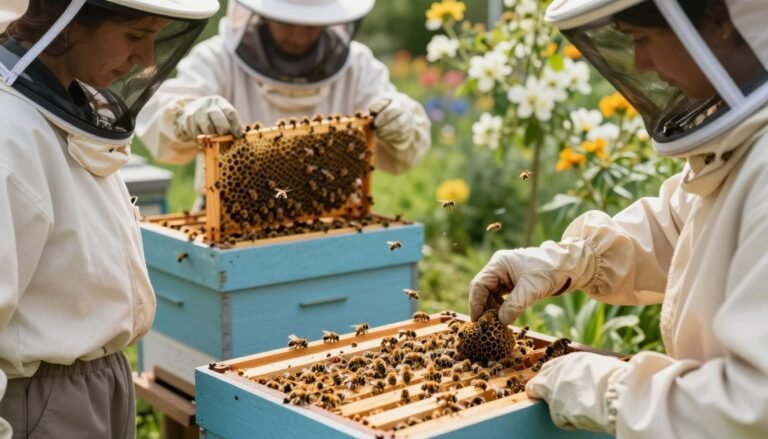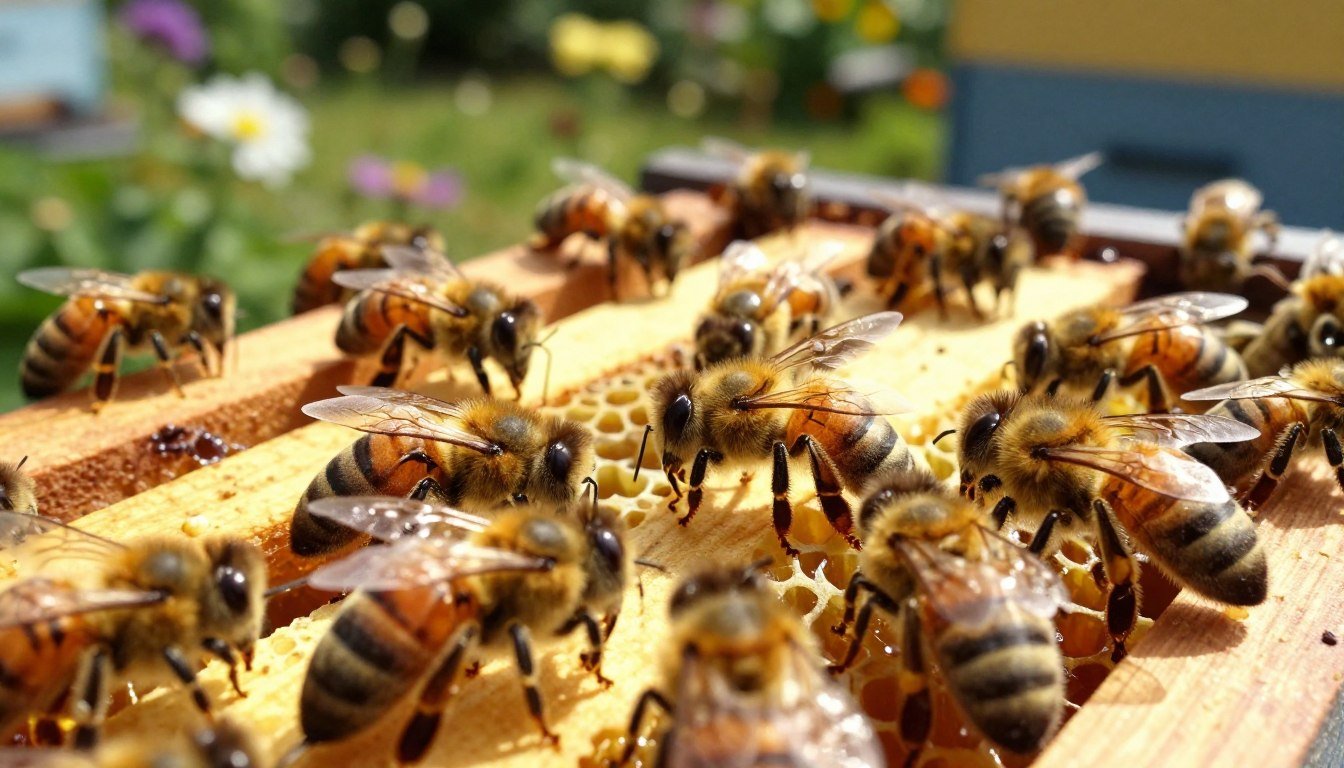
Understanding colony rejection helps any beekeeper protect hive health. Roughly 40% of package queens fail in their first months, so spotting the causes early saves time and honey. Careful introduction and proper tools cut that risk.
When introducing a mated queen to a queenless colony, worker behavior determines success. Use a reliable queen cage for introduction and place it in the center of the brood nest. This gives workers time to learn her scent and reduces aggression.
Watch for calm workers, feeding through mesh, and later eggs on the frame. If acceptance fails, it often traces to scent mismatch, poor timing, or stress during transport. Following a structured process improves acceptance and long-term success for colonies and beekeepers.
Key Takeaways
- Use a timed-release introduction cage placed in the brood nest.
- Monitor worker behavior for signs of acceptance before release.
- Scent establishment is crucial for colony acceptance.
- Many package queens fail early; careful handling reduces losses.
- Check for eggs and brood to confirm a colony is truly queenless.
Understanding Why Bees Reject a New Queen
Scent, age, and brood condition drive many colony decisions. Worker recognition relies on pheromones and familiar hive odors. If these signals differ, the introduced leader may be treated as an intruder.
Biological instincts
Worker behavior protects the genetic line and resources like honey and brood. When scent profiles change, workers act rapidly to defend the hive. This defense can lead to aggression and eventual rejection.
The Impact of Older Workers
Older workers are bonded to the prior ruler’s pheromones. They often respond more aggressively to unfamiliar queens and can sway the entire colony.
- Colonies may form queen cells if they sense poor health or mating problems.
- Healthy brood usually calms acceptance; failing brood prompts replacement efforts.
- Even robust queens face hostility when workers have already committed to raising their own cells.
For practical guidance on handling introductions and reducing rejection, see this acceptance and rejection guide for beekeepers.
The Role of Pheromones and Scent Identity
A queen’s scent acts like an identity card that workers use to sort hive members from intruders. This chemical passport controls grooming, feeding, and defense inside the colony.
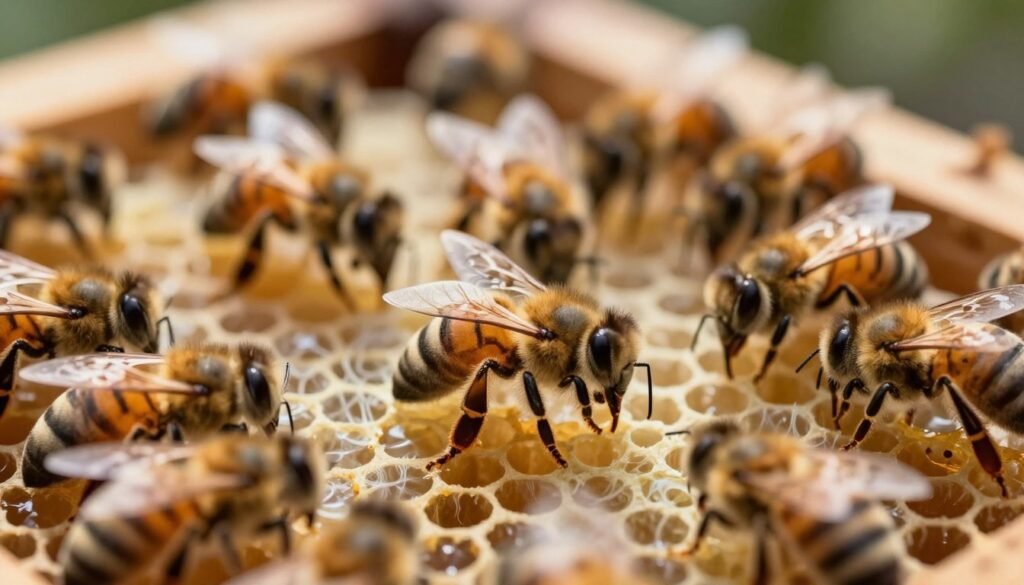
Every queen bee produces a unique blend of pheromones. Workers spread that profile through contact during routine care. If the scent does not match the hive’s established odor, workers treat the individual as foreign.
- Pheromones are the primary chemical language for a bee colony.
- Workers distribute queen scent while feeding and grooming.
- Allowing time for pheromone permeation boosts acceptance.
Practical note: successful introductions hinge on scent transfer. For deeper reading on chemical signaling and management, review this bee pheromones guide to improve beekeeping outcomes.
Assessing Hive Readiness for a New Queen
Checking brood pattern and food reserves is the best first step before placing a new leader. A careful inspection gives you confidence that the colony will accept an introduction.
Verify queenless status. Open the hive and inspect every frame for eggs or young larvae. If you find eggs, do not proceed; workers will usually kill an outsider.
Beekeepers should ensure the colony has been without a laying female for at least 24 hours. For safety, aim for near 99% certainty that the hive is truly queenless before any introduction.
Practical checks
- Confirm adequate honey and pollen resources so the colony can feed brood and an introduced queen.
- Note that long queenless periods can deplete young nurse bees needed for care.
- Use a queen cage to protect her while the old pheromone fades over days.
“Proper assessment makes the difference between acceptance and loss.”
For step-by-step guidance on how to introduce new queen bee safely, review this how to safely introduce a new queen.
Common Pitfalls During the Introduction Process
A common mistake is rushing the introduction before hive odors and behavior settle. Introducing a leader too early often causes immediate aggression. Workers use scent to identify members, so leftover pheromone confuses their response.
Stressed colonies struggle to accept unfamiliar individuals. Illness, low stores, or poor brood health increases defensive actions and lowers acceptance rates.
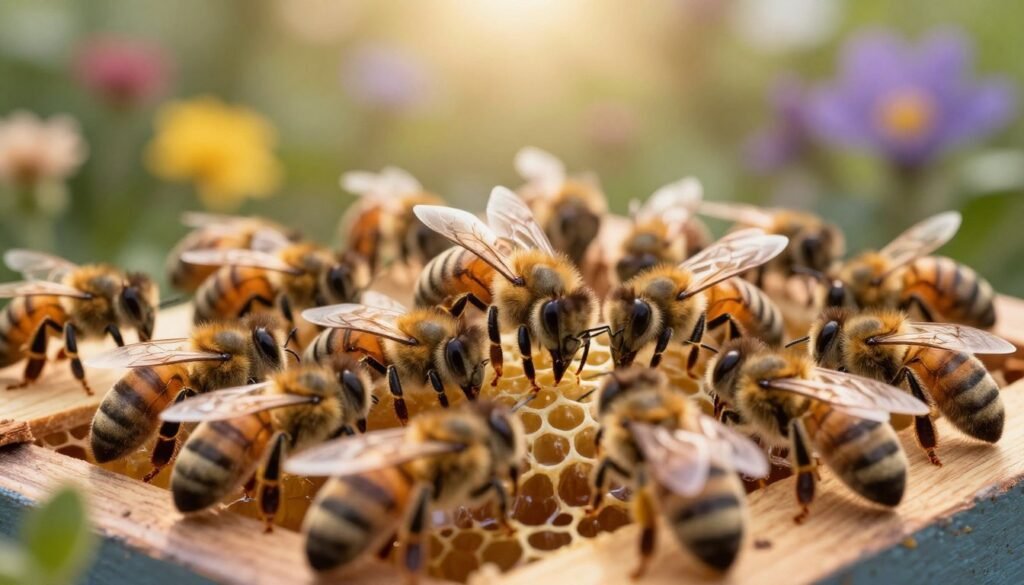
- Introducing while the hive still senses the prior ruler often leads to immediate rejection.
- Do not introduce if workers have begun laying eggs; they will fight an outsider.
- Use a queen cage to protect the incoming leader during scent transfer and adjustment.
- Patience matters: rushing the process commonly results in loss of the queen bee.
| Pitfall | Impact | Action |
|---|---|---|
| Residual pheromone | Immediate aggression | Wait several days; use timed-release cage |
| Colony stress or disease | Lower acceptance | Treat disease, feed if low on honey |
| Worker-laid eggs present | Near-certain rejection | Confirm queenless status before introducing |
“Slow, deliberate introductions work far better than quick fixes for hive stability.”
For practical tips on cage handling and common mistakes, review this queen cage mistakes.
Proven Methods for Successful Queen Introduction
A measured introduction process shields the incoming leader while workers learn her scent. Use staged steps to protect the bee and give the colony time to accept a replacement.
Using a Queen Cage
Queen cage use is the most reliable method for introducing a new queen. The cage acts as a barrier while scent exchange occurs through mesh.
Place the cage in the brood area and monitor daily. Include a candy plug to control release speed and allow workers to feed the enclosed leader.
The Push-in Cage Technique
The push-in cage lets the incoming ruler lay on a frame of brood while staying protected. This keeps her active and healthy by granting access to honey and brood.
Frame placement with access to nurse workers encourages feeding and reduces stress. Typical acclimation is 2 to 6 days before release.
Gradual Acclimation
Gradual scent transfer improves acceptance. If workers feed through the mesh and calm interactions occur, the introduction process is working.
- Check daily for balling or aggression.
- Use cages that permit contact but prevent harm.
- Seek guidance from the Purdue Extension guide for best practices.
Recognizing Signs of Acceptance and Rejection
Observing how nurses approach and feed the caged leader offers quick insight into colony mood. Calm walking on the mesh and feeding through the candy plug signal steady acceptance.
If worker bees nip or bite the wire of the queen cage, treat that as clear aggression. Balling is the extreme form of rejection when a cluster forms and heats the bee to death.
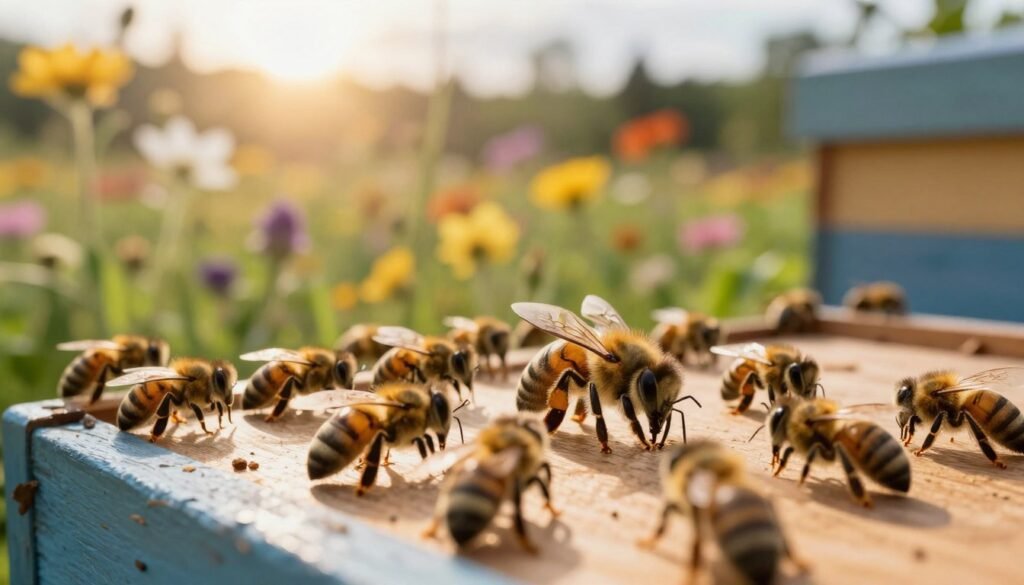
Monitor the cage for several days. Check the surrounding frame to ensure workers do not try to sting the enclosed queen bee. Casual interest usually means the pheromone is integrating.
- Calm contact: walking and feeding through mesh — good sign.
- Mesh biting or balling: immediate intervention required.
- Neutral interest: scent may be settling; continue to observe for days.
“Prompt, careful observation lets you intervene before rejection becomes irreversible.”
| Behavior | Interpretation | Action | Timing |
|---|---|---|---|
| Feeding through candy plug | Acceptance forming | Leave cage; recheck daily | 2–6 days |
| Workers biting mesh | Aggression | Remove queen; reassess colony | Immediate |
| Balling cluster | Fatal rejection | Rescue queen if possible; combine hives | Immediate |
For more troubleshooting on why might colonies turn hostile during introduction, see this FAQ on colony rejection.
Alternative Solutions for Failing Colonies
A failing hive often needs quick decisions to preserve brood and foragers for winter survival.
Combine when survival is the goal. When resources are low or the laying female is failing, merging weak hives with the newspaper method gives workers time to adjust. This is the most effective way to save colonies before cold weather.
Combining Weak Hives
Use frames to boost rebuilding. Adding a frame of brood with fresh eggs lets a queenless group raise cells and restore broodstock. Remember: raising a replacement from larvae takes about 25 days.
- Newspaper method: place a sheet between hive boxes so workers mix slowly and hostility fades.
- Laying workers: if present, requeening often fails and combining is wiser.
- Resource focus: combine honey and pollen frames to support developing brood and workers.
| Issue | Best Action | Timing |
|---|---|---|
| Queenless too long / laying workers | Combine with healthy colony using newspaper method | Immediate |
| Low brood and eggs present | Add frame with young eggs to allow cell rearing | Within days |
| Weak colony before winter | Merge two hives to conserve heat and foragers | Before cold sets in |
“Sometimes protecting colony health means consolidating resources rather than risking total loss.”
When you need step-by-step help with a queenless hive, consult this guide on identifying and fixing a queenless hive for practical rescue steps: find and fix a queenless hive. For boosting populations naturally before combining, see this resource: boost colony population naturally.
Conclusion
Timing, scent transfer, and steady observation form the core of successful introductions. Verify the hive is truly without a laying female before you act.
, Use a properly placed cage to protect the incoming leader while workers learn her profile. Patience is essential; rushing the process raises risk of aggression or fatal balling.
Monitor daily for feeding through mesh or hostile biting. If requeening fails, combining weak hives with the newspaper method often preserves resources and boosts recovery.
For practical guidance on handling rejection scenarios, consult this queen rejection guide for added tips on securing long-term acceptance and success.