Sacbrood disease affects the honey bee worldwide and leaves larvae on their backs in a canoe-like form.
Healthy apiaries start with vigilant observation. Inspect brood and look for odd symptoms in combs and wax.
The adult bees may show no clear signs, yet viruses can shorten lives and weaken colonies. Protecting adult bees demands swift, practical steps.
Beekeepers must act when brood or larvae look abnormal. Check hives, remove damaged comb, and limit spread across nearby colonies.
For repairs and further guidance on managing damaged boxes, see repair damaged hive boxes. Good beekeeping combines careful inspection with sound hygiene to keep bees strong.
Key Takeaways
- Watch brood closely for canoe-shaped larvae as a key sign.
- Inspect combs and wax for irregularities early.
- Adult bees may hide high viral loads without clear signs.
- Limit contact between affected and healthy colonies quickly.
- Follow proven management steps and repair damaged hive boxes when needed.
Identifying Signs of Disease in Your Apiary
Early detection of brood problems keeps hives productive and limits spread. Inspect frames often and note any unusual patterns. A spotty brood pattern is one of the earliest symptoms a beekeeper will spot.
Recognizing Brood Symptoms
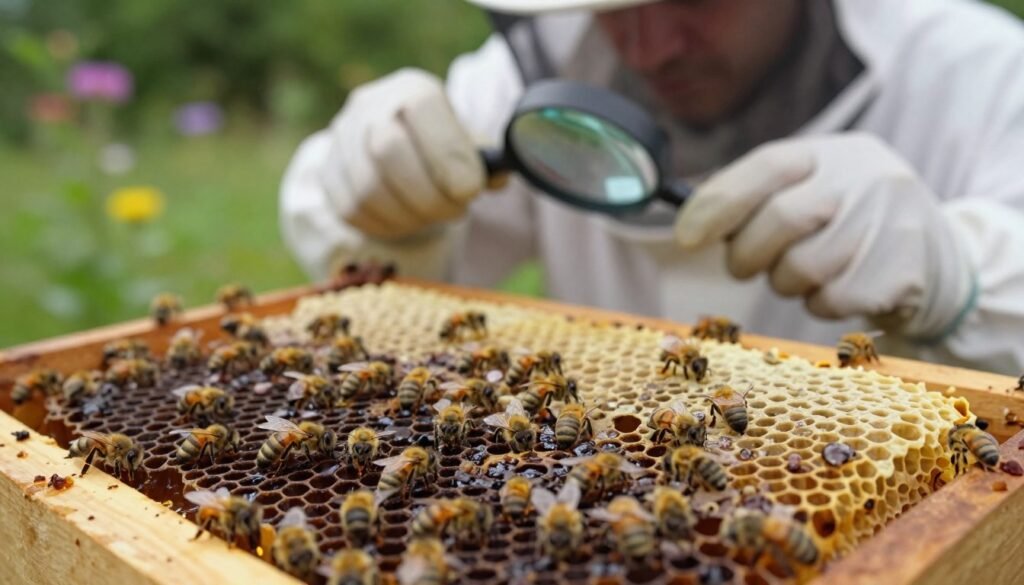
Check brood cells for discoloration and misshapen larvae. Dead larvae that look sunken or watery suggest bacterial trouble. Examine the bottom board for varroa mites or dead brood that may point to a failing population.
Watch adult bees for weakness or deformity. Such signs often signal heavy mite pressure and virus transmission. Monitor multiple hives so you can compare healthy frames with suspect ones.
Field Diagnostic Tests
When you find dead larvae, a simple field test helps with quick diagnosis. The ropiness test uses a toothpick stirred into a dead larva.
If the stirred mixture strings out up to 3/4″ before snapping back into the cell, the hive is very likely infected with American foulbrood.
Record observations and act quickly if the test is positive. Also, consider selective breeding and learn more about hygienic behavior to strengthen future colonies.
Understanding the Risks of American Foulbrood
Paenibacillus larvae causes american foulbrood, one of the most lethal threats an apiary can face.
Spore persistence is the core risk: spores resist heat and cold and can survive for decades in equipment.
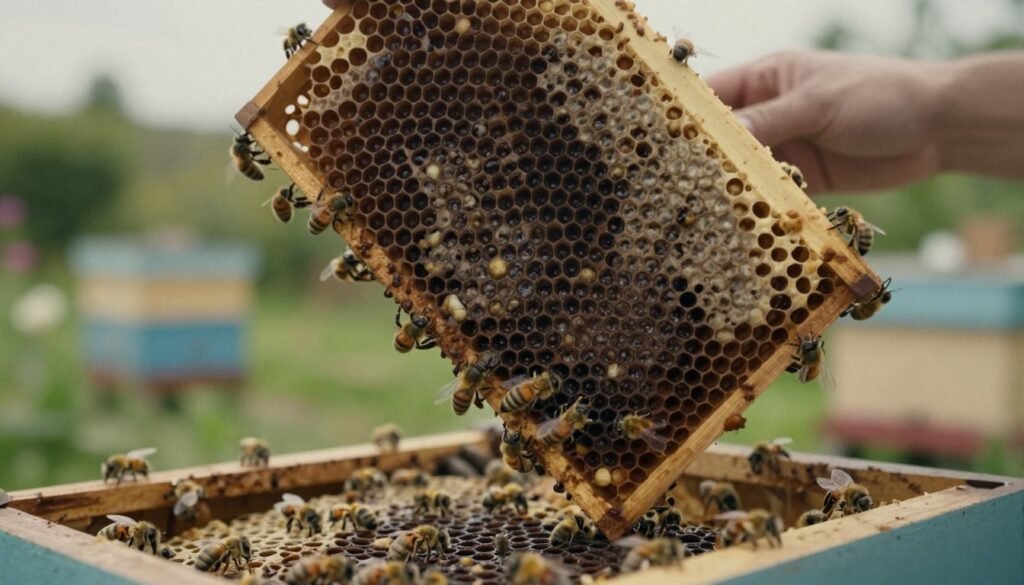
Inspect hives for sunken, perforated cappings and a spotty brood pattern. A foul odor and ropy dead brood often indicate severe infection.
Adult bees remain unaffected by the bacteria but can spread pathogens by robbing weakened colonies. Nosema and varroa mites also weaken brood care and raise case counts for secondary infections.
- Highly contagious: spores persist and resist standard cleaning.
- Classic signs: sunken cappings, foul odor, ropy or rubbery dead brood.
- Vector risk: adult bees move spores between hives and colonies.
- Control: many cases require destruction of infected equipment to stop spread.
| Feature | Indicator | Risk | Recommended Action |
|---|---|---|---|
| Cause | Paenibacillus larvae | High—spores long-lived | Confirm diagnosis; consult guidance |
| Brood signs | Sunken cappings; spotty brood pattern | Severe | Isolate hive; test for ropiness |
| Spread | Adult bee robbing; equipment | Widespread if unchecked | Consider destruction of contents |
| Complicating factors | Varroa, nosema, weak brood care | Increases susceptibility | Improve mite management; strengthen stocks |
For detailed regional rules and further steps, review official diagnosis and control guidance.
What to Do With Honey From a Diseased Colony
Start by separating frames that carry suspect comb from those that appear sound. If brood shows sunken cappings or dead larvae, treat any nearby comb or jars as potentially contaminated.
If american foulbrood is confirmed or strongly suspected, do not use the honey or comb. State rules often require destruction and on-site burning of infected hives to stop spread.
When honey looks clean and fresh and the hive received no chemical mite treatments, it is usually safe for consumption. Still, beekeepers must verify the hive’s health before harvest.
“Consult your local apiary inspector when in doubt; their guidance protects your apiary and surrounding colonies.”
- Check combs for clear symptoms — sunken cappings and dead larva are red flags.
- Honey from a starved colony without brood disease can often be used safely.
- When uncertain, surrender samples or follow official cleaning rules.
| Situation | Risk | Recommended Action | Notes |
|---|---|---|---|
| Confirmed american foulbrood | Very high | Do not use honey or comb; destroy on site | Follow state law and inspector directives |
| Suspect signs (sunken cappings, dead larvae) | High | Isolate frames; consult inspector | Remove samples for testing if available |
| No brood symptoms; clean honey | Low | Use after standard filtration and storage | Avoid honey from hives treated with chemical miticides |
| Unsure | Variable | Ask your apiary inspector; review official guidance | See hive cleaning and sterilisation guidance |
For procedural details on cleansing equipment and legal requirements, review official hive cleaning and sterilisation guidance.
Assessing the Safety of Stored Honey
Before reusing stored comb, inspect frames for signs of spoilage that start in winter and show up during spring.
Test for fermentation by checking smell and texture. Warm, sour odors or bubbling suggest high moisture and active fermentation. If comb or wax looks wet, discard it.
In spring, clear the bottom board and inspect hives for debris and dead larvae. Mummies from chalkbrood can carry spores and risk nearby colonies. Learn more about preventing that fungus at prevent chalkbrood.
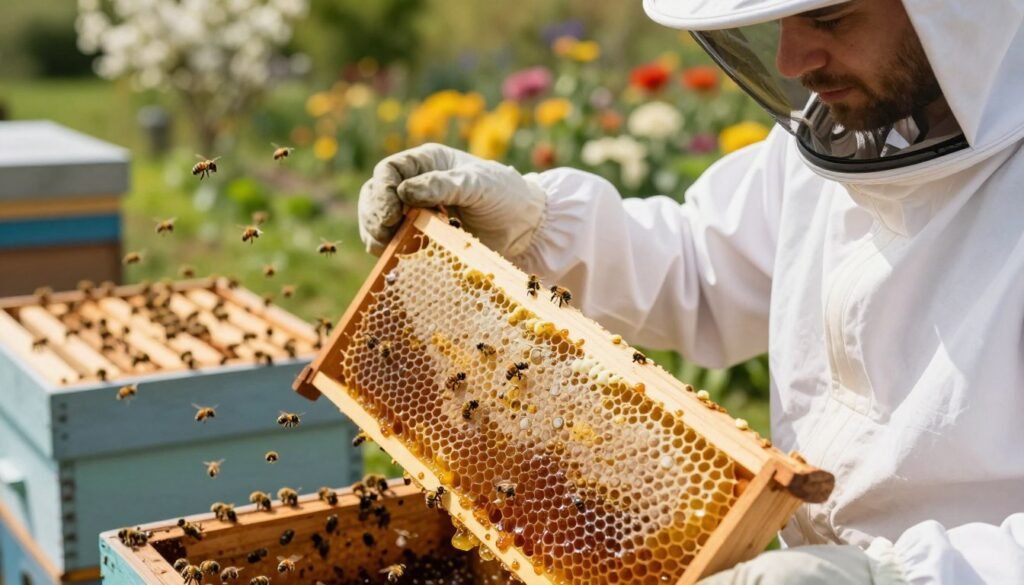
Adult bees normally keep stores clean, but low populations fail at this task. If brood or comb shows mold, stains, or a sour odor, do not reuse those frames.
- Check combs for discoloration and off-odors before harvest.
- Isolate suspect frames and avoid moving spores among colonies.
- Store sealed jars in a cool, dry place to limit microbial growth.
“Consult regional biosecurity guidance when unsure about salvage decisions.”
For protocol on containment and hygiene, see local biosecurity resources before returning equipment to service.
Managing Hive Equipment After a Colony Loss
After a hive loss, inspect every frame and store equipment with strict pest control in mind.
Look for signs of wax moths and small hive beetles. Wax moth larvae tunnel through wax combs and leave silk cocoons. Small hive beetle damage often causes comb to become wet and ferment, a clear symptom of a failing hive.
If american foulbrood is suspected, follow legal direction and destroy affected equipment. The spores resist cleaning and pose long-term risk for other hives.
Freeze foundation that appears sound for at least 48 hours to kill hidden eggs and larvae. Scrape woodenware thoroughly to remove debris, cocoons, and wax residues that attract pests and hold pathogens.
“Store combs in a moth-tight place and keep inventory of frames before reuse.”
| Item | Check | Action | Risk |
|---|---|---|---|
| Frames with comb | Silk, tunnels, wet comb | Discard or freeze; isolate good frames | Wax moths, fermentation |
| Woodenware | Debris, cocoons, old wax | Scrape and scorch if safe; store dry | Pathogen buildup |
| Foundation | Integrity, no brood stains | Freeze before reuse | Hidden pest eggs |
| Unknown status | Suspicious symptoms | Consult an inspector; review guidance at when a colony dies | Variable; follow local rules |
For more on parasite signs and prevention, review resources on hive pests. Strong colonies and fast action protect remaining bees and equipment.
Cleaning and Sanitizing Woodenware
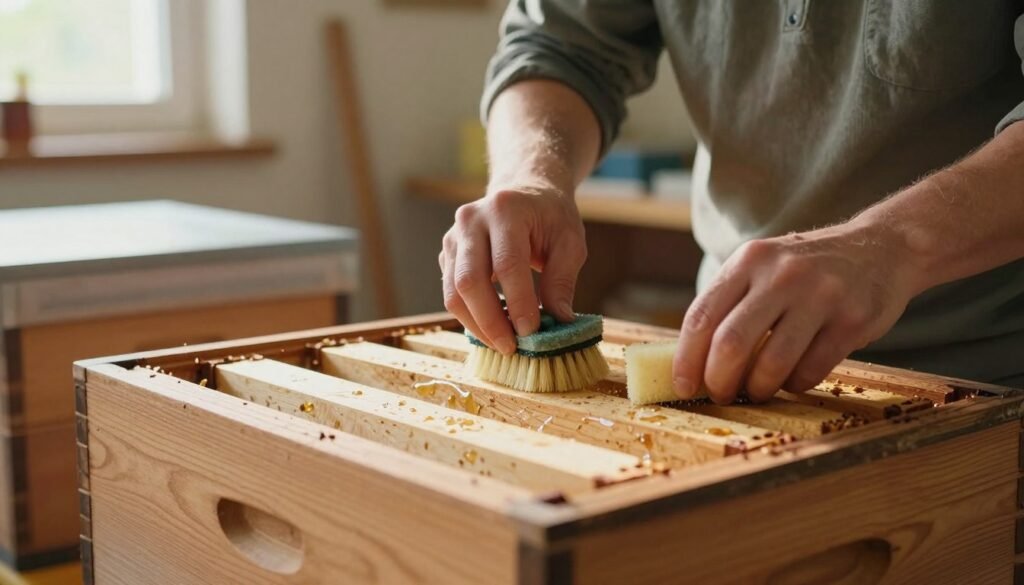
Good woodenware care starts with clear steps that remove wax, propolis, and hidden pests. Regular maintenance lowers risk for brood disease and gives new bees a healthy start.
Scraping and Scorching
Begin by scraping the bottom board and inner covers. Remove old wax, propolis, and debris that can shelter larvae or spores.
Scorching the interior with a torch is an effective method for killing wax moth eggs and sanitizing a hive box. Move the flame evenly and avoid charring outer joints.
Bleach Solutions
Some beekeepers wash boxes in a light bleach solution, though bleach will not reliably kill all pathogens, including american foulbrood spores.
If american foulbrood is suspected, follow legal direction and consult authorities rather than relying on simple cleaning. Replace old combs with new foundation each year and isolate suspect combs.
“Clean equipment lowers stress on bees and reduces the chance that symptoms will reappear in nearby colonies.”
- Scrape wood clean; scorch inner surfaces for extra sanitation.
- Isolate or discard stained combs rather than trying to salvage them.
- For protocol on cleaning and disinfecting beekeeping equipment, review cleaning and disinfecting beekeeping equipment.
Handling Comb and Foundation
Store frames carefully after harvest to block pests and preserve wax quality.
Freezing frames for several days kills wax moth eggs and larvae before you store supers. Freeze-only treatment helps stop infestation without chemicals.
Replace at least three combs in the brood chamber each year with fresh foundation. Regular rotation gives bees clean space for brood and reduces buildup of pathogens and mites.
If heavy damage from a wax moth is present, discard the comb and install new foundation. Never reuse comb from hives infected with american foulbrood; spores remain and pose long-term risk.
- Inspect stored combs periodically to catch new infestations early.
- Keep foundation clean and free of debris for better brood hygiene.
- Isolate suspect frames and follow local guidance when disease symptoms appear.
“Proper comb handling preserves hive health and lowers the chance that pests or spores will spread among colonies.”
For step-by-step practices on replacing and recycling comb, see our guide on comb care and replacement.
Preventing the Spread of Pathogens
A well-fed, vigorous bee population is the single best barrier against brood infections and infestations. Healthy colonies recover faster and repel pests that carry spores and mites.
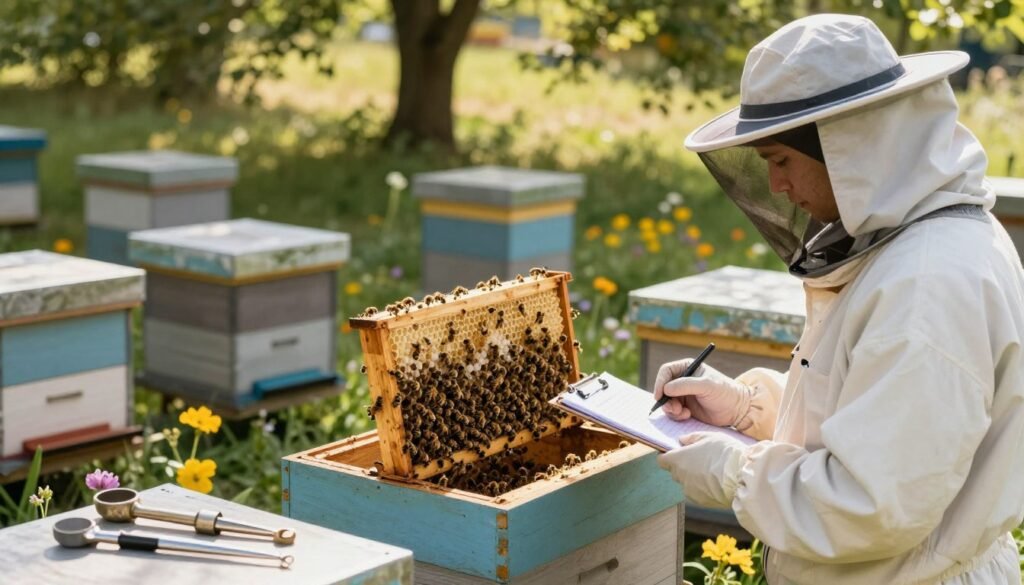
Maintaining strong colonies means steady food, good queen performance, and effective mite control. European foulbrood often appears when bees are stressed.
Maintaining Strong Stocks
Monitor population each spring and boost feed if stores run low. Strong adult bees can care for larvae and limit disease growth.
Hygienic Stock Selection
Select strains that remove sick brood. Hygienic genetics reduce spread and lower long-term risk.
Avoiding Equipment Sharing
Avoid moving combs or tools between hives. Shared comb can carry varroa mites, wax moths, and spores.
- Isolate hives showing symptoms of nosema or moth infestation.
- Use Fumadil-B only when lab counts exceed one million spores per bee and follow label rules.
- Keep hives dry and ventilated to cut fungal risk.
“Prevention starts with strong bees, careful stock choice, and strict gear hygiene.”
When to Seek Professional Inspection
Prompt expert assessment limits spread and helps beekeepers choose the right course of action.
If you suspect american foulbrood, contact your state apiary inspector immediately. An inspector can confirm diagnosis before you consider burning equipment or making other drastic moves.
When unsure about brood signs or unusual larvae, asking for help is the responsible choice for any beekeeper. Early intervention often saves frames, woodenware, and nearby colonies.
“If you find evidence of american foulbrood, follow inspector recommendations to protect the beekeeping community.”
- Inspectors provide an accurate diagnosis of brood disease that field tests might miss.
- They guide legal steps and sanitary methods for equipment and hive recovery.
- When a colony is failing, professional advice can prevent spread and preserve honey and stores when safe.
| Trigger | Action | Benefit | Notes |
|---|---|---|---|
| Suspected american foulbrood | Call state apiary inspector | Official diagnosis | Follow legal and sanitary directives |
| Unclear brood/larvae signs | Request inspection | Avoid unnecessary destruction | May save equipment and bees |
| Confirmed disease | Implement inspector’s plan | Limits spread among colonies | Includes cleaning, disposal, or quarantine |
| Recent colony loss | Ask for sanitation guidance | Proper cleaning of equipment | Protects surrounding hives |
Preparing for Future Colony Success
A well-prepared apiary begins with clean gear and good records after winter. Inspect frames, check joints and repair broken boxes. Confirm the foundation is intact before bringing in new bees in spring.
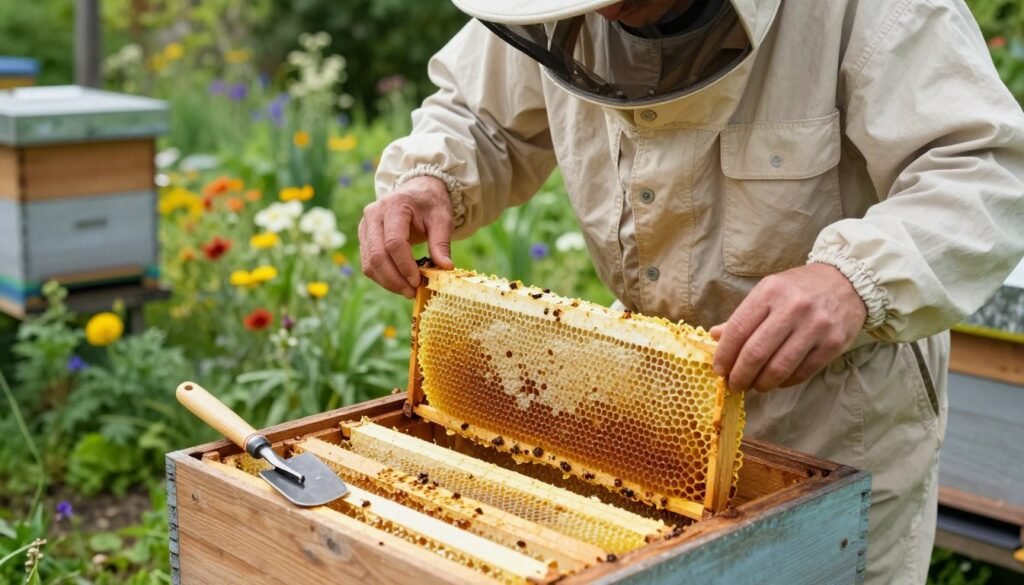
Manage varroa mites year-round. Follow guidance such as NC State Beekeeping Note 2.03 for detection and treatment planning. Early intervention keeps brood strong and lowers mite pressure.
- Clean and scrape the bottom board and store boxes in a dry place.
- Freeze or replace stained frames; inspect foundation for wear.
- Seal entrances and repairs so wax moths and other pests cannot enter stored gear.
- Provide supplemental feed if winter losses left stores low; this helps bees build population before the spring flow.
“Consistent management across the year gives colonies the best chance at a healthy, productive season.”
| Check | Action | Benefit |
|---|---|---|
| Bottom board | Clean and replace when worn | Improved hygiene; fewer pests |
| Foundation | Inspect; replace damaged sheets | Better brood pattern; stronger comb |
| Varroa levels | Monitor; treat per thresholds | Lower mite loads; healthier bees |
For common setup errors and early-care tips see beginner mistakes in beekeeping. A steady plan each year improves survival and boosts honey harvests.
Conclusion
, Successful beekeeping depends on early detection and decisive action. Protect your honey bee investment by keeping clear records and checking frames often. Strong, regular checks help safeguard colonies and prevent outbreak spread.
Spot brood issues quickly and isolate affected frames. Treat signs of disease seriously and consult an inspector when unsure. Healthy bees and clean equipment cut long-term risk and preserve stores for harvest.
Focus on prevention: breed hygienic strains, manage mites, and rotate comb. With steady care and prompt steps, you can recover after loss and keep colonies productive for years.