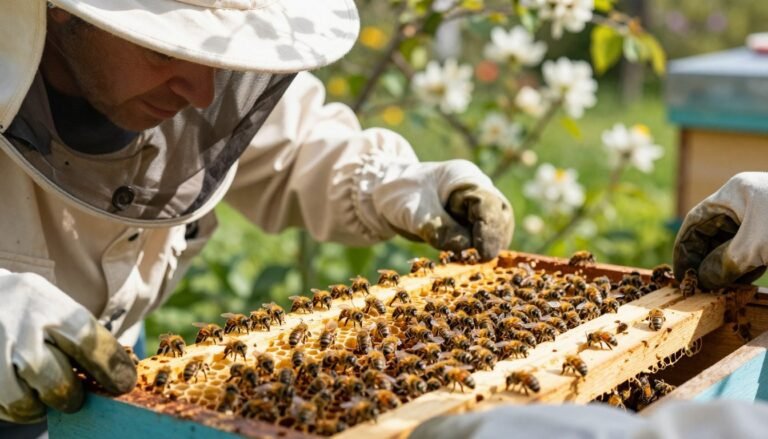
Bill Hesbach, an Eastern Apicultural Society Certified Master Beekeeper from Connecticut, developed a seasonal management schedule to help backyard beekeepers keep colonies healthy year-round.
Managing the varroa situation each month matters for strong hives. Regular treatment and careful monitoring of bees and brood help colonies survive summer and winter stress.
Effective options often include oxalic acid vaporization during broodless periods to cut infestation rates. A consistent method of treatment gives colonies the best chance to build honey stores and a resilient population.
Use the schedule as a guide, adapt to your local climate, and learn safe application steps. For more natural approaches and additional treatment options see natural remedies for varroa mites.
Key Takeaways
- Seasonal management helps backyard beekeepers protect colonies throughout the year.
- Consistent treatment methods improve survival into summer and winter.
- Oxalic acid vaporization works best in broodless windows to lower counts.
- Monitor bees and brood regularly and adapt the schedule to local conditions.
- The ultimate goal is a strong colony that produces honey and lasts for weeks.
Understanding the Varroa Mite Threshold by Month
Early detection of harmful levels in a hive gives beekeepers the best chance to act quickly.
Defining infestation rates
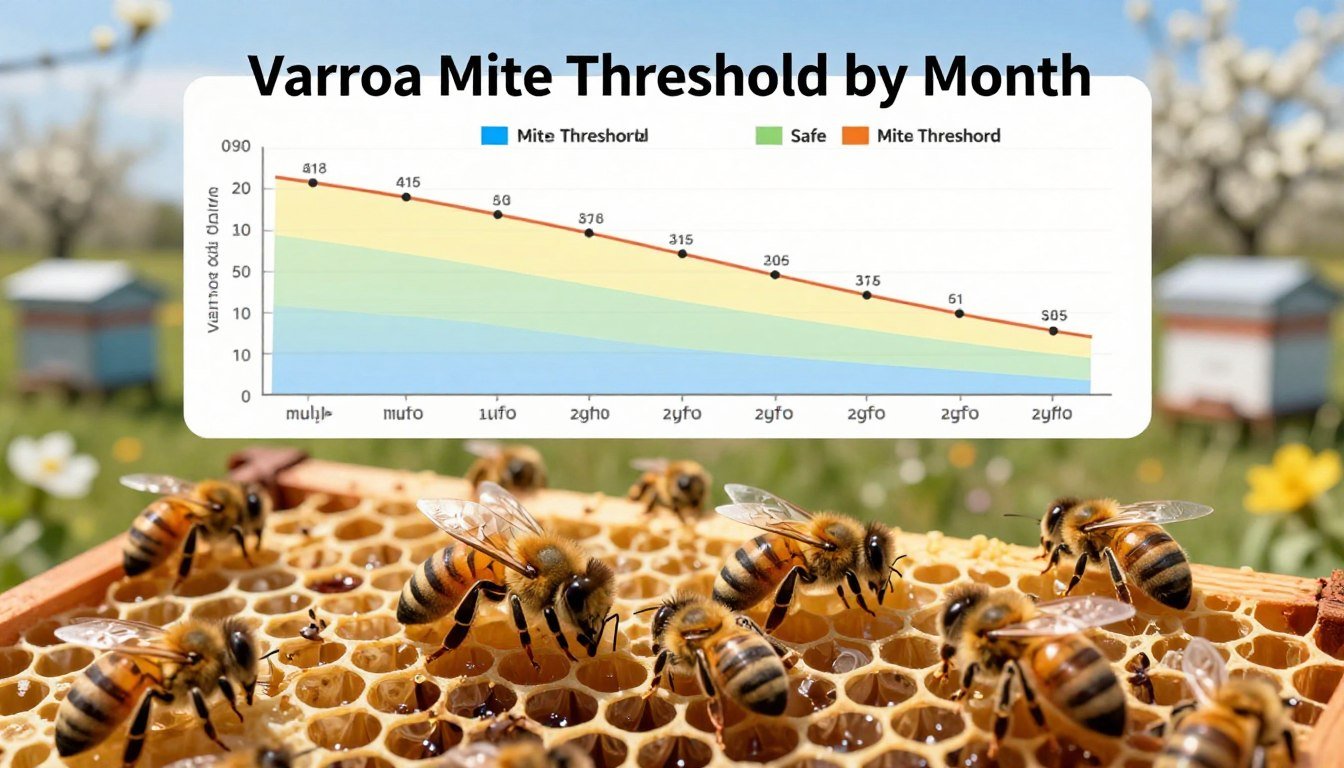
Use a 300-bee sample as a baseline. Finding 7 or more mites in that sample signals a critical threshold. At that point, the colony may struggle to recover without a prompt treatment.
Monitoring hive health
Sticky boards work well for tracking counts. Place one under the brood chamber for a clear reading and check it regularly.
- Seven-plus mites per 300 bees = critical action needed.
- Ten or more often leads to bees abandoning the hive.
- Monthly checks help spot rising population levels early.
Practical tip: Pair regular sampling with targeted treatment, such as approved acid applications during brood breaks, to keep colonies healthy and productive for honey season.
Seasonal Management for New Bee Colonies
A fresh colony’s first weeks set the tone for the entire season and demand focused management.
Plan initial treatment when you install a three‑pound package in late March or early April. Early growth has little or no honey in the supers, so you have more treatment options before the main nectar flow.
Formic acid can be effective if the colony holds at least six brood frames. That level protects developing brood while lowering pest counts without contaminating honey.
Monitor mite levels through the summer. Regular checks help ensure the colony reaches a strong population by the end of the year.
- Start treatments early but avoid the peak flow.
- Rotate treatment options to reduce resistance.
- Keep records of counts, brood frames, and hive health.
Good management keeps colonies robust and productive. Consistent monitoring and smart treatment choices protect bees and set hives up for a strong honey season.
Strategies for Overwintered Hive Populations
Early spring checks give beekeepers a clear shot at protecting colonies before brood expands.
Early Spring Assessment Techniques
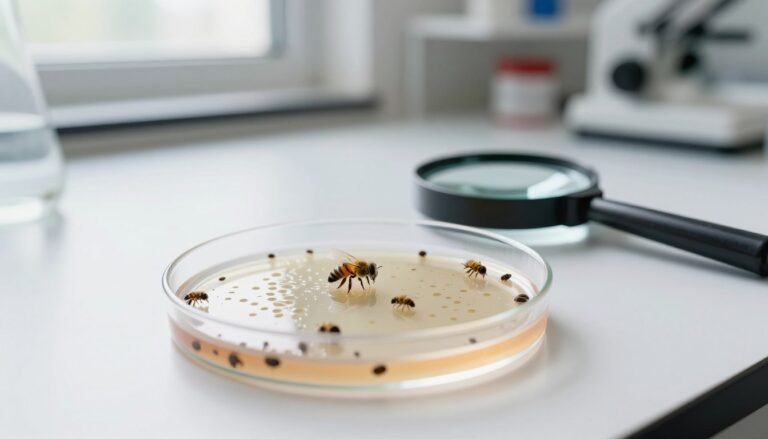
In early March, run a sticky board under the brood chamber for a three-day drop. This quick check helps flag overwintered colonies with high pest counts.
Why it matters: Overwintered colonies often host more brood, so a simple visual inspection can understate the true population of pests. High counts in spring need fast action to stop virus spread to nearby hives.
When a colony is broodless, oxalic acid vaporization is a highly effective treatment. Vapor reaches the dispersal stage and contacts pests on adult bees, improving control without contaminating honey.
“Early detection and prompt treatment save colonies and reduce apiary losses.”
| Action | Timing | Expected Result |
|---|---|---|
| Sticky board 3-day drop | Early March | Identify high counts |
| Oxalic acid vaporization | Broodless window | Lower populations quickly |
| Immediate intervention | When counts are high | Reduce virus spread |
For testing guidance, consult varroa testing methods. For broader apiary planning, see tips on apiary productivity.
Identifying Critical Treatment Windows
Pinpointing short treatment windows helps protect growing colonies without harming honey stores.
Growth Stage Considerations
Treat during narrow brood breaks when possible. Intervening then reduces pest populations on adults and limits spread into brood cells.
Formic Pro works best when daytime temps are 50–85°F during the first three days of application. Use it only when brood patterns and weather match.
Peak Season Challenges
Avoid treatments while honey supers are on the hive to prevent contamination. Many treatment options will affect honey quality or worker behavior.
Post Harvest Preparation
After the flow, aim for counts near zero. Strips like VarroxSan offer slow-release oxalic acid control to lower populations into fall.
“Post-harvest control sets winter success; low levels make winter bees healthier.”
| Window | Recommended Option | Key Note |
|---|---|---|
| Broodless period | Oxalic acid vaporization | Targets adults without contaminating honey |
| Warm early season | Formic Pro | Requires 50–85°F first 3 days |
| Post-harvest | VarroxSan strips | Slow-release for fall reduction |
For guidance on timing and techniques, see our guide on when to treat for varroa mites and avoid common errors with tips from beginner mistakes in beekeeping.
Essential Safety and Application Protocols
Before treating, check hive materials and product labels to avoid damage or contamination.
Know your hive type. Polystyrene hives cannot tolerate the heat from vaporization equipment. For those hives, use oxalic acid dribble or approved strips as the safe alternative.
Always follow the manufacturer’s instructions for formic acid and other chemical treatments. Proper timing and dose protect bees and prevent harm to the beekeeper.
- Rotate treatment options to reduce resistance to a single chemical.
- Remove honey supers if the label prohibits their presence during application.
- Conduct a follow-up mite test after every treatment to confirm the population fell.
| Protocol | Why it matters | Practical tip |
|---|---|---|
| Check hive material | Prevents damage or loss from heat | Use dribble or strips for polystyrene hives |
| Read product label | Ensures safe dose and timing | Follow PPE and temperature guidance |
| Post-treatment testing | Verifies treatment success | Run a 3-day drop or alcohol wash |
For guidance on timing and safe procedures during the fall season, see our note on timing for fall control.
Conclusion
A steady cadence of checks and timely actions keeps colonies resilient through the year.
Keep short, regular counts before and after every treatment to confirm success. Rotate treatment options to limit resistance and protect long-term apiary health.
Maintain low mite levels in spring and summer so winter bees start strong. Record results and adjust management as seasons change.
For testing methods see varroa test explained. For practical scheduling across many hives, consult time management for multi-hive apiaries.