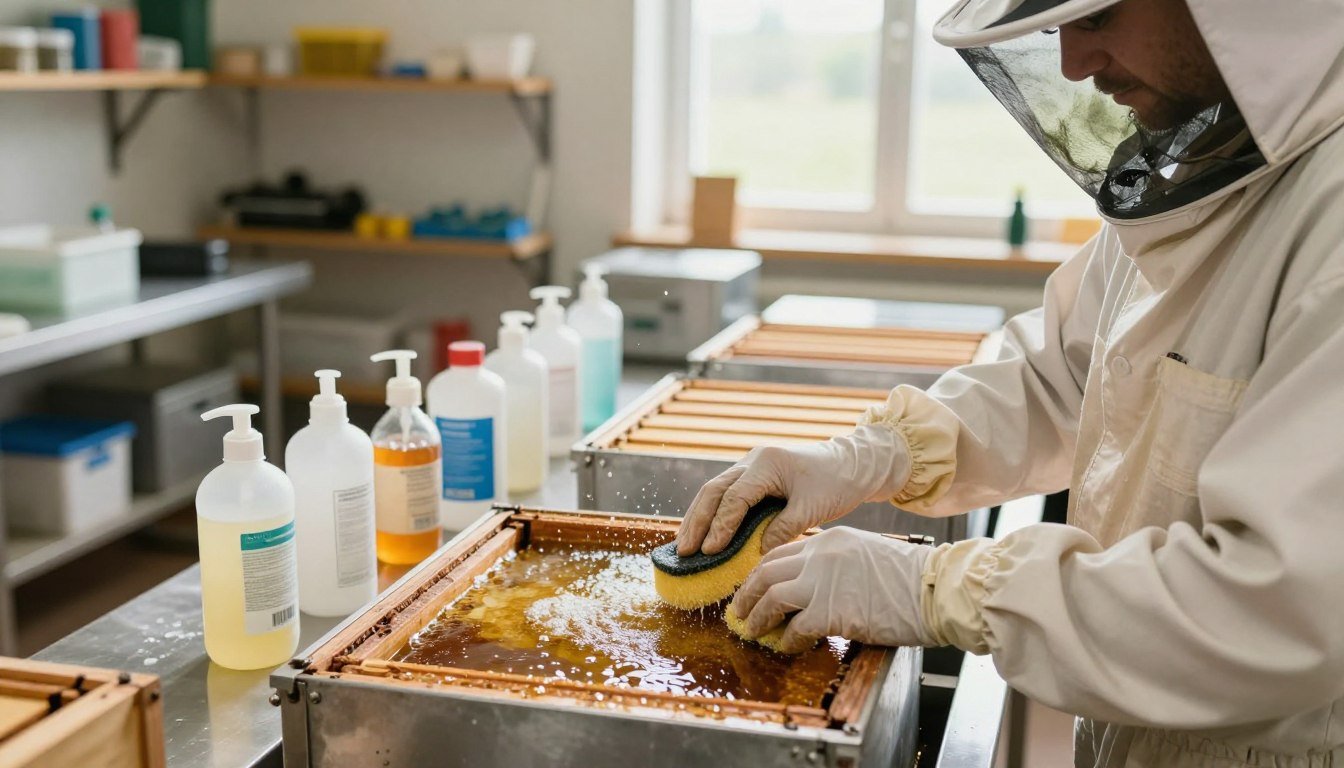
American foulbrood (AFB) can devastate an apiary. If a colony shows signs of disease, treat all equipment as a contamination risk and follow a strict cleaning process.
Start by disassembling the extractor so no wax, dust, or debris hides in nooks and parts. Remove loose wax and crumbs before any washing step.
Avoid using very hot water right away; it melts wax and makes buildup harder to remove. Instead, scrape and dry-clean first, then use a controlled heat or approved disinfectant to finish the job.
Clean the honey gate and all fittings thoroughly. Residual honey will attract pests and harbor pathogens if left in place. For guidance on facility biosecurity and disinfecting practices, see biosecurity recommendations.
When shared equipment is involved, disinfect between uses and follow industry cleaning tips for long-term beekeeping success. For practical maintenance and component care, consult this detailed guide on cleaning and maintaining a honey extractor.
Key Takeaways
- Disassemble the extractor to remove wax, dust, and hidden debris.
- Scrape and dry-clean before applying heat or disinfectant.
- Avoid very hot water early; it can spread buildup by melting wax.
- Thoroughly clean the honey gate and fittings to deter pests.
- Treat equipment from diseased hives as contaminated and follow strict protocols.
- Disinfect shared gear between uses to protect your apiary.
The Critical Importance of Equipment Hygiene
A quality honey extractor may rival a bottling machine in cost, so treating it as a long-term asset is essential for every beekeeper. Regular care preserves value and prevents losses that come from contaminated runs.
High standards of cleaning guard both product and apiary health. Leaving an extractor outside for bees to scavenge invites a feeding frenzy and raises the risk of disease spread.
Professional operations clean the extractor after each use to stop pathogens moving between hives. If you borrow gear, return it in a disease-free condition to protect the group.
“Proper hygiene is not cosmetic — it’s the foundation of safe, edible production and healthy bees.”
- Protect investment: Routine maintenance extends equipment life.
- Prevent contamination: Residual honey on walls can host bacteria.
- Share responsibly: Clean borrowed tools to safeguard others.
| Priority | Outcome | Suggested Action |
|---|---|---|
| Hygiene | Consistent quality and safe product | Daily cleaning checkpoints and records |
| Equipment care | Lower repair costs | Inspect seals, gates, and moving parts |
| Shared use | Reduced disease transfer | Disinfect between users; follow best practices |
For tools and devices used in wax handling, consult recommended wax extraction equipment to match your hygiene plan.
Preparing for Sanitizing Honey Extractors After Sick Colonies
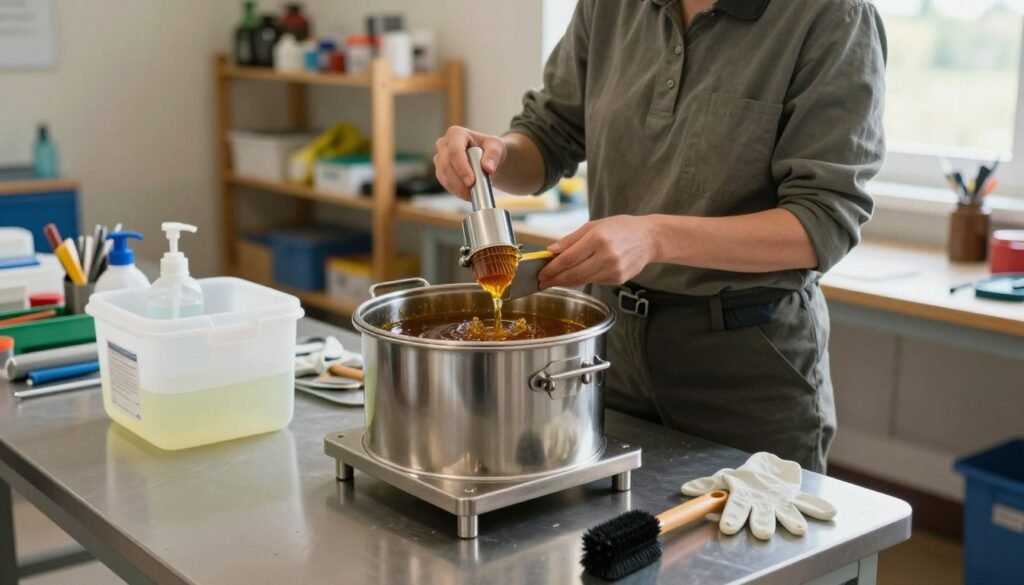
Begin by gathering all parts on a clean surface so you can access every seam and fastener. This makes it easier to inspect each component and prevents dust or pests from moving between pieces.
Initial Disassembly
Remove baskets, lids, honey gate, and any removable fittings. Lay parts out in order so reassembly is straightforward.
Scrape visible wax and propolis from frames and parts before wetting. Old comb carries higher varroa risk and needs special care.
Safety Precautions
Wear gloves and goggles when you handle any chemical solution like bleach or strong soap. Always close and seal the honey gate before filling the drum with water or solution.
Freeze frames and suspect comb at 20°F for at least 24 hours to kill wax moths and other pests. Using cold water to rinse keeps wax brittle and reduces smearing.
“Take time in prep — rushing increases the chance you miss residue that harbors disease.”
- Set aside enough time; this process takes focused steps and cooling or drying intervals.
- Designate a dust-free drying area to air dry equipment away from bees and pests.
- Rinse thoroughly after any soap use; residue can make honey inedible.
- For deeper guidance on tool disinfection, consult this disinfection guidance: why disinfect specialized beekeeping tools.
| Step | Action | Reason |
|---|---|---|
| Disassemble | Remove all parts and lay in order | Access hidden crevices; reduce cross-contamination |
| Freeze | Frames and comb at 20°F for 24 hrs | Eliminate wax moths and related pests |
| Scrape & rinse | Remove wax/propolis; rinse with cold water | Prepares surfaces for effective cleaning and prevents wax melting |
| Protect | Use PPE and keep gate closed | Personal safety and prevent leaks during cleaning |
Effective Cleaning and Debris Removal Techniques
Tackle the worst of the buildup dry, scraping the drum and parts before introducing any water. Use a flexible silicone spatula to loosen residual wax and propolis on sidewalls. This reduces smear when you add liquid.
Tip: tip the honey extractor at a steep angle so remaining honey drains toward the honey gate. This is the fastest way to clear viscous residue.
Rinse with cold water to let wax flakes come off without melting. If you use soap, rinse thoroughly with plenty of water to avoid chemical residue in final jars.
- Scrape interior and removable parts before wetting.
- Remove debris from frames and drum to help the final step.
- Use a pressure washer or strong hose on stubborn buildup.
- Thoroughly clean the gate and fittings where wax often accumulates.
“Clean well now and you save time and risk later.”
| Action | Reason | Next Step |
|---|---|---|
| Dry scrape | Stops smear | Cold water rinse |
| Drain to gate | Efficient removal | Clean fittings |
| Flush parts | Remove debris | Final sterilization |
For tool tips on scraping, see how a hive tool is used for. For repairs to worn wooden parts, consult this repair damaged hive boxes guide.
Advanced Sterilization Methods for Beekeeping Equipment
Choose a sterilization method that matches the material and risk level. Metals tolerate high heat, sealed drums accept fumigation, and washable parts respond well to bleach or boiling.
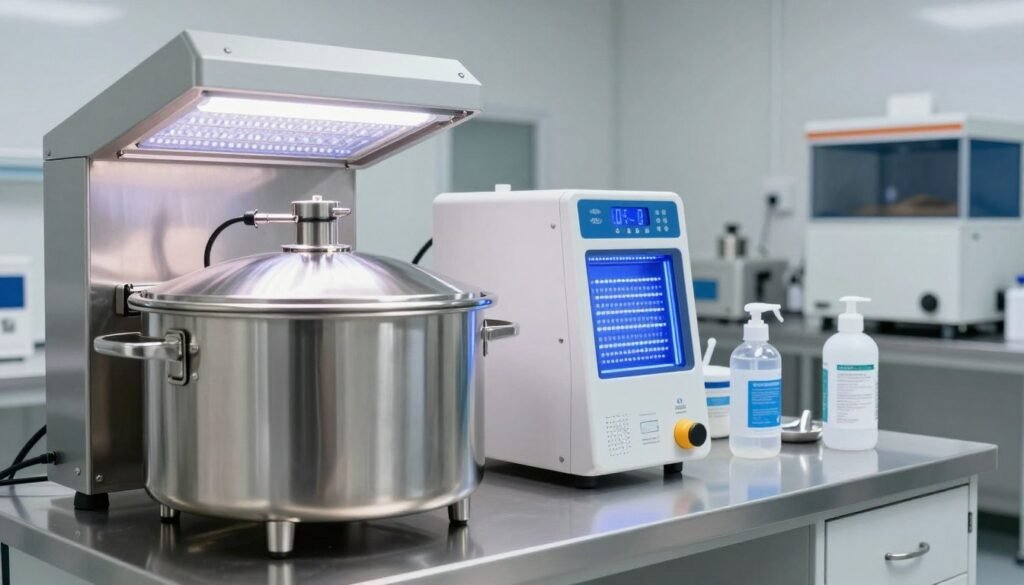
Heat Sterilization
Use heat carefully on metal pieces. A propane torch or hot-air source will sterilize forks, frames’ metal parts, and the drum interior if you keep flame away from seals and paint.
Take care with time and temperature to avoid warping extractor parts. Rinse with cold water and dry fully after cooling.
Chemical Fumigation
Acetic acid fumigation penetrates sealed gear. Use an 80% solution and seal items for about a week so fumes reach all crevices.
Ventilate well and allow all acid to evaporate before reuse. For guidance on specialized products and biosecurity, consult this disinfection FAQ.
Bleach Solutions and Boiling
For washable parts, mix 1 part bleach to 5 parts water and submerge for at least 10 minutes. Scrub, rinse, and then rinse again with cold water.
Smaller tools sterilize well by boiling in a 1:5 soda-to-water mix for 5–10 minutes. Always dry parts completely before storage to avoid residual chemical harm to bees.
“Consult your inspector for serious disease cases; these methods may not replace regulatory actions.”
| Method | Best For | Key Step |
|---|---|---|
| Heat | Metal parts, extractor drum | Use controlled flame; avoid seals |
| Fumigation | Sealed equipment and hard-to-reach crevices | 80% acetic acid; seal for 7 days |
| Bleach / Boil | Washable parts, tools, gates | 1:5 bleach:water or 1:5 soda boil; rinse with cold water |
After any method, inspect the honey gate, seals, and parts before reassembly. For safe wax handling and extraction safety, see this wax extraction safety guide and the producer biosecurity guide.
Maintaining Long-Term Apiary Health and Storage
Treat storage as part of the cleaning process: keep a cleaned extractor and loose parts in airtight containers or sealed cabinets to block dust and pests. A dry, well-ventilated location prevents rust and environmental damage to metal parts.
Keep a simple, regular cleaning schedule and record each step. Good records help you spot recurring problems and show history when you consult inspectors or neighbors.
Check stored frames and parts periodically for pest activity and damage. Inspect the gate, seals, and fittings before reassembly so you catch buildup early.
For facility biosecurity and long-term care tips, review the biosecurity recommendations at Alberta Beekeepers and practical harvesting storage advice in the honey harvesting guide.
A well-maintained extractor and equipment make the next harvest safer and protect the quality of your honey.