Introducing a new queen to honey bee colonies is an essential skill for serious beekeepers. This process ensures long-term hive health and steady brood production when done with care.
Careful planning reduces risk of mortality for the mated queen and keeps social order inside the colony. Be sure the colony is truly queenless before any attempt, and use tested methods such as timed cage release and fondant or candy plugs to slow acceptance.
Workers must acclimate to the newcomer; rejection, injury, or killing can follow poor timing or disturbance. Use frames and cells checks to confirm queenlessness, limit checks once the cage is placed, and avoid handling for several days.
For detailed failure modes and safe steps, see this practical guide on common pitfalls and remedies: how queens fail during introduction.
Key Takeaways
- Ensure the colony is hopelessly queenless before placing new leadership.
- Use a cage and slow-release candy or fondant to improve acceptance.
- Minimize disturbance for at least seven days after release.
- Check frames and cells to confirm eggs and brood appear from the new ruler.
- Proper planning and timing dramatically boost success for beekeeping operations.
Understanding the Importance of Queen Introduction After a Split
Introducing new leadership reshapes social signals in the hive and controls brood output. A healthy new queen will show consistent laying and create even brood patterns that fill frames and sustain the workforce through the season.
When an unhealthy queen is added, brood patterns break down. That leads to fewer workers, higher disease risk, and unstable cells. Instrumentally inseminated stock can sometimes emit altered pheromones. This makes worker bees slower to accept the newcomer.
Strong pheromones matter. They keep the colony organized and reduce aggression over time. Requeening an aggressive hive with a trusted mated queen often calms behavior within 10–12 weeks.
“Quality of the queen sets the blueprint for every bee in the colony.”
Use careful method selection and monitor laying and brood signs on frames. For more on bringing in proven stock, consider resources on introducing a mated queen.
Preparing Your Colony for a New Queen
Prepare the hive by confirming there is no laying female and by clearing potential rival brood sources.
Remove the old failing queen or prove the colony is hopelessly queenless before any introduction. Workers must sense absence for about 24 hours so they accept new leadership more readily.
Clear all emergency and swollen queen cells on sight. Removing these prevents the workers from raising their own replacement and lowers the chance the new queen will be killed.
Practical steps
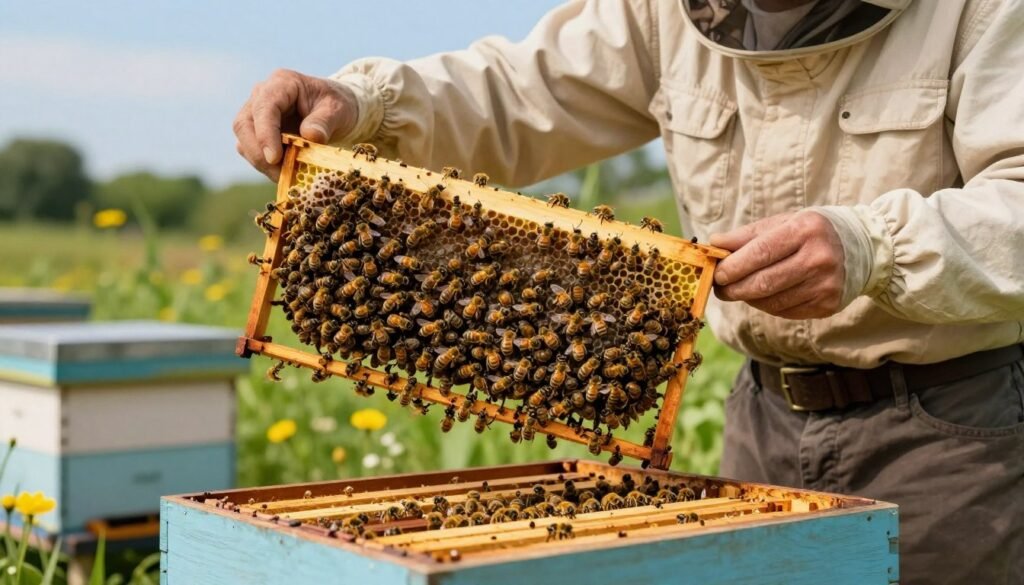
- Confirm absence: inspect frames and comb for eggs or an unmated female.
- Remove cells: cut out or scrape away queen cells found on brood frames.
- Feed if needed: in dearth provide 1:1 sugar syrup to simulate nectar flow.
- Wait 24 hours: leave the colony queenless so workers register the loss.
- Re-check at 8 days: shake bees off every frame to find and destroy any late emergency cells.
It is best to introduce a new queen into a small colony or recent split, since young workers accept outsiders more readily. For technical rearing basics consult this guide on queen rearing basics.
Evaluating Queen Health and Quality
Inspect the new female closely before placing her into the hive. Look for a larger, rounded abdomen and steady movement across the comb.
Check wings and legs. Wings should be whole and free of deformity. Legs must let her walk confidently through brood frames.
Examine tarsi and foot pads for banking damage; healthy pads are pearly white. Scan the body for mites or signs of disease such as deformed wings.
- Size: noticeably larger than workers, longer abdomen.
- Mobility: active, not lethargic when gently prodded.
- Feet: tarsi and pads intact and pale in color.
- Health flags: no Varroa visible, no wing deformities.
- Origin: verify if instrumentally inseminated and bred by a reputable source.
Use a secure cage if any doubt remains and delay full release until laying and eggs are confirmed on the frame. For options on controlled placement and cell handling, review mated queen cells.
Selecting the Right Introduction Method
Method selection shapes how workers perceive and welcome a newcomer into the colony. Choose a way that matches hive strength, weather, and beekeeper comfort.

Direct release considerations
Direct release is fastest but risky. Use it only with calm, small colonies where you can make sure workers will accept new laying female.
Never force release if bees show aggression. If workers ball or bite the cage, hold off and use a slower method.
Using a candy plug
Candy plugs slow release and let pheromones spread before full freedom. Mix 1 cup of honey with 2 pounds of powdered sugar to form the plug.
Warm the honey to about 95°F before mixing. Workers will chew through the candy over 2–4 days, giving the newcomer time to acclimate.
Butler cage introduction
Wedge the Butler cage firmly between two frames of brood; this is where bees expect to find their leader. Place the caged mated queen without attendants for better acceptance.
Inspect the hive in 4–6 days to confirm the new ruler was released and has started laying eggs on the frame.
| Method | Speed | Best use | Key step |
|---|---|---|---|
| Direct release | Fast | Very calm, small colony | Make sure workers are calm before release |
| Candy-plugged cage | 2–4 days | Most splits and unsure colonies | Mix honey + powdered sugar; warm to 95°F |
| Butler cage | 3–6 days | Frames with brood | Wedge between two frames of brood; inspect in 4–6 days |
For step-by-step techniques on placing cages and timing, see this practical guide on queen introduction. For hive setup tips before placing a cage, review beehive installation.
Advanced Techniques for Difficult Introductions
Push-in cage placement gives beekeepers precise control when standard methods risk failure. Make a rectangular 3-by-5-inch cage and push it into the comb midrib with the new queen placed underneath.
Build the cage from 8 mesh hardware cloth (eight openings per inch) for good ventilation and worker access. The mesh lets scent spread while preventing workers from grabbing the occupant.
Best practice is to shake bees off a fairly dark comb before placement; these workers are often stronger and help acceptance. Place the cage over a small patch of emerging brood and some nearby honey or open nectar.
“Check the push-in cage in three to five days to ensure bees haven’t chewed under the edges.”
Check in 3–5 days. If the mesh holds and the new laying female shows signs of being tolerated, you may release her directly. Plastic push-in cages can reduce chewing risks and work well for mated queens, especially artificially inseminated stock.
- Make a 3×5-inch push-in cage from 8 mesh cloth.
- Place it over brood and a bit of honey for better acceptance.
- Inspect at 3–5 days and release when laying or when workers calm.
- Consider plastic push-in cages to avoid edge chewing.
For technical background on queen rejection and ways to reduce risk, see this rejection guide. For research-based rearing and handling practices consult the Purdue extension resource on safe hive management: hive management tips.
Monitoring Colony Acceptance and Progress
Inspect the hive roughly five to seven days after the new female is released to confirm acceptance and early laying.
Signs the newcomer is settling in
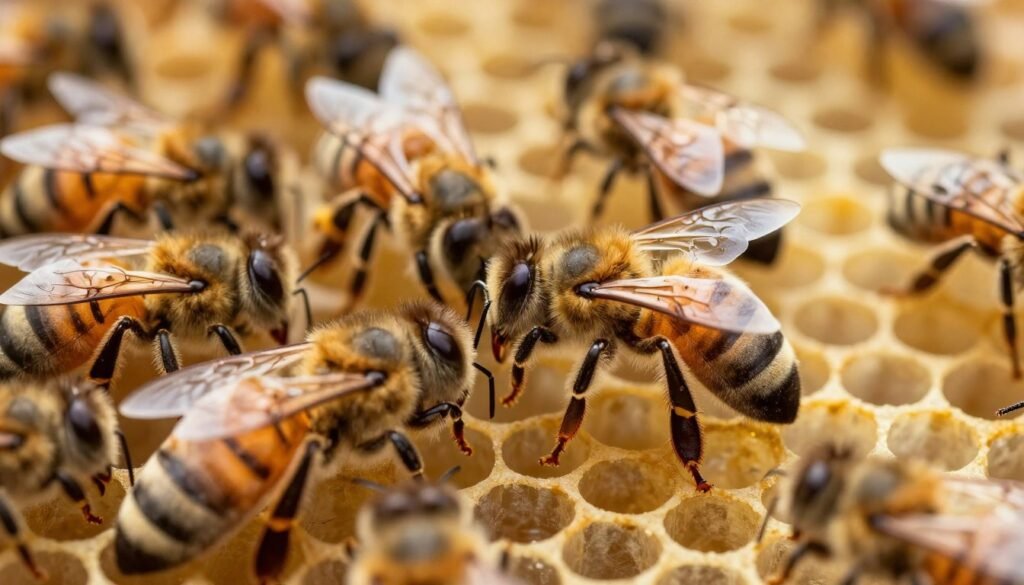
Look for eggs and tiny larvae on frames. That shows the mated female has started regular laying.
Watch worker behavior. Calm activity and feeding around the cage mean good acceptance. Aggression or a dead new female signals failure.
- Check the colony 5–7 days after the new female is free for eggs and larvae.
- Seven to fourteen days after popping the fondant tab, re-check for eggs if using that cage method.
- If the newcomer is rejected, repeat the process with a different method and a fresh mated female.
- Once eggs appear, expect capped brood patches within another seven days.
- Make sure there is not an unmated female already in the colony before re‑placing stock.
| Sign | Timing | Action |
|---|---|---|
| New eggs | 5–7 days | Note pattern on frame; wait for larvae |
| Larvae present | 7–10 days | Monitor growth; limit disturbance |
| Capped brood | 14–21 days | Confirm steady laying pattern |
| Aggression or dead female | Any early check | Remove remains; try another method |
For gentle monitoring tips see this guide on monitoring new colony and learn how to inspect purchased nucs before introducing stock.
Conclusion
Patience, preparation, and the right method often decide whether the colony accepts its new leader.
Use proven cage techniques, candy plugs, and calm timing to boost acceptance. Confirm the hive is truly queenless and free of emergency cells before placing a mated queen.
Monitor for eggs and brood over several weeks. Consistent checks help confirm success without excessive disturbance.
For seasonal tasks and inspection timing that support healthy introductions, see this practical guide on seasonal beekeeping tasks.
FAQ
How soon should I place a new queen after dividing a hive?
Place the new mated female within 24–72 hours of making the colony division. Providing two to three brood frames and adequate attendants encourages acceptance and reduces robbing. If using a queen cage, position it between brood frames so workers can feed her through the bars.
Do I need to remove the old laying female before introducing a new one?
Yes. Remove any existing laying female and destroy competing egg layers to prevent fighting and mixed pheromones. Inspect frames carefully for eggs and larvae; then remove or mark frames that might cause conflict so the colony focuses on the newcomer.
What should I do with existing queen cells during a split?
Destroy excess emergency or swarm cells unless you want multiple queens. Leave one healthy cell if you plan to raise a resident. Secure frames with cells vertically to avoid damage and transfer them to the receiving hive if you intend the new breeder to emerge there.
How do I check the health and quality of a mated female before placing her in the hive?
Inspect for vigorous movement, intact wings, no visible mites, and a clean, shiny abdomen. Ask suppliers like Mann Lake or Better Bee for breeder records and mating yard performance. A laying pattern within two weeks confirms viability.
What are the pros and cons of direct release versus caged placement?
Direct release speeds up egg laying but risks immediate rejection or killing if pheromones clash. Caged placement using a candy plug or screened “butler” cage gives workers time to accept scent, lowering mortality. Choose direct only if the colony lacks any queen brood or comb with young larvae.
How does the candy plug method work and when should I use it?
A candy plug provides a slow release of the new female by forcing workers to eat through a sweet barrier over 2–4 days. Use this in medium-strength colonies to reduce attack risk. Ensure the plug faces outward and the cage rests between brood frames for easy feeding by attendants.
What is a butler cage and when is it recommended?
A butler cage secures the female with attendants and a mesh entrance so workers can feed and smell her. It’s ideal for colonies with strong defensive behavior or hives recently split. Attach it to a central brood frame and staple or clip to prevent shifting.
When is a push-in cage useful for difficult introductions?
Use a push-in cage when you must protect the new female from immediate worker aggression or when introducing her into comb with young brood. It isolates her for several days while permitting pheromone exchange, then remove the cage once workers accept her presence.
How can I tell if the colony has accepted the new female?
Accepted signs include calm behavior around the cage, worker feeding of the female, and egg laying within 5–10 days. Over the following week you’ll see a regular laying pattern and brood progression from egg to larva.
What should I do if the colonists reject the introduced mated female?
If you see biting, piling, or dead attendants, remove the mated female and try again with a different method or new supplier. Consider requeening with a young mated breeder from a reputable source and use a butler or candy-caged introduction next time.
How many brood frames should go with the colony receiving a new female?
Transfer at least two strong brood frames with mixed stages—eggs, larvae, and capped brood—to give the new female attendants and pheromonal stability. Also include frames of food and fondant if stores are low to prevent starvation during the acceptance period.
How long before the new mated female begins laying after release?
Expect initial laying within 3–10 days after full release. Temperatures, colony strength, and whether she is stressed during shipping or handling affect timing. Monitor brood frames each few days to confirm progress.
Can I introduce a mated female into a hive that still has queen cells?
Avoid introducing a mated female into a hive with active queen cells; workers may prefer a homegrown emerged female. Remove extra cells or combine strategies—retain a single strong cell if you want a backup, but manage carefully to prevent supersedure conflicts.