The real difference between mead, wine, beer, and cider comes down to one thing: what sugar source the yeast is actually fermenting — honey for mead, grape juice for wine, malted grain for beer, apple juice for cider. Almost every other difference people ask about (alcohol content, how long it takes, whether it’s gluten-free, even whether mead legally counts as a “wine”) traces directly back to that one starting-ingredient distinction.
Key Takeaways
- The core difference is the fermented sugar source: honey (mead), grape juice (wine), malted grain (beer), apple juice (cider) — everything else follows from that.
- Mead is legally classified as a type of wine in the U.S.: under TTB regulations (27 CFR 4.21(f)), “honey wine” is an official wine standard of identity, and meaderies are licensed and taxed as bonded wine premises, not breweries.
- The Beer Judge Certification Program (BJCP) splits mead into three strength categories by starting gravity: hydromel (3.5–7.5% ABV), standard (7.5–14% ABV), and sack (14–18% ABV) — a wider range than typical wine, beer, or cider.
- Mead and cider are naturally gluten-free (no grain involved at all); beer is not unless specifically brewed with gluten-free ingredients.
- Fermentation and conditioning time is the biggest practical gap: beer and cider are often ready in weeks, wine in months, while a good mead frequently benefits from 6 months to a year or more before it’s at its best.
Table of Contents
- The Core Difference: What’s Actually Being Fermented
- Is Mead Legally a Wine?
- Alcohol Content, Side by Side
- Quick Comparison Table
- Fermentation and Conditioning Time
- Gluten and Other Dietary Differences
- Flavor and Sweetness Range
- A Quick Note on Calories and Carbs
- Which One Should You Try Making First?
- Frequently Asked Questions
The Core Difference: What’s Actually Being Fermented
Every one of these drinks works the same basic way — yeast eats fermentable sugar and produces alcohol and carbon dioxide — but where that sugar comes from changes everything downstream. Mead ferments diluted honey directly; there’s no grain, no fruit pressing, no mashing involved, just honey, water, and yeast. Wine ferments the natural sugar in grape juice. Beer is the most involved process of the four: brewers have to first convert starch locked inside barley (or other grain) into fermentable sugar through malting and mashing, a step neither mead nor wine nor cider requires at all. Cider ferments the natural sugar in apple juice, making its process closer to wine’s than beer’s, just with a different fruit.
Is Mead Legally a Wine?
Yes, and this is the part almost no comparison article actually checks. Under U.S. federal regulation — specifically the Alcohol and Tobacco Tax and Trade Bureau’s standards of identity at 27 CFR 4.21(f) — “honey wine” is an official designated category of wine, and TTB explicitly permits producers to label it “mead” instead. A commercial mead producer (a meadery) is licensed and regulated as a bonded wine premises under 27 CFR Part 24, pays the same federal wine excise tax structure as a winery (roughly $1.07 per gallon up to 16% ABV, reduced substantially for small producers under the Craft Beverage Modernization Act credit), and files the same wine-specific paperwork a grape winery does — not brewery paperwork. So while mead isn’t technically a wine in the grape-juice sense, it is, as a matter of actual federal law, a wine. Beer and cider each have their own separate regulatory categories and tax treatment.
Alcohol Content, Side by Side
Typical beer runs roughly 4–6% ABV, though craft styles can go higher. Standard dry cider is usually similar to beer, around 5–6% ABV. Wine typically lands in the 11–14% range. Mead has the widest spread of any of the four: the Beer Judge Certification Program, the organization that certifies competition judges and defines style guidelines used across the homebrewing world, splits mead into three official strength categories based on starting gravity: hydromel (roughly 3.5–7.5% ABV, closer to beer or cider strength), standard (7.5–14% ABV, in line with wine), and sack mead (14–18% ABV, stronger than nearly any wine and approaching fortified-wine territory). No other drink on this list has an equivalent, officially recognized strength range that wide.
Quick Comparison Table
| Drink | Fermented From | Typical ABV | Typical Ferment Time | Gluten-Free? | U.S. Legal Category |
|---|---|---|---|---|---|
| Mead | Honey | 3.5–18% | Weeks to months, ideally aged longer | Yes | Wine (honey wine) |
| Wine | Grape juice | 11–14% | Weeks to several months | Yes | Wine |
| Beer | Malted grain | 4–6% | 1–4 weeks typical | No (unless specifically gluten-free brewed) | Malt beverage |
| Cider | Apple juice | 5–6% | Weeks to a couple months | Yes | Wine (or a separate hard cider tax class, depending on ABV/carbonation) |
Fermentation and Conditioning Time
This is where mead diverges most sharply in practice, even when the legal ABV ranges overlap with wine. Beer’s active fermentation is typically done in one to four weeks, and most styles are ready to drink shortly after. Cider follows a similar, relatively quick timeline. Wine usually needs several weeks of active fermentation plus some months of aging before release. Mead’s active fermentation alone often runs two to six weeks — comparable to wine — but unlike a lot of wine, a young mead right off primary fermentation typically tastes noticeably rougher than it will later, and most experienced meadmakers consider six months to a year of bulk and bottle aging the real difference between an average mead and a genuinely good one. Our step-by-step guide to making mead at home covers this timeline in more practical detail.
Gluten and Other Dietary Differences
Because mead is fermented purely from honey and wine purely from grape juice, both are naturally gluten-free with no special formulation needed — the same is true of standard cider, fermented from apple juice. Beer is the outlier: because it’s made from malted grain (usually barley, sometimes wheat), traditional beer is not gluten-free, and a genuinely gluten-free beer requires either an entirely different grain (sorghum, rice, millet) or a specific gluten-removal process, not just a recipe tweak. This is a real, practical distinction for anyone brewing or shopping with a gluten sensitivity or celiac disease in mind, and it’s a point mead and cider share that beer simply can’t.
Flavor and Sweetness Range
Beer’s flavor is shaped heavily by hops (bitterness, aroma) and the specific grain bill (roasted, caramel, or toasted character), giving it a savory, often bitter backbone none of the other three naturally have. Wine’s flavor comes from the grape variety, terroir, and fermentation/aging choices, generally landing on a spectrum from crisp and dry to rich and fruit-forward. Cider sits closer to wine in structure but carries apple’s characteristic tartness and lighter body. Mead’s flavor is the most directly tied to a single raw ingredient of the four: honey variety genuinely drives the base flavor more than yeast choice does, which is why choosing the right honey matters as much as it does, and why mead can range from bone dry and wine-like to dessert-sweet depending entirely on how much honey went in and how completely fermentation was allowed to finish.
A Quick Note on Calories and Carbs
Because alcohol itself carries calories regardless of source, and mead’s ABV range is so wide, its calorie count varies more than the other three: a light hydromel can sit close to a standard beer, while a sweet sack mead can carry noticeably more calories per glass than a typical glass of wine, mostly from unfermented residual honey sugar rather than the alcohol itself. A dry, fully-fermented standard-strength mead is roughly comparable to a glass of wine calorie-for-calorie. Beer, thanks to its lower ABV, is often lighter per serving despite the grain base, though this varies a lot by style. None of the four are “diet” drinks, but if calories genuinely matter to you, checking the actual final gravity (how much unfermented sugar remains) tells you far more than the category name does — a bone-dry mead and a dessert-sweet one from the same honey can differ substantially.
Which One Should You Try Making First?
If you’re deciding what to brew rather than just what to drink: beer has the steepest process (the mashing/sugar-conversion step mead, wine, and cider all skip) but the fastest payoff, often drinkable within a month. Cider is genuinely one of the simplest processes of the four if you can source good juice. Wine requires the most attention to grape sourcing and timing around harvest. Mead sits in an appealing middle position for a lot of beginners: a genuinely simple three-ingredient process with real room to experiment through honey choice and additions, balanced against the real patience required to let a batch actually mature into something good rather than judging it too early.
The practical bottom line: mead, wine, beer, and cider are all just “yeast plus a sugar source,” and nearly everything that makes them feel like different categories of drink — taste, alcohol range, how long you wait, even how they’re taxed — traces back to which sugar source that is. Mead’s honey base is also exactly what makes it legally a wine, one of the more surprising, checkable facts in this whole comparison.
Frequently Asked Questions
Is mead a type of wine or a type of beer?
Legally, mead is a wine. Under U.S. federal regulation (27 CFR 4.21(f)), “honey wine” is an official wine standard of identity, and meaderies are licensed and taxed as wine producers, not breweries, regardless of how the flavor compares to grape wine.
What has more alcohol, mead or wine?
It depends on the mead. Standard-strength mead (7.5-14% ABV) is comparable to wine, but “sack” mead can reach 14-18% ABV, stronger than nearly any standard wine, while “hydromel” mead can be as low as 3.5% ABV, closer to beer or cider strength.
Is mead gluten-free?
Yes. Mead is fermented entirely from honey, water, and yeast with no grain involved, making it naturally gluten-free, the same as wine and standard cider. Beer is the exception among the four unless specifically brewed with gluten-free grains.
Why does mead take longer to taste good than beer or cider?
Young mead right after fermentation typically has a rougher, more “hot” alcohol character than beer or cider at the same stage, and most of that smooths out with bulk and bottle aging — commonly six months to a year, well beyond what beer or cider usually need before drinking.
What’s the actual production difference between beer and the other three?
Beer requires converting starch in grain into fermentable sugar through malting and mashing before fermentation can even start. Mead, wine, and cider all ferment a sugar source (honey or fruit juice) that’s already fermentable, skipping that conversion step entirely.
Which is easiest to make at home as a beginner: mead, wine, beer, or cider?
Cider and mead are generally considered the simplest processes, since both skip the grain-conversion step beer requires and don’t demand the harvest-timing precision that grape wine does. Mead’s main challenge is patience with aging rather than process complexity.
For further reading, see American Homebrewers Association.
Related Reading
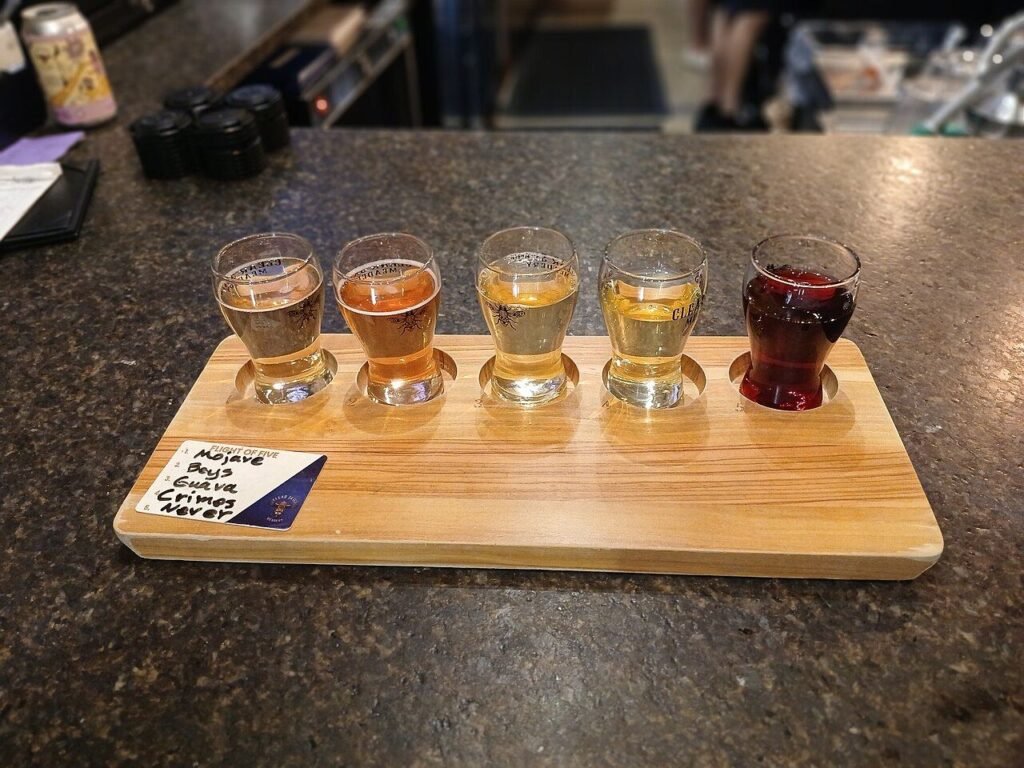
Image credits: Photo: "Flight of meads from Clear Skies Meadery" by Ser Amantio di Nicolao, licensed CC BY-SA 4.0, via Wikimedia Commons.