Yes — making mead at home for personal or family use is legal under federal law in all 50 states, without a permit, registration, or tax, as long as you stay within the same gallon limits that apply to home winemaking. Mead is legally classified as wine, not a separate category, so it falls under the tax-exemption Congress wrote for home winemakers back in 1978, not the beer-specific statute that a couple of states were still catching up on as recently as 2013. Where things actually get complicated is state and local law, selling or bartering what you make, and a few real gray areas around exceeding the federal limits — all of which the rest of this guide covers with the actual regulation text, not just a vague “check your local laws.”
This article explains general federal and state alcohol law as it applies to home mead-making. It is educational information, not legal advice — if you’re planning to produce mead commercially, or you’re in a jurisdiction with unusual local alcohol rules, confirm your specific situation with the Alcohol and Tobacco Tax and Trade Bureau (TTB) or a licensed attorney before you start.
Key Takeaways
- Federal law (26 U.S.C. § 5042(a)(2) and 27 CFR 24.75) lets any adult make wine — which legally includes mead — for personal or family use, tax-free and without a permit, up to 100 gallons a year for a one-adult household or 200 gallons for a household with two or more adults.
- That 200-gallon cap is per household, not per adult — a household with five adults still tops out at 200 gallons, not 1,000.
- You can legally take your homemade mead off your property for personal use, including to a homebrew club meeting, tasting, or competition — but you can never sell it, trade it for goods or services, or offer it for sale under any circumstances without a federal permit and bond.
- The famous “homebrewing became legal in all 50 states in 2013” milestone was specifically about beer catching up to federal law in Alabama and Mississippi — wine and mead’s personal-use exemption has applied nationwide since 1978, with no equivalent state holdout.
- A small number of states and localities add real restrictions on top of federal law — Alaska’s local-option “dry” and “damp” community system is the clearest documented example, and it’s worth understanding even if you don’t live there, since it shows exactly how a state can layer stricter rules onto a federally legal activity.
Table of Contents
- The Federal Law That Makes Homemade Mead Legal
- How Much Mead You’re Actually Allowed to Make
- What You Can — and Can’t — Do With It
- The “All 50 States in 2013” Myth, and Why It Doesn’t Apply to Mead
- Where State and Local Law Add Extra Rules
- Common Mistakes That Turn Legal Mead Into a Legal Problem
- Frequently Asked Questions
The Federal Law That Makes Homemade Mead Legal
The legal foundation for home mead-making is short and specific: 26 U.S.C. § 5042(a)(2) of the Internal Revenue Code states that “any adult may, without payment of tax, produce wine for personal or family use and not for sale.” The TTB’s own implementing regulation, 27 CFR 24.75, repeats that language almost verbatim and adds the practical details: the exemption applies per household, it covers removing the finished wine from where it was made for personal or family use “including use at organized affairs, exhibitions or competitions, such as home winemaker’s contests, tastings or judgings,” and it explicitly does not require a permit, bond, or registration at this scale.
This exemption dates to Public Law 95-458, signed by President Carter on October 14, 1978, which amended the Internal Revenue Code to exempt both home beer and home wine production from federal excise tax for the first time since Prohibition-era restrictions had effectively kept it illegal. Home wine and home beer became legal on the same day, under the same law — a detail that matters later in this article, because it’s routinely misremembered.
Mead doesn’t get its own separate statute; it’s covered because the TTB classifies it as a type of wine. Specifically, TTB’s own guidance (see its Mead/Honey Wine resource page) designates mead as “agricultural wine” — wine made from the fermentation of an agricultural product other than fruit juice. The labeling standard in 27 CFR 4.21(f) requires that anything called “honey wine” or “mead” be derived wholly from honey, aside from allowed additions of sugar, water, or added alcohol, and commercially produced “standard” honey wine is capped at 14% ABV before it needs a different formula classification. That 14% cap is a commercial labeling rule, though — it doesn’t limit what you can ferment at home for personal use, only what a bonded winery can call “mead” on a label without extra paperwork.
How Much Mead You’re Actually Allowed to Make
Under 27 CFR 24.75, the limit is set at the household level, not per person:
- 100 gallons per calendar year if there is one adult in the household
- 200 gallons per calendar year if there are two or more adults in the household
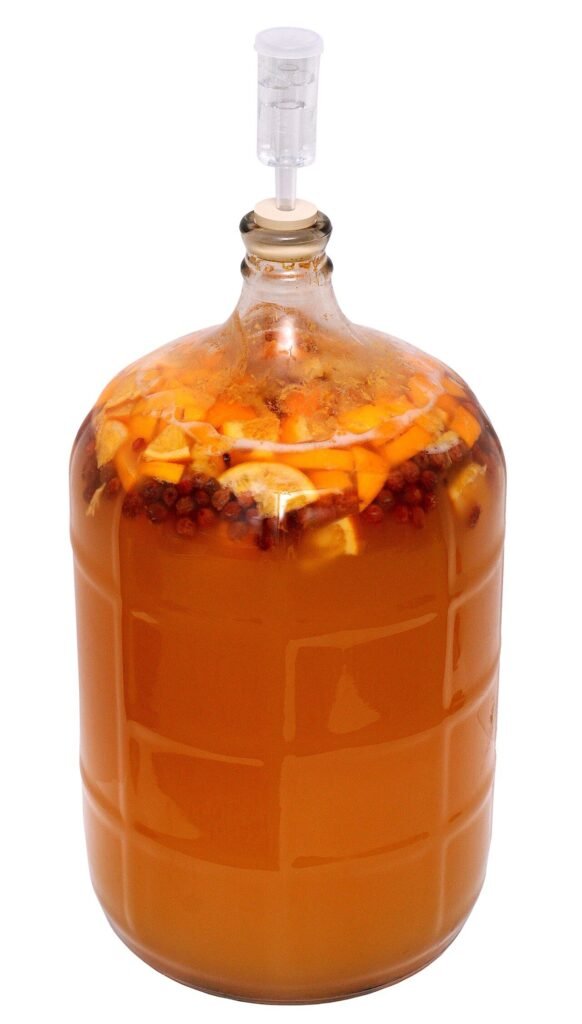
That second number is a common source of confusion. It’s not 200 gallons per adult — a household with two adults and a household with six adults are both capped at the same 200-gallon aggregate. It’s also worth noting the regulation defines “adult” as 18 or older, or whatever the higher minimum drinking age is in your specific locality, whichever is greater — effectively 21 almost everywhere in the U.S. today.
If you genuinely exceed those limits in a given year, the regulation doesn’t just make the excess illegal outright — it requires that tax be paid on the amount over the limit, reported on TTB Form 5120.17. In practice this is a rare situation for a hobbyist (200 gallons is roughly 1,000 standard 750ml bottles a year), but it’s the actual mechanism if you’re scaling up toward the limit rather than an assumption you should make on your own.
What You Can — and Can’t — Do With It
Because 27 CFR 24.75 specifically permits removing your homemade mead from your property “for personal or family use including use at organized affairs, exhibitions or competitions,” you’re on solid legal ground bringing a bottle to a homebrew club meeting, entering it in a mead-making competition, or sharing it at a private gathering. None of that requires a permit.
What you categorically cannot do, at any scale, is sell it or offer it for sale. The regulation’s “not for sale” language has consistently been read to cover any exchange of value, not just a cash transaction — so bartering mead for goods or services carries the same legal risk as selling it outright, even though no money technically changes hands. Doing so without the appropriate federal wine producer’s permit, bond, and state license isn’t just a regulatory violation; producing or selling untaxed alcohol outside the personal-use exemption can be prosecuted as tax evasion under 26 U.S.C. § 7201, which carries penalties of up to five years in prison and $100,000 in fines for an individual, plus separate authority under 26 U.S.C. § 7301 for the government to seize untaxed alcohol and the equipment used to produce it. Those are the ceiling penalties for willful, large-scale violations, not what happens if you give a neighbor a bottle as a gift — but they explain why “just sell a few bottles at the farmers market” is a genuinely bad idea without going through actual licensing, which is a real, separate process involving a TTB wine producer’s basic permit, a bond, formula approval, and state licensing on top.
The “All 50 States in 2013” Myth, and Why It Doesn’t Apply to Mead
If you’ve read anything about homebrewing legality, you’ve probably seen the claim that “homebrewing became legal in all 50 states in 2013.” It’s true, but it’s about beer specifically, and it gets misapplied to mead constantly. Alabama and Mississippi were the last two states whose own state alcohol codes still criminalized home beer production even after the 1978 federal exemption existed — both states fixed this at the state level in 2013, closing a decades-long gap between what federal law allowed and what state law actually permitted.
Wine and mead never had that same gap. Because the 1978 federal law exempted home wine production nationwide at the same time as beer, and no state is documented to have maintained a separate state-level ban on home winemaking the way Alabama and Mississippi did for beer, mead’s personal-use legality has been consistent across all 50 states since 1978 — not since 2013. This is a small but real distinction: articles that only cite “legal since 2013” for homebrewed alcohol in general are technically describing beer’s history, not mead’s.
Where State and Local Law Add Extra Rules
Federal law sets the floor, not the ceiling. States regulate alcohol independently through their own ABC (Alcoholic Beverage Control) codes, and while most track the federal wine exemption closely, a state or even a specific locality can add restrictions federal law doesn’t mention.
The clearest documented example is Alaska. State law (AS 04.21.015) permits private manufacture of alcohol within the federal limits, but it explicitly defers to Alaska’s local option system under Title 4 of the Alaska Statutes. Under local option, individual cities and villages can vote to become “dry” (no alcohol) or “damp” (restricted alcohol), and that local vote overrides the state and federal permission to homebrew — you can be fully compliant with 26 U.S.C. 5042 and still be breaking local law in a dry Alaska community. Enforcement in these communities is documented to include restricting or refusing to sell brewing yeast at local stores specifically because it’s a recognized workaround for producing alcohol where it’s locally banned. This is a genuinely unusual arrangement; most states don’t give individual towns this kind of override power over a federally legal home-production activity.
More generally, the American Homebrewers Association maintains a state-by-state statute database that’s worth checking directly rather than relying on a generic “laws vary by state” disclaimer. A few states have statutes that technically permit home production but restrict removing it from the property at all, even for personal use at a club meeting or competition — a real limitation on top of the federal exemption’s “organized affairs” language, and one that only shows up if you read your specific state’s code rather than assuming federal law is the whole picture.
Common Mistakes That Turn Legal Mead Into a Legal Problem
- Treating a barter or trade as different from a sale. Exchanging mead for someone else’s homebrew, a service, or store credit still falls under “offered for sale” in practice, even with no cash involved.
- Assuming a competition entry means you’re licensed to distribute. Entering a judged competition is covered by the “organized affairs” language in 27 CFR 24.75; selling tickets, charging admission that includes samples, or letting the venue sell your mead is not.
- Not accounting for local option or dry-county rules. Federal and state legality doesn’t override a local jurisdiction’s own restrictions, and Alaska isn’t the only place with local alcohol control — many states have dry counties or municipalities for retail sale, and a few extend restrictions to production.
- Losing track of your household’s total gallons for the year if you’re brewing beer, wine, and mead simultaneously — the wine/mead exemption and any separate beer exemption are tracked independently, but multiple mead batches in the same household still count toward the same aggregate 100/200-gallon wine limit.
- Assuming “aged and given away as gifts eventually” isn’t a sale. It isn’t, as long as no value is exchanged for it — but keep it that way. The moment a gift comes with an expectation of payment, a trade, or a “suggested donation,” it stops being a gift under the law’s own logic.
Frequently Asked Questions
Is it legal to make mead at home in every U.S. state?
Yes, at the federal level, in all 50 states, under 26 U.S.C. § 5042(a)(2) and 27 CFR 24.75, since mead is legally classified as wine. A small number of states and localities (Alaska’s local-option communities being the clearest example) can add stricter local rules on top of that federal permission.
Do I need a permit or license to make mead for personal use?
No. As long as you’re making it for personal or family use and staying within the 100/200-gallon household limit, federal law requires no permit, bond, registration, or tax payment.
Can I bring homemade mead to a party, club meeting, or competition?
Yes. Federal regulation 27 CFR 24.75 specifically allows removing homemade wine (including mead) from your property for personal or family use, including at organized affairs, exhibitions, or competitions like tastings and judgings.
Can I sell mead I make at home?
No, not under any circumstances, without a federal wine producer’s permit, a bond, formula approval, and the appropriate state license. Selling homemade mead outside those requirements can be prosecuted as tax evasion under 26 U.S.C. § 7201.
How much mead can I legally make in a year?
Up to 100 gallons per calendar year for a one-adult household, or 200 gallons per calendar year for a household with two or more adults. This is a household total, not a per-person allowance.
Wasn’t homebrewing only legalized in 2013?
That date refers specifically to home beer brewing becoming legal in every state, once Alabama and Mississippi updated their state laws to match the 1978 federal exemption. Home wine and mead production has been legal nationwide since 1978, with no equivalent 2013-style state holdout.
Related Reading
Image credits: Photo: "Glass of mead." by Marieke Kuijjer, licensed CC BY-SA 2.0, via Wikimedia Commons.