Understanding water content in your jars matters for shelf life and taste. Small checks at home help spot batches that need extra drying or quick use.
Practical cues—like slow, ribboning pours, persistent micro-bubbles, and capped-frame counts—give reliable clues about ripeness. When exact certainty is required, confirm with a proper device or lab test.
This guide shares easy, actionable methods that let backyard keepers assess harvest quality and reduce fermentation risk. For step-by-step sensory checks and frame-based advice, see this sensory and no-instrument guide and a detailed hive moisture overview.
Key Takeaways
- Simple sensory checks can flag high water content before spoilage.
- Look for ribboning pours, micro-bubbles, and capped-frame percentage.
- Under about 18% water content is generally safe for storage.
- Use drying, cool storage, or segregation for suspect lots.
- Confirm borderline or commercial batches with an instrument or lab.
Understanding Honey Moisture and Quality
Water reduction inside the hive is the key step that decides whether a harvest stays fresh or ferments. Bees fan and dehydrate nectar until it reaches a stable balance. This natural process determines final content and overall product safety.
The Science of Ripeness
Yeast spores are everywhere; even one spore per gram can cause fermentation within a year if moisture climbs above 19%, according to USDA guidance. Floral source matters: mangrove honeys often tolerate higher water, while cabbage palm batches can spoil at lower levels due to higher yeast counts.
Ideal Moisture Ranges
Targeting 17% or less eliminates fermentation risk, regardless of spore load. Values above 18% raise concern and may require drying, cooler storage, or separating suspect jars. Different honeys carry different safe ranges, so match handling to floral type.
- Beekeeping relies on bees to lower water in nectar for long shelf life.
- Maintaining the right range preserves flavor and marketable quality.
- When in doubt, confirm with proper equipment; see best refractometer options for growers who want precise measurement.
Why You Should Test Honey Moisture Content
Measuring water in harvested jars gives clear answers about storage life and safety. Proper moisture content prevents fermentation and preserves taste. Small checks help decide which batches need drying or quick use.
“I pulled frames at 21% water and kept jars for personal use for eight months without issues,”
That example shows short-term stability, not commercial safety. For keeping jars over a year, testing is the only reliable safeguard. Labs can analyze samples, while many hobbyists rely on refractometers for fast, on-site numbers.
- Commercial standards usually demand lower water levels than backyard practice.
- Different types need different vigilance, especially during hot, humid months.
- Removing excess water preserves flavor, nutrition, and shelf life.
Limitations of Traditional Beekeeping Wisdom
Old visual rules can mislead modern growers. A fully capped frame once meant readiness. Today, rising ambient humidity can change that rule.
The Fallacy of Capped Comb Reliability
Bees seal cells when they believe nectar is stable. But a high relative humidity inside the hive can let sealed jars absorb extra water over time.
- Many beekeepers assume a fully capped frame equals safe jars. That belief is risky.
- When the hive stays humid, bees may not lower the moisture content enough for storage.
- A capped frame can hold over 20% water — far above safe limits for long storage.
- Visual checks ignore environmental effects; they are not reliable in all climates.
- Verify frame readings before extraction to avoid spoiled batches and lost effort.
“Relying on caps alone often leads to fermentation surprises later.”
For deeper reading on managing water and content, see this moisture in honey overview and a practical sensory guide.
How to Test Honey Moisture Without a Refractometer
A simple pour and feel check gives fast insight when refractometers are not on hand. Watch flow, bubbles, and thickness. Thicker, slow-moving jars usually hold less water and more sugar.
Calibrate any refractometer at 71.5 BRIX with extra virgin olive oil before using it for final readings. That step ensures accuracy when you move from rough checks to precise measurement.
Different types of honey show different viscosity for the same water amount. Floral source and sugar mix change the feel, so treat sensory checks as a rough estimate rather than a final reading.
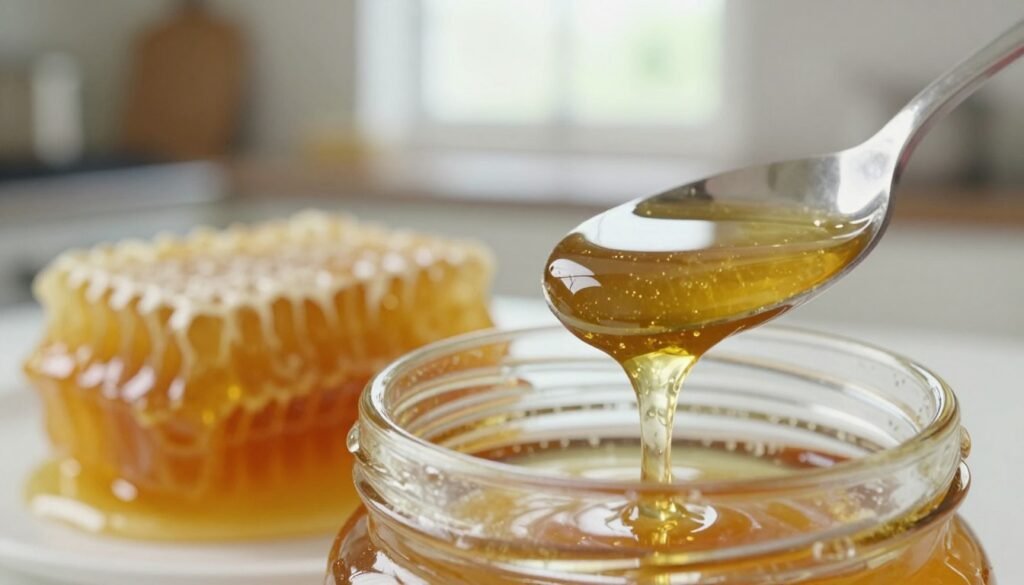
Look for a specific thickness range that matches safe storage. If jars run very thin or hold many tiny bubbles, consider drying or separating that lot.
Manual methods are practical during harvest, but professional refractometers and lab analysis remain the gold standard. For practical drying and handling tips, see this guide on checking moisture content and drying and a short note on purity checks.
“Sensory checks won’t replace instruments, but they let you sort suspect jars quickly.”
Sensory and Physical Indicators of Ripe Honey
Quick physical cues often reveal whether nectar has been reduced enough for safe keeping. These hands-on checks give fast, practical readings during harvest and help you decide which frames need extra attention.
The Thumb Viscosity Test
Rub a small dab between thumb and index finger. If the drop strings past about 1/2 inch it usually signals a thick, ripe product.
This is a swift, tactile way to check whether jars or fresh comb have reached good viscosity.
The Frame Shake Method
Hold the frame by the top bar and give it a firm shake. Ready frames shed nothing from open cells; thin, runny nectar will slosh out.
Use this as a quick screening step before extraction. It helps you sort frames that need further drying.
The Bead and Flow Test
Drop a small bead on a clean surface and watch the bottom of the drop. If it beads and holds shape, water content is likely low.
If the drop flattens and spreads, the lot may be too thin for long storage.
- Thumb test: ripe product stays in place on skin.
- Frame shake: nothing should fall from cells when ready.
- Bead and flow: beading at the bottom of a drop signals low water levels.
“Even without a digital reading, these sensory methods let you make informed harvest decisions.”
For deeper reading on environmental effects and curing, see a technical chapter on water management at moisture and curing and practical notes on humidity’s role in curing at humidity effects on curing.
Managing Excess Moisture in Your Harvest
Simple room adjustments often cut water levels within days and save entire supers.
Stack supers on racks in a room kept at 35–40% relative humidity. Use box fans to push steady air across frames. This airflow speeds the drying process and lowers the overall moisture level fast.
Elevate frames on 2x4s so air circulates under and around them. Pair fans with a dehumidifier for best results. Small hive beetle eggs need about 50% humidity to survive, so lower humidity also helps reduce pests.
- Drying process: fans plus dehumidifier cut water in days.
- Frame placement: 2×4 elevation promotes even airflow.
- Trickle method: use a bottling bucket to move product slowly into a lower container and shed a little water.
| Method | Room Humidity | Timeframe | Notes |
|---|---|---|---|
| Stacked supers with fans | 35–40% | 2–5 days | Fast, low-cost; monitor levels |
| Fans + dehumidifier | 35% | 1–3 days | Most effective for borderline lots |
| Bottling bucket trickle | Room ambient | Hours–days | Removes small amount of water while filtering |
“Taking time to dry jars properly means delivering a consistent, high-quality product to customers.”
The Role of Humidity in Hive Management
Ambient humidity around an apiary plays a major role in whether bees can finish drying nectar inside the hive. Bees work to keep the internal humidity near 50%–60% so stored syrup reaches a stable water balance.
Environmental Factors Affecting Hive Conditions
The environment around your honey hive affects how well colonies control content and water levels. High external humidity forces bees to work harder. They cannot evaporate nectar efficiently when the air is saturated.
Monitor local weather during rainy or muggy periods. If conditions stay wet, intervene with drying frames or move supers to a drier room.
Light and season change bee activity. Shorter days reduce fanning and drying. Longer daylight boosts foraging and ventilation.
- Airflow: open hive entrances and strategic placement help bees lower internal humidity.
- Timing: harvest on drier days when possible to reduce risk.
- Consistency: understanding these factors yields steady, high-quality honey year-round.
“Good beekeeping matches hive care to local climate rather than hoping bees can do it alone.”
For grading and market standards on finished product, review grading standards at grading standards.
When to Seek Professional Testing
Certified laboratories can uncover subtle adulteration and sugar profiles that simple methods miss. Home checks and handheld tools give quick guidance, but labs identify rice syrup markers and specific sugar types. This level of detail matters for brand trust and regulatory compliance.
If you sell product commercially, send representative samples for analysis. Labs report exact moisture content, sugar composition, and any foreign syrups. That evidence protects your reputation and can be required by buyers.

Beekeepers who suspect excess water or tampering should contact certified testing facilities for a definitive check. Even experienced producers with refractometers benefit from lab confirmation when moving into markets with strict standards.
- Commercial sellers: lab results often required for wholesale or retail contracts.
- Quality assurance: professional methods detect adulterants that field methods cannot.
- Regulatory needs: labs provide documentation for inspections and export.
| Reason for Testing | What Labs Provide | When to Send Samples |
|---|---|---|
| Verify purity | Sugar profile, adulterant markers | Before retail contracts or suspect batches |
| Confirm water levels | Exact moisture content report | Borderline refractometer readings or high humidity harvests |
| Regulatory compliance | Certified certificates and chain-of-custody | For export, large orders, or formal complaints |
“Professional testing gives a level of proof that reassures buyers and meets food-safety rules.”
For guidance on sample collection and recommended labs, see this resource on measuring moisture content of harvested honey.
Conclusion
Bringing harvest checks together ensures consistent quality from hive to jar.
Mastering the basic process of assessing jars is essential for any dedicated beekeeper. Use sensory checks for quick sorting, and rely on a refractometer when exact numbers matter.
Manage hive humidity and dry frames as needed so your product stays stable and free from fermentation. Prioritize bee health and careful handling during extraction and storage.
These steps help you produce market-ready honeys that customers trust. For practical options when levels are high, see this guide on handling high-moisture jars.