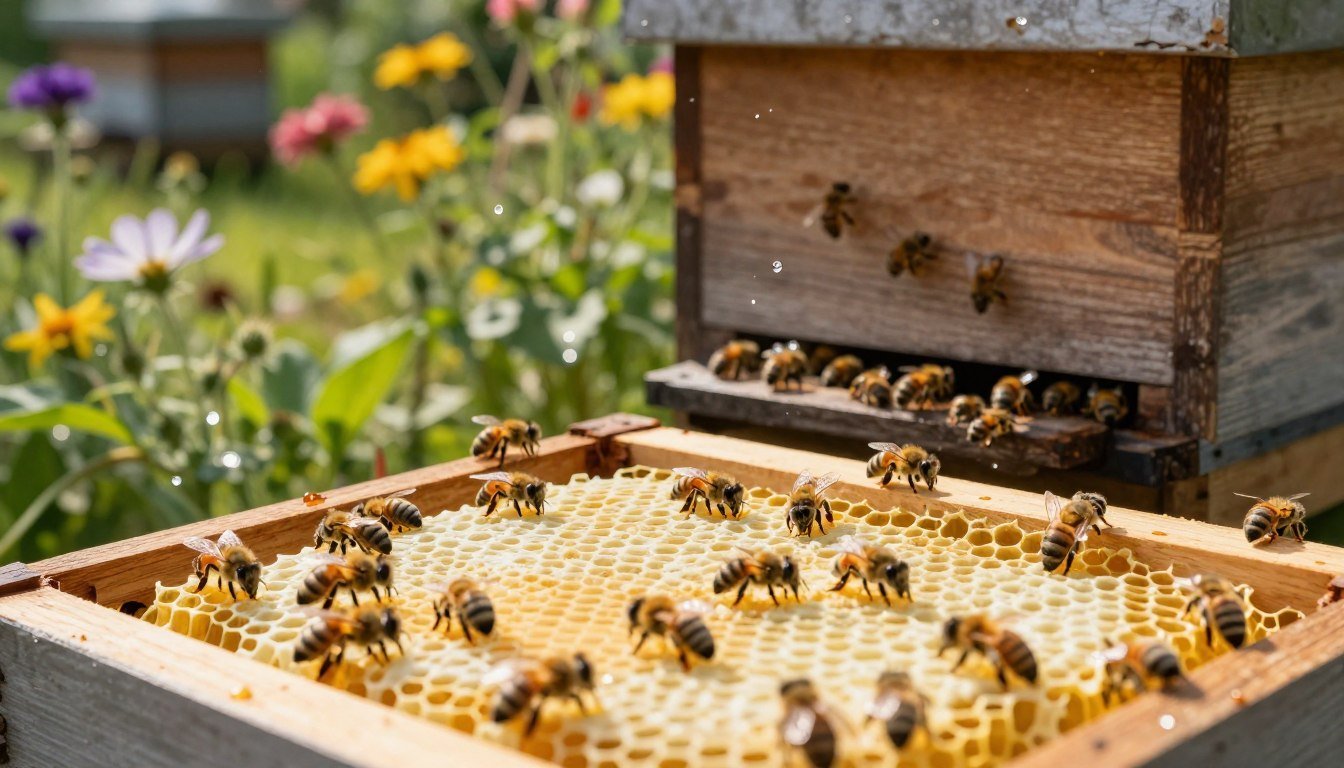
Drawing comb is a core skill for every American beekeeper managing a healthy colony. A well-timed spring expansion gives a hive the space it needs for brood, honey stores, and steady growth.
Introduce new plastic or wax foundation near the brood nest, seed a frame of drawn comb beside it, and offer light 1:1 syrup during nectar windows. These moves encourage workers to build straight, usable comb.
Monitor colony strength and mite levels, keep frames level, and place supers only when the population and nectar flow support expansion. Small changes in spacing, warmth, and food supply often convert slow starts into steady progress.
For deeper troubleshooting and common causes when comb stalls, consult this guide on reasons a hive may hesitate.
Key Takeaways
- Place new foundation next to the brood nest and seed with drawn comb.
- Use 1:1 syrup during spring nectar windows to support wax production.
- Keep frames straight and maintain tight, even spacing in the brood box.
- Check queen laying, brood pattern, and mite loads before pushing new comb.
- Warmth and a strong workforce speed comb building.
Understanding the Biology of Comb Building
Young worker bees shoulder most comb building, converting stored honey into the wax cells the colony needs. This process is costly: modern sources and historic studies place the honey requirement between roughly 6.6 and 10 pounds of honey per pound of beeswax.
The Metabolic Cost of Wax
Wax production is energy intensive. Blake Shook notes about 10 lbs of honey yield one pound of wax, while Whitcomb’s 1946 research gives a range of 6.6–8.8 lbs. That means comb building competes directly with honey storage.
The Role of Young Worker Bees
Nurse-age workers — roughly week two and three of life — produce wax glands that secrete scales used in comb building. Early-life pollen intake is critical; workers need protein in the first five to six days to develop fat bodies and functional wax glands.
- Healthy colonies with a productive queen and steady nectar build comb faster.
- Time required for drawing comb links to nectar flow and the age structure of the hive.
- Plastic foundation can guide cell shape but requires bees to adapt their building behavior.
“Young bees must consume pollen in their first 5 to 6 days of life to develop the fat cells required for wax production.”
| Factor | Impact on Comb Building | Practical Note |
|---|---|---|
| Honey availability | Directly limits wax output | Supplement during nectar gaps with syrup |
| Worker age | Nurse-age bees produce most wax | Maintain strong brood rearing for steady young bees |
| Pollen intake | Enables fat body development | Ensure pollen resources or supplements early in spring |
| Plastic foundation | Alters building pattern | Seed with a drawn frame when possible |
For beekeepers wanting to experiment with material preparation, consider this guide on create wax foundation at home for practical options that support comb building in managed hives.
How to Get Bees to Draw Out Wax Foundation Effectively
Small, timely steps push a new super from empty frames into useful drawn comb. Place the box adjacent to the brood nest and seed it with at least one frame of drawn comb when possible.
Avoid adding a queen excluder before construction starts; colonies rarely begin building through an excluder. Wait until workers have formed a fist-sized section of comb on 3–4 frames, then install the excluder to keep the queen below.
Feed light syrup during nectar windows and summer lulls. Consistent syrup keeps nurse bees producing wax and shortens the time required for drawing comb on plastic foundation.
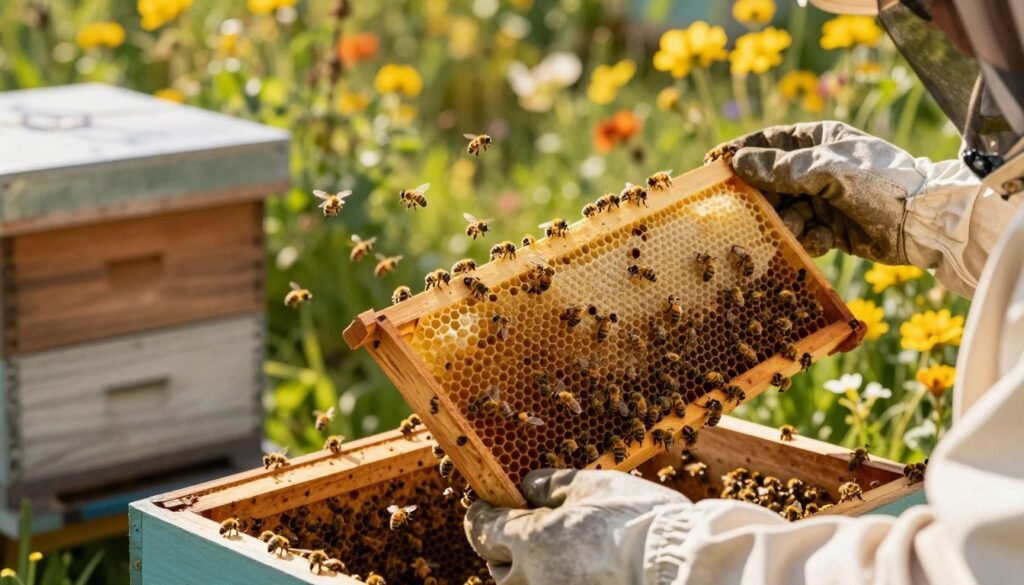
Inspect every few days. Ensure frames stay level and the hive has space for incoming nectar. A strong, tightly packed colony will build faster, but monitor brood patterns and signs of swarming.
- Do not use an excluder until comb is partially drawn.
- Continue feeding until 3–4 frames show fist-sized drawn comb.
- Provide water, steady syrup, and access to pollen or supplements if natural stores are low.
“Feed until several frames have a firm start of comb; then add the excluder.”
For additional tactics, see the critical factor for encouraging bees to draw out and tips on encourage bees to build comb faster.
The Role of Supplemental Feeding in Comb Production
Caloric supply, not syrup strength alone, often determines whether a new super receives drawn comb. Randy Oliver’s trials found that 1 gallon of heavy syrup or 2 gallons of light syrup produced similar results when the total sugar provided matched need.
Tibor I. Szabo’s 1977 work supports the idea that drawing a comb is a significant energy investment—roughly 200–400 g of sugar per comb depending on definitions and conditions.
Comparing syrup concentrations
Key points from practical trials:
- Light syrup is eaten faster; heavy syrup supplies concentrated calories.
- Total sugar delivered matters most for comb building and beeswax production.
- If a colony already has ample empty space, feeding alone may not prompt construction.
When using plastic foundation, maintain a steady sugar supply until several frames show a firm start of drawn comb. Remove the queen excluder during initial feeding so workers can access the upper box freely.
“Feed until the colony shows measurable progress; sugar volume, timing, and colony strength drive results.”
For practical steps and seasonal timing, see secrets to drawing comb.
Seasonal Considerations for Hive Expansion
Seasonal timing shapes whether a hive will accept a new box and invest energy in extended comb building.
Spring brings natural expansion. Colonies focus on brood and quick cell construction when nectar flows begin. Adding a super during this window gives the colony space to expand without wasting effort.
In early summer, Blake Shook recommends feeding 1:1 syrup at about 1–2 gallons per week to encourage extra comb and steady building. Supplemental syrup during a strong flow supports nurse bees while they make beeswax and store honey.
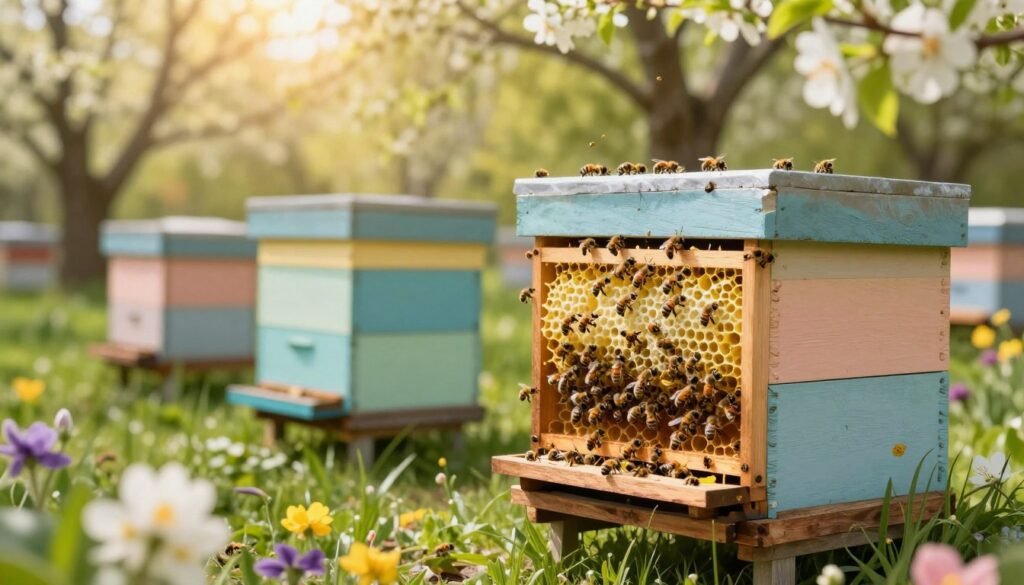
By fall the colony contracts and will likely ignore a box of plastic foundation. A strong hive often fills the brood nest and will not shift energy toward an extra super unless food and space remain ample.
“Plan comb additions around nectar peaks and brood cycles for the best results.”
- Early summer: feed 1:1 syrup 1–2 gallons/week to spur comb building.
- Peak summer: prioritize drawing frames for next year during heavy nectar flow.
- Fall: avoid adding empty boxes; colonies prepare for winter.
| Season | Likely Behavior | Recommended Action |
|---|---|---|
| Spring | Rapid brood expansion; eager building | Add box near brood; monitor queen and frames |
| Early Summer | High energy for comb and honey | Feed 1:1 syrup 1–2 gal/week; seed with drawn frame |
| Peak Summer | Best time for long-term comb | Maximize drawn frames during nectar flow |
| Fall | Colony contracts; low interest in new comb | Avoid empty super; focus on stores and insulation |
For practical timing and seasonal tips, see this note on drawing comb guidance and strategies that boost productivity naturally at boost hive productivity.
Troubleshooting Common Obstacles in the Apiary
A stalled run of comb often signals a deeper issue within the colony rather than a simple lack of food. Start with quick checks before changing management or adding equipment.
Identifying Colony Health Issues
Inspect brood pattern, queen presence, and mite loads first. A poor brood pattern or a failing queen reduces worker production and the energy for comb building.
Check pollen stores and recent feeding. Young workers need protein to make beeswax and finish new frames.
- Look for spotty brood or few nectar foragers.
- Run a mite test if activity is low.
- Keep syrup feeding steady during slow flows.
Managing Swarm Impulses
Crowded hives favor reproduction over comb production. If supers sit untouched, the colony may prepare to swarm rather than fill frames.
Avoid placing a queen excluder too early. Once several frames have a start of drawn comb, then install an excluder if needed.
“A colony that doubts its future will rarely invest the time and energy needed for new comb.”
For quick tactics and further reading on common stalls, see the practical guide linked here: why comb may stall.
Conclusion
, A strong colony, good timing, and steady feeding are the cornerstones of reliable comb production. Small management moves often yield the biggest gains for drawn frames and seasonal expansion.
Maintain brood health, give a seeded frame when possible, and keep syrup available during slow nectar windows. These steps help bees finish comb and reduce wasted effort on empty foundation.
Watch for stress or swarm signals and manage frames and supers promptly. With consistent beekeeping and the right sugar support, your hive will produce more honey and lasting comb year after year.