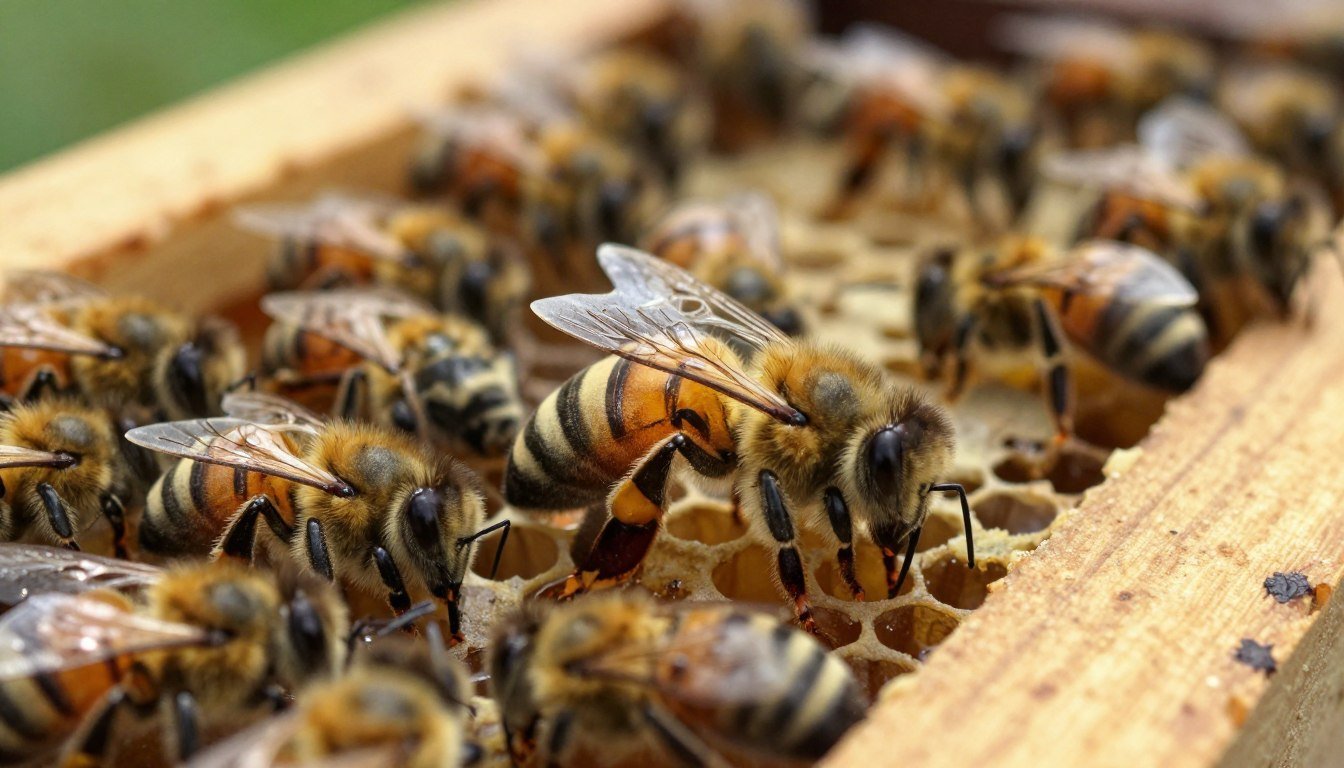
Beekeeping starts with senses: the smell of propolis and the steady hum of a healthy colony. Those cues guide a dedicated beekeeper when inspecting brood patterns over months.
Knowing that a worker cell stays capped for 12 days lets you estimate brood age. A frame densely packed with sealed brood often signals strong egg laying by the queen bee.
Seasonal timing matters. During an active week, inspections reveal the queen’s laying rhythm; by autumn months, careful checks prepare bees for winter.
Use practical methods and brief, regular checks. For step‑by‑step locating techniques and inspection timing, see this guide on locating the queen bee in a. For broader management tips, consult resources at Beekeepers Realm.
Key Takeaways
- Use smell and sound as quick health checks when opening a hive.
- Inspect brood patterns over weeks, noting that capped worker cells take 12 days.
- Dense sealed brood across a frame usually means productive egg laying.
- Perform brief, regular inspections during warm, calm days for best results.
- Prepare hives for autumn by monitoring laying patterns and colony strength.
Understanding the Importance of Brood Patterns
A clear brood pattern reveals much about a colony’s health and the queen’s performance. A frame with a tidy, filled brood area is welcome for beekeepers because it shows the queen bee has been filling the brood nest. Brood rings often form near the top of the frame, and concentric circles mean steady laying across the comb.
Consistent eggs and sealed cells keep population numbers stable through the active season. Remember that a worker cell remains capped for 12 days, so sealed brood gives a short-term history of laying success. Empty or scattered cells may signal gaps in laying or worker preparation.
- Good brood patterns show dense, uniform brood and few empty cells.
- Concentric rings across the top of a frame are typical in productive colonies.
- Understanding small cell gaps helps diagnose laying issues early.
How to Find a Failing Queen on Frames
Brood distribution across a frame gives a short record of laying performance. Inspect frames in the brood box slowly and map what you see. Mark any patchy zones and missed cells for later comparison.
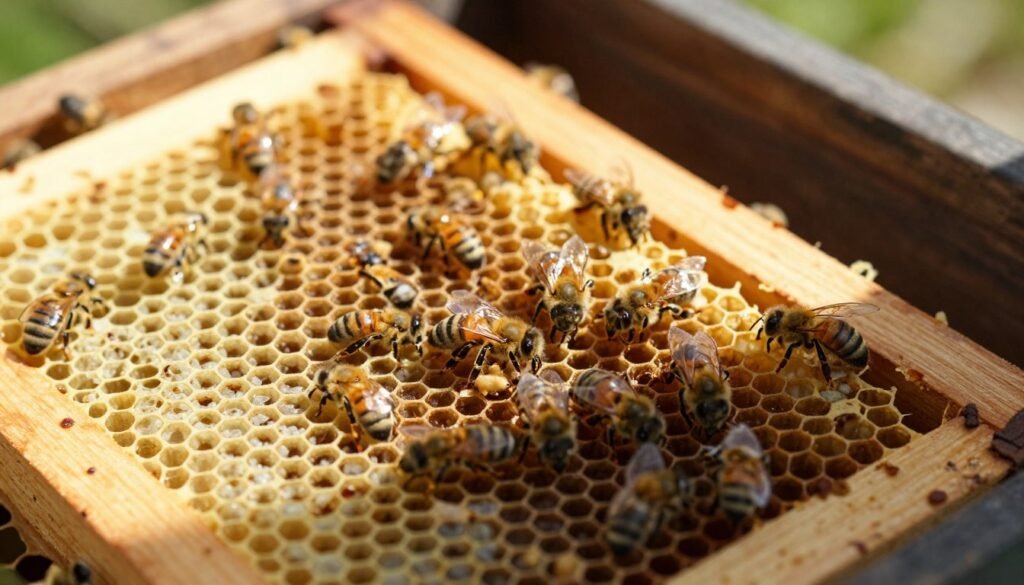
Visual Indicators of Queen Health
Spotty or scattered brood often signals inconsistent egg laying. Look for random drone cells, many empty cells, or large gaps inside a filled nest. These signs suggest the queen may be poorly mated or losing output.
Inspecting the Brood Nest
Check several frames over a few visits. A single odd frame can result from worker activity, larvae loss, or pests. If most frames show interrupted worker brood and missed eggs, the colony needs attention.
- Note large numbers of missed cells across a frame.
- Watch for worker brood interrupted by empty cells.
- Track patterns over days and assess the brood box across time.
For deeper pattern analysis, consult this piece on spotty brood and queens and use heat mapping methods like those at heat‑mapping for brood pattern assessment.
Distinguishing Between Normal and Abnormal Cell Patterns
Small gaps or long empty lines can mean normal comb development rather than reproductive trouble. On newly drawn comb, supporting wires or fresh wax often cause the queen to skip rows of cells for a short period.
After a few cycles, workers clean and prepare those zones, and the queen will usually begin laying there in due course. Observe over several visits rather than making a quick judgment.
If you find eggs that failed to hatch or larvae that perished, those losses create an irregular pattern that looks abnormal. Count the missed cells and watch development across 12 days for sealed worker brood trends.
A poorly mated queen may cause a spotty brood pattern by producing many unfertilized egg cells. Careful inspection of adjacent frames and context such as recent weather or pests helps decide if the pattern signals queen trouble or environmental effects.
- Note empty lines on new comb; they often resolve with time.
- Track brood and egg survival over several days before acting.
- Compare frames and use resources like this guide on cell types and signs of a weak queen for context.
Environmental Factors Affecting Hive Performance
When nectar comes in fast, bees sometimes use brood space for storage rather than brood rearing.
During a strong nectar flow, a colony may run short of storage frames. Workers then backfill the brood box with honey. That shift creates a spotty brood pattern that can mimic poor queen performance.
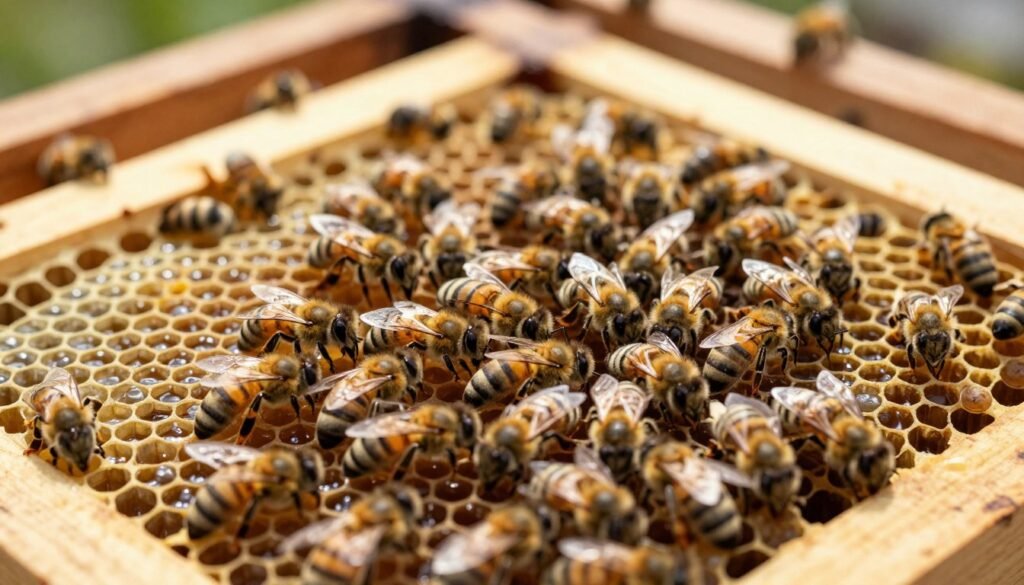
Managing Storage Space During Nectar Flows
Act quickly by adding drawn comb or an extra super when stores climb. Place a new frame of drawn comb in the brood box and inspect it after a few days. If the queen lays eggs on it, she is still productive and the previous gaps were environmental.
- Backfilled brood nest often shows honey in cells that should hold larvae.
- Adding frames eases pressure and protects laying rhythm.
- Space management helps maintain a stable colony through heavy honey flows.
| Sign | Likely Cause | Quick Test | Recommended Action |
|---|---|---|---|
| Spotty brood | Backfilled with nectar | Insert drawn comb, check after days | Add super or frames; monitor laying |
| Honey in brood cells | Storage shortage | Move some frames upward | Provide drawn comb in box or add super |
| Good eggs on new frame | Queen productive | Visual check in 2–3 days | Restore normal frame layout |
For additional reading on queen performance and inspection risks, see queen performance problems and a practical guide on inspecting purchased nucs.
Scientific Perspectives on Queen Quality
Recent studies challenge simple readings of brood patterns as proof of poor performance. Researchers found that brood layout alone gives an incomplete picture of queen health.
A team led by Marla Spivak reported that moving queens between colonies improved brood in many cases. They saw notable gains 21 days after each queen exchange.
Surprisingly, queens from poor-brood colonies did not show lower sperm counts or higher pathogen loads. Sperm viability and pathogen measures were similar across groups.
“Brood pattern alone is an insufficient proxy for queen quality.”
- About 3 million sperm is cited as a threshold sometimes linked with poor mating, but numbers did not explain all outcomes.
- Colony environment often drives brood results more than individual queen metrics.
- Despite this, replacing an underperforming queen remains the most practical choice for many beekeepers.
Takeaway: Use scientific evidence alongside field checks. Brood patterns can mislead; combine observation with tests and a short monitoring period after any intervention.
Practical Techniques for Boosting Colony Morale
Introducing young brood and eggs from a strong hive often calms workers and sustains nest activity. This low‑risk step buys the colony short time while the resident queen reestablishes steady laying.
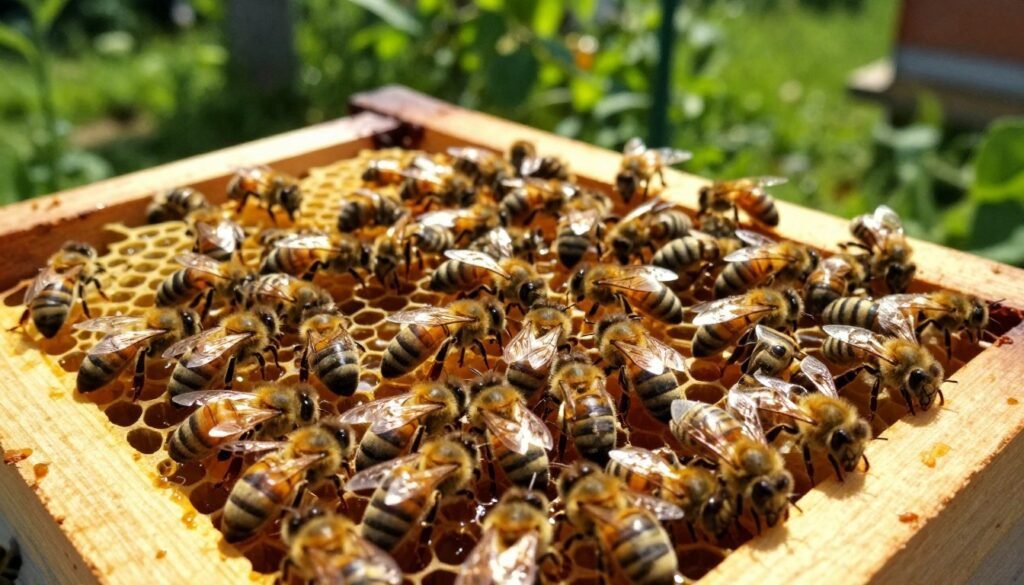
Introducing Brood Frames
Take one frame of eggs and uncapped brood from a vigorous hive and slip it gently into the underperforming hive. Place it near the brood nest so workers quickly accept and tend the larvae.
Timing Your Interventions
Perform this swap during calm weather and a midday inspection. A single frame often suffices; avoid over‑disturbing the colony or removing too much from the donor hive.
Monitoring Queen Acceptance
Watch the hive for about one week. Confirm that workers care for larvae and that the resident queen remains active. If unrest or prep for swarm shows, act sooner.
- Benefit: stabilizes pheromone signals and reduces supersedure drive.
- Risk: donor hive must remain strong; never strip a weak source.
- Tip: for rehab planning see beehive rehabilitation tips.
| Action | Expected Effect | Check in |
|---|---|---|
| Insert frame of young brood | Calmer workers; brood care resumes | 7 days |
| Move drawn comb into box | Relieves storage pressure; encourages laying | 3–5 days |
| Monitor queen activity | Confirm egg laying or plan requeening | 7–14 days |
Strategic Options for Requeening Your Hive
Selecting the right requeening path saves months of colony stress and lost honey. Research shows up to 40% of package deliveries fail in the first few months, so plan for backups.
Options include buying a new mated queen, adding a frame of young larvae so workers raise their own, or combining the weak box with another using newspaper.
Raising a new leader from larvae takes about 25 days. That route is low cost but needs patience and worker support.
- If you squish an underperforming queen, preserve her in rubbing alcohol for use as a swarm lure in spring.
- When cold months approach, combining two colonies often beats risking a small cluster that cannot survive a cold night.
- Replacing a failed package queen is common; keep spares or plans for rapid action.
| Choice | Speed | Risk | Best use |
|---|---|---|---|
| Buy mated queen | Fast (days) | Cost, possible failure | Spring/summer rebuild |
| Frame of larvae | Slow (~25 days) | Requires healthy workers | Low‑cost rearing |
| Combine hives | Immediate | Loss of identity for donor | Preparation for winter |
Conclusion
A calm, methodical inspection routine tells you more about nest performance than a single hurried check.
Careful observation of brood patterns, stores, and worker behavior guides wise choices. Use short, regular visits across weeks to build a clear record.
Science shows environment often drives brood outcomes, yet replacing an underperforming queen remains common practice for many. Before action, allow a brief monitoring period and compare multiple frames.
Take time to inspect thoroughly and apply the techniques in this guide. Patience, ongoing learning, and steady attention keep the colony healthy and productive through the season.