Moving a free comb into a managed frame is a key skill for any beekeeper facing a swarm or salvage job. This introduction covers a proven technique that protects the colony, the queen, and the brood while you transfer sections of comb into an empty frame.
Practical preparation matters. Gather a sturdy board, a sharp tool, masking tape or bands, and spare foundation or drawn frames. JeffH’s compost-bin rescue shows that careful planning keeps nurse bees calm and lowers risk when shifting comb.
Start by placing the combed branch or box where you can work safely. Secure cut pieces to bars so the colony can expand into frames over the next weeks. For detailed field tips, see community advice on swarm collection and comb transfer.
Key Takeaways
- Prepare equipment and empty frames before handling free comb.
- Secure comb pieces to bars so bees can build outwards.
- Protect the queen and brood during every step of the move.
- Work calmly with two hands and a clear plan to reduce stress.
- Expect the colony to settle and fill frames with brood and honey in weeks.
Essential Tools for Beekeeping Salvage
A tidy workspace and a few trusted items make salvage work much safer. Gather gear that protects the colony and preserves honey quality. Good prep shortens handling time and lowers stress for the bees.
Selecting the Right Rubber Bands
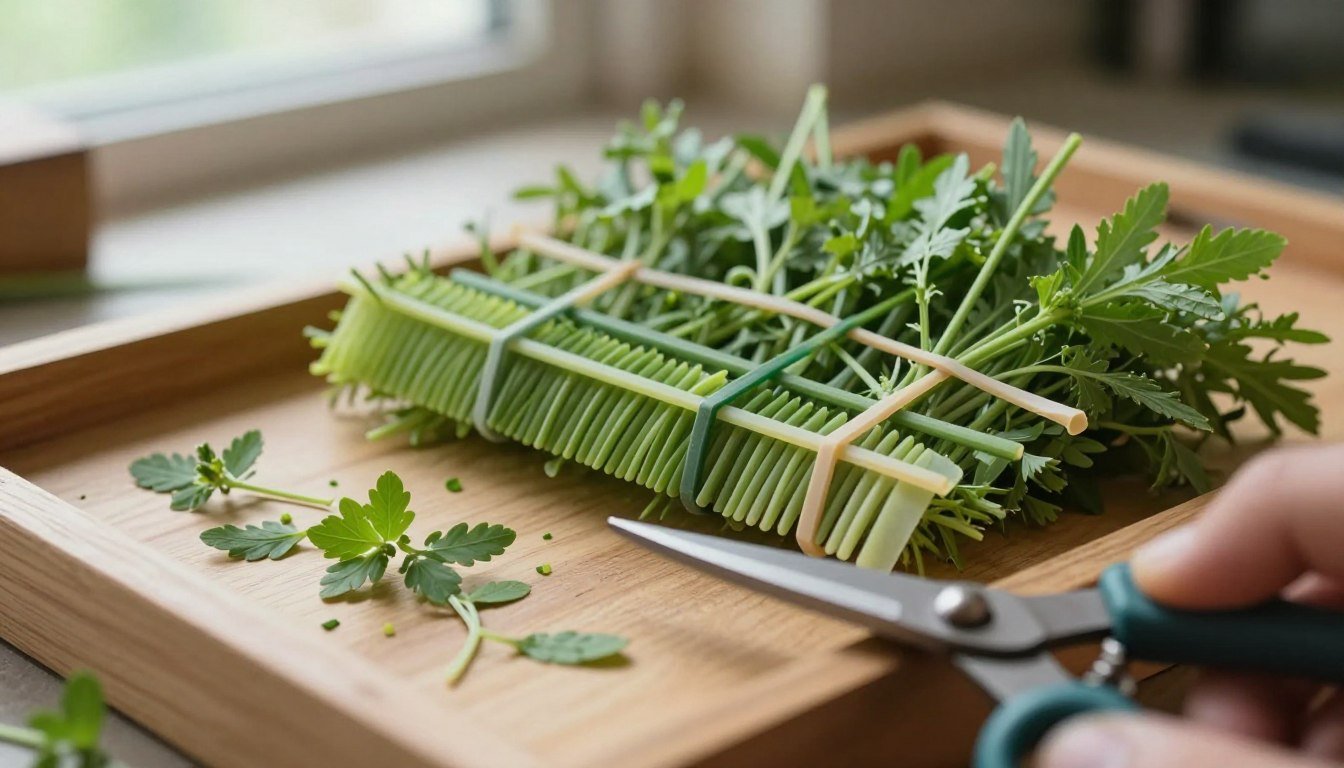
Choose soft, strong bands that won’t snap. These rubber bands hold comb against a frame while bees weld it in place. Keep extras on hand; sourced bands from others are commonly used by experienced beekeepers.
“Wired frames give vital support for cut-out work,” — TimG.
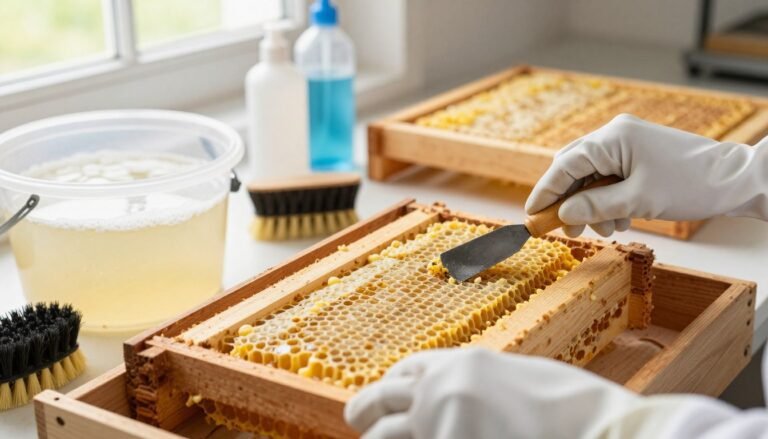
Preparing Your Cutting Surface
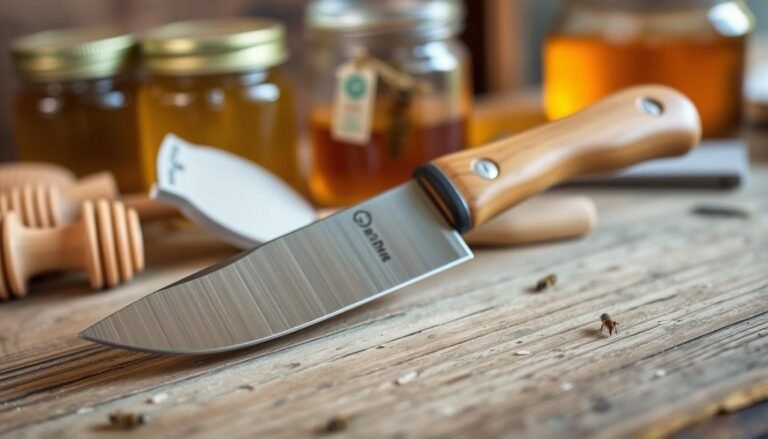
Use a large, flat chopping board and a long knife as fiftyjon recommends. Clean the board before work so honey stays uncontaminated. A steady surface helps you trim pieces so they fit the frame without shredding wax.
- Use wired frames for extra support.
- Have at least two spare bands per piece.
- Organize tools and equipment for quick access.
- Refer to guidance on cleaning foundation when needed: cleaning plastic foundation.
How to Cut and Rubber-Band Wild Comb into Frames
Measure each wax panel against a spare frame before any trimming. This simple check helps ensure the piece fits the bars and the foundation that will guide bee building.
Use a sharp tool for clean edges so honey and brood suffer minimal damage. Clean cuts let the colony accept the transfer faster and reduce fuss during the job.
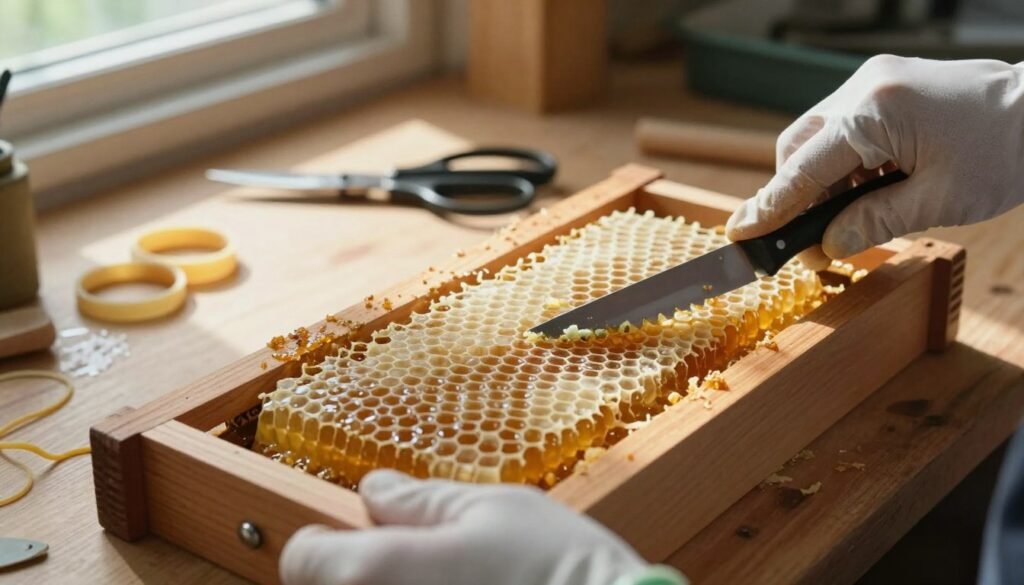
Stretch bands over the frame ends first, as fiftyjon advises. That step speeds placement and keeps pieces steady while you position the comb.
“Wired frames give vital support when moving heavy comb,”
- Align wire and bars so heavy brood gets solid support.
- Place each piece gently and secure with rubber bands until bees attach the wax.
- Check foundation alignment; it provides the stable base the hive needs.
Good beekeeping equipment and tidy technique make this task repeatable. For extra guidance on stubborn burr, see the detailed remove burr comb properly guide.
Preparing the Hive for Transferred Comb
Make the brood box ready before any transfer. Clear space, check brood frames, and position equipment so work is steady and fast. A well-prepared hive protects honey, brood, and the queen.
Positioning Comb for Optimal Bee Space
Maintain correct bee space around each frame. Place each frame with even gaps so bees can move and tend brood without obstruction. If a swarm was left for weeks, you may find wax hung from the roof, as Brock Bee discovered in a national brood box.
Use a board as a temporary cover while you work. This keeps bees calm and helps prevent loss of honey or brood. Ensure the hive entrance is clear so foragers can orient during the change.
- Secure brood frames so the queen can continue laying uninterrupted.
- Organize pieces and tools within reach; effective beekeeping often needs extra hands.
- Handle the queen cage gently when introducing her to the new frame layout.
Well-supported comb and orderly placement let bees focus on honey and brood care. For related repair guidance, see fix cross-comb.
Managing Bee Behavior During the Transfer
A calm transfer reduces risk and helps the colony settle quickly. Use deliberate, slow movements and keep gear organized so the work finishes without extra disturbance.
Using the nurse bee shake method
Using the Nurse Bee Shake Method
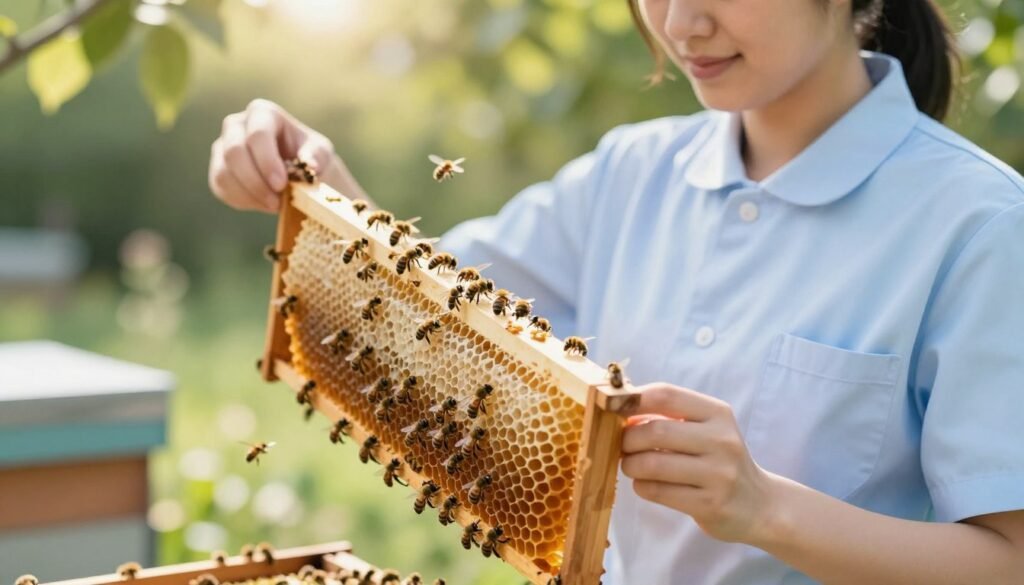
Semaphore’s nurse bee shake boosts a weak swarm by placing bees on a board near the entrance. The nurse bees march in and care for brood while foragers return home.
Set the board in front of the hive entrance. Shake gently so nurse bees stay near the comb and find the frame support inside.
Minimizing Colony Stress
Hinterland Bees recommends using rubber bands to fasten comb to a top bar of a frame so pieces stay stable while bees attach wax.
“Secure small sections firmly and check the queen’s location before moving any brood.”
- Protect the queen with a cage if needed.
- Use a nuc for temporary housing when the colony needs time to strengthen.
- Observe the hive after transfer for settling and brood care.
| Action | Benefit | Tool |
|---|---|---|
| Nurse bee shake | Maintains brood care | Board |
| Secure pieces | Reduces comb damage | Rubber bands, frame |
| Queen protection | Preserves colony function | Queen cage, nuc |
For further transfer logistics and hive movement guidance, consult a practical guide on moving beehives and a top-bar handling article on managing cross comb.
Long-Term Maintenance of Repaired Frames
Routine checks help ensure the restored wax bonds firmly to the support bars. Inspect repaired areas in short visits during the first few weeks. This helps confirm the bees weld the comb to the frame and remove any stray bands.
Avoid nylon string when securing pieces. Experienced keepers warn that string can tangle bees and cause damage. Use elastic bands or soft ties briefly; the colony often chews them off after weeks as the comb firms up.
- Check brood frames for queen activity and any sign of damage.
- Remove loose material if bees do not clear it naturally.
- Keep the brood box tidy so honey stores and brood develop evenly.
“Do regular, gentle inspections. Small adjustments with the proper tool save trouble later.”
| Check | Why | Action |
|---|---|---|
| Welded comb | Secures structure | Observe bond; wait for bands to be removed by bees |
| Brood presence | Confirms queen use | Inspect frames; note eggs or larvae |
| Loose material | May trap bees | Clear with care using a clean tool |
For more details on using larger ties safely, see this practical note on rubber bands and transfer technique.
Conclusion
Well-planned transfers return lost stores and brood to a productive home while keeping bees safe. Use proper equipment and steady technique so a rescued frame bonds quickly and honey remains protected.
Prioritize the queen and nurse bees. Their care drives colony recovery, whether you place pieces in a nuc or a full hive. Temporary bands help while the colony secures the comb; the supports are often removed by the bees as they finish the job.
With calm work and a good checklist you will manage frames, brood, and stores for long-term success. For tips on fitting deep frames and reasons bees may delay drawing comb, consult this guide on fit deep frames and this piece on reasons bees won’t draw comb.