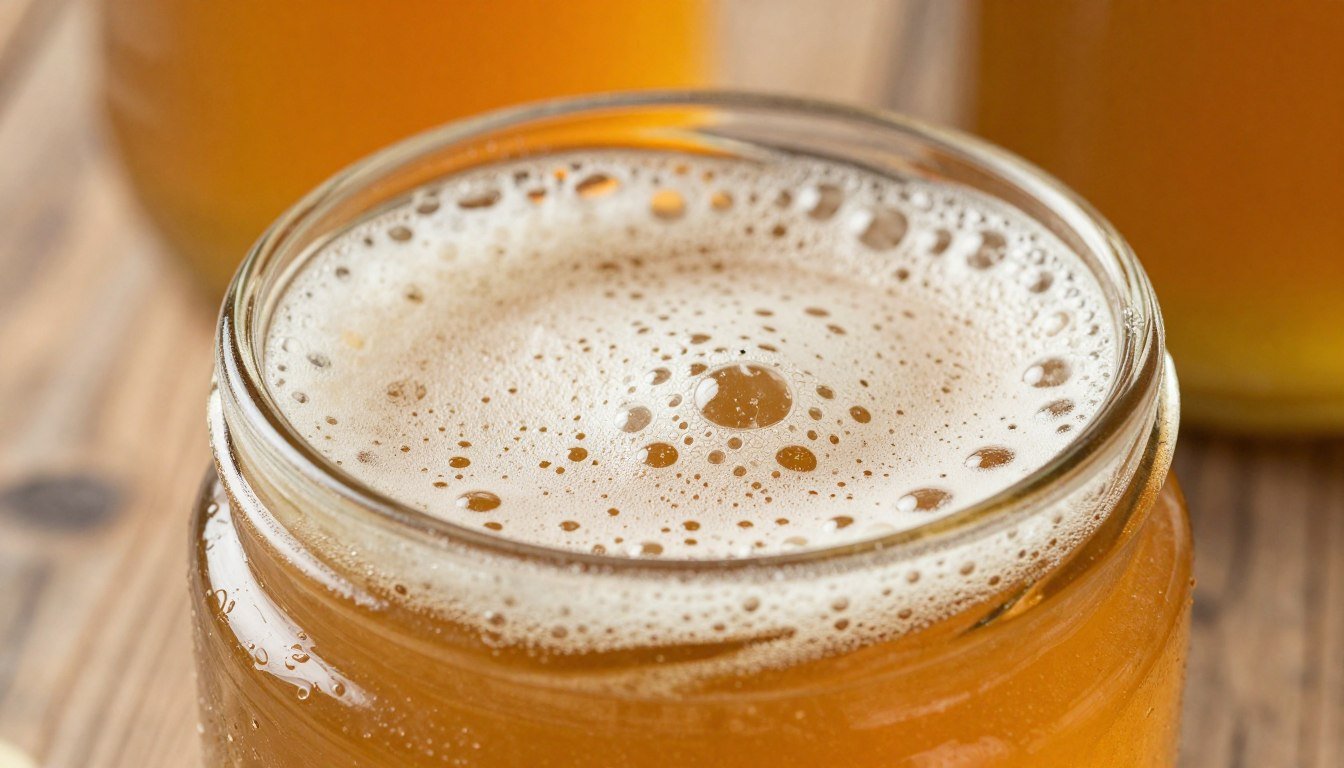
This short guide clarifies why a thin layer of white stuff often appears at the top of jars of raw honey.
At Brookfield Farm Bees and Honey in Maple Falls, Washington, the owner runs 80–100 hives and sees this froth regularly. Different honeys show varied moisture and wax content, so some jars form more bubbles than others.
The collection of air, tiny wax flakes, and pollen rises during transfer from tanks. That trapped air creates a delicate honey foam that signals minimal heating and gentle handling.
The good news: this stuff does not harm the taste or safety. Many people prefer that sign of purity because it shows the product stayed close to its natural form.
For technical background, read a practical note about the white layer at understanding the white layer and grading context at honey grading standards.
Key Takeaways
- The visible froth is a natural byproduct of gentle extraction and transfer.
- Air bubbles, wax, and pollen rise to the top, forming a thin layer.
- Presence of the layer often indicates minimal processing and preserved flavor.
- Brookfield Farm Bees and Honey observes seasonal differences across honeys.
- The layer is safe to eat; you can skim it off or stir it back in if preferred.
Understanding the Foam on Honey After Bottling Explained
When raw product is moved and poured, tiny air pockets and bits of pollen collect at the surface. This creates a pale layer near the lid that many people call white stuff.
This is not spoilage. Trapped air and natural particles rise to the top of a jar and form a thin froth. The effect is more visible in unheated, unfiltered raw honey because the natural form stays intact.
Moisture levels in different honeys affect how fast the layer will form. Higher moisture can make bubbles rise sooner. Bees add pollen and wax that help these pockets stay visible.
You can soften crystallized product by placing the sealed jar in warm water; this will not harm the layer. Many people view this mark as proof of gentle handling and preserved flavor.
For technical background, read a practical note at understanding the white layer.
The Natural Composition of Honey Froth
A mix of pollen grains, propolis specks, and trapped air gathers near the lid during transfer. This pale top is not random; it reflects what the bees collected and the way the product was handled.
Pollen and propolis particles bring flavor and texture. Tiny pollen bits and propolis add a subtle, unique taste that many commercial, heavily filtered jars lack.
The visible top also includes a thin layer of wax. Small wax flakes float up and help the air bubbles stay suspended. That interaction between air and natural proteins helps the tiny bubbles form a stable structure.
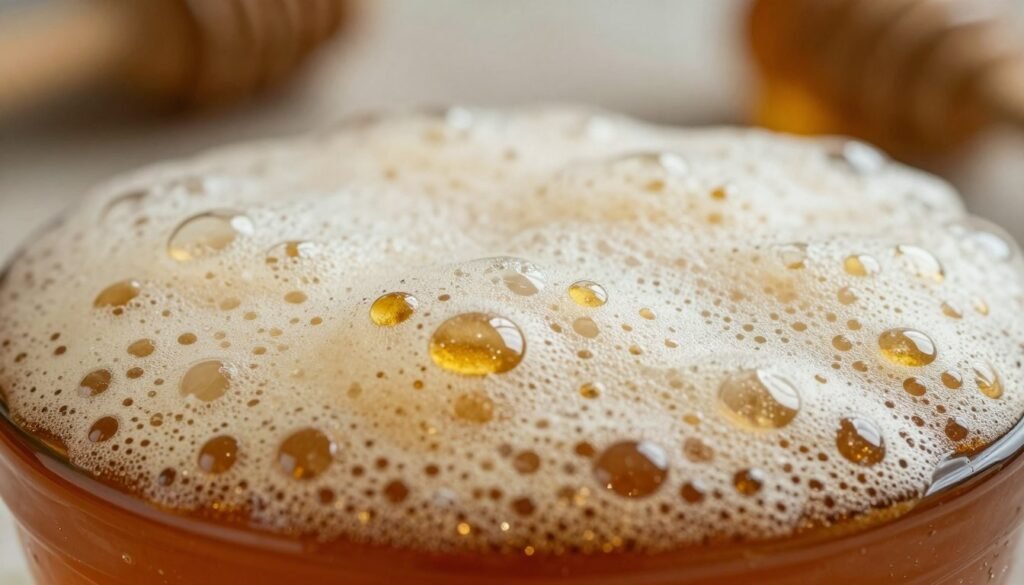
- The white stuff is a blend of air bubbles, pollen, propolis, and wax.
- Because moisture content remains natural, enzymes and beneficial compounds are preserved.
- Each jar reflects the local flowers the bees visited, so every batch tastes slightly different.
For a technical read about the pale top, see understanding the white layer, and learn about pollen benefits at fermented pollen.
How Extraction and Bottling Methods Introduce Air
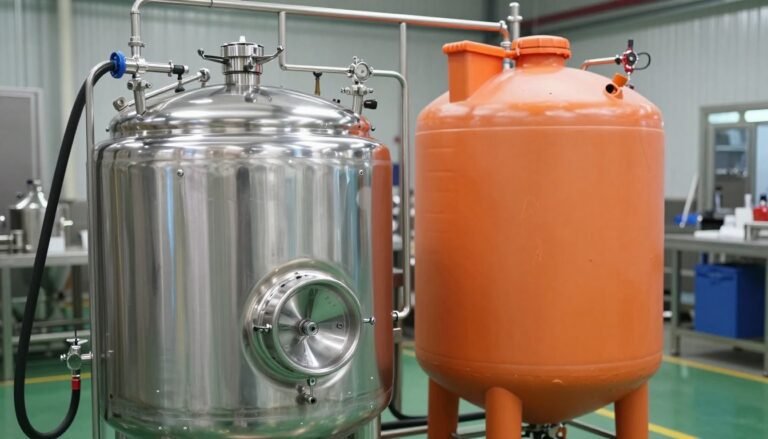
The mechanics of moving viscous product through equipment is the main reason tiny bubbles appear at the top of jars. Large-scale operations managing 1,700–2,000 hives often rely on pumps and long pipe runs. Those pumps entrain air and mix it with the liquid during transfer.
Maxant’s Baffle Tank serves as a clarifier. It stops large chunks of wax while letting pollen and propolis pass. That design reduces big debris but does not remove fine air bubbles.
How pumping and settling shape the visible layer
When honey moves through pipes, trapped air forms many tiny bubbles that rise during the settling time in holding tanks. Over hours, those bubbles collect at the surface and create a delicate, pale top that enthusiasts often value.
- Pumps introduce the most air in commercial setups.
- Baffle tanks remove wax chunks but allow pollen and propolis through.
- Even gravity-fed systems show the same effect because the air was already introduced.
“It sounds like a simple process, but the mechanics of pumping are the primary reason for the fluffy texture in jars.”
For practical packaging tips, see our guide to effective bottling techniques and labeling best practices at how to package and label honey for.
Why Protein Content Influences Bubble Formation
Different floral sources deliver varying protein levels that change how small air pockets behave during settling. Darker varieties, like Buckwheat, tend to show more pale top because they carry higher protein counts from nectar and bee-derived material.
Proteins reduce surface tension and act as tiny scaffolds around bubbles. That structural support helps fine beads remain visible rather than collapsing quickly.
Moisture content also matters. Proper moisture stabilizes the mixture and affects bubble lifetime. Too much water speeds up bubble rise; too little makes the liquid denser and changes how beads collect.
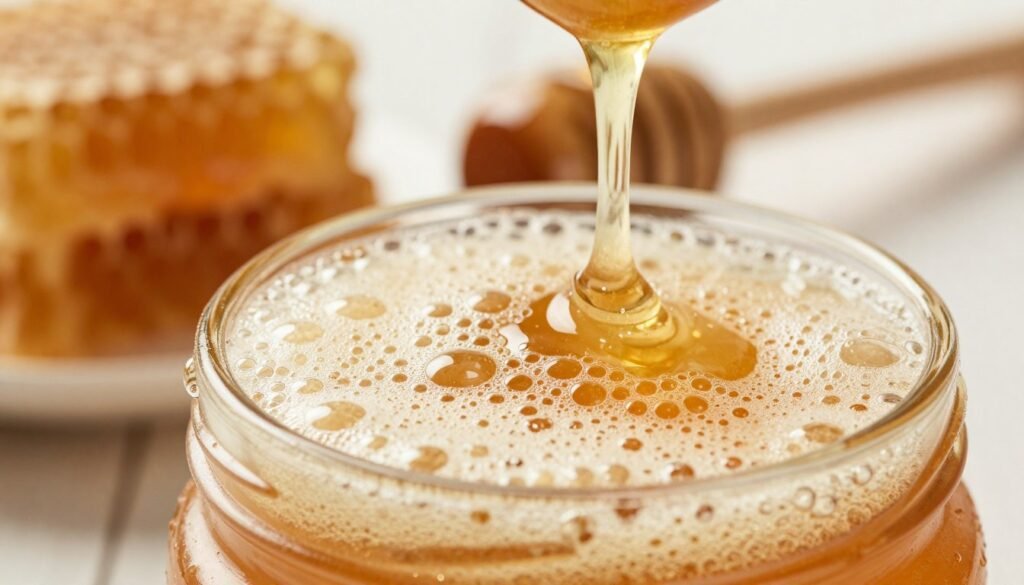
Avoiding high-heat processing preserves these delicate proteins and their nutritional value. Producers who skip intense heating keep the natural compounds intact, which directly influences the volume of froth produced.
- Protein presence lowers surface tension and supports bubbles.
- Darker honeys often show more visible tops due to higher protein.
- Correct moisture stabilizes the jar and affects bubble behavior.
For laboratory context on how composition alters bubble dynamics, see research on protein effects in honey.
Distinguishing Between Foam and Fermentation
Simple tests—smell, look, and wait—help separate normal surface activity from true fermentation.
Normal surface bubbles are a physical collection of trapped air, pollen, and tiny wax flakes. They sit still and do not change over time.
Fermentation is biological. If moisture is too high, natural yeast can turn sugars into alcohol and gas. That causes ongoing bubbling and a sour or off smell.
Check your jar: if bubbling continues after a day or you detect a sour odor, suspect active fermentation. Also look for visible foaming that grows or jars that hiss when opened.
Properly harvested raw honey rarely ferments because bees and good beekeeping keep moisture within safe limits. You can confidently eat the stable top layer if no sour signs appear.
“If in doubt, smell and wait—fermentation is active; stable surface beads are not.”
| Sign | Normal Surface Layer | Fermentation |
|---|---|---|
| Smell | Sweet, floral | Sour or fermented |
| Movement | Stable, no growth | Continuous bubbling |
| Cause | Trapped air, pollen, wax | Yeast activity due to high moisture |
| Action | Consume or skim if preferred | Refer to testing and discard if unsafe |
Learn more about how to identify fermented honey if you suspect spoilage.
Managing Honey Foam in Your Jars
Managing the pale top is easy and depends mostly on your serving preference.
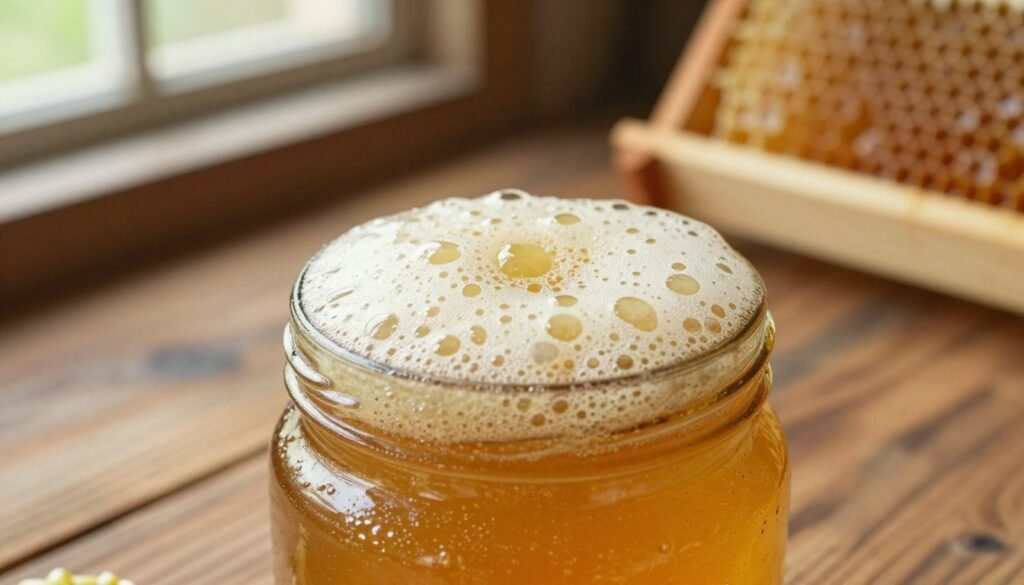
Skimming the Surface
If the pale layer bothers you, use a clean spoon to skim it away before serving. Skimming removes the visible froth quickly.
This keeps the jar tidy while leaving most of the content intact.
Stirring for Consistency
Alternatively, stir the layer gently to fold pollen, wax, and propolis back into the jar. That spreads the beneficial particles and keeps the taste uniform.
Embracing the Natural Quality
The layer is safe to eat. It contains the same pollen and propolis found throughout the raw product. Many people enjoy it as a sign of minimal processing and real flavor.
Air bubbles will often rise again with time, so the top may reappear even after stirring.
“Embracing the pale layer is a way to appreciate the natural quality bees create.”
- Skim with a clean spoon for presentation.
- Stir to incorporate pollen and wax for even taste.
- Contact Massey Honey Co. at 1-800-775-7443 or visit 18543 Yorba Linda Blvd, Suite #206, Yorba Linda, CA 92886 for production details.
- Read more about surface signs at white stuff on top.
| Action | Effect | When to Use |
|---|---|---|
| Skim | Removes visible layer, cleaner top | Before serving to guests |
| Stir | Disperses pollen, wax, propolis | For consistent taste in jar |
| Do nothing | Preserves natural sign of raw quality | When you prefer minimal processing |
The Role of Temperature and Storage Conditions
Proper storage slows crystallization and keeps texture consistent. A steady temperature near 57 degrees F helps manage the rate at which jars go cloudy or form granules over time.
Fluctuating temperatures let trapped air expand and contract. That change can increase visible foam at the surface and shift the feel of the jar.
Keep sealed containers away from direct heat and sunlight. Heat degrades enzymes and increases moisture loss. Both factors change how different honeys crystallize.
- Store at a steady temperature near 57 °F to slow crystals.
- Avoid temperature swings; they make air pockets more noticeable.
- Protect jars from moisture and direct heat to preserve enzymes.
Even if crystallization occurs, the product is safe. Gently place the sealed jar in warm water to return it to liquid form without harming natural compounds.
“Understanding storage conditions ensures your jars remain flavorful and stable for long periods.”
For practical steps on handling and long-term care, see our guide to extract and store raw honey. Proper beekeeping storage keeps what bees produce in the best possible state.
Conclusion
Natural sign of quality, the pale cap you see in a jar tells a simple story about handling. This layer is harmless and often prized by people who favor minimal processing.
What it is: tiny air beads, wax flakes, and pollen that rise during transfer and settle at the top. That blend gives a subtle texture and extra flavor notes that reflect the local flowers bees visited.
You may skim the layer for presentation or stir it back for uniform taste. Store jars at room temperature to preserve enzymes and the product’s natural character.
For technical context about stability and structure, see this research on honey foam stability.