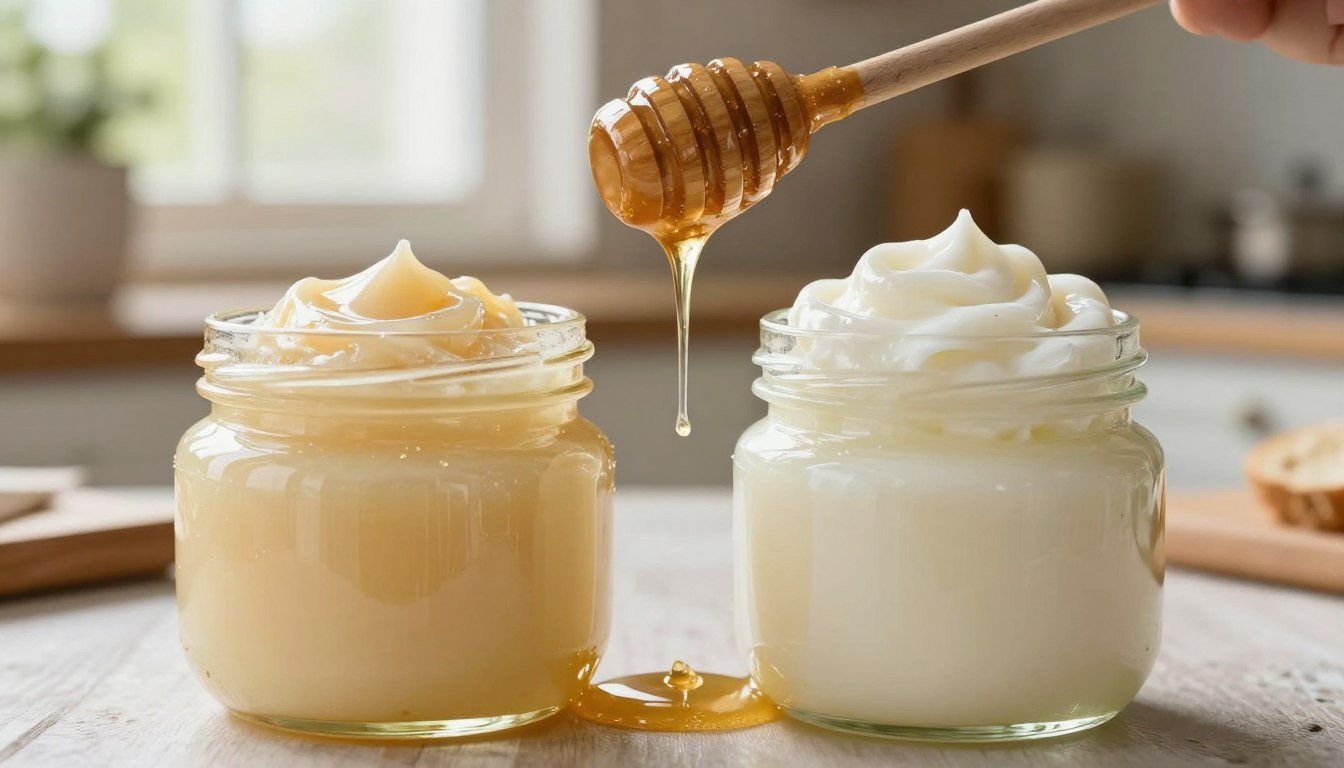
This introduction clarifies why two jarred forms of the same natural product look and feel different. We explain how liquid honey becomes a spreadable form through a controlled crystallization process.
The guide compares texture, process, and time needed to make creamed honey and whipped honey. You will learn how seed crystals, temperature, and the way producers incorporate air shape the final consistency.
No dairy or additives are needed; the smooth, butter-like result comes from managing crystals and flow. We also cover how to store jars at room temperature and why some jars stay runny while others set.
For more detail on grading and identifying pure raw honey in a jar, see this grading overview.
Key Takeaways
- Both forms start as raw liquid bee product and change by controlled crystallization.
- Seed crystals and low temperature yield a fine, spreadable texture.
- Adding air alters color and lightness without adding cream or dairy.
- Proper storage at room temperature preserves consistency.
- Learning the process helps you make creamed products at home safely.
Understanding the Basics of Honey States
Raw honey can present as runny syrup or a spreadable paste depending on natural factors. It is a supersaturated sugar solution, which means it holds more sugar than water would normally allow.
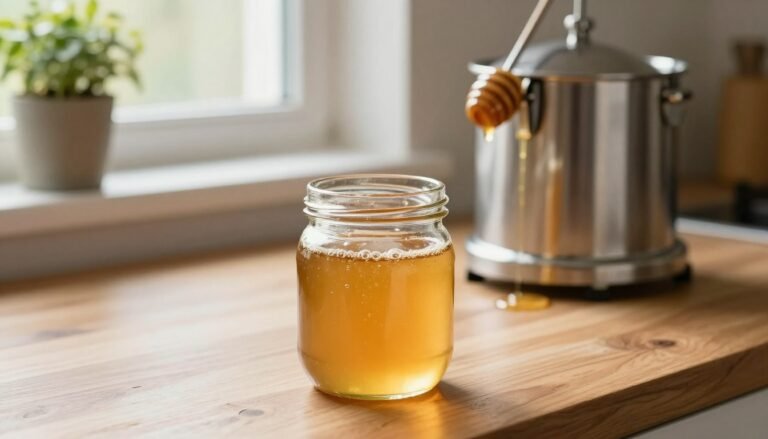
In its liquid form, the jar shows a golden, pourable consistency that flows easily. That familiar pourable state is what most people expect when they reach for a spoon.
When left untouched, sugars reorganize. Over time, the same raw product may change into a fine, spreadable product. Both creamed honey and whipped honey are simply different physical arrangements of the same source.
“Understanding the states of honey helps you appreciate the natural processes inside every jar.”
The water content affects stability. Lower water slows fermentation and keeps shelf life longer. Knowing this helps you store jars and choose the right form for drizzling or spreading.
For practical tips on controlled setting and the science behind these states, see this controlled crystallization guide and this overview of types of honey.
The Science Behind Honey Crystallization
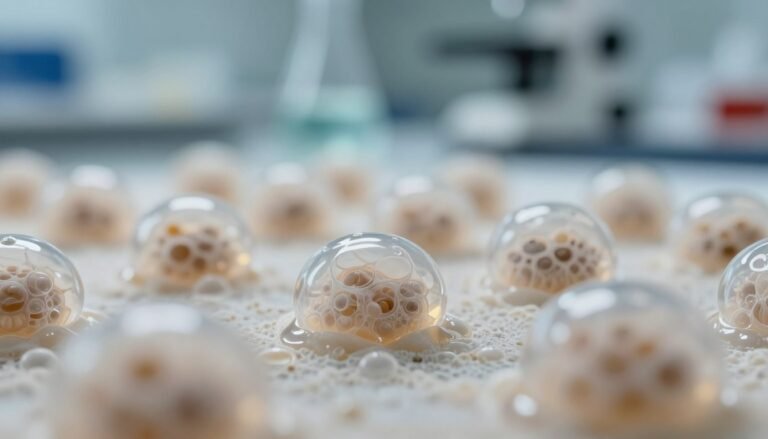
Crystallization begins when sugars in the jar reorganize from a uniform syrup into tiny solid crystals. This natural change depends on the sugar mix and storage conditions. Understanding the chemistry helps explain why some jars set faster than others.
Glucose and Fructose Ratios
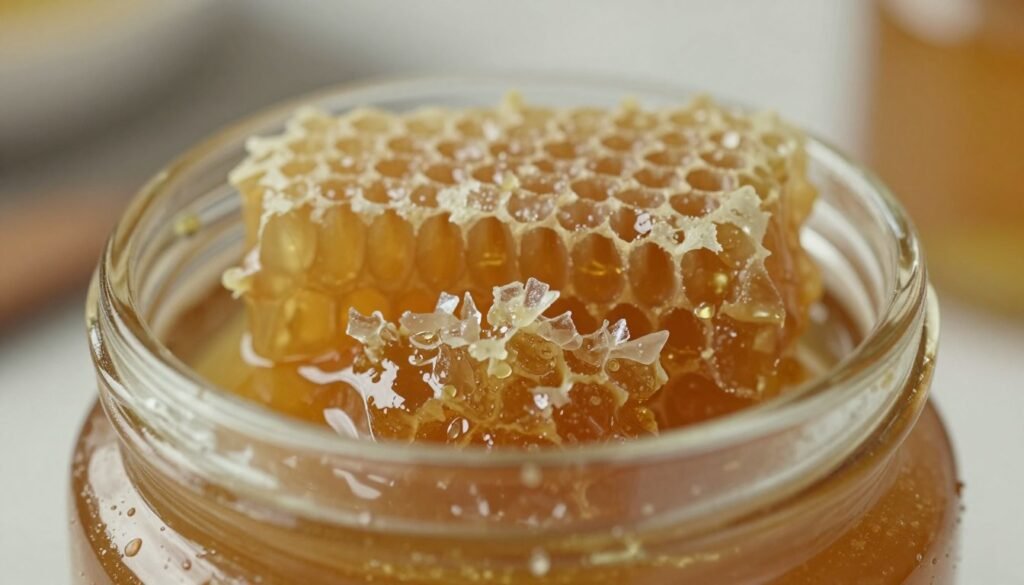
Glucose-to-fructose balance controls speed of the change. A Food Chemistry study of 136 varieties found this ratio is the main driver. Varieties with higher glucose, like rapeseed, form crystals quickly.
Why Crystallization Occurs
The crystallization process is a natural chemical reaction where glucose separates from the water to form solid particles. Cooler temperature often speeds this action, while warmer storage slows it.
“Crystallization is a sign of purity, not spoilage — it shows the product is unprocessed.”
| Factor | Effect | Practical Tip |
|---|---|---|
| Glucose-to-fructose | Alters crystallization speed | Choose high-fructose types for slower set |
| Temperature | Cooler = faster crystals | Store at stable room temp to manage texture |
| Time | All jars will develop crystals over time | Use controlled seeding for smooth spreads |
Note: Learning this science lets producers manage the process and produce a smooth final feel. For details on raw handling and processing differences, see the difference between raw and processed honey.
Defining Creamed Honey vs Whipped Honey
What separates a silky spread from a coarser set jar is how producers direct crystal growth and trap tiny air cells.
Creamed honey — also sold as spun honey, honey butter, or whipped honey — is simply a jar of pure nectar given a controlled crystallization process.
Despite the names, this product contains no dairy. The goal of the process is a smooth, spreadable texture that stays consistent across the jar.
- Controlled crystals: Seed crystals set a fine grain and prevent grit.
- Mechanical air: Gentle mixing adds tiny air pockets for lighter color and feel.
- Stable result: Fully set jars keep a uniform consistency and do not change much over time.
“This method produces a silky spread, not the coarse, uncontrolled crystalized honey many people find gritty.”
Tip: Knowing that creamed honey whipped and honey whipped honey are names for the same product helps you pick the right jar at the store.
The Role of Texture in Culinary Applications
Different textures steer how chefs use liquid and set forms in recipes. The mouthfeel of a jar decides whether it should be drizzled, folded, or spread. Simple swaps change both presentation and function.
Choosing Between Drizzling and Spreading
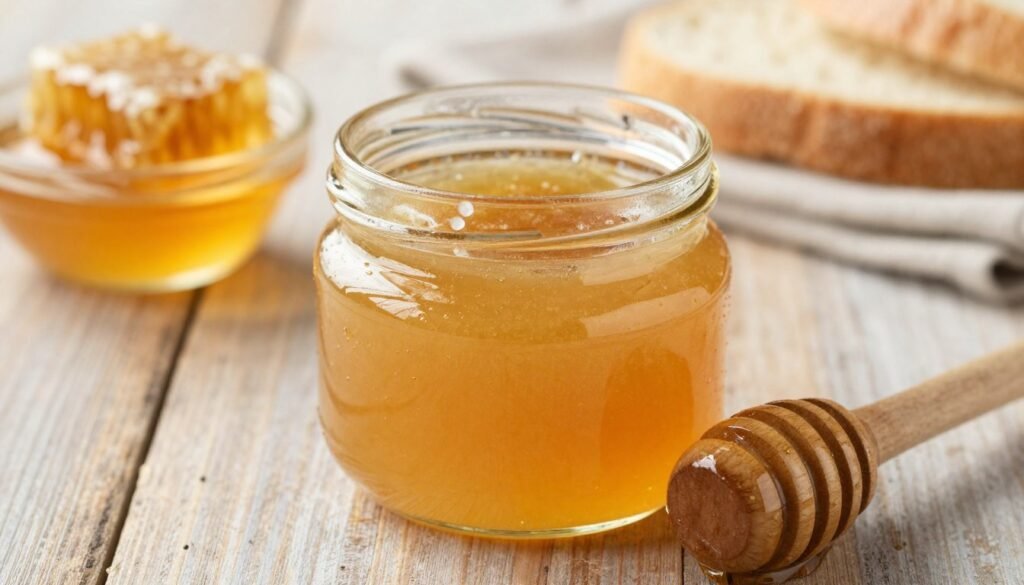
Liquid honey shines when you want a clean pour. Use it for dressings, marinades, or to sweeten a hot tea. Keep blends below 40°C to protect delicate enzymes.
Creamed honey stays put. Its thick feel is ideal for toast, yogurt, or as a natural frosting on muffins. When a topping must not run, this product is the practical pick.
- Raw liquid mixes easily into wet ingredients for smooth dressings.
- Thicker spreads prevent sticky drips on breakfast plates.
- Many cooks keep both forms on hand for flexibility in recipes.
“Texture guides use: pour when you want motion, spread when you want control.”
For a deeper look at production and labels that affect kitchen choice, read what is creamed honey and practical tips on labeling for sale.
Comparing Production Methods
Production choices—from gentle stirring to mechanical agitation—dictate final mouthfeel.
The most common method breaks large crystals into fine particles using controlled mechanical whipping. This step refines the crystallization and helps create a smooth spread.
During agitation, tiny pockets of air are trapped. Those micro‑bubbles lighten color and improve the perceived texture of the jarred product.
Centrifugal extraction yields the initial liquid honey. Producers either bottle that syrup directly or move it into a setting process to produce spun honey or a spreadable jar.
Traditional low‑heat methods keep natural enzymes and flavors intact. Avoiding high heat means the final products retain more of their raw integrity.
- Goal: uniform crystals for consistent spreadability.
- Step: seed and stir to control crystal size.
- Result: long‑lasting consistency without grit.
| Step | Technique | Effect on Product |
|---|---|---|
| Extraction | Centrifuge | Clean liquid for bottling or processing |
| Seeding | Add fine crystals | Controls crystal growth and texture |
| Whipping | Mechanical agitation | Breaks crystals and traps air for light feel |
| Heating | Low heat or no heat | Preserves enzymes; avoids runny jars |
“Understanding the method helps buyers choose products with the best texture and natural benefits.”
The Dyce Method for Controlled Crystallization
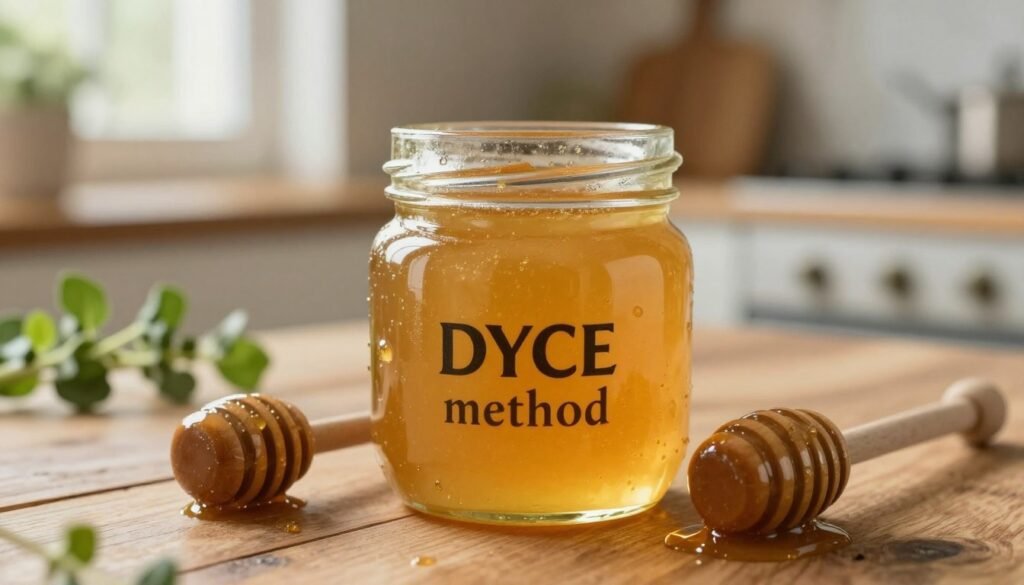
Cornell’s Dyce technique offers a repeatable way to turn liquid nectar into a smooth spread. Developed in 1928 by Professor Elton J. Dyce, the method sets a standard for texture and shelf stability.
Pasteurization benefits
The Dyce process begins with pasteurization at 150 degrees for 15 minutes. This heat step kills yeast and reduces the risk of fermentation, giving a reliable product that fills jars cleanly.
The downside of high heat
High temperatures do improve shelf life, but they can reduce enzymes and alter flavor in raw honey. Producers balance safety and nutrition when choosing this route.
- Cool and mix with seed that supplies fine crystals.
- Store at an optimal 57 degrees to guide crystallization.
- Avoid trapping air during mixing to keep a dense, creamy consistency.
For a practical, step‑by‑step guide to make creamed honey using this method, see how to make creamed honey — the Dyce.
The No Heat Raw Method
Skip pasteurization and use gentle seed blending to transform raw liquid into a stable spread.
This no‑heat raw method preserves natural enzymes and antioxidants. Producers fold fine seed crystals into the liquid at room temperature to begin controlled crystallization.
Mixing must be steady for several minutes so the seed crystals spread evenly through the jar. As you stir, the mixture often takes on a lighter color — a sign that crystals are breaking down and the texture is refining.
Pour the blend into jars and store at 57 degrees. That temperature guides the set and helps the product keep a smooth, spreadable consistency without heat.
“No heat means a true raw result that keeps flavor and nutritional value intact.”
If you want practical comparisons and handling tips for raw products, see a short guide on raw honey vs creamed and a manual on how to extract and store raw honey.
Nutritional Profiles of Different Honey Forms
Preserving active compounds depends mostly on whether the jarred product saw heat, not on its mouthfeel. If both jars start as raw liquid and avoid pasteurization, their nutrient profile stays the same.
Preserving Enzymes and Antioxidants
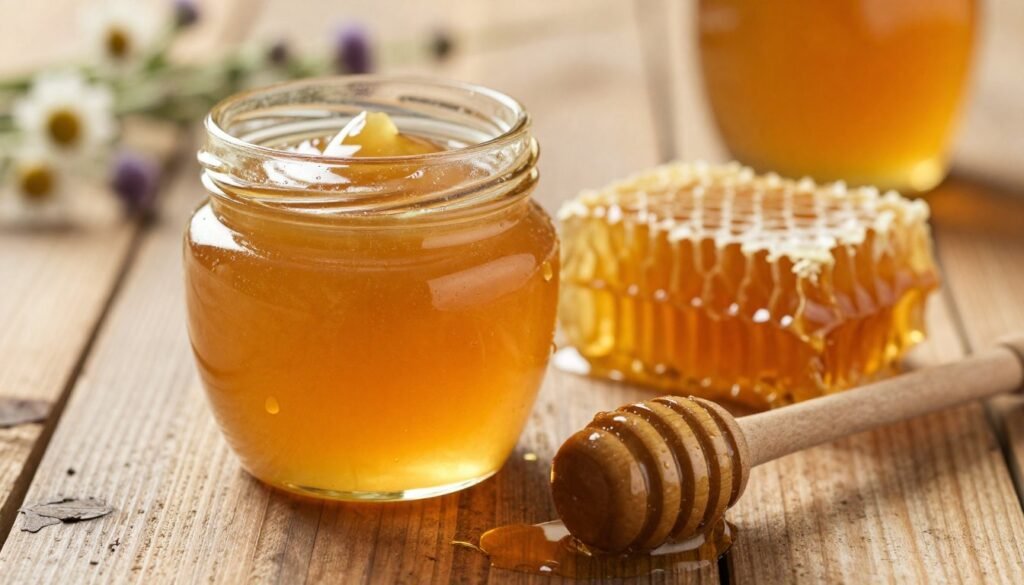
Raw honey contains enzymes, antioxidants, and pollen particles that add health value. Commercial pasteurization can reduce these benefits.
No-heat processing of a spreadable jar keeps the same bioactives found in raw liquid. The setting step only alters crystals and the jar’s feel, not its core chemistry.
“The creaming process changes physical structure, not the natural compounds you want to keep.”
| Factor | Effect on Nutrients | Practical Note |
|---|---|---|
| Heat treatment | Reduces enzymes & antioxidants | Check labels for pasteurized or raw |
| No‑heat setting | Preserves bioactive compounds | Raw creamed product retains hive benefits |
| Physical texture | No effect on chemistry | Choose texture for use, not nutrition |
| Storage | Maintains stability and pollen | Store at room temp away from direct heat |
Tip: Look for clearly labeled raw options. For more detail on differences between spreadable and liquid jars, see this raw creamed product guide.
Best Practices for Storing Your Honey
Store jars with care to preserve flavor, texture, and the set you expect from each product. Keep containers in a cool, dry spot away from direct sunlight and heat sources.
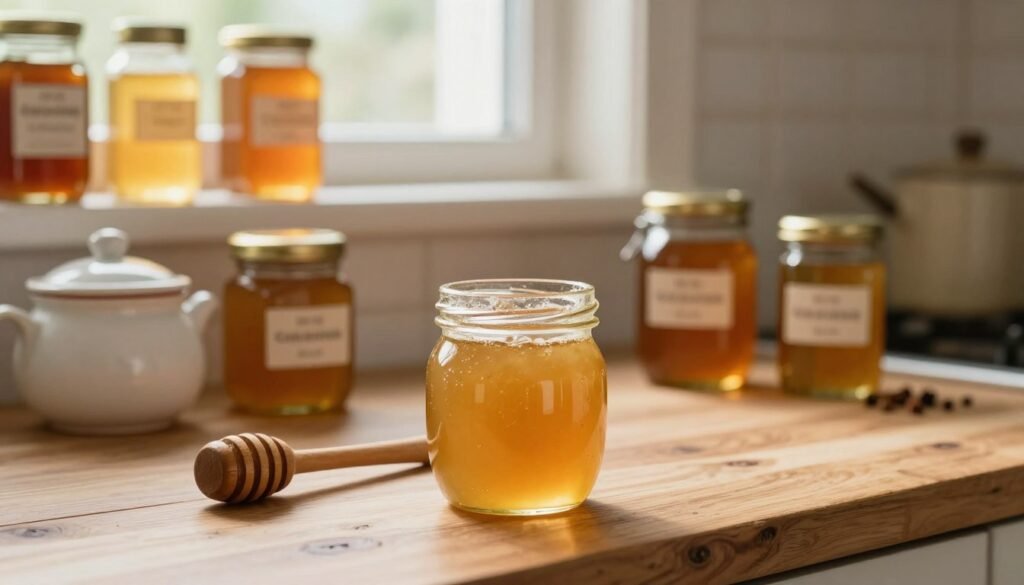
For spreadable jars, the optimal temperature is about 57 degrees. That steady temperature helps maintain smooth consistency and slows unwanted crystallization.
Avoid refrigeration. Cold can make liquid honey crystalize unevenly and can make creamed honey overly hard. If liquid honey starts to set, warm the sealed jar in a bowl of warm water for several minutes to restore flow.
Do not microwave or heat above 40°C. High heat breaks down enzymes and reduces the product’s natural benefits.
- Always store in a sealed jar to stop moisture absorption.
- Keep temperature consistent to protect texture and prevent excess crystals.
- Whether you buy creamed honey, whipped honey, or raw honey, steady conditions give the best long-term result.
“Consistent temperature and a tight seal are the easiest steps to keep your jars at peak quality.”
How to Identify Quality Raw Honey
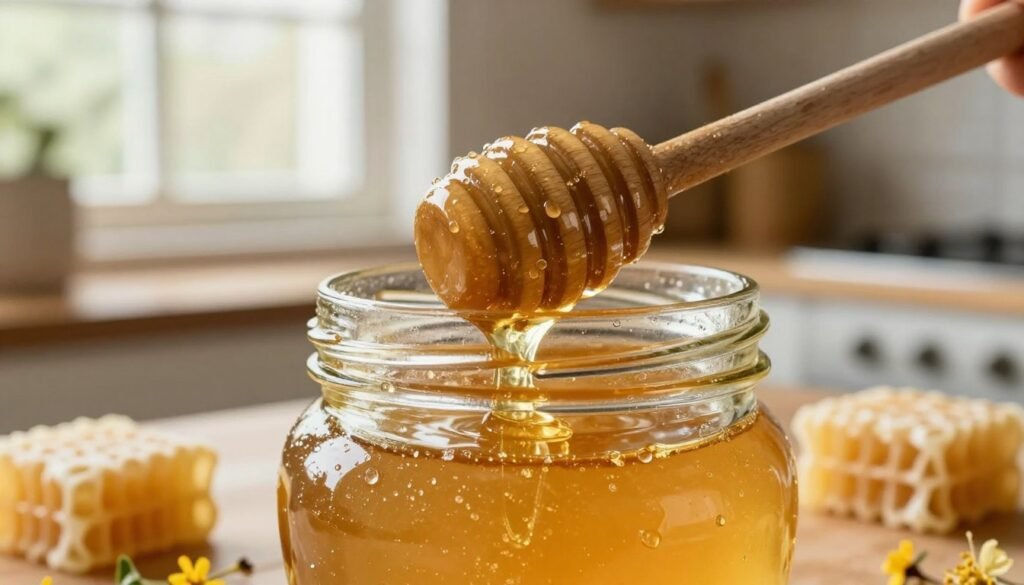
Look for natural cloudiness and fine crystals. This indicates the jar has not been ultra‑filtered and likely retains pollen and micro particles.
Pure raw honey often appears slightly opaque and may show tiny flecks of beeswax or pollen. Those particles are signs of minimal processing and real provenance.
If a jar stays perfectly clear and runny for more than a year, it was probably pasteurized and filtered. That removes many enzymes and reduces nutritional value.
Crystallization is a hallmark of purity. Whether the product is sold as creamed honey or kept as liquid honey, the ability to set shows the sugars are natural and unaltered.
- Check labels: Look for “raw” or “unpasteurized” to confirm minimal heat treatment.
- Read ingredients: The jar should list only honey — no syrups or additives.
- Assess texture: Consistent spreadability or uniform runniness signals careful processing and correct temperature control.
“A quality jar trusts its natural crystals and keeps the flavor intact.”
| Indicator | What it means | Buyer tip |
|---|---|---|
| Cloudiness / particles | Minimal filtering; retains pollen | Choose for raw benefits |
| Long-term clarity | Likely pasteurized/filtered | Avoid if you want raw liquid |
| Uniform consistency | Controlled process and proper temperature | Good for spreadable jars like creamed honey |
| Visible crystals or set | Proof of natural crystallization | Signs of pure raw product |
Conclusion
Whether you choose a jar to drizzle or to spread, the choice reflects small processing decisions more than different sources.
Creamed honey and liquid honey both deliver the same floral nutrients when kept raw. Understanding crystallization helps you pick the texture that suits your recipes and table.
Both whipped honey and raw creamed honey offer stable spreadability and a pleasant mouthfeel. Their consistency makes them ideal for toast, yogurt, and baking without loss of natural benefits.
Choose based on use and taste. Opt for raw honey labels and minimal processing to enjoy genuine flavor and nutrition every day.
FAQ
What are the main differences between creamed and whipped honey?
Both products aim for a spreadable, smooth texture but use different methods. One uses controlled crystallization to create many fine crystals for a silky, stable spread. The other incorporates air and sometimes mechanical agitation to produce a lighter, aerated product that may be softer and paler in color. Texture, processing steps, and intended use (spreading vs drizzling) help distinguish them.
How does the crystallization process work in honey?
Crystallization starts when glucose separates from the liquid and forms tiny sugar crystals. The ratio of glucose to fructose, water content, and temperature determine how fast and what kind of crystals form. Lower water and higher glucose encourage faster, denser crystal formation; warmer, stable room temperatures favor controlled crystallization for a smooth result.
Why do glucose and fructose ratios matter?
Glucose is less soluble than fructose, so honey with more glucose tends to crystallize sooner and more firmly. Honey varieties with higher fructose stay liquid longer. Producers use this knowledge to select base honey for specific textures and to control the end product’s consistency and spreadability.
What is the Dyce method and why is it used?
The Dyce method involves seeding liquid honey with a fine batch of pre-crystallized product, then storing it at a cool, steady temperature to encourage uniform crystal growth. This yields a very smooth, stable spread with predictable texture. It’s popular for producing premium, consistent spreads without excessive processing.
Can raw, no-heat methods produce a comparable texture?
Yes. No-heat approaches rely on natural seeding and controlled, cool storage to encourage fine crystals while preserving enzymes and flavor. Results depend on starting honey quality and patience—this method avoids high temperatures but takes longer to achieve a smooth, spreadable texture.
Does heating honey affect its nutrients?
High temperatures can diminish heat-sensitive enzymes and alter flavor. Moderate, brief warming for processing can aid viscosity and filtration, but prolonged heating or pasteurization may reduce beneficial compounds. Producers who prioritize raw attributes use low-heat or no-heat methods to preserve antioxidants and enzymes.
How should I store spreadable and aerated honey products?
Store jars in a cool, dark place at a steady room temperature to maintain texture and slow further crystallization. Avoid warm spots like near stoves or radiators and keep lids tight to prevent moisture absorption. Refrigeration can harden textures and is generally unnecessary for quality products.
How can I tell if a product is high-quality raw honey?
Look for minimal processing claims, clear sourcing information, and lab or producer transparency about pasteurization and filtration. High-quality raw options often retain natural aroma, flavor complexity, and a tendency to crystallize naturally. Trusted brands and local beekeepers like those at farmers markets often provide the best traceability.
Which texture is better for spreading on toast versus drizzling on yogurt?
For spreading, choose a stable, fine-crystal product that holds its shape and spreads easily. For drizzling, a smoother, slightly more fluid product or gently warmed liquid form works better. Consider color and flavor intensity, too: lighter spreads blend well with delicate foods, while robust flavors suit heartier pairings.
Can I make a smooth spreadable product at home from crystallized honey?
Yes. Gently warming a jar in a warm-water bath until soft (not hot) and then seeding with a small amount of finely crystallized product or whipping briefly can help. For a controlled, long-term result, use a low-temperature seeding approach and store at steady cool room temperature to encourage fine crystals without destroying flavor or enzymes.
Does incorporating air change the product’s shelf life?
Adding air reduces density and can alter mouthfeel and appearance but doesn’t inherently shorten shelf life if handled hygienically. The main risks come from moisture introduction or contamination during processing. Proper jars, clean tools, and dry conditions keep the product stable for months.
Are there safety concerns with crystallized or aerated honey?
Both forms remain safe for most adults and older children. Never feed honey to infants under one year due to botulism risk. Keep jars sealed and free from water to prevent fermentation. If unexpected fermentation or off-odors occur, discard the product.