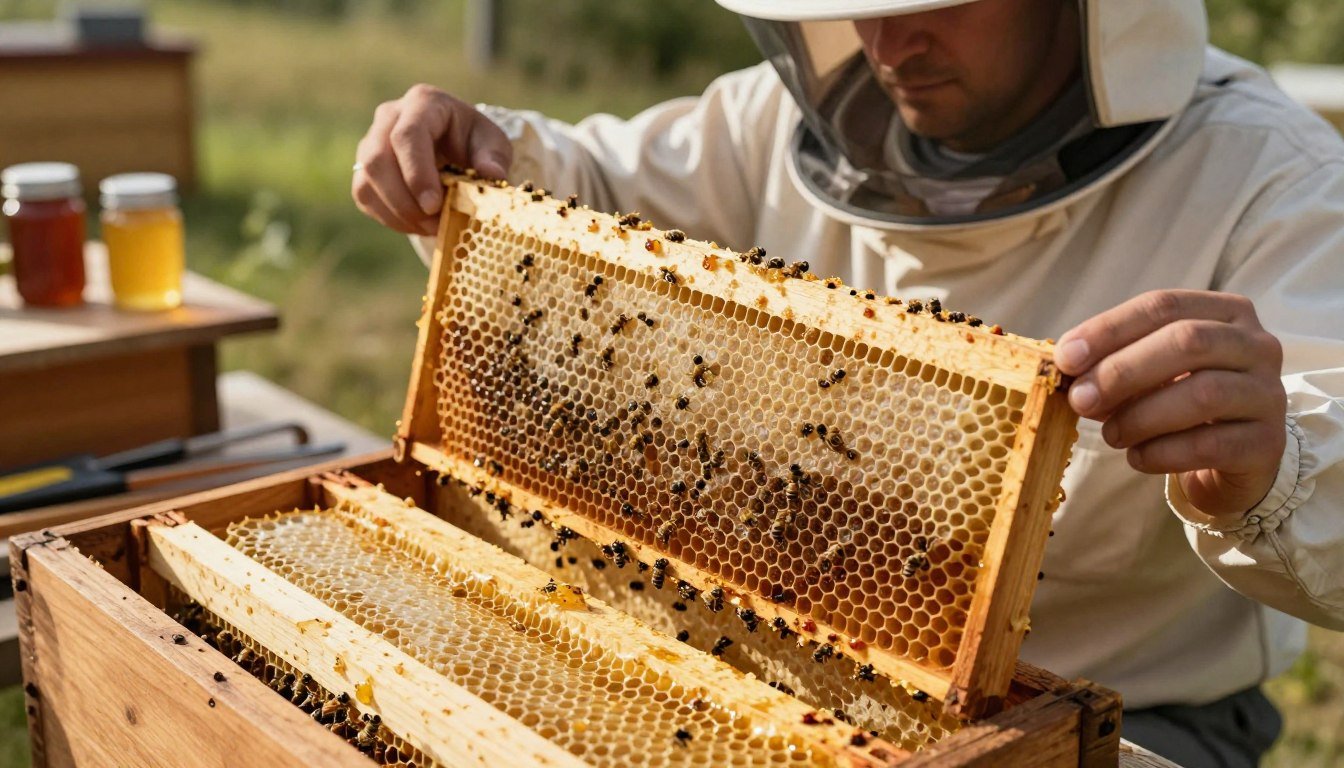
Handling old frames raises real risks for beekeepers after a sudden hive loss. Field reports from Peter48 and Dawn_SD point to two key issues: dark brood comb and chemical buildup in wax.
Eva’s experience with a mass die-off that left the hive foul smelling shows why inspection matters before restoring equipment. Granulated honey and pollen that remain on wood or plastic foundation may spur swarming or hide pests.
Practical options include salvaging deep frames that pass health checks, switching to new foundation, or using plastic foundation to scrape granules as Doug1 suggests. Treatments such as Oxalic Acid Vapor help manage Varroa without locking chemicals into wax.
For step-by-step community advice and checks to decide whether to keep or discard old frames, consult this forum thread on using old frames after hive losses: using old frames after hive losses.
Key Takeaways
- Inspect brood box and comb closely after any mass die-off to spot contamination or pests.
- Cycle brood frames yearly when they darken; replace all old frames every 3–5 years if chemicals build up.
- Remove granulated honey and pollen or switch to plastic foundation to reduce swarming risk.
- Use targeted treatments like Oxalic Acid Vapor for Varroa before reintroducing salvaged equipment.
- Keep clean frames and new foundation on hand to protect hive health through winter and the active season.
Understanding the Risks of Reusing Frames
Old frames may harbor two serious hazards: infectious agents and locked-in chemicals. Inspecting comb and wood before returning equipment to service helps protect healthy hives.
Disease transmission
American Foulbrood spores resist simple cleaning and require immediate incineration of affected equipment, a point stressed by Dawn_SD.
Mold, mite frass, or other signs of decay suggest pathogen spread. Eva discarded moldy brood comb to avoid risk to nearby hives.
Chemical contamination
Old wax accumulates treatments and pesticides over years. Dawn_SD warns that residues in honey frames may harm bees and affect queen health.
Peter48 recommends scorching woodenware with a propane torch to kill wax moths, SHB, and mite eggs when disposal is not chosen.
- Look for mite frass and unusual odors that signal PMS or collapse.
- Consider replacing wax foundation if residues appear significant.
Can You Reuse Frames From a Dead Colony Safely
Answering “can you reuse frames from a dead colony” starts with diagnosis. If the cause of loss is unknown, take a conservative route. Eva chose to discard comb for peace of mind after her die-out.
Expert guidance favors rendering wax and scorching woodenware when tests are absent. Peter48 recommends this to avoid passing pathogens or chemical residues into healthy hives.
Doug1 notes hobbyist beekeepers may recycle brood comb only when they are absolutely sure of disease-free status. The Bee Informed Partnership offers regional data to help assess AFB risk and support safe decisions.
| Option | Risk | When to Use |
|---|---|---|
| Render wax | Low—removes residues | Unknown cause or suspected contamination |
| Scorch wood | Moderate—kills pests, not spores | Non-AFB losses when reuse desired |
| Keep comb | High if undiagnosed | Only when lab tests confirm clean |
- When uncertain, render wax and clean equipment.
- Never return comb when AFB is suspected.
- For community guidance, see using old frames after hive losses.
Identifying the Cause of Colony Loss
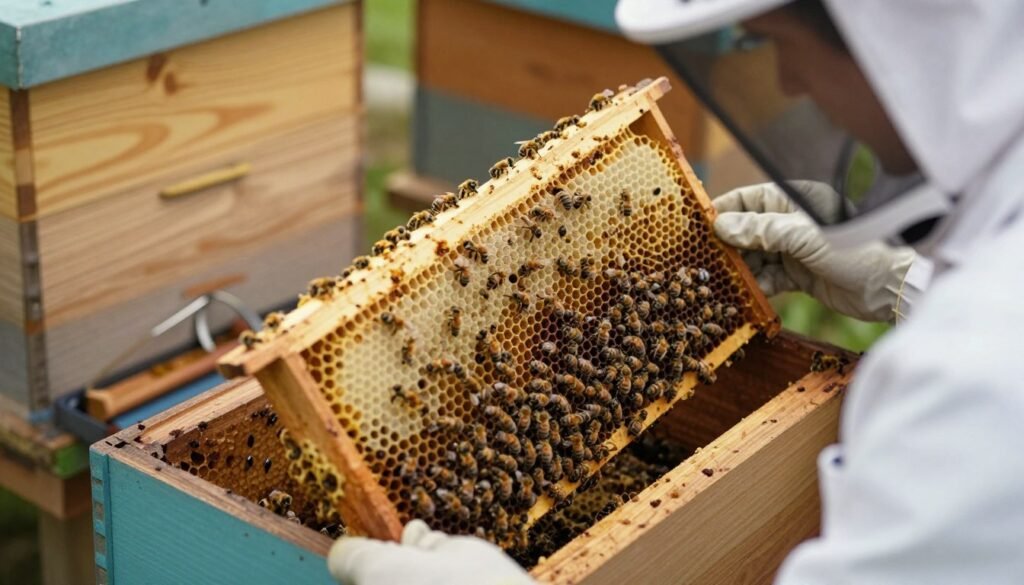
Small signs inside the brood box often reveal whether mites, robbing, or toxins ended the hive.
Recognizing Varroa crashes
Doug1 describes a Varroa crash as workers abandoning the hive while capped brood and stores remain. That pattern is a clear red flag for parasitic mite pressure.
Eva reported bees found head-first in cells. That posture may differ from other failures and helps narrow diagnosis.
Dawn_SD highlights torn wax cappings in an otherwise empty hive as strong evidence robbers cleaned stores after the loss.
“Parasitic Mite Syndrome often mimics other disorders,” — Bee Informed Partnership.
Peter48 urges beekeepers to consider insecticide poisoning when loss is sudden and nearby hives stay healthy.
| Sign | Likely cause | Immediate action |
|---|---|---|
| Abandoned capped brood | Varroa / PMS | Test mite levels; isolate equipment |
| Torn wax cappings | Robbing | Inspect adjacent hives; secure stores |
| Sudden single-hive die-off | Insecticide | Note nearby sprays; report if needed |
For guidance on repairing boxes and preparing equipment after diagnosis, see repair damaged hive boxes.
Signs of Disease to Watch For
Early signs of sickness in the hive often show up on comb and woodenware long before an obvious collapse. Check brood pattern, odors, and stored honey for clues. Small changes over time point to larger problems.
American Foulbrood (AFB) demands strict action. Dawn_SD emphasizes that AFB may require destruction of equipment to stop spread.
Look for moldy comb or soft, discolored wood. Eva removed moldy frames after her loss, which reduced risk to nearby hives.
Doug1 notes that AFB sometimes resembles Varroa-related collapse, but the lack of mite frass in cells helps distinguish the two.
Watch for more wax moths or Small Hive Beetle activity. Peter48 warns that rising beetle numbers often signal a weakened colony and higher disease risk.
- Inspect equipment each season and winter storage.
- Remove clearly moldy or foul-smelling foundation and wood.
- Test or consult local beekeepers and the Bee Informed Partnership if AFB is suspected.
Assessing the Condition of Old Wax
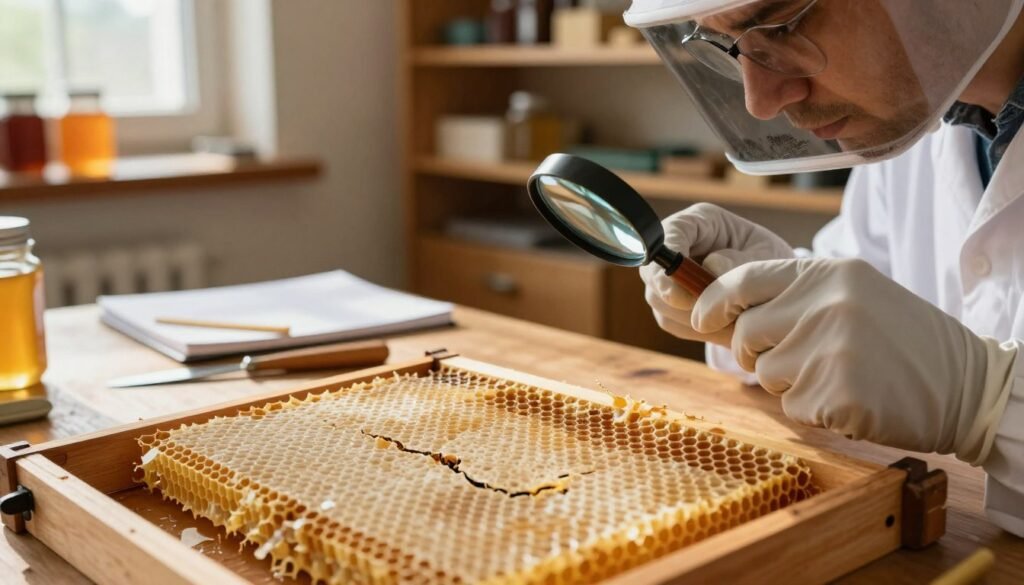
Dark, brittle comb often signals it’s time for replacement or rendering. Inspect color, smell, and texture before deciding what to keep. Peter48 warns that brood frames tend to darken after one year and should be cycled out.
Look for trapped pollen, heavy propolis build-up, and signs of wax moths or moths activity. Dawn_SD notes that wax accumulates pesticides over several years, so many beekeepers replace wax every three to five years.
When wooden equipment holds granulated honey, Doug1 recommends using plastic foundation so the beekeeper can scrape residue and extend frame life for new brood rearing.
Eva rendered wax from frames that were at least three years old. Rendering melts old comb and separates wax from debris, letting beekeepers salvage material while discarding contaminated wood or equipment.
For practical guidance on handling old bee frames, see the old bee frames FAQ.
Chemical Accumulation in Brood Comb
Old comb often becomes a chemical sink. Dawn_SD explains that wax absorbs pesticides and many treatment residues over years. That buildup may affect brood development and queen longevity.
Field reports note different treatments leave distinct residues. Peter48 points out Oxalic Acid Vapor leaves minimal trace, while other acaricides persist in wax and wood.
Doug1 recommends plastic foundation where feasible. Plastic lets the beekeeper scrape old comb and reduce total contamination in the brood box before winter or spring use.
Practical checks include testing suspicious equipment or rendering very old wax. Eva kept frames of unknown provenance in quarantine until research results were clear.
- Track years of use for each frame and rotate regularly.
- Replace dark comb or heavy propolis build-up after one to three years.
- Consider plastic foundation to ease cleaning and lower long-term residue.
“Chemical residues in wax influence colony health and longevity.”
When to Discard Frames Entirely
Deciding when to discard frames hinges on visible wear, contamination, and service history. Inspect wood, wax, and foundation for holes, mold, or heavy propolis that trap debris.
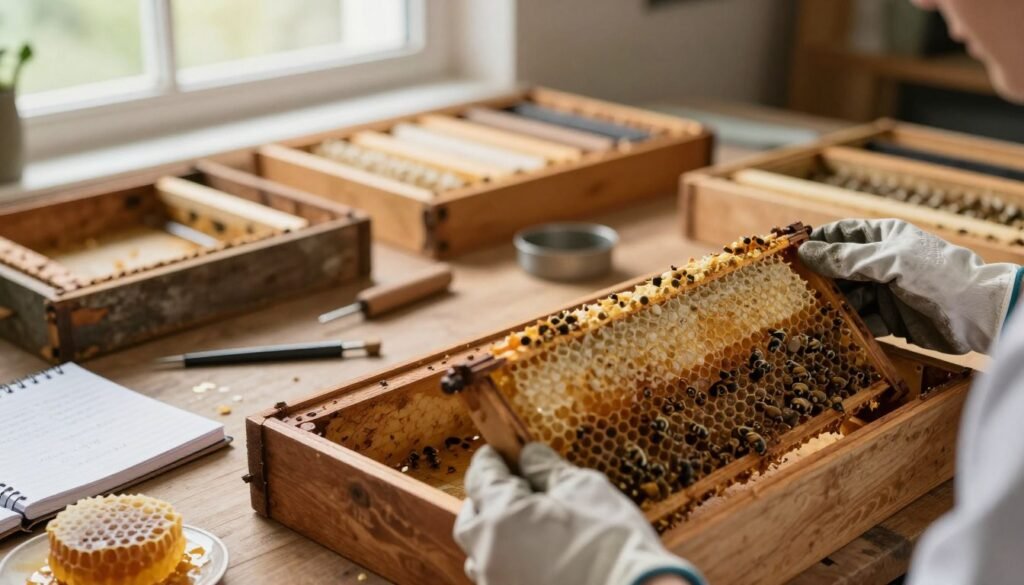
Dawn_SD recommends replacing any frame older than five years or showing extensive holes. Peter48 urges removal of gear that is “really daggy,” full of drone-sized cells, or clearly aged.
Eva removed moldy frames after her die-out to protect neighboring hives. Doug1 warns that comb clogged with granulated honey or pollen risks swarming and should be scraped or discarded.
- Structural failure: cracked wood or loose foundation = discard.
- Contamination: visible mold, foul odors, or heavy residue = remove.
- Service life: if use exceeds five years, replace wax and frame parts.
| Issue | Action | Why |
|---|---|---|
| Holes / broken wood | Discard | Harbors pests, weak support |
| Granulated stores | Scrape or discard | Stops brood expansion, reduces swarming |
| Mold or foul smell | Discard | Infection risk to other hives |
Practical rule: favor safety over thrift. A proactive beekeeper replaces suspect wood or wax to protect queen health and hive productivity over time.
Cleaning Woodenware After a Die-out
A clear plan for cleaning woodenware reduces pathogen risk and speeds the return to active beekeeping.
Start by scraping loose wax, propolis, and debris from every frame and box. Doug1 stresses that thorough scraping helps reveal hidden damage and pest traces.
If no contagious disease is present, Dawn_SD says well-cleaned woodenware often is safe to return to service. Eva plans a deep spring clean after she renders wax from her old frames.
“Scorching unpainted wood with a propane torch kills wax moth eggs, SHB, and many mites.” — Peter48
Recommended steps:
- Scrape residue and inspect brood box joints for rot.
- Render or remove wax that holds old stores and pollen.
- Scorch unpainted surfaces with a gas blow torch for quick sterilization.
When time allows, store sanitized wood in dry, ventilated space. Consider plastic foundation for problem frames to lessen future wax buildup and speed cleaning.
Methods for Rendering Old Wax
Melting old comb into usable wax reduces waste and recovers material for future apiary projects.
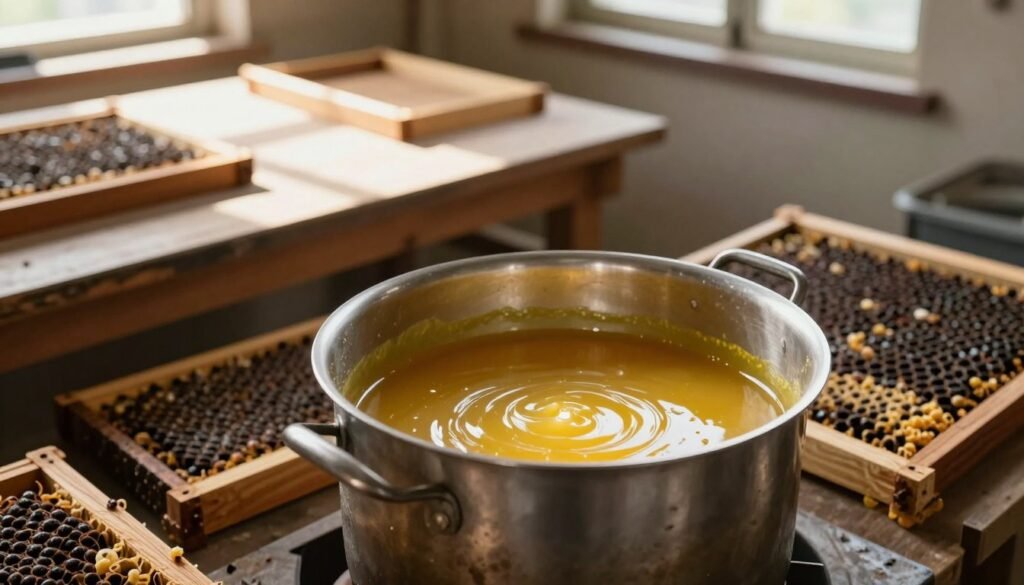
Peter48 recommends rendering as the best route for dirty frames. Heat melts comb, and filtering removes debris and trapped brood bits.
Doug1 favors passive methods such as a solar wax melter or a double boiler. These protect the wax from scorching and yield a cleaner product ready for foundation or craft use.
Dawn_SD notes that high temperatures do more than melt—they help sanitize wax, lowering pathogen risk when hives are being refitted.
Practical steps:
- Scrape loose stores and propolis before heating.
- Use low, steady heat; filter melted wax through fine mesh or cloth.
- Label and store cleaned wax, and discard contaminated woodenware.
| Method | Pros | Cons |
|---|---|---|
| Solar wax melter | Low fuel cost; gentle heat | Weather dependent; slower |
| Double boiler / kettle | Controlled temperature; clean result | Requires supervision; needs equipment |
| Direct heat / torch | Fast melting | Risk of scorching; impurities persist |
Sterilizing Equipment with Heat
Many beekeepers opt for thermal sterilization to protect new bees when preparing used equipment. Heat kills wax moths, small hive beetle, and many parasites without adding chemical residues.
Using a Propane Torch
Peter48 recommends a propane flame to scorch woodenware. Quick passes with intense heat destroy pest eggs and exposed mite stages.
Take care: move the torch evenly. Overheating chars joints and weakens wood. Work outside with clear space and a fire extinguisher on hand.
Oven Sterilization Considerations
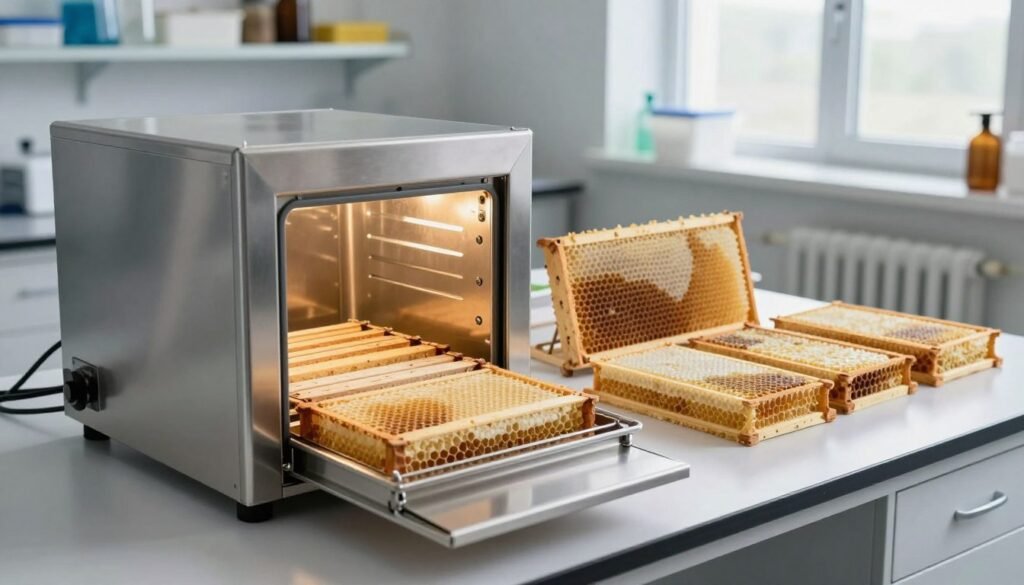
Eva asked about baking frames in a low oven. A vented oven reduces smoke, but high temperatures must reach all surfaces for effective sanitizing.
Dawn_SD warns that uneven heat may leave spots alive and may warp thin boards. Doug1 notes heat treatment is standard, yet proper time and temperature matter for success.
“Apply heat thoroughly and cautiously; it is effective when done correctly.” — Field reports
| Method | Pros | Cons |
|---|---|---|
| Propane torch | Fast; kills eggs and pests | Risk of charring; needs skill |
| Low oven bake | Even heat if vented; indoor option | Smoke; needs high temp and monitoring |
| Solar / melter heat | Gentle on wax; safe for long time | Slower; weather dependent |
- Tip: test one frame first and monitor results.
- Safety: wear gloves and eye protection when handling hot wood or melted wax.
Managing Pollen and Honey Residue
Treat pollen-packed comb or sticky honey on foundation as time-sensitive material. Leftover stores attract robbers and spread pests if left exposed.
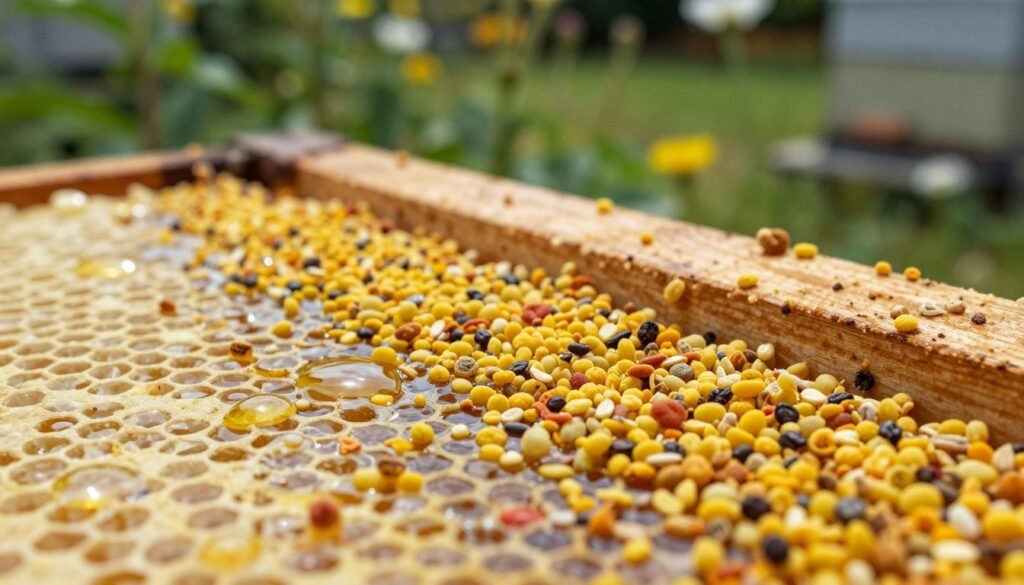
Doug1 scrapes granulated honey and pollen off plastic foundation and reserves the scrapings as emergency feed during dearths. This practical recycling reduces waste while protecting hives.
Peter48 notes that when frames are in good condition and the season is right, local bees often clean minor residues themselves during flow. Still, Dawn_SD warns that unremoved stores invite robbers and disease spread.
“Manage food residues quickly to limit robbing and pathogen transfer.”
- Scrape heavy granulation into sealed containers for later feeding.
- Quarantine suspect frame parts and render wax if contamination is unknown.
- Return useful foundation to service only after cleaning and inspection.
| Residue Type | Action | Reason |
|---|---|---|
| Granulated honey | Scrape and store | Provides emergency feed; lowers robbing risk |
| Pollen packs | Collect or render wax | May harbor pests; useful if stored hygienically |
| Small sticky spots | Leave during strong flow | Local bees will often clean |
For practical steps on encouraging bees to clear old comb, see encourage bees to clean old comb.
Rotating Frames in Healthy Hives
Rotating brood frames into upper boxes is a practical way to refresh the nest and boost honey storage.
Peter48 recommends shifting older brood into the supers so brood hatches out, leaving comb ready for honey. This staged move lets bees finish brood cycles while freeing cells for stores.
Dawn_SD supports that approach. Regular rotation keeps the brood area tidy and encourages the queen to lay in clean cells. That improves brood quality over the season.
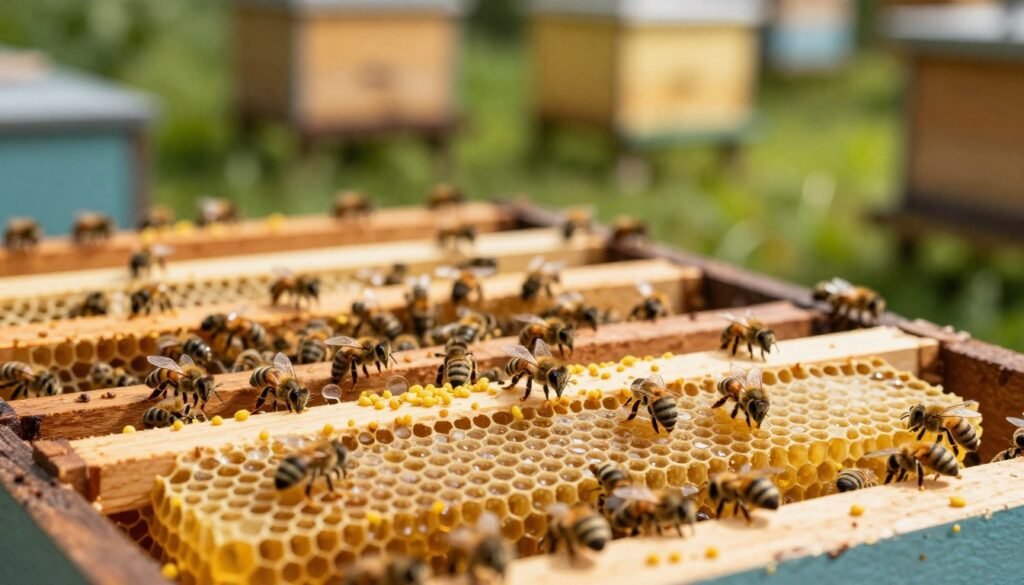
Doug1 uses a simple schedule: move a frame every two weeks to avoid shocking the hive. This paced rotation preserves brood continuity and prevents congestion in the nest.
RicB adopted the method in his Flow hive after guidance from Peter48. He reports fewer bottlenecks and more consistent honey deposition when rotation follows a clear rhythm.
- Stage moves: shift frames in small batches about two weeks apart to reduce disruption.
- Brood handling: allow brood to hatch before using the comb for storage.
- Foundation strategy: integrate new foundation selectively to refresh wax while keeping productive frame stock.
Practical note: if frames hold heavy wax or old comb, consider rendering wax or replacing foundation rather than forcing rapid reuse. For community tips on rotating brood and managing used comb, see reusing brood frames and advice on encouraging new comb build at why bees won’t draw comb.
Preventing Future Colony Losses
Regular Varroa monitoring and prompt treatment reduces sudden hive failure risk. Dawn_SD stresses checks in spring and fall, and treating when thresholds rise.
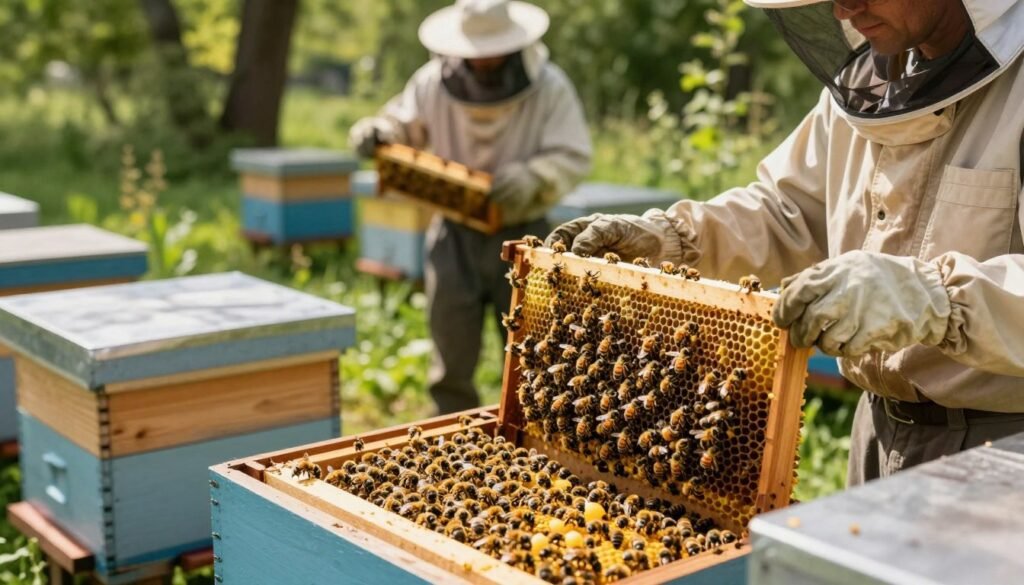
Keep hives strong with steady feed and good spring nutrition. Peter48 recommends winter stores that prevent late-winter starvation and steady protein during brood buildup.
Work with local experts. Eva consults her agricultural extension to diagnose loss causes and adapt management plans.
Breed for hygienic traits where feasible. Doug1 notes selective stock lowers long-term disease pressure and limits AFB spread.
- Maintain regular mite counts and record treatments.
- Rotate old comb and consider new foundation when wax shows heavy buildup.
- Use good feeding practices to avoid nutritional stress.
| Prevention Step | Action | Benefit |
|---|---|---|
| Varroa monitoring | Scheduled checks and timely treatment | Lower collapse risk |
| Nutrition | Manage winter stores; supplemental feed as needed | Stronger brood rearing |
| Genetics & resources | Select hygienic stock; use extension and data | Reduced disease incidence |
“Use surveys and regional data to guide local decisions.”
For guidance on handling old frames after losses, see how to handle old frames after.
Best Practices for Hive Hygiene
Routine hive checks and prompt removal of worn frames protect brood health and limit pest entry. Follow a simple schedule of inspections each month during the active season.
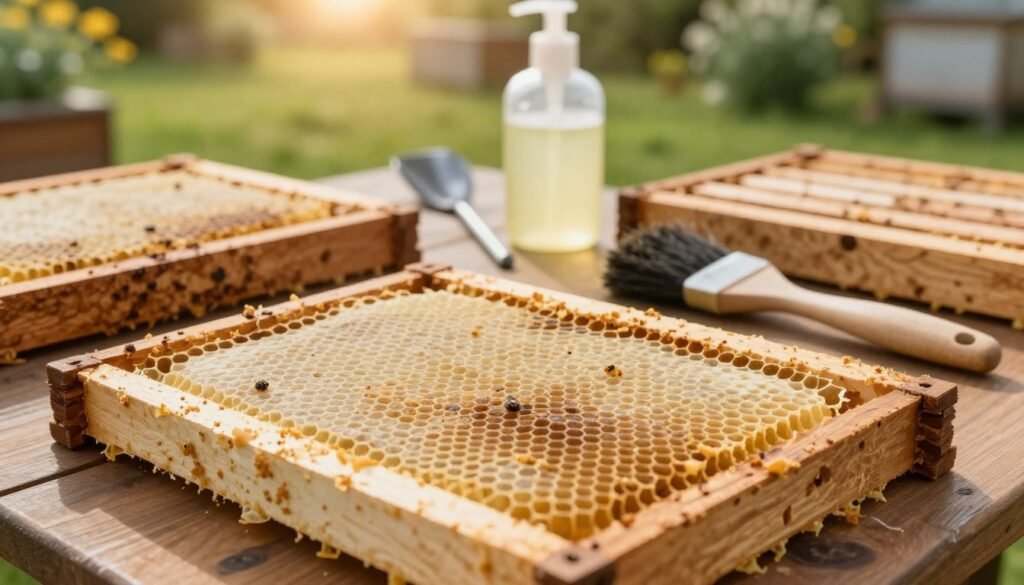
Peter48 stresses removing old, damaged frames quickly to avoid hiding pest eggs and frass. Doug1 adds that using clean equipment and steady maintenance supports strong brood rearing and steady growth.
Dawn_SD recommends keeping the yard tidy. Clear debris and spilled stores to reduce Small Hive Beetle harborage and discourage robbing.
Eva learned to discard moldy or foul-smelling frame parts after her die-out, which protected nearby colony health. The Bee Informed Partnership offers practical hygiene guidelines worth following for every beekeeper.
“Good sanitation and timely replacement of worn parts are among the most effective defenses against pests and disease.”
- Inspect boxes and frame junctions monthly.
- Remove broken foundation and heavily soiled frame pieces.
- Store cleaned wood in dry, ventilated space until reuse frames are needed.
For community troubleshooting after losses, see the hive wiped-out help thread for field-tested tips.
Expert Tips for Sustainable Beekeeping
Efficiency in the yard starts with thoughtful rotation and careful handling of old wax and foundation. Small routines today prevent large losses tomorrow.
Peter48 recommends steady rotation of brood frames and regular rendering of old wax to cut waste and keep brood areas productive.
Dawn_SD favors natural treatments like Oxalic Acid Vapor and selecting hygienic bees to boost long-term resilience. These choices reduce chemical load in comb and preserve honey quality.
Doug1 highlights using plastic foundation to scrape and reclaim useful comb material. This tactic speeds cleaning and protects frame integrity while lowering discard rates.
- Rotate brood into storage boxes gently to refresh cells without stressing the queen or brood.
- Render very old wax and replace with new foundation when contamination is suspected.
- Track treatments and follow Bee Informed Partnership data to guide timing and reduce honey residue.
“Sustainable practices save time and protect hive health.”
For tips on lowering plastic use while keeping efficient foundation options, see reduce plastic use in apiaries.
Conclusion
, A careful assessment of causes, condition, and past treatments guides whether gear returns to service.
Prioritize hive health by discarding any parts that show clear signs of disease or heavy contamination. When provenance is unknown, render old wax and scorch woodenware before reuse to lower risk.
Keep an ongoing rotation schedule and inspect brood areas each season. Good hive hygiene and timely Varroa monitoring protect surrounding colonies and improve long‑term productivity.
Key steps: diagnose loss, remove suspect material, sanitize salvageable items, and maintain steady maintenance routines to support sustainable beekeeping.