Best Solar Wax Melter for Backyard Beekeepers

Discover the best solar wax melter for backyard beekeepers with our expert roundup. Compare top models and features to find the perfect fit for your beekeeping needs.

Processing cappings and reclaiming honeycomb is easier with the right tool. The Dancing Bee unit, made in Canada, measures 78 x 56 x 40 cm and is priced at $249.95.

This model offers simple, hands-off melting that suits small apiaries and hobby projects. It heats gently to protect honey and helps clean queen excluders while keeping tasks tidy.

If you encounter a page blocked extension while checking product details or reviews, try disabling extensions to load the full page. That fix often restores access to price and specification info.

For guidance on features and comparisons, see our detailed gear guide and extraction overview at Dancing Bee review and guide and a broader equipment review at wax extraction equipment review.

Key Takeaways

  • Compact, Canadian-made unit measures 78 x 56 x 40 cm and costs $249.95.
  • Designed to melt cappings gently to protect honey quality.
  • Disable browser extensions if a page blocked extension appears.
  • Useful for cleaning queen excluders and small-scale processing.
  • See linked guides for in-depth reviews and buying details.

Understanding the Benefits of Solar Wax Rendering

Letting the sun do the heavy lifting is a gentle, low-cost way to reclaim wax. This method uses daylight to melt cappings and produce clean beeswax with minimal equipment. It reduces energy use and limits handling that can introduce contaminants.

The Science of Solar Melting

Sun-heated chambers raise internal heat and slowly liquefy wax without boiling or adding water. Painting the chamber black boosts absorption and improves melting on cool days.

The process preserves honey quality and works well across seasons. For tips on long-term handling and to learn how professionals enhance efficiency, see the professional melter FAQ.

If a page blocked extension prevents access to a product or price, try disabling extensions or refreshing the page to view current details. For practical uses like making foundation or reviewing hive benefits, check guides on creating wax foundation and beekeeping benefits.

Top Features to Look for in the Best Solar Wax Melter for Backyard Beekeepers

Choosing the right build and filters makes a big difference in wax recovery and long-term use. Look for a unit with a clear plexiglass lid, a shallow melting tray, and a dedicated collection pan. These parts help the sun heat the chamber and guide melted beeswax cleanly into the pan.

Material Durability and Construction

Untreated wood frame and simple leg assembly provide stable support and natural insulation. The design should be sturdy enough to last several seasons and resist warping from heat. A plexiglass lid is essential; it traps sun energy and speeds melting while protecting contents.

Filtration Systems for Purity

A good filter keeps debris out of the final product. Simple solutions—like layered aluminum foil or a mesh over the tray—catch bits of comb before wax reaches the pan. Clean filters mean higher quality beeswax and less time spent skimming.

  • Durable construction extends service life and maintains high quality results.
  • Effective filtration improves purity and reduces post-melt work.
  • If you see a page blocked extension on our product page, try disabling extensions to view full details and price.
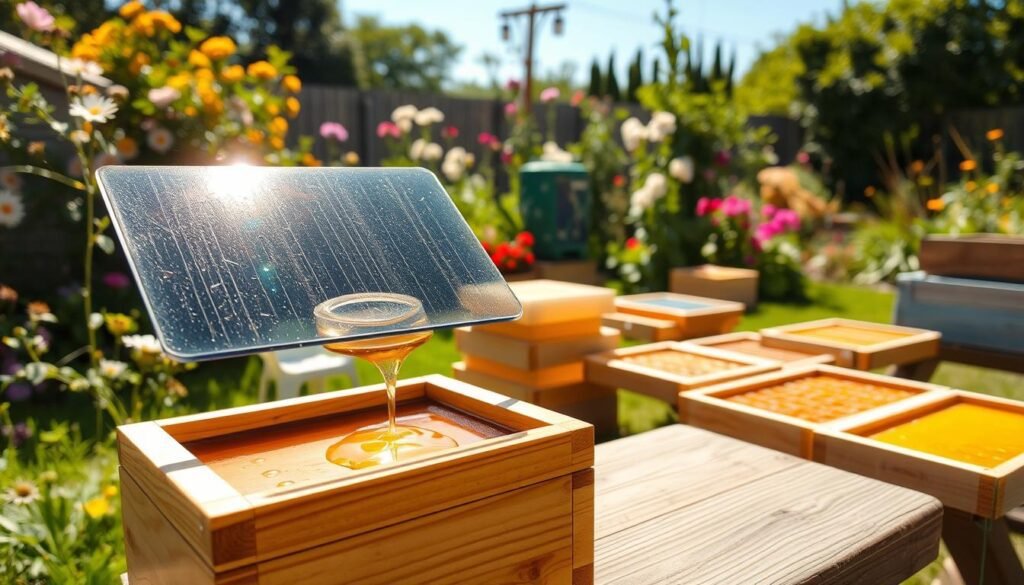
A solar wax melter positioned prominently in the foreground, showcasing its sleek, reflective glass top that captures sunlight. The melter is made of natural wood, harmoniously blending with the beekeeping theme. In the middle ground, various beeswax frames are neatly placed, surrounded by dripping golden wax reflecting sunlight. The background features a lush backyard garden, with blooming flowers, green grass, and a bright blue sky, creating a serene atmosphere. Soft sunlight enhances the scene, casting gentle shadows and highlighting the melter's details. The angle is slightly elevated, providing a clear view of the melter's functionality while emphasizing its practicality for backyard beekeepers. The mood is peaceful and productive, evoking a sense of sustainability and connection with nature.

Compare models and safety tips at product details and pricing and review handling guidance at extraction safety.

Comparing Popular Models and Construction Quality

Construction and pan design often decide how quickly a unit will melt cappings on a cool day. Compare the Dadant Deluxe solar wax melter to other options and you see clear differences in wood framing, lid fit, and tray slope.

A tight lid and a sturdy collection pan speed melting and keep honey cleaner. The Dadant model uses a dedicated pan under the tray to catch melted wax and reduce skimming.

Durable wood construction stands up to years of sun and handling. Thinner boards warp and slow melting on cloudy days. Choose models with solid joints and a well-sealed chamber for consistent melting.

If a page blocked extension or blocked extension blocked message stops you from seeing specs or price, try disabling extensions and reload the page to view full details.

  • Check construction quality and pan placement when you read reviews.
  • Proper care and handling extend service life and help you melt beeswax even on low-sun days.
  • See a detailed buying guide at beeswax melting machine guide and explore related topics at related topics.

Conclusion

In conclusion, a well-built wax melter makes routine comb handling simpler and more efficient. Investing in a quality solar wax melter can save time and recover valuable material each season.

Compare price and read reviews to match a unit to your needs. If a page blocked extension prevents details, try disabling extensions or disabling extensions to view the full page and price info.

Regular use keeps hives cleaner and increases usable wax. For tips on filtering beeswax and simple methods, see this filtering beeswax, guidance to build your own unit, and practical DIY extraction methods.

Thanks for reading our review. Good luck with your bee work and melting projects this season.

FAQ

What is solar wax rendering and how does it work?

Solar wax rendering uses sunlight to gently heat comb scraps and cappings inside an insulated box or pan with a transparent lid. Heat softens the beeswax, which drains through a filter into a collection pan or mold. This low-temperature method preserves natural oils and fragrance while reducing smoke and fuel use compared with stovetop or boiler methods.

How long does it take to melt comb scraps and cappings using a solar unit?

Time depends on sun strength, ambient temperature, and unit design. On a bright, warm day expect several hours to a full day to fully render small batches. Thicker honey residue or colder conditions extend processing time. Positioning the unit to catch direct sun and preheating pans can shorten the cycle.

What materials should I look for to ensure long-term durability?

Choose units with stainless steel pans or heavy-gauge aluminum for the inner collection surfaces and corrosion-resistant frames like powder-coated steel or untreated hardwood for the box. Look for UV-resistant polycarbonate or tempered glass lids and quality seals around joints to keep out water and pests.

How do filtration systems affect wax quality?

Multi-stage filtration yields cleaner wax. Coarse filters catch large debris; fine mesh or cheesecloth removes smaller particles. Some designs include settling pans so heavier impurities sink before final filtration. Cleaner wax demands less further refining and saves time when making blocks or cosmetics.

Can solar rendering handle honey residue without fermenting the wax?

Yes, but proper draining is key. A sloped collection pan and timely removal of melted wax reduce moisture retention that leads to fermentation. Avoid leaving wet frames in the box overnight; strain and store collected wax in a cool, dry place until fully solidified.

Is it safe to leave a solar unit unattended during melting?

Most passive solar units are low-risk because they operate at relatively low temperatures. Still, place the unit on a stable, nonflammable surface away from flammable materials. Check periodically for overheating or pests and never leave children or pets unsupervised near the unit during operation.

How do I maintain and clean my melting pan and filters?

Allow wax to cool and harden, then remove blocks and scrape residues with nonabrasive tools. Warm water and mild detergent clean remaining honey and propolis; avoid high-pressure washing on seals or insulation. Replace fine mesh filters regularly and inspect seal integrity each season.

What capacity should I choose based on typical hive work?

Match capacity to the size of your apiary and how often you process comb. Small-scale hobbyists can use units holding a few pounds per run; larger operations need bigger pans or multiple trays to avoid frequent backlogs. Factor in sun hours—more frequent processing reduces required capacity.

Are there brand-name units or DIY plans I should consider?

Several reputable manufacturers and beekeeping suppliers offer purpose-built solar boxes and stainless collection pans. DIY plans are common and can work well if you use quality metal for collection pans and a durable, transparent lid. Compare construction quality, warranty, and customer reviews before choosing.

How does weather affect results, and when should I schedule rendering?

Warm, sunny days with low wind give the best results. Cloudy or cool conditions slow rendering and increase the risk of trapped moisture. Plan rendering during clear weather windows and avoid rainy seasons to minimize contamination and drying issues.

Can I use a solar unit year-round in cooler climates?

In cooler climates, solar rendering is seasonal unless you add supplemental heat. Insulation and dark interior finishes help capture more heat, but extended cold periods usually require a heated room, oven, or steam rendering for reliable results.

What safety and environmental benefits does passive solar extraction offer?

Passive solar methods reduce fuel use, emissions, and the need for open flames or electric heating. They lower fire risk compared with stovetop rendering and preserve more natural beeswax properties, which is beneficial for cosmetic and candle uses.

How much can I expect to recover from cappings and old comb?

Yield varies with honey content and comb age. Fresh cappings often return a high proportion of pure wax after draining, while older combs contain more impurities and less yield. Proper heating and filtration improve recovery and reduce waste.
Share on Social Media