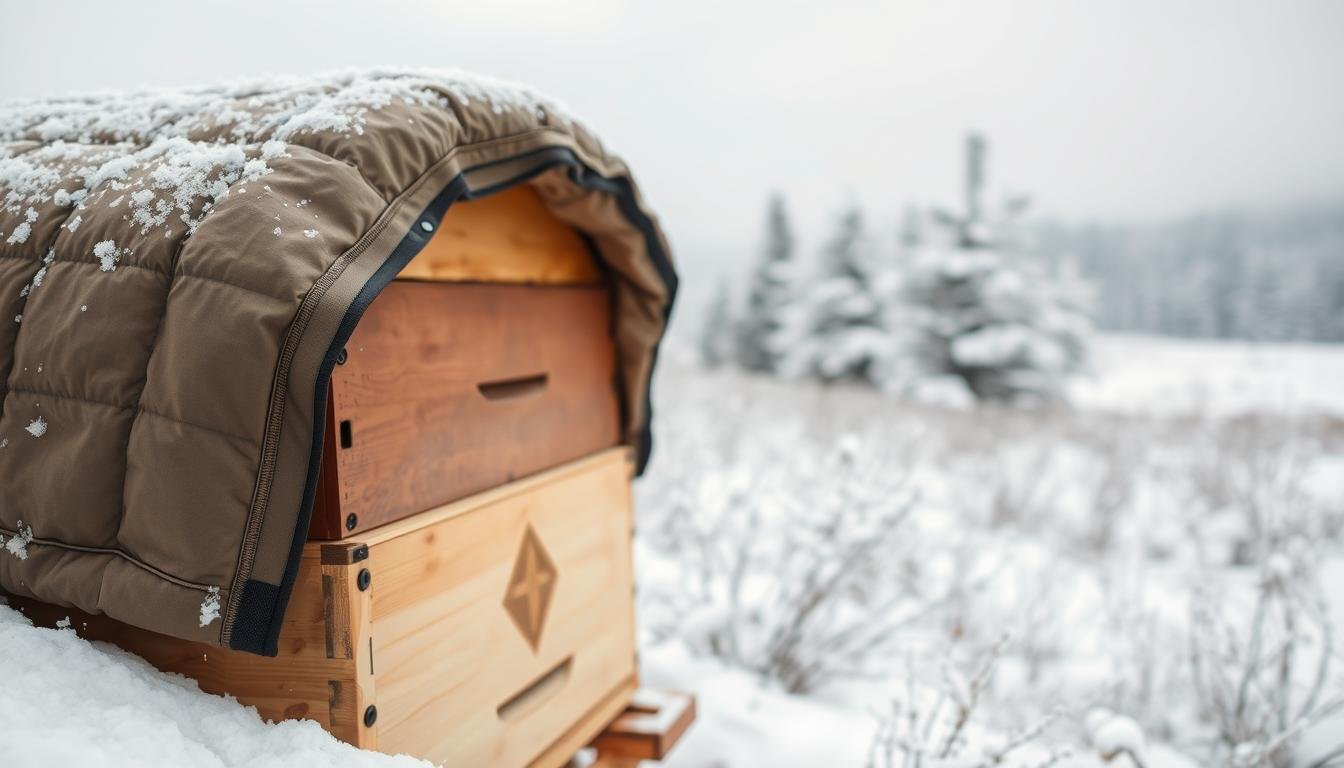
Preparing your hives for winter is a top priority in beekeeping. Proper insulation and a reliable cover help limit heat loss and protect your colony when temperatures drop. The right system also reduces moisture buildup, which harms bees during long cold spells.
The MayBee wrap uses 600D Oxford cloth and pearl cotton to form an R-3 insulation barrier. This design fits common boxes and lets beekeepers manage the entrance to balance airflow and warmth. Quality hive wraps create a steady interior that keeps bees dry and calm all winter.
Each year, choosing a durable cover is an investment in your apiary’s health. Good protection reduces stress on the colony and helps frames retain vital heat. Our guide compares options to help you pick a wrap that fits your needs and your hives.
Key Takeaways
- Insulation is crucial to prevent excessive heat loss in a hive.
- The MayBee system provides R-3 protection with 600D cloth and pearl cotton.
- Proper entrance management preserves warmth while allowing airflow.
- Durable covers fit various boxes and support colony survival through winter.
- Choosing quality hive wraps reduces moisture problems and stress on bees.
Understanding Winter Challenges for Bee Colonies
As temperatures drop, bee colonies adopt tighter clusters that change how they use energy. This shift raises the demand on stored honey and on the small microclimate inside each hive.
Freezing weather forces clusters to move less and burn more fuel to generate heat. That makes monitoring stores a year-round duty. Beekeepers in Minnesota and similar zones report that reducing energy drain is often the difference between survival and loss.
The Impact of Freezing Temperatures
Cold air infiltration causes stress. Without enough insulation, the heat the bees produce escapes the boxes. Varroa mites and other health pressures can worsen the colony’s ability to cope.
Managing Honey Stores
Bees need accessible honey near the cluster. Keep the entrance clear so air moves properly but moisture does not build up. Proper protection and timely checks help keep the colony strong through winter.
“Reducing energy consumption during a long Minnesota winter is vital for the survival of my strongest hives.”
| Challenge | Effect | Action |
|---|---|---|
| Freezing temperatures | Rapid honey use, tighter clustering | Monitor stores; add insulation |
| Cold air infiltration | Stress, potential colony loss | Seal gaps; manage entrance |
| Moisture buildup | Condensation, chilled bees | Provide ventilation; reduce damp areas |
For additional tips on reducing heat loss and improving insulation, see our guide to hive painting tips for better insulation.
Why You Need the Best Hive Wrap for Cold Climates
A reliable thermal barrier can cut the energy your colony needs to survive a long winter.
Hive Hugger systems show a 90% winter survival rate by lowering the energy bees use to stay warm. That lets the colony conserve honey and maintain brood temperatures with less strain.
Every beekeeper knows that wind and moisture are top threats. A proper cover blocks cold air and seals gaps around boxes. This reduces drafts at the entrance and helps keep internal heat steady.
Investing this year in quality insulation reduces honey consumption and raises the odds your hives emerge strong in spring.

- Thermal barrier: prevents rapid heat loss when cold air hits the walls.
- Moisture control: limits condensation that chills bees.
- Secure fit: stops drafts that harm developing brood.
| Benefit | What it protects | Result |
|---|---|---|
| Reduced heat loss | Boxes and cluster | Lower honey use; stronger spring colony |
| Moisture management | Interior surfaces | Less condensation; healthier bees |
| Draft prevention | Entrance and seams | Stable temperatures; protected brood |
“A tight, weatherproof cover makes the most practical difference in long winters.”
For guidance on timing and removal, see our note on why wrap your beehives. If you face damp seasons, read tips on managing hives in wet regions.
Key Material Considerations for Thermal Protection
Durable cloth and smart weatherproofing keep the interior temperature steady when cold air hits the hive. Choosing materials that hold up to wear will protect boxes through the year and reduce replacement costs.
Durable fabrics: Materials such as 600D Oxford cloth resist tears and abrasion on the exterior. That durability helps the wrap last more than one year while shielding the colony from wind and rain.
Durable Fabrics and Weatherproofing
Waterproof windproof shells stop moisture at the surface. Moisture is one of the biggest threats to bees during winter, so a dry interior matters as much as heat retention.
- High-quality insulation sheets, like pearl cotton, provide steady thermal resistance.
- Waterproof windproof exteriors keep rain and driving air out of the boxes.
- Design must allow controlled airflow at the entrance to prevent condensation.
| Feature | Benefit | Practical note |
|---|---|---|
| 600D Oxford exterior | Long-lasting protection | Resists wear; lasts multiple seasons |
| Pearl cotton sheets | Thermal insulation | Keeps heat steady near the cluster |
| Waterproof windproof layer | Moisture control | Prevents damp buildup inside |
Every beekeeper should weigh durability and insulation together when choosing a wrap. For more on insulation choices and winter prep, review our guide to bee hive insulation for the winter and tips on design tweaks between cold and warm.
Evaluating Insulation Effectiveness and R-Values
Measure R-value, not just marketing claims. Multi-layered designs that pair aluminum foil with pearl cotton can reach an R-3 rating. That level of insulation significantly reduces heat loss and keeps an insulated hive more stable overnight.
On sunny days, the foil layer reflects excess heat and helps prevent overheating while still trapping warmth after sunset. Without proper protection, cold air can shave as much as 10°F from the interior by morning.
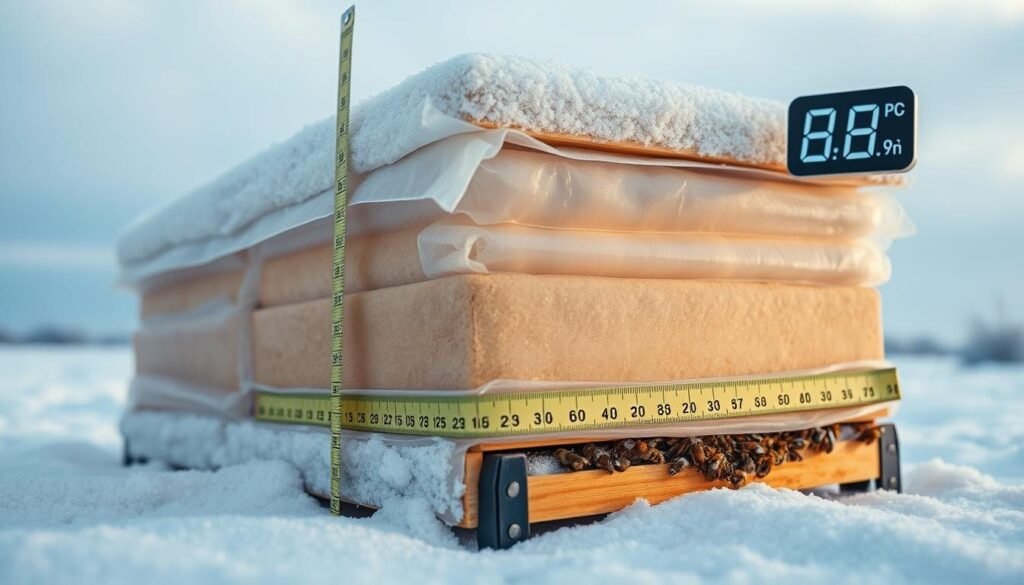
Practical checks matter: test wraps over several nights to see real-world results. Reducing heat loss by up to 40% is possible when you add multi-layered sheets on your boxes.
- An R-3 insulation value is a useful benchmark during winter.
- Evaluate how a cover affects moisture and entrance airflow.
- A well-insulated hive reduces the energy bees expend and protects the colony year-round.
| Metric | Impact | Note |
|---|---|---|
| R-value | Lower heat loss | R-3 is a common target |
| Reflective layer | Stable daytime temps | Helps on sunny days |
| Layered sheets | Moisture control | Combine with ventilation and tested covers |
“Every beekeeper should evaluate the R-value of their chosen cover to ensure it provides adequate protection.”
For detailed options and test methods, see our guide to insulation for beehives.
The Importance of Proper Ventilation and Airflow
Properly placed vents allow excess moisture to escape without letting valuable heat vanish. Balance between insulation and airflow keeps the interior stable and protects the colony during winter.
Preventing Condensation Buildup
Condensation can freeze on frames and cause frostbite in bees. To reduce risk, make sure vent holes are clear and not blocked by the wrap. Excess moisture invites mold and disease and stresses the colony.
Strategic Vent Placement
Use top vents with a screened bottom to create a gentle upward draft. A screened bottom board helps remove damp air while keeping pests out. When you install insulation, be sure leave the entrance slightly open so fresh air can circulate.
- Do this: check vents each visit and clear any blockage.
- Combine: top vents + screened bottom = better air exchange.
- Remember: balance protection with ventilation to preserve heat and reduce moisture.
| Issue | Effect | Action |
|---|---|---|
| Blocked vent holes | Condensation buildup | Unblock vents; adjust insulation |
| Closed entrance | Poor air exchange | Leave small gap at entrance |
| No screened bottom | Stale, damp air | Install screened bottom board |
“Preventing condensation is a year-round goal, and proper vent placement is a hallmark of good beekeeping.”
Comparing Top-Rated Winter Hive Wraps
Ease of installation and reliable ventilation often tip the scales when beekeepers choose their winter gear.
Field reports show the Hive Hugger and MayBee models lead in user satisfaction during harsh winters. Steve Ashley observed the Hive Hugger was easier to use and yielded larger bee populations than the Bee Cozy.
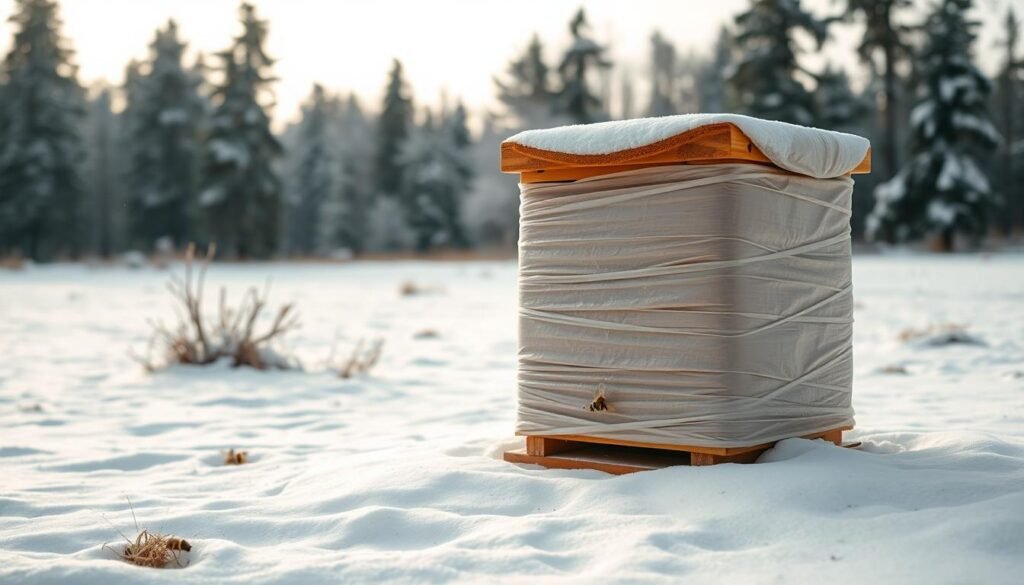
MayBee is light and manageable at 76.8 x 18.1 inches and 3.14 pounds. Adjustable straps fit 8-frame and 10-frame boxes so you can secure the cover tightly around hive boxes. Top-rated options pair pearl cotton and aluminum foil sheets to limit heat loss and cut moisture risks.
- Waterproof windproof exteriors protect the outer surface from snow and freezing rain.
- Vent holes preserve airflow and reduce condensation inside hive.
- Easy install designs save time and help colonies survive winter with more honey stores.
| Model | Weight / Size | Notable feature |
|---|---|---|
| Hive Hugger | Light | Quick install; strong population gains |
| MayBee | 76.8 x 18.1 in; 3.14 lb | Pearl cotton + foil; adjustable straps |
| Bee Cozy | Varies | Traditional fit; durable exterior |
“The Hive Hugger was easier to use and resulted in larger bee populations compared to the Bee Cozy.”
Installation Techniques for Maximum Heat Retention
Properly fastening insulation around boxes turns a simple cover into a reliable thermal envelope for the colony. A careful install reduces drafts and limits moisture, so the cluster uses less honey through the winter.
Securing Wraps with Buckles and Straps
Nylon buckles are recommended because they hold strong in heavy snow and resist freezing. Use straps to pull the material snug around any medium super and the brood boxes.
- Make sure the wrap fits tightly around boxes and any added super to stop cold air seeping in.
- Fasten buckles and straps so the cover stays put in wind and snow; this preserves internal heat.
- Check the entrance is clear; bees need access to fresh air and to fly on mild days.
- Adjust straps to manage airflow — secure, but not completely airtight — to avoid condensation.
Each year, test the fit before deep freeze. A well-installed cover offers reliable protection and helps the colony stay warm until spring.
“A tight, well-fastened thermal envelope is the most practical defense against winter losses.”
Balancing Moisture Control and Warmth
Modern triple-layer designs trap valuable heat while allowing moist air to escape through vents. This balance keeps the cluster warm without letting condensation form on cold walls.

When moisture is trapped, droplets can fall onto bees and chill the colony. A breathable yet insulated cover reflects heat back and wicks away excess humidity.
Every year beekeepers should check vent placement and test how their insulation affects airflow. Clear entrances prevent ice blockages that stop needed exchange of air.
Proper protection combines reflective layers and moisture-wicking materials with screened vents. That mix reduces damp spots in boxes and keeps bees comfortable during long winter stretches.
“Balance warmth with ventilation to protect your colony from both cold and condensation.”
For practical steps on preventing internal dampness, see our guide to reduce moisture inside winter hives.
Sustainability and Reusability of Winter Gear
Long-lasting insulation gives beekeepers reliable protection while shrinking their environmental footprint.
Reusable covers made from 600D Oxford cloth hold up well over many winters. Clean them with mild soap and water, then air-dry before storage. This simple care keeps the fabric and insulation intact.
Each year, inspect straps, seams, and the insulation layer. Replace worn buckles and patch small tears to keep moisture out and preserve internal heat.
- Durable materials reduce waste and save money across multiple seasons.
- Proper cleaning prevents mold and keeps the cover ready to protect your boxes and colony.
- Reusable gear is a cost-effective choice for beekeepers managing several hives.
“Sustainable equipment that lasts means fewer replacements and steadier protection for bees.”
| Feature | Care | Expected Lifespan |
|---|---|---|
| 600D Oxford exterior | Wipe with mild soap and air-dry | 3–6 seasons |
| Pearl cotton insulation | Dry thoroughly; store flat | 2–4 seasons |
| Straps and buckles | Replace if cracked or brittle | Seasonal check, replace as needed |
For buying and care tips, see our sustainable hive covers guide.
Analyzing User Reviews and Field Performance
Real-world reviews show protection that balances dryness and airflow makes the biggest difference in winter survival.

Many beekeeping reports note that preventing heat loss while preserving airflow is key. Users praise designs that keep the inside hive dry and shield frames from damp. Field data and backyard tests agree: dry conditions mean healthier bees in late winter.
Bill Hesbach reported his Hive Hugger was one of his strongest hives after using the vacuum-sealed insulated top. Dawn Moore, a first-year keeper, said her 8-frame hive came through the year stronger than she expected.
- Waterproof windproof exteriors resist tearing and hold up in harsh winters.
- Reflective layers help regulate temps on sunny days while reducing heat loss at night.
- Vent holes and a clear entrance preserve airflow and limit moisture buildup.
“We’ ve seen colonies survive winter with more honey stores when they winter in a protected environment.”
Analyze performance each year to refine gear choices. Let bees winter in a dry, ventilated space and they are more likely to be strong and productive when spring arrives.
Integrating Supplemental Feeding with Hive Wraps
Feeding bricks paired with insulated covers give colonies an added layer of protection during winter. These dense patties sit near the cluster so bees use less energy moving to reach food. The result is lower honey consumption and steadier internal heat.
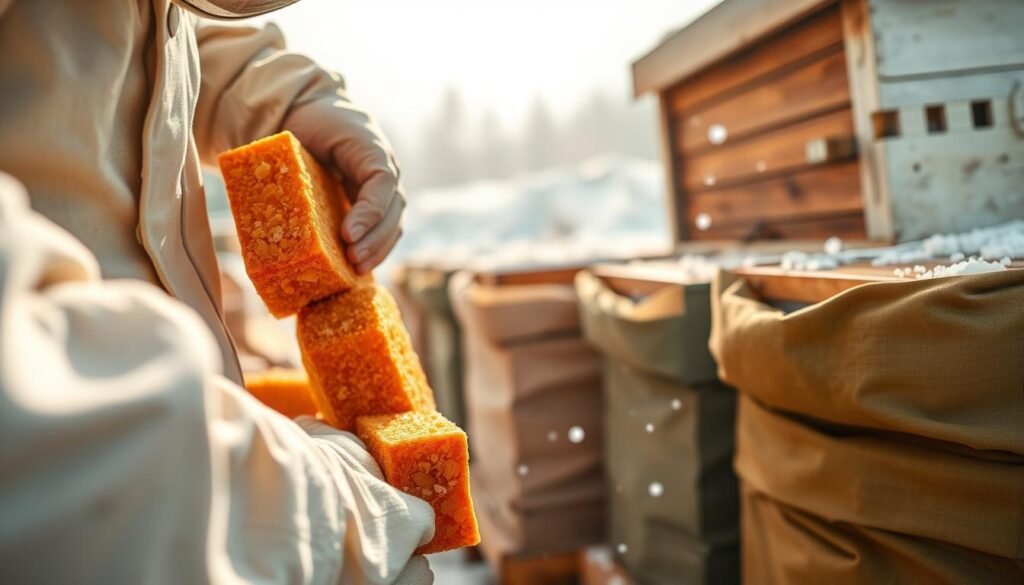
Using Feeding Bricks for Extra Protection
Place feeding bricks above the brood or in a feeding super to keep stores accessible. When you add a super, make sure the wrap is large enough to cover the entire assembly so insulation remains continuous.
- Integrating supplemental feeding with your hive wraps helps bees survive cold weather by supplying extra energy.
- Feeding bricks boost honey stores when natural reserves are low and reduce colony movement.
- Monitor food levels through the season and clear the entrance to avoid moisture and condensation.
Tip: many beekeepers report fewer winter losses when food and insulation work together. For setup guidance, read this note on winter covers and colony survival and our step-by-step on how to winterize beehives.
“A warm, well-stocked hive reduces stress and helps colonies come through the year stronger.”
Common Mistakes to Avoid During Winterization
Over‑sealing the entrance is a frequent error. You must make sure bees can access the air outside the hive. Blocking the entrance blocks needed exchange and causes moisture to build up fast.
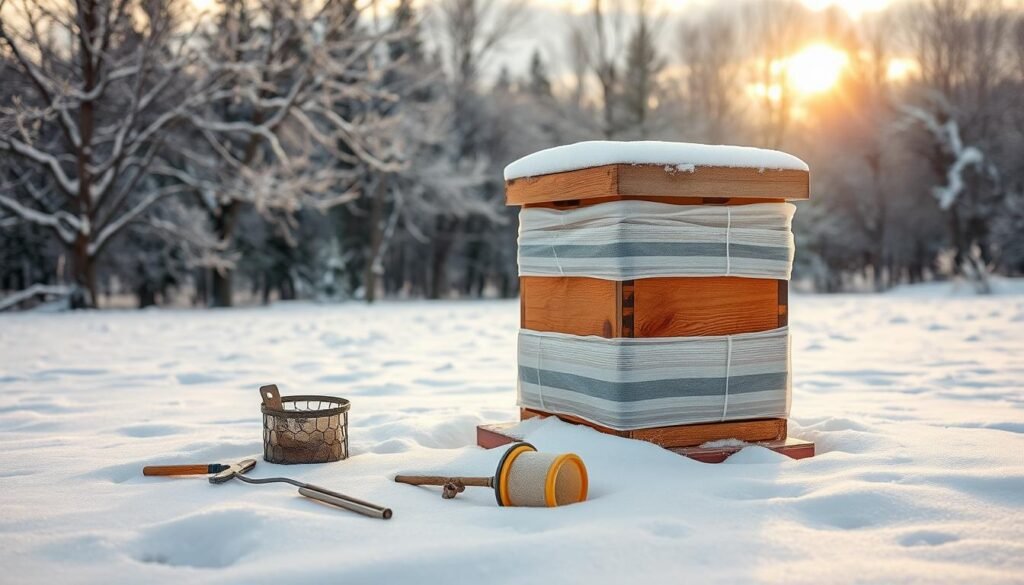
Skipping varroa mites treatment before cold weather risks heavy losses. Treating mites in the fall gives the colony a better chance of surviving the winter.
When you’re working on insulation, be sure leave room for ventilation. A non‑breathable cover or old equipment traps damp air and harms the bees.
- Do not block the entrance; leave a small gap for airflow.
- Check that the wrap is secured tightly around boxes to stop cold air from entering.
- Manage the screened bottom so snow or the wrap does not restrict airflow.
- Replace cracked gear; worn equipment reduces protection this year.
| Issue | Risk | Action |
|---|---|---|
| Blocked entrance | Moisture buildup | Clear opening; monitor vents |
| Untreated varroa mites | Colony collapse | Treat in fall; check counts |
| Poor ventilation | Condensation on frames | Adjust insulation; leave airflow paths |
“Avoiding these mistakes is like good practice for any beekeeper who wants to ensure their colony survives the winter season.”
For gear choices that fit U.S. conditions, see our guide to beekeeping gear for U.S. climates.
Conclusion
Taking simple, consistent steps this year gives your bees the best chance to thrive when spring arrives. Prepare each hive with attention to fit and access so the colony uses less energy and stays active on mild days.
Focus on insulation and airflow. Good insulation cuts heat loss while a clear entrance and vents reduce moisture that can chill frames. Check straps and seams on boxes so the wrap stays snug through winter.
As beekeepers, small, regular checks and a well-fitted cover are practical protection. With the right gear and routine, your hives emerge stronger and ready to build in spring.
FAQ
What does a winter hive cover do for my bee colony?
A good winter cover reduces heat loss, shields boxes from wind and driving rain, and helps manage moisture. It creates a more stable microclimate around the colony so bees use honey stores more efficiently and can maintain cluster temperature. Choose a cover that is waterproof, windproof, and allows some controlled venting to prevent condensation buildup.
How much insulation is enough to help bees survive harsh winters?
Insulation should slow conductive heat loss without trapping excessive moisture. Look for materials with reasonable R-value but also breathable layers or a ventilation plan. Foams or insulated panels work well when paired with an outer, waterproof shell. Avoid over-insulating to the point where moisture and mold become problems.
Won’t wrapping a hive stop airflow and cause condensation?
It can if you seal the hive completely. Maintain screened bottom ventilation or add small upper vents to let humid air escape. Proper vent placement and breathable materials reduce condensation while still retaining heat. Monitor inside hives on sunny days to make sure moisture isn’t accumulating on frames.
Should I reduce the entrance after installing a winter cover?
Yes, narrowing the entrance helps bees defend against robbing and cuts drafts. Leave enough space for ventilation and bee traffic, and consider an entrance reducer that still allows steam to escape. In severe cold, a smaller opening reduces stress on the cluster but don’t close it fully.
How do I balance insulation with Varroa mite management?
Winter covers and insulation don’t affect Varroa directly, but good winterization supports colony health, making treatments more effective. Treat for mites before cold sets in and avoid opening boxes for administration once bees are clustered. Use screened bottom boards or timing of chemical treatments as part of an integrated pest management plan.
Can I use household materials to insulate my boxes?
Yes, many beekeepers repurpose rigid foam boards, Reflectix, or old comforter material inside an outer waterproof layer. Ensure materials are dry, non-toxic, and fastened securely. Avoid materials that hold moisture next to frames or compress the brood chamber.
How should I place vents to prevent heat and moisture loss?
Place a small top vent near the inner cover and keep the screened bottom for crossflow. A short top entrance or an upper notch on the inner cover lets humid air escape without creating a direct cold draft over the cluster. Test placements in your local climate and check hives on warmer winter days.
When is the best time to add feeding bricks or supplemental sugar?
Add fondant or feeding bricks before deep winter cold so the cluster has immediate access. Install feeders during late fall or early winter when bees still fly. Combining supplemental feeding with an insulated cover helps bees conserve energy while they access food stores.
How do I secure covers against strong winds and snow?
Use straps, buckles, or ratchet tie-downs that go around the boxes and anchor to hive stands. Consider adding wooden battens or bricks on top if legal and safe in your apiary. The goal is to keep the outer shell tight without compressing insulation or deforming boxes.
Are reusable thermal jackets worth the cost compared to DIY options?
Commercial jackets often offer durable, weatherproof exteriors and consistent insulation values, saving time and labor. DIY solutions can be effective and economical, but durability and fit vary. For large apiaries, the time savings and standardized performance of commercial gear can justify the expense.
How do I monitor moisture and temperature inside hives during winter?
Use a small digital thermometer/hygrometer placed above the top bars or near the brood area. Check readings on mild days to avoid disturbing the cluster. Visual checks on sunny winter days show whether condensation forms under the inner cover; adjust ventilation accordingly.
Will insulation change how much honey a colony needs to survive winter?
Yes. Effective thermal protection reduces energy expenditure, so bees typically consume less honey. However, always provision based on local norms and colony size. Don’t rely solely on insulation; verify stores before deep freezes and supplement if needed.