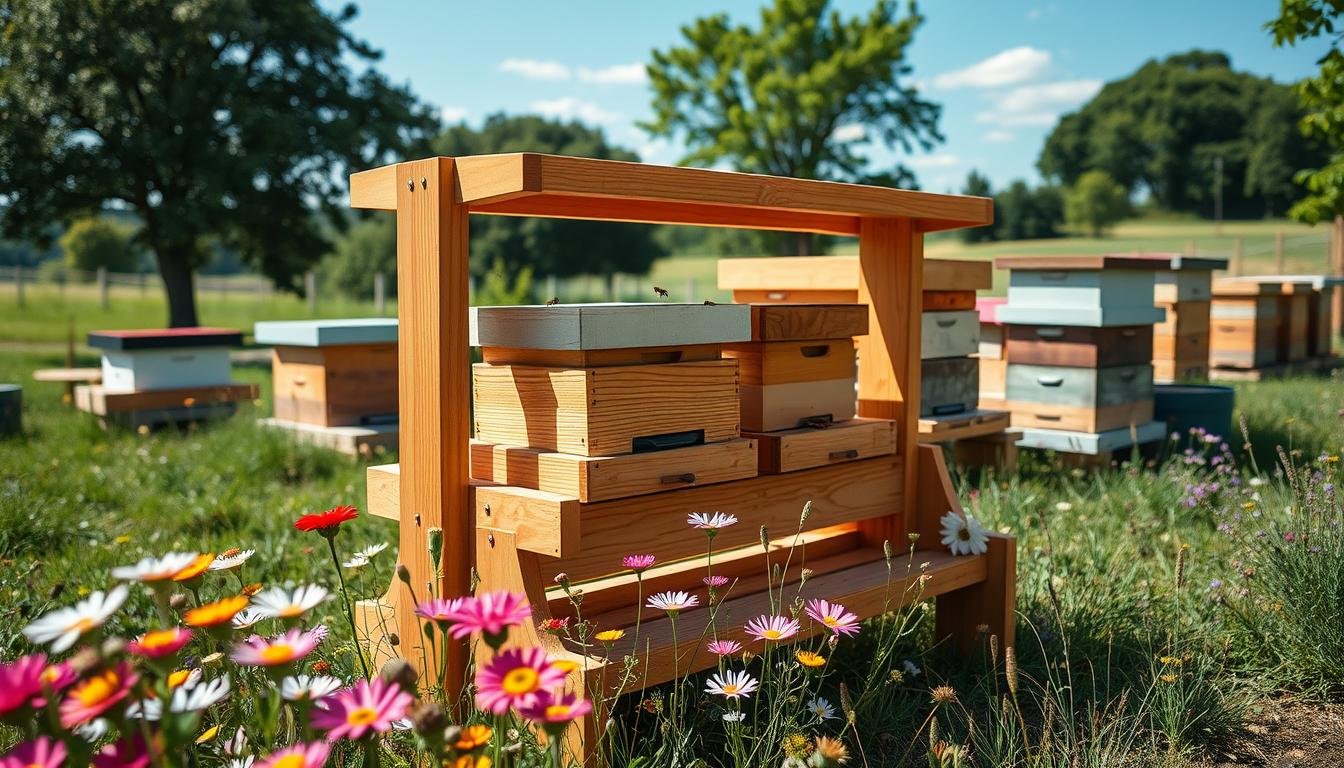
Choosing the right stand is a small step that pays big dividends for your colonies. A sturdy platform keeps boxes dry, eases inspections, and reduces back strain when moving frames.
Practical options range from pallets and wood frames to galvanized metal legs or plastic feet. Thorne’s lists a two‑unit stand at £92.50, while Abelo’s adjustable metal legs go for £125. Scaffold jacks, rated to 4 tonnes, cost about £12 each and work well for leveling under heavy loads.
Foxhound Bee Company warns against placing hives directly on the ground to avoid rot. A raised base improves airflow and reduces moisture, helping bees stay healthy through the season.
Later sections will compare materials, load capacity (remember full boxes can top 100+ kg), and practical builds, including a 2016 concept from Calum Grigor. For noise reduction and adjustable-leg solutions, see this resource page.
Key Takeaways
- Elevating boxes keeps brood dry and eases daily inspections.
- Materials matter: wood is modifiable, metal is durable, plastic resists rot.
- Account for full-season loads—plan for 100+ kg per unit at peak.
- Adjustable legs or scaffold jacks help level on uneven ground.
- Good stands reduce strain during frame handling and speed workflows.
Why Your Apiary Needs a Dedicated Hive Stand
A raised platform can stop moisture and critters from turning your equipment into a maintenance headache. Elevating boxes protects wooden components from prolonged dampness and slows rot. It also limits access by ants, skunks, and other pests that target ground-level colonies.
Protecting Against Moisture and Pests
Keep hives off wet ground to improve airflow and extend the life of wood boxes. Use blocks, pallets, or purpose-built stands and ensure the top stays level so frames hang straight. A clear entrance, free of vegetation, helps bees move in and out and cuts cleanup time at the end of the season.
Ergonomic Benefits for Beekeepers
Proper height reduces bending during inspections and lowers strain on backs and knees. Adjustable options let beekeepers set a comfortable working level, speeding management tasks. For guidance on setting up multiple units and spacing, see apiary setup.
- Reduce moisture and rot risk.
- Block pest access to colonies.
- Improve ergonomics for faster inspections.
Evaluating the Best Hive Stand Design for Your Colonies
A reliable support must balance load capacity, access, and weather resistance. Confirm a hive stand will hold full-season loads—single boxes can exceed 100 kg when heavy with honey. Choose materials that resist rot and settling so colonies stay off the ground.
Durability matters: professional metal legs often outlast simple wood blocks, especially in multi-unit apiaries. Metal resists moisture and needs less replacement over time.
Ease of access to frames speeds inspections and reduces strain. Set the height to fit your routine so lifting and frame removal remain safe.
Practical management starts with a solid foundation. If you want quick product options, see the bee hive stands page or guidance on choosing boxes at how to choose a beehive.
“A stable base reduces repairs, speeds checks, and keeps bees healthier.”
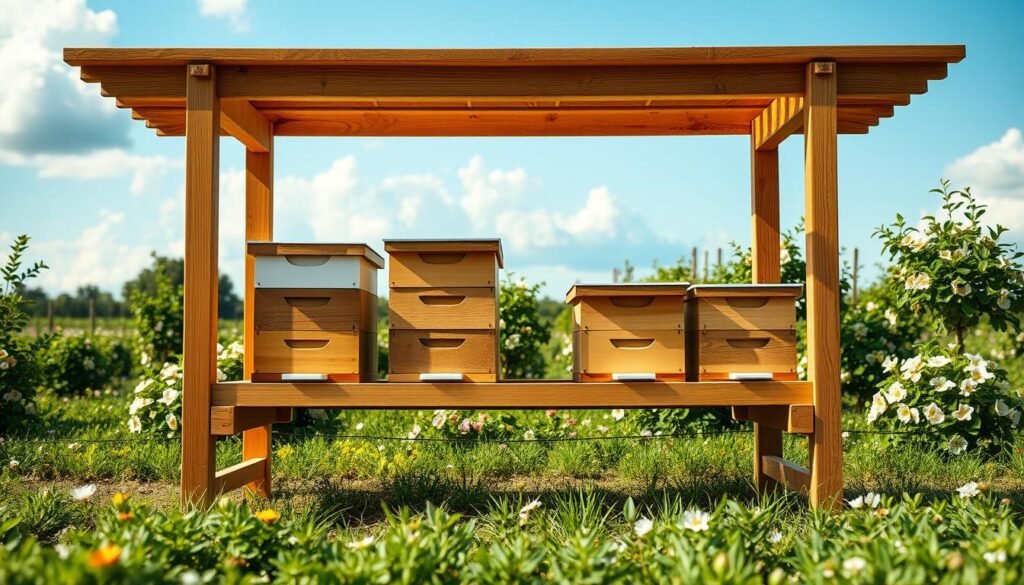
- Plan for weight and weather when selecting supports.
- Prefer corrosion-resistant legs for longevity.
- Adjust height to protect your back and speed inspections.
Comparing Common Materials for Hive Support
Choose a support that copes with full-season loads and weather without sinking or twisting. A clear comparison helps you pick a solution that protects boxes, frames, and colonies while saving time on repairs.
Cinder Blocks and Wood
Cinder blocks are cheap and quick to use. They lift hives off the ground and resist rot. But they must sit on firm soil or a gravel pad to avoid leaning over time.
Wood supports are familiar to many beekeepers. Use pressure-treated timber to reduce moisture damage and extend life.
Metal and Scaffold Jacks
Metal legs give long-term durability and adjustability. Abelo sells adjustable metal legs for £125, which work well on uneven ground.
Pre-made metal options also exist; Thorne’s offers a two-hive solution for £92.50 for those who prefer a ready item.
Pallets and Plastic
Pallets are common in commercial setups and lift multiple units at once. They can rot if placed on wet soil, so keep pallets elevated and ventilated.
Plastic stands resist rot but may become brittle after years in sunlight and under heavy colonies. Consider UV-rated materials if you choose plastic.
| Material | Pros | Cons | Typical Cost |
|---|---|---|---|
| Cinder blocks | Low cost, easy to source | Can shift; needs solid base | Low |
| Pressure-treated wood | Customizable, classic look | Needs treatment to avoid moisture | Moderate |
| Metal legs / scaffold jacks | Durable, adjustable | Higher upfront cost | £92–£125 (examples) |
| Pallets / plastic | Good for multi-unit setups; rot-resistant options | Pallets can rot; plastic may get brittle | Varies |
For guidance on choosing the right material and practical installation tips, review vendor specs and plan for full loads when lifting frames.
Essential Features for Stability and Strength
A secure base begins with careful attention to how weight moves across each support point. Strength and levelness matter for long-term stability and safe beekeeping.
Weight Distribution and Leveling
A full hive can exceed 100 kg at peak season. Spread that load across multiple legs or blocks so no single point bears the entire weight.
Scaffold jacks are an affordable way to keep stands level. They are rated to 4 tonnes and cost about £12 each, making them useful under heavy boxes.
Calum Grigor’s 2016 concept uses jacks to stabilise multiple colonies and reduce sway in wind. That approach helps keep frames square and the top perfectly level so bees draw comb correctly.
- Ensure legs sit on firm ground or a gravel pad to avoid sinking.
- Check level before each inspection to protect frames and bees.
- Use a mix of wood, metal, or blocks to match your site and workload.
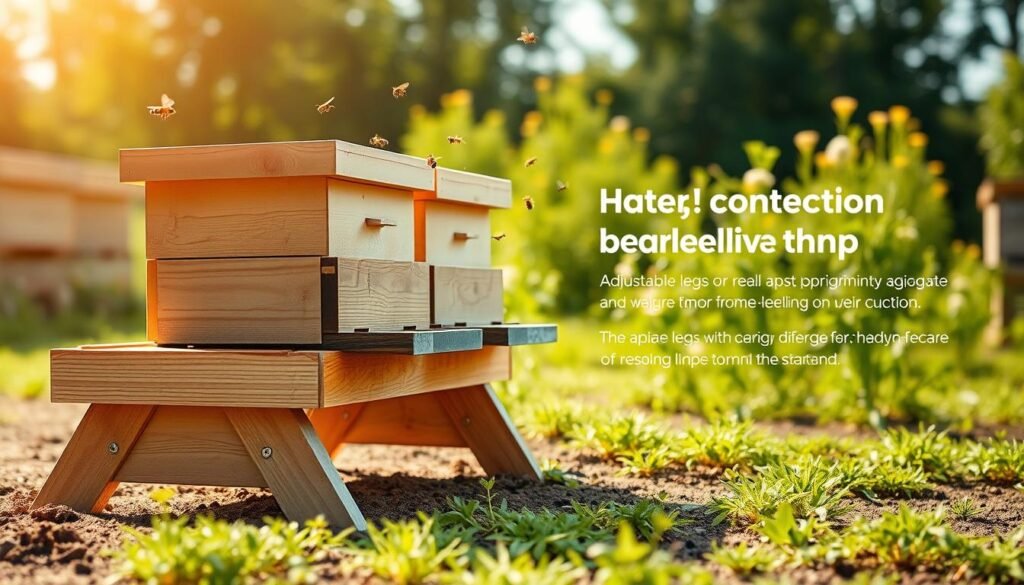
“Proper weight distribution prevents tipping and speeds inspections.”
For a deeper look at practical builds, see the ultimate hive stand, and pair leveling with monitoring like wireless hive scales to track loads over time.
Strategic Placement and Apiary Maintenance
Choose a sheltered spot in your apiary to reduce wind stress and keep moisture from pooling under colonies. Proper placement shortens drying time after rain and protects wood supports from long-term rot.
Check each hive stand every few years for corrosion or rot. Metal legs and treated wood both show wear; catch issues early to avoid sudden instability.
When you use pallets or blocks as an option, confirm they don’t block the entrance. Clear grass and debris from the end of each unit so inspections stay quick and safe.
- Level periodically: after heavy rain or ground movement, re‑check height and leg contact.
- Monitor materials: watch plastic and wood for cracking or rot over years of use.
- Plan airflow: avoid low spots that trap moisture around the ground and frames.
“Routine checks and smart placement make inspections faster and keep colonies healthier.”
For detailed setup guidance, review this apiary setup guide and consider shade versus sun placement advice at shade vs. sun placement.
Final Thoughts on Building Your Hive Foundation
A solid foundation keeps colonies secure through wet seasons and heavy honey flows. Choose a hive stand that lifts boxes off the ground, spreads weight across legs, and resists rot. This protects a wooden hive and the bees inside.
Practical stability matters for hive management. Proper stands make inspections faster, reduce back strain for beekeepers, and cut repair time over years.
For DIY tips and layout ideas on how to build a solid base, see this how to build a solid base page. Invest time now and your hives will reward you with easier care and healthier colonies.