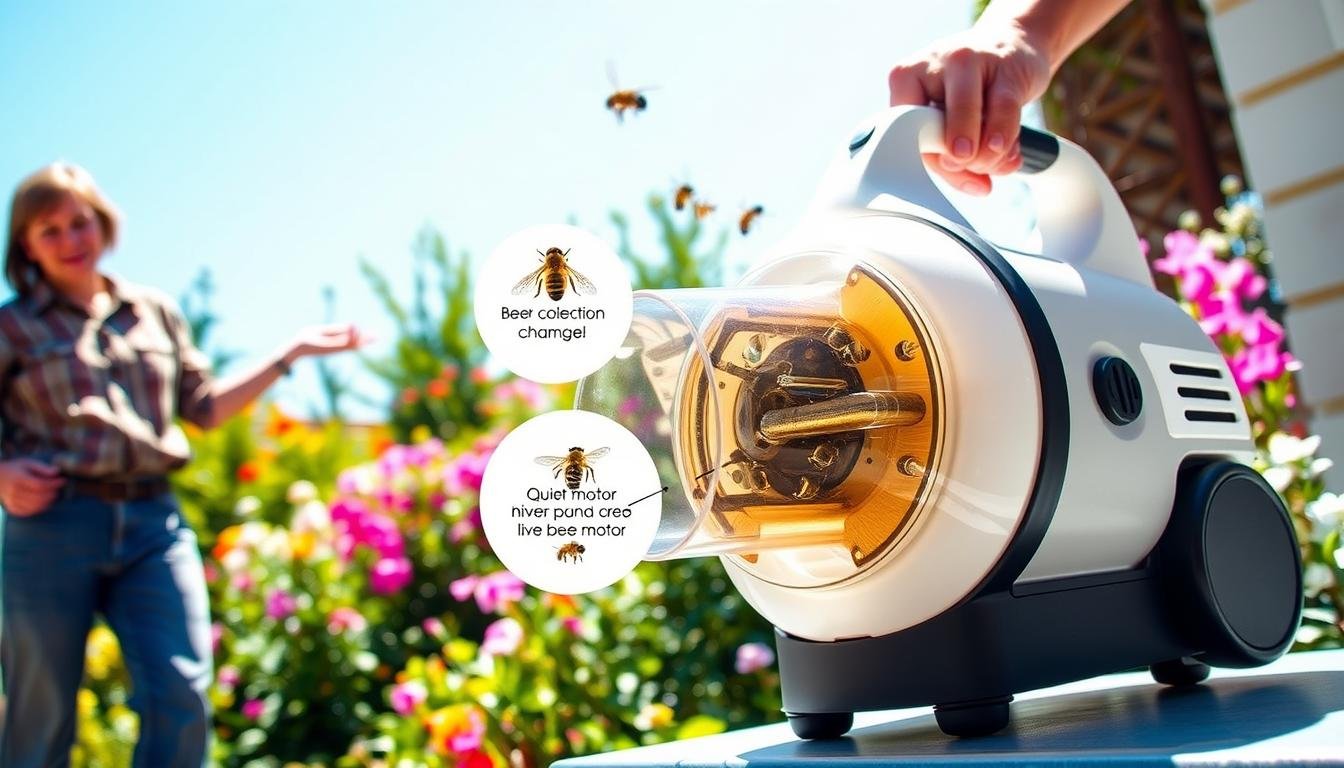
Choosing the right tool changes how you handle colony moves. Professionals need gear that protects insects while speeding work. The Everything Bee Vacuum Gen 2.5 is built for that balance.
Foxhound Bee Company lists the Gen 2.5 at $489.99 USD. Since 2020, rental fleets and beekeepers have trusted it for gentle captures and safe transport during complex relocations.
Quiet operation, backpack design, and a removable hose let crews work with less disruption. The unit’s battery, onboard controls, and a secure bee bucket help keep colonies calm and alive during transfer.
For side-by-side perspective and additional options, see a detailed product page at Foxhound’s Everything Bee Vacuum Gen 2 and comparative gear at BeeVac. Use professional-grade vac tools to improve efficiency and client outcomes.
Key Takeaways
- Professional-grade equipment reduces stress and mortality during colony moves.
- The Everything Bee Vacuum Gen 2.5 is priced at $489.99 and popular in rental fleets.
- Backpack design and remote controls support safer, quieter operations.
- Compare models and reviews to match gear to your workflow and hive types.
- Using the right vac improves efficiency and client satisfaction on-site.
Why You Need the Best Bee Vacuum for Live Bee Removals
When dealing with a large swarm, choosing a purpose-built capture tool saves hours and reduces stress on the colony. A 7-gallon bucket paired with a proper unit can safely hold up to 50,000 bees with near-zero mortality during transport.
Using dedicated gear is more effective than makeshift traps. Professionals report dramatic time savings during complex removals. That means quicker site clearance and less disturbance to homeowners.
High-quality bee vacuums are engineered to cut mortality. They control suction, protect fragile workers, and let you capture large colonies without harming them.
- Specialized units outperform DIY setups and reduce accidental deaths.
- Capture capacity and gentle handling let teams move whole hives in one session.
- Expert what is a bee vac reviews on this page explain why pros invest in proper tools.
- Field guides and rescue techniques show how to use these machines safely in tight spaces.
Essential Features for Safe and Efficient Bee Capture
Precision gear keeps colonies healthy while crews work faster. A short checklist of core features helps teams choose the right setup for tight cavities, attic boxes, and wall extractions.
Suction Control and Airflow
Adjustable suction is critical. It lets you tame the motor so workers are not damaged during intake.
The bucket design uses screens at the top and bottom to keep steady airflow while protecting bees and preventing crowding.
Battery Life and Portability
Look for units that deliver 6+ hours of runtime; many operators report 8+ hours on a single charge. Continuous power means fewer interruptions and faster clears.
Hose and Nozzle Versatility
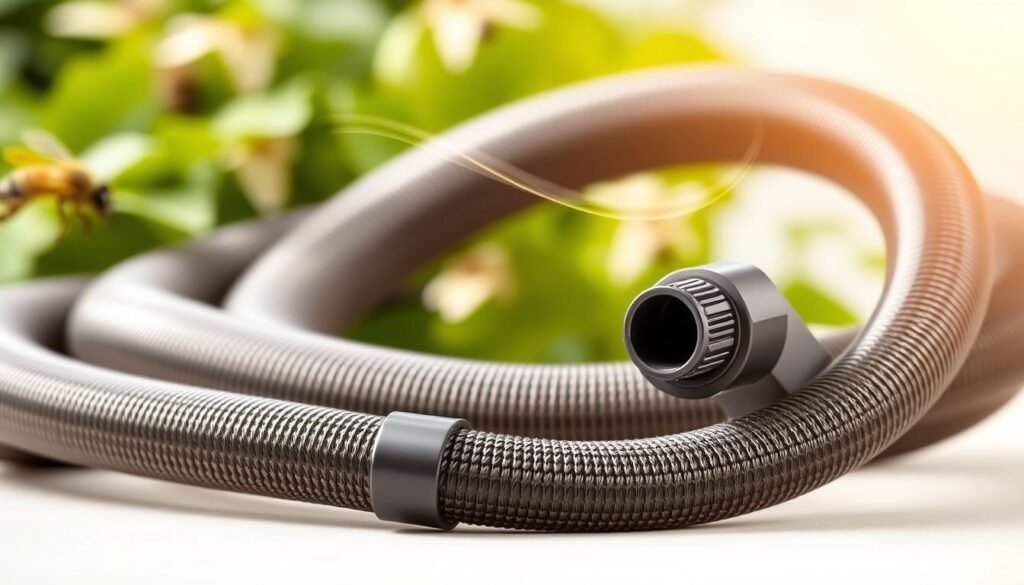
A 7-foot hose plus an 18-inch nozzle extension reaches deep into a box or between combs. Flexibility reduces crawl space risks and speeds collection.
“Adjustable flow and the right reach are the two features that change a long day into a quick job.”
| Feature | Why it matters | Practical note |
|---|---|---|
| Suction control | Prevents injury to workers | Use low settings near combs |
| Battery runtime | Keeps crews productive | 6+ hours typical; some hit 8+ |
| Hose & nozzle | Reach and precision | 7-ft hose, 18-in extension fits tight spaces |
For a closer look at a proven product option, see the product page with full specs and reviews.
Comparing Professional Backpack Units and DIY Options
Site logistics and transport often decide if crews bring a canister-style unit or a hive body system. Pros weigh mobility, transfer speed, and containment when choosing tools.
Evaluating Canister Style Versus Hive Body Systems
Canister-style units excel at portability and on-site maneuvering. Charlie Agar of Charlie Bee Company prefers canister rigs for quick access and easier carry between jobs.
DIY shop vac setups can work in a pinch but often need extra time to build a secure bucket and hardware cloth screen. A basic shop vac lacks dedicated motor controls and fine suction adjustment.
“A true professional tool gives controlled suction and a purpose-built bucket. That control saves time and reduces stress on the colony.”
- Backpack vacuums: superior portability and built-in suction control.
- Hive body systems: allow direct transfer into a hive box with an adapter kit.
- Shop vac DIY: lower cost but more prep time and less precise power management.
| Option | Strength | Practical note |
|---|---|---|
| Canister-style | High mobility, controlled suction | Best for tight access; easier hose handling |
| Hive body system | Direct transfer into hive body | Great for swarm transfer; needs adapter kit |
| DIY shop vac setup | Affordable entry option | Requires bucket containment, screens, more assembly time |
For step-by-step assembly tips and safe handling protocols, consult the field manual. Use that guidance when adapting shop tools into functioning vac systems.
Conclusion
, A well-chosen field kit saves time and preserves colony health during transfers. Use gear that offers adjustable suction and easy carry so teams can handle a swarm with steady, calm moves.
Choose between a professional backpack unit or a custom vac setup that supports a secure bucket and a compatible body adapter. That combination keeps bees contained and lowers mortality while you move frames or whole hive parts.
Investing in reliable tools protects the hive and lifts service standards in beekeeping. For humane structural work and step-by-step guidance on hive extraction and safe removal, see this bee hive removal guide.