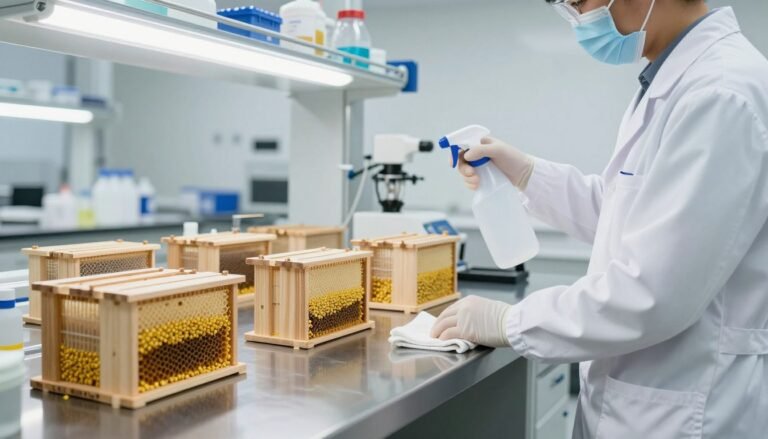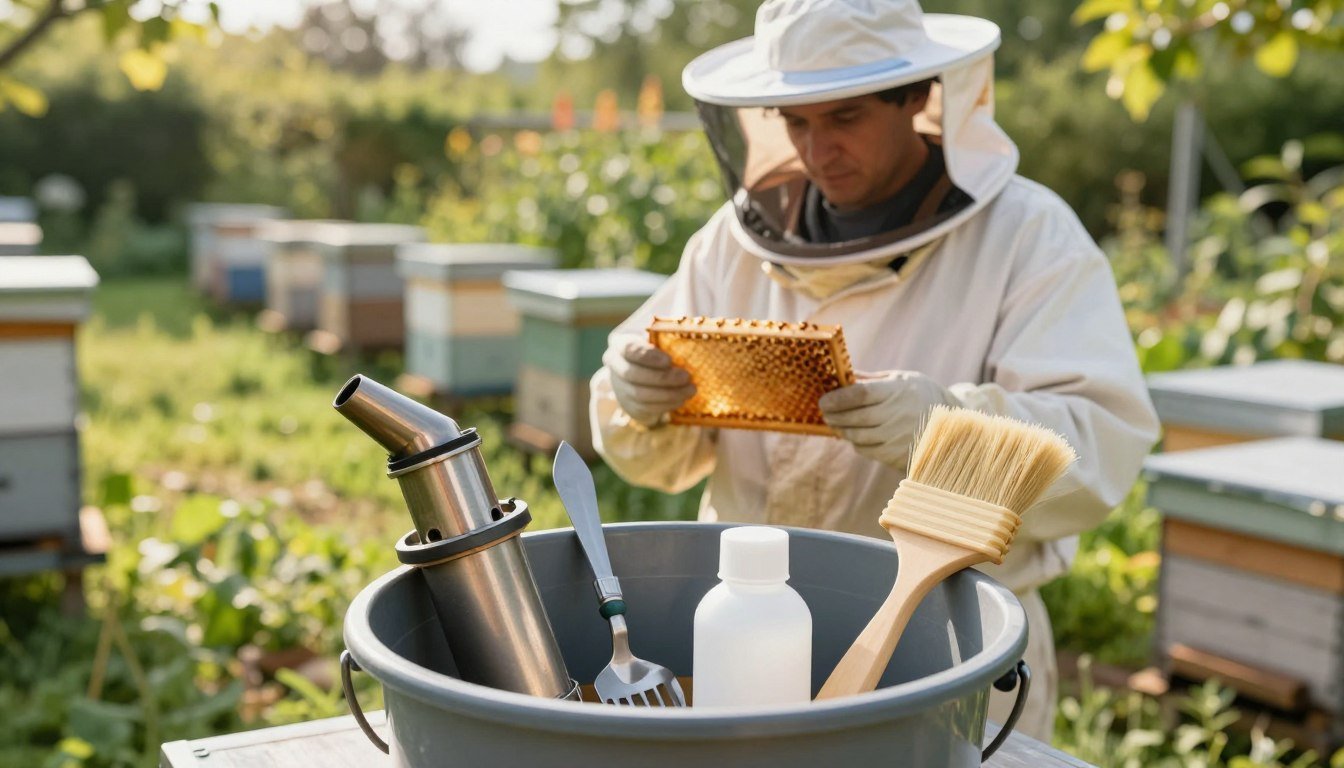
Keeping hive equipment clean is vital to healthy honey bee colonies. A well-organized kit helps beekeepers reduce the spread of spores, parasites, and other threats that move on frames, boxes, and smokers.
American foulbrood can force euthanasia of an affected colony to stop spread. That stark fact makes sterilizing tools as important as routine cleaning. Prioritize the queen’s protection, the integrity of comb and wax, and the stores of honey when you plan inspections.
Manage the flow of equipment between hives to limit exposure. Keep clear records of maintenance, time, and use to spot patterns early.
Professional standards and precise, modular frames reduce gaps where pests hide. Learn more about mechanized hygiene benefits and protocols at professional beekeeping equipment and hygiene.
Key Takeaways
- Sterilizing beats simple cleaning when spores risk exists.
- Control equipment flow between hives to limit cross-contamination.
- Document maintenance to protect queens, comb, and honey stores.
- Use standardized frames and boxes to reduce pathogen harborage.
- Respond to signs of American foulbrood immediately to stop spread.
Understanding the Importance of Apiary Hygiene
Clean frames and fresh comb cut transmission paths that harm your hive and queen.
Research by Piccirillo and De Jong (2004) found old brood comb carries about four times more varroa mites than new comb. This makes old wax a reservoir for threats that reduce colony vigor.
Diseases like chalkbrood and nosema spread on used comb and inside boxes. Regular cleaning of equipment lowers the exposure of your bees to spores and parasites.
Every beekeeper should treat each hive as a unique environment. Replace worn comb, inspect frames often, and sterilize boxes and tools to protect the queen and the future of your colonies.
- Old comb increases mite loads and pathogen risk.
- Consistent cleaning prevents cross-contamination between hives.
- Sterilizing frames supports healthy brood and better honey storage.
Essential Components for Your Apiary Tool Bucket Setup for Disease Control
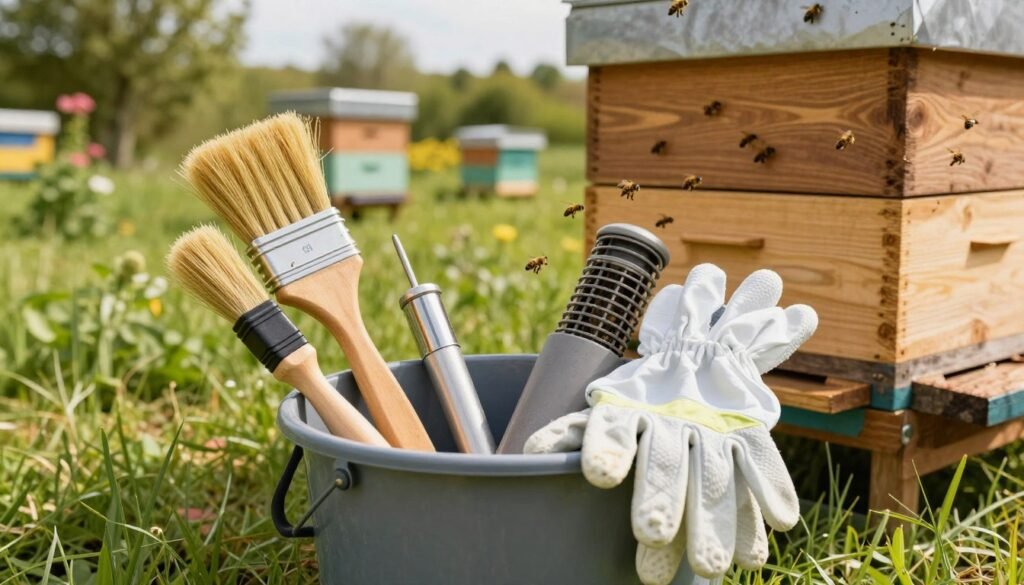
A compact hygiene kit keeps inspections quick and reduces the chance that spores hitch a ride between colonies.
Selecting Durable Containers
Choose a sturdy plastic container that resists chemicals and holds a 10% bleach solution safely. Use separate compartments to keep frames and metal parts apart.
Durability preserves drawn comb and helps protect honey stores.
Must-Have Cleaning Supplies
- 10% bleach mix in a sealed container to disinfect a hive tool between uses.
- Metal scrubbers or Brillo pads to remove stubborn propolis.
- Protective gloves when handling cleaners and hot water.
- A quality queen excluder made from durable material that tolerates cleaning.
- Space to store tools separately from frames and drawn comb to save time during inspections.
| Item | Purpose | Material |
|---|---|---|
| Bleach container | Disinfect metal pieces | Sturdy plastic |
| Metal scrubbers | Remove propolis | Stainless steel |
| Gloves | Personal protection | Chemical-resistant |
| Queen excluder | Clean without damage | Durable metal or plastic |
Tip: Stocking proper equipment saves time and helps beekeepers protect the queen, frames, and wax. For recommended supplies, see this guide to beekeeping equipment.
Distinguishing Between Cleaning and Sterilization
Removing propolis and wax is only the start; sterilization finishes the job by killing spores and viruses.
Cleaning removes visible contamination like dirt and old comb. It helps inspections and keeps frames neat, but it does not kill all microbes.
According to the U.S. Environmental Protection Agency, disinfectants differ from simple cleaners. Disinfecting reduces microbes, while true sterilization eradicates bacterial spores and viruses that threaten a honey-producing colony.
“A clean frame may still harbor spores that can infect your bees if not properly sterilized.”
When you suspect a problem in any box or hive, sterilize frames and equipment to protect remaining colonies and the queen. Beekeepers should prioritize sterilization before moving items between hives.
For step-by-step guidance on cleaning and sterilizing hive instruments, consult this practical guide on how to clean and sterilize hive.
When to Perform Routine Equipment Maintenance
Small signs on frames or at the entrance often tell a beekeeper when to act before a problem spreads. Make routine maintenance a scheduled habit to protect the queen, the comb, and honey stores.
Identifying Signs of Contamination
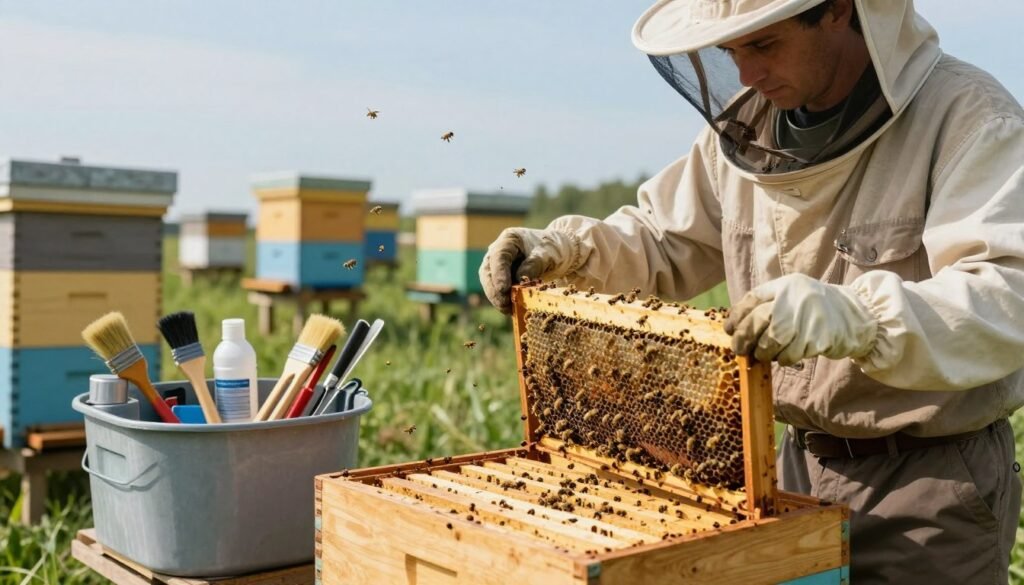
Inspect frames and the hive box at least once a month. Look for irregular brood patterns, discolored wax, or unusual dead bee piles at the entrance.
- Clean your hive tool after every use — this is a documented fact that reduces transmission between colonies.
- Sterilize equipment before the season begins and before you move any hive box between locations.
- Use minimal smoke during inspection to maintain a clear view of bee behavior and frame condition.
- Keep detailed records of sterilization dates and maintenance actions to manage exposure and flow of equipment.
When you notice signs of infection, take the time to sterilize all equipment immediately. That quick action protects the queen and preserves honey production across your hives.
hygiene and quarantine guidance and a seasonal beekeeper checklist can help set a strict maintenance schedule.
Initial Preparation and Safety Precautions
Before you touch a frame or open a hive, gather safety gear and clear a clean workspace.
Wear personal protective equipment: gloves, face mask or respirator, and goggles. OSHA recommends PPE when handling strong cleaners. Make sure water is handy to rinse skin if acid or bleach contacts you.
Have scrubbing brushes, stainless scrubbers, and a safe container ready. Disassemble the box and separate frames to reach top bars, edges, and propolis deposits. This saves time and protects comb and wax.
- Prepare a dust-free drying area with space to air frames away from insects.
- Ensure good ventilation to avoid buildup of smoke or chemical vapors.
- Keep the queen protected in a secure box or nuc while you clean frames from her colony.
Wear a respirator when using chemical sterilants and avoid heavy smoke during inspections near the entrance. Proper preparation of equipment and workspace helps beekeepers remove debris safely and preserve honey and brood.
For detailed guidelines, consult the beekeepers manual and a practical honey harvesting guide.
Effective Heat Sterilization Techniques
Applying controlled heat is a fast, low-cost way to sterilize metal and wooden hive parts.
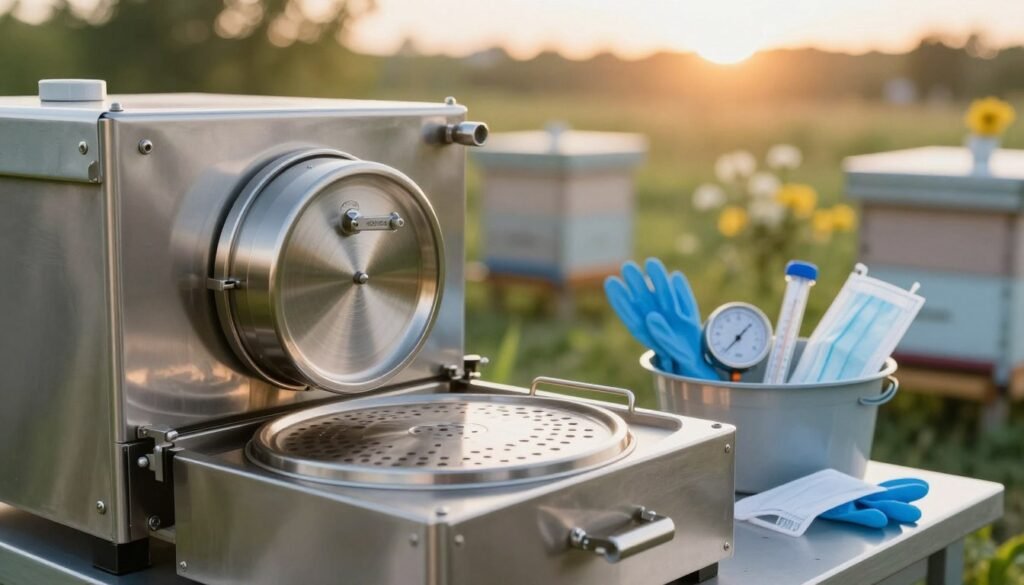
Use heat methods carefully to kill spores, soften hardened wax, and make frames easier to clean. Always clear a safe space away from flammable materials and protect the queen and honey stores before you begin.
Torching Metal Tools
Heat metal tools with a propane torch until they glow red to kill bacteria quickly. The University of Pennsylvania notes flame sterilization is effective on metal surfaces in lab settings.
Allow tools to cool completely before touching frames or working near bees.
Boiling Smaller Equipment
Boil smaller metal items and removable parts in a washing-soda solution (1:5 soda to water) for 5–10 minutes. Boiling loosens wax and propolis before final cleaning.
- Keep a fire extinguisher nearby when torching wooden boxes.
- Charring the inside of a hive box can help kill spores in wood grain.
- Perform heat work in an open area with enough space and time to cool items safely.
| Method | Best Use | Key Benefit |
|---|---|---|
| Propane torch | Metal hive tools | Rapid sterilization of surfaces |
| Boiling (1:5) | Small parts, frames | Sanitizes and loosens wax |
| Charring | Wooden hive box interior | Kills spores in wood grain |
Quick heat sterilization helps beekeepers protect a healthy colony and prevent spread through equipment. For step-by-step cleaning guidance, see the cleaning and sterilizing beekeeping equipment resource.
Chemical Sterilization Methods for Beekeeping Equipment
Chemical methods provide a reliable option to sanitize frames and boxes when heat is not available.
Use at least 500 ml of acetic acid in a sealed hive box when fumigating. Seal seams with plastic wrap or tape to keep fumes contained.
Mix bleach at 1 part bleach to 5 parts water for soaking metal parts and non-painted surfaces. Wear rubber gloves and goggles to avoid chemical burns.
- Rinse and air-dry equipment and frames thoroughly before returning them to any colony or near honey.
- Chemicals kill most pathogens, but they will not eliminate American foulbrood spores.
- Store chemicals securely, away from honey and food products.
- Consult your local apiary inspector if you are unsure about the best method for your site.
| Method | Use | Note |
|---|---|---|
| Acetic acid fumigation | Sealed box | Use ≥500 ml; seal seams |
| Bleach soak (1:5) | Tools, metal parts | Rinse well and dry |
| Storage | All chemicals | Keep away from honey and food |
According to the National Bee Unit, chemical sterilization is a reliable alternative when heat is impractical.
Managing Frames and Comb to Prevent Pathogen Spread
Proper handling of frames and old comb is one of the simplest ways to protect your colony’s health. Keep routines short and consistent so your bees return to a clean environment.
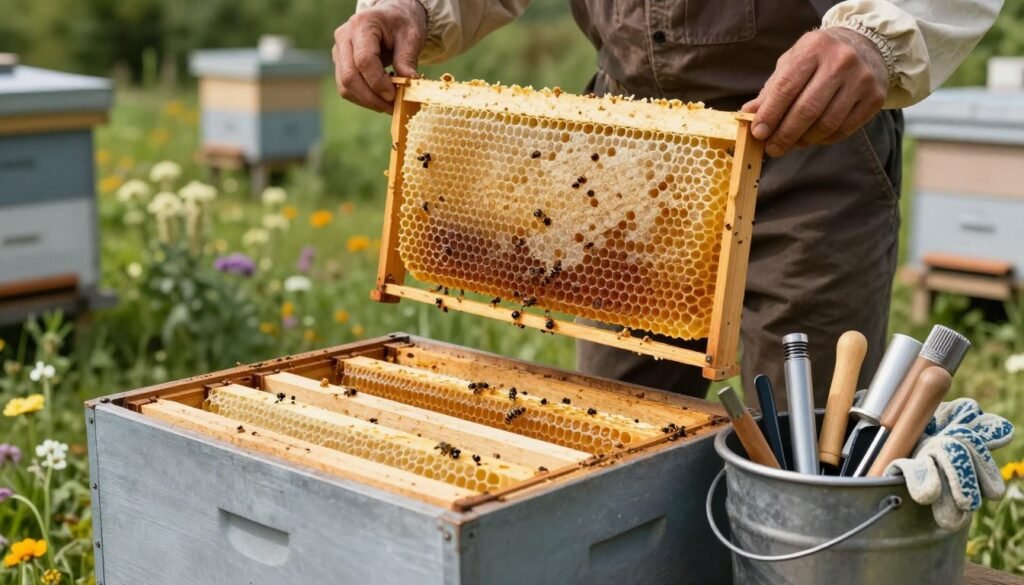
Risks of Old Comb
Old comb harbors more mites and pathogens than new comb. Avoid saving aged comb when possible; it is roughly four times more likely to carry varroa.
Keeping fresh comb protects the queen and the brood. Scrape excess wax and propolis before storage to reduce hidden pests.
Freezing Frames
Freezing frames at 20°F or lower for at least 24 hours kills wax moth larvae and helps stop infestations before they reach the hive.
After freezing, inspect each frame and air-dry it in a clean space away from other equipment.
Storing Drawn Comb
Store drawn comb in airtight containers or sealed boxes to block insects and spores. Use a sturdy plastic tub or sealed wooden box and check often for breaches.
Clean and store a queen excluder separately to prevent it becoming a source of infection. Regular checks and simple freezes keep honey stores and frames safe.
Further reading: see this short guide on good apiary hygiene and tips on how to store frames.
Best Practices for Record Keeping and Apiary Management
Good record keeping turns routine inspections into a reliable early-warning system for hive problems.
Keep short, dated notes each time you clean or sterilize equipment. Make sure to log the date, method used, and which frames or boxes were treated.
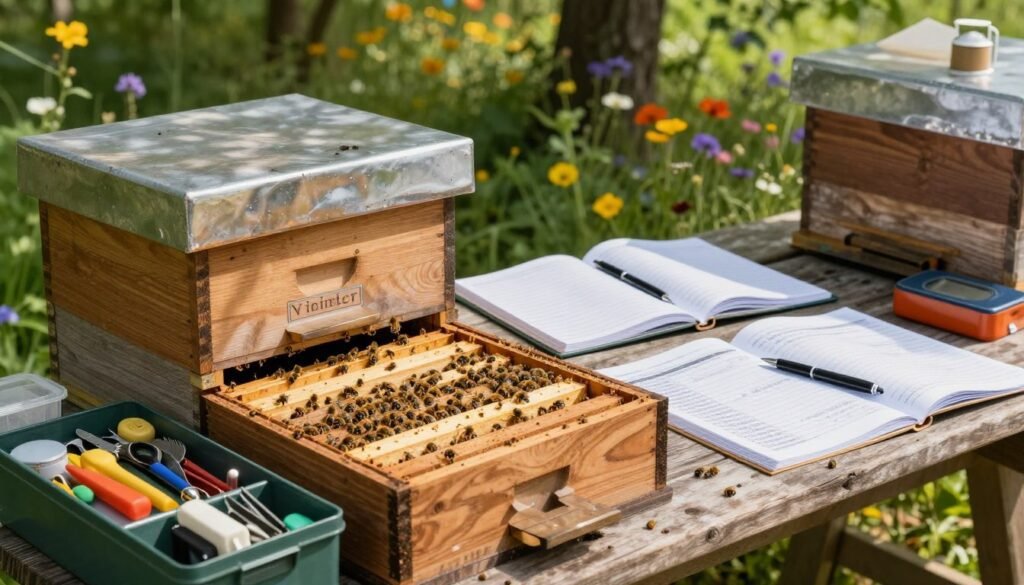
Identifying Signs of Contamination
Record observations of brood pattern, unusual bee behavior, and the quality of honey. Note any issues with drawn comb or the queen excluder so you can act quickly.
- Make sure sterilization dates and methods are clear and easy to read.
- Track queen condition and colony progress to spot trends over time.
- Use the log to decide when to replace old frames or a worn box.
| Record Item | What to note | Why it matters |
|---|---|---|
| Sterilization | Date, method, items treated | Verifies effectiveness and compliance |
| Hive inspection | Brood pattern, bee activity, pests | Early detection of problems |
| Storage | Condition of drawn comb, excluder | Prevents infestations and honey loss |
Consistent records sharpen your view of management choices and save time during decision-making. For systems that simplify records and space needs, consider looking at minimalist approaches in minimalist beekeeping setups.
Conclusion
A simple, steady hygiene routine protects hives and boosts long-term colony health.
Maintaining a clean hive and sanitized equipment keeps your bees productive and your honey safe. Follow the sterilization methods here, and make short records after each session.
Prioritize the queen and inspect boxes often. Consistent maintenance and clear logging are the hallmarks of responsible beekeeping and stronger colonies.
Every cleaned frame and properly stored tool adds resilience to your operation. Investing a little time now leads to healthier colonies and better honey harvests later.
Thank you for your commitment to excellent hive care and the protection of our vital bee populations.
FAQ
What should I include in an equipment bucket to reduce pathogen spread?
Include sturdy containers, a dedicated disinfectant approved for beekeeping equipment, nitrile gloves, a hive tool, wire brush, a spray bottle, and clean rags. Add a queen excluder-compatible frame holder and a small hand torch for metal tool sterilization. Keep a labeled supply of extra frames, drawn comb storage bags, and alcohol wipes for quick wipes between hives.
How often should I clean and sterilize hive parts like frames and boxes?
Perform basic cleaning after each inspection: scrape propolis and wax, wipe down surfaces, and disinfect tools. Sterilize deeply when you detect brood disease, before moving colonies, or when reusing donated frames. Schedule full maintenance at least annually during low activity months to inspect boxes, replace damaged frames, and treat or dispose of contaminated comb.
What is the difference between cleaning and sterilization of beekeeping equipment?
Cleaning removes visible debris, wax, and propolis using scrapers, brushes, and detergents. Sterilization uses heat, chemicals, or freezing to kill pathogens. Both steps matter: clean first so sterilants reach all surfaces, then apply the chosen sterilization method to reduce spores and bacteria effectively.
Can I use a propane torch on hive tools and metal parts?
Yes. Torching metal tools is an effective heat method to burn off organic matter and neutralize many pathogens. Hold the flame on metal until it is glowing hot, then let it cool. Avoid torching painted or plastic parts and use caution to prevent fires. Wear heat-resistant gloves and perform this outdoors on a non-flammable surface.
Is boiling a safe option for small gear like queen clips and frames’ hardware?
Boiling in water for 10–20 minutes safely sterilizes many small metal items and stainless clips. Remove wooden components first, as extended boiling can warp or delaminate them. Dry items thoroughly to prevent rust, and follow with an optional alcohol wipe for faster drying and extra disinfection.
Which chemical agents are suitable for sterilizing hive boxes and frames?
Use beekeeping-friendly disinfectants such as diluted bleach (follow guidelines), Virkon S, or acetic acid for surface treatment. Always rinse and dry boxes before reuse if residues remain. Avoid oils or harsh solvents that leave residues harmful to bees. Check label instructions and local regulations for safe concentrations.
How risky is reusing old drawn comb, and when should I replace it?
Older comb accumulates pesticides, pathogens, and brood disease spores over time. Replace comb every 3–5 years or sooner if you see signs of disease, heavy darkening, or deformities. When in doubt, freeze suspect frames for several days or replace with foundation or new drawn comb to lower pathogen load.
What are the benefits and limits of freezing frames to control pests?
Freezing frames for 48–72 hours can kill many wax moth larvae and some pest stages, and it helps reduce certain pathogens. However, freezing does not eliminate all spores like American foulbrood. Use freezing as part of an integrated approach alongside inspection, replacement, and proper chemical or heat treatments when needed.
How should I store drawn comb and frames to keep them safe between uses?
Store drawn comb in sealed, labeled containers away from heat and pests. Use plastic or metal boxes with tight lids and consider periodic freezing or treating with approved deterrents for wax moths. Keep drawn comb separate from empty equipment and maintain clear records on age and source of each frame.
What signs indicate contamination in hive equipment or colonies?
Watch for foul or unusual brood odors, sunken or perforated cappings, spotty brood patterns, unusually dark or soft comb, heavy wax moth activity, or an unexpected rise in deadouts. Also inspect for excessive propolis or discoloration on frames and boxes. Early detection lets you isolate and treat affected gear quickly.
When is the best time to perform major maintenance on hives and equipment?
Schedule major maintenance during late fall or early spring when colony activity is low. This timing minimizes stress on bees and gives you space and time to repair, sterilize, or replace boxes and frames before peak season. Record dates and actions for each hive to inform future maintenance cycles.
What personal protective measures should I take during inspections and equipment cleaning?
Wear a veil, gloves, and, if needed, a jacket. Use smoke sparingly to calm bees during inspections. Work methodically to limit time near open colonies. Keep cleaning supplies, a first-aid kit, and water on hand. Sanitize hands and change gloves between colonies if you suspect infection to reduce cross-contamination.
How should beekeepers document maintenance and health of colonies?
Keep a logbook or digital records listing inspection dates, treatments, comb ages, queen status, and any signs of disease or pests. Note where frames and drawn comb originated and actions taken with contaminated gear. Good records help track trends, inform replacements, and support biosecurity during equipment exchanges or sales.
Are plastic frames and components easier to sanitize than wood?
Generally yes. Plastic frames and hive parts tolerate harsher cleaning and boiling without warping and resist absorption of residues. They can simplify sterilization but may still harbor pests in crevices. Combine thorough cleaning with chemical or heat sterilization and inspect regularly for wear.
Can commercial honey extraction equipment spread pathogens, and how do I prevent that?
Yes. Extraction gear can transfer spores and pathogens between batches. Clean and sterilize all surfaces that touch honey and comb between uses. Use food-grade sanitizers, hot water rinses, and dry thoroughly. Separate extraction for suspect frames and avoid mixing honey from hives with known issues.
When should I consult a local extension agent or a professional beekeeper about potential disease?
Contact experts immediately if you find suspicious brood patterns, a sudden rise in dead colonies, or if you’re unsure about test results. Local extension services and experienced beekeepers can help with diagnosis, sampling for lab tests, and recommending regulatory-compliant disposal or treatment steps.