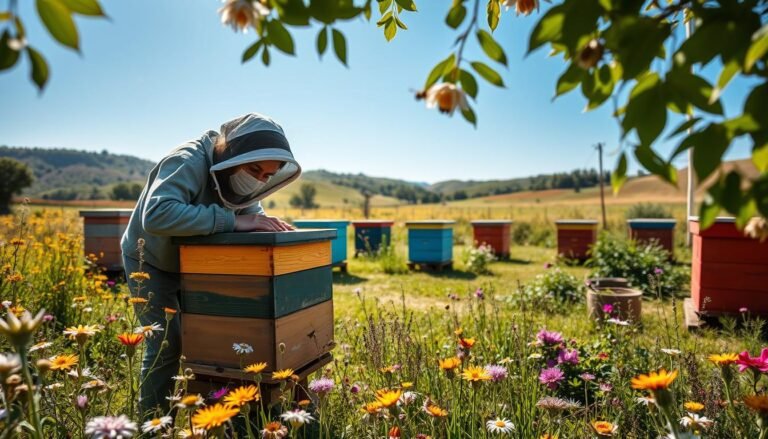
Protecting honey bee colonies starts with clear, practical steps any beekeeper can use today. Meghan Milbrath of Michigan State University highlights that prevention beats costly treatment. Her guidance helps keep bees healthy and reduces the spread of pests and disease.
Good management means regular monitoring of hives, checking brood and queen health, and sanitizing equipment. Control contact with outside bees and manage water sources to lower risk. These actions support stronger colonies and better honey production.
When you limit sources of infection and inspect hives often, you cut the need for heavy treatments. A consistent routine also makes it easier to spot varroa mites, wax issues, and other threats early. That saves time, money, and keeps your operation resilient.
Key Takeaways
- Prevention first: prioritize disease avoidance over reactive treatment.
- Monitor hives regularly to protect queens, brood, and colony health.
- Sanitize equipment and limit contact with outside bees and water sources.
- Early detection reduces pest spread and lowers treatment needs.
- Use trusted guidance, such as resources on apiary productivity, to improve management.
Understanding the Importance of Apiary Biosecurity
Knowing how pathogens travel between colonies is the first step to protecting honey production and colony health.
Defining Biosecurity
Biosecurity means using practical, preventive steps to lower the risk of infectious agents moving among honey bees. It covers everyday choices: where you place hives, how you source new colonies, and how you handle equipment.
The Role of the Beekeeper
The beekeeper acts as a steward of bees and must use good management to reduce spread. The University of Hawaii Extension hosted hands-on clinics that trained vets and field staff in these protocols.
Protecting brood and queen health depends on active monitoring. Control of water sources and limiting contact with outside hives help prevent varroa and other mites from entering a yard.
| Risk Area | Common Threats | Simple Controls |
|---|---|---|
| Water sources | Drifting bees, shared feeders | Provide on-site water, monitor use |
| New colonies | Introduced pests and diseases | Quarantine and inspect before mixing |
| Equipment | Contaminated frames, wax | Sanitize tools and store separately |
| Neighboring hives | Drifting, robbing events | Manage apiary layout and monitor activity |
- Priority actions: monitor hives regularly and document signs of stress.
- Early detection reduces treatments and protects regional colony health.
Developing an Apiary Biosecurity Plan for Small Beekeepers
Start by mapping how your hives move and who touches them. Keep a simple log of colony transfers, queen introductions, and equipment swaps. That visibility cuts most risks and makes management routine.
Adopt strict hygiene steps used in other animal industries. Michigan State University swine teams use shower-in/shower-out and clear clothing protocols. Adapt those ideas: change gloves, clean tools, and limit cross-contact between hives.
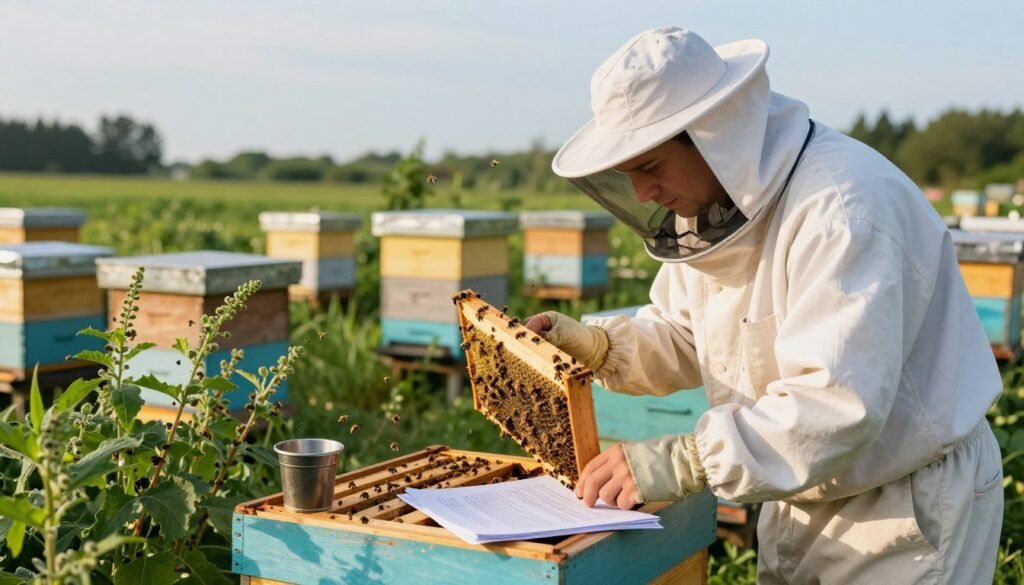
Include written procedures for equipment handling, brood checks, and queen introductions. Document who inspects each hive and when. Good records help spot varroa mites and other pests early and reduce heavy treatments.
“A well-structured approach ensures every hive is protected.”
- Inventory movement: record frames, queens, and colony swaps.
- Hygiene steps: clean tools, control water sources, and limit outside contact.
- Monitoring: schedule regular brood and mite checks and note treatments.
For practical examples and producer guidance, consult the honey bee producer guide. To avoid common mistakes when sourcing bees and equipment, see this beginner mistakes resource.
Evaluating Your Specific Operational Risks
Identify where your operation is most exposed. Start by locating points where bees, equipment, and water meet. These spots often drive the spread of pests and diseases.
Identifying High-Risk Areas
Inspect incoming equipment carefully. New frames, used boxes, and second-hand wax can carry pathogens that threaten brood and queen health. Quarantine and inspect items before use.
Map hive placement to limit drift and robbing. Mark shared water sites and block uncontrolled sources. This reduces disease transfer and protects honey production.
| Risk Area | Likely Threats | Action |
|---|---|---|
| Incoming equipment | Contaminated wax, spores | Quarantine, inspect, sanitize before mixing |
| Water sources | Drifting bees, cross-contact | Provide managed water, monitor use |
| Colony placement | Drifting, varroa spread | Space hives, create clear boundaries |
“Consistent monitoring lets you catch mites and disease early.”
Use resources like the Healthy Farms Healthy Agriculture Initiative and review a sustainable apiary plan to build inspection checklists and treatment schedules.
Preventing the Introduction of External Pathogens
Stopping outside infections starts with rules that quarantine new stock and gear before they touch your hives.
Quarantine Procedures
Isolate all incoming colonies and any used equipment in a separate area. Keep new bees at least two rows away from active hives and check them weekly.
Monitor isolated colonies for signs of varroa, unusual brood patterns, or behavioral changes. Record observations and delay mixing until three clean inspections pass.
Sterilize tools, frames, and protective gear before moving them between locations. This simple step helps prevent the spread of pests and diseases and protects brood and queen health.
Sourcing New Bees
Buy queens and nucs from reputable breeders who document health checks. Favor suppliers that test for mites and common diseases.
When bringing in bees, demand health records and ask about recent treatments. If records are unavailable, increase quarantine time and monitoring intensity.
“Isolate, inspect, and sanitize before integration — it’s the best defense against costly treatments.”
- Isolate new colonies: hold and monitor before mixing.
- Inspect regularly: look for mites and strange brood signs.
- Sanitize equipment: clean hive tools and wax frames before reuse.
| Action | Why it matters | Suggested interval |
|---|---|---|
| Quarantine new colonies | Detect mites and disease before spread | 3 inspections over 6 weeks |
| Source from vetted breeders | Reduces risk of infected queens or nucs | Prior to purchase; request records |
| Sanitize shared equipment | Limits cross-contamination between hives | After each use or when moving sites |
For practical checklists and detailed procedures, review the beeyard factsheet and guidance on managing labor and handling. These resources support strong management and help prevent spread of pests diseases among your colonies.
Managing Hive Health and Colony Susceptibility
Early, focused care reduces how vulnerable a colony is during peak risk periods.
Provide steady nutrition. Feed supplemental pollen or syrup when natural forage is scarce. Strong brood and a vigorous queen cut the chance of collapse and reduce stress on bees.
Monitor regularly. Inspect brood, note brood patterns, and track mite levels. Quick detection of pests lets you apply targeted treatments before they spread.
- Isolate weak or queenless hives and requeen or unite when safe.
- Rotate frames and remove damaged wax to lower pathogen load.
- Keep water sources managed to limit cross-contact among hives.
“A strong colony is the best defense against pests and pathogens.”
| Issue | Common signs | Immediate action | Follow-up |
|---|---|---|---|
| Varroa mites | Deformed brood, mite counts high | Apply targeted miticide or mechanical control | Recheck after treatment; monitor every 2–4 weeks |
| Queen failure | Spotty brood, low population | Introduce a new queen or combine colonies | Verify acceptance and brood pattern in 2–3 weeks |
| Poor nutrition | Small colony, sluggish foraging | Provide syrup and pollen substitute | Plan seasonal feeding and assess forage availability |
| Diseases | Unusual brood, deadouts | Isolate affected hive and test if needed | Record findings and apply recommended treatments |
Maintain clear records and train staff to act fast. For guidance on mentoring new crew and building inspection habits, see how to mentor new beekeepers effectively.
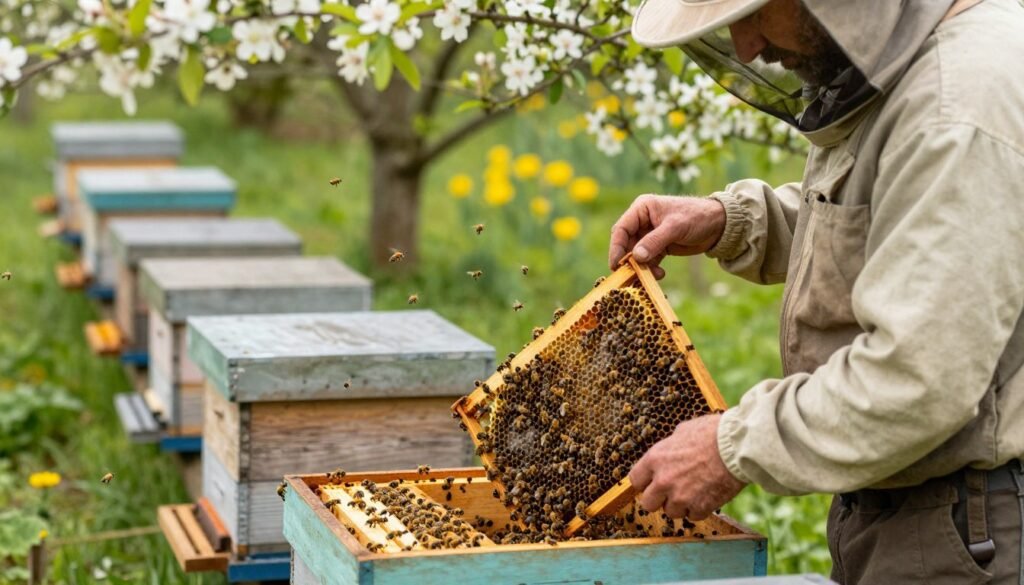
Controlling the Spread of Disease Between Apiaries
Keeping clear boundaries between yards and using dedicated gear cuts the chance that pests move with your bees. When you move colonies or frames, use separate tools and clothing by site. That limits cross-contamination and helps protect brood and queen health.
Monitor each hive after relocation. Check mite counts, brood patterns, and behavior on a weekly schedule. Record findings and hold suspect colonies apart until they pass three clean inspections.
Reduce drifting by orienting hive entrances, spacing hives, and managing foraging sources. Control shared water to prevent mixing of honey bees from different colonies.
- Use dedicated equipment for each site where practical.
- Log movements of queens, nucs, and frames to trace any issues quickly.
- Report unusual disease signs to local authorities to protect regional health.
| Risk Action | How it helps | Frequency |
|---|---|---|
| Separate tool sets | Stops transfer of wax, spores, and mites | Every move |
| Site quarantine | Detects problems before mixing colonies | 3 inspections over 6 weeks |
| Water management | Reduces inter-colony contact | Ongoing |
“A well-managed yard sets the standard and slows the spread of disease.”
Learn more about breeding traits that support hygiene and resistance at predisposition to hygienic behavior. Consistent monitoring and clean equipment keep bees healthy and support steady honey production.
Implementing Effective Hygiene Standards for Tools
Daily tool care and gear sanitation cut the chance that pests or disease hitch a ride to healthy hives.
Cleaning Hive Tools
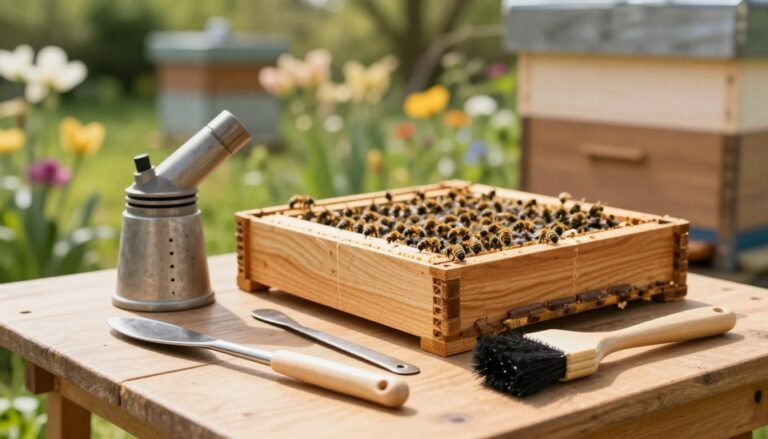
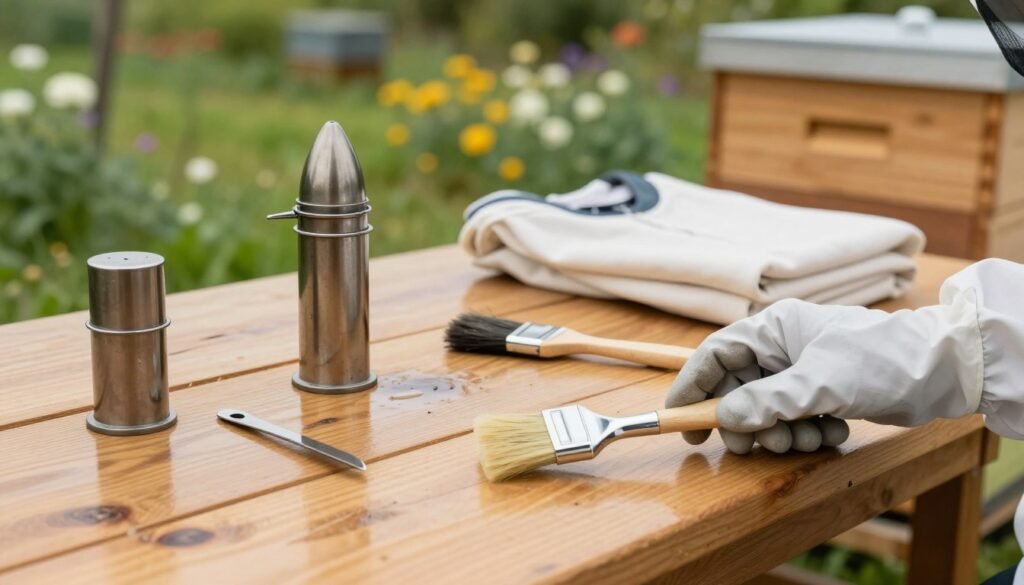
Wipe and scrape every hive tool after use to remove wax, propolis, and debris. This lowers the risk that spores or mites move between colonies.
Use a diluted 50% bleach solution to disinfect metal tools when visible contamination exists. Rinse and dry tools before reuse to protect metal and avoid chemical residue on frames.
Sanitizing Protective Gear
Rotate and wash gloves, jackets, and veils often. Keep at least two sets of gear and separate them by site so equipment does not create cross-contact.
Inspect fabric and foam for wear. Replace torn suits or heavily soiled items to prevent hidden contamination reaching brood or queen areas.
| Item | Cleaning Step | Frequency |
|---|---|---|
| Hive tool | Scrape, bleach dip (50%), rinse, dry | After each hive visit or when soiled |
| Protective gear | Wash, air dry; rotate sets | Weekly or after heavy use |
| Shared equipment | Sanitize frames and boxes; remove old wax | Before moving between colonies or sites |
| Spare sets | Label and store separately by location | Maintain on hand; inspect monthly |
- Keep multiple tool sets to switch between hives and reduce accidental spread.
- Document cleaning and monitoring so worn or contaminated items are replaced promptly.
- Commit to consistent hygiene to protect hive health, honey production, and minimize heavy treatments.
Monitoring and Surveillance Protocols
Consistent surveillance turns small signs of trouble into manageable fixes. Set a calendar of weekly or biweekly checks so each hive gets a routine inspection. Simple, steady reviews catch issues before they spread to other colonies.
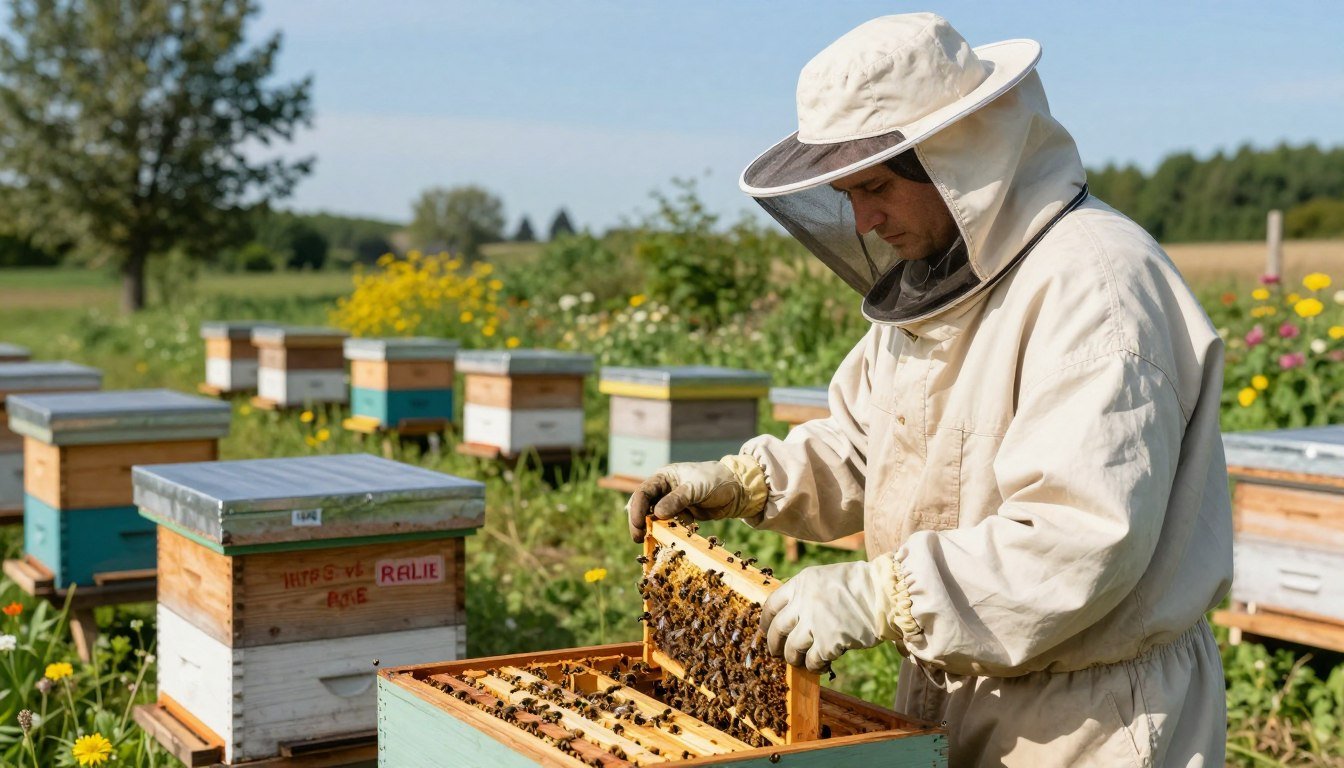
During inspections, focus on brood patterns, queen activity, and forager behavior. Count mites with a sugar or alcohol wash to detect varroa early. Record results in a log book or digital app to track trends and trigger action when thresholds are reached.
Use professional tools like mite testers, a good magnifier, and consistent scales to measure colony weight. These tools make routine checks faster and more accurate and support better management decisions about treatment and feeding.
- Routine schedule: set inspections and stick to them.
- Document everything: dates, counts, treatments, and outcomes.
- Respond early: treat or isolate hives when counts exceed thresholds.
“Vigilant monitoring is the most cost‑effective way to protect colony health.”
For modern tools and data-driven methods, review resources like digital beekeeping promises to strengthen your monitoring plan and keep honey production steady.
Managing Equipment and Woodenware Safely
Clean, dry storage is the simplest defense against hive beetle and other pests. Keep boards, frames, and boxes off the ground and in a ventilated shed. Moisture and old wax attract pests and speed disease spread.
Inspect every piece before it returns to a hive. Look for beetle larvae, wax moth damage, cracked frames, or mold. Remove or repair damaged wood to protect brood and queen health.
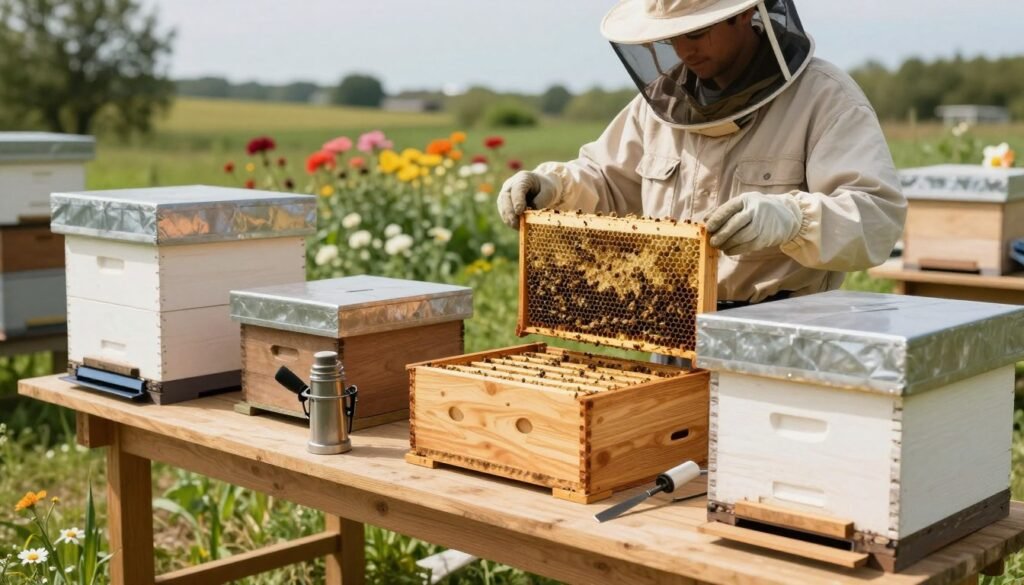
Use a barrier system—sealed bins, labeled racks, or painted exteriors—to separate clean and used items. This reduces contact between colonies and lowers treatment needs.
“Consistent care of woodenware keeps colonies strong and lowers the risk of costly outbreaks.”
- Store equipment clean and dry; rotate frames seasonally.
- Document moves and monitor stored items monthly.
- Cull old wax and broken boxes that can harbor mites or disease.
| Item | Risk | Action |
|---|---|---|
| Frames with old wax | Wax moths, spores | Freeze, replace, or render wax |
| Wooden boxes | Cracks, mold, beetle shelter | Repair, paint, store elevated |
| Tools & gear | Cross-contamination | Label sets by site; sanitize before use |
Handling Deadouts and Contaminated Materials
A single neglected dead hive can threaten nearby colonies and contaminate shared equipment. Remove deadouts promptly to stop pests and the spread of disease.
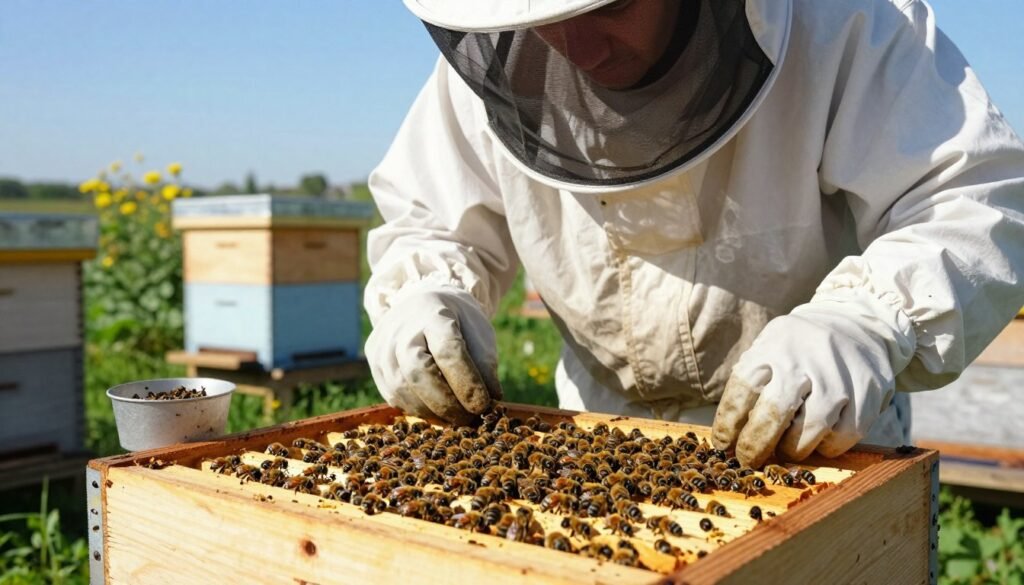
First, assess whether frames or boxes can be salvaged. If wax or honey is heavily soiled, render or destroy it. Store reusable wood separately and label it so you do not mix contaminated items with clean gear.
Sanitize all equipment that touched the dead colony. Scrape, bleach-dip metal tools, and freeze or heat-treat frames if you plan to reuse them. This reduces the chance that mites or pathogens travel to healthy hives.
Dispose of carcasses and waste away from flight paths to prevent attracting hive beetle and other pests. Follow local regulations when burying or incinerating material to remain compliant.
Document every deadout and any treatments applied. Good records help you spot trends and protect brood and queen health across your operation.
“Prompt removal, careful cleaning, and clear records keep colonies healthy.”
- Remove dead colonies quickly and isolate contaminated gear.
- Clean and sanitize tools and frames before reuse.
- Use a regular checklist—see a useful seasonal checklist here.
Training Staff and Managing Visitor Access
Clear, consistent training turns casual helpers into reliable hive stewards. Train every staff member on safe handling of frames, protective gear use, and how to check brood and queen health. Keep lessons short and practical so the team remembers key steps.
Limit entry and explain rules to visitors. Greet guests, describe risks, and require a signed visitor log. Ask that anyone entering wears a clean suit and uses site-specific tools to avoid moving pests or disease between hives.

Maintain a visitor log and tool inventory. Record names, dates, purpose, and gear used. This record helps trace contact if a disease or mite problem appears in colonies.
Use short refreshers and drill scenarios so staff can respond to suspected issues. Reinforce communication about monitoring results and any necessary treatment.
“Consistent training and strict access control protect brood, queens, and honey production.”
- Require clean suits and dedicated equipment per site.
- Keep a visible visitor policy and enforce it politely.
- Schedule routine training and document attendance.
| Topic | Action | Frequency |
|---|---|---|
| Visitor screening | Sign log; brief on rules; provide gown | Every visit |
| Staff training | Hands-on handling, hive checks, emergency steps | Quarterly or season start |
| Tool control | Label sets by site; store separately | After each use |
| Communication | Share monitoring results and treatments | Weekly updates |
For formal guidance and templates that support training and access control, consult the honey bee producer guide. Use that resource to build clear SOPs that protect your bees and sustain honey production.
Responding to Disease Outbreaks and Emergencies
Immediate, methodical response can halt an outbreak before it undermines honey production. Move quickly to isolate affected hives and stop the spread. Short, clear actions protect brood and queen health and reduce long-term losses.
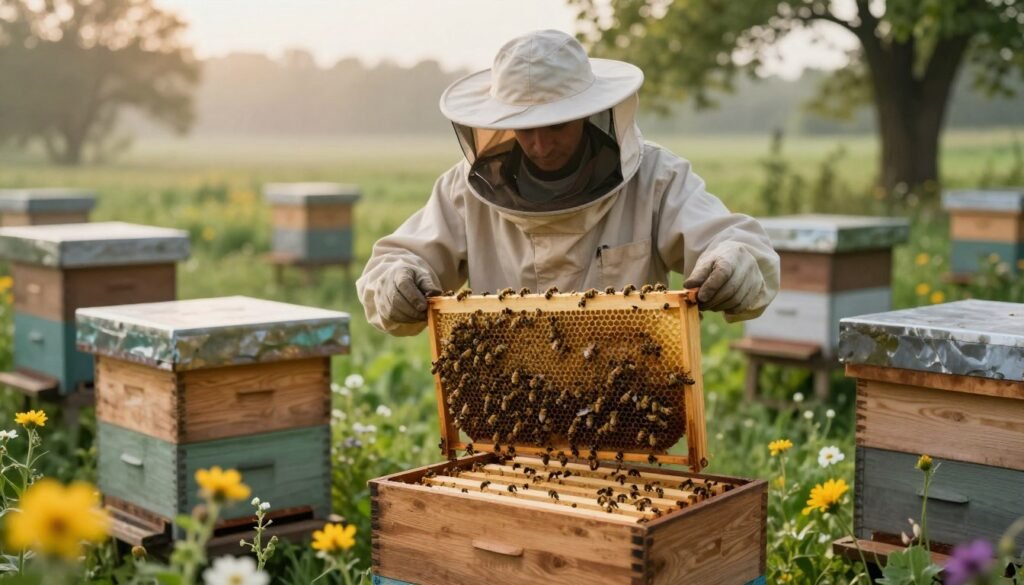
Reporting Notifiable Diseases
Always report suspected notifiable diseases to state or federal authorities without delay. Officials can confirm American Foulbrood (AFB) or other serious threats and advise legal steps.
| Issue | Immediate action | Why it matters |
|---|---|---|
| American Foulbrood (AFB) | Isolate, report, remove contaminated equipment | AFB spores survive >70 years in hive materials |
| European Foulbrood (EFB) | Clean wax, sanitize hive tool and equipment, monitor | EFB can persist ~6 months in debris |
| Varroa mites | Rapid treatment and close monitoring | Mites die within ~3 days without food but spread fast |
| Small Hive Beetle | Control soil, remove infested combs, treat promptly | Life cycle 38–81 days; quick control limits buildup |
Use a written emergency checklist, record every action, and note treatments used. Keep reusable equipment labeled and separated from contaminated items. For official templates and emergency response guidance, review emergency response guidance.
“Consistent monitoring and quick action are the hallmarks of a successful response.”
Economic Benefits of Proactive Disease Management
Early detection and steady care protect your investment in equipment, queens, and hives. Preventing disease reduces replacement costs and cuts emergency treatment bills. That keeps cash flow steady and lowers annual loss.
Routine monitoring increases honey yields by keeping colonies strong through the season. Healthy brood and a reliable queen boost foraging and colony growth. Smaller, predictable expenses replace costly, last‑minute responses.
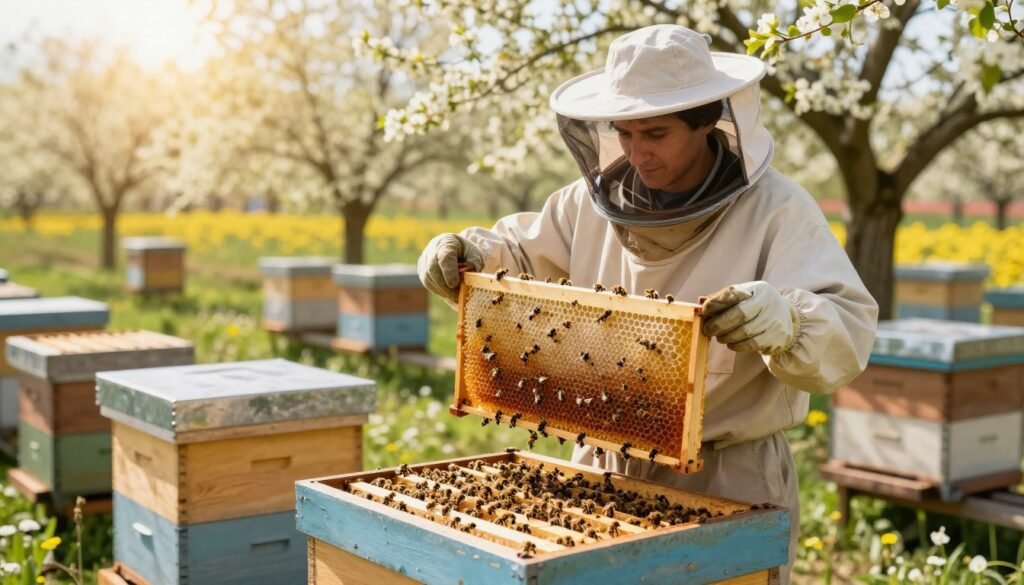
Investing modestly in gear, sanitation, and staff training pays back quickly. Fewer deadouts mean less spent on new bees, frames, and other equipment. Preventing spread of pests and mites preserves production and marketable honey.
“The cost of steady management is far lower than replacing multiple colonies after an outbreak.”
- Lower replacement costs: maintain hive strength and avoid emergency purchases.
- Higher yields: consistent checks keep brood and worker bees productive.
- Reduced treatments: targeted control avoids repeated chemical use and extra labor.
For research and practical guidance, consult the center for honey bee research. A professional approach to management keeps operations profitable and resilient.
Utilizing Professional Resources and Support
Tap local and national experts to strengthen your hive routines and protect colony health. Extension specialists and state inspectors offer objective checks, training, and templates that save time and reduce costly mistakes.
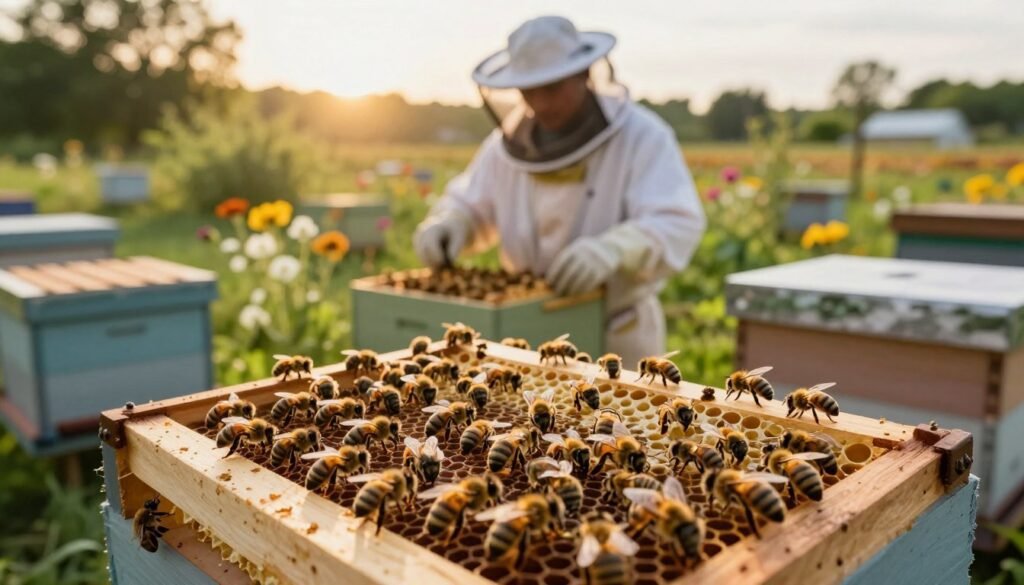
Join a regional association or subscribe to specialist updates to stay current on treatments, mite thresholds, and equipment handling. Use training sessions to practice brood checks and queen assessments under expert guidance.
Take advantage of templates and workshops to build written procedures that match your operation. This helps standardize monitoring and keeps everyone on the same page when it comes to disease control and response.
| Resource | Contact | Key benefit |
|---|---|---|
| Extension specialists | University offices | Evidence-based guidance and local training |
| State inspectors | Regulatory agency | Diagnostic support and reporting advice |
| Producer groups | Local associations | Peer networks, shared equipment tips |
For practical integrated pest guidance, review integrated pest management resources like integrated pest management. Consistent engagement with experts improves monitoring, reduces risk, and sustains honey production.
Maintaining Consistent Compliance and Review
Consistent checks and documented actions make it easier to update practices when threats change. Schedule an annual review of your management steps and inspect equipment logs, treatment records, and monitoring notes.
Documenting compliance shows commitment to colony health and supports faster decisions when pests or diseases emerge. Keep a clear log of hive visits, brood observations, queen status, and any treatments applied.
Be prepared to revise procedures. New research, shifting pest pressure, or local outbreaks may require adjustments to how you handle frames, queens, or water sources.
Train staff on any updates and keep tool sets labeled by site. Regular monitoring of colonies highlights weak points and reduces the chance of costly interventions.
“A routine review and clear records protect your investment and help keep honey production steady.”
- Yearly audit: review treatments, monitoring cadence, and equipment care.
- Document actions: logs that track inspections, mites, and treatments.
- Adjust promptly: update procedures when new risks or guidance appear.
Conclusion
Practical daily steps—clean gear, log checks, and isolate new stock—turn risk into routine control. Build simple habits around equipment care and steady monitoring to protect colonies and keep a productive hive. This approach lowers the chance of pests and limits costly treatment needs.
Prioritize queen and brood checks, manage water sources, and rotate tools by site. Strong management keeps bees healthy and helps honey yields remain steady.
Invest in training and professional support, review procedures annually, and record every action. Your commitment protects your operation, supports regional colony health, and sustains beekeeping success across the United States.
FAQ
What is a biosecurity program and why does my beekeeping operation need one?
A biosecurity program is a set of practical steps to reduce the risk of introducing and spreading pests and diseases among honey bee colonies. Implementing these measures protects colony health, maintains honey quality, and reduces treatment costs. Simple actions like monitoring for Varroa mites, isolating new colonies, and cleaning tools lower the chance of costly outbreaks.
How do I identify high-risk areas in my operation?
High-risk areas include places where bees, equipment, or people move between colonies and locations—storage sheds, queen rearing benches, and vehicle beds. Also watch shared water sources and apiary entry points. Regular inspection and mapping of these zones let you prioritize controls and reduce cross-contamination.
What quarantine procedures should I use when bringing in new bees or queens?
Hold new colonies or queens apart from resident hives for 2–4 weeks. Inspect brood, adult bees, and brood comb for signs of mites, foulbrood, or small hive beetle. Monitor mite loads using sugar shake or alcohol wash and treat if thresholds are exceeded. Keep records of origin, health checks, and any treatments applied.
How should I source new colonies and equipment to minimize disease risk?
Buy from reputable suppliers with transparent health records. Prefer local breeders that follow good management and Varroa control. Avoid used woodenware unless it has been cleaned, heat-treated, or wax-refined. Request health certificates when available and ask about recent treatments and queen performance.
What are practical daily hygiene steps for hive tools and protective gear?
Wipe hive tools between hives with a 70% isopropyl wipe or hot soapy water, then dry. For heavy contamination, use a dilute bleach solution (follow safety guidance) or heat to melt wax and kill pathogens. Wash gloves and suits after use and store them dry. Keep a dedicated cleaning station and spares to avoid cross-use.
How often should I monitor colonies for Varroa and other pests?
Monitor Varroa at least monthly during the active season and more often in spring and fall. Use sugar shakes, alcohol washes, or sticky boards to quantify mite loads. Look for clinical signs of American or European foulbrood and small hive beetle regularly. Early detection allows targeted treatments and reduces colony losses.
What steps should I take if I find a diseased or dead colony?
Isolate the affected hive and minimize movement. Wear clean protective gear and disinfect tools after use. For notifiable diseases like American foulbrood, contact your state apiary inspector immediately. Remove and either burn severely infected materials where regulations permit or follow approved disposal or sterilization methods to prevent spread.
How can I safely store and manage woodenware, frames, and foundation?
Store woodenware in a dry, rodent-proof area elevated off the ground. Freeze or heat-treat frames with suspicious activity to kill brood pathogens and wax moth larvae. Rotate and replace old combs regularly to lower pesticide and pathogen buildup. Label and segregate equipment by apiary location to avoid cross-contamination.
Are there simple on-farm treatments that reduce pest pressure without harming bees?
Integrated pest management (IPM) focuses on cultural, mechanical, and selective chemical methods. Drone brood removal, screened bottom boards, brood breaks, and monitored treatments like oxalic acid vaporization can lower Varroa. Follow label rates and timing to avoid queen harm and residue issues in honey.
What recordkeeping should I maintain to support colony health and traceability?
Keep concise records of colony origin, inspections, mite counts, treatments, queen changes, and production. Note dates, products used, and batch numbers. Good records help identify trends, support trace-back during outbreaks, and demonstrate compliance with local regulations.
How do I train staff and limit visitor access to protect hive health?
Provide brief, practical training on inspection hygiene, tool cleaning, and recognizing common pests and diseases. Restrict access to core apiary areas and require visitors to clean footwear and use disposable gloves when necessary. Designate one person to handle high-risk tasks like moving frames or splitting hives.
When should I contact professional support or a state apiarist?
Contact a state apiary inspector, extension agent, or certified entomologist when you detect unusual symptoms, rapid colony declines, suspected notifiable diseases, or persistent high mite levels despite treatment. Professionals can confirm diagnoses, advise on legal reporting, and recommend containment steps.
What economic benefits come from proactive disease management?
Preventive measures cut colony losses, reduce emergency treatment costs, and protect honey yields and reputation. Healthy colonies need fewer chemical interventions, improving product quality and long-term profitability. Investing in basic controls often pays off within a single season.
How often should I review and update my site-specific protocols?
Review procedures annually and after any disease incident or major operational change. Seasonal checklists before spring build-up and fall winterization help adapt practices to shifting risks. Regular review keeps measures current with new threats, treatments, and regulations.
What wildlife or environmental factors increase disease risk and how do I manage them?
Free-ranging bees, drift, robbing, and nearby unmanaged colonies raise pathogen exchange. Reduce risk by providing adequate forage, water stations to discourage drift, and spacing hives to limit robbing. Engage with nearby beekeepers to coordinate treatments and share surveillance data.
Can I reuse wax and combs, and what precautions should I take?
Reuse selectively. Old comb concentrates pesticides, pathogens, and disease spores. Replace brood comb every 2–5 years depending on use and inspection. Render suspicious wax and either refine it through high heat or dispose of it if foulbrood contamination is suspected.