Knowing the right number of frames can speed colony growth and boost survival. This intro explains core counts and the factors that matter when you prepare small colonies for the main nectar flow.
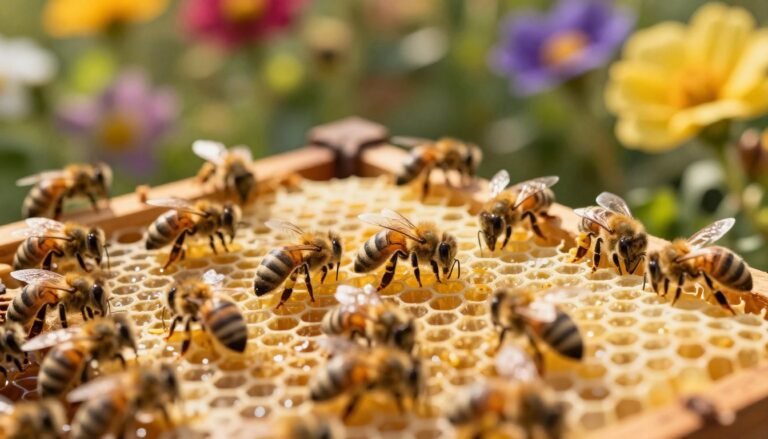
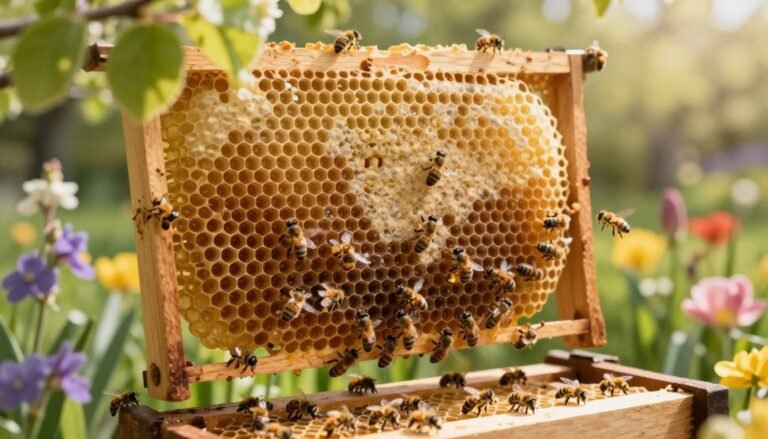
A deep Langstroth frame holds about 6,900 worker cells. A vigorous young queen may lay over 2,000 eggs in one day. These figures shape how population and brood fill comb and drive expansion.
New beekeepers often start with packages, yet nucleus colonies offer established brood and a laying leader. Tracking worker lifespan, near 35 days, helps set realistic timelines for growth and winter prep.
Good entrance management and comb space let the colony use its resources and reach peak strength before cold weather. This section sets the stage for practical counts and care tips that follow.
Key Takeaways
- Frame cell counts and queen laying rate determine population momentum.
- Worker lifespan affects brood turnover and space needs.
- Nucleus starts offer immediate brood advantage over packages.
- Monitor comb coverage to judge colony strength and growth.
- Manage entrance and feed timing to support expansion.
Understanding the Role of a Nucleus Colony
A nucleus colony forms the core unit that drives hive expansion and seasonal buildup.
A nucleus, often called a nuc, is the central foundation for growth. It contains brood, stores, and a laying queen in a compact space. This setup gives beekeepers a manageable unit to monitor health and performance.
Defining the Nuc
Standard setup: modern beekeeping commonly uses a 5-frame nuc. That size balances enough workers to defend the cluster while keeping the colony small enough for focused care.
Benefits of Starting with Nucs
Nucleus colonies are smaller than full hives but include all parts needed to develop into productive units. Workers accept the queen faster than with packages, which reduces stress and loss.
- Reliable expansion thanks to existing brood and stores.
- Better swarm control and easier queen evaluation.
- Low-impact increases without weakening the main hive.
| Feature | 5-Frame Nuc | Full Hive |
|---|---|---|
| Typical components | Brood, queen, stores | Brood, larger population, multiple supers |
| Mobility | High — easy to move or transport | Low — heavy and bulky |
| Management focus | Queen quality and health | Resource flow and production |
For practical transport and housing options, consider a well-reviewed nuc box when you move nucleus colonies: best nuc box for transporting bees.
How Many Frames of Bees Should a Strong Nuc Have
Estimating worker coverage per comb helps set realistic targets for a healthy nucleus colony.
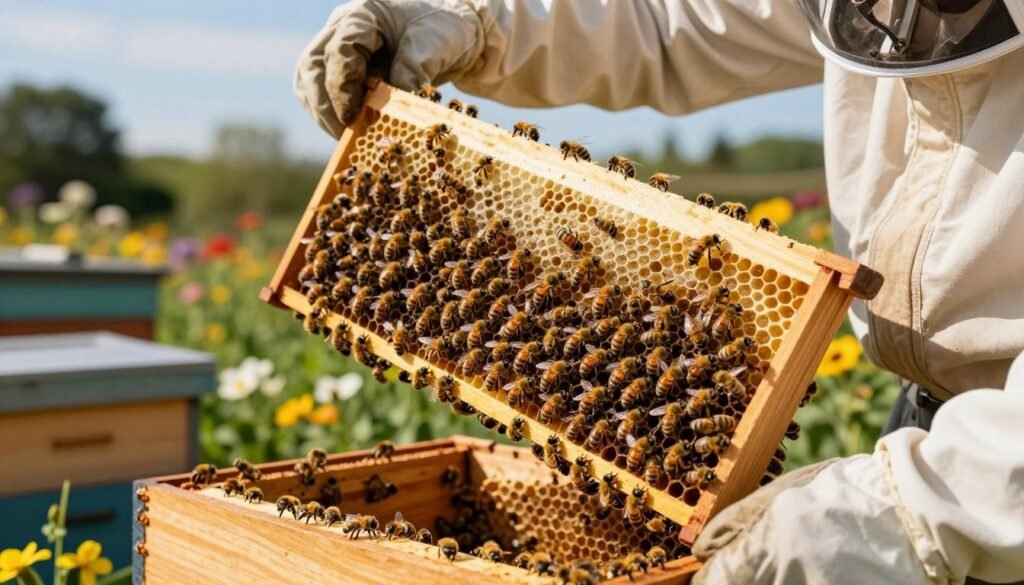
Use 2,000 workers as a working figure for a deep frame. That allows quick math when planning growth in a 5-frame nuc box.
A well-built start will include two to three brood-rich frame surfaces. At about 65% brood coverage, two frames produce roughly 4,500 new workers over time.
Keep the queen’s laying rate under observation. Frame counts change with eggs, brood, and seasonal conditions. In cool weather, extra workers are vital to warm developing brood.
“A frame with adequate stores plus brood and a laying queen gives the best chance for steady growth.”
Practical checklist:
- Include one honey frame, one brood frame, and space for laying expansion.
- Ensure comb quality and feeder access in the nuc box.
- Monitor cluster size and add support or move frames when growth stalls.
| Metric | Typical Value | Management Tip |
|---|---|---|
| Workers per deep frame | ~2,000 | Use for quick sizing checks |
| Brood coverage for growth | 65% per key frame | Supports ~4,500 workers |
| Common housing | 5-frame nuc box | Balance mobility and brood support |
For modeling growth rates and planning expansions, consult practical buildup guides like modeling nuc buildup and resources on purchasing options such as this buying packages and nucs.
The Importance of Brood Density for Colony Growth
Brood density sets the tempo for colony expansion during buildup seasons.
Calculating Brood Coverage
Brood capacity matters. A deep Langstroth frame contains over 6,900 worker cells; at 90% fill that equals about 6,200 brood cells. High density gives the queen thermoregulated space to keep laying.
John Harbo found peak efficiency near 4,500 workers, which covers roughly 2.3 comb surfaces. Look for about 65% coverage on a key frame — close to 4,500 developing larvae or pupae.
“Brood density is a limiting factor for buildup because the queen needs warm cells to continue laying.”
New workers emerge about 20 days after eggs are laid. Without enough workers to warm comb, growth stalls. Manage comb and brood so the nucleus can transition into a full hive.
| Metric | Value | Action |
|---|---|---|
| Cells per deep frame | ~6,900 (90% = 6,200) | Target high-quality brood frames |
| Efficient worker count | ~4,500 | Maintain ~65% coverage |
| Development time | ~20 days | Plan feeding and support |
For details on parent colony makeup used to create a nucleus, see typical composition of a strong parent.
Evaluating Queen Quality and Laying Capacity
Queen productivity sets the pace for brood buildup in any small starter colony.
Look at egg pattern first. A uniform, dense pattern signals good fertilization and steady daily output. Age is best judged by the number of eggs fertilized, not the calendar.
Second-season queens can remain productive. Still, they often show higher swarm drive by late summer. Monitor them closely and note any drop in laying rate.
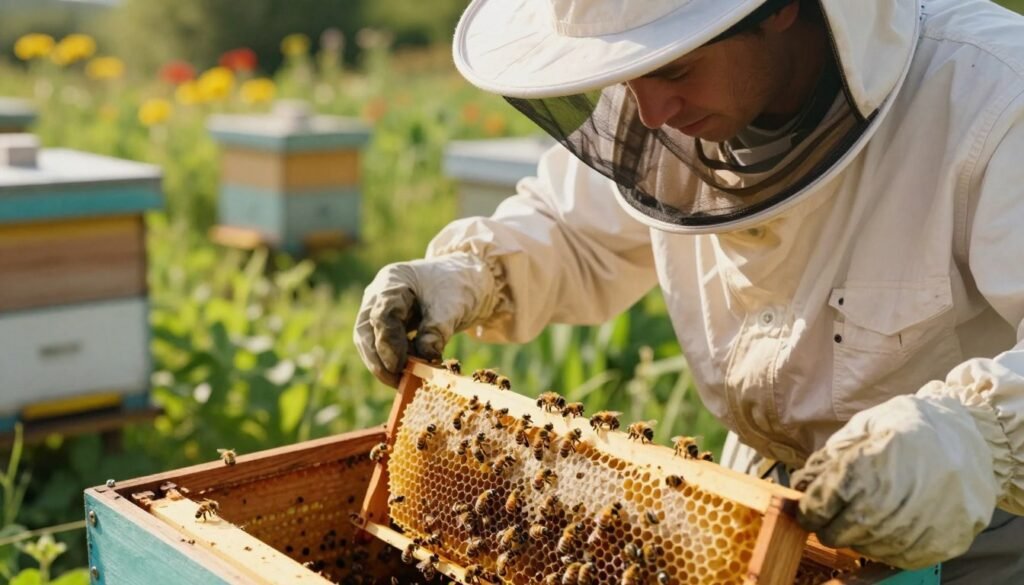
Be ready to replace poor performers. Ruthless culling keeps overall apiary health high. If brood frames show patchy coverage or spotty hatch, swap the queen or use a new queen cell and allow time for mating and laying.
- Young queens in compact starter colonies may not reach full output until given room.
- Using a queen cell delays buildup while the new queen emerges and mates.
- Replace failing queens before winter to protect colony strength.
| Metric | Good Sign | Action |
|---|---|---|
| Egg pattern | Uniform, tight cells | Continue usual care |
| Laying rate | Steady daily coverage on frames | Monitor stores and brood |
| Seasonal behavior | Increased swarm prep in 2nd year | Inspect and requeen if needed |
For practical checks on population and disease risk before purchase or requeening, see an inspection guide and typical counts for starter colonies: inspect purchased nucs and typical nuc counts.
Comparing Different Nuc Configurations
Different starter options set the pace for population growth and honey capture in early season. Choice of starter determines time to reach full hive strength and how soon the colony can exploit nectar flows.
Package Bee Dynamics
Package installs lack brood and comb, so they take longer to form stable brood nests. Nolan’s study shows such colonies peak near ten weeks after setup.
That delay means later honey potential unless the beekeeper provides drawn comb and strong feeding.
Ripe Queen Cell Methods
Using a ripe queen cell in a 5-frame setup mimics natural replacement. Expect about 65 days to reach 20-frame strength with one brood frame plus a queen cell.
“A natural transition via queen cell buys acceptance but costs time while the new queen mates and begins laying.”
Small Nuc Applications
Small nucleus boxes serve for mating queens, sales, or holding stock. They grow slowly but rarely swarm.
Add a third brood frame and you can cut buildup to roughly 48 days, boosting honey capture when weather and nectar align.
| Configuration | Typical feature | Expected buildup time |
|---|---|---|
| Package | No brood, new workers only | ~10 weeks to peak (Nolan) |
| 5-frame with queen cell + 1 brood | Established brood, mating delay | ~65 days to 20-frame strength |
| 5-frame with 3 brood frames | High brood density, faster growth | ~48 days if weather is good |
Choosing the right configuration depends on your calendar, local nectar flow, and whether you need queens for sale. For a decision guide comparing starts, see which start to choose.
Managing the Transition from Nuc to Full Hive
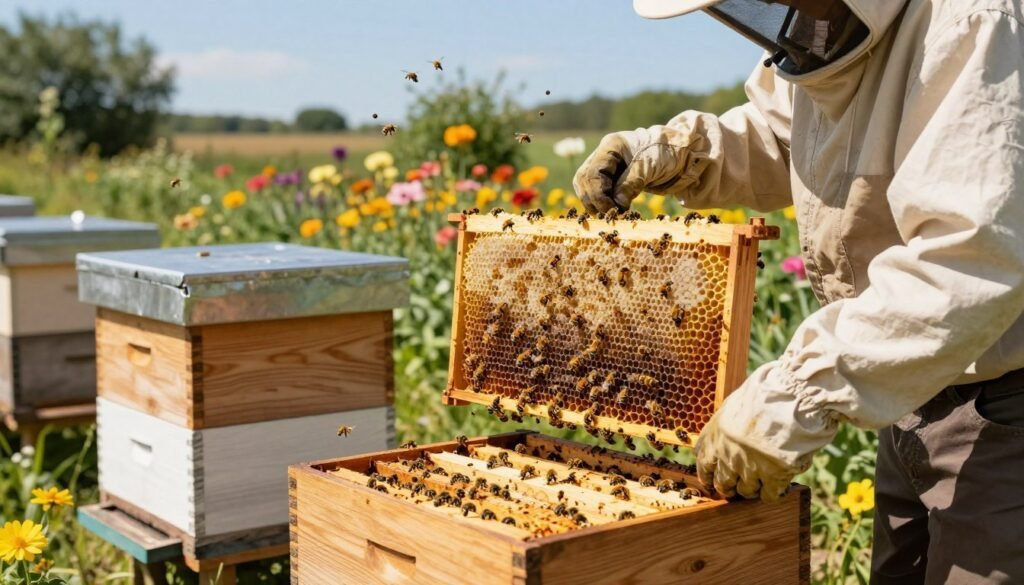
Placing the established comb in the middle of the new hive encourages workers to expand outward and fill space. Centering the brood cluster promotes even traffic flow and makes sure the queen finds warm, consistent cells for laying.
Move the frames when the box feels crowded. Overcrowding raises the swarm impulse and risks losing brood and workers. Keep the frames in the same order to preserve brood structure and pheromone patterns.
Support the colony during the first weeks by offering a light sugar syrup feeder. Feeding helps sustain brood rearing while the hive adjusts and draws new comb.
- Place frames centrally to guide expansion outward into empty frames.
- Watch for crowding and add space before the colony shows swarm signs.
- Use a feeder to maintain brood production during the move.
- Keep brood, stores, and queen arrangement intact to reduce stress.
“A timely and orderly move preserves growth momentum and helps the colony exploit the summer honey flow.”
For timing guidance on when to move and to boost population naturally, see this moving timetable and tips to boost colony population.
The Impact of Seasonal Weather on Colony Buildup
Spring warmth and late freezes both shape how fast brood and population rise in the hive.
Cold snaps force workers to focus on thermoregulation. That pulls workforce energy away from brood care and comb drawing.
Heat waves also reduce foraging and can stress the queen. Reduced intake of pollen and nectar slows growth.
Lengthening days in spring trigger the queen to raise her laying rate. This natural cue helps a nuc expand toward full hive size.
Beekeepers should track local bloom timing and pollen amounts. Aligning nuc creation with peak nectar flow gives the best chance for rapid buildup.
“Using survivorship models like Lloyd Harris helps predict how weather shifts change worker survival and colony growth.”
- Extreme temperature diverts workers from brood care.
- Spring day length boosts queen laying and brood expansion.
- Low pollen or nectar supply chokes growth and reduces honey stores.
- Unprepared nucs may lose population during sudden winter-like returns.
| Factor | Effect on Buildup | Practical Tip |
|---|---|---|
| Late freeze | Stops brood rearing; raises mortality | Use insulation and limit inspections |
| Warm spring | Increases laying rate and foraging | Prepare extra frames and feeders |
| Low pollen | Slows brood development | Provide pollen substitute or place near blooms |
| Heat stress | Reduces foraging and hive cooling | Offer shade and water source |
Strategies for Successful Walkaway Splits
Dividing a productive hive into two forces the queenless half to rear a successor from existing larvae, expanding the apiary without buying queens. Walkaway splits are a cost-effective start for beekeepers who want to grow colonies from existing stock.
Prepare the queenless unit with plenty of brood, pollen, and stored honey so workers can feed developing larvae and raise a quality queen. Expect a delay: no new eggs are laid until the replacement completes mating and begins laying.
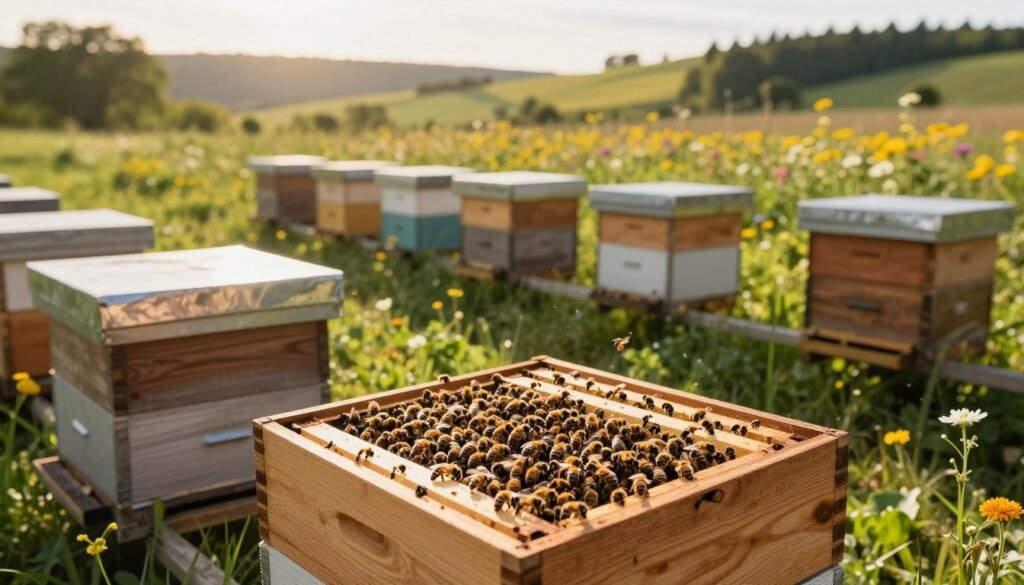
Winston’s work notes that removing excess queen cells reduces swarm risk. Trim surplus cells to guide the colony toward one healthy queen and to limit chaos during the emergence window.
Monitor the split closely. The beekeeper should watch for signs of poor brood rearing, mite spikes, or insufficient stores, and be ready to intervene or combine if growth stalls. This process also offers a window to reduce varroa through population disruption.
“Removing excess queen cells in walkaway splits can help prevent swarming.”
- Ensure brood and stores are present before making the split.
- Remove extra queen cells to lower swarm chance.
- Expect slower buildup than with a ripe queen cell start.
- Use the split to manage varroa and increase colony numbers economically.
Essential Equipment for Housing Your Nuc
Choosing the right housing keeps a small colony warm, secure, and ready to expand. The shelter you pick affects brood survival, handling, and transport.
Choosing Between Polystyrene and Wood
Polystyrene nucleus hives are lightweight and insulate well. That thermal benefit helps the brood maintain steady temperature and reduces feeding needs in cool spells.
Wooden boxes offer time-tested durability. They resist crushing and stand up to rough handling, though they may need painting or repairs over years.
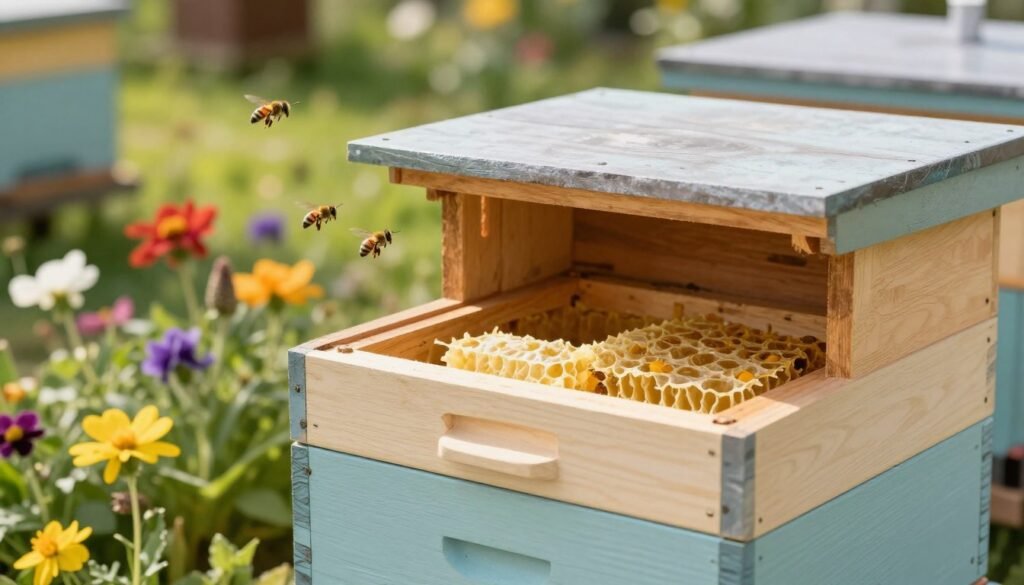
Most beekeepers opt for a 5-frame nuc box for standard moves. Six-frame versions give extra room but add weight and cost.
- Insulation: poly leads in cold climates; wood breathes in humid sites.
- Mobility: lighter material makes transport between apiaries easier.
- Entrance management: a reducer is essential to prevent robbing and to control traffic.
- Quality matters: a snug lid and tight joints let the colony hold heat around brood frames.
“Match the box material to your climate and handling needs to give the nucleus hive the best start.”
Preventing Overcrowding and Swarming
Early space management keeps colonies focused on growth instead of splitting.
Regular inspections help you spot crowding early. Open the box briefly, check brood layout, and note any signs that the colony plans to divide.
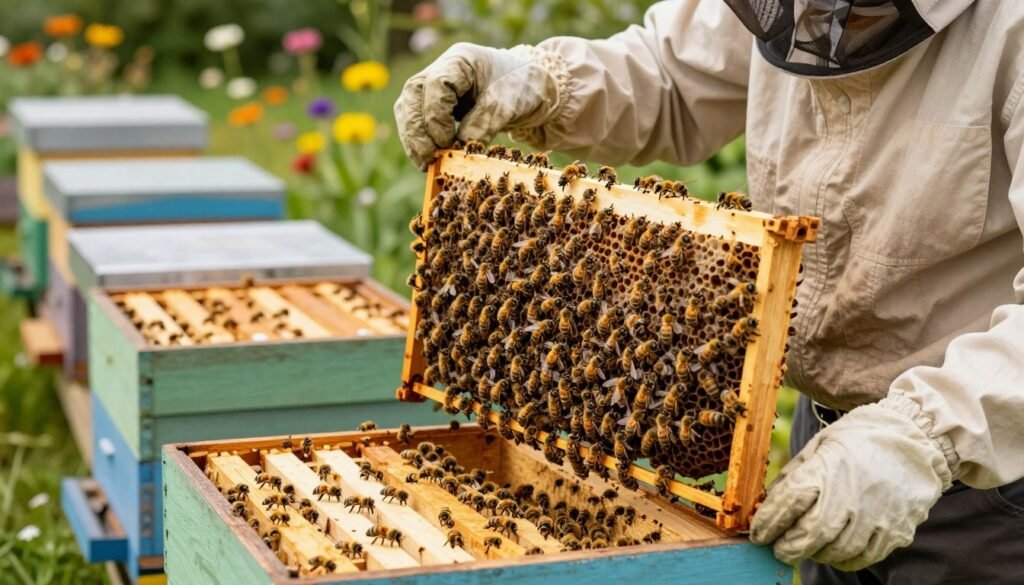
If the queen runs out of room to lay, workers will start building queen cells. Those cells are the clearest sign that the colony plans to swarm.
Act fast: add an extra drawn comb or move the colony into a larger hive before queen cell construction progresses. That simple step often ends the swarm impulse.
“Timely management of hive space keeps the colony strong and foraging through the season.”
- Inspect weekly during buildup to prevent restrictions.
- Provide laying room to keep the colony focused on brood and stores.
- Remove or manage queen cells only when you understand the colony’s status.
| Sign | Recommended Action | Timing |
|---|---|---|
| Tight cluster on frames | Add an empty comb or box | Within 3–7 days |
| New queen cells | Evaluate and add space or requeen | Immediate |
| Heavy traffic at entrance | Reduce entrance congestion; give room | Same week |
For detailed techniques and preventative steps, read this guide to prevent swarming.
Conclusion
Consistent care and timely choices set successful colonies apart. Use steady inspections, quality housing, and balanced brood-to-resource ratios to keep growth on track.
Startups that receive prompt support tend to expand faster into full production units. Choose equipment that matches climate and lifting needs, and add space before congestion appears.
For those weighing options, consider the benefits of a 6-frame option and review an apiary productivity guide for planning and resource tips.
Apply these strategies and you can steward resilient colonies that reward careful management with higher yields and lower losses.
FAQ
What is a nucleus colony and why do beekeepers use it?
A nucleus colony, or nuc, is a small, established unit of bees placed into a compact box with a queen, brood, workers, and food stores. Beekeepers use nucs to start new hives, replace failing colonies, or introduce strong genetics. Nucs reduce stress compared with packages and speed up comb building and brood rearing.
What should be included when selecting a quality nucleus box?
Choose a box with secure ventilation, a reliable entrance reducer, and frames with drawn comb if possible. Insulated polystyrene boxes retain heat better during cool weather, while wooden boxes are durable and easier to repair. Ensure frames fit snugly to prevent drifting and robbing.
How does brood density affect early colony growth?
Brood density drives population increase because sealed brood produces worker bees that expand the colony. High brood coverage signals a strong laying pattern and faster buildup. Monitor brood area regularly to time feeding and supering for optimal growth.
What indicators show a queen has good laying capacity?
Look for consistent, even patches of eggs and brood across several frames, low numbers of queen cells, and calm colony behavior. A laying queen maintains steady brood production; a drop in brood area or spotty frames suggests reduced capacity or health issues.
How do packages compare with nucs when starting a hive?
Package bees arrive without comb and require more initial work to draw comb and establish brood. Nucs arrive with brood and stores, so colony strength is immediate and queen introduction is already resolved. Packages offer genetic variety, while nucs provide speed and lower initial risk.
When are ripe queen cells a good option for producing new colonies?
Ripe queen cells can create new units quickly in walkaway splits or when local mating conditions are favorable. Success depends on timing, available foragers, and weather for mating flights. Use ripe cells when you need rapid multiplication and have resources to support both units.
What are typical uses for small nucleus colonies?
Small nucs serve as queen rearing starters, mating nucs, or temporary shelters for rescuing swarms. They also act as test colonies for breeding or disease management. Small units require careful feeding and monitoring to avoid starvation or collapse.
How should the transition from a nucleus to a full hive be managed?
Move the nuc into a full hive box when foraging and brood patterns show steady growth. Add empty frames or drawn comb to give space, increase entrance size gradually, and provide supplemental sugar or pollen if forage is limited. Monitor for robbing and queen performance during expansion.
What role does seasonal weather play in colony buildup?
Temperature and nectar flow determine growth windows. Spring warmth and abundant forage enable rapid population increase, while cold snaps or heavy rains slow brood rearing and foraging. Adjust feeding, insulation, and management timing to match local weather patterns.
What are best practices for walkaway splits to ensure success?
Use frames with mixed stages of brood, adequate nurse bees, and a source of food stores. Leave a queen cell or introduce a mated queen, and place splits in shaded, sheltered locations. Regularly check for queen acceptance, brood pattern development, and sufficient worker numbers.
How can beekeepers prevent overcrowding and reduce swarming risk?
Provide space by adding boxes or honey supers, rotate frames to balance brood and stores, and perform regular inspections to catch swarm cells early. Proper ventilation, hive positioning, and ensuring a strong queen with ample laying room also help control swarming impulses.
What essential equipment is recommended for housing a nucleus colony?
A compact nuc box with matching frames, an entrance reducer, and secure lids are essential. Consider using polystyrene nucs for better insulation in cooler climates and wooden ones for longevity. Include feeders, protective clothing, and tools for safe handling.