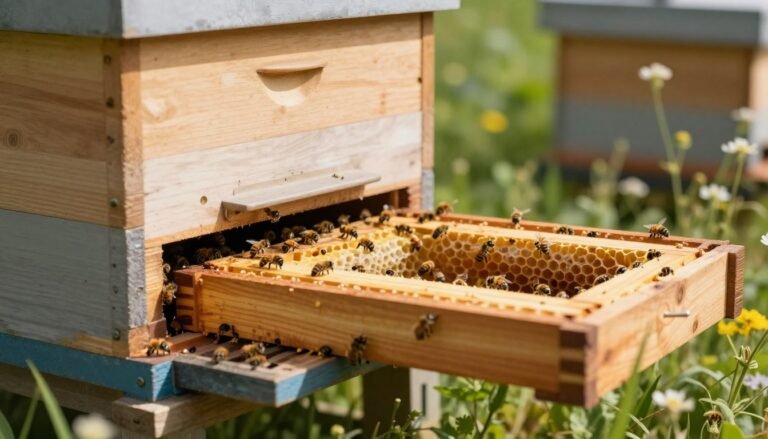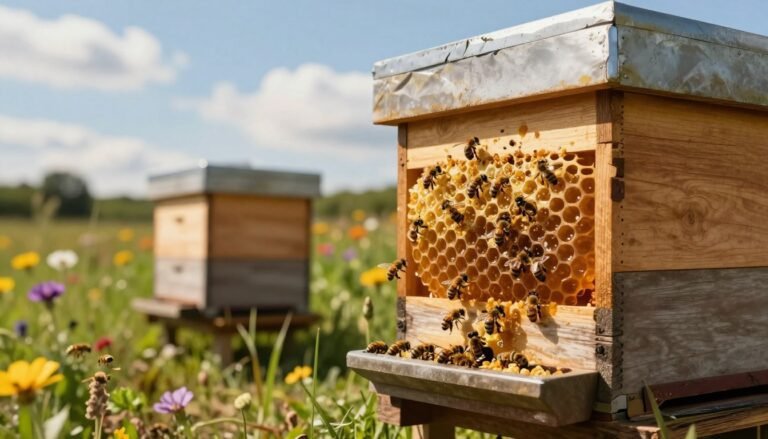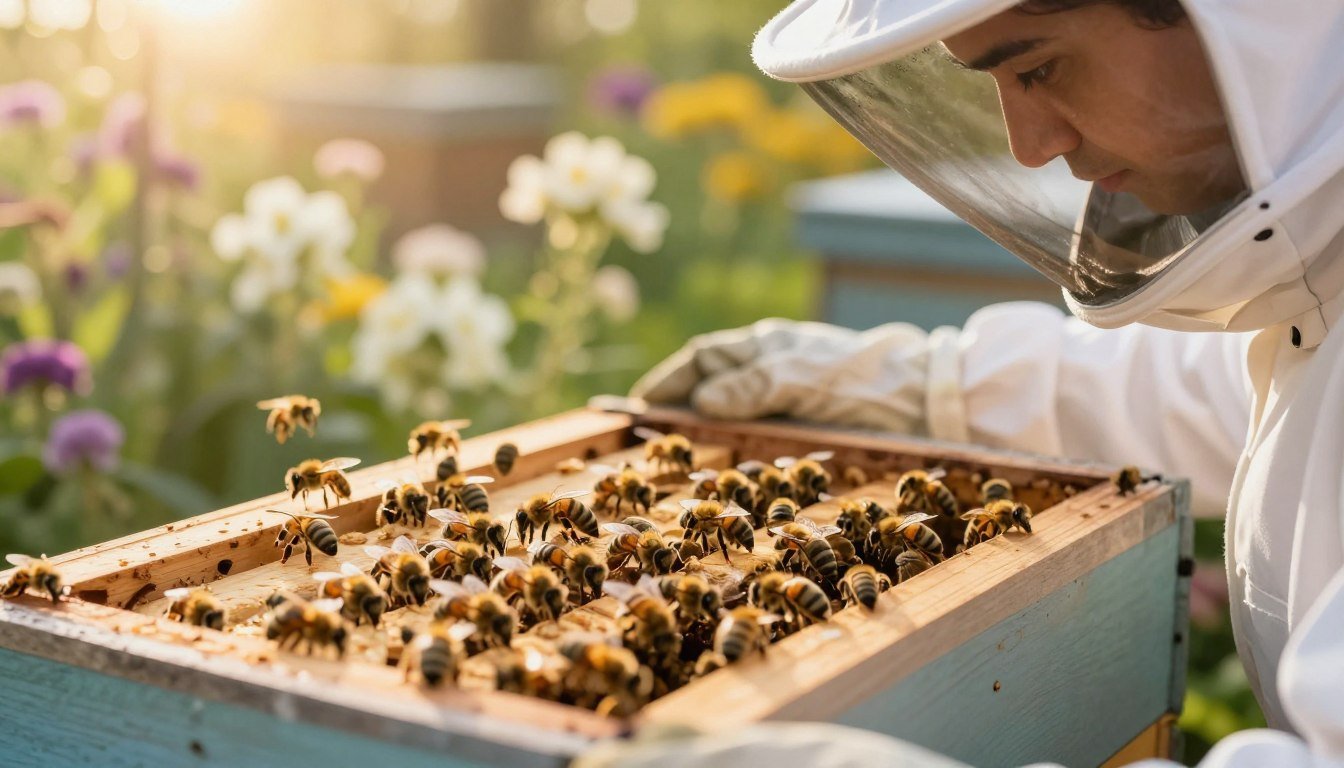
Starting a new 3‑pound package demands a clear plan for mite control and colony health. Bill Hesbach of Wing Dance Apiary in Cheshire, CT highlights the need to track seasonal varroa cycles while installing a new hive.
Early days set the tone for queen acceptance, brood development, and long‑term honey production. A couple of weeks after installation, inspect for a laying queen and expanding frames. Follow label directions for any treatment to avoid contaminating hive stores.
Manage varroa proactively with a mix of methods. Consider organic acid or a targeted strip option as part of a seasonal treatment plan. Use monitoring techniques such as sugar shake or sticky boards to assess mite levels and guide action.
For practical week‑by‑week care and feeding recommendations, consult this installation and early management guide. For seasonal mite tactics, see the varroa management plan.
Key Takeaways
- Establish a treatment plan at installation to protect queen and brood.
- Monitor mites with sugar shake or sticky boards before treating.
- Rotate treatments and include mechanical controls to delay resistance.
- Follow product labels to protect honey and hive health.
- Check queen laying and colony growth within a couple of weeks.
Understanding the Risks of Varroa Mites in New Colonies
Varroa infestations drive rapid declines in colony health and shorten the lifespan of worker bees. High mite loads cut the life of adult workers, reduce foraging, and undermine winter buildup.
The impact on winter survival is stark. In northern climates, colony losses in December often trace back to varroa damage accumulated over the season. A hive that carries heavy mite pressure through spring and summer rarely survives the cold months.
The Impact of Mite Loads on Winter Survival
Research shows that over several months mites can decimate a colony. Heavy infestations reduce brood production and leave fewer long‑lived winter bees to sustain the hive.
Why New Packages Are Vulnerable
New package colonies lack established brood rhythms that limit mite reproduction. Mites reproduce inside capped brood, so rapid brood cycles in spring let populations explode.
Early weeks matter. Proper treatment during the first weeks helps ensure the bees raising winter bees are healthier and less infected.
| Risk Factor | Effect on Colony | Mitigation |
|---|---|---|
| High mite load | Shorter worker lifespan; reduced winter bees | Monitor counts; targeted treatment |
| Rapid brood cycles | Fast mite reproduction inside capped brood | Time interventions in spring and summer |
| New package status | Lack of resistance from established colony patterns | Start with clean stock; early checks |
| Seasonal accumulation | Progressive damage leading to winter loss | Rotate methods; monitor through months |
For detailed protocols on treatment timing and options, consult this varroa treatment lecture and a formic vs oxalic comparison for method tradeoffs.
Should You Medicate Package Bees?
A clear treatment plan often makes the difference between early colony success and loss.
For beginners, a conservative approach is common: targeted treatment helps protect the queen and developing brood while skills develop. Many new colonies arrive from commercial sources that lack mite tolerance, so early intervention can prevent rapid mite buildup.
Avoid blanket, “just in case” applications. Unnecessary interventions raise exposure risks for the queen, harm drone fertility, and may contaminate hive stores. Follow label directions exactly when applying any treatment to protect honey quality and hive health.
Some keepers accept annual losses and pursue treatment‑free programs, often pairing that choice with selective breeding for hygienic traits. For guidance on breeding and hygienic predisposition, see this hygienic behavior resource.
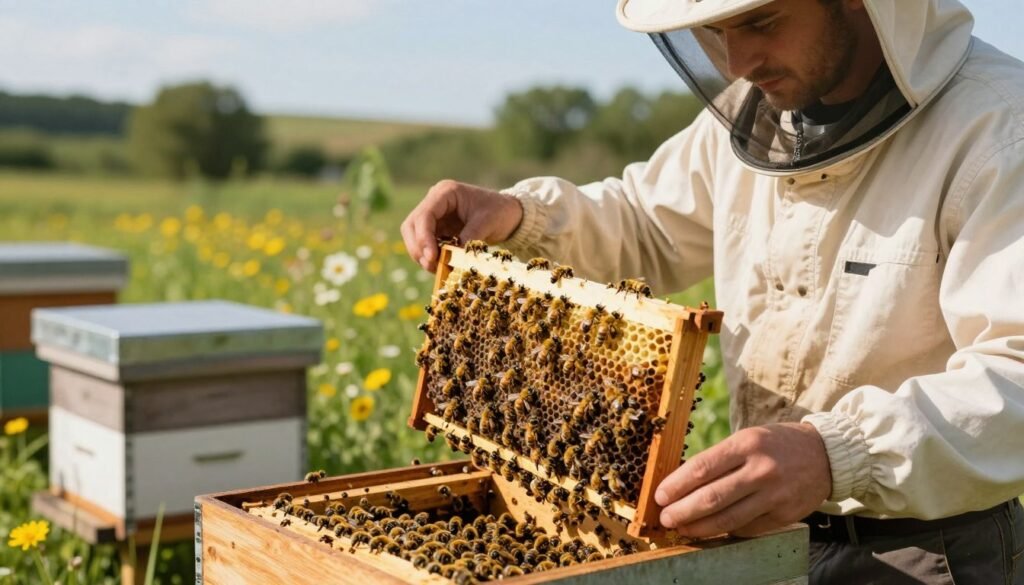
For practical medical guidance and safe practices, consult authoritative sources such as the Honey Bee Medicine handbook. The presence of varroa in a new package is common; the decision to treat depends on goals, risk tolerance, and a plan to monitor mite counts and colony growth.
Evaluating Organic Treatment Options
Selecting an organic method depends on brood status, local temperatures, and colony goals. Match timing and dose to protect the queen and developing brood while reducing varroa pressure.
Formic Acid Applications
Formic strips kill mites under capped brood and work when brood is present.
Avoid use above 85°F daytime highs. Read product directions for strip count and placement to limit harm to the queen and honey stores.
Oxalic Acid Vaporization and Dribble
Oxalic treatments excel when no brood is present. Vaporization or dribble targets mites in the dispersal stage.
Apply on a cool day (around 50°F minimum) and consider a sugar spray beforehand so workers fill honey stomachs and reduce acid ingestion.
Thymol-Based Treatments
Thymol gels or trays offer a plant-derived option with antiseptic properties.
Monitor daytime temperatures closely to avoid overheating the colony. Multiple applications may be required; follow label timing and amounts precisely.
| Method | Works With Brood? | Temperature Notes | Key Precautions |
|---|---|---|---|
| Formic acid (strips) | Yes | Avoid >85°F | Control strip count; follow label |
| Oxalic acid (vapor/dribble) | No — best when broodless | Apply on cool days (~50°F+) | Wear PPE; limit amount; sugar spray helps |
| Thymol (Apiguard type) | Partially | Watch daytime temps carefully | Stagger applications; protect queen laying brood |
Organic options are generally safer than synthetics but demand care. Pair treatments with monitoring tools and consult resources on local mite thresholds and practical treatment guidance.
Seasonal Management and Treatment Timing
Timing matters more than frequency. Plan interventions around brood cycles, daytime highs, and inspection windows to keep mites low from spring through winter.
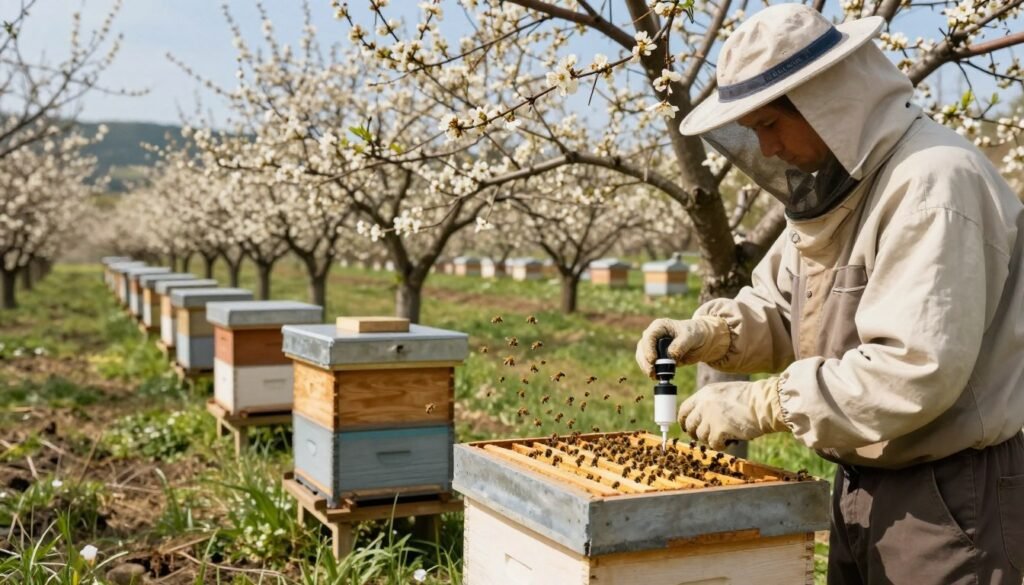
Ten weeks after installation (roughly June) is a key checkpoint. Assess colony strength and, if mite counts are high, apply a formic acid strip now and again in early June to hold levels into late summer.
Late August or the first week of September calls for an aggressive control aimed at ~80% kill to protect winter buildup. Rotate options to slow varroa resistance and protect honey quality.
For broodless winter treatment, use oxalic acid dribble or vaporization in late November when no brood is present. Nucs require gentler choices because the queen is actively laying brood.
| Window | Action | Notes |
|---|---|---|
| Early spring | Monitor; plan rotations | Goal: low mite baseline |
| June (~10 weeks) | Formic acid option | Second formic helps through summer |
| Late Aug–early Sept | High-efficacy treatment (~80% kill) | Prepares colonies for winter |
| Late Nov | Oxalic dribble/vapor | Broodless timing maximizes impact |
Always check daytime highs and avoid Apiguard when honey supers are on. For a practical timeline, consult the seasonal proactive varroa schedule.
The Importance of Monitoring and Mite Counts
Small, frequent tests offer the best insight into varroa trends in a hive. Routine checks after installation and during active weeks let managers catch problems early.
Sugar Shake and Alcohol Wash Methods
Sugar shake keeps the sample alive and is ideal for quick field checks. Collect a half cup of bees (about 300) from the brood area. Gently add powdered sugar, shake, and count fallen mites.
The alcohol wash kills the sample but gives a clean count. Add alcohol to the collection jar in the apiary, agitate, then strain to tally mites. Always check the jar to avoid capturing the queen.
| Method | Sample Size | Result Metric | Action Threshold |
|---|---|---|---|
| Sugar shake | ~300 bees (½ cup) | Mites counted per 300 | >5% → consider treatment |
| Alcohol wash | ~300 bees | Mites counted per 300 | >5% → consider treatment |
| Record keeping | N/A | Seasonal trend of mite counts | Track to judge treatments |
Keep simple records of mite counts and dates. Even treatment-free operations benefit from data on colony resistance. A couple minutes of monitoring can avert major losses and guide the next treatment choice.
Further reading on interpreting results is available in an understanding mite counts guide, and detailed steps for the alcohol wash method.
Conclusion
Conclusion — practical goals for healthy hives.
Consistent tracking of mite counts guides safer, lower‑impact interventions for long‑term hive health. Regular monitoring lets managers pick a targeted treatment and limit damage over months. Organic choices like oxalic acid dribble or vaporization reduce residue in wax while cutting mite loads.
Prioritize queen and brood health when planning spring and fall work. A clear seasonal plan keeps colonies robust through the year and helps the bees live longer and stronger into winter. Solid record keeping and timely action make beekeeping outcomes predictable and aligned with the goal of healthy hives.
FAQ
What is varroa and why does it matter for new hives?
Varroa destructor is a parasitic mite that feeds on adult and developing bees. High mite loads weaken colonies, spread viruses such as deformed wing virus, and reduce winter survival. New colonies installed from packages or nucs face high risk because mites reproduce quickly when the queen is laying brood.
Are packages and nucs equally vulnerable to mite infestations?
Both are vulnerable, but differences exist. Nucs arrive with established brood and often carry a queen already laying, so mites can be hiding in brood cells. Packages bring adult workers and a caged queen with less brood initially, so immediate mite reproduction may be lower. Still, both require monitoring and timely action based on mite counts.
When is the best time to treat a newly installed colony for varroa?
Treating early in the season, before peak brood rearing, reduces mite buildup. Many beekeepers aim for treatment within the first few weeks after installation or before major nectar flows. The exact timing depends on queen laying status, local climate, and mite levels measured with a sugar shake or alcohol wash.
What non-chemical options help control varroa in new colonies?
Non-chemical strategies include using hygienic stock, drone brood removal, screened bottom boards, and frequent monitoring. These methods reduce mite pressure but rarely eliminate the need for targeted organic treatments when thresholds are exceeded.
How effective is oxalic acid for newly established colonies?
Oxalic acid is highly effective against phoretic mites (on adult workers) when brood levels are low. Vaporization or dribble works best when brood is minimal or during brood breaks. If the queen is laying heavily and brood is present, oxalic acid alone will not reach mites inside capped cells.
What safety precautions are required when using oxalic acid?
Wear proper PPE: a respirator rated for organic acids, gloves, and eye protection. Follow manufacturer instructions for dosage and application. Ensure adequate ventilation during vaporization and avoid contamination of honey supers unless using approved methods and timing.
How do formic acid and thymol compare for treatment in early spring?
Formic acid can penetrate capped brood and reduce mites within cells, making it useful when brood exists. Thymol products (ApiLife Var, Apiguard) work in warm conditions and require sustained contact time. Both require careful temperature windows and adherence to label instructions to avoid queen harm or colony stress.
What are the practical differences between dribble and vapor oxalic applications?
Dribble (liquid) involves applying diluted oxalic to bee clusters and offers direct contact but risks syrup contamination. Vaporization delivers acid fumes that coat bees quickly and is efficient for larger operations. Vapor requires specialized equipment and strict safety measures; dribble is simpler but less effective with brood present.
How often should mite counts be performed after installation?
Perform baseline counts at installation, then repeat every 2–6 weeks through the active season, increasing frequency if mite levels climb. Use a sugar shake or alcohol wash to quantify phoretic mites and compare against action thresholds to decide on treatments.
What thresholds indicate treatment is necessary for a new colony?
Thresholds vary by method, but many beekeepers treat when alcohol wash results exceed 3%–5% mites (3–5 mites per 100 bees) or when sugar shakes show sustained upward trends. Consider local recommendations and colony strength when deciding.
Can treatments harm the queen or brood?
Some treatments carry risks. Formic acid can stress or kill queens if misapplied; thymol may cause brood disruption in high temperatures; improper oxalic use can burn tissue or contaminate honey. Follow product labels carefully and avoid treating honey supers unless approved.
Is it necessary to treat immediately after installing a package or nuc?
Immediate blanket treatment is not always required. Make an initial mite count and assess queen laying and brood levels. Early treatment is prudent if counts are high or if bringing in colonies from areas with known varroa pressure. Targeted, evidence-based treatment reduces unnecessary chemical exposure.
How do sugar shake and alcohol wash methods differ for mite monitoring?
Both estimate phoretic mite levels. Sugar shakes use powdered sugar to dislodge mites and are bee-friendly but slightly less accurate. Alcohol washes kill the sampled bees and usually yield more consistent counts. Choose the method that balances accuracy and colony impact.
What role does seasonal management play in varroa control?
Seasonality affects brood patterns and treatment efficacy. Spring and summer bring heavy brood rearing, making treatments that penetrate capped cells more valuable. Fall treatments aim to lower mite loads before winter to improve survival. Align interventions with local nectar flows and brood cycles.
Are there risks to honey quality from organic miticides?
When used according to label instructions and timed to avoid honey supers, organic miticides typically leave minimal residues. Always check product approvals, observe pre-harvest intervals, and remove or avoid treating colonies with full supers to protect honey quality.
What follow-up steps help ensure long-term colony health after treatment?
Continue regular monitoring, rotate treatment types to limit resistance, maintain good apiary hygiene, and manage nutrition and space to reduce stress. Integrate chemical and non-chemical tactics and keep records of mite counts, treatments, and queen performance.