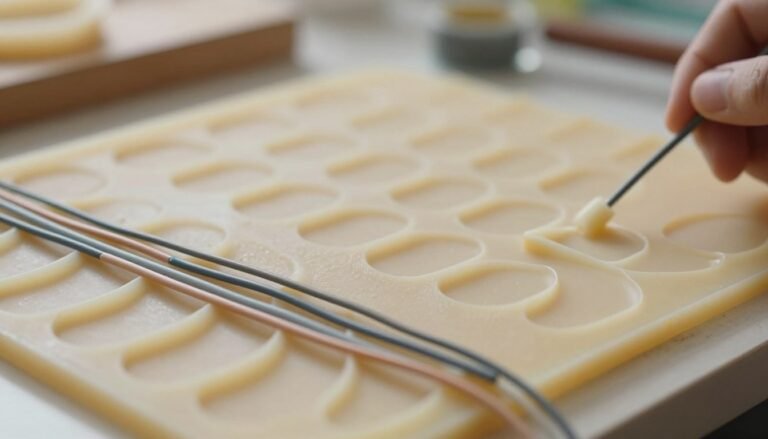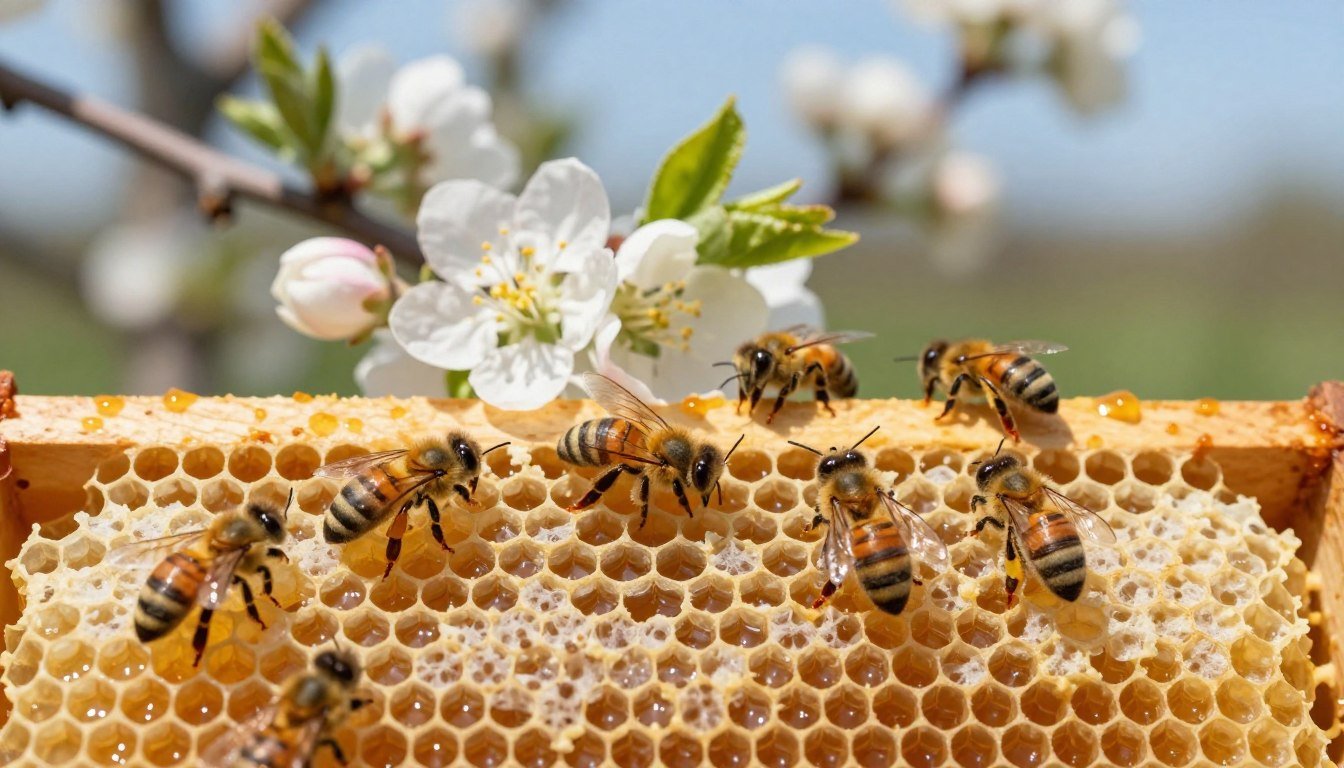
This article outlines why preserving pre-built hive structure matters for colony recovery after winter. Beekeepers who protect usable frames cut the time colonies need to reach full strength in early activity.
Understanding a colony’s needs during the cool months sets the stage for success. Good resource management reduces stress on bees and lowers the risk of early swarming.
Protecting drawn comb keeps brood patterns, stored pollen, and honey intact. That preservation helps hives exploit early nectar flows and recover faster when temperatures rise in spring.
Simple steps—freezing vulnerable frames briefly, sealing stored boxes, and labeling brood versus honey—save time and money. For detailed storage methods and pest prevention, see this practical guide on frame care: storing frames to prevent pests.
Key Takeaways
- Protecting pre-built frames speeds colony recovery after winter.
- Preserved brood and stores help hives use early nectar sources.
- Short freeze and airtight storage reduce pest risks.
- Labeling and separating frame types aids rotation and readiness.
- Good winter prep prevents stunted growth or early swarming.
The Vital Role of Drawn Comb in Hive Health
Usable comb inside frames gives a hive immediate capacity to raise young and store incoming nectar. A strong colony with existing comb spends less time on wax production and more on brood rearing and foraging. That shift speeds seasonal recovery and improves honey stores.
Essential Hive Functions
Comb serves multiple roles: brood cells, honey storage, pollen reserves, and winter clustering sites. Each empty cell used for honey is one fewer cells for the queen to lay eggs.
When frames are ready, the colony can expand the brood nest quickly. Experienced beekeepers treat drawn comb as valuable inventory and keep extra supers on strong hives to prevent bottlenecks.
The Risks of Backfilling
Backfilling happens when foragers deposit nectar in the brood nest. That practice restricts the queen and slows production of new bees for the season.
Adding a box of foundation demands heavy labor from the workforce. For guidance on rotation and timing to avoid these issues, see a practical note on frame rotation in hives and common reasons bees won’t draw foundation.
Understanding How Much Drawn Comb Boosts Spring Buildup
Immediate storage space turns a fleeting nectar pulse into lasting weight gain for the hive.
When a colony has ready cells, foragers drop nectar into empty comb instead of forcing house bees to process or digest it. This keeps the brood area free for the queen to lay.
If beekeepers miss a peak flow because frames or foundation are unavailable, that harvest can be lost for the year.
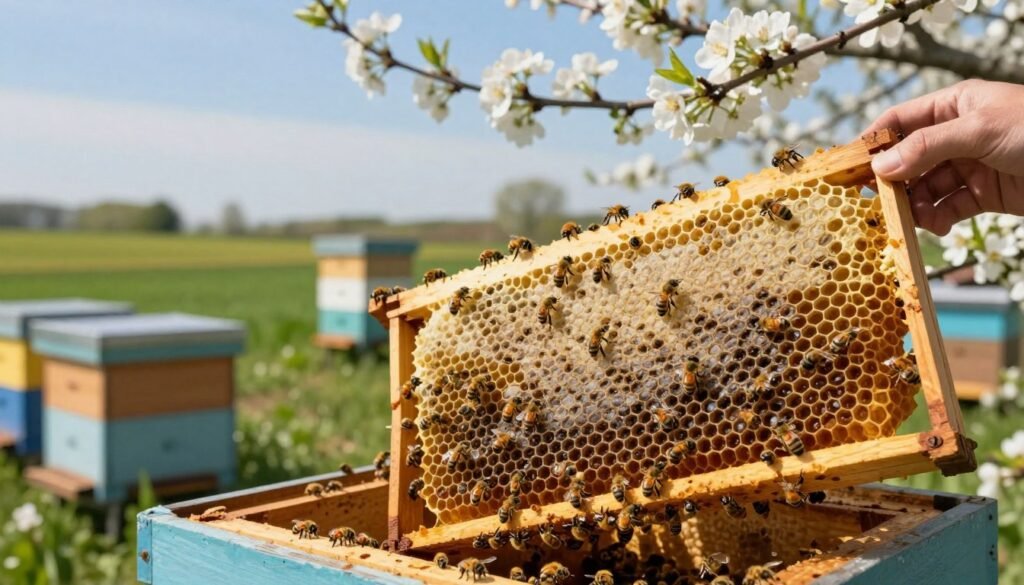
Practical benefits include faster colony growth and measurable weight increase when honey goes straight into stored cells. Adding empty supers and extra frames before a flow prevents wasted time on wax production.
- Space for nectar: allows bees to store rather than congest the brood nest.
- Labor savings: workers focus on brood and foraging, not building new comb.
- Capture opportunity: each undrawn frame is a missed chance during short flows.
In short, this article answers the question by showing that prepared colonies convert brief flows into lasting gain, provided managers supply drawn comb or adequate foundation and supers in time.
Why Bees Need Space for Brood Rearing
In early activity the colony’s main task is to expand the brood nest so new workers appear quickly. Without clear room to lay, the queen slows and growth stalls.
Prioritizing Space for the Queen
Bees need uninterrupted cells for steady egg laying. Every cell in the brood nest is a valuable resource and should not be filled with incoming nectar or honey.
Providing extra frames or foundation helps only when the colony has the right age mix of workers to build wax. A beekeeper who forces foundation into a weak h ive risks wasted effort.
“Protecting brood space lets the colony focus on raising the next generation rather than endless building.”
When a nectar pulse arrives, bees can prepare to swarm if space is mismanaged. Managing internal layout keeps workers on brood tasks and limits premature swarming behavior. For specifics on the conditions that favor comb production see conditions necessary for comb building.
| Priority | Effect on Colony | Practical Action |
|---|---|---|
| Protect brood nest | Steady egg laying by the queen | Remove excess honey from brood area |
| Provide frames/foundation | Space for storage and future brood | Add frames when workforce age suits wax production |
| Manage nectar flow | Reduces swarming triggers | Give supers before major nectar arrives |
Managing Comb Building During the Honey Flow
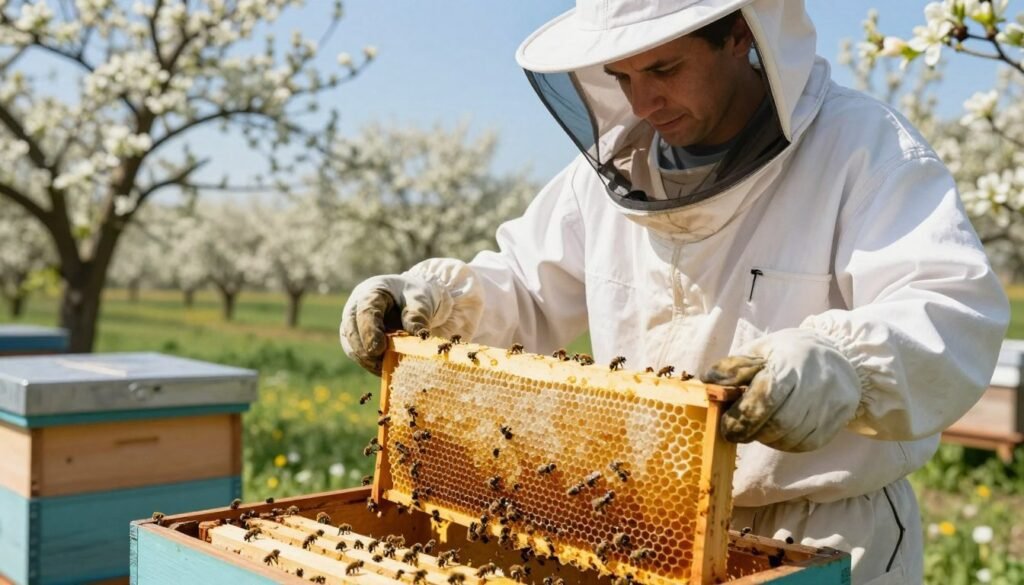
C sudden surge of nectar leaves no time for slow builders; readiness determines the harvest. A hive with empty cells can store incoming honey right away, while a hive without space risks backfilling the brood area or forcing workers to digest excess syrup-fed nectar.
Prepare before the bloom: add extra frames or a super so bees have immediate places to store. Without that space, the queen loses laying room and the colony’s growth stalls.
Balance matters: allow bees to store honey while protecting the brood nest. Each added box must be monitored so building stays in desired zones.
- Give empty frames or pre-made comb before the flow starts.
- Watch hive activity and add supers early, not after the peak.
- Prevent honey from entering brood cells to keep the queen laying steadily.
For practical tips about encouraging cells and preventing swarming during a flow, see this guide on getting bees to draw out comb and a note on signs that a hive may swarm: preparing to swarm.
| Challenge | Effect on Colony | Practical Step |
|---|---|---|
| Short nectar period | Lost harvest if no storage | Add frames/supers before flow |
| No empty cells | Brood area crowded | Shift honey to outer boxes |
| Workers processing nectar | Less brood care and foraging | Provide pre-built comb or foundation |
| Poor box management | Misplaced building effort | Monitor and reposition frames as needed |
Creating Ideal Conditions for Wax Production
Bees accelerate wax manufacture when the hive environment supplies fuel and easy access to feed. A clear plan—steady carbohydrates, warmth, and ample space—lets a colony convert energy into new cells with less delay.
Energy Requirements for Bees
Wax is expensive. For every pound of wax produced, a colony uses about six pounds of honey. That typically equals roughly one to two pounds per frame of new foundation.
Monitor hive weight so you can tell if bees are using stores or need supplemental syrup. A well-fed colony will spend more time on brood and drawing foundation than on searching for nectar.
Using Feeding Stimulants
When natural nectar is scarce, use a heavy 2:1 syrup to supply the calories bees need for wax work. Supply that syrup in a large bucket or top feeder so intake is quick and continuous.
- Avoid small entrance feeders: they limit flow and slow progress.
- Add lemongrass oil: a few drops in syrup act as a stimulant to attract bees to the feed.
- Keep feeders full: uninterrupted access supports steady construction.
| Need | Action | Result |
|---|---|---|
| Carbohydrates | Provide 2:1 syrup in large feeder | Faster wax and frame completion |
| Warmth | Position hive for sun, avoid drafts | Less brittle wax, easier building |
| Attraction | Add lemongrass to syrup | Higher feed uptake, quicker work |
For practical feeding strategies and step-by-step management, review a regional spring management guide and a note on encouraging bees to build comb faster: spring management guide and encouraging bees to build comb faster.
The Impact of Temperature on Comb Construction
Temperature determines whether bees can shape wax into neat cells or are left with brittle, unusable sheets.
The brood nest stays warm and acts as the best site for building. Bees work wax easily near that core, so place foundation directly adjacent to the brood nest.
As soon as a frame is partially drawn, move it toward the outside of the box. This frees center space for fresh foundation and prevents tunneling up the center of the hive.
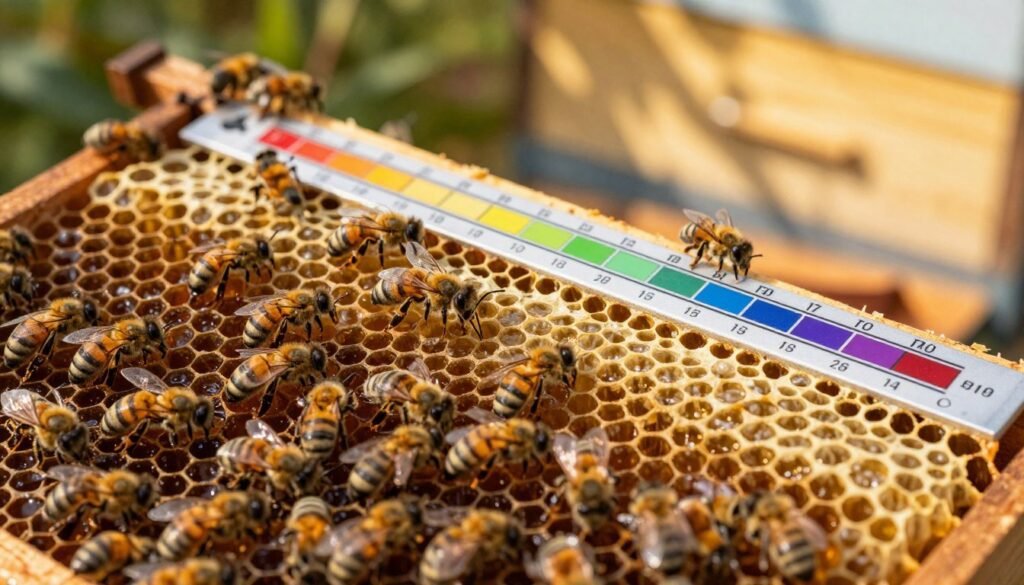
In horizontal systems add new frames between honey stores and the brood nest to keep them in the warmest zone. Timing matters in northern states; colonies must be in a growth period to build comb efficiently.
- Key point: wax is plastic only when warm enough for workers to manipulate it.
- Frame strategy: put foundation beside brood and rotate outward as frames are filled.
- Result: steady building without sacrificing brood nest heat.
| Condition | Beekeeper Action | Expected Result |
|---|---|---|
| Cold ambient temps | Delay adding new foundation until colony warms | Reduced brittle wax, better cell formation |
| Partially built frame | Move to outer position in the box | Center freed for new foundation, even drawing |
| Horizontal hive layout | Insert frames between honey and brood | Consistent temperature for building, balanced frames |
Comparing Syrup Concentrations for Drawing Foundation
Randy Oliver’s 2016 trials tested whether heavy syrup or light syrup changes the rate at which colonies finish plastic foundation.
Experimental Results on Syrup Types
The study fed equal sugar amounts as concentrated or dilute syrup to strong colonies and then scored each plastic foundation frame for percent completion.
The surprising result: there was no statistically significant difference in percent of foundation finished between the two groups.
Practical observations followed. Colonies took about 1 gallon of heavy syrup in the time they consumed 2 gallons of light syrup. It takes roughly 0.2 gallons of heavy syrup to produce enough wax to complete a deep frame.
Implication: heavy syrup saves handling and storage without reducing wax production. Beekeepers managing many hives will find heavy syrup more efficient for feed and logistics.
| Measure | Light Syrup | Heavy Syrup |
|---|---|---|
| Consumption rate | Faster by volume | Slower by volume |
| Comb produced | Similar percentage | Similar percentage |
| Practical note | More trips, more volume | Less volume, ~0.2 gal/frame |
For additional management tips on increasing hive stores and timing feeds, see this guide to increase honey production.
Calculating the Metabolic Cost of Wax Production
Quantifying the energy bees spend on wax clarifies tradeoffs between replacing and preserving frames.
Historic measures show high costs: Huber (1814) suggested 5–11 lbs of sugar makes 1 lb of wax, and Whitcomb (1946) estimated about 6.6–8.8 lbs of honey per pound of wax.
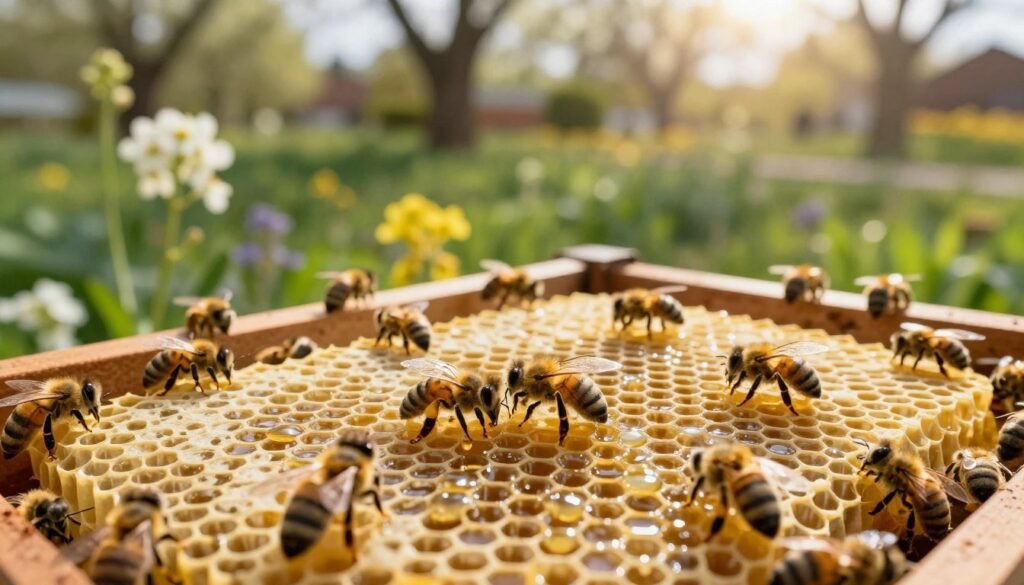
Szabo (1977) added that 200–400 g of sugar will form about 0.5 cm of new sheet. Practically, a deep frame needs roughly 0.2 gallons of heavy syrup to be completed.
“Every hour spent building is an hour not spent foraging or tending brood.”
Implications: the wax itself adds little weight to a super; stored honey provides most of the gain. That means replacing old frames costs lost honey that could have been collected instead.
- Metabolic cost: colonies consume several pounds of honey per pound of wax.
- Management choice: retaining usable comb often yields better returns than forcing bees to build new.
- Practical note: factor syrup and worker time when planning frame rotation; see a detailed colony buildup study.
| Measure | Estimate | Practical impact |
|---|---|---|
| Sugar per lb wax | 5–11 lbs (Huber) | High energy draw from stores |
| Honey per lb wax | 6.6–8.8 lbs (Whitcomb) | Lost harvest if bees must build |
| Sugar for 0.5 cm | 200–400 g (Szabo) | Small sections are still costly |
Conclusion
A hive with prepared storage turns brief blooms into harvestable weight without wasting worker hours.
Preserve and position usable frames so the queen has space to lay and workers can store nectar. This saves energy and shortens the time to strong colony numbers.
Feed heavy syrup when natural sources lag; it is an efficient way to encourage foundation completion and reduce repeated trips. Manage frame placement and temperature so wax work stays productive, not costly.
Prioritizing available comb leads to healthier hives and a better harvest. For a deeper look at rates of colony growth and timing for package installation, see this colony buildup study.
FAQ
What is the effect of drawn comb on spring colony buildup?
Drawn comb gives a colony immediate, usable space for brood and stored food. Frames with finished wax reduce the energy workers spend on construction, allowing more bees to forage, rear brood, and expand the nest early in the season. That faster expansion often translates to stronger colonies heading into nectar flows and reduces the chance of swarming due to congestion.
Why is drawn comb considered vital for hive health?
Drawn foundation supports essential hive functions such as brood rearing, pollen storage, and honey storage. Mature comb improves brood thermoregulation, reduces stress on nurse bees, and increases the queen’s egg-laying efficiency. Healthy comb also lowers disease transmission compared with damaged or poorly built wax.
What are the risks if bees backfill brood space with stores?
Backfilling occurs when foragers deposit nectar or pollen into central brood areas, reducing available space for eggs. This constrains the queen, slows population growth, and can weaken the colony before peak nectar. Providing drawn frames or supers early helps prevent backfilling and keeps the brood nest productive.
How does providing drawn frames influence the queen’s laying rate?
When the queen finds continuous, stable cells, she can sustain a higher laying rate. Drawn sheets maintain consistent cell size and orientation, making it easier for her to move and lay without interruption. This supports a steady increase in worker numbers during the critical spring period.
When should beekeepers add drawn foundation versus plastic foundation?
Add drawn or shallow-deep frames when you need immediate space for brood or stores. Plastic foundation can work but often needs time to be built out. If the colony needs rapid expansion—during early nectar flows or after a split—use fully drawn frames or frames with wired organic foundation to speed growth.
How can I manage comb building during a strong nectar flow?
During a flow, give the bees room by adding supers with drawn frames. Rotate space so foragers place nectar in the upper boxes rather than the brood nest. Monitor frequently; rapid honey deposition can cause congestion and trigger swarming if you don’t provide adequate storage.
What conditions encourage wax production for new comb?
Warm temperatures, abundant nectar or syrup, a large workforce of young wax-producing bees, and low brood nest stress encourage comb construction. Ensure the brood nest remains healthy, supply light syrup when natural nectar is scarce, and keep hive temperature stable for efficient wax synthesis.
How much energy do bees require to build new wax?
Wax synthesis is energetically expensive. Bees consume substantial carbohydrates to produce wax scales, so a strong nectar flow or supplemental feeding is usually necessary for rapid comb construction. That’s why beekeepers often feed light syrup to stimulate building when nectar is limited.
Are feeding stimulants or different syrups effective for drawing foundation?
Yes. Light sugar syrup (1:1) commonly stimulates comb building and foraging activity, while heavier syrup (2:1) is better for rapid storage. Some beekeepers add small amounts of floral essences or pollen substitutes to increase interest, but plain sucrose syrup remains the most reliable and cost-effective option.
How does ambient temperature affect wax building?
Wax production and comb assembly slow at low temperatures. Ideal comb construction occurs when the brood nest is warm and consistent. Cold snaps force bees to cluster and ration resources, halting comb work. Keep hives protected from drafts and aim for colony strength before chilly periods.
What have experiments shown about different syrup concentrations for drawing foundation?
Trials indicate that 1:1 syrup encourages comb building and colony expansion, while 2:1 syrup leads to quicker honey storage but less comb extension. Results vary by region and season, so many beekeepers switch concentrations depending on goals: 1:1 to grow comb and brood nest, 2:1 when storing surplus.
How can beekeepers estimate the metabolic cost of wax production?
Estimating metabolic cost involves tracking syrup consumption, brood rearing, and wax output. Practical methods use feed records and observed comb drawn per frame. Because wax requires high carbohydrate input per gram, watch feed-to-comb ratios and adjust supplemental feeding to match construction demands.
What practical steps preserve drawn frames for reuse year to year?
Rotate and inspect frames each season. Replace dark, brittle comb that may harbor disease. Freeze or solarize frames if you need to store them, and avoid mixing heavily reused brood combs with new honey super frames to limit residue transfer. Proper maintenance extends the value of drawn foundation.
When should I add space to prioritize the brood nest?
Add space as soon as you see consistent egg-laying, expanding brood area, or signs of backfilling. Early spring and pre-flow periods are critical. Prioritize adding drawn brood frames first; give supers for storage after the brood nest has room to grow and the queen can continue laying unhindered.