Published March 31, 2026 · Last Updated August 26, 2026
Fungal infection can quietly undermine a colony by attacking the developing brood. This disease kills larvae and reduces the strength of your bees, making colonies more vulnerable to pests and other problems.
Early detection and simple management steps help keep losses low. Good ventilation, solid brood-to-bees ratios, and removing moldy equipment reduce moisture and spore buildup. Hygienic stock and strong colony care are key to resistance.
This post is a practical guide for beekeepers. You will learn how to identify signs, manage the brood nest, and take preventive measures. For a detailed primer and further resources, see this disease primer.
Key Takeaways
- Fungal threats target brood and can weaken a colony quickly.
- Maintain ventilation and remove old, moldy equipment to reduce risk.
- Strong colonies and hygienic bees limit spread and help recovery.
- Monitor for uncapped or discolored brood and act early.
- Practical hive care often prevents major losses without harsh remedies.
Understanding Chalkbrood Disease
Knowing how the pathogen works gives beekeepers a clear edge in prevention.
What is Ascosphaera apis?
Ascosphaera apis is the fungus that causes this brood disease. It belongs to the phylum Ascomycota and targets developing larvae inside the hive.
The fungus cannot pierce larval skin from outside. Infection requires ingestion of contaminated food. Once fungal spores germinate in the gut, they consume the host from within, turning affected brood into dry, chalky remains.
- Larvae eat food tainted with fungal spores from pollen, syrup, or nurse bees.
- Spore transfer occurs by drifting bees, robbing, and contaminated equipment or pollen.
- Cool, moist conditions and an expanding brood nest let the fungus gain a foothold.
Adult bees do not get sick from this fungus, but the loss of brood reduces colony growth and resilience. For practical prevention methods, see this prevention guide.
Identifying Chalkbrood Mummies in Front of Hive
Careful observation at the hive entrance often reveals discarded, hardened larvae that point to disease.
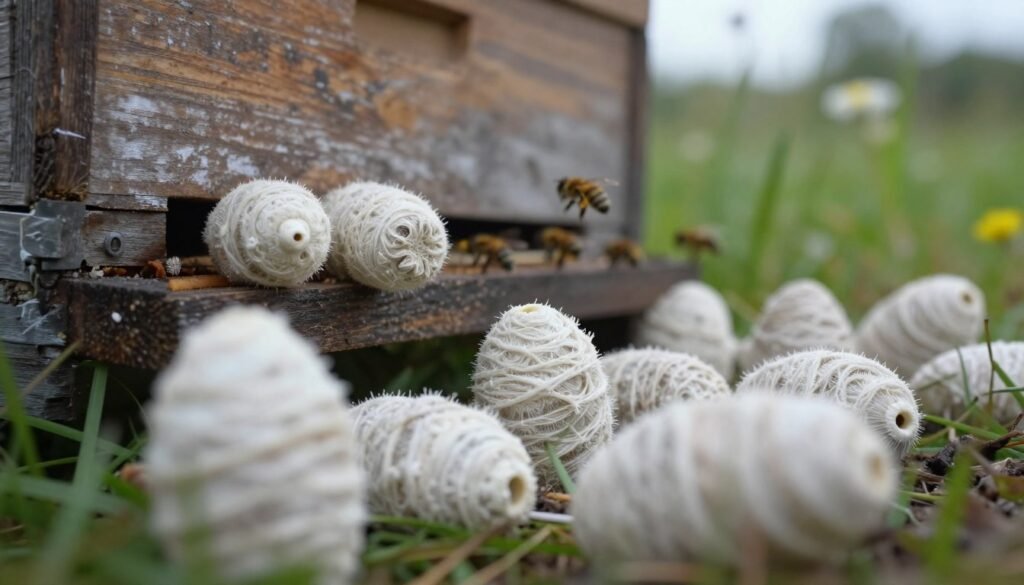
What to watch for:
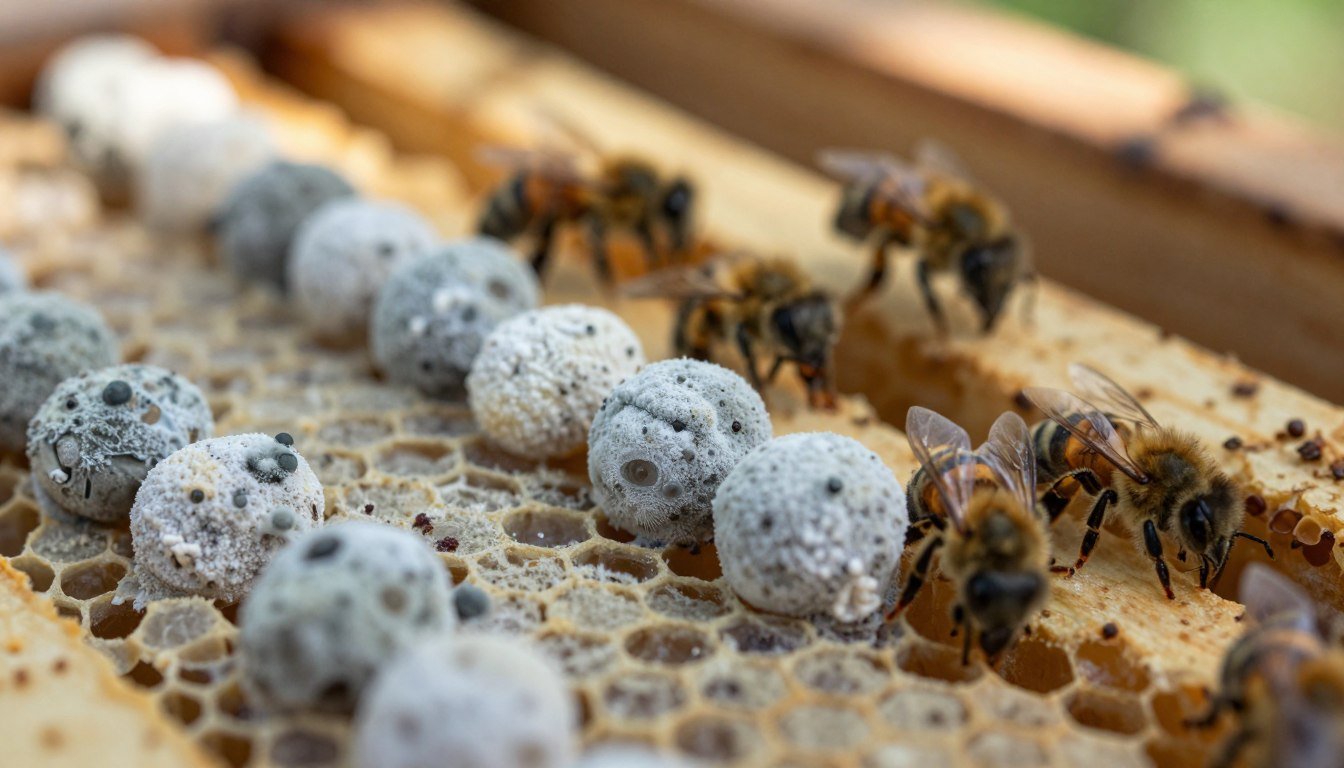
- White to grey-black, hard, shrunken lumps at the hive entrance where worker bees discard dead brood.
- Scattered or “pepperbox” patterns on frames where capped brood cells look perforated or removed.
- Rattle test: a gentle shake of a suspicious frame may reveal loose, hardened larvae.
These remains result when Ascosphaera apis consumes infected larvae and turns them to dry, chalk-like pieces. The presence of spores and discarded bits signals active cleaning by worker bees.
Note that affected colonies can lose 5–37% of honey yield, so early identification matters. For related checks and the rattle test procedure, see this identifying chilled brood post.
Environmental Factors and Hive Stress
When spring brings fast brood growth, many hives struggle to keep the nest warm enough for healthy development.
The impact of chilled brood
Cool, wet conditions are the main driver for this fungal problem. The pathogen thrives in cool, moist environments often found in early spring.
Chilled brood happens when the nest expands faster than the worker force can heat it. Larvae cooled by short gaps in attendance become far more vulnerable to infection.
“A strong, populous colony buffers temperature swings and lowers disease risk.”
- Poor ventilation, a weak queen, or a small workforce raises stress and vulnerability.
- Monitor hives closely during spring and act if brood appears uneven or cold.
- Use tools like thermal brood checks to spot trouble early: thermal brood checks.
| Condition | Risk | Management |
|---|---|---|
| Cool, moist spring | High | Improve ventilation; reduce moisture |
| Small workforce | Moderate | Combine colonies or add frames of brood |
| Poor queen performance | Moderate | Requeen with hygienic stock |
Immediate Steps for Managing an Outbreak
Act quickly when you spot signs of fungal brood to limit spore spread and help the colony recover.
Inspect only when warm: Perform checks when air temperatures are above 62°F (17°C) to avoid chilling the brood. Brief, targeted inspections reduce stress and keep worker bees focused on care.
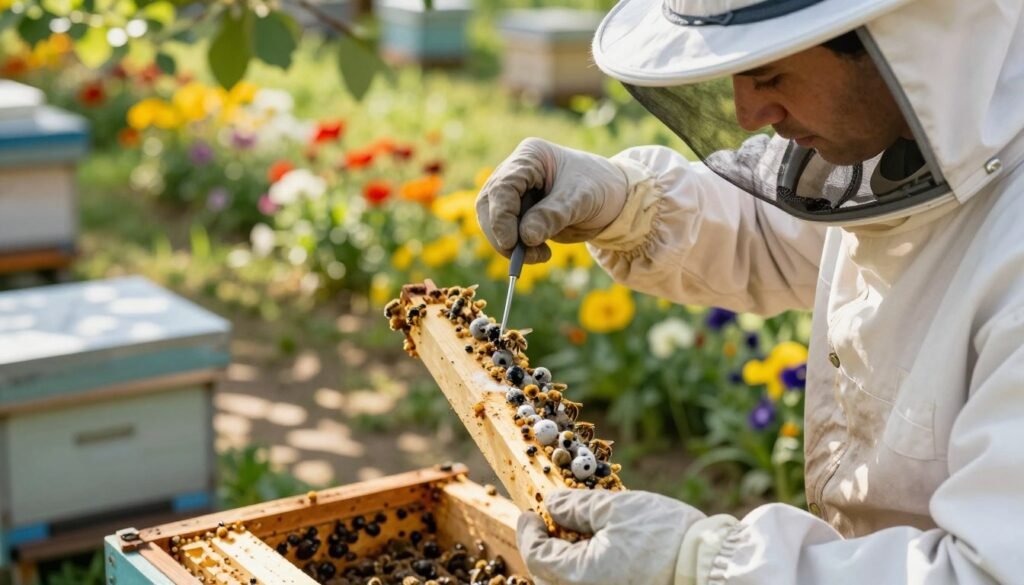
Removing infected frames
If a frame shows more than 10% infection, remove it or cut out the affected cells. This lowers the spore load and helps healthy larvae survive.
Worker bees do much of the cleaning, so limit handling time. There is no chemical treatment for this disease; management supports colony hygiene and resilience.
Reducing hive volume
Use follower boards or move the colony to a smaller nucleus box to concentrate the workforce. A reduced space helps workers maintain brood temperature and focus on removing debris by the entrance.
- Place hives in sunny spots and improve ventilation to cut moisture and limit fungal growth.
- Consider requeening with younger, hygienic stock to boost long-term resistance.
- Monitor for signs over the next several days and rotate out badly affected frames.
| Action | Why it helps | When to apply |
|---|---|---|
| Remove >10% infected frames | Reduces spores and infected cells | At inspection above 62°F (17°C) |
| Reduce hive volume | Improves brood warmth and cleaning efficiency | Immediate after detection |
| Improve ventilation & sun exposure | Lowers moisture that favors fungus | Ongoing; during recovery |
For a technical review of management options, see the FAO guide and a practical cleaning and recovery post.
The Role of Colony Strength and Genetics
Colony genetics and population size shape how well a hive resists brood disease.
Population matters. A strong, populous colony keeps nest temperature steady and limits the chance that larvae develop an infection. Good nutrition and ample workers help maintain steady care for the brood.
Hygienic behavior is heritable. Worker bees that detect and remove diseased brood interrupt the disease cycle before spores spread. Beekeepers note this trait passes through the queen.
Practical steps include selecting queens from lines known for hygiene. JeffH reported replacing a queen twice solved persistent problems when the new queens produced progeny that cleaned affected cells effectively.
- Prioritize strong colonies and good feeding to support resistance.
- Consider requeening with proven hygienic stock when disease recurs.
- Track outcomes; resistance shows up in offspring behavior, not just the queen alone.
For a field test and results related to simple interventions, see the banana test results.
Improving Hive Ventilation and Moisture Control
A simple change in ventilation can shift a damp, risky nest into a dry, healthy one.
Why moisture matters: Damp conditions favor the fungus and let spores persist inside brood cells. Dry, warm air helps protect larvae and supports worker bees as they clean and care for the brood.
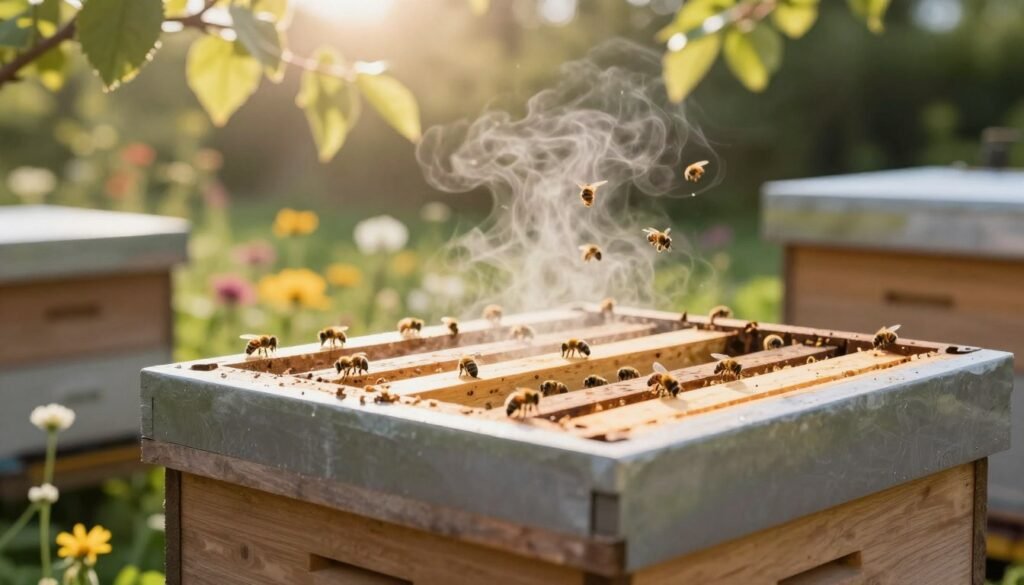
Techniques for moisture reduction
Place hives where they get morning sun. Solar warmth dries frames and lowers humidity during spring.
Bianca recommends propping the lid open a few hours on a warm afternoon. That simple step lets excess moisture escape without chilling the nest.
Reduce internal volume during cool months so the colony can hold temperature more easily. Good ventilation beats blocking the entrance, which can trap damp air and raise risk.
- Ensure screened vents or an upper escape for humid air.
- Move wet, moldy equipment out and rotate damp combs.
- Keep entrances clear so worker bees can remove debris and discarded mummies quickly.
“Small ventilation fixes often make the biggest difference to colony health.”
Outcome: These measures lower spore loads, help bees maintain brood warmth, and reduce losses to chalkbrood and related problems.
Biosecurity and Long-Term Apiary Health
Long-term apiary health starts with strict routines that stop spores from moving between colonies. Maintain a barrier management system that separates groups of hives and limits bee interchange. This reduces cross-contamination and lowers risk across the yard.
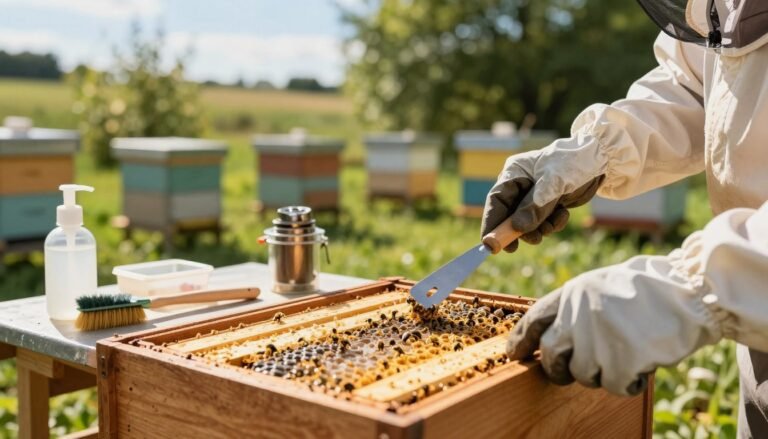
Disinfect tools after each inspection. Clean metal tools, gloves, and boxes when you move from a sick colony to a healthy one. Remember that fungal spores can persist in equipment and soil for up to 15 years, so cleanup matters over time.
Reduce the hive entrance to about 15 sq. cm to help worker bees regulate temperature and ventilation. Manage brood cells carefully and remove old comb to break the cycle of spore production.
- Use separate kit bags and label gear by apiary.
- Quarantine new colonies and inspect after several days.
- Rotate out contaminated frames and monitor signs for days after changes.
With 30–40% annual losses reported in recent years, strict biosecurity is essential. For practical checklists and guidance, see this pest page and the apiary hygiene checklist.
Conclusion
Strong colonies, good ventilation, and routine checks form the core of effective management for chalkbrood. Keep inspections brief and timed for warm days to avoid chilling brood.
There is no chemical treatment; rely on hygienic stock, prompt removal of badly affected comb, and moisture control to reduce the spore load. These steps let worker bees clear infections and restore colony strength.
For deeper research on hygienic behavior and its role in removing infected brood and mummies, see this hygienic behavior study. Consistent monitoring and good apiary practice keep your hives productive and resilient.
FAQ
What causes Ascosphaera apis to infect a colony?
Ascosphaera apis is a fungal pathogen that attacks bee larvae after spores are consumed with food. Poor brood thermoregulation, damp conditions, and stress raise risk. Workers can carry spores on pollen, nectar, or hive tools, so contamination often follows weakened colony defenses or exposure to infected equipment.
How can I recognize infected brood and fungal signs at the entrance?
Infected larvae dry into pale, brittle bodies that break into dusty fragments. You may see these remains near the hive entrance and on landing boards. Inside, affected brood cells contain chalky remains rather than healthy, plump pupae. Check frames for discolored larvae and abnormal cappings.
Which environmental factors make disease more likely?
High humidity, poor ventilation, prolonged cold snaps, and crowded conditions promote fungal growth. Chilled brood from weak thermoregulation by the colony allows spores to germinate. Overwintered hives that lack pollen stores or have insufficient worker numbers also face higher infection pressure.
What immediate steps should I take if I find infected frames?
Remove and replace heavily affected frames to cut spore loads. Dispose of badly contaminated comb away from the apiary. Clean or replace hive tools and sanitize equipment. Boost the colony by providing syrup and pollen patties if stores are low to help workers restore brood care.
Does reducing hive volume help control spread?
Yes. Reducing empty space concentrates workers and improves brood thermoregulation. Consolidate frames so the colony can better maintain temperature and reduce chilled brood, which lowers conditions favorable to the fungus.
How important is colony strength and genetics for resistance?
Strong colonies with abundant workers maintain stable brood temperatures and hygienic behavior, removing infected larvae more effectively. Some genetic lines show better hygienic traits; selecting queens from such stock can reduce recurrence over years.
What ventilation and moisture-control techniques work best?
Provide screened bottom boards for airflow, add inner covers with small ventilation holes, and avoid tight, unventilated stacks. Reduce moisture by elevating hives, ensuring dry apiary sites, and using breathable insulation rather than plastic wraps during damp spring conditions.
How do I practice biosecurity to protect the apiary long-term?
Isolate new colonies for observation, avoid sharing frames between apiaries, and disinfect tools and gloves. Monitor colonies regularly in spring and after moving hives. Keep records of disease incidents and queen lines to inform management and replacement decisions.
Can treatment with medications or chemicals eliminate spores?
There are no silver-bullet chemicals that remove all spores in the field. Management focuses on cultural controls: hygiene, brood replacement, and strengthening colonies. Heat-treating or thoroughly melting and rendering comb can reduce long-term spore reservoirs in heavily contaminated equipment.
When is intervention most effective during the season?
Early spring, when colonies are building and workers restore brood thermoregulation, is the best time to intervene. Quick action within days of detection—removing bad comb, improving ventilation, and feeding—prevents spread and helps the colony recover before peak brood rearing.