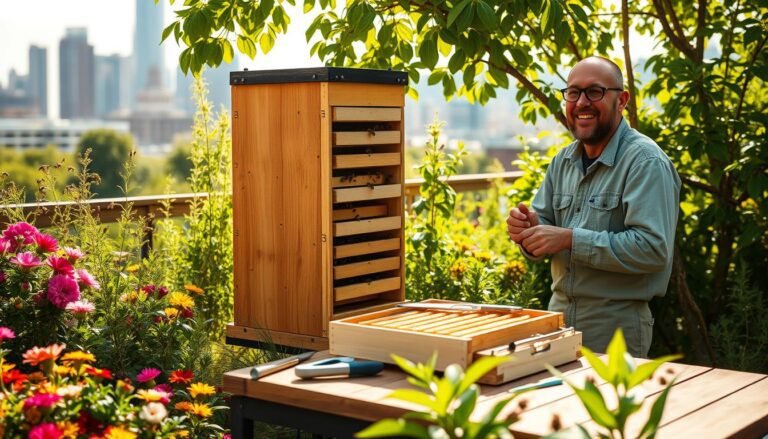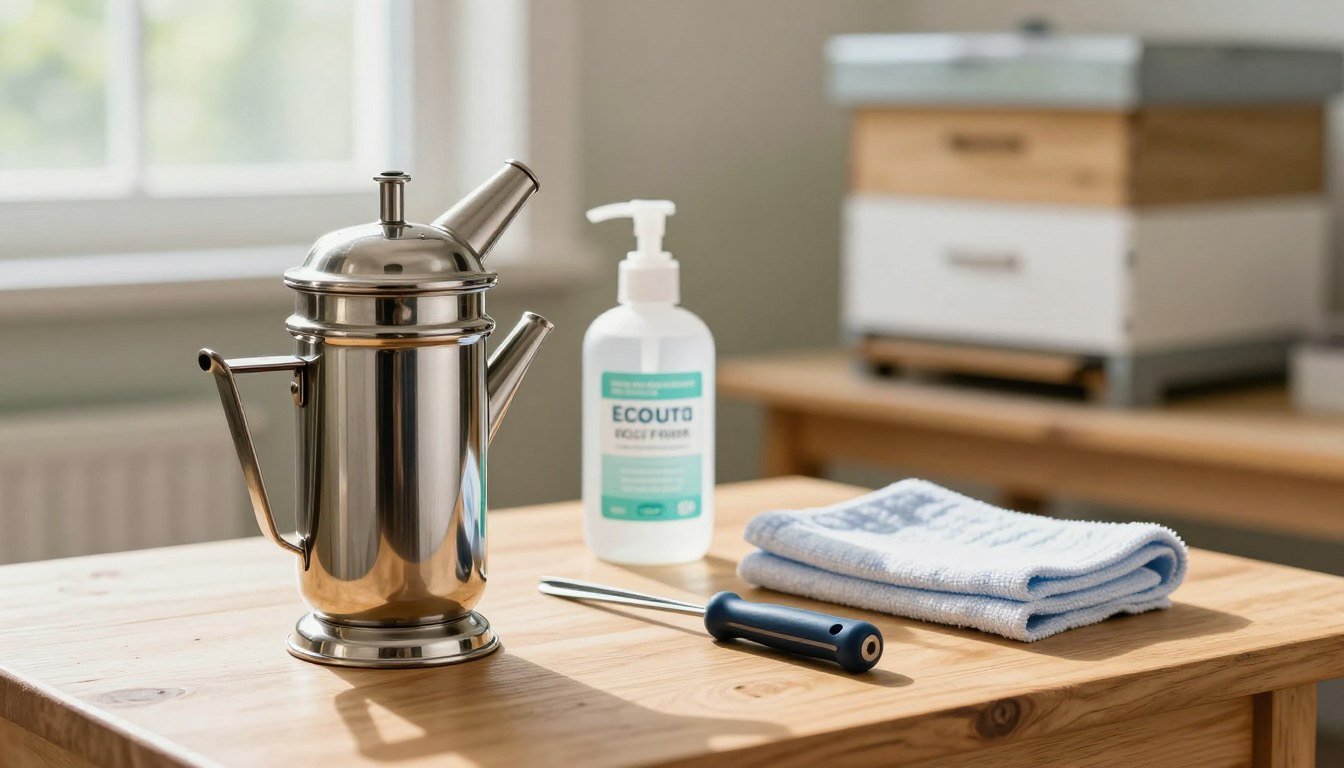
Keeping beekeeping equipment clean protects colonies. Honeybees catch diseases and parasites easily when gear is shared or left dirty. Sterilizing gear reduces the chance of colony collapse and keeps hives productive.
Routine cleaning between uses matters. Wiping a hive tool, washing protective clothing, and treating machine-washed bee suits stops the spread of pests. Old comb holds more varroa mites, so burning or treating frames with a blow torch or hand wash is often recommended.
If American foulbrood (AFB) appears, the only option is to euthanize the infected colony and destroy anything it touched. That hard fact makes regular maintenance vital. For step-by-step smoker maintenance, see a trusted guide on smoker maintenance.
Key Takeaways
- Clean tools and equipment after each use to lower disease risk.
- Old comb is likelier to carry mites; treat or replace frames regularly.
- Maintain protective clothing with warm water and soap or machine wash.
- Use a fire-safe torch method for sterilizing metal parts when needed.
- Store gear dry and ventilated to prevent rust and debris buildup.
The Importance of Maintaining a Sanitary Apiary
A tidy apiary lowers disease risk and helps colonies stay productive through the season. Regular removal of old frames and broken comb cuts reservoirs of spores that cause chalkbrood and nosema. Keep inspections frequent so problems surface early.
Healthy practice starts with simple routines. Proper placement of hive stands and cleared vegetation limits ant access. When boxes sit level and dry, inspections go faster and colonies suffer fewer setbacks.
- Old comb inside a bee hive spreads brood infections; replace suspect frames promptly.
- Good beekeeping routines stop pathogens from moving between hives.
- A clean apiary protects your investment and supports long-term colony health for bees.
Takeaway: prioritize routine cleaning, organized layout, and prompt frame replacement. For detailed quarantine advice, review apiary hygiene guidance, and learn practical precautions from this beekeeping safety resource.
Essential Preparation for Sanitizing Smoker Tools and Hive Tools
Proper prep keeps equipment safe and makes cleaning more effective. Start with simple steps to protect your bees and your gear.
Initial Cleaning Procedures
Begin by freezing beekeeping equipment at 20°F or lower for at least 24 hours to kill wax moths and other pests. This step reduces the chance of reinfestation when you return items to storage.
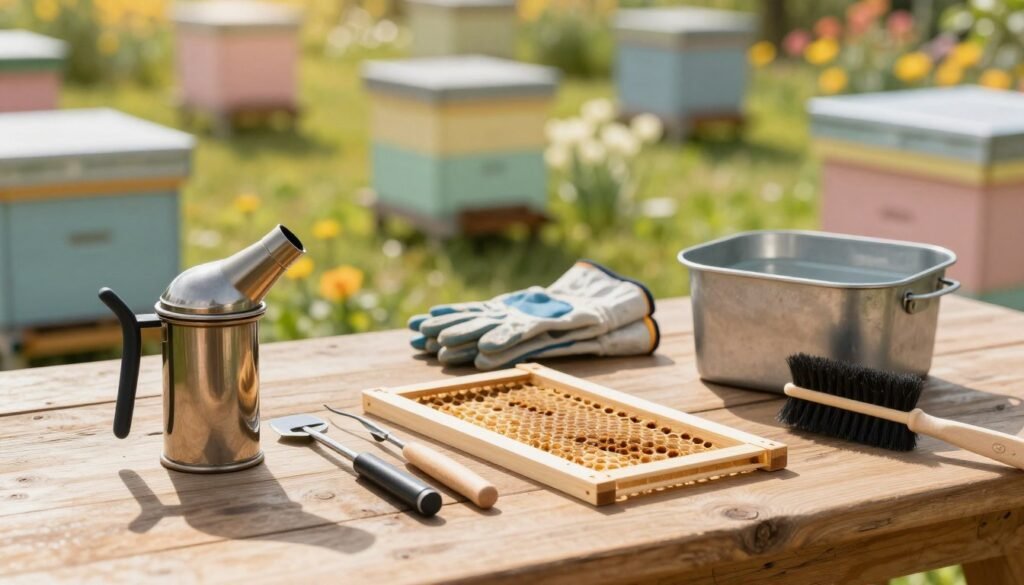
Use a hive tool to scrape all remaining wax, propolis, and honey from frames. Remove loose dirt and debris before any wet washing.
Wash metal and plastic parts with warm water and a mild detergent. Rinse thoroughly to remove residues that might attract bees or damage hive surfaces.
Safety Precautions
Wear basic protective gear. Some sterilization methods need gloves, face masks, goggles, or even a respirator. Choose PPE based on the chemical or heat method you plan to use.
Prepare your workspace. Gather scrubbing brushes, scrub pads, and drying racks so you work quickly and avoid accidental damage to frames or equipment.
| Task | Why it Matters | Recommended Action |
|---|---|---|
| Freezing | Kills wax moth larvae | 20°F for 24 hours |
| Scraping | Removes wax propolis buildup | Use a hive tool on frames |
| Washing | Clears dirt and honey residues | Warm water and mild detergent |
| PPE | Protects you during disinfection | Gloves, mask, goggles as needed |
For step-by-step routines on maintaining beekeeping equipment, consult this guide to beekeeping equipment maintenance. Proper prep ensures every hive tool is ready for the next inspection.
Effective Heat Sterilization Techniques
Heat-based methods offer quick, chemical-free sterilization for many common beekeeping items. Use heat to target microbes that survive routine wiping. Always remove loose debris and propolis before applying flame or boiling, since residues can shield organisms from high temperatures.
Torching Metal Components
Use a propane torch to heat a hive tool until it glows red. This destroys bacteria on metal components within seconds. Keep bellows and any rubber parts well away from the flame, and direct flame only at the metal edges.
For wooden boxes, scorch surface corners lightly to kill wax moth eggs without igniting the wood. Work outdoors, have a fire extinguisher ready, and allow pieces to cool completely before handling.
Boiling Water Methods
Smaller pieces of equipment and frames can be boiled. Mix washing soda with water at a 1:5 ratio and bring to a rolling boil. Submerge items for 5–10 minutes to lift residues and kill pests.
- Boil frames only if your pan fits them fully submerged.
- Let metal cool before applying bleach as a secondary step.
- Store cleaned equipment dry to prevent rust and reinfestation.
For detailed protocols on cleaning and sterilizing beekeeping equipment, see the practical guide at cleaning and sterilizing. For safety tips when working with wax and heat, review bee wax extraction safety.
Chemical Disinfection Methods for Beekeeping Gear
When heat is impractical, properly applied chemical methods remove pathogens from beekeeping gear. Use chemicals with care to protect bees and preserve equipment life.
Bleach soaks work well for metal and hard plastics. After scraping away propolis and wax, soak a hive tool and other equipment in a 10% bleach solution overnight to disinfect surfaces. Household bleach typically lists 3% sodium hypochlorite as the active ingredient.
Rinse every item thoroughly with water after chemical treatment. Residue can harm bees or leave odors that repel colonies.
For sealed fumigation: use 80% acetic acid and enclose the bee box with heavy plastic wrap for one week. This method reaches crevices that liquid soaks miss. Follow PPE guidance and ventilate before reopening.
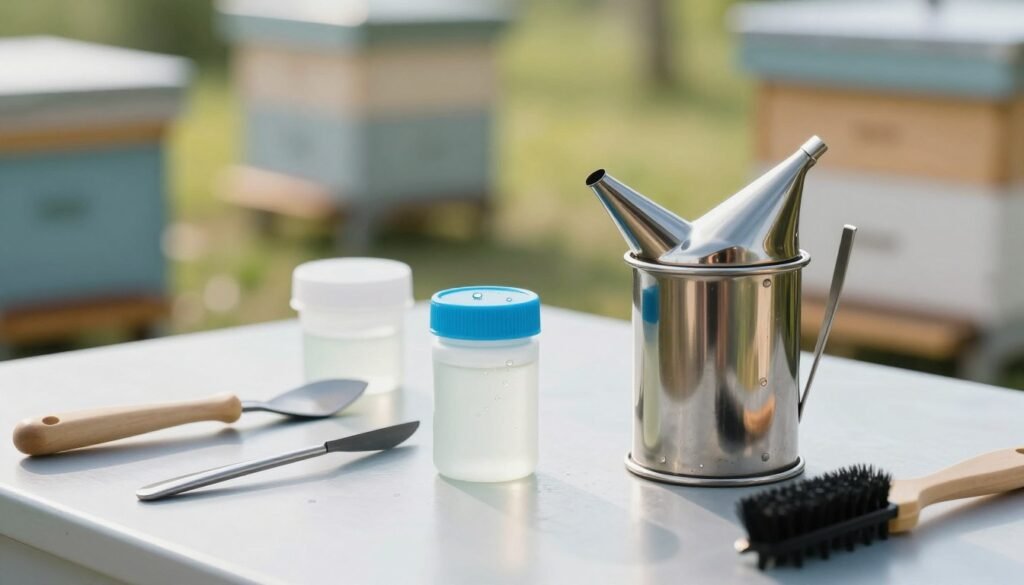
- Scrub bellows and smoker base with soapy water to remove honey and wax.
- Chemical methods can sterilize boxes that can’t take intense heat.
- Always follow safety labels, wear gloves, and rinse with water before reuse.
hive cleaning and sterilisation guidance offers regulatory details and step-by-step safety recommendations.
Maintaining Protective Clothing and Apparel
Clean bee suits, veils, and gloves protect you and lower stress in colonies during inspections. Proper care keeps clothing durable and stops residues that make bees defensive.
Washing Bee Suits
Machine wash bee suits with washing soda to break down wax, propolis, and honey stains. Use a gentle cycle and cool or warm water.
Do not bleach frequently; repeated harsh chemicals weaken fabric. Hang suits to dry or use a low-heat setting if the label allows.
Cleaning Veils and Hats
Hand wash veils and hats in warm water with a little soap to protect delicate netting. Rinse thoroughly to remove soap residue.
Inspect seams and netting for tears and repair small holes before returning the gear to service.
Managing Gloves
For nitrile beekeeping gloves, wash with soap and water and air dry. Never put nitrile gloves in the dryer; heat can melt them and ruin your protective clothing.
Leather gloves should soak briefly in cold chlorine water to loosen wax, then be conditioned with oil to keep material supple.
“Check protective gear each season; worn material invites stings and shortens the life of expensive equipment.”
- Remove alarm pheromones by cleaning suit and gloves after heavy inspections.
- Store dry, ventilated, and away from direct sunlight to preserve materials.
- Refer to a practical beekeeping equipment guide and advice on choosing equipment for long-term care tips.
Best Practices for Equipment Storage and Inspection
Good storage habits are the last defense against wax moths and mice during the off-season. Store beekeeping equipment in a dry, ventilated building to prevent moisture, mold, and rodent damage.
Hang a hive tool and other metal items on pegboards or nails to keep them off the floor and away from gnawing pests. Stack unused hive components the way you use them to save space and make spring setup faster.
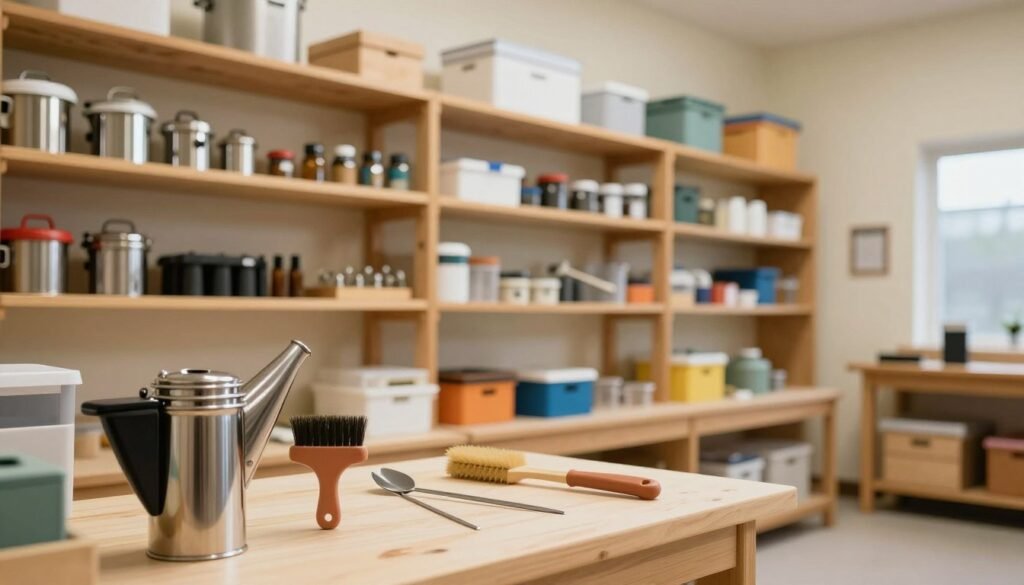
Inspect stored frames, bee suits, and gloves every month to spot moth larvae or rodent nests early. If you find damage, clean affected pieces with warm water and soap or use a blow torch on metal parts before returning items to storage.
Final storage is part of your cleaning routine. Keep the smoker, protective clothing, and tools in labeled bins or on shelves. A tidy apiary storage area reduces pest re-infestation and saves time at inspection.
- Dry location prevents rust and mold.
- Hooks and pegboards limit rodent access.
- Rotate frames and check suits often for signs of wax moths.
For step-by-step maintenance and storage tips, consult an equipment maintenance tips or this beekeeping equipment guide.
Conclusion
Regularly clearing wax and honey residue from gear prevents disease spread and saves time at inspections.
Keep a short routine: wash metal and plastic parts with warm water and mild soap, heat-treat or use approved chemical methods when needed, and launder your suit and gloves after heavy work.
Store frames and other equipment dry and ventilated to limit pests and mold. For formal guidance on apiary hygiene, consult the best practice guidelines.
Consistent maintenance keeps your bee colonies stronger and improves honey yields. For harvest timing and handling, see practical advice on honey harvesting.
FAQ
What is the simplest first step to clean smoker bellows and metal hive implements?
Start by removing loose debris and wax with a stiff brush or plastic scraper, then wash metal parts in warm, soapy water. Rinse thoroughly and dry immediately to prevent rust. For bellows, wipe the exterior and allow the interior to air out; avoid submerging leather or fabric components.
How can I safely use heat to treat metal components without causing damage?
Use a propane torch or heat gun to pass brief, even flames over metal surfaces to burn away propolis and wax. Keep the flame moving to prevent warping. Alternatively, dip small metal pieces in boiling water for several minutes, then dry and oil lightly to curb corrosion.
Are chemical disinfectants effective for beekeeping equipment, and which ones are recommended?
Yes. A dilute bleach solution (one part household bleach to nine parts water) or a 70% isopropyl alcohol wipe kills many pathogens. Rinse items treated with bleach and dry fully. Hydrogen peroxide is another option for delicate parts; always test on a small area first to avoid material damage.
How should I clean and care for my bee suit and veil?
Machine-wash suits on a gentle cycle using mild detergent and warm water, then air-dry out of direct sun. Remove and hand-wash veils and hats, checking seams and zippers. Store garments in a sealed container to reduce pest exposure.
What’s the best way to handle soiled gloves and keep them from spreading disease?
Hand-wash gloves in warm, soapy water and scrub away propolis and wax. If gloves are heavily contaminated or show tears, replace them. For rubber or nitrile gloves, disinfect with alcohol or an approved disinfectant and allow full drying before reuse.
How often should I inspect stored equipment for pests or contamination?
Inspect gear at least monthly during active seasons and before each new colony inspection. Look for signs of wax moths, rodents, mold, or sticky residues. Clean and treat items immediately if you find pests or stains.
Can I use a blowtorch on wooden frames and boxes to sterilize them?
Avoid direct torching of wood; extreme heat can char, weaken, or release toxic fumes. For wooden components, consider fumigation in a controlled manner, careful drying, or replacing badly infested or diseased pieces rather than torching them.
How do I remove stubborn propolis and wax without harming tools or clothing?
Soften residues by placing metal parts in hot water or using a heat gun at a safe distance. For clothing, freeze items to make wax brittle, then scrape gently and launder normally. Avoid harsh scraping on plated surfaces to prevent scratching.
What protective gear should I wear while cleaning and disinfecting equipment?
Wear sturdy beekeeping gloves, eye protection, and a mask when using chemical disinfectants or torches. Use heat-resistant gloves and avoid loose clothing near open flames. Ventilate the area when working with strong chemicals.
How do I store cleaned equipment to prevent recontamination?
Store dry, clean components in sealed, labeled plastic bins or metal cabinets in a cool, dry area. Elevate boxes off the floor, place moth traps nearby, and rotate stock so older items are used first. Keep a cleaning log to track treatments and inspections.
Can I use household bleach on leather bellows or fabric suit parts?
No. Bleach can weaken and discolor leather and many fabrics. Use mild soap and water for leather bellows, and specialized leather cleaners or glycerin-based conditioners. For fabrics, use gentle detergents and spot-test any disinfectant first.
How long should I let items dry after washing or disinfecting before reuse?
Allow full air drying—typically 24–48 hours depending on humidity—before returning gear to service. Ensure valves, seams, and crevices are dry to prevent mold growth and reduce the risk of disease transfer.
Are there tools or equipment I should retire rather than attempt to clean?
Replace any item with deep corrosion, cracked insulation, torn suits, or persistent disease contamination. Frames heavily infested with wax moths or showing signs of foulbrood should be disposed of or fully replaced according to local regulations.
What is a safe, low-cost routine for routine maintenance between full cleanings?
After each hive inspection, brush off debris, wipe metal parts with a cloth dampened in alcohol, and shake out garments. Regular spot-cleaning reduces buildup and makes periodic deep cleaning faster and less risky.
How do I handle and dispose of chemical solutions used for disinfection?
Neutralize and dilute bleach solutions with excess water before disposal down a drain per local rules. Store chemicals in labeled containers away from children and animals. Follow product instructions and local hazardous-waste guidelines for disposal of concentrated chemicals.