Published March 31, 2026 · Last Updated August 26, 2026
Maintaining strong hives matters for every beekeeper. Early action preserves brood, supports the queen, and keeps honey stores secure.
Small colonies often lose heat and fail during winter. That risk drains resources and costs time that could build a healthy colony.
Good management favors consolidation over spreading effort thin. Experienced keepers know tending one vigorous hive yields better results than saving several failing units.
Decisive steps include combining weak units, monitoring pests, and following proven care guides like first-year nuc care. Expansion planning also helps when you scale hives responsibly: see beekeeping expansion tips.
Key Takeaways
- Prioritize strong hives to protect brood and the queen.
- Monitor pests and nutrition to prevent losses.
- Combine or rehome weak units before winter arrives.
- Invest time in one healthy colony for better long-term output.
- Use trusted care guides for nucs and expansion planning.
Identifying the Signs of a Weak Colony
Visible gaps across frames and unused honey stores signal a colony under stress. Check the unit for adult bees that can cover both sides of three frames. Foxhound Bee Company defines this as the practical benchmark for a weak hive.
Defining a Fragile Unit
Look for low bee numbers at the entrance and a box that the cluster cannot warm. A weak colony often leaves a super untouched while stores sit idle for a week.
Recognizing Queenless Conditions
Missing eggs, no capped brood, and scattered larvae point at queen failure. A queen-less hive will collapse without skilled intervention by a beekeeper or beekeepers.
“Stealing a frame of eggs from another colony can give a struggling unit a pathway to raise a new queen.”
| Sign | What to Check | Risk |
|---|---|---|
| Sparse frames | Can bees cover three frames both sides? | Cold brood, reduced survival |
| No capped brood | Look for eggs and young larvae | Queen failure, need for merge |
| Lost bees after swarm | Count foragers and cluster size | Robbing, disease, collapse |
When to Isolate a Weak Hive from the Rest of the Yard
Deciding when to move a struggling box matters for colony health. A drop in forager returns or empty frames signals low population and higher robbing risk. Act before late autumn when preparing for winter becomes urgent.
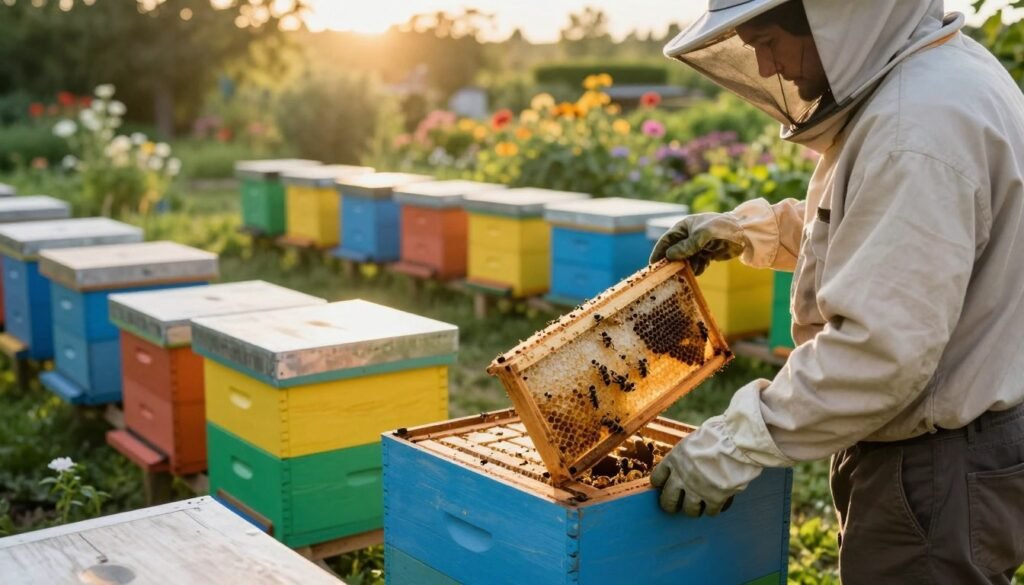
If a unit is queen-less and failing, Dee advises a shake-out on a sunny flying day about 10 yards away. Scatter the bees so survivors will seek entry into another hive. This limits drift back to the original box.
- Evaluate strength well before first frost; weak colonies rarely raise a new queen in late season.
- Move any frail box away so foragers learn a new location and honey stores stay protected.
- Use clean equipment and plan a spring restart for that stand.
For guidance on combining frames and splitting safely, see best practices for hive splitting.
Assessing the Risks of Disease and Robbing
Robbing and beetle pressure can overwhelm a fragile colony fast. When guard numbers drop, hive beetles and robbers find easy access to stores and comb.
Early consolidation reduces pest habitat and keeps brood warm through winter. Foxhound Bee Company noted that combining hives before winter lowered losses from wax moths and hive beetles.
Preventing Small Hive Beetle Infestations
Small hive beetles thrive where bees cannot patrol frames. A queenless hive often lacks brood pheromone. That can lead to laying workers and other problems.
- Consolidate frames so bees cover brood and pollen and defend stores.
- Transfer a capped brood frame from another colony if resources permit.
- Merge units ahead of winter to reduce comb loss and raise defense against robbers.
| Risk | Sign | Action |
|---|---|---|
| Hive beetles | Beetles in comb and slime on honey | Consolidate frames; remove infested comb; merge hives |
| Robbing | Bees fighting at entrance; quick loss of honey | Reduce entrances; add guard bees via frames; merge with stronger hives |
| Queenless conditions | No eggs or capped brood | Introduce capped brood frame from another colony; consider combining |
“Combining hives before winter protects comb and boosts defensive numbers.”
Consolidating Frames for Maximum Efficiency
Selecting prime brood, pollen, and honey frames concentrates resources where they matter most.
Start by choosing frames with healthy brood, capped brood, and solid pollen stores. Move these into one box so bees can warm brood and defend stores with less effort.
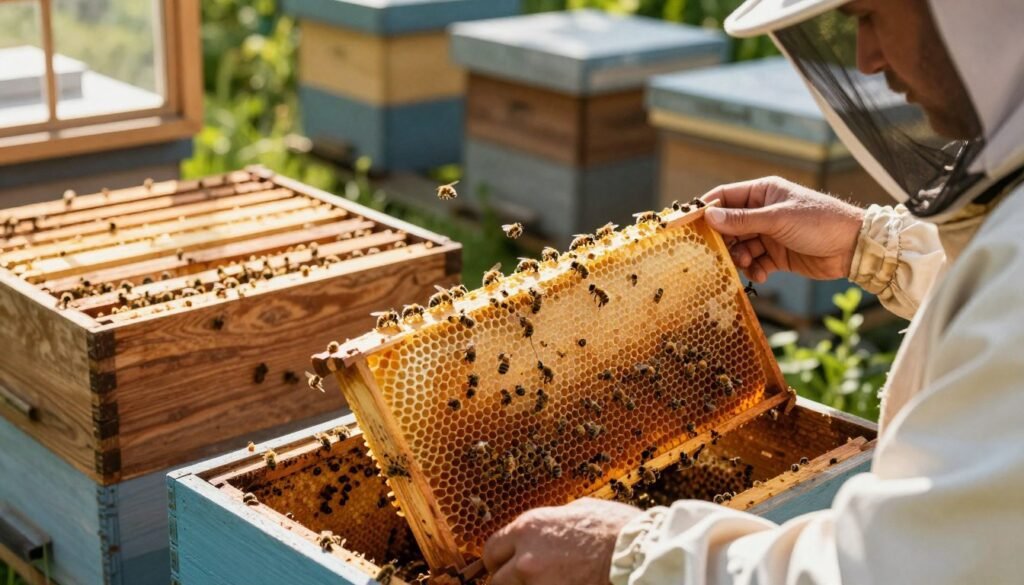
Remove empty frames and excess comb. This reduces distance guards must patrol and saves time for winter tasks.
- Keep honey above brood so bees feed without breaking cluster.
- Accept spare capped brood from a strong colony when population is low.
- Limit total frames so the cluster covers all brood each night.
| Goal | What to move | Benefit |
|---|---|---|
| Protect brood | Capped brood frame | Boosts population quickly |
| Feed access | Honey and pollen frames above cluster | Maintains warmth and reduces robbing |
| Defend stores | Remove empty frames; tighten box | Less area to guard, less loss |
Practical tip: For step-by-step splitting and frame transfers, consult splitting guidance. If you suspect swarming or low returns, review indicators at swarm preparation signs.
The Newspaper Method for Safe Colony Integration
A sheet of newsprint placed between boxes gives bees time to accept a new queen and mingle scents. This method eases merging by slowing direct contact while guards learn the new odor profile.
Preparing the Newspaper Barrier
Use two layers of paper taped under a super, and add cardboard around the stack for protection during transport. JeffH often tapes two pieces together so the barrier stays intact.
Seal the entrance on the upper box so workers must exit through the paper and return through the lower entrance. That forces gradual contact and scent exchange.
Timing the Integration
Place the weaker box on top of a stronger hive before cold sets in. The bees chew through the newspaper over several days, and discarded paper fragments in front of the stand mark progress.
Benefits: combined population warms brood, shares honey stores, and reduces beetle and robbing risk during winter.
- Top placement encourages downward drift and minimal fighting.
- Cardboard protects the paper during handling and transport.
- Look for paper pieces outside the entrance as a success sign.
| Step | What to do | Expected result |
|---|---|---|
| Prepare barrier | Tape two sheets, add cardboard | Paper stays intact until in place |
| Stack boxes | Place weaker box above stronger box; seal entrance | Bees chew through and exchange scent |
| Monitor | Watch for discarded paper and steady activity | Peaceful union; shared warmth and stores |
“Paper chewing gives bees time to accept a new queen and settle differences.”
For step-by-step instructions on combining frames and whole boxes, see how to combine beehives.
Alternative Techniques for Strengthening Hives
Quick merges and smart frame swaps offer practical ways to boost struggling colonies. If you lack time for the newspaper method, use gentle smoke to calm bees and smooth a fast merge. Smoke confuses guards and lowers aggression during handling.
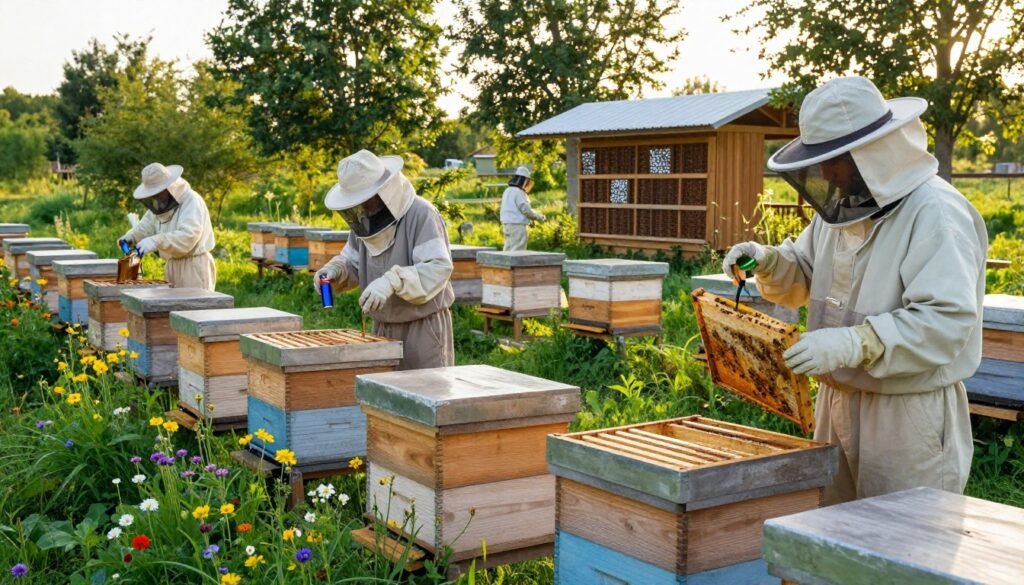
Replace worn frames with drawn comb or empty frames of drawn comb so the queen has room for brood. JeffH recommends cutting drone comb out before adding frames to maximize worker brood space.
Introduce new queens carefully. Move her on a frame with attending workers so she gains protection during transfer. Monitor for swarm signs; a sudden drop in population often signals imminent swarm and raises pest risk.
Plan for spring. Strengthen colonies early; a combined unit has a better chance of survival and can be split in spring to create a strong hive and a second colony.
“Cutting out drone comb before adding frames can free space for worker brood and boost population.”
- Use smoke for quick merges.
- Add drawn comb to encourage laying.
- Protect queens with attending bees during introduction.
- Watch for swarm activity and act early.
For detailed balancing advice, review this practical beekeeping guide and read about [balancing honey harvesting with colony needs].
Protecting the Queen During Transitions
Introducing a new queen requires deliberate steps that calm bees and shield her from guards. Careful placement on a brood frame helps her scent spread quickly through the colony, which aids acceptance.
Using Smoke to Reduce Aggression
Heavy, controlled smoke confuses guard bees and lowers flight reflexes. This makes transfers less risky and gives the queen space to walk on frames without constant attack.
Place her on a healthy brood frame and surround that frame with her attendants. That cluster presence protects her while workers clean spilled syrup or unpack stores, which keeps guards occupied.
- Smoke first: brief puffs at the entrance and under the top box before lifting frames.
- Frame placement: queen-on-brood frame in center of box so scent spreads fast.
- Distract guards: a light sugar spray near frames can keep guards busy and reduce problems during the merge.
“Protecting the queen is the most important thing you can do to ensure long-term survival through winter.”
For techniques on calming aggressive bees during transfers, see calming aggressive bees.
Final Thoughts on Apiary Management
A careful plan now gives bees the best chance to thrive through winter and into spring. Make a strong, decisive plan that spots a weak hive early and sets clear steps for merging or repair.
Protect brood and queen by moving prime frames, guarding stores of honey, and watching for pests. Combine colonies before cold sets in so the cluster can warm more efficiently.
Every beekeeper learns by practice. Take time, track results, and refine your way. With steady care you will maintain a healthy colony and enjoy better yields in spring.
FAQ
What is a weak colony and how can I spot one early?
A weak colony shows low population, scattered brood, few foragers, and limited stores. Look for sparse frames with capped brood gaps, a small cluster at the entrance, or a queen-less pattern of eggs and larvae. Regular inspections in spring and late summer reveal these signs before problems worsen.
How do I recognize queenless conditions quickly?
Queenless hives often lack freshly laid eggs, show laying workers, or present emergency queen cells. Workers may act disorganized and guard activity drops. Check brood frames for uniform egg patterns; absence of eggs over several days usually indicates no laying queen.
Why isolate an underperforming colony in the yard at all?
Separating an underperforming colony protects stronger colonies from robbing, disease spread, and pests. It also preserves genetic continuity and gives the keeper space to apply treatments or combine frames without disturbing healthy neighbors.
When is the highest risk of robbing and disease transmission?
Late summer and early fall are peak risk periods due to dwindling nectar, stressed colonies, and increased drift. Mild winters with poor stores also raise risk, because weakened colonies attract robbers and pathogens more easily.
How can I prevent small hive beetle infestations during isolation?
Keep hive entrances small, use beetle traps or oil traps in the bottom board, and maintain clean brood combs. Remove cappings with heavy wax moth or beetle damage and avoid piling exposed honey frames where beetles can breed.
What is the best way to consolidate frames for a struggling colony?
Move frames with brood, nurse bees, and adequate stores into one box to concentrate resources. Use frames with emerging brood and pollen near the center, keep capped honey for food, and remove empty frames or excess boxes to reduce void space.
How does the newspaper method work for combining colonies safely?
The newspaper method delays full mingling by placing a sheet between two hive boxes. Bees chew through the paper over a day or two, allowing scents to blend slowly. This reduces fighting and helps acceptance of introduced brood, frames, or a new queen.
How should I prepare the newspaper barrier for integrating colonies?
Use one or two sheets, crumple lightly in the center for an air gap, and punch a few small holes to allow scent transfer. Align frames so brood centers face each other and set the box with the stronger population on top if combining a queen-right hive with a weaker one.
When is the right timing to integrate frames or colonies using newspaper?
Combine during calm, warm weather when foraging is active, ideally mid-morning to early afternoon. Avoid rainy or cold days. Ensure hungry hives have adequate stores and that the stronger colony isn’t already stressed by robbing or disease.
What alternative techniques strengthen underperforming colonies?
Options include placing a new mated queen, performing a frame swap with a healthy hive, re-queening, or miticidal and antibiotic treatments when indicated. Feeding sugar syrup and pollen patties can boost population growth ahead of consolidation.
How can I protect the queen during hive transitions or merges?
Move the queen with a dedicated frame of brood or caged in a protector if introducing to another colony. Place her frame toward the center, surrounded by nurse bees and stores. Use gradual integration methods like newspaper or timed introductions to prevent harm.
Should I use smoke when moving frames or introducing a queen?
Light, brief puffs of smoke calm guard bees and reduce aggression during manipulations. Avoid over-smoking, which can disrupt bee behavior and mask queen pheromones. Smoke helps when opening boxes, moving frames, or placing a caged queen into a new home.
How long should I monitor an isolated colony after intervention?
Monitor weekly for at least four to six weeks, checking brood pattern, queen status, stores, and pest signs. Continue inspections into the following season to confirm recovery before returning frames or merging with neighboring colonies.
When is combining with a stronger hive preferable to isolation?
Combine when the weak colony has little chance of recovery—too few bees, extensive disease, or no viable queen. Combining supplies brood and workers to the stronger hive, preserves productive genetics, and prevents further resource drain across the apiary.
How can I minimize disturbance to other colonies during isolation or consolidation?
Work during warm, calm weather and keep entrances facing away from other hives. Use closed transport methods for moved boxes, reduce hive openings, and perform treatments or merges at times when foragers are active to lower drift and aggression.