Last Updated August 26, 2026
When floral resources drop, your bees switch from storing honey to burning stores. This natural gap often follows the spring nectar flow and appears again before fall blooms or during winter. Beekeeping is local; timing shifts by area and year, so watch frost dates and local blooms.
Prompt action keeps a colony steady. Inspect frames and stores; if bees consume more than they collect, they may become defensive, beard, or slow comb building. Simple steps like entrance management, feeders, and water stations reduce stress and robbing risk.
This guide aims to give step-by-step, practical measures to stabilize hives using in-hive feeders, sugar syrup, robbing screens, and targeted plantings. Learn when to intervene based on colony cues rather than a rigid calendar to protect your apiary across U.S. regions.
Key Takeaways
- Recognize low-forage periods by local bloom and frost timing.
- Act on hive inspections: add sugar syrup or in-hive feed when stores run low.
- Use enclosed feeders and entrance controls to lower robbing and stress.
- Plan plantings and water stations to bridge gaps across the year.
- Prioritize colony momentum and safety over strict schedules.
Why nectar dearth happens and why it matters right now
Plants control the calendar: weather dictates when blooms produce usable sugars that sustain colonies. Heat and drought cut nectar output. Extended rain or cold also stops plants from offering much to pollinators.
Annual patterns are clear. A strong spring nectar flow often ends before hot summer weeks. Mid-summer brings a gap, then a fall rebound as asters bloom. Winter is a long slow period with little to no incoming forage.
Why it matters now: colonies peak in summer while available food can drop. That mismatch stresses bees, changes their behavior, and raises robbing risk. Local area weather and microclimates shift timing by weeks each year, so observation beats a fixed calendar.
“Use frost dates and local bloom notes to bracket likely starts and ends of the flow.”
- Visible flowers may be low in sugars after heat or heavy rain.
- Anticipate shortfalls by keeping notes and pre-positioning feeders and entrance gear.
- Early action protects stores and prevents rapid resource crashes.
| Season | Typical Flow | Recommended Action |
|---|---|---|
| Spring | High | Build stores and expand brood space |
| Summer | Low (mid-summer gap) | Monitor stores, add feeders, reduce entrances |
| Fall/Winter | Fall rebound / Winter low | Stabilize colonies and prepare for winter |
How to recognize a nectar dearth fast
You can spot a forage shortfall by reading the land and hive at the same time. Start outside, then confirm signs at the entrance and inside hive frames.
Field cues
Scan the landscape. Brown lawns, heat waves, low rainfall, and fewer flowers point to scarce forage. These visible signs often precede changes in colony activity.
At the hive
Watch bee traffic at the entrance. Louder buzzing, bearding, fanning, and more defensive behavior suggest stress. Foragers may fly low or visit the same blossoms repeatedly.
In combs and foraging patterns
Open a box briefly: if frames show no fresh nectar, stalled comb drawing, or ragged cappings, the colony is burning stores. Returning bees may lack honey loads or check hummingbird feeders.
Timing and triggers
Use the mid-summer gap rule: expect a drop after the spring nectar flow and before fall asters. Log observations by area and time to sharpen your response window.
| Sign | What to look for | Likely cause | Immediate action |
|---|---|---|---|
| Brown turf & few blooms | Large bare areas, wilted plants | Heat/drought | Prepare feeding, monitor water |
| Entrance temperament | Bearding, loud buzzing | Reduced incoming food | Reduce entrance, ready robbing screen |
| Comb inspection | No fresh stores, stalled wax | Store use > intake | Add in-hive or closed feeders |
Impact on bee behavior and inside the hive
Inside the hive, shifts in activity show up quickly. Workers cut foraging, and tasks move toward conserving resources. Watch the colony each week so you spot change early.
Queen slowdown and brood reduction
The queen often lowers egg-laying to match fewer incoming sugars. Brood patterns tighten: fewer eggs and spotty larvae become common.
Workers may cannibalize some larvae to reclaim protein when stores run low. This is a survival response, not failure.
Honey consumption outpacing intake and starvation risks
When honey use rises while nectar intake dips, math works against the hive. Strong colonies can burn through reserves fast.
Defensiveness and bearding increase as food pressure grows. Fanning and crowding at the entrance also rise when temperature control and ventilation matter.
- Monitor brood and stores weekly.
- Act before frames show stalled comb or no fresh nectar.
- Remember: short summer shortfalls can weaken fall buildup.
| Sign | Inside hive clue | Quick action |
|---|---|---|
| Queen slowdown | Smaller brood area | Check nutrition, reduce inspections |
| Rising consumption | Empty frames, thin honey | Add closed or in-hive feeders |
| Behavior change | Bearding, defensive flights | Limit disturbance, install robbing gear |
For background reading and practical tips, see this practical reading list.
Plant physiology during dearth: why flowers stop offering nectar
On hot days, plants trade floral rewards for survival; that shift changes what returning foragers find.
Transpiration, wilting, and nectar cutbacks in hot, dry weather
Transpiration rises when air temperature climbs and soils dry. Plants lose water faster than roots can replace it. As a result, leaf turgor falls and flowers may limp while still open.
Because producing floral sugars is nonessential, many species reduce nectar first. You may see blooms that look healthy but give little reward to pollinators.

Why rain patterns and temperature swings change nectar flow
Periodic rain and milder nights let plants refill tissues and extend flows. Conversely, abrupt swings or long wet spells can also suppress secretion even when blooms are present.
- Soil moisture, species, and microclimate change how long flows last in any area.
- Wilted leaves or curled margins usually signal low floral sugar that day.
- Short recovery rains often open brief windows of higher reward that bees exploit.
Practical note: irrigate forage plantings near apiaries where feasible, and track which plants hold up under stress to plan future plantings and predict local timing. Learn more in this regional climate guide.
Robbing prevention and entrance management
Tightening hive openings and adding a simple screen can stop frantic raids before they escalate. Control at the entrance is the fastest way to protect stores during a short dearth.
Reduce entrances and close upper openings
Make the opening as small as the colony can safely use. Close upper vents and use reducers so a few guards can cover the entry. Scale the opening by hive strength; weak hives may need near-closure with ventilation.
When and how to install a robbing screen
Prefer a robbing screen when pressure rises or reducers fail. Install screens in the evening after foragers return. Bees reorient the next day in 20–60 minutes and will use the elevated exit while robbers hunt the lower scent edge.
Spotting a robbing event versus normal traffic
Normal returning bees fly straight and often carry pollen. Robbers show erratic probing at seams, frantic flights, fighting, and wax debris dragged out. If you see dragging, quick action is needed.
Be prepared: gear placement and rapid response
- Keep reducers and screens at hand to act within minutes.
- Avoid spilling sugar or syrup near hives — it draws robbers.
- Combine reducers and a screen if pressure intensifies; escalate defenses stepwise.
| Action | When to use | Effect |
|---|---|---|
| Entrance reducer | Early signs of stress | Fewer guards can defend effectively |
| Robbing screen | Active probing or fights | Redirects robbers, elevates exit |
| Reducer + screen | High pressure | Maximum defense, retains ventilation |
For a deeper Q&A on recognizing and stopping raids, see this robbing Q&A.
Feeding bees during dearth: methods, mixes, and mistakes to avoid
Prep before the gap: ready 1:1 syrup and secure enclosed feeders before colonies show panic signs. Early preparation keeps a struggling hive from burning stores too fast.
When to feed: thresholds and seasonal judgment calls
Start when signs accumulate: light frames, dwindling nectar arcs in comb, rapid consumption, or sudden aggressive behavior justify supplemental feeding.
Sugar syrup ratios and mixes
Use a 1:1 sugar syrup as a thin nectar substitute in summer dearth. Mix batches ahead of time so you can act quickly when uptake rises. Keep sugar and syrup counts steady to match demand.
Best feeders and spill avoidance
Favor enclosed options: hive-top feeders, division-board or covered-jar in-hive feeders keep scent contained and reduce robbing risk. Avoid entrance feeders and any open feeding near the yard.
- Remove honey supers before feeding to avoid contaminating harvest.
- Set feeders to minimize drowning and check for leaks; small spills recruit robbing fast.
- Monitor uptake daily; rapid consumption means continue support and adjust volumes to hive strength.
“Combine enclosed feeding with tight entrance management and reassess weekly as natural forage returns.”
Provide safe water sources through the hot months
Hot, dry spells quickly shrink natural water in ponds and gutters, raising demand at the apiary.
Bees need extra water in summer dearth to cool the brood nest and to thin stored nectar. Reliable water helps colonies keep brood humidity and thermoregulation steady when flowers are scarce.
Low-risk setups: marbles, floats, drippers, and shallow trays
Simple designs work best. Try shallow trays filled with pebbles or marbles so insects can land without drowning.
- Floating corks or wood pieces in a bucket give footing and reduce drownings.
- A slow dripper onto a rough board creates multiple shallow pools that bees use readily.
- Covered feeder pans or small enclosed feeders limit wasp takeover and evaporation.
Placement tips to prevent drowning and reduce pest pressure
Place water near the hives but not at the entrance to avoid congestion and defensive clashes. Match siting to your area microclimate — shade slows evaporation, windier spots dry out faster.
- Keep depth under 1 inch with abundant footing.
- Keep stations full and consistent; bees learn and return to steady sources for months.
- Clean and rotate pans to discourage wasps and algae; move slightly if pests increase.
Good idea: provide water even when you are not adding syrup—this supports colony stability during long warm stretches.
| Design | Pros | Cons | Maintenance |
|---|---|---|---|
| Shallow tray + marbles | Cheap, low-drowning | Evaporates faster | Daily refill; clean weekly |
| Bucket with float | Large supply, low upkeep | Can attract wasps | Top-up every 2–3 days; replace float |
| Slow dripper on board | Low maintenance, steady | Needs pressure control | Check flow weekly; clean nozzle |
Nectar dearth solutions for beekeepers: a practical step-by-step plan
A rapid triage step can stop store loss and cut robbing risk within hours. Use this checklist now to stabilize hives, then shift to fall prep as the season changes.
Quick triage checklist for the present season
Begin at the entrance. Reduce openings, close upper vents, and add a robbing screen in the evening if pressure appears.
Confirm feeding need by checking nectar arcs and frame weight. If frames are light, start 1:1 syrup in enclosed feeders immediately and avoid spills.
Set a reliable water source within easy flight distance and top it daily during hot spells. Limit inspections to late day to cut stress and robbing risk.
Short-term stabilization vs. preparing for fall and winter
Short-term: equalize weak units by moving capped brood or food frames, combine failing colonies when needed, and check mite loads now. A stressed colony cannot tolerate high varroa.
Mid- to long-term: leave adequate honey reserves; pull surplus only after you confirm stores are restored. Map actions by time: stabilize this week, then plan to catch the next nectar flow and winterize with enough stores.
Keep a staged kit (reducers, screens, feeders, sugar) and a simple checklist so responses are fast, not improvised.
| Task | When to do it | Why it matters |
|---|---|---|
| Entrance reduction & robbing screen | At first sign of pressure; install in evening | Stops raids quickly while preserving ventilation |
| Enclosed 1:1 syrup feeding | When frames feel light or intake rises | Replaces lost nectar without drawing robbers |
| Water station | Daily in hot weeks | Supports cooling and food processing |
| Equalize or combine | When a colony is weak or queenless | Preserves viable population and brood |
| Mite check & treatment | Now, before fall buildup | Protects winter survival and honey stores |
Equalize and support colonies under stress
When a unit weakens, rapid support can stop collapse before robbing escalates. Assess population, queen status, and brood pattern first. That diagnosis directs whether to move frames, feed, or combine.
Combining weak hives and sharing resources
Start by finding the cause. If the colony lacks a queen, has brood gaps, or a thin population, act sooner rather than later.
- Share capped brood or food frames from strong colonies to boost momentum.
- When combining, use the newspaper method to merge a weak hive into a queen-right unit safely.
- Tighten the hive entrance and consider a screen on the weak hive until population rebounds.
- Avoid stripping one donor hive; spread frames among several donors to prevent new weak points.
Leaving sufficient stores and pulling excess at the right time
Leave enough honey and nectar in every hive during dearth and defer harvest until after the next nectar flow.
Feed weaker colonies with in-hive options to reduce scent and lower robbing risk. Do equalization work late in the day to cut drift and theft.
Practical rule: recheck the recipient colony’s queen status and brood rearing within a week to confirm recovery.
| Task | When | Why |
|---|---|---|
| Share brood/food frames | At first signs of weakness | Boost bees and brood quickly |
| Combine with newspaper | If queenless or failing | Create one viable colony |
| Tighten entrance & add screen | During support ops | Defend stores and reduce robbing |
Track each action and outcome to refine your equalization plan season to season. For detailed seasonal tactics, see the seasonal management guide.
Manage varroa mites proactively during dearth
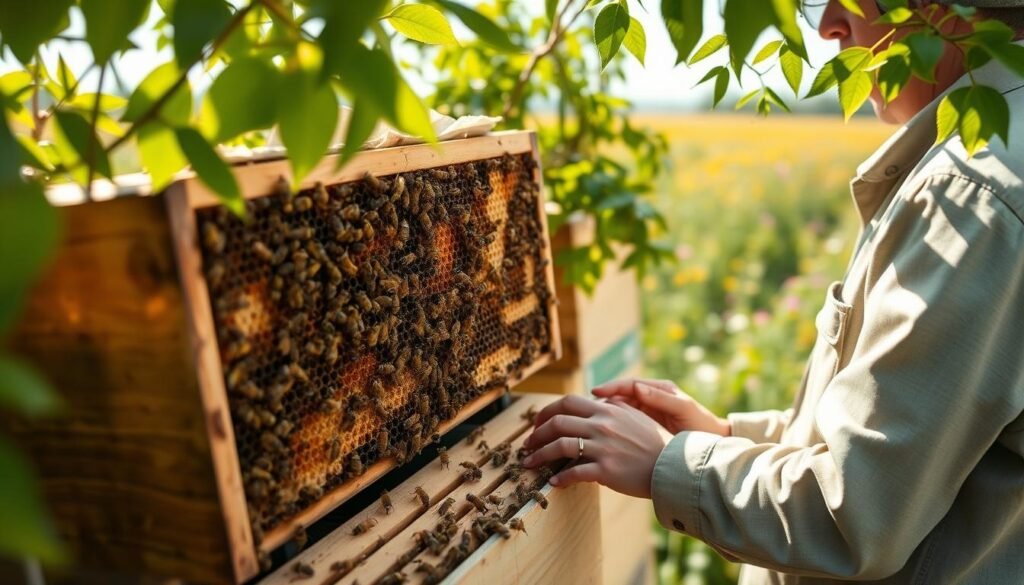
Reduced brood rearing concentrates mites on the remaining pupae and workers. That shift often produces a measurable spike in mite counts during low-forage periods.
Why mite spikes coincide with shortages
When a colony cuts egg-laying, mites lose hiding places. They move onto adult bees and the limited brood, increasing visible load and disease risk.
Stressed bees have weaker immune responses. This makes honey bees more vulnerable just as fall and winter cohorts must be established.
Treatment timing to protect brood and foragers
Monitor regularly and act early. Use sticky boards or alcohol washes to set thresholds and schedule treatments before winter bees form.
- Coordinate feeding and entrance management so treatments don’t add stress.
- Choose methods that match current temperature and colony status and follow label directions.
- Recheck mite levels after treatment and record dates and outcomes.
Practical note: plan checks late in the day to avoid peak traffic and reduce disruption.
Planting and habitat hacks to bridge the summer gap
Small, dense beds of summer-blooming herbs make a big difference to nearby colonies. Place plantings close to hives so foragers spend less energy and more time collecting pollen and sugar.
Summer-blooming herbs and plants bees love
Choose hardy, nectar-rich herbs. Include borage, basil, oregano, thyme, lemon balm, and mints to supply blooms during slow periods. These plants tolerate heat and reward bees when native flowers decline.
Staggered blooms for spring, summer, and fall continuity
Mix early spring bulbs, mid-summer herbs, and fall asters or goldenrod to smooth supply across the year. Match selections to your local hardiness zone and rainfall so beds perform reliably in your area.
- Locate beds near the apiary to shorten flights.
- Use diverse species to cover varied weather and soil conditions.
- Irrigate during heat waves to keep flowers productive.
- Add hedgerows or wildflower strips to extend habitat for other pollinators.
- Keep notes each year and replace underperforming plants.
| Plant type | Best bloom season | Benefit |
|---|---|---|
| Borage | Summer | High nectar, loved by bees |
| Mint family (basil, oregano, lemon balm) | Summer | Long bloom, steady pollen |
| Thyme | Late spring–summer | Heat tolerant, aromatic flowers |
Practical tip: track which plants delivered most nectar and pollen on your property and adjust next year.
Seasonal timing across the United States: localizing your plan
Local weather and frost patterns are the clearest cues to set your seasonal hive plan. Use those cues to predict when the regional nectar flow starts and ends so you can stage equipment and feedstock.
Using frost dates and local bloom notes to predict flows
First and last frost dates are reliable anchors. The last spring frost often falls one to two weeks after the start of a spring flow in many areas.
Keep a simple log of first blossoms, peak bloom, and frost days by neighborhood and elevation. Local notes beat statewide calendars when planning feeders, syrup mixes, and screens.
Why dearth length varies by region, weather, and year
Flow length changes with rainfall, temperature swings, and geography. Northern areas tend to have shorter springs and longer winters; southern zones can have intermittent summer flows after rain.
Plan buffers: expect gaps to last from weeks to several months depending on your area and the year. Stage feeders and have a robbing screen on hand as colonies peak.
“Review months of inspection weights and compare notes with local peers to sharpen timing each season.”
- Use frost dates as anchors to set your calendar.
- Track bloom notes by micro-area and elevation, not just county maps.
- Prep sugar and syrup ahead of predicted gaps so feeding is immediate when needed.
- Adjust feeder types and screen settings to match local robbing pressure.
| Region | Typical flow timing | Plan actions (equipment & feed) |
|---|---|---|
| Northern temperate | Late spring start; short summer window | Stage feeder early, conserve honey, use tighter screen settings |
| Mid-Atlantic / Midwest | Spring flow, mid-summer gap, fall rebound | Prep enclosed feeders, monitor weights months in advance, add screen at peak |
| Southern & coastal | Longer frost-free season; intermittent summer rains | Be ready to rapid-super after rain; pause feeding during brief flows |
For more on timing and seasonal honey strategies, consult this maximizing honey production guide tailored to regional management.
Moving hives and limiting inspections during dearth
Limit inspections and disturbance during a dearth. Opening a hive exposes stores and raises robbing risk while bees grow defensive. Check only when needed and plan work for late in the day.
If you must inspect, keep frames covered and work fast. Close boxes between checks and avoid spilling syrup or comb. Clean any drips immediately to prevent yard scent that attracts thieves.
Consider moving hives only when another area clearly offers better forage and you can manage reorientation. Use a moving or robbing screen to seal the entrance while keeping ventilation during transport.
- Reduce the entrance before moving and reopen slowly after settling.
- Choose calm weather and low-traffic time to lower stress on bees.
- Watch post-move behavior; spikes in defensiveness or disoriented flights mean pause further intrusion.
- Keep tools and covers ready so inspections stay quick and controlled.
Practical rule: prioritize colony stability—minimize checks until natural flow and stores recover.
Conclusion
Consistent, low-impact care preserves colony strength until the next nectar dearth window passes. Anticipate gaps, tighten entrances, and stabilize stores with enclosed 1:1 syrup in-hive feeders.
Keep a small rapid-response kit on hand: reducers, a robbing screen, covered feeders, sugar and mixed syrup. Act quickly and avoid open feeding that draws robbers; provide steady water nearby to help brood and food processing.
Leave enough honey and capped nectar so the colony can rebuild over the coming months and enter winter with reserves. Monitor varroa and treat as needed so brood and the next generation of honey bees survive.
In short: plan by frost dates and local bloom notes, run disciplined inspections, and keep supplies ready. With steady application, your colonies will catch the next nectar flow and finish the season stronger.
FAQ
What causes a summer nectar dearth and why should I act now?
Hot, dry weather, sudden heat spikes, and gaps between major blooms reduce floral reward. Plants conserve water and cut nectar production, leaving colonies short on incoming carbohydrates. Acting quickly prevents stores from falling too low, reduces robbing risk, and protects brood and queen health.
How can I tell a dearth is underway without opening the hive?
Look for field cues: few open flowers, brown lawns, and bees visiting bird feeders or puddles. At the hive, expect louder, concentrated traffic, bearding at the entrance, and increased defensiveness. These signs let you triage colonies without disruptive inspections.
What inside-hive signs point to an urgent food shortage?
When you inspect, find empty or spotty honey frames, halted wax drawing, and thin cappings. Brood areas may shrink as the queen slows. If consumption outpaces stored honey, feeding or combining colonies becomes urgent to avoid starvation.
When should I start feeding syrup and what ratio is best?
Feed when stores drop below a healthy threshold for your region or when field and hive cues match. Use a 1:1 sugar-to-water syrup as a nectar substitute during dearth. Provide small, steady quantities to reduce robbing and avoid overloading frames with moisture.
Which feeder types work best during a dearth?
Hive-top feeders and in-hive internal feeders minimize robbing and let bees access syrup without exposing it. Avoid prolonged open feeding outdoors; it attracts robbers and other pollinators. Proper placement and sealed fittings reduce spills and pest pressure.
How do I prevent or stop robbing when resources are scarce?
Reduce the entrance size, close upper vents, and install a robbing screen if aggression escalates. Remove exposed syrup, relocate hives slightly if practical, and be ready with smoke and rapid response gear. Spotting frantic fighting or large groups at one hive signals an active robbing event.
Is it a good idea to combine weak colonies during a dearth?
Yes. Combining weak hives can concentrate stores and brood into stronger colonies, improving survival odds. Use the newspaper or fume method to merge colonies safely. Balance combining with disease and varroa considerations to avoid concentrating problems.
How should I manage varroa during a dearth?
Monitor mite levels before and during the dearth; stress and reduced brood can change mite dynamics. Treat according to integrated pest management timing and label instructions so treatments protect colonies without adding undue stress during low-resource periods.
What water arrangements keep bees safe in hot months?
Provide shallow trays with marbles, corks, or floating wood to prevent drowning. Use drippers or shallow basins with perches near hives. Place water sources a short distance from entrances to limit robbers and reduce drift into neighboring yards.
Which plants help bridge the summer gap and reduce future shortages?
Plant summer-blooming herbs and ornamentals like basil, thyme, borage, coneflower, black-eyed Susan, and native asters. Stagger plantings for continuous bloom from spring through fall. Prioritize regionally appropriate species to match local bloom schedules.
Should I move hives or limit inspections during a dearth?
Limit heavy inspections to reduce stress, smoke need, and robbing risk. Moving hives is disruptive and should be a last resort; if relocation is necessary, do it quickly and follow best practices to minimize disorientation and forager loss.
How can I stabilize a colony fast with a short triage checklist?
Close or reduce entrances, provide 1:1 syrup in a secure feeder, place nearby water, check for signs of robbing, combine very weak units if appropriate, and monitor varroa. Reassess weekly and shift from short-term fixes to preparing stores for fall.
How does plant physiology reduce floral rewards during drought?
In hot, dry conditions plants reduce transpiration and conserve water, cutting back nectar secretion. Wilting and disrupted carbohydrate transport also lower nectar volume and sugar concentration, which directly reduces available forage for bees.
How do regional differences affect dearth timing?
Local climate, frost dates, and native bloom schedules determine when flows start and stop. Coastal and southern areas often have different gap timing than northern interiors. Use local extension notes and beekeeper associations to refine timing for your apiary.
What mistakes should I avoid when feeding during a shortage?
Avoid open outdoor feeding, overfeeding thin syrup that ferments, leaving feeders unsealed, and treating varroa at the same stressful moment without oversight. Also do not rely solely on sugar; supplement with pollen patties if protein shortages appear.