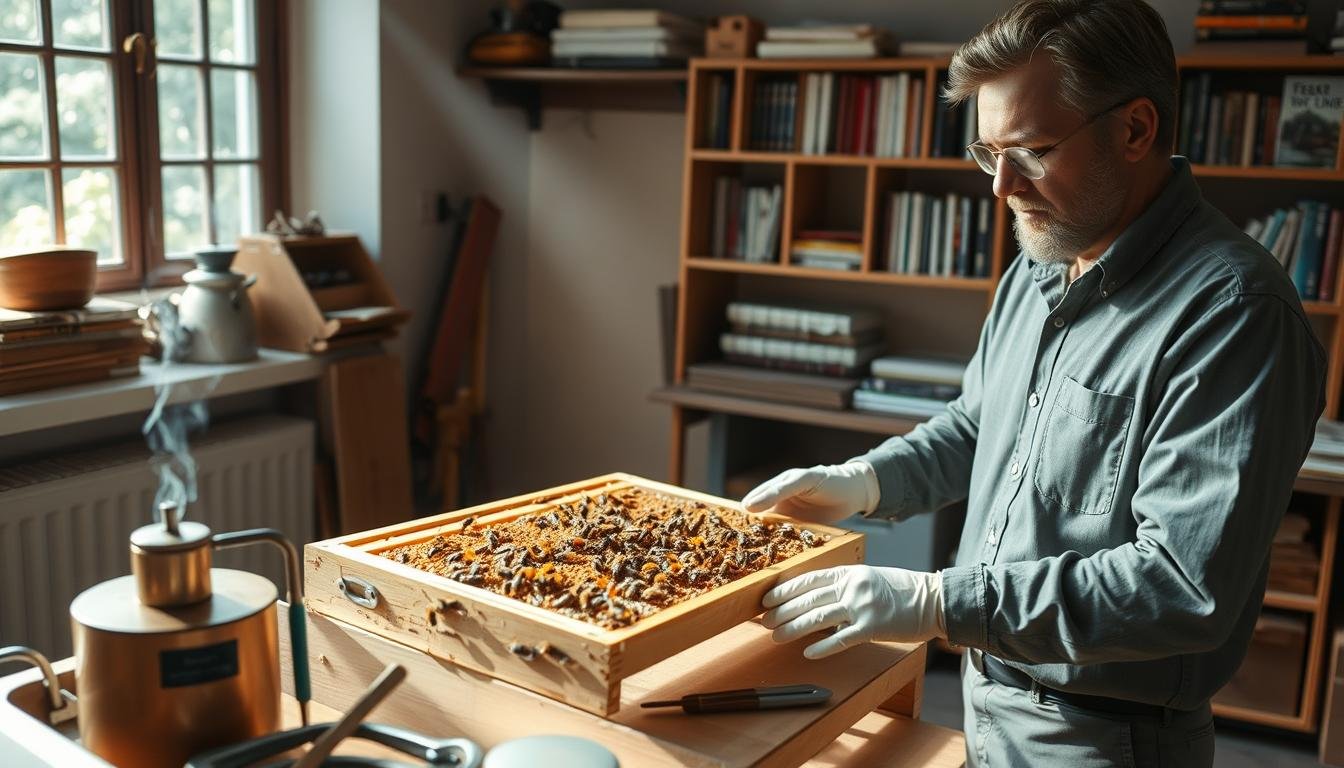
Spring planning matters. Winter stores supply carbohydrates while pollen supplies fats and protein that nurse bees need to make brood food in their mandibular and hypopharyngeal glands. Queens often begin laying by early February in many U.S. regions, so timing matters for colony health.
This guide explains a clear, data-backed plan for coordinating light syrup and protein inputs so a colony experiences a steady nectar-flow equivalent alongside pollen. That steady input helps nurse bees rear healthy larvae and prevents gaps that can exhaust overwintered workers.
We cover light syrup blends (33–50% sugar) that mimic nectar, differences between winter patties and high-protein pollen patties, spoilage prevention, and red flags like caramel color or bitter taste from high HMF. Practical safeguards and timing tips help beekeepers support hive growth without creating swarm pressure.
For deeper field data and technical details, see an applied analysis at fat bees, part 3.
Key Takeaways
- Coordinate light syrup and pollen so nurse bees have steady carbs and proteins.
- Feed 33–50% syrups slowly; prevent spoilage with proper preservatives.
- Use winter patties for calories and pollen patties for gland development.
- Consistency matters—stopping protein early raises disease risk.
- Watch syrup color and taste; caramelized syrup can harm bees.
Understand brood biology and seasonal nutrition drivers
Nurse bees act as metabolic engines, turning pollen fats and protein into the frequent jelly that growing larvae need. This biological conversion is central for spring build-up and guides early-season choices in beekeeping.
Why pollen and fats/proteins power rearing
Larvae require dozens of daily feedings during their first six days. Those feeds supply lipids, glycogen, and amino acids that set developmental pace.
The role of nurse glands and continuous cohorts
New adults need pollen-derived protein after emergence to finish hypopharyngeal gland growth. Without that, they cannot make high-quality jelly for the next cohort.
- Bee bread is made by mixing incoming pollen with saliva and sealing it with honey for long-term storage.
- Placement of pollen stores near the nest shortens trips and improves feeding efficiency.
- A small, steady syrup input can mimic a nectar signal, but syrup alone cannot replace protein from pollen.
Key point: a colony may begin rearing but will falter if protein runs short—this mismatch, not lack of honey, often defines spring success.
Assess your colony before you start
Perform a quick, focused inspection of the nest area before adding feeds or supplements. This reveals whether the hive has the stores and signals nurses need for steady rearing.
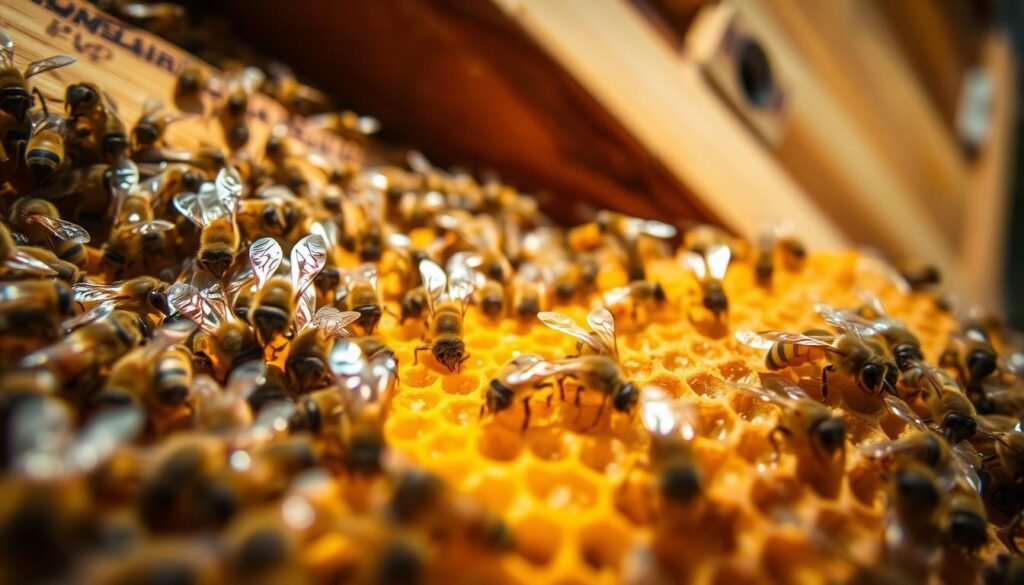
Check for stored pollen and bee bread near the brood nest
Inspect frames beside the brood nest for pollen arcs and fermented bee bread. Look for a thin honey glaze sealing bee bread; this placement shortens trips for nurse bees and improves feeding efficiency.
Signs of adequate feeding: larvae “swimming” in royal jelly
Open comb with young larvae that glisten in white jelly is a clear, professional cue that carbohydrate and protein inputs are sufficient.
“If larvae lack jelly or are capped early, the colony may be conserving resources or missing a nectar signal.”
- Confirm honey reserves on either side of the nest; a round of light syrup (as low as 33% sugar) can provide a nectar-equivalent signal.
- Note queen laying patterns, but watch for nurses removing eggs during dearth.
- Consider a pollen substitute when weather limits foraging to prevent stop-start rearing.
- Check overall hive health and visible issues before adding protein so problems aren’t masked.
For practical field steps that expand on these checks, see this guide to grow your honeybee population.
How to stimulate brood production safely
A simple twin strategy—continuous light syrup and quality protein—gives nurse bees the signals and materials for healthy rearing.
Match a nectar cue with protein near the nest. Offer a light syrup (33–50% sugar) as a slow trickle; 33% often mimics natural nectar and can be as effective as thicker mixes.
Feed continuously rather than dumping large volumes. Slow input keeps nurses focused on feeding larvae instead of storing honey.
- Provide protein via pollen patties or substitutes placed next to the brood frame.
- Confirm honey reserves first; if low, give one or two rounds of syrup so the colony feels secure.
- Set time-bound goals so peak rearing aligns with your main spring flow and reduces swarm pressure.
| Goal | Method | Timing |
|---|---|---|
| Signal nectar flow | Slow 33–50% syrup trickle | Continuous, weeks before spring honey |
| Gland development | Pollen patties near brood | Start several weeks before main flow |
| Avoid swarming | Space management and planned splits | Monitor weekly; act early |
Protein strategies: pollen patties, substitutes, and timing
Good protein planning makes the difference between a hive that merely survives spring and one that thrives during the main nectar flow.
Winter patties are high-carbohydrate and low-protein. They act as calorie insurance and can be fed through cold months without forcing frequent cleansing flights.
Pollen patties deliver the protein bees need for gland development and increased laying. Start a pollen patty about six weeks before your local honey flow so colonies peak with nectar.
- Choose pollen substitute or patties with sterilized pollen (e-beam) for safety and uptake.
- Keep feeding consistent; stopping mid-build can strand open brood and raise EFB risk.
- Scale patty size to colony strength and check consumption weekly.
| Patty Type | Main Role | When to Use |
|---|---|---|
| Winter patty | Calorie support, low protein | Fall through early spring if stores low |
| Pollen patty | High protein for gland growth | Start ~6 weeks before main flow |
| Pollen substitute | Supplement when natural pollen lacks | Use until daily foraging resumes |
Carbohydrate strategies: syrup types, mixes, and safety
Clear carbohydrate plans steer colony behavior: syrup choice and delivery often decide whether nurses keep feeding or switch to storage.

Light mixes and the nectar signal
Light syrup at about 1:2 sugar-to-water (~33%) most closely mimics natural nectar. That mix keeps nurse activity steady without encouraging heavy storage.
Feed slowly and continuously. Small, regular doses maintain the “flow” cue and support rearing when paired with protein patties or pollen.
Sucrose, HFCS, and inverted syrups
Sucrose is the reliable first choice for beekeeping feeding. Some operators use sucrose/HFCS blends or gently inverted syrups for ease of use.
Avoid caramel-colored or bitter syrup; high HMF from overheating harms bees and creates acceptance issues.
Prevent spoilage and protect health
- Mix with warm water for faster dissolution and steady delivery.
- Preserve light syrup: add 4 ml unscented household bleach (6%) per gallon or use thymol to reduce microbial growth.
- Switch to heavy syrup only when building winter honey stores; heavy mixes drive storage rather than rearing.
| Syrup Type | Best Use | Precautions |
|---|---|---|
| 33% (1:2) | Nectar signal, daily feeding | Use preservatives; feed slowly |
| 50%+ | Rapid stores, winter candy | Not for stimulation; promotes storage |
| Inverted/HFCS | Convenience blends | Avoid if caramelized; monitor HMF |
Application methods, equipment, and placement
Small choices in placement and gear change uptake and hive behavior. Correct placement of patties and the right equipment keep nurse bees working where they matter most.
Patty placement near the brood and under-lid options
Place patties directly above or beside the brood nest so nurses find protein on routine trips. This boosts consumption and gland development.
Under-lid feeding using a top rim can work well if the hive retains heat and bees can access the patty. Keep patties thin and broad to reduce burr comb and increase contact area.
“Thin, wide patties get eaten faster and cause fewer comb problems.”
Feeder choices for syrup and liquid diets
For syrup, inverted jar or pail feeders deliver a steady trickle. That steady flow gives a continuous nectar signal without flooding combs.
Frame feeders are usable but often leave more residue. Inverted feeders usually promote faster uptake, especially with fine liquid diets that stay mixed in heavier syrup.
| Item | Best use | Note |
|---|---|---|
| Patties | Protein near brood nest | Thin, check weekly |
| Inverted feeder | Syrup delivery | Steady, low-residue |
| Frame feeder | Temporary refill | Harder to clean |
- Avoid blocking bee space in a single or double deep box; feeders and patties should not obstruct the cluster.
- Keep equipment clean and rinse between uses; preservatives in syrup help, but physical cleaning reduces cross-contamination risk.
- Watch hive entrances and interior traffic. Strong hives handle higher flow; small hives need reduced holes or lower flow rates.
- Track the amount delivered each week. Small, consistent volumes work best and prevent backfilling the brood area.
Regional timing and weather windows in the United States
Regional bloom calendars and local weather set the clock for feeding and hive management in each yard.
Anchor plans to local flow dates. Work back about six weeks from your historical honey flow and start patties early enough so colonies gain foragers as the main nectar arrives.
In mild areas, bees may forage on willow, witch hazel, and skunk cabbage between winter and spring. Still, stored pollen or patties matter when cold snaps block flights.
- Use small, regular syrup doses during short dearths; roughly a half-gallon of ~33% syrup weekly has supported stimulation in western yards.
- Watch weather windows: a few warm days can reduce supplemental needs; prolonged rain or cold means keep feeds steady.
- Match timing to your local phenology and consult local beekeepers or associations for yard-specific dates.
- Adjust the amount per colony: strong hives need earlier space and different feeding than weaker colonies.
| Region | Typical first flow | When to start patties |
|---|---|---|
| Coastal South | Late winter–early spring | 6 weeks before first bloom |
| Inland North | Late spring | 6–8 weeks before main flow |
| Western foothills | Early spring or variable | 6 weeks; use syrup bridge in gaps |
For further reading and local guides, consult this beekeeping resources page: beekeeping resources.
Risk management: health issues, pests, and overpopulation
Anticipate biological and environmental risks so gains from feeding do not create new problems. Keep checks simple and repeat them weekly as colonies expand.
Small hive beetles and patty size control
Small hive beetles (SHB) are drawn to pollen patties. Offer roughly half‑pound pieces and replace them often so bees finish patties before SHB eggs hatch.
Dysentery risk in cold snaps
High‑protein patties raise defecation frequency. During prolonged cold, favor low‑protein winter patties for stores until bees can take cleansing flights.
Swarm pressure and equipment readiness
Have extra frames, a nuc box, a spare bottom board and lid on hand. Quick splits remove swarm pressure and protect hive health.
- Keep syrup supply steady; erratic feeding causes yo‑yo effects and can cut jelly volume.
- Consistent protein feeding reduces EFB risk when weather is cool and rainy.
- Track stores, space, and brood patterns; thin jelly signals a nutrition shortfall.
| Risk | Action | When |
|---|---|---|
| SHB attraction | Half‑lb patties, frequent replace | High SHB regions |
| Dysentery | Use winter patties | Cold snaps |
| Swarm surge | Emergency split | Queen cells appear |
For swarm cell guidance and split timing, consult this short guide on swarm cell management.
Conclusion
Conclusion
Practical timing and clean feed make the difference between fleeting gains and lasting hive strength. Use a light syrup bridge (roughly 33–50%) paired with nearby protein about six weeks before your main flow. Keep sugar solutions fresh, add preserve measures like 4 ml household bleach per gallon or thymol, and reject any caramelized or bitter syrup.
Feed in modest, steady amounts and offer small patties so bees finish them quickly and SHB risk stays low. Add a box or frames when stores rise, and keep feeders, spare equipment, and a nuc ready for splits.
Record what works this year and refine timing for next season. For practical feeding guidelines and regional planning, see this feeding primer at bees feeding basics and expansion gear notes at beekeeping expansion tips.
FAQ
What key nutrients do honey bees need for steady brood rearing?
Nurse bees require pollen proteins, essential fatty acids, and carbohydrates. Protein and lipids drive gland development for royal jelly, while nectar or light syrup supplies the energy for feeding. A balanced supply near the brood nest keeps continuous cohorts of nurse bees active.
How can I check colony readiness before adding supplements?
Inspect frames near the brood nest for stored pollen and bee bread. Look for active nursing behavior and larvae with shiny, white brood food—often described as “swimming” in royal jelly. Also assess queen laying pattern and overall adult bee numbers before adding patties or syrup.
What pairing of protein and carbohydrates works best for build-up?
Combine a quality pollen patty or substitute with a light syrup feed (around 1:1 or 2:3 sugar:water by weight) to mimic a nectar flow. This pairing supplies both the proteins for gland development and calories for foraging and brood care without overstressing the colony.
When should I introduce protein patties for spring build-up?
Start about six weeks before your local major nectar flow. That timing allows nurse bees’ glands to strengthen and the queen’s laying rate to increase as forage becomes available. Adjust schedules to regional bloom dates and current colony condition.
How often and how much patty should be offered?
Place a moderate-size patty (enough for several days of consumption) directly above or adjacent to the brood nest. Replace or refresh every 7–14 days depending on consumption. Avoid oversized portions that invite pests like small hive beetles.
Which syrup concentration is best for stimulation without spoilage?
Light syrup in the 33–50% sugar range (about 1:1 by weight) stimulates brood rearing without crystallizing. Keep feeders clean, use local, good-quality sucrose when possible, and avoid prolonged storage of homemade invert syrups that can develop HMF if overheated.
Are there differences between pollen patties and winter patties?
Yes. Winter patties emphasize carbohydrates and long-term stores to sustain bees in cold months, while pollen patties focus on protein and lipids to support nurse bees and larval feeding during build-up. Choose formulations and timing that match seasonal needs.
What feeder types work best with protein and syrup strategies?
Use top-open patties placed near the brood for protein. For liquid feeds, internal frame feeders, top feeders, or division-board feeders reduce robbing risk. External feeders are convenient but increase exposure to pests and robbing—use them cautiously.
How do I prevent small hive beetle problems with patties?
Keep patty sizes small, replace stale material, and maintain strong colonies to limit beetle breeding. Traps, oil traps in bottom boards, and hygienic management of spilled patties help. Move patties closer to the brood so bees can guard them effectively.
Can high-protein feeding cause dysentery or other health issues?
High-protein diets during cold snaps can stress bees and increase dysentery risk. Avoid heavy protein supplementation when temperatures prevent cleansing flights. Feed in moderate amounts during warm periods and monitor colony behavior closely.
What are safe practices for syrup preservation and contamination control?
Use clean equipment, avoid overheating syrups to prevent HMF formation, and do not add household bleach. Some beekeepers use thymol strips cautiously, but follow label guidance. Rotate and clean feeders regularly to prevent fermentation and disease spread.
How can local bloom dates guide my feeding schedule?
Map local nectar flow and pollen bloom windows and begin protein supplementation about six weeks ahead of the main flow. Adjust syrup feeding to coincide with early nectar scarcity and reduce supplemental feeding once abundant forage appears.
What signs show I’m pushing colonies toward swarm pressure?
Rapid population growth, congestion in the brood nest, and abundant queen cells indicate swarm intent. If these appear, consider splits, add supers, or slow stimulation. Always have extra equipment on hand in build-up season.
How do nutritional gaps increase risk of European foulbrood (EFB)?
Inconsistent feeding or abrupt stops create stop-start brood rearing, which stresses nurse bees and larvae. That instability can raise susceptibility to EFB. Maintain steady, appropriate supplementation through the critical ramp-up period.
Are pollen substitutes effective compared with real pollen?
High-quality pollen substitutes and blends can support gland development and rearing when natural pollen is scarce, but they rarely match fresh pollen’s full nutrient profile. Use tested commercial brands and monitor colony response closely.
What equipment should I have ready for emergency splits during heavy buildup?
Keep extra brood boxes, frames, a mated queen or queen cells, and temporary feeders available. Quick splits relieve swarm pressure and preserve honey yields while maintaining healthy brood rearing momentum.