Last Updated September 13, 2026
Goal: This introduction lays out a clear, step-by-step approach that protects people and property while respecting pollinators. The guide focuses on preventing long-term damage from honey, wax, and brood left inside a structure.
Timing matters. Swarm season peaks in spring, when honey bees search for a new site. Early action can stop a cluster from turning into a full colony in your home or nearby area.
Know the difference between a temporary cluster and an established colony. A swarm is often docile and may move on. An established nest in soffits, chimneys, or walls can cause honey leaks and foul odors if killed in place.
Safety first: protect people in high-traffic zones, then stabilize the scene to reduce stings while a professional plan is arranged. Proper removal and cleanup cut long-term costs and protect both the colony and the building.
Key Takeaways
- Act early during swarm season to prevent settlement.
- Differentiate a temporary cluster from an active colony.
- Prioritize people, then stabilize the area before action.
- Killing nests in place risks honey leaks and contamination.
- A methodical, professional approach saves costs and preserves pollinators.
Safety First: Assess Risk, Protect People, and Stabilize the Site
Start by sizing up risk: who is nearby, what paths people use, and how visible the cluster is. Quick observation helps decide whether to post a perimeter or call for help.
When to evacuate: clear entrances, walkways, and any crowded zones immediately. Close nearby windows and doors so honey bees cannot drift indoors while you organize support.
Personal protective equipment: amateurs should not attempt wall access. Trained operators use full suits, veils, gloves, boots, and leg straps. Professionals also apply smoke to mask alarm pheromones and reduce defensive behavior.
Quick actions that reduce stings
- Set a buffer and keep people and pets away from the area.
- Avoid loud tools and sudden movements near the cluster.
- Have epinephrine auto-injectors ready for known allergies.
| Who Acts | Recommended Equipment | When to Call Pros |
|---|---|---|
| Homeowner (observe) | Binoculars, phone camera | If cluster is near busy entrances |
| Experienced beekeeper | Full bee suit, smoker, hive box | When live capture is feasible |
| Pest control / contractor | Access tools, PPE, cleanup gear | Large nests in walls or high-traffic job sites |
| Medical responder | First-aid kit, epinephrine | Multiple stings or allergic reaction |
Identify What You’re Dealing With: Swarm, Exposed Comb, or Established Colony
Start by spotting behavior and location; that tells you if you’re looking at a passing cluster or an entrenched colony.
Docile clusters: A classic swarm is a basketball-sized mass of honey bees that often rests calmly for 3–5 days. The queen stays with the cluster while worker bees and scout bees perform zig-zag flights and dances to choose a new site.
Watch for change: if wax comb appears on limbs or eaves, the group is shifting from a temporary cluster toward an exposed nest and will grow more defensive.
Signs of an established colony: steady traffic into gaps in soffits, chimneys, columns, meter boxes, or walls usually means brood and honey are inside. Those colonies defend their stores and are more likely sting when disturbed.
- Look for calm hanging clusters, active scout dances, or focused flight into an opening.
- Note dark stains at entrances and constant flight lines — these point to comb and honey inside cavities.
- If unsure, share clear photos and location details with a beekeeper via this guide on swarm control splits: swarm control split.
Safe Way to Remove Bees from a Building
Decide whether observation, live relocation with a beekeeper, or hiring pest control is best based on activity and risk.
Decision path: If a calm swarm hangs away from people, monitor for a day or two. If traffic streams into an opening, plan live removal with a local beekeeper or a specialist who does bee removal and comb extraction.
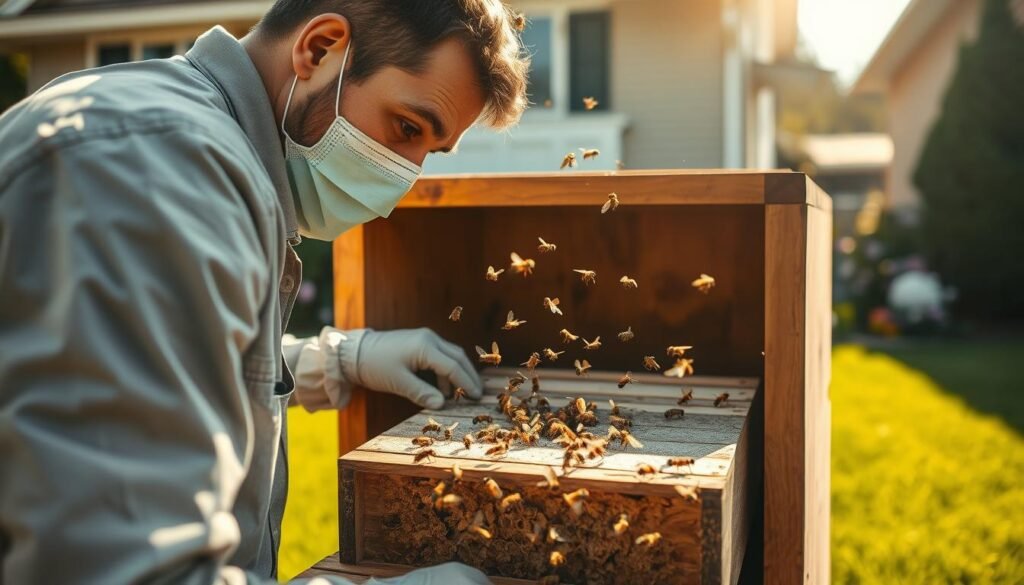
Never kill in place. Killing bees inside cavities often leaves honey and brood that ferment or decompose. That causes leaks through drywall, foul odors, and expensive hazardous cleanup when pesticides soak into structure materials.
Special caution
In high-traffic areas and public locations, escalate to licensed pest control teams experienced with live capture, cavity cleanup, and sealing. Africanized honey bees are more defensive; trained crews should handle those colonies.
- Ask providers what their service includes: removal, comb and honey extraction, sanitizing, sealing, and repairs.
- Document the location, height, and nearby foot traffic so the team brings proper equipment and staffing.
- Prefer relocation when feasible — it protects people and preserves pollinators.
Immediate Actions for Swarms on Your Property
If a cluster settles on your property, quick observation often shows whether it will move on or need action.
When waiting is OK: Many honey bees rest for 3–5 days before moving. If the site is low-traffic, cordon the area and monitor daily. Keep windows and vents closed so the group does not drift into cavities.
When you must act fast: Move people, pets, and children away if the cluster is near doors, walkways, or play areas. Agitation increases risk and makes later collection harder.
Contacting a local beekeeper
Gather clear photos that show size, approximate height, and surrounding access limitations. Note gates, ladders needed, and nearby power lines so the beekeeper brings the right gear.
Beekeepers often collect swarms at night using simple boxes. If many bees have begun producing wax or you see steady flight into an opening, escalate to professionals who can extract honey and comb.
| Situation | Suggested Action | Who to call |
|---|---|---|
| Low-traffic yard, swarm hanging | Monitor 2–5 days; keep clear | Local beekeeper or beekeepers |
| Near entrances or playgrounds | Act immediately; remove people and pets | Beekeeper or licensed contractor |
| Steady flight into wall or soffit | Do not disturb; arrange cavity removal | Professional removal team |
How Professionals Remove Bees from Walls and Cavities
Locating the nest starts before any demolition. Technicians use stethoscopes, tapping, and careful listening to find humming inside a wall or cavity. They may drill tiny test holes or insert fine wire to map comb edges without opening large sections.
Access and method are chosen based on the site and colony size. Live removal favors cutting out comb and relocating honey bees. When relocation is not feasible, vacuum systems with baffles collect bees safely while minimizing harm.
A coordinated job usually includes both a bee removal pro and a contractor. That team opens the wall, extracts comb, wax, and honey, and then cleans so odors and fermentation do not persist.
Technicians use smoke to mask alarm pheromones before exposing brood. After extraction, all entrances and secondary access points are sealed with fine mesh (six+ meshes per inch) and expandable foam as appropriate.
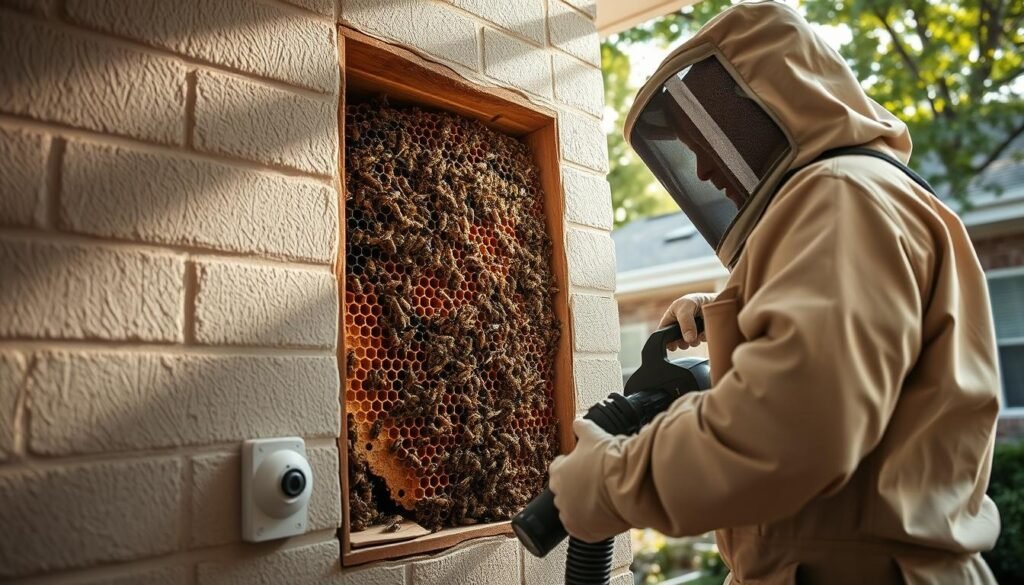
- Pros evaluate framing, wiring, and insulation to choose the best access site for the job.
- Complete cleanup prevents leaks, staining, and pest control issues caused by leftover honey.
- Providers should document the work, replace insulation if needed, and outline follow‑up monitoring.
DIY Considerations: Limits, Equipment, and When to Stop
DIY attempts carry clear limits—know what tasks to tackle and when to stop.
Minimum gear matters. At a bare minimum use a breathable suit with attached veil, gloves, boots, and leg straps. Proper face protection prevents bees entering clothing and reduces sting risk.
Why smoke and trained technique help
Beekeepers use smoke to mask alarm pheromones and calm honey bees before work. Smoke buys time and lowers defensive responses. Do not improvise without training and a clear exit plan.
Why home remedies backfire
Sprays like vinegar or household chemicals can suffocate or stun bees, provoke aggression, and spread honey, making cleanup worse. Simple fragrances or sprays often turn a fixable swarm into a structural pest emergency.
| DIY Step | When OK | When Stop |
|---|---|---|
| Observation and photos | All situations | Never stop documenting |
| Approach with PPE | Small, exposed clusters | Established colony in wall |
| Smoke use | Trained operator only | If you lack training or exit plan |
If the queen cannot be secured, or you find heavy honey and comb inside cavities, pause and call a professional or local beekeeper. Protect people and pollinators by stopping before risk grows.
For planning help, consult a swarming preparation guide.
Preventing Future Bee Invasions: Bee‑Proofing Your Home
Preventing repeat invasions starts with sealing even the smallest gaps around your house.
After extraction, lingering honey and wax draw scouting insects. Seal every opening larger than a pencil and clear nearby debris so new nesting sites are not attractive.
Focus on utility penetrations, vents, soffits, hollow porch columns, and water meter boxes. Inspect conduit entries, cable ports, and any box lids that sit on or near the house.
Mesh, foam, and structural repairs that last
Install fine mesh (six+ meshes per inch, such as #8 hardware cloth) over vents and grills. Use expandable foam for voids, then trim and seal for a flush finish.
Avoid sealing around live power lines; coordinate with your utility provider for safe access and permanent repairs.
Seasonal walkthroughs during swarm season
Schedule checks in April–May. Walk the perimeter, inspect boxes and lids, door and window flashings, and chimney flues. Prompt fixes stop cavities from becoming full comb sites.
- Perimeter survey: note entrances into walls and attic cavities around pipes and meter lids.
- Cap hollow columns and repair rotted siding on the house.
- Extend inspection to sheds, barns, bird boxes, and stored boxes that can hide a new colony.
| Problem Area | Recommended Fix | Why it Matters |
|---|---|---|
| Vents and soffits | Install #8 hardware cloth; secure trim | Blocks air access and prevents cavity entry |
| Water meter boxes and grill lids | Seal small holes; latch lids tight | Stops sheltered boxes from becoming nesting sites |
| Hollow porch columns & cavities | Cap top and bottom; fill with foam | Removes continuous access and nesting space |
| Conduit and cable penetrations | Seal around cables; consult electrician for energized lines | Prevents access while maintaining safe power access |
Routine maintenance and cleaning after any removal remove attractive honey odors and reduce pest recurrences. For help when insects are still entering your home, consult a local resource like bees getting inside my home.
Timing, Location, and Scale: Factors That Change the Job
Timing and scale shape the options professionals choose when dealing with hanging clusters or deep nest cavities.
Season matters. In much of the U.S., swarm season runs March–June. Many swarms rest for 3–5 days and then move on. That short window often lets owners wait when the cluster is low‑risk.
But size and growth change the equation fast. A settling swarm can become a full colony in weeks. Larger nests build honey and comb that complicate extraction and cleanup.
Access and site constraints
Height, nearby utilities, and landscaping affect method and cost. Masonry, plaster, and old framing may need special cutting or repair. Limited access raises time and crew needs.
- Plan around peak time and provider availability.
- Estimate size early—larger size needs more personnel and gear.
- Give clear location and access notes so crews stage ladders, vacuums, and barriers efficiently.
| Factor | Impact | Action |
|---|---|---|
| Season timing | Affects whether waiting is safe | Monitor for days or schedule prompt removal |
| Site access | Determines equipment and crew size | Provide parking, gate, and approach details |
| Honey load / nest size | Increases cleanup and repair scope | Plan for comb extraction and odor control |
Coordinate early. Tell your provider about area constraints and any sensitive nearby sites like schools or storefronts. Clear instructions speed the job and reduce surprises.
For planning resources and provider guidance, see our beekeeping resources.
Conclusion
Conclude by matching the response to the scene: calm swarms often need only monitoring and perimeter control, while a nest in walls or a cavity requires full extraction and cleanup.
Work with experienced beekeepers or licensed pest control teams for live relocation or humane removal. Proper jobs remove honey and comb, extract the colony or hive, and seal every entrance so scouts cannot find a new site.
Keep people back, avoid improvised spray attempts, and use PPE and trained smoke technique when professionals handle the job. After work, do seasonal checks around vents, water meter lids, and eaves to protect your home and the insects that pollinate our gardens.
FAQ
What should I do first if I find a colony in my wall?
Keep people and pets away and mark a safe perimeter. Do not try to collapse walls or spray chemicals. Take photos from a distance and note the entrance location and any honey staining. Contact a local beekeeper or licensed pest control specialist who handles honey bee colonies for advice and possible removal.
How can I tell whether it’s a harmless swarm cluster or an established nest?
A swarm cluster hangs in a loose ball and is usually calm for a few hours to days. An established colony inside walls shows steady worker traffic at a single entrance, honey odors, and sometimes staining or buzzing inside structures. Defensive behavior—guard bees flying aggressively—indicates a long-term nest.
Is it okay to hire pest control to kill bees in my home?
Killing bees may stop activity quickly but creates problems: leftover honey and brood attract other pests, cause odors, and damage structures. Many municipalities and beekeepers prefer live removal and relocation. If extermination is chosen, follow up with thorough cleanup and repairs conducted by professionals.
Can I remove bees myself with a vacuum or spray?
DIY methods risk injury and often fail. A bee vacuum used by trained apiarists can collect live bees safely, but store-bought vacuums and insecticides usually scatter bees and make colonies more defensive. If you’re not an experienced beekeeper, stop and call a pro rather than escalate the problem.
When is it safe to wait and monitor a bee situation?
If the insects are a calm swarm on a low branch or in an accessible spot and no one is at risk, monitoring for 24–48 hours can allow a beekeeper to relocate them. If the colony is inside walls, in high-traffic areas, or if occupants are allergic, act quickly and arrange professional removal.
How do professionals locate colonies inside walls or cavities?
Technicians use listening devices, thermal imaging, and small test holes to find cavities and the queen. They map flight paths and entrances, then access the hive through minimal openings for live removal, vacuuming of bees, or controlled extraction of comb and honey.
What protective equipment should homeowners use while waiting for help?
Maintain distance and wear long sleeves, closed shoes, and gloves if you must approach. Do not attempt to use bee suits or smoker equipment unless trained. Keep windows and doors near the infestation closed to limit indoor bee access while professionals arrange removal.
What happens to the honey and comb after live removal?
Professionals remove comb and honey to prevent rot, pests, and structural damage. They may harvest salvageable honey and dispose of soiled comb. After removal they clean and dry cavities, then seal and repair the entry points to prevent reoccupation.
Could Africanized honey bees change how removal is handled?
Yes. Africanized bees are more defensive, increasing risk to people and pets. Removal teams wear higher levels of protection and use more cautious approaches. Notify responders if you suspect aggressive behavior so they can dispatch a suitably trained crew.
How do I find a reputable local beekeeper or removal service?
Search state beekeepers associations, local extension offices, and professional removal directories. Ask for references, proof of insurance, and whether they perform live relocation versus lethal control. Photos, exact address, and details about entrance size and bee behavior help them prepare.
What home repairs prevent future nesting in walls and soffits?
Seal gaps around vents, pipes, and utility penetrations with metal flashing, caulk, or hardware cloth. Repair damaged soffits, replace missing vent covers, and fill hollow columns. Use mesh and durable materials rather than temporary foams that bees can chew through.
How does season and colony size affect removal timing and cost?
Spring and early summer swarm season brings more relocations and often easier removals because colonies are smaller. Large, established colonies with extensive comb or difficult access require more labor, possible structural repairs, and thus higher costs. Site access and time of day also influence the approach.
Are there legal or environmental considerations when relocating honey bees?
Yes. Some jurisdictions regulate relocation to protect native pollinators and public safety. Relocation should follow local guidelines and be done by licensed apiarists when required. Proper relocation preserves honey bee populations and reduces the need for chemical control.
What should I document for the removal crew when I call?
Provide photos of the bees, the exact address, description of the entrance (size and location), signs of honey or staining, and any known allergies on site. Note the best access points and any pets or children to keep clear of the work area.