Published November 27, 2025 · Last Updated August 26, 2026
This Best Practices Guide explains why training beekeepers as educators, habitat stewards, and communications ambassadors boosts community engagement and measurable conservation results across the United States.
The guide shows how hands-on hive skills, clear science translation, and public programming connect honey bee care with native species and broader pollinators. It presents a modular approach that includes safety protocols, communication tools, and adaptable demonstrations for schools, grower meetings, and civic events.
Readers will find practical modules on hive inspections, disease recognition, habitat installation, pesticide education, and climate literacy. The workflow ties research and education to community science opportunities, so participation, habitat acres improved, and incident reports become measurable outcomes that support funding and program growth.
By the end, the reader will have a blueprint to develop or refine training that scales consistent, high-quality programs linking honey, bee health, and local conservation goals.
Key Takeaways
- Training merges field skills with communications to strengthen local pollinator work.
- A modular curriculum covers hive care, disease spotting, habitat, and safety.
- Programs translate research into accessible education and community science.
- Metrics like participation and habitat acres track impact and funding value.
- Beekeepers act as trusted messengers bridging science, agriculture, and the public.
Why cross-training beekeepers elevates pollinator outreach and conservation
When practical hive experience meets plain-language education, communities gain usable guidance that supports both honey production and wild pollinator conservation.
Training expands skills so beekeepers can connect how pollination underpins agriculture and local ecosystem services. This helps translate complex research into everyday practices for growers, gardeners, and civic groups.
Combining technical hive knowledge with clear communication reduces risk and improves outcomes for a crop, community greenspaces, and biodiversity. Trained leaders also correct common myths about honey, seasonal forage gaps, and the role of managed colonies alongside wild bees.
Partnerships with extension services and local agencies keep messages consistent on integrated pest management, habitat enhancement, and community participation. The result is a multiplier effect: each trained presenter amplifies science-backed practices across networks, raising local bee health and overall health literacy.
Defining cross-training for beekeepers in the United States
Education programs that blend technical hive work and public presentation build consistent, trustable messages. They teach volunteers and professionals how to observe, explain, and connect hive findings to local practices.
Core competencies: bee health, pollination, and community education
Core skills include identifying brood patterns, pests, diseases, and nutritional stress. Trainees learn to relate those signs to landscape factors like forage, weather, and land management.
Instruction emphasizes pollination ecology so presenters link floral diversity and bloom timing to practical planting and maintenance steps. Clear demos, visuals, and audience assessment sharpen delivery and build lasting knowledge.
- Practice sessions with feedback refine pacing and Q&A handling.
- Resource curation guides audiences to planting lists, handouts, and trusted data portals.
- Graduates coordinate with local partners to align messages and expand events.
Outcome: a replicable baseline that raises bee health, improves program quality, and scales consistent conservation education across communities.
The importance of pollinators to agriculture, ecosystems, and hive health
Reliable pollination supports farm yields and wild plant reproduction. Trained presenters explain how timely pollination services stabilize crop production across diverse systems.
Connecting crop pollination to hive and pollinator health
Audiences learn that floral diversity, continuous bloom, and clean water directly affect hive nutrition and immunity. Clear examples show how colony nutrition influences brood development and overwintering success.
Presenters link these points to practical steps such as hedgerows, cover crops, and fall flowering plants that boost both bees and farm performance.
Translating research into practical management practices
Peer-reviewed studies on forage quality, pesticide exposure, and disease spread become usable advice. Trainers teach how to interpret extension factsheets and regional studies without jargon.
- Actionable steps: diversified plantings, buffer zones, and improved spray timing.
- Landscape-scale ideas: habitat corridors and reduced chemical risk improve wild and managed pollinator health.
- Co-benefits: better soil, water retention, and carbon storage often enhance floral resources and nesting sites.
Simple handouts and planting lists help community members apply research to local crops and climates. This approach turns science into measurable conservation and hive health gains.
Roles and opportunities for beekeepers in pollinator education programs
Local stewards who keep hives can lead school demos, farmer workshops, and garden talks that turn curiosity into action.
Typical roles include classroom visits, field days co-hosted with extension partners, and skill sessions at community gardens. These events build trust and explain practical steps to protect bees and related species.
Key responsibilities are preparing age-appropriate materials, coordinating live or virtual demos, and following safety and accessibility protocols. Organizers should plan logistics, risk management, and evaluation metrics.
- Curriculum and campaigns: contribute to lesson plans, social media, and habitat installation days that turn ideas into action.
- Partnerships: work with master gardener programs, watershed groups, and city sustainability offices to amplify messages and ensure consistent information.
- Professional growth: join train-the-trainer sessions, certification tracks, or mentorship programs to expand regional capacity.
Follow-up matters: provide handouts, planting guides, and links to trusted portals so learning continues after events. Maintain an outreach portfolio with topic lists and photos to secure future opportunities and align expertise with community needs.
Designing a cross-training program that blends science, management, and outreach
Build a curriculum that moves from evidence-based lectures to live inspections and community demos in short, focused modules. This sequencing helps learners apply new methods immediately and retain key messages.
Structuring modules: classroom, apiary, and community engagement
Start with classroom units that summarize relevant research and safety basics. Follow with apiary sessions that show inspections, brood checks, and nutrition assessment.
Finish with public-facing practice where trainees lead short demonstrations and adapt slides or handouts for local audiences.
Seasonal planning for hive management and field demonstrations
Map topics to the calendar so participants see spring inspections, summer forage checks, and fall preparation. The Bee Mindful Workshops in Driftwood, Texas model this with March, April, October, and November sessions and a three-day certificate format.
Safety, equipment, and accessibility considerations
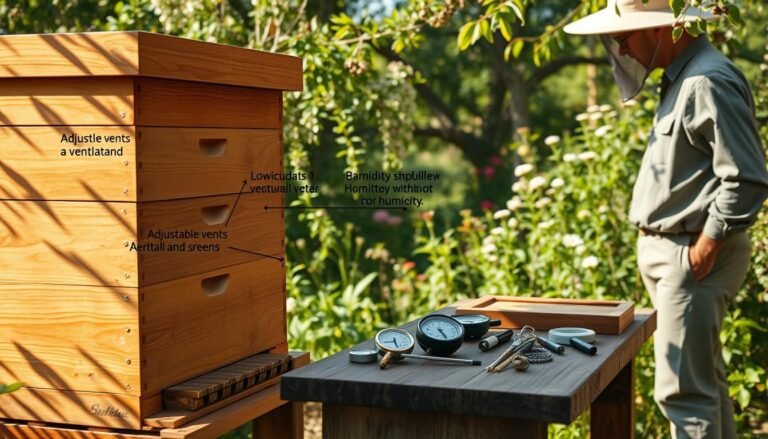
Define PPE standards and assistant roles during live hive work. Include a maker day to teach conversion boxes, swarm traps, and low-lift designs.
Prioritize accessibility by offering modified station layouts and tools that reduce upper-body strain.
| Module | Focus | Outcome |
|---|---|---|
| Classroom | Research, safety, teaching aids | Clear messaging, slide decks, checklists |
| Apiary | Inspections, multiple hives, methods | Hands-on competence across hive styles |
| Community Practice | Demo scripts, accessibility, feedback | Ready presenters with certificate track |
Partnering through NAPPC Task Forces to scale impact
National task forces form short-term, cross-discipline teams that turn clear goals into ready tools and timelines. These groups link research, agencies, and community educators so local presenters gain current content and practical pathways to plug into larger work across North America.
Agriculture and Pollinators: extension, research funding, and farmer engagement
The Agriculture and Pollinators team pushes applied research and helps share results with producers through extension and commodity groups. This creates consistent messaging that aligns with USDA and EPA guidance and supports farm-focused programs.
Pollinator Communications: campaigns, survey insights, and Bioblitz
The communications task force develops campaigns, analyzes the Pollinator Communication Survey, and runs the annual Pollinator Week Bioblitz on iNaturalist. These efforts boost community science and public participation.
Pollinator Habitat Installations and Pesticide Education
One team compiles step-by-step guidance on site prep, installation, and maintenance so presentations can be tailored to parks, farms, and rights-of-way.
The Pesticide Education group increases incident reporting, partners with NASDA, and builds constructive engagement with pesticide applicators and homeowners.
Managed Lands, Honey Bee Health, and Bombus synergies
Task Forces working with utilities and transportation promote award programs that motivate large-scale habitat. Complementary teams focus on honey bee health and imperiled Bombus conservation so trainers can present balanced guidance on managed colonies and native bee needs.
“Task Forces meet to assign roles, set timelines, and move projects from concept to field-tested resources.”
To see participating organizations and recent partners, consult the NAPPC participants list. Joining these initiatives offers technical support, recognition, and channels to scale local conservation work.
Cross-training beekeepers for pollinator outreach
A local hive leader can shape public conversations by matching technical skills to common questions about planting, spray timing, or starting a school garden.
Aligning expertise with community needs begins with a short needs assessment before events. Collect common questions so demonstrations target the highest priorities.
Practical steps to meet information needs
- Map questions to modules: link planting lists, spray timing, and garden starts to specific teaching units.
- Build a resource library: vetted handouts, extension summaries, and research links that presenters share.
- Train quick assessment: teach presenters to gauge baseline knowledge and adjust pacing and detail.
Encourage co-delivery with county agents and master gardeners to blend strengths and expand reach. Use consistent messaging that aligns with regional guidance and national campaigns.
| Action | Tool | Outcome |
|---|---|---|
| Community needs assessment | Short survey, intake form | Tailored demos that answer top questions |
| Resource library | Handouts, planting lists, extension links | Reliable takeaways and follow-up info |
| Follow-up channels | Email lists, QR codes, office hours | Ongoing support and deeper education |
Pesticide education alignment for beekeepers and applicators
A coordinated approach between state agencies and applicators makes it easier to prevent and respond to chemical exposure. This section outlines practical steps that protect honey bee colonies, wild bees, and wider pollinators while keeping agriculture productive.
Building bridges with state departments of agriculture and applicators
Align messages with NASDA-disseminated best practices and direct audiences to state-specific resources on labels, registration, and complaint processes. Train pesticide applicators in clear protocols: pre-application notifications, wind and temperature checks, and timing to reduce exposure.
Integrated pest management should be central: scouting, thresholds, selective products, and non-chemical controls reduce risk and preserve crop outcomes. Encourage use of alert systems and local registries so nearby hive owners get timely information.
Bee kill incident reporting workflows and communication protocols
Provide step-by-step guidance on reporting: collect dead and affected bees, photograph hive conditions, note spray timing, and contact the state lead listed on the pesticide label. Share template logs and incident forms to standardize documentation and speed response.
Train presenters to explain residue pathways and exposure routes in plain language and to model constructive dialogue between applicators and hive owners. Aligned education reduces conflict and improves pollinator health and program predictability.
“Clear protocols and mutual respect make prevention and response faster and fairer.”
Pollinator habitat installations as hands-on outreach
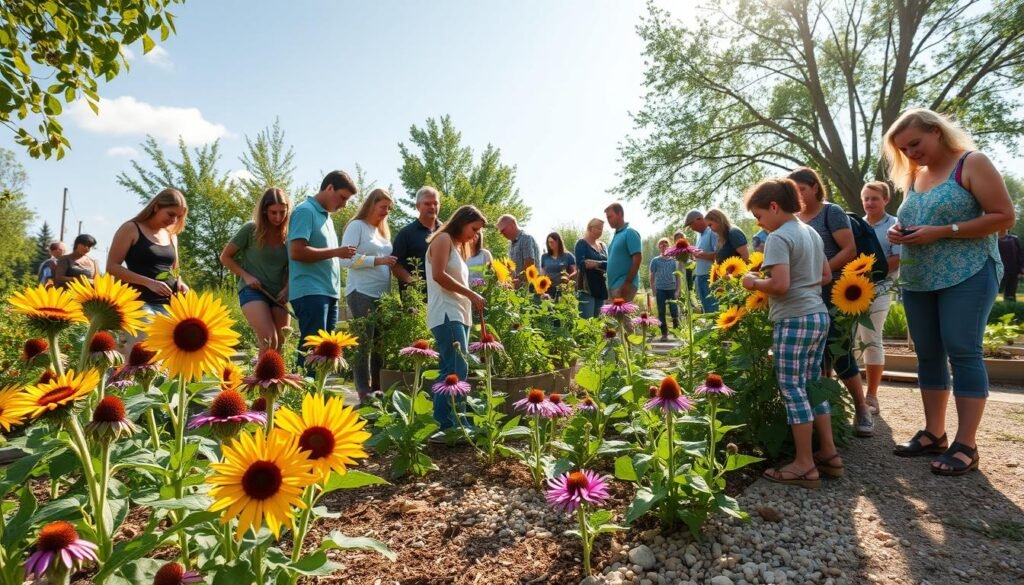
Demonstration sites make abstract research tangible by showing bloom schedules, survival rates, and how simple design choices affect results.
Landscape types: farms, urban gardens, rights-of-way
Designs should match context. On farms use hedgerows and cover crops that support crop edges. Urban yards benefit from pocket prairies and layered plantings. Rights-of-way need low-growing, low-maintenance mixes.
Native plants selection and maintenance schedules
Provide region-specific planting lists and bloom calendars to ensure season-long forage and nesting resources. Share clear maintenance timelines: first-year watering, seasonal mowing windows, and annual survival checks.
Engaging land managers and homeowners with accessible guidance
Use signboards and QR codes that link to planting lists, sourcing tips, and care guides. Coordinate mowing and chemical-use policies with managers to protect life cycles.
“Live installs turn volunteers into stewards and create repeatable models for conservation.”
| Site Type | Key Plants | Maintenance |
|---|---|---|
| Farm hedgerow | Native grasses, nectar shrubs | Spring planting, annual checks |
| Urban pocket prairie | Mix of wildflowers, sedges | First-year irrigation, late-season mow |
| Rights-of-way | Low-growing natives, groundcovers | Infrequent mowing, targeted weed control |
Communications for outreach: messages that resonate across North America
Tailored messages that match local priorities make conservation work easier to start and simpler to sustain. Clear framing turns complex research into practical steps that communities can use right away.
Audience segmentation: growers, gardeners, students, civic groups
Segment messages to match motivations: yield stability and reduced risk appeal to growers. Gardeners respond to beauty and biodiversity. Students engage with discovery and career paths. Civic groups value neighborhood pride and local wins.
Storytelling that elevates conservation and local projects
Use vivid local stories—habitat installs, school gardens, roadside recognition—and show simple steps to replicate success. Mention local honey and how honey bee health links to broader habitat gains.
- Leverage national assets: Task Forces provide campaigns, the Pollinator Communication Survey, and the Pollinator Week Bioblitz on iNaturalist to amplify work across north america.
- Equip presenters: offer slide templates, seasonal content calendars, and clear information handouts aligned with extension and education partners.
- Measure and adapt: track reach, engagement, and conversions to refine messages and maintain long-term support.
Climate change and pollinators: integrating science-based education
As seasons shift, community education can turn climate science into resilient planting plans that keep forage available through heat and drought.
The NAPPC Climate Change and Pollinators Task Force develops public-facing resources and seeks funding to support research on climate impacts to plants and pollinators across North American landscapes.
Public-facing resources that connect climate impacts to management choices
Practical guidance translates research into steps on planting diversity, bloom timing, and water management to sustain forage during heat waves and droughts.
- Explain phenological shifts and offer staggered plant lists and microclimate features to buffer mismatches.
- Compare plant selections under varied climate scenarios so communities can plan resilient gardens and corridors.
- Share region-specific case studies showing how weather changes affect colony foraging and local flowering windows.
Equip presenters with clear talking points, funding pathways, and links to local programs. Encourage community science monitoring of bloom timing and bee activity so managers adapt plans as research evolves.
Honey bee health tools and research translation
Practical tools and clear research translation shorten the gap between lab findings and field decisions at the hive.
The NAPPC Honey Bee Health Task Force sets priorities for 2025 Honey Bee Health Grants and builds sponsorship plans to increase support and partnerships. Grants favor projects that deliver field-ready outcomes and usable management guidance.
Using BeeMD and promoting grants that advance hive health
The BeeMD app and website are practical tools for diagnosing issues and accessing management guidance. Trainers should demo BeeMD during inspections to show real-time decision paths and common signs of stress in bees and honey bee colonies.
- Integrate BeeMD into sessions: pair a short research brief with a hands-on diagnostic exercise.
- Turn peer-reviewed results into checklists and simple decision trees that trainees can use on the apiary.
- Share quick-start guides and links so participants continue learning after workshops, and coordinate these resources with extension materials.
Data sharing and standardized terms make communication clearer. Encourage attendees to give feedback to the Task Force on gaps and desired features. Sponsorships expand resources so clubs and schools gain broader access to tools and training programs.
“Tools like BeeMD and targeted grants speed the translation of research into effective hive health practices.”
See related reading in our beekeeping resources and books to build session agendas that pair evidence and application.
Training modules for beekeepers: from hive biology to community demos
Practical labs and focused briefs prepare trainees to translate hive behavior and honey processing into simple public lessons. The Bee Mindful Workshops combine hands-on practice with short classroom units so learners build skills quickly.
Bee biology and social structure uses observation frames and photos to show division of labor, brood stages, and colony dynamics. Instructors Les Crowder and Nathalie B. guide discussion and practical observation.
Hive inspections and disease recognition
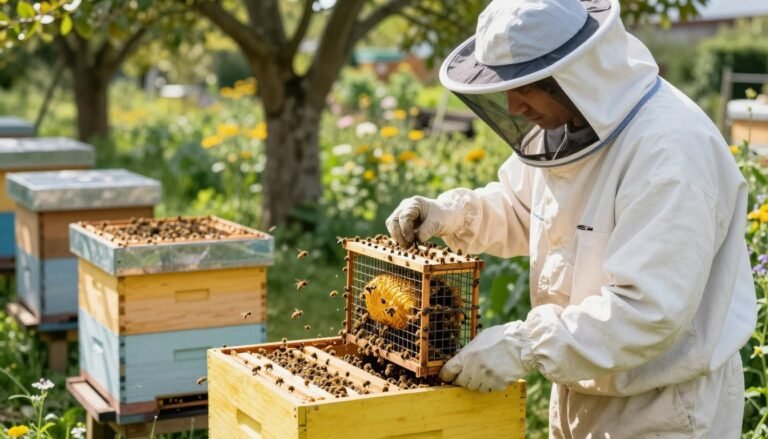
Standardized inspection routines cover preparation, smoke use, frame handling, and record-keeping. Side-by-side visuals and symptom checklists teach how to spot pests and tie observations to management decisions and communication.
Demonstration hives and conversions
Modules introduce Langstroth, Layens, Top-bar, Warre, and common conversions. Trainers compare pros, cons, and maintenance questions so public demos remain clear and accurate.
Honey production and processing
Students follow nectar flow to extraction and processing. Lessons demystify equipment, hygiene, labeling, and simple supply-chain notes that support local honey sales and education.
| Module | Focus | Takeaway |
|---|---|---|
| Biology & Behavior | Division of labor, brood stages, frames | Clear explanations of colony roles |
| Inspections & Diagnosis | Routine checks, pest ID, records | Repeatable, safe inspection habits |
| Hive Types & Demos | Langstroth, Top-bar, Layens, Warre | Confident public demo scripts |
| Honey Processing | Extraction, filtering, labeling | Hygiene and presentation best practices |
Scenario drills (queenless signs, brood breaks, dearth) build problem-solving and calm public explanations. Each module closes with take-home materials, a demo script template, and prompts to log lessons learned to refine teaching and management practices.
Natural and sustainable beekeeping practices as outreach exemplars
Using locally adapted colonies and minimal equipment, teaching sites model how small choices support long-term bee health.
The Bee Mindful Workshops highlight treatment-minimal approaches that use swarms and splits from survivor stock. These methods show how resilient, locally adapted colonies develop over years.
Teaching apiaries include mixed hive styles and accessible setups that reduce physical strain. Trainees learn calm handling, frame checks, and how to read stores and brood stages.
Leveraging swarms, splits, and local stock
Position natural practices as entry points: capture swarms and time splits to match forage and weather patterns. Evaluate genetics and seasonal cues before actions.
Hands-on learning to build confidence
Demonstrate minimal-equipment workflows that lower cost and complexity. Emphasize respectful handling, slow movements, and safety during public demos.
- Simple swarm-trap placement and conversion boxes suited to school programs.
- Checklists for site selection: accessibility, shade, wind, water.
- Record-keeping templates to track queen performance and overwintering outcomes.
| Focus | Benefit | Practical tip |
|---|---|---|
| Swarm use | Genetic diversity | Trap near known forage corridor |
| Splits | Colony resilience | Time with bloom peaks |
| Teaching apiary | Confidence building | Low-lift stands and mixed hives |
Pollinators on managed lands: outreach with utilities, transportation, and energy
Managed corridors offer a practical stage to show how vegetation choices can support biodiversity while meeting safety and reliability goals.
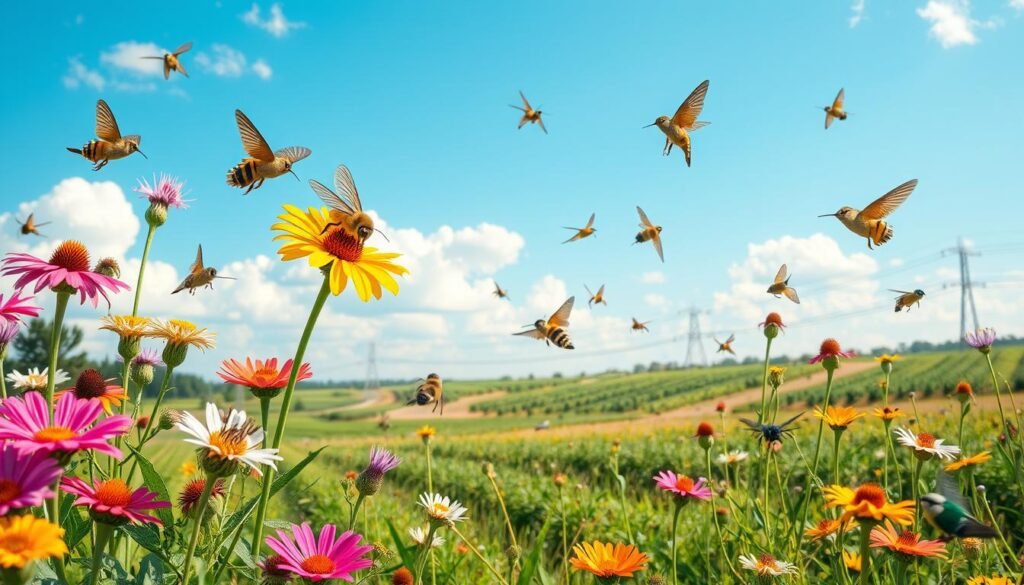
The NAPPC Pollinators on Managed Lands Task Force promotes habitat along rights-of-way through education and awards such as the Pollinator Electric Power Award and the Pollinator Roadside Management Award.
Recognizing and sharing best practices
Showcase award-winning projects that pair safety with biodiversity to inspire utilities and DOTs.
- Use outreach scripts tailored to operations staff that emphasize low-growing native plants and strategic mowing.
- Share maintenance schedules and seed mix examples that lower long-term costs and improve corridor continuity.
- Host field days with DOTs, solar developers, and utilities to demo equipment, safety protocols, and habitat performance.
“Recognition and practical demonstration make adoption easier for crews and contractors.”
| Action | Benefit | How to scale |
|---|---|---|
| Showcase pilot sites | Build credibility | Submit to national awards and regional case studies |
| Train operations teams | Practical adoption | Field days and scripted materials |
| Monitor results | Document outcomes | Standard templates for bloom, species, and maintenance logs |
Align messaging with regulation and safety, connect projects to extension and research, and link local successes to national programs across North America to attract technical support and funding.
North American collaboration and inclusion in outreach
Inclusion means adapting materials to language, culture, and traditional stewardship so campaigns resonate locally.
The NAPPC North American Collaboration group expands participation across Canada, Mexico, First Nations and Indigenous territories, Central America, and the Caribbean. It prioritizes translation of materials and supports continent-wide strategies that make conferences and activities relevant across the region.
Key actions include partnership building, translation, and co-creation of education tools that reflect regional plants, practices, and governance.
“Reciprocity and shared leadership are the foundation of durable, respectful regional work.”
- Adapt materials for linguistic and cultural relevance and include local examples of honey bee keeping, bees habitat, and honey uses.
- Share data and stories across borders to lift regional successes and guide research-driven programs.
- Support mentorship, hybrid events, and grant strategies that fund translation and local adaptation.
| Action | Benefit | Regional focus |
|---|---|---|
| Translation & adaptation | Higher participation and trust | All North American areas |
| Indigenous partnerships | Integrates traditional knowledge | First Nations & Indigenous territories |
| Cross-border data sharing | Scalable, evidence-based programs | Canada, Mexico, Caribbean |
Legal, safety, and ethical considerations for public-facing hive work
Legal clarity, visible signage, and defined roles reduce risk and make live hive work repeatable and safe. Begin each session with registration, a safety briefing, and an overview of practical tools, as modeled in the Bee Mindful Workshops.
Protective equipment, site safety, and ADA-accessible programming
Start small and plan clearly. Establish PPE rules, allergy disclosures, first-aid readiness, and a briefing before opening a hive. Assign assistants to manage crowd flow and monitor comfort.
- Assess site accessibility (use): stable surfaces, seating, shade, and obstacle-free paths to viewing stations.
- Document legal steps: permissions, liability waivers, local ordinances, and clear signage about risks and rules.
- Prioritize ethics: limit manipulations, minimize disturbance, and protect honey bee welfare and overall bee health.
Provide alternate viewing—observation hives, video feeds, or frame boxes—when live inspections pose safety or access barriers. Use scripted interventions to stop unsafe behavior and calm situations. Record incidents and near misses with standardized forms and train presenters to explain safety rationales clearly.
For templates and research on incident protocols, see incident reporting guidance.
Funding, sponsorships, and support for pollinator education programs
Practical sponsorship plans show funders the value of training, habitat installs, and evaluation in one package. Clear budgets and measurable outcomes make proposals easier to win.
The NAPPC Honey Bee Health Task Force develops sponsorship plans that increase support and partnerships for honey bee health research. Multiple task forces also flag grant streams, such as Lepidoptera conservation awards, that can seed pilot projects.
Connecting to grants, sponsorships, and partnerships
- Map funding pathways: research grants, corporate sponsors, and community foundations that fund education, habitat, and climate resilience.
- Use task force channels to learn about upcoming opportunities and evaluation criteria.
- Bundle training, habitat installs, and communications into a single project with timelines and deliverables.
- Engage extension, NGOs, and municipalities as co-applicants to strengthen match and implementation capacity.
Practical tools include a resource budget template for materials, accessibility, insurance, and evaluation. Offer sponsors recognition and regular reports that highlight community impact.
“Diversified support and clear metrics turn pilots into sustainable programs.”
| Item | Benefit | Action |
|---|---|---|
| Small grants | Pilot modules | Test and scale successful lessons |
| Sponsorship plans | Visible value | Define reach, metrics, co-branding |
| Grant calendar | Organized submissions | Assign roles and deadlines |
Measuring impact: metrics, feedback loops, and continuous improvement
Clear measurement turns activity into learning. Define simple metrics, collect timely feedback, and review outcomes so programs improve over time.
Tracking participation, habitat installs, and incident reporting
Core metrics include number of participants, demographics, knowledge gain, follow-up actions, and habitat acres enhanced. Track incident reporting statistics alongside these measures.
Use standardized sign-in, pre/post surveys, and QR-based resource downloads to quantify engagement and learning outcomes.
Using surveys and dashboards to refine education programs
Record habitat milestones—site prep, planting, bloom coverage, and maintenance—using shared spreadsheets or a dashboard. Link pesticide sessions to changes in reporting workflows and resolution timelines.
Visualize trends over multiple years to see which modules change behavior most. Combine numbers with qualitative feedback from open-ended survey answers and facilitator debriefs.
Align metrics with funder needs and share results with Task Forces and local partners. Schedule regular review cycles to refine curriculum, adjust audience targeting, and celebrate milestones publicly to sustain momentum.
“Data-driven review cycles turn short events into long-term gains.”
Find incident protocol guidance in related research at this resource.
Conclusion
This conclusion underscores how trained local leaders turn hands-on hive work into measurable community gains.
When presenters pair practical skills with simple metrics, programs expand reach and build trust. The approach supports a healthy honey bee population and helps people understand why bees and a single bee matter in daily life.
Blend science and practice: use research-backed lessons, tools like BeeMD, and clear funding reports to sustain projects. Partnerships with farmers, utilities, and agencies multiply habitat and education at landscape scale.
Follow best practices, collect results, and seek ongoing support. Together, these steps make meaningful conservation and better honey outcomes achievable across the United States.
FAQ
What is the goal of training beekeepers to support pollinator conservation?
The goal is to expand beekeeper skills beyond hive management so they can teach the public, work with farmers, and promote habitat. Trained beekeepers translate research into practical management practices, lead habitat installations, assist with pesticide education, and help monitor hive health and native pollinators across farms, gardens, and managed lands.
Which core competencies should be included in a training program?
Essential competencies cover honey bee health, disease recognition, hive inspections, pollination basics, and community education techniques. Programs should also include pesticide reporting workflows, habitat planning, seasonal hive management, and communication approaches for diverse audiences like growers, gardeners, and civic groups.
How can beekeeper-led outreach connect to agricultural pollination needs?
Beekeepers can help farmers by explaining pollination timing, advising on hive placement and colony strength, and sharing best practices to reduce pesticide risk. They act as liaisons between growers and applicators, support extension efforts, and help translate research into on-farm actions that improve crop yields and hive health.
What safety and legal issues should be addressed for public-facing hive work?
Training must cover personal protective equipment, site safety protocols, ADA-accessible program design, liability considerations, and local regulations governing hives. Clear communication and incident reporting procedures reduce risk and protect participants and colonies during demonstrations and habitat installs.
How do pesticide education and applicator outreach fit into training?
Effective modules teach pesticide drift awareness, label reading, reporting bee kill incidents, and building partnerships with state departments of agriculture and licensed applicators. Beekeepers learn communication protocols to document incidents and advocate for safer application windows and buffer zones.
What role do habitat installations play in outreach activities?
Habitat installs provide hands-on learning and visible conservation wins. Training covers site assessment, native plant selection, installation and maintenance schedules for farms, urban gardens, and rights-of-way, plus guidance for engaging land managers and homeowners in ongoing stewardship.
How can programs measure the impact of outreach and training?
Use metrics like participation numbers, habitat acres installed, colony health indicators, incident reports, and survey feedback. Dashboards and regular evaluation cycles help refine curricula, improve seasonal planning, and demonstrate outcomes to funders and partners.
How should training integrate climate change and research translation?
Include modules that explain climate impacts on bloom timing, forage availability, and pest pressures. Teach beekeepers to interpret research, use tools like BeeMD for hive health insights, and adapt management and outreach messages to local climate trends and farmer needs.
Which hive types and demonstration formats are effective for education?
Demonstrations can feature Langstroth, Top-bar, Warre, and Layens hives, including conversions. Training should cover safe demonstration techniques, honey production and processing basics, and hands-on activities that build public confidence without compromising colony welfare.
How can beekeepers engage diverse audiences across North America?
Train on audience segmentation and tailored messaging for growers, gardeners, students, utilities, and transportation agencies. Use storytelling that highlights local projects, share survey insights, and employ campaigns and Bioblitz events to broaden participation and awareness.
What partnerships amplify the reach of beekeeper training programs?
Collaboration with extension services, universities, NAPPC task forces, state departments of agriculture, conservation groups, and industry sponsors expands training capacity. These partners provide research funding, technical support, and channels to scale habitat installations and pesticide education.
How can programs secure funding and sponsorships?
Combine grant applications, corporate sponsorships, fee-for-service workshops, and in-kind partnerships. Align proposals with research priorities, conservation grants, and community education goals. Demonstrate measurable outcomes like habitat installs and participation to attract support.
What are best practices for incorporating native pollinators alongside honey bees?
Teach habitat design that supports wild bees and imperiled Bombus species by using native plant mixes, seasonal bloom continuity, and nesting resources. Emphasize monitoring native pollinator populations and coordinating outreach that distinguishes hive management from wild pollinator conservation.
How can beekeepers report and respond to bee kill incidents effectively?
Establish clear documentation steps, photograph evidence, collect dead bees when advised, and notify state pesticide agencies per local protocols. Training should include communication templates, legal considerations, and collaboration with applicators to prevent future events.
What ongoing support helps trained beekeepers remain effective educators?
Provide continuing education, access to research updates, mentoring, toolkits for demonstrations, and community of practice networks. Regular workshops, online resources, and partnerships with extension and research institutions keep content current and practical.